

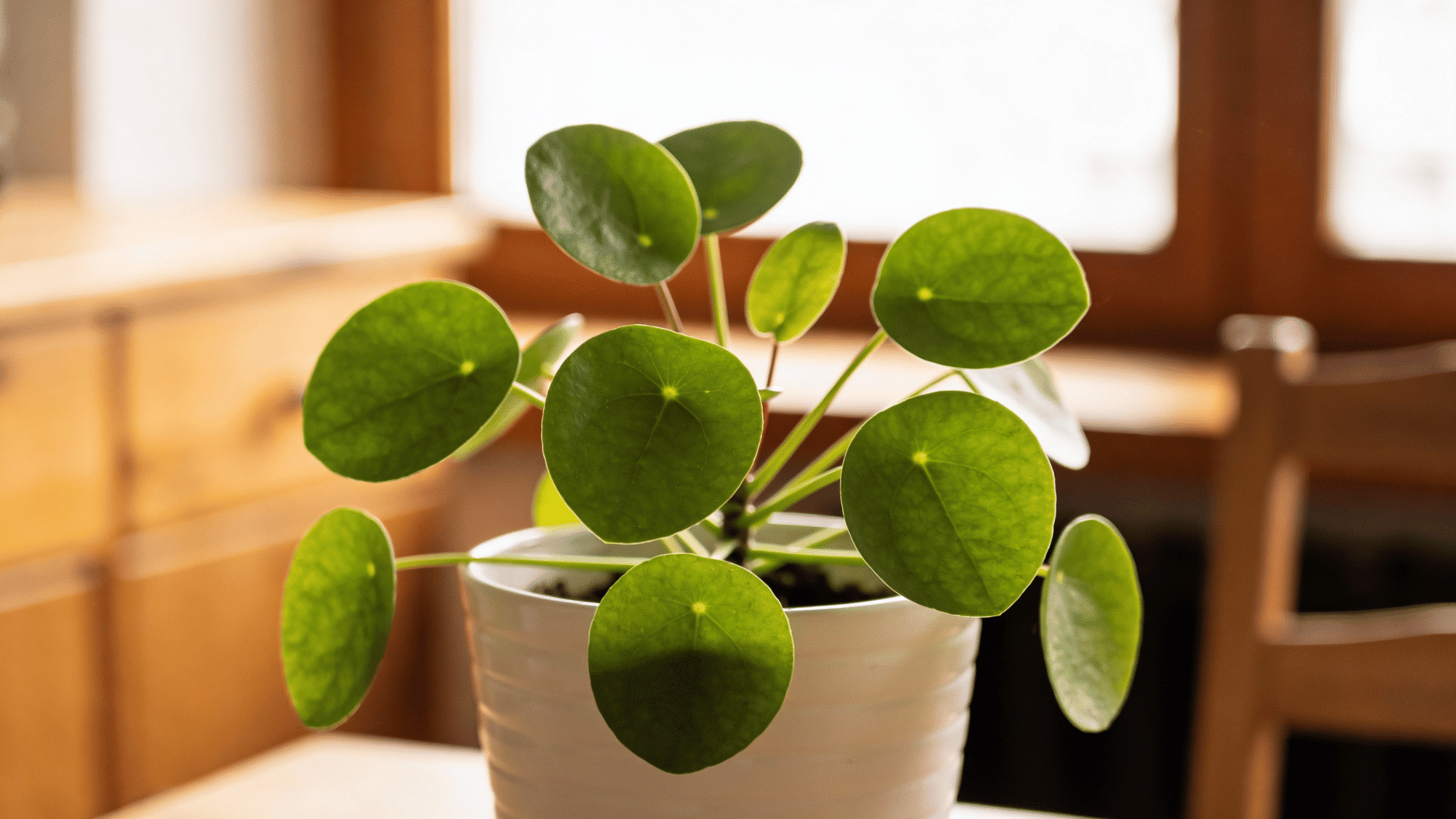
Chinese Money Plants have become a favorite among plant lovers everywhere. Their round, pancake-shaped leaves and charming appearance make them hard to resist.
But many people bring them home without knowing how to keep them happy and healthy.
These plants aren’t difficult to care for, yet they do have specific needs. Get the basics right, and they’ll reward you with lush growth and maybe even some baby plants.
Miss the mark, and you might end up with droopy leaves or worse. This blog covers everything needed to help a Chinese Money Plant thrive, from watering schedules to the perfect spot in the home.
Basics of Chinese Money Plant
The Chinese Money Plant, also known as Pilea peperomioides, is a small houseplant native to southern China. It features distinctive round leaves on delicate stems, making it instantly recognizable.
| Detail | Information |
|---|---|
| Scientific Name | Pilea peperomioides |
| Common Names | Chinese Money Plant, Pancake Plant, UFO Plant, Missionary Plant |
| Origin | Yunnan Province, China |
| Plant Type | Perennial succulent |
| Mature Size | 12 inches tall, 12 inches wide |
| Growth Rate | Moderate to fast |
| Light Requirements | Bright, indirect light |
| Soil Type | Well-draining potting mix |
| Soil pH | 6.0 to 7.0 (slightly acidic to neutral) |
| Watering Needs | Moderate; allow soil to dry between waterings |
| Temperature Range | 55°F to 65°F (13°C to 18°C) |
| Humidity | Average household humidity (40-50%) |
| Toxicity | Non-toxic to pets and humans |
| Special Features | Produces offsets (baby plants) easily |
All Requirements for a Healthy Chinese Money Plant
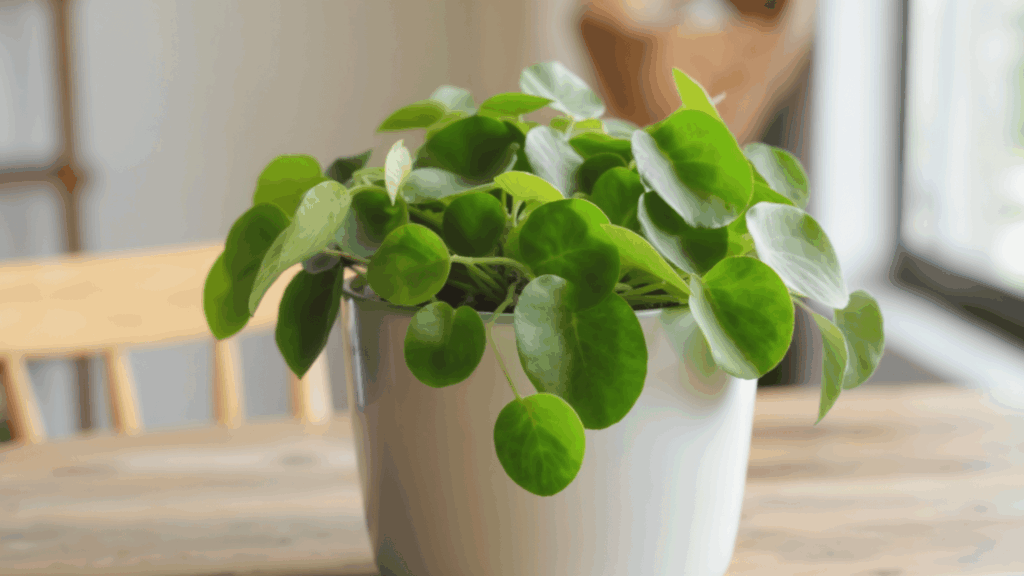
Meeting the basic needs of a Chinese Money Plant isn’t complicated. Focus on these six essential factors to keep it growing strong and beautiful.
Light
Chinese Money Plants need bright, indirect light to stay healthy.
Direct sunlight can scorch their delicate leaves, leaving brown spots. A spot near an east or west-facing window works perfectly.
Rotate the plant weekly so all sides get equal light exposure. This prevents it from leaning toward the light source and helps maintain its balanced, attractive shape.
Water
Water when the top inch or two of soil feels dry to the touch. These plants don’t like sitting in soggy soil, which can lead to root rot.
During the growing season, this usually means watering once a week.
In winter, they need less frequent watering. Always use a pot with drainage holes, and let excess water drain away completely after each watering session.
Soil
A well-draining potting mix is essential for Chinese Money Plants. Regular houseplant soil mixed with perlite or sand works great.
The soil should hold some moisture but not stay waterlogged. Good drainage prevents root problems and keeps the plant healthy.
Some growers add a bit of coco coir to improve texture and water retention without sacrificing drainage.
Temperature
These plants prefer temperatures between 55°F and 65°F, though they can tolerate a slightly wider range. Keep them away from cold drafts, heating vents, and air conditioning units.
Sudden temperature changes stress the plant and can cause leaf drop.
Room temperature in most homes suits them just fine, making them easy to care for year-round without special adjustments.
Humidity
Average household humidity levels work well for Chinese Money Plants. They’re not fussy about moisture in the air like some tropical plants.
If the air gets very dry during the winter months, the leaf edges might brown slightly. A quick mist once a week or a pebble tray with water underneath can help, but it’s usually not necessary.
Fertilizer
Feed Chinese Money Plants during spring and summer when they’re actively growing. A balanced, water-soluble fertilizer diluted to half strength works best. Apply it once a month for optimal growth.
Skip fertilizing in fall and winter, when the plant enters its dormant period. Over-fertilizing causes more harm than good, leading to salt buildup in the soil and burned roots.
How to Prune and Maintain a Chinese Money Plant
Regular pruning and maintenance keep a Chinese Money Plant looking its best. These simple tasks encourage healthy growth and prevent common problems.
- Remove Yellow or Damaged Leaves: Check the plant regularly for yellowing, brown, or damaged leaves. Gently pull them off at the base or use clean scissors to snip them away. This prevents the plant from wasting energy on unhealthy foliage and keeps it looking tidy.
- Trim Leggy Stems: If stems grow too long and sparse, trim them back to encourage bushier growth. Cut just above a leaf node using sharp, clean scissors. The plant will respond by producing new growth from that point, creating a fuller appearance.
- Remove Offsets for Propagation: Chinese Money Plants produce baby plants at their base. These can be left to create a fuller pot or removed for propagation. Carefully separate them when they’re about 2-3 inches tall with their own roots, then pot them separately.
- Dust the Leaves: Wipe the round leaves with a damp cloth every few weeks to remove dust buildup. Clean leaves absorb light better and look more attractive. This also helps you spot any pest problems early before they become serious.
- Rotate the Plant: Turn the pot a quarter turn every week or two. This ensures all sides receive equal light and prevents the plant from leaning heavily in one direction. Regular rotation promotes even, symmetrical growth.
- Check for Pests: Inspect the undersides of leaves and stems monthly for common pests like spider mites, mealybugs, or aphids. Catching problems early makes treatment easier. Wipe away pests with rubbing alcohol on a cotton swab or spray with insecticidal soap if needed.
How to Propagate Chinese Money Plant Babies
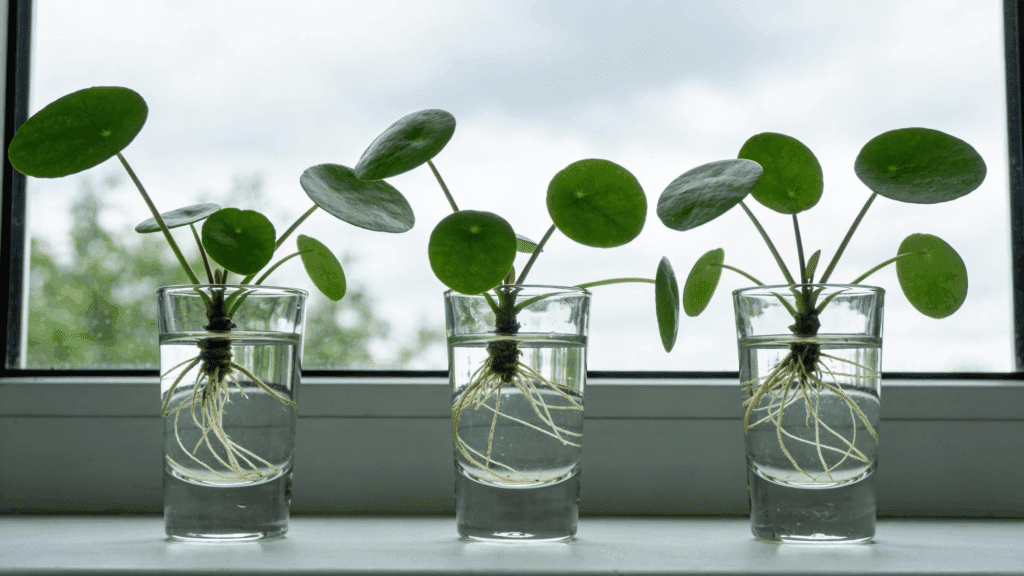
One of the best things about Chinese Money Plants is how easily they produce baby plants, called offsets or pups.
These small plantlets emerge from the soil around the base of the mother plant, and they’re incredibly simple to propagate.
Within a few months of owning a healthy Chinese Money Plant, there will likely be several babies ready for their own pots. This makes it easy to expand a collection or share plants with friends and family.
The process doesn’t require any special tools or advanced gardening skills.
With a bit of patience and the right technique, you’ll get new plants that grow just as beautifully as the original. Propagating these babies is rewarding and gives the mother plant more room to thrive.
Common Chinese Money Plant Problems and Solutions
Even with proper care, Chinese Money Plants can face issues. Recognizing problems early and knowing the solutions helps keep them thriving.
- Drooping Leaves: Usually caused by underwatering or overwatering; check soil moisture and adjust watering schedule accordingly.
- Yellow Leaves: Often indicates overwatering or poor drainage; allow soil to dry out more between waterings and ensure proper drainage.
- Brown Leaf Tips: Typically caused by low humidity, fluoride in tap water, or fertilizer burn; use filtered water and reduce fertilizer application.
- Curling Leaves: Generally means the plant needs more water or is getting too much direct sunlight; water thoroughly and move to indirect light.
- Leggy Growth: Results from insufficient light; move the plant closer to a bright window, but avoid direct sun exposure.
- Root Rot: Caused by waterlogged soil and poor drainage; repot in fresh, well-draining soil and trim away any mushy, dark roots.
- No Baby Plants Appearing: The plant may be too young, stressed, or not getting enough light; ensure optimal care and be patient.
Feng Shui Meaning of the Chinese Money Plant
In feng shui, the Chinese Money Plant is believed to attract wealth and prosperity. Its round, coin-shaped leaves symbolize money and good fortune, which is exactly how the plant earned its popular name.
Many believe that placing this plant in specific areas of the home can invite positive energy and financial abundance.
The wealth corner, located in the far-left area near the entrance, is considered the ideal spot for a Chinese Money Plant.
Beyond monetary benefits, the plant is also thought to bring harmony and balance to living spaces. Its upward growth represents rising fortunes and new opportunities.
The ease with which it produces baby plants symbolizes the multiplication of wealth and generosity. The Chinese Money Plant adds natural beauty and a sense of positivity to any room it occupies.
To Conclude
Caring for a Chinese Money Plant doesn’t require a green thumb or years of experience.
With the right light, proper watering habits, and occasional maintenance, this charming houseplant will flourish for years to come.
The reward goes beyond just having a beautiful plant on display. Watching it produce baby plants to share with others creates a special connection to the growing process.
Pay attention to what the Chinese Money Plant is communicating through its leaves and growth patterns. Small tweaks to care routines can make all the difference in creating a truly happy, healthy plant.