

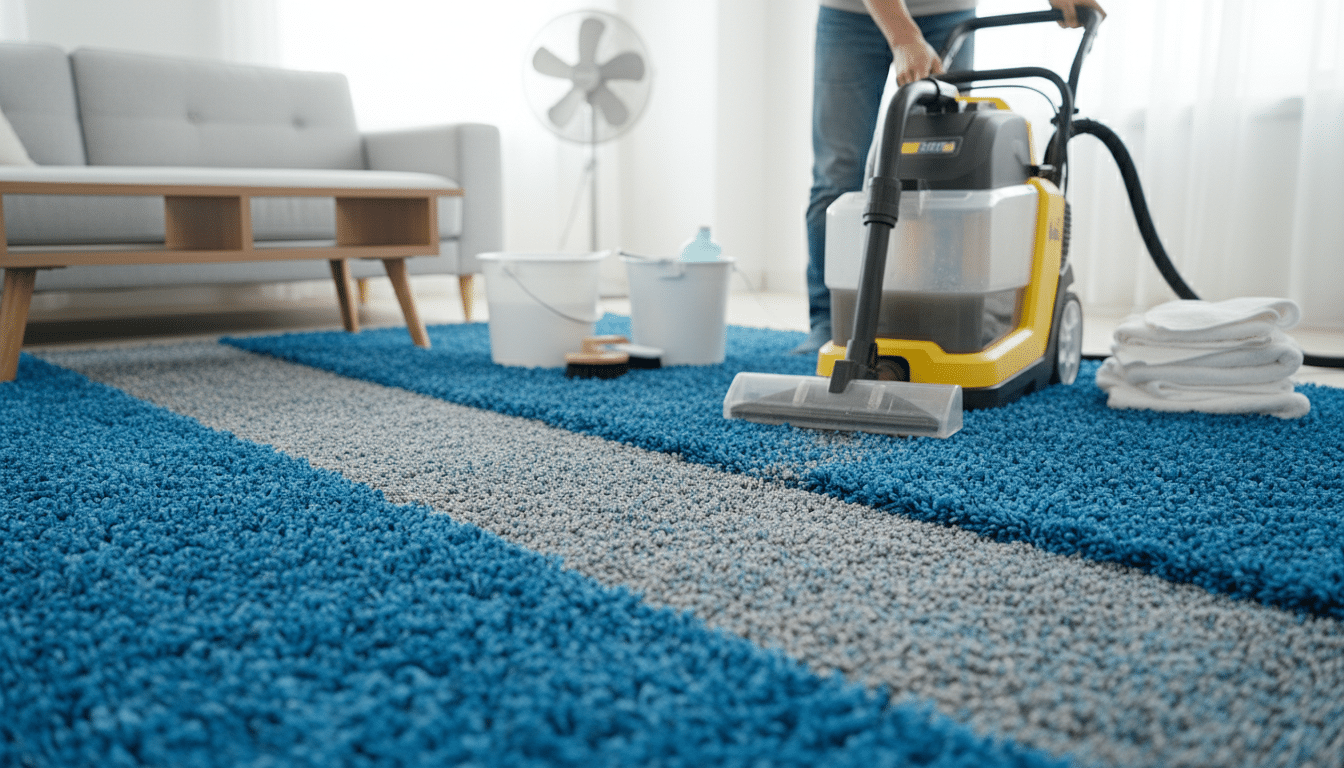
I know how frustrating it feels when your rug starts to look dull or dirty. I’ve dealt with spills, dust, and stains at home, and I didn’t want to spend money on professional cleaning every time.
The good news is, you can handle most of it yourself with simple things you already have.
In this guide on how to clean area rugs at home step by step, I’ll show you easy ways that actually work.
You’ll learn how to remove dirt, treat stains, and keep your rug fresh without using heavy tools or machines.
I’ll walk you through each step in a clear way so you don’t feel confused. By the end, you’ll know how to clean your rug safely and make it look better again, right from your home.
Why You Should Clean Area Rugs at Home
A clean rug can make any room look brighter and more inviting. Dust, dirt, and small particles build up quickly, even when the rug looks clean on the surface.
Over time, this can make the space feel dull and may affect indoor air quality.
Cleaning area rugs at home is also a smart way to save money. Professional services can be costly, while simple home methods can handle regular dirt and light stains just as well.
Quick cleaning also helps deal with spills before they set in. Regular care helps rugs last longer. It reduces wear, prevents bad smells, and keeps stains from becoming hard to remove.
One thing I always point out from my renovation work: dirt doesn’t just sit on top of rug fibers, it works its way down and grinds against the backing over time, weakening the structure.
Regular vacuuming is your first line of defense against that kind of invisible damage.
With a simple routine, it becomes easy to keep rugs fresh and in good condition without much effort.
How to Clean Area Rugs at Home Step by Step
Cleaning your rug at home may seem like a big task, but it becomes simple when you follow the right steps. These easy steps will help you clean your rug safely using basic tools and methods.
Tools Needed to Clean Area Rugs at Home
You don’t need many tools to clean your rug at home. Most of these items are simple and easy to find in any house.
| Tool / Item | Use |
|---|---|
| Vacuum Cleaner | Removes loose dirt and dust |
| Mild Detergent | Cleans stains and dirt safely |
| Soft Brush | Gently scrubs the rug surface |
| Bucket | Holds water and cleaning mix |
| Clean Cloth/Towel | Blots stains and helps dry the rug |
Step 1: Pick a Safe Cleaning Area
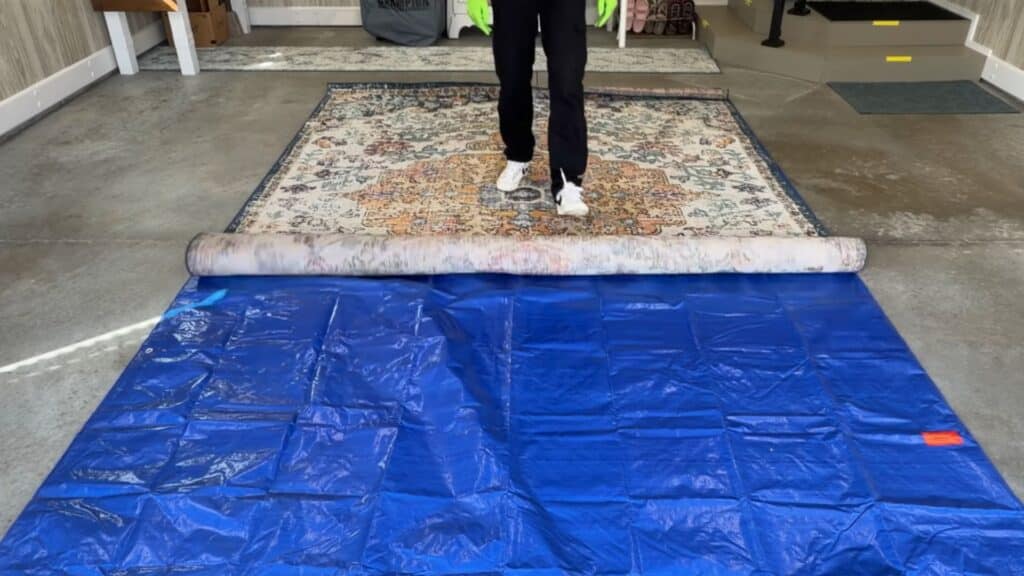
Start by choosing a space where water won’t cause any damage. A garage, driveway, or outdoor area works best for this process.
Avoid cleaning on wood or laminate floors since moisture can seep through and harm them. Lay down a tarp first to protect the surface and keep things tidy. Then spread the rug flat so you can clean it evenly from edge to edge.
Step 2: Vacuum the Rug Thoroughly
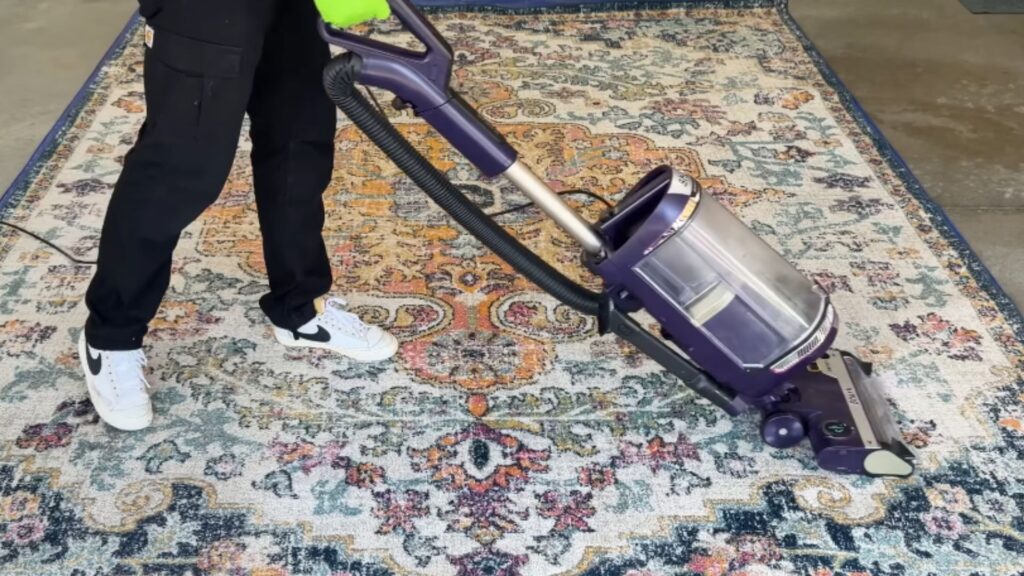
Vacuuming removes loose dirt before any water is added. Go over the rug in different directions to lift dust, hair, and debris stuck in the fibers.
This step helps prevent dirt from turning into mud later. It’s also a good idea to vacuum the back of the rug. Taking a little extra time here makes the rest of the cleaning process much easier.
Step 3: Prepare the Cleaning Solution
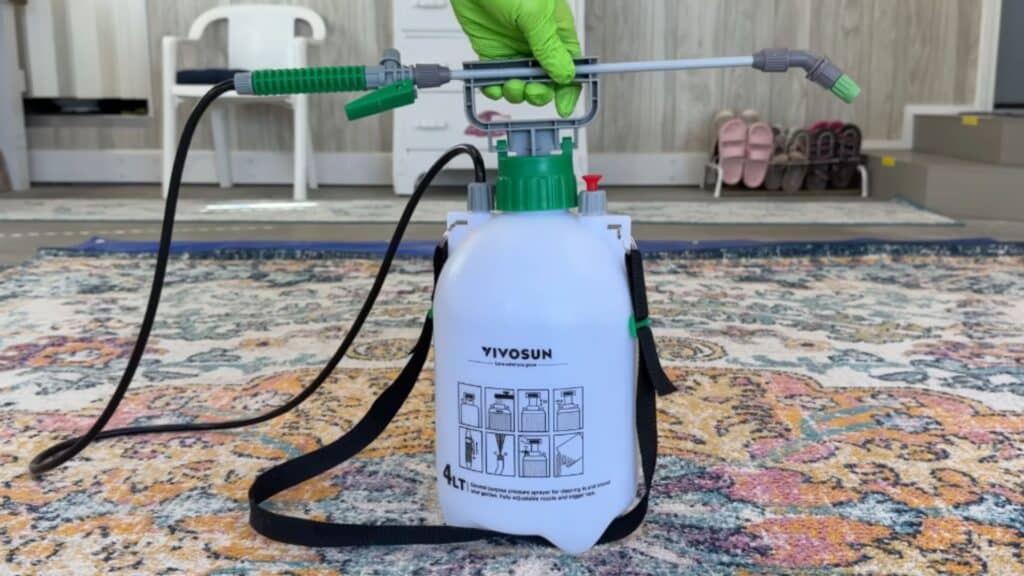
Use a simple carpet cleaner that is safe for your rug type. Mix it with water in a spray bottle or pump sprayer for easy use.
This method helps spread the solution evenly across the surface. Avoid using too much soap, as it can leave residue behind. A well-mixed solution makes cleaning more effective and keeps the rug from feeling sticky later.
Step 4: Apply the Cleaner Evenly
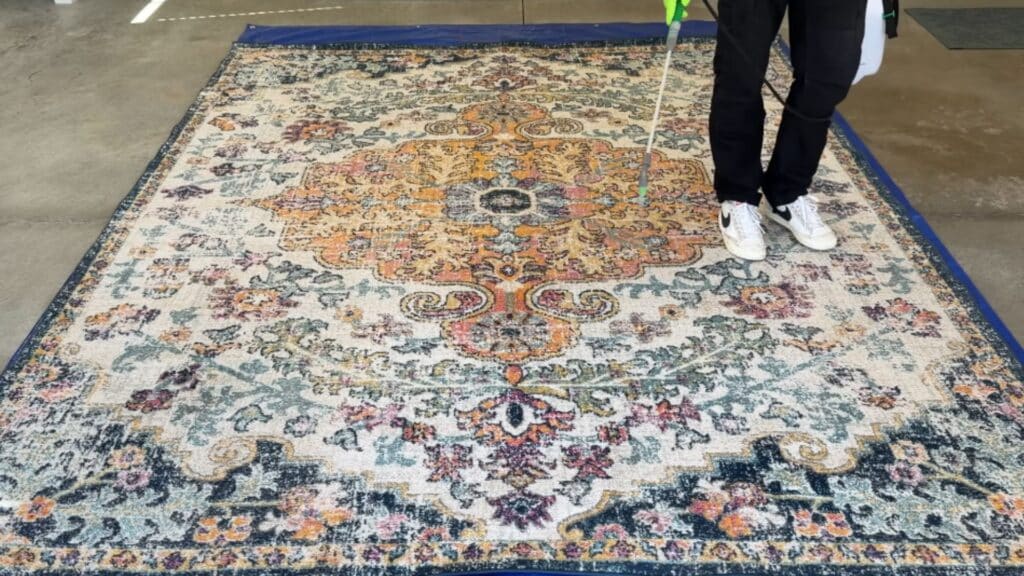
Spray the cleaning solution across the entire rug surface. Keep a steady distance so the liquid spreads evenly without soaking one area too much.
Make sure every part of the rug is covered. Missing spots can leave dirt behind after cleaning. Even coverage helps the cleaner work properly and prepares the rug for the next step.
Step 5: Gently Scrub the Surface
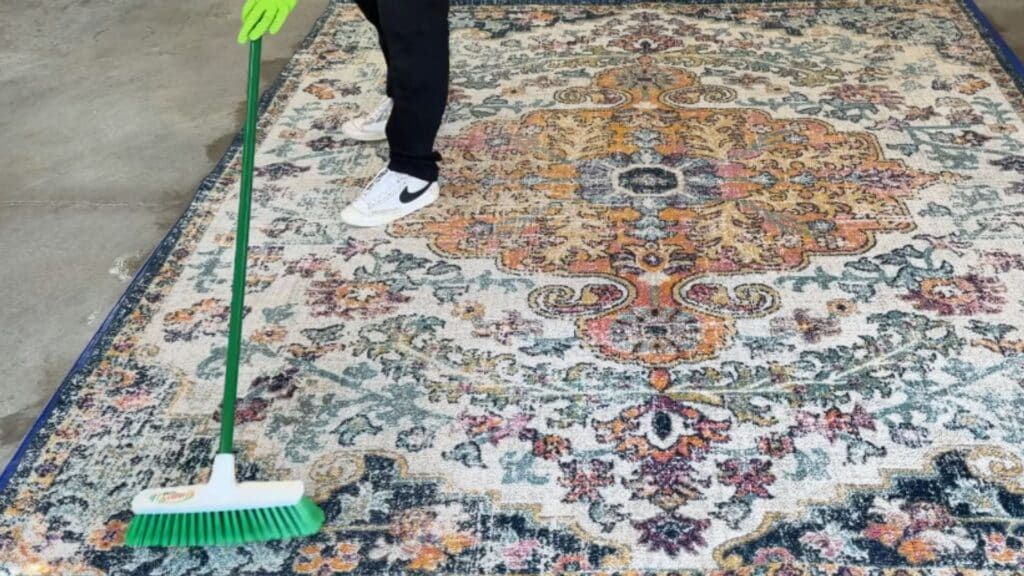
Use a soft brush to lightly scrub the rug. Move in small sections and avoid pressing too hard. Gentle scrubbing helps loosen dirt trapped deep in the fibers.
This step allows the cleaner to work better without damaging the material. Focus more on areas with stains, but keep the motion light and even across the rug.
Step 6: Rinse and Remove Dirt
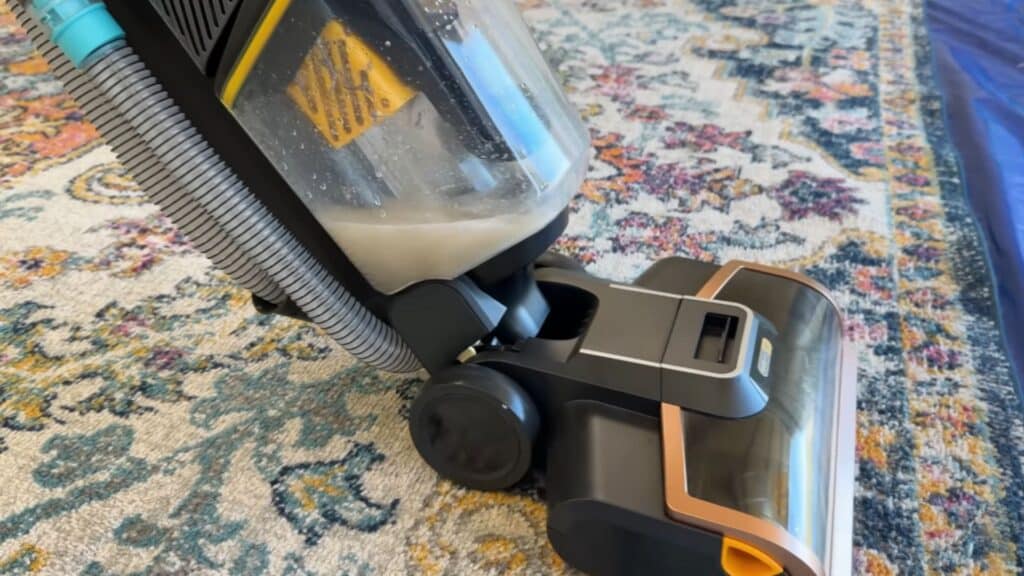
Rinse the rug using clean water to wash away dirt and soap. Move slowly to make sure all areas are cleaned properly.
This step is important because leftover soap can attract more dirt later. Continue rinsing until the water looks clear. A proper rinse leaves the rug clean and fresh without any sticky residue.
Step 7: Extract Excess Water
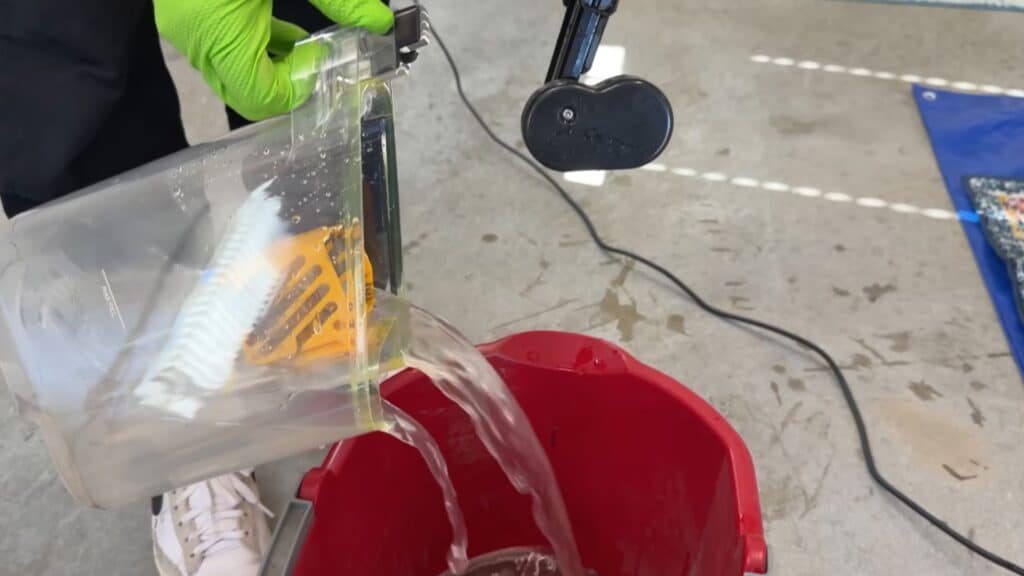
After rinsing, remove as much water as possible from the rug. This helps reduce drying time and prevents bad smells.
If using a machine, go over the rug slowly to pull out moisture. If not, press with clean towels to soak up water. The less moisture left behind, the better the final result will be.
Step 8: Dry the Rug Properly
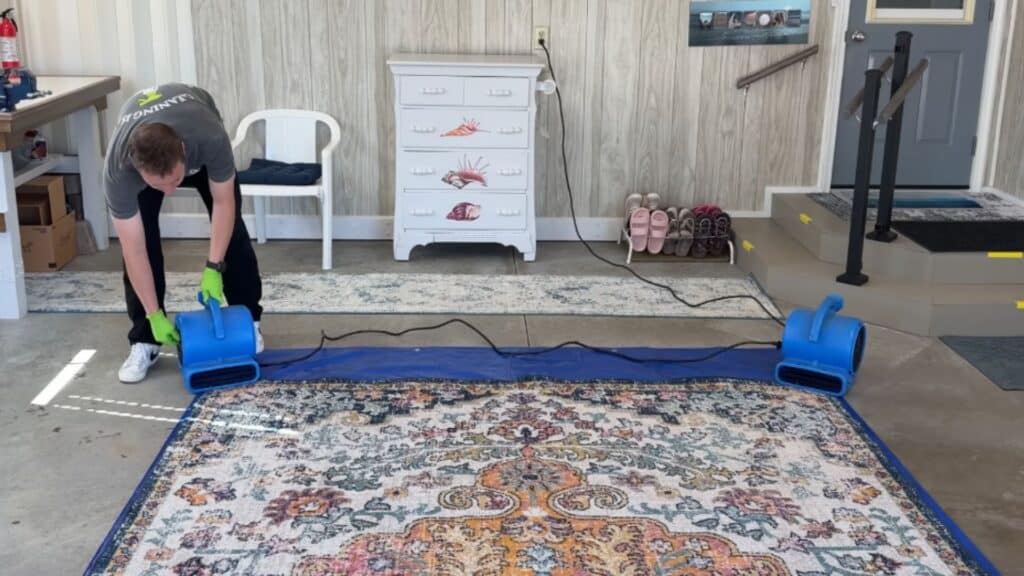
Place the rug in an area with good airflow so it can dry fully. Use fans or keep it outside if the weather is dry and mild.
Avoid humid conditions, as they slow down drying and may cause odor. Make sure both sides of the rug are completely dry. Proper drying keeps the rug fresh and prevents mold or mildew.
This tutorial is based on a helpful video by CleanThatUp. You can check out the original video on their YouTube channel or watch it below.
Common Mistakes to Avoid When Cleaning Rugs
Cleaning rugs seems simple, but mistakes can cause damage, stains, or odors, so knowing what to avoid helps keep your rug fresh, safe, and long-lasting.
- Using Too Much Water: Excessive water can soak deeply into the rug, causing damage. It also increases drying time and may lead to bad smells.
- Skipping Vacuuming Before Cleaning: Cleaning without vacuuming turns loose dirt into mud. This makes the rug harder to clean and makes stains spread.
- Using Harsh Cleaners: Strong chemicals can damage rug fibers and fade colors. Always use mild, safe cleaners for rugs.
- Scrubbing Too Hard: Rough scrubbing can weaken fibers and ruin the texture. Gentle brushing is enough to lift dirt.
- Not Rinsing Properly: Leftover soap can make the rug sticky and attract more dirt. Always rinse until the water runs clear.
- Drying the Rug Poorly: A damp rug can develop mold and odor. Proper airflow is needed to dry it fully.
- Skipping the Patch Test: Applying cleaner directly to the full rug without testing a small area first is one of the most common mistakes. Color bleeding can ruin a rug in seconds, and it can’t be undone.
- Using the Wrong Method for Your Rug Type: Hosing down a jute rug or machine-washing a wool rug can cause irreversible damage. Always match your method to your material.
When to Avoid Cleaning Rugs at Home
Cleaning rugs at home works well in many cases, but there are times when it’s better to avoid it.
Delicate rugs made from wool, silk, or other natural fibers can get damaged by water and simple cleaners. These materials often need special care that is hard to manage at home.
Very old or valuable rugs should also be handled carefully. DIY cleaning can cause color fading or weaken the fibers. In such cases, professional cleaning is a safer option.
If the rug has heavy stains, strong odors, or mold, home methods may not be enough. Deep issues like these often need proper equipment and treatment.
Also, if the rug label clearly says “dry clean only,” it’s best to follow that advice to avoid damage.
Wrapping Up
Cleaning your rug at home is easier than you might think. I’ve found that with a little time and the right steps, you can bring back its fresh look without spending much.
The key is to stay gentle, use simple tools, and let the rug dry fully. Small habits like regular vacuuming and quick spot cleaning really help in the long run.
The single biggest thing I’ve learned from years of working on home interiors is this: knowing your rug’s material before you start is worth more than any cleaning tip. Get that right and everything else follows naturally.
If your rug ever feels too delicate or heavily stained, it’s okay to get expert help. But for most everyday messes, you’ve got this.
Give these steps a try and see the difference yourself. If it worked for you, let me know your results or tips in the comments!
Frequently Asked Questions
How Often Should I Clean My Area Rug?
Area rugs should be vacuumed weekly to remove dust and dirt. Deep cleaning can be done every 3 to 6 months, depending on foot traffic and use.
Can I Use Laundry Detergent on Rugs?
Laundry detergent can be used in small amounts if it is mild and free from harsh chemicals. Always dilute it with water to avoid residue buildup.
How Long does it Take for a Rug to Dry?
A rug usually takes 6 to 24 hours to dry fully. Drying time depends on airflow, humidity, and how much water was used during cleaning.
What is the Best Way to Remove Odor from Rugs?
Use a mix of baking soda or a mild vinegar solution to remove odors. Let it sit for a while, then vacuum or rinse for fresh results.