

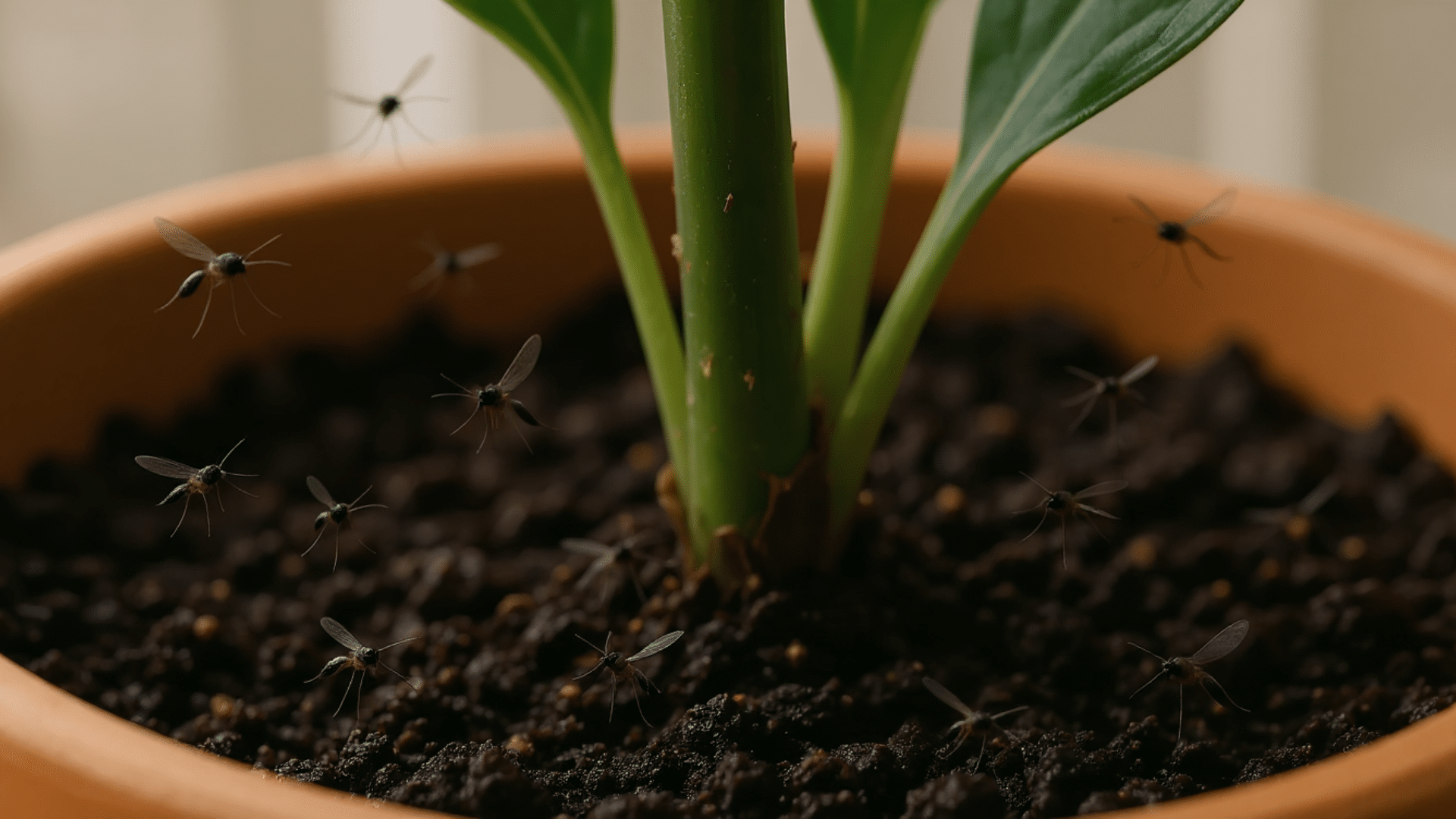
It starts with one tiny bug flying near a plant. Then another. Soon, the soil looks alive with little black gnats.
This is a common problem for people who care for houseplants. Fungus gnats may be small, but they show up fast and stay too long.
They don’t bite, but they can bother people and harm plants. Most often, they hide in damp soil and grow in number without warning.
It can feel like they came out of nowhere. But there’s no need to panic. With the right steps, fungus gnats can be handled quickly and safely, without tossing out your favorite plant.
What are Fungus Gnats?
Fungus gnats are tiny black flies that often show up in plant soil. They’re about the size of fruit flies and can be hard to notice at first.
They fly low around houseplants and lay eggs in damp soil. The eggs hatch into small white worms called larvae.
These larvae live in the top layer of soil and feed on fungus and decaying matter. But sometimes, they chew on plant roots too. That can weaken your plants and cause slow growth or drooping leaves.
The adult gnats are annoying, but the larvae are the ones doing the damage in the soil.
How to Tell If You Have Fungus Gnats in Soil
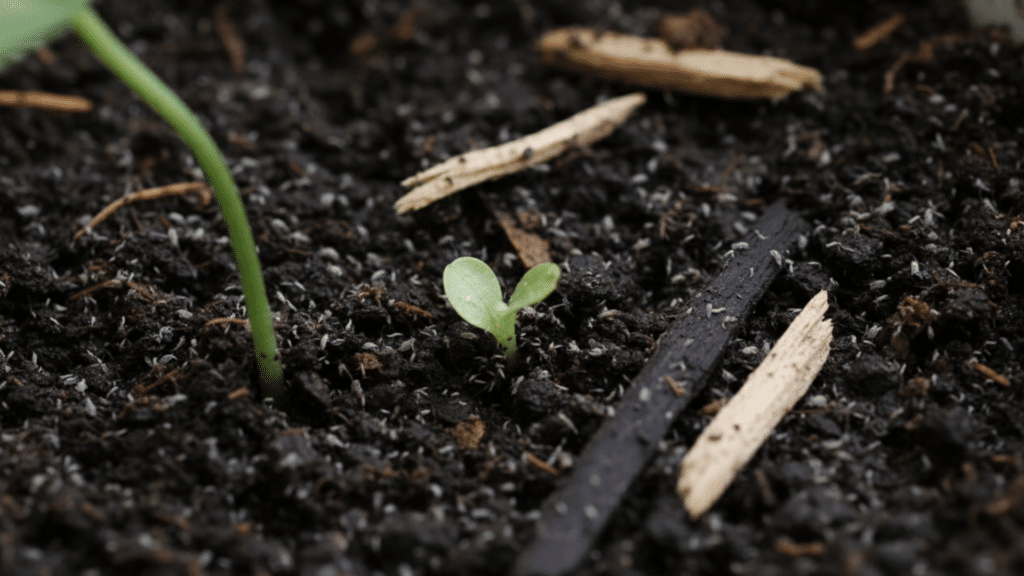
Not sure if those tiny bugs are fungus gnats? Look for these signs in your soil and plants before the problem spreads.
- Tiny black flies around the base of houseplants
- Larvae that look like clear or white worms in the soil
- Soil that stays wet for days
- Yellowing or soft leaves
- Wilting even when the plant gets enough water
- Sticky traps filled with little bugs
If you notice a few of these signs, you likely have fungus gnats in the soil.
Why Do Fungus Gnats Show Up?
Fungus gnats need three things to survive: moisture, organic matter, and a quiet spot to lay eggs. Overwatered soil is their favorite place. Look at what causes them to show up:
- Wet Soil Too Often: Watering too much or too often creates a perfect home for gnats. Their larvae can’t survive in dry soil.
- Old Potting Soil: Reused or low-quality potting mix may already carry eggs or fungus.
- No Drainage: Pots without drainage holes keep the bottom of the soil soggy. Gnats love that.
- Rotting Leaves or Moss: Any decaying matter on top of the soil helps them thrive. Even a small pile of wet leaves can attract them.
Best Ways to Get Rid of Fungus Gnats in Soil
Getting rid of fungus gnats takes a little time and care. But it can be done with simple tools, safe products, and a few changes in how you care for your plants.
1. Let the Soil Dry Out
This is one of the easiest and best steps. Fungus gnats in soil need moisture to survive. Letting the top 1 to 2 inches of soil dry between waterings helps stop eggs and larvae from growing.
Quick tip: Stick your finger into the soil. If it still feels damp, wait a day or two before watering.
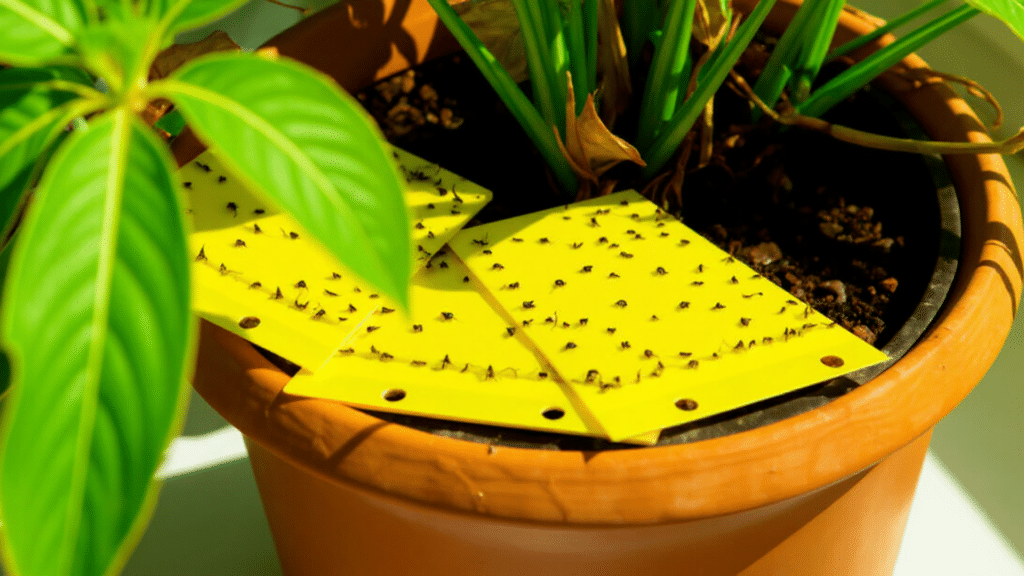
2. Use Yellow Sticky Traps
Sticky traps are a great way to catch adult gnats. They’re bright yellow and have a sticky surface that flying bugs can’t resist.
How to use them:
- Place one near the base of each infested plant
- Replace them every few days as they fill up
- Use for 2–3 weeks to break the cycle
This won’t stop larvae, but it cuts down how many adults are around to lay new eggs.
3. Cover Soil with Sand or Gravel
Adult gnats lay eggs on the top layer of moist soil. If you block access to that layer, they can’t lay eggs.
Use:
- Horticultural sand
- Aquarium gravel
- Decorative stones
How to do it:
- Spread a ½-inch layer over the top of the soil
- Make sure it stays dry between watering
This also helps dry the soil faster and discourages larvae.
4. Water with Hydrogen Peroxide Solution
A mix of 3% hydrogen peroxide and water can kill larvae in the soil. It’s safe for most houseplants when used the right way.
Mix:
- 1 part hydrogen peroxide
- 4 parts water
Steps:
- Mix in a watering can
- Water your plant until the solution drains from the bottom
- Wait for the soil to dry fully before watering again
Only use this once per week until the gnats are gone.
5. Add Beneficial Nematodes
Nematodes are tiny worms that you can’t see, but they eat fungus gnat larvae. You can buy them online or from plant stores.
How to use:
- Mix with water
- Pour into the soil
- Repeat in 7–10 days if needed
They’re a great choice if you have many plants or don’t want to use chemical treatments.
6. Try BTi or Mosquito Bits
BTi (Bacillus thuringiensis israelensis) is a natural bacterium that kills larvae but is safe for pets, people, and plants.
How to use:
- Soak Mosquito Bits in water for 30 minutes
- Water your plants with the mixture
- Repeat once per week
BTi only works on larvae, not adult gnats, so use it along with sticky traps.
7. Repot the Plant (If Nothing Else Works)
Sometimes, the soil is just too far gone. If you’ve tried everything and still have gnats, repotting may be your best bet.
Steps:
- Remove the plant from its pot
- Gently shake off or rinse away old soil
- Use fresh, sterile potting mix
- Clean the pot with soap and hot water before reusing
Only do this if the plant is healthy enough to handle the change.
How to Prevent Fungus Gnats in Soil

Once you get rid of fungus gnats, it’s important to keep them from coming back. Follow these simple steps to stop them before they start:
- Let soil dry between waterings: Only water when the top inch feels dry to the touch.
- Use well-draining soil: Pick a mix that doesn’t hold too much moisture. Add sand or perlite if needed.
- Empty trays under pots: Don’t let water sit at the bottom of planters.
- Clean up fallen leaves: Remove dead leaves and plant debris from the soil surface.
- Cover soil with sand or gravel: This keeps gnats from laying eggs in the top layer.
- Use pots with drainage holes: Make sure extra water can flow out easily.
- Avoid reusing old soil: Start fresh when repotting to avoid bringing gnats back.
- Try bottom watering: It keeps the topsoil dry, which gnats don’t like.
Best Products to Use
| Tool/Product | What It Does | Safe for Plants? |
|---|---|---|
| Sticky traps | Catches adult gnats | Yes |
| Hydrogen peroxide | Kills larvae in soil | Yes (diluted) |
| BTi / Mosquito Bits | Kills larvae safely | Yes |
| Nematodes | Natural pest control for larvae | Yes |
| Neem oil | Insect control repels adults | Yes |
| Horticultural sand | Blocks adults from laying eggs | Yes |
Common Mistakes to Avoid
Before you wrap up your gnat battle, keep these warnings in mind. They’ll help your efforts work faster and last longer.
- Watering on a set schedule. Not every plant dries out at the same speed. Always check the soil first.
- Using soil from old pots or the garden. It might contain gnat eggs or fungus.
- Ignoring just one plant. If you treat only one, but others nearby are infested, the gnats will keep coming back.
- Letting sticky traps get full. Replace them often to stay ahead of the adult gnat population.
- Adding compost or organic matter too often. Too much can attract gnats and give larvae food to grow.
Wrapping Up
Fungus gnats in soil can be frustrating, but they don’t have to ruin your plants. With the right steps, you can stop them and keep them from coming back.
Dry soil, sticky traps, and safe treatments all work well when used together. It’s also important to water only when your plant needs it.
Small changes in your routine can make a big difference. Stay alert, check your soil often, and act fast when you see signs of gnats.
Your plants will stay stronger and healthier in the long run. Got a favorite trick that worked for you? Share your experience in the comments and help others fight off fungus gnats, too.