

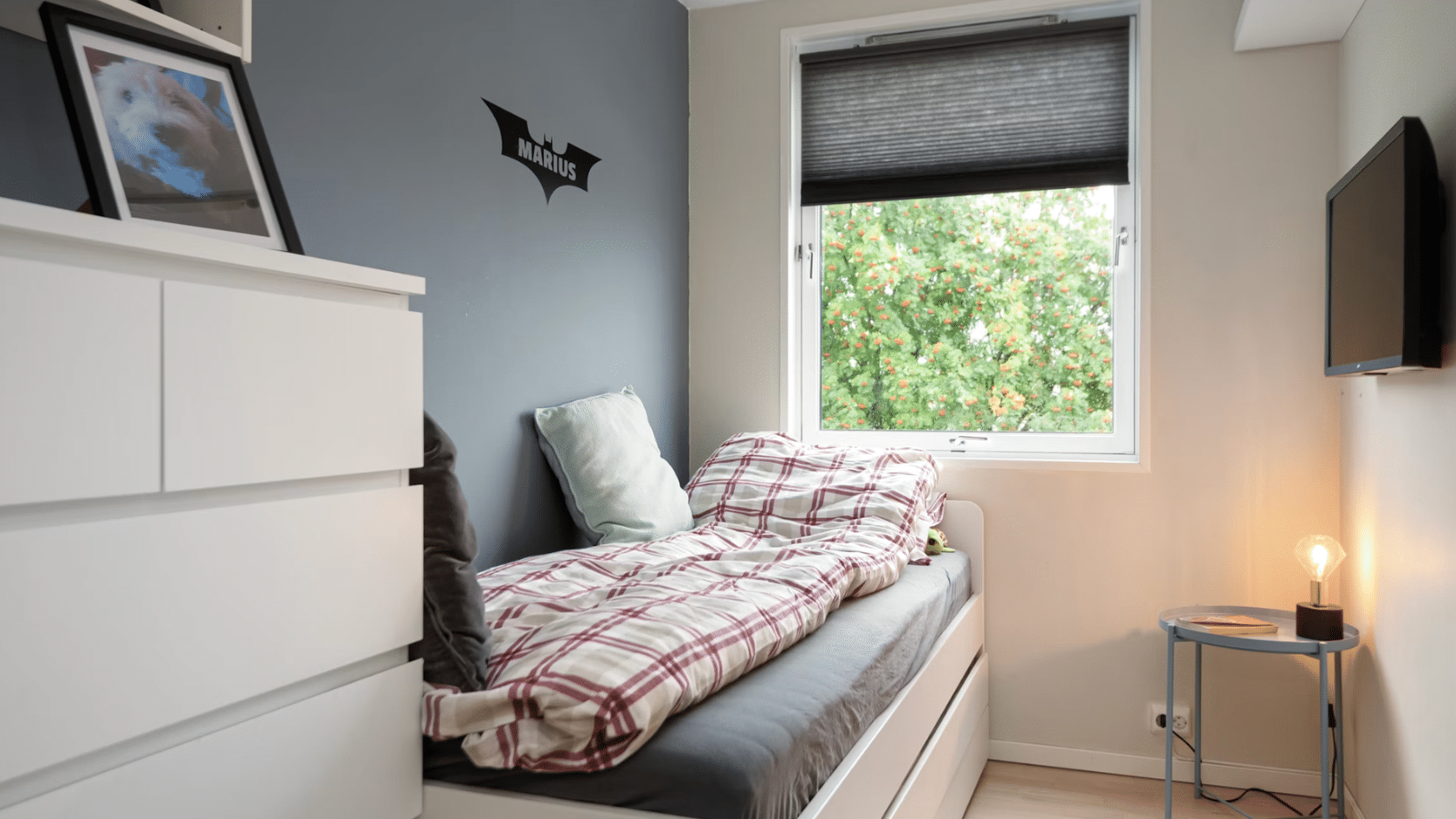
A small bedroom can feel cramped and cluttered without the right setup. But the size of the room rarely matters as much as how you use the space.
With the right layout, colors, and storage choices, even the smallest bedroom can feel open, restful, and put-together.
In this guide, you will find some practical ways to decorate a small bedroom, from choosing the right furniture to making the most of walls and light.
These ideas work for renters, homeowners, and anyone looking to get more out of a tight space.
Assessing Your Small Bedroom
Before buying anything new, take stock of your room’s existing strengths. Understanding your layout, natural light, and floor plan sets the foundation for every design decision you make.
- Identify Your Room’s Natural Strengths: Notice where sunlight enters, use windows to brighten the space, and keep curtains light and simple.
- Use Alcoves Smartly: Turn small corners into storage, reading spots, or a compact workspace.
- Keep Floors Visible: Avoid covering the entire floor to keep the room feeling open and less crowded.
- Highlight Room Details: Use wall shapes, trim, or beams as natural design features rather than hiding them.
- Work With the Room: Place furniture based on the room’s layout, not just trends.
- Map Out Your Floor Plan: Measure the room size before buying anything to avoid mistakes.
- Sketch a Simple Layout: Draw a rough plan to test furniture placement ideas.
- Keep Walking Space Clear: Leave enough room to move easily without bumping into furniture.
- Place Big Items First: Start with the bed, then add smaller pieces around it.
Budget Tips for Decorating a Small Bedroom
You can refresh a small bedroom without spending too much money. Simple updates and smart choices help improve both space and style on a budget.
| Item / Idea | Approximate Cost (USD) | Benefit |
|---|---|---|
| Rearranging Furniture | $0 | Improves space and flow without spending money |
| Fresh Paint | $20–$50 | Makes the room feel brighter and bigger |
| Wall Shelves | $15–$40 | Adds storage without using floor space |
| Bedding / Cushions / Curtains | $10–$30 each | Refreshes the overall look easily |
| Mirrors | $15–$60 | Makes the room feel more open and spacious |
| Thrift / Online Finds | Low cost | Helps save money while upgrading decor |
Decor Ideas for Small Bedrooms
Small bedrooms can feel cozy and comfortable with the right layout. Smart furniture placement helps save space and keeps the room open.
1. Push Your Bed Into the Corner
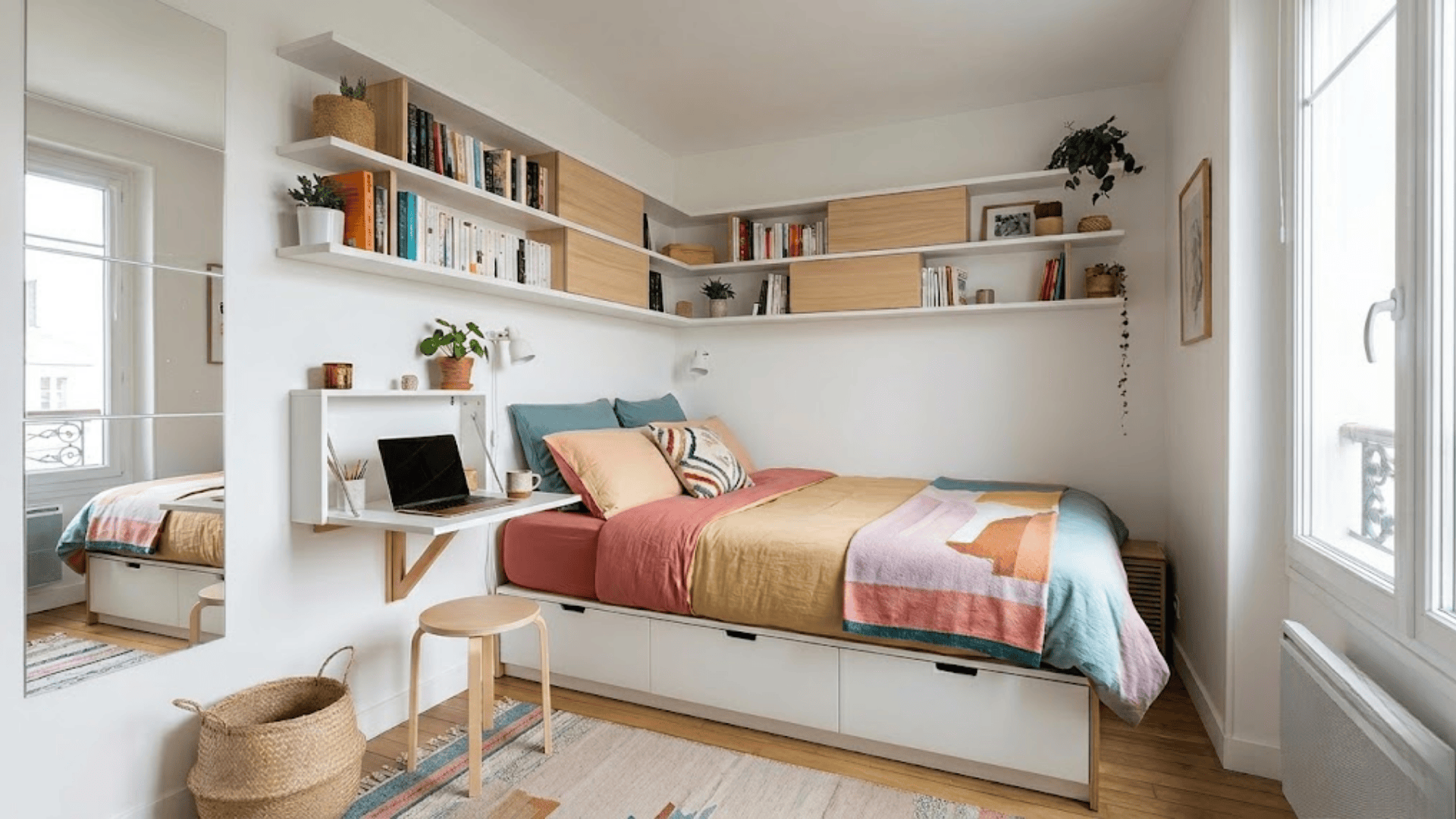
Placing your bed in the corner of the room is one of the simplest small bedroom ideas you can try today.
It frees up floor space on two sides instead of three, giving the room an open, breathable feel that a centered bed simply cannot achieve.
Add decorative cushions along the wall side to make the arrangement look intentional rather than tucked away.
A daybed frame fits this layout well and also works as seating during the day, helping you save space without adding extra furniture.
Best for: Small bedrooms that need more usable floor space or anyone who wants their bedroom to function as a lounge area during daytime hours.
Pro tip: Mount a floating shelf or a slim sconce light on the corner wall just above the bed. This replaces the need for a bedside table entirely and keeps your newly freed floor space completely clear.
2. Choose a Storage Bed to Ditch the Dresser
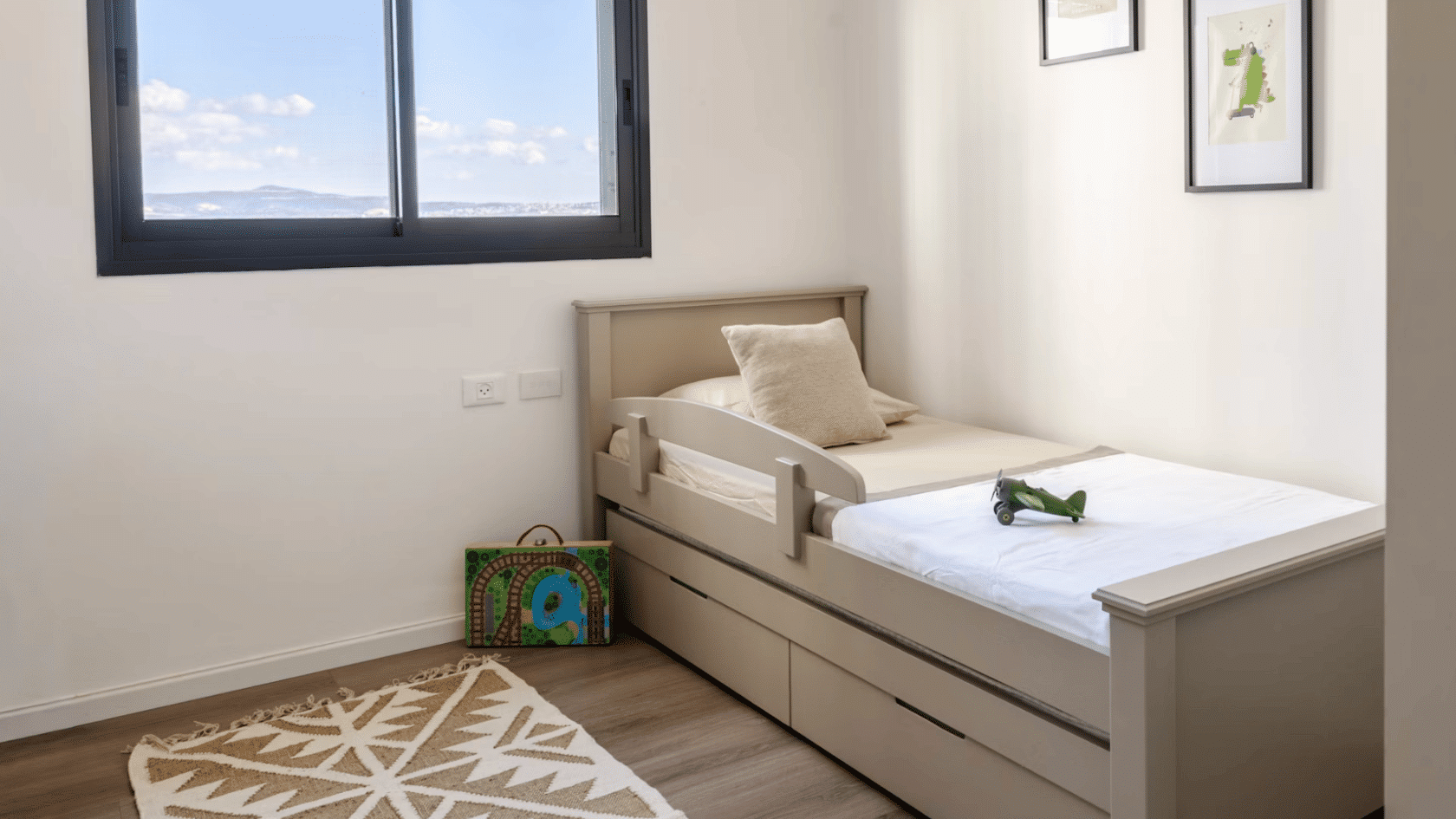
A bed with built-in drawers underneath is a total game-changer for small bedrooms. It gives you a significant amount of hidden storage without taking up any extra floor space, which is exactly what a compact room demands.
You can store folded clothes, extra bedding, or seasonal items right under where you sleep, eliminating the need for a separate dresser entirely.
Ottoman beds lift up to provide large hidden storage for bulky items.
Best for: Small bedrooms with no closet or limited wardrobe space where every inch of storage needs to pull double duty without cluttering the floor.
Pro tip: Use vacuum storage bags for bulky seasonal items like winter duvets or thick sweaters before sliding them into under-bed drawers. You can fit nearly twice as much into the same space with zero extra effort.
3. Install Floating Nightstands
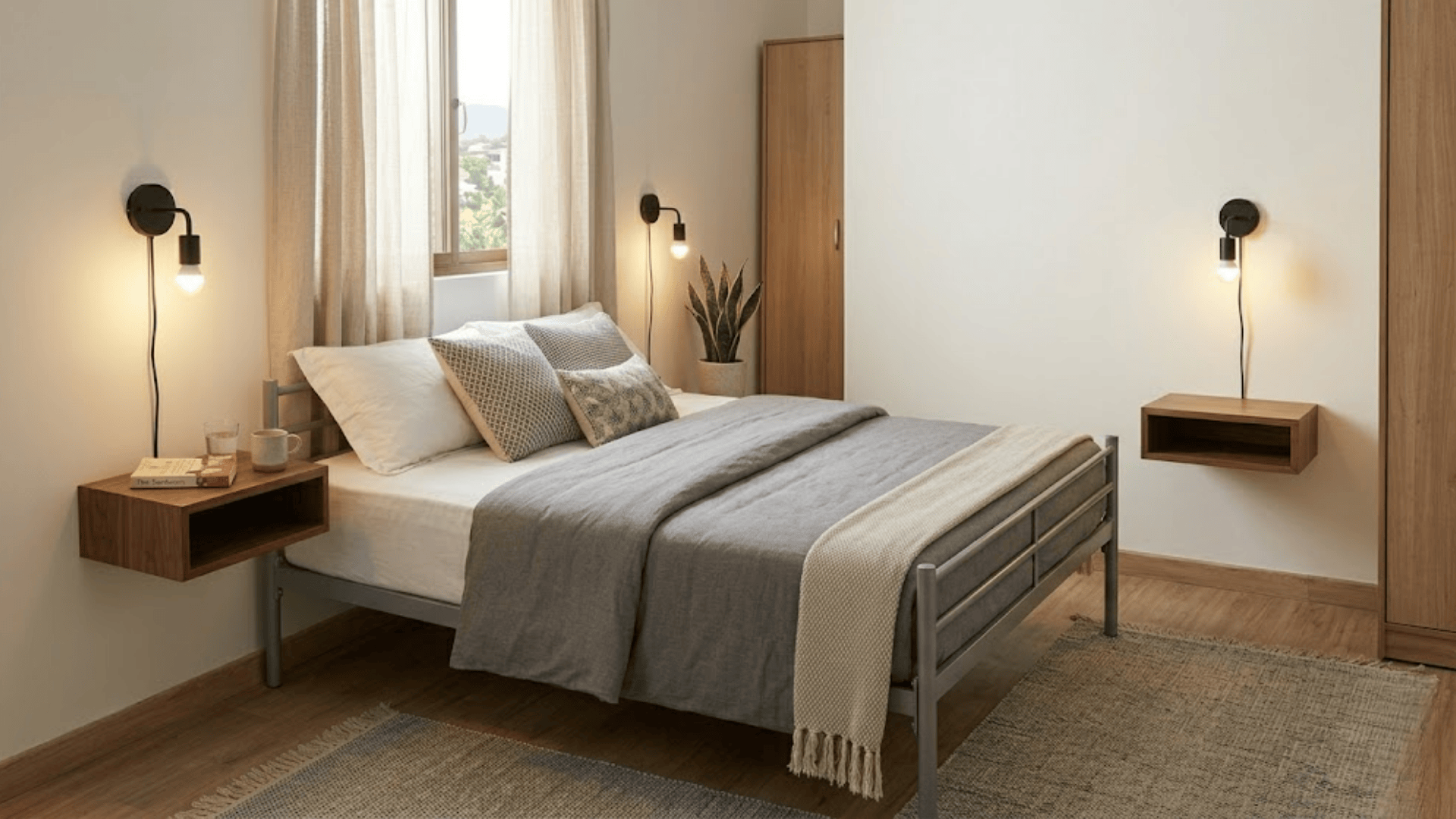
Wall-mounted floating nightstands are a small but mighty upgrade for any compact bedroom. Wall-mounted shelves keep the floor clear, making the room feel more open.
You can style them with a small lamp, a book, or a candle without the surface feeling cluttered or heavy.
They also free up visual breathing room along the lower half of the wall, which is exactly where small bedrooms tend to feel the most closed in.
Best for: Very narrow bedrooms where standard nightstands would block the walking path or make an already tight space feel even more squeezed on both sides of the bed.
Pro tip: Install them at exact mattress height so you never have to reach up or bend down to grab something in the middle of the night, a small detail that makes the setup feel custom-built rather than improvised.
4. Go Floor-to-Ceiling with Your Shelving
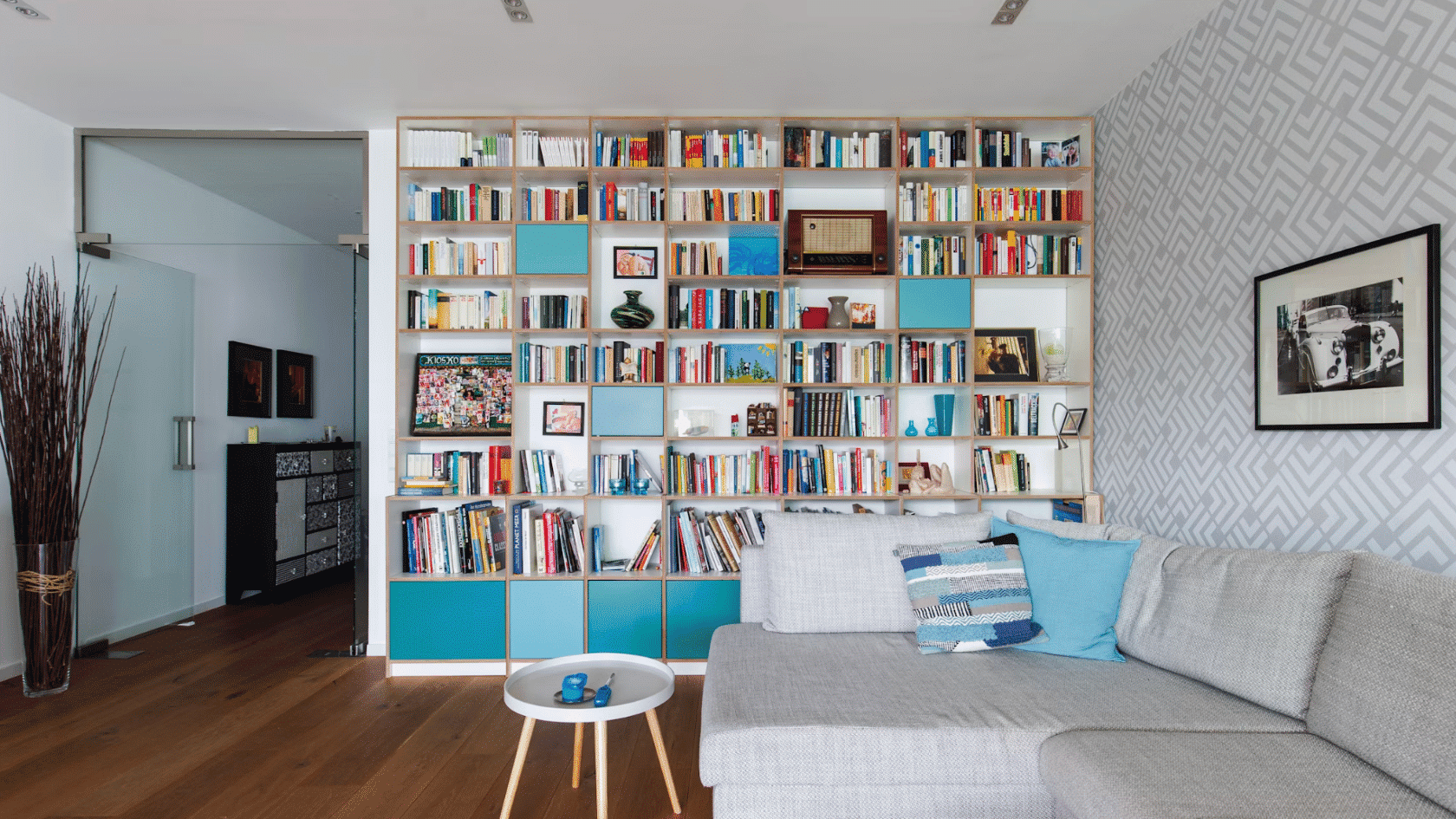
Installing shelves that run all the way to the ceiling gives you plenty of storage for books, decor, and folded items while drawing the eye upward in a way that shorter furniture never achieves.
This creates the visual impression of a taller room, which instantly makes the space feel less tight and more expansive overall.
Keep upper shelves for less-used items and lower shelves for daily essentials.
Best for: Book lovers and creative people who need generous display and storage space without sacrificing a single square foot of valuable floor area in an already compact room.
Pro tip: Use matching baskets or bins on the upper shelves to keep the look neat and cohesive, without them, the top portion of tall shelving tends to look chaotic and heavy, which cancels out the airy effect you are going for.
5. Use Light and Neutral Colors on Your Walls
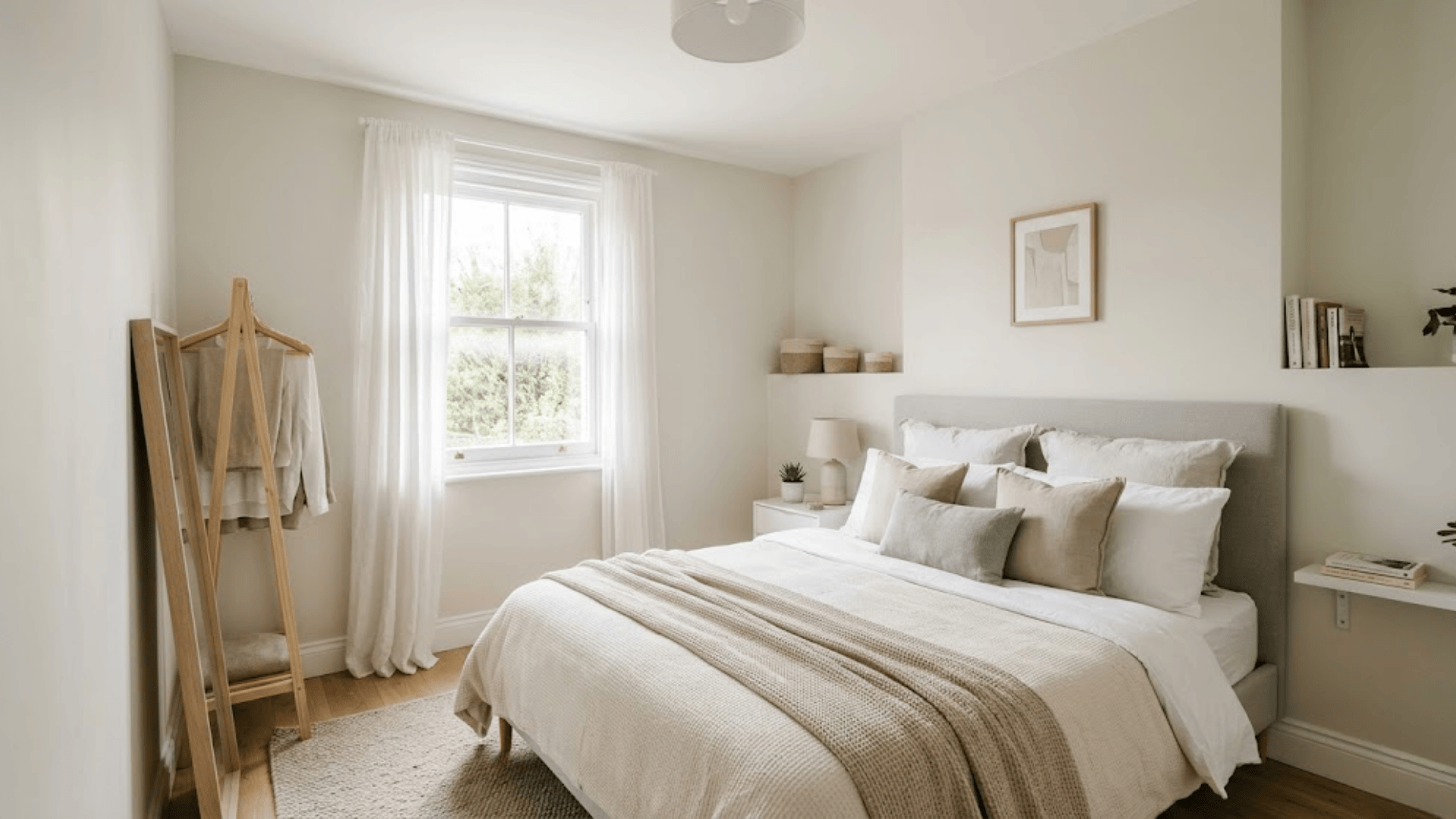
Light colors are your best friend when decorating a small bedroom. Soft whites, warm creams, pale blues, and gentle greiges reflect natural light back into the room, making walls feel like they are pushing outward rather than closing in.
These shades create a calm, airy look that works with any decor style.
Even modest natural light feels amplified when every surface around it is working to bounce that brightness deeper into the space.
Best for: North-facing or low-light bedrooms that need every bit of reflected brightness they can get, as well as rooms that need a versatile base color that works with virtually any bedding or furniture choice.
Pro tip: Use the same light color on the ceiling to blur the boundary between wall and ceiling completely this subtle trick makes the room feel noticeably taller and more open without changing a single piece of furniture.
6. Try Color Drenching for a Cozy Feel
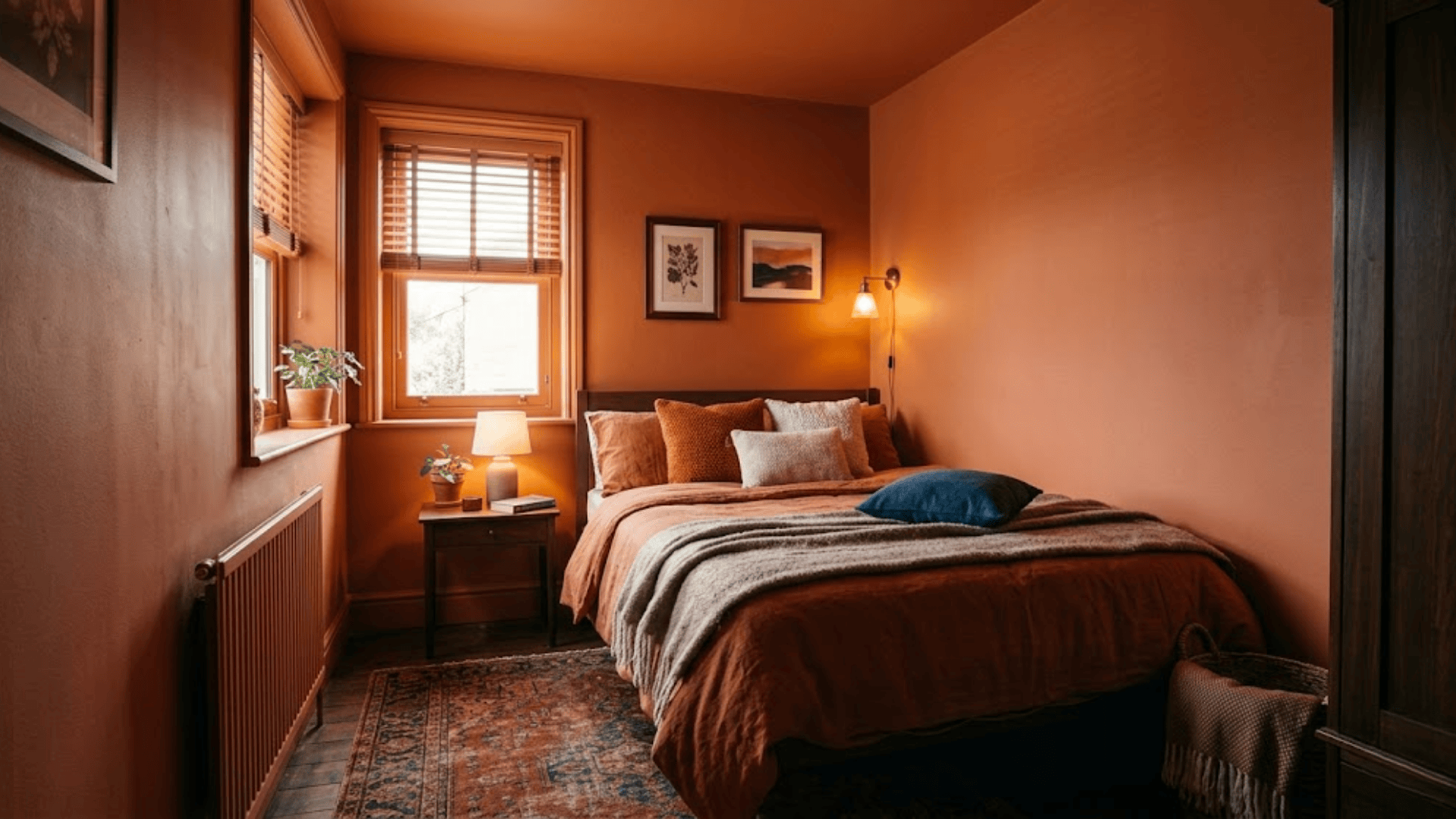
Color drenching means coating walls, ceiling, and even trim in the exact same shade, and it works surprisingly well in small bedrooms.
It creates one space that feels calm, cozy, and well-planned.
Earthy terracottas, dusty pinks, and sage greens are popular choices right now because they are warm enough to feel enveloping without tipping into darkness.
The result is a room that looks deliberately designed rather than a piece-by-piece decoration over time.
Best for: Bedrooms where a bold, magazine-worthy look is the goal without adding any extra furniture, decor, or architectural detail to achieve it.
Pro tip: Use a matte finish paint for color drenching since it absorbs light evenly across every surface and makes the monochromatic effect look far more intentional and high-end than eggshell or satin finishes ever would.
7. Add a Single Accent Wall
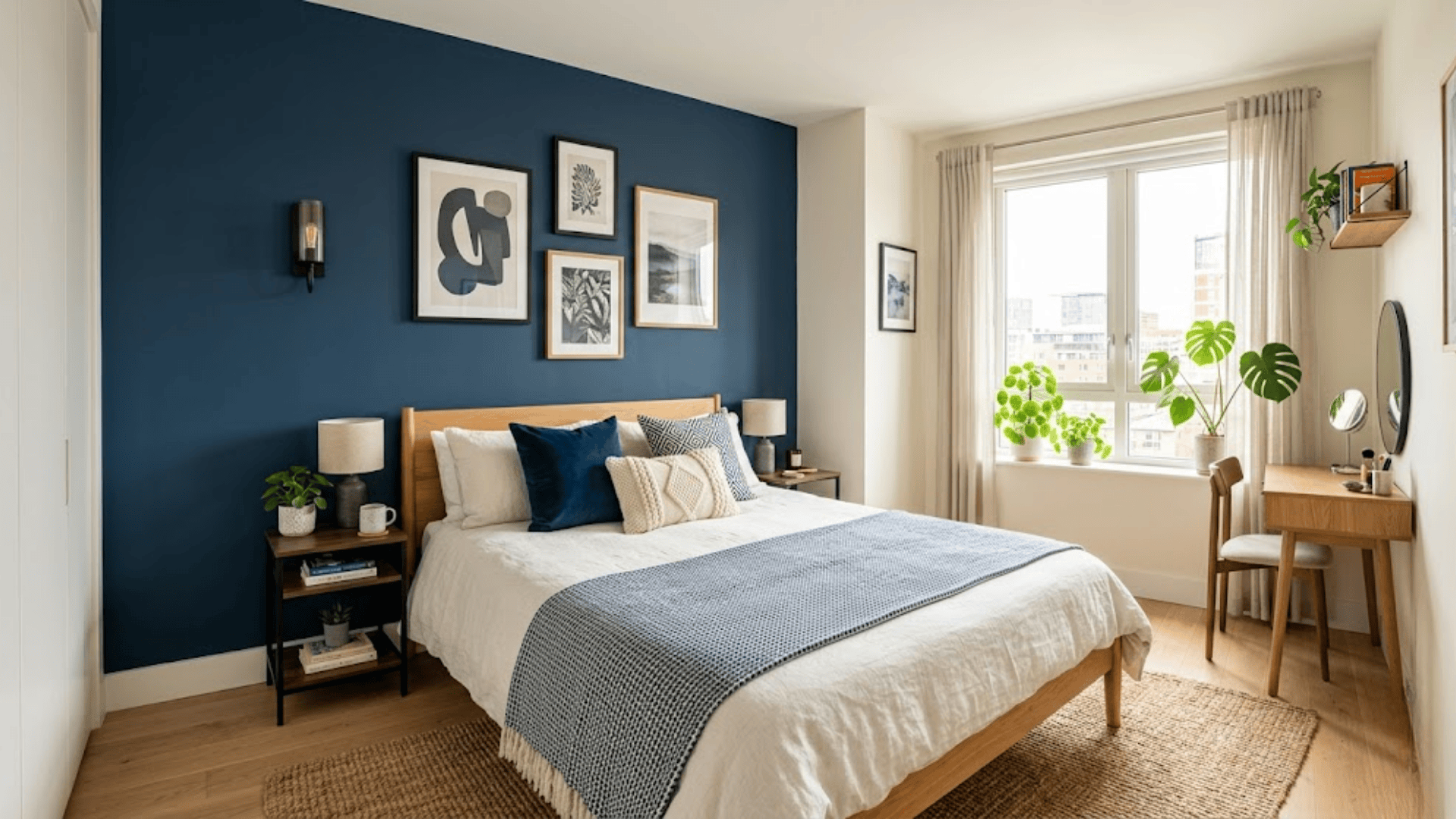
Choose the wall behind the bed and paint it a deeper shade to create a focal point that adds depth and personality without making the room feel smaller.
Keep the other walls light and neutral so the accent wall stands out without overwhelming the space.
Even a single bold wall can change a plain, forgettable bedroom into something that feels considered, layered, and intentionally designed from the ground up.
Best for: People who want to add personality and visual interest to a small bedroom but are not ready to commit to an all-over color change across every surface.
Pro tip: Wallpaper on a single accent wall adds far more visual texture and interest than paint alone and does not require repainting or priming if the style is changed later down the line.
8. Hang Your Curtains High and Wide
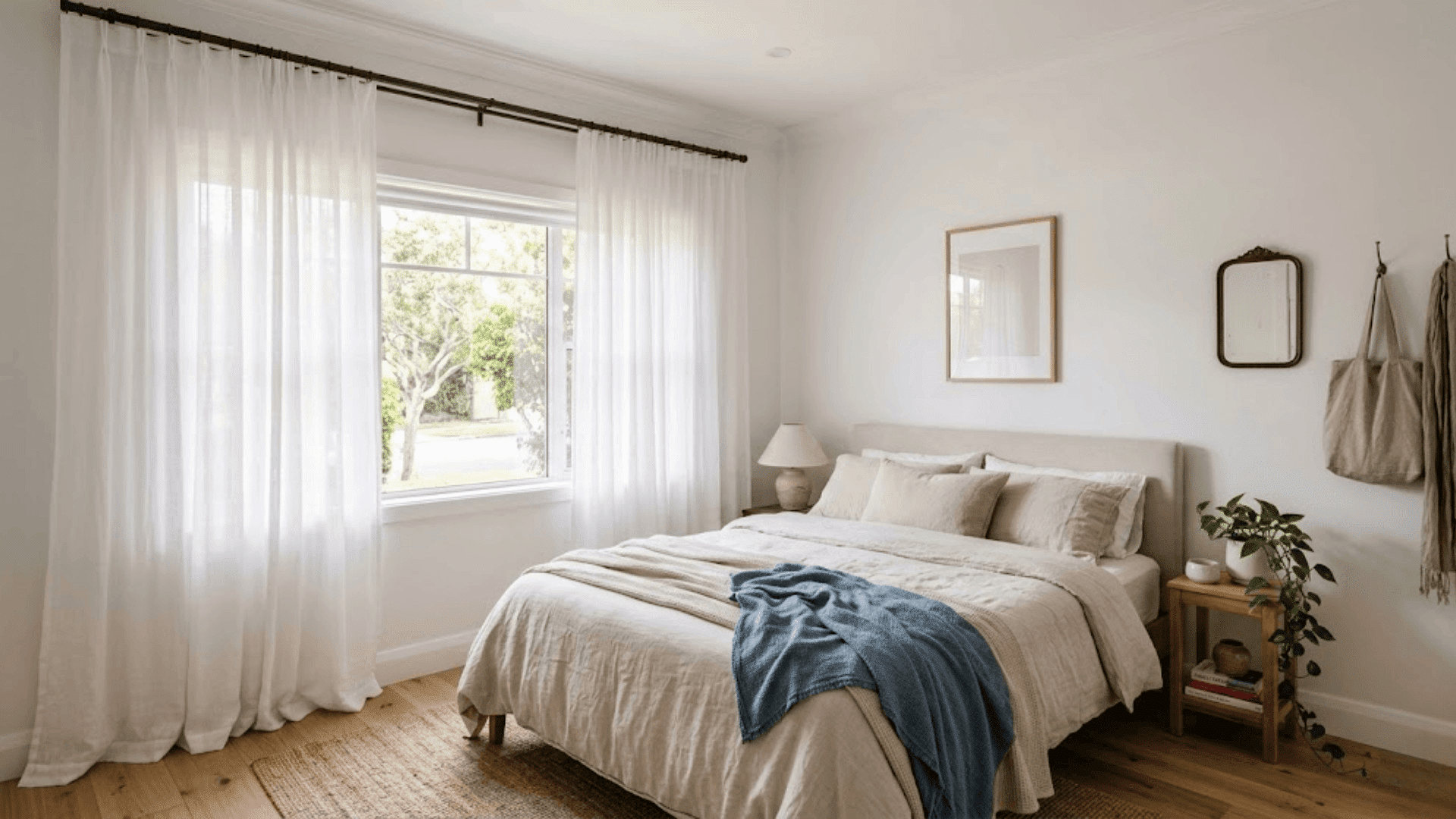
Mount the curtain rod near the ceiling and extend it beyond the window frame on both sides.
When curtains hang this way, the windows appear much larger than they actually are, and the ceiling reads as noticeably taller without any structural changes to the room.
Choose light, flowing fabrics in neutral tones to keep the overall look soft and airy rather than heavy or dramatic.
This single styling decision changes the entire perceived proportion of a small bedroom more than almost any other simple fix.
Best for: Bedrooms with small or average-sized windows that need to feel grander, more open, and better connected to the natural light coming in from outside.
Pro tip: Linen or cotton curtains in off-white or warm ivory catch natural light beautifully throughout the day and never go out of style in a small bedroom, regardless of how the rest of the decor evolves over time.
9. Place a Large Mirror Opposite a Window
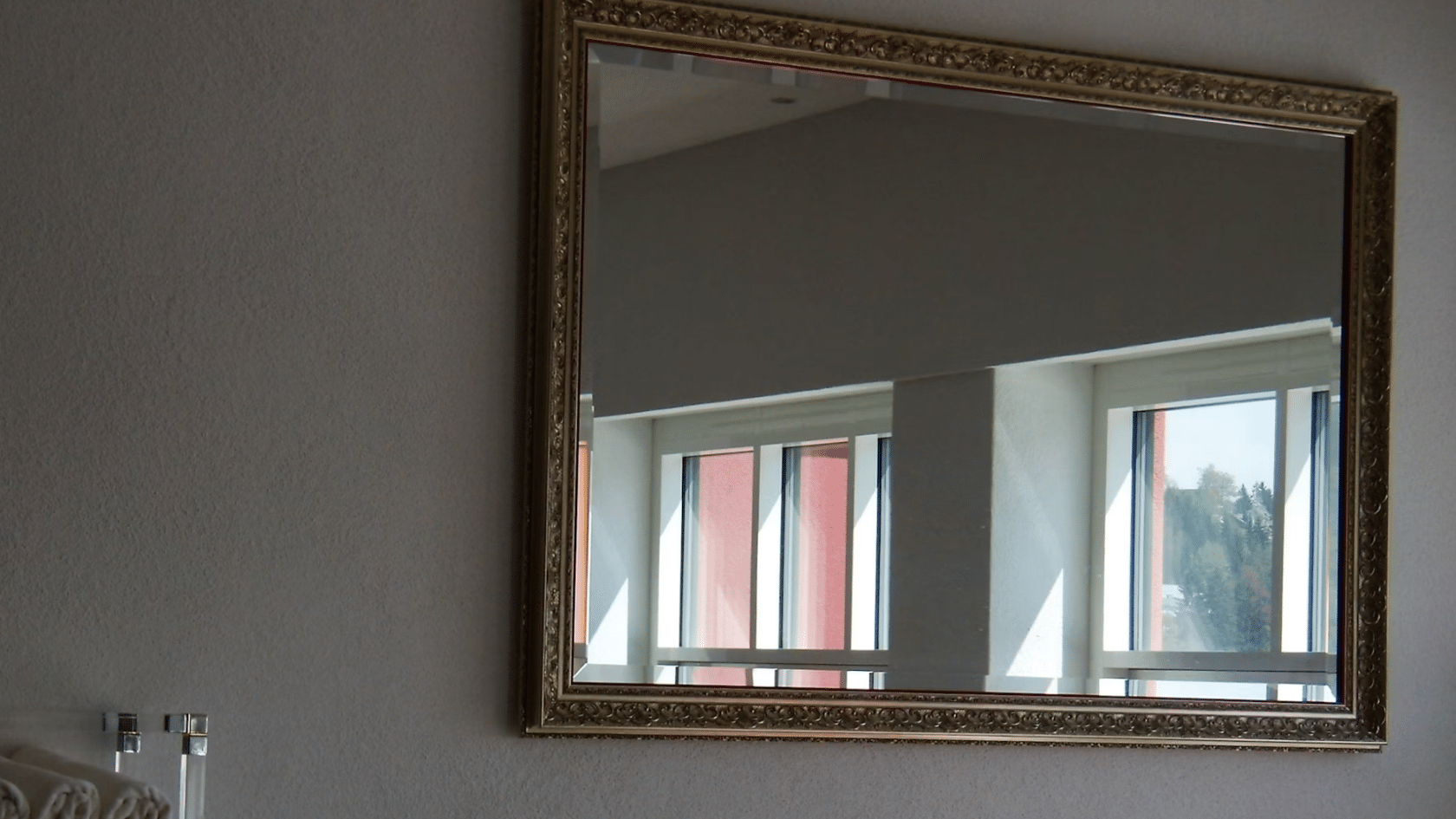
A large mirror reflects natural light and helps make the room feel bigger and brighter. The room instantly feels brighter and more open without any structural changes or major investment.
A leaning floor mirror works beautifully for this purpose and can be repositioned anytime the layout changes.
Even a modestly sized mirror in the right spot makes a measurable difference in how spacious a small bedroom feels throughout the day.
Best for: Dark or windowless-feeling bedrooms that need more light and perceived depth, as well as any small space where natural light is limited to just one wall or corner.
Pro tip: Avoid placing a mirror directly facing the bed if nighttime reflections feel unsettling, an adjacent wall placement reflects just as much light and achieves the same spatial effect without any of the discomfort.
10. Invest in Mirrored Furniture
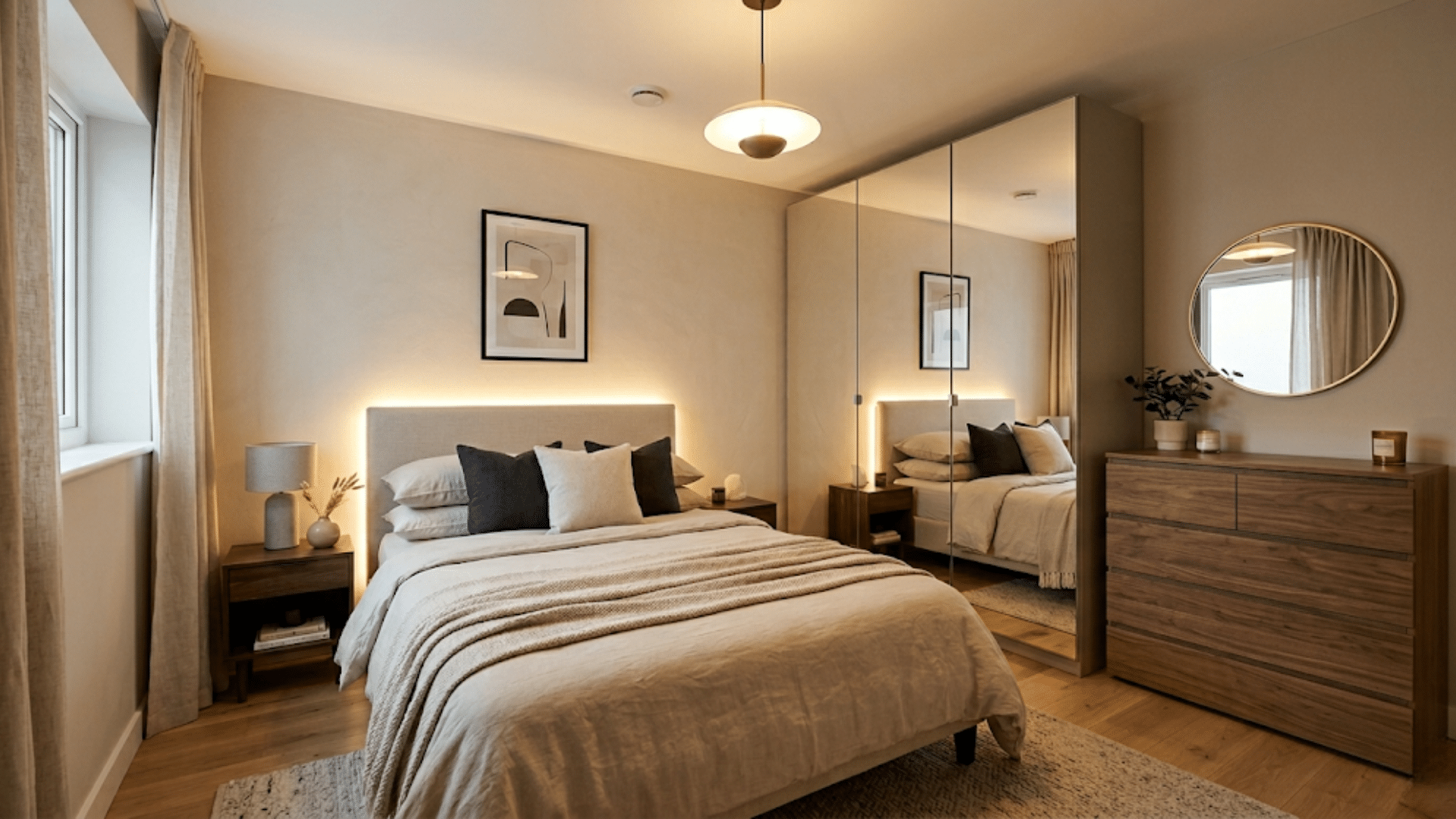
A mirrored wardrobe or dresser front reflects the room back on itself, creating a convincing illusion of depth that makes the space feel far more generously sized than it actually is.
It also works as a full-length dressing mirror without taking up extra floor space.
The reflective surface works especially well in bedrooms that do not receive a lot of natural light, bouncing whatever artificial light is present back across the room continuously throughout the day and evening.
Best for: Small bedrooms with limited natural light that rely on artificial lighting to stay bright and open.
Pro tip: Keep mirrored furniture fingerprint-free with a microfiber cloth and a small amount of glass cleaner applied regularly so the reflective effect stays crisp, clear, and fully effective.
11. Use a Headboard to Define the Bed Zone
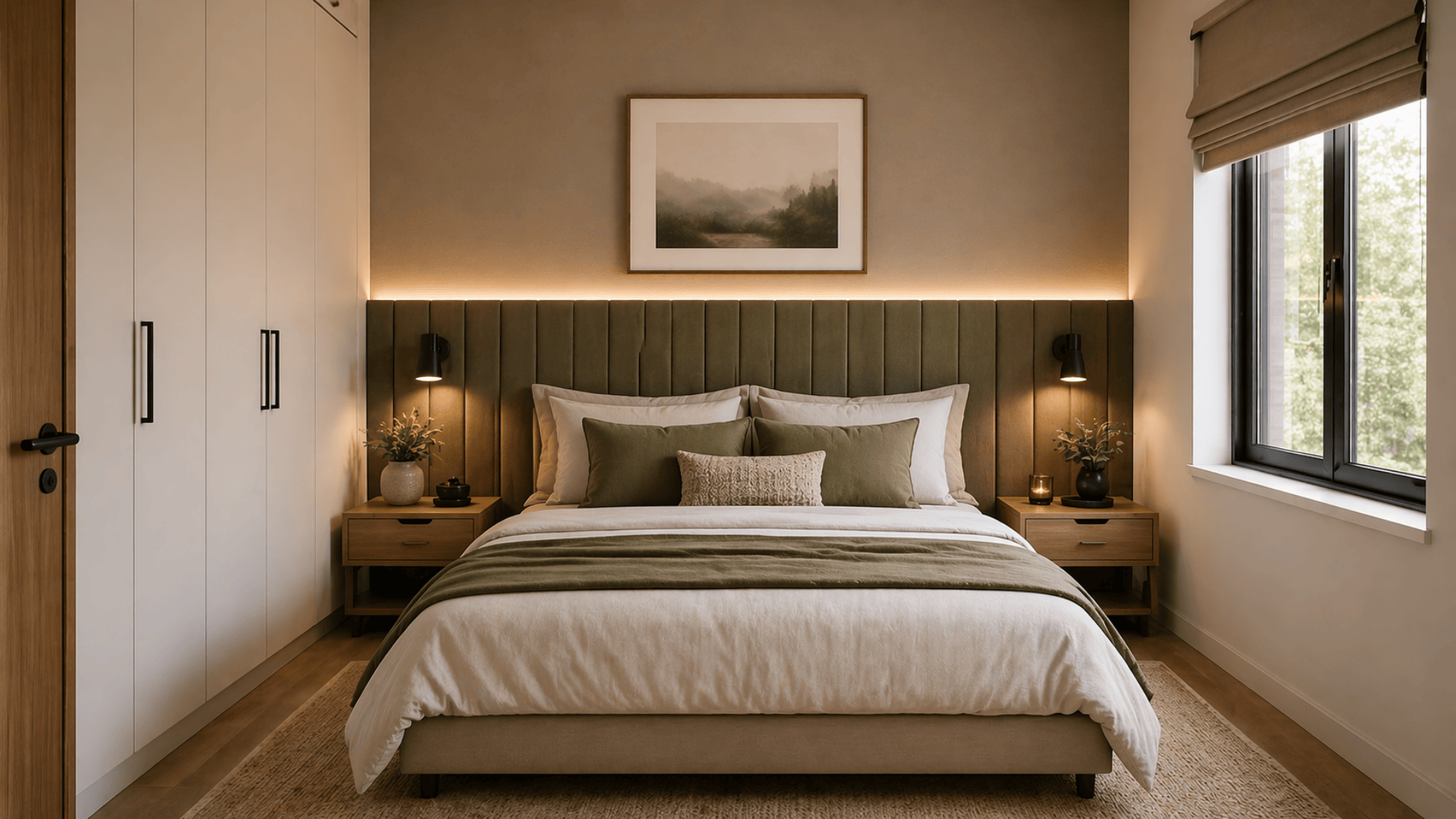
A headboard acts as an anchor that gives your bed area a genuine sense of structure and definition that a bare wall simply cannot provide on its own.
It draws your eye to a central focal point and makes your room feel intentionally designed rather than randomly assembled over time.
A tall headboard creates the illusion of higher ceilings, making a small bedroom feel more spacious.
Best for: Bedrooms that feel unfinished or randomly put together and desperately need one strong focal point to anchor the entire room and give it a sense of deliberate, considered design.
Pro tip: A DIY fabric headboard made from plywood and batting costs very little to put together yourself and delivers exactly the same visual impact.
12. Swap Table Lamps for Wall Sconces
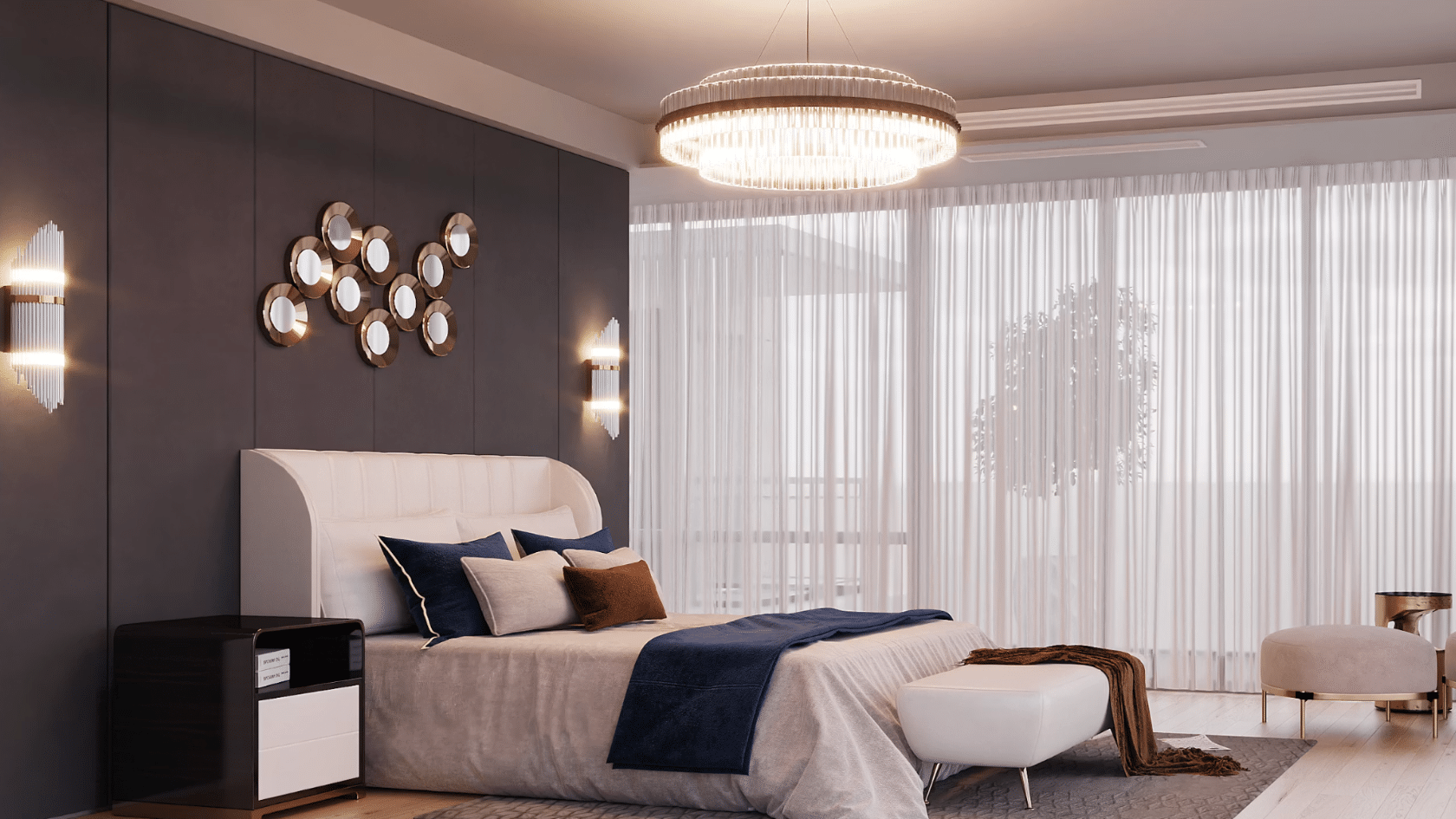
Replacing bedside table lamps with wall-mounted sconces is a simple switch that frees up surface space on the nightstand immediately and makes the entire bedroom feel more deliberately designed.
Sconces deliver the same warm, functional reading light without consuming any floor or table real estate whatsoever.
They also add a polished, architectural quality to the wall that a standard table lamp sitting on a surface simply cannot replicate.
Best for: Tiny nightstands or floating shelves that do not have enough surface space for a full lamp base while still leaving room for a phone, glass of water, or book.
Pro tip: Choose sconces with a swing arm so the light can be angled precisely toward a book or screen without disturbing a partner sleeping beside you a functional detail that makes a significant difference in everyday use.
13. Use Under-Bed Storage Strategically
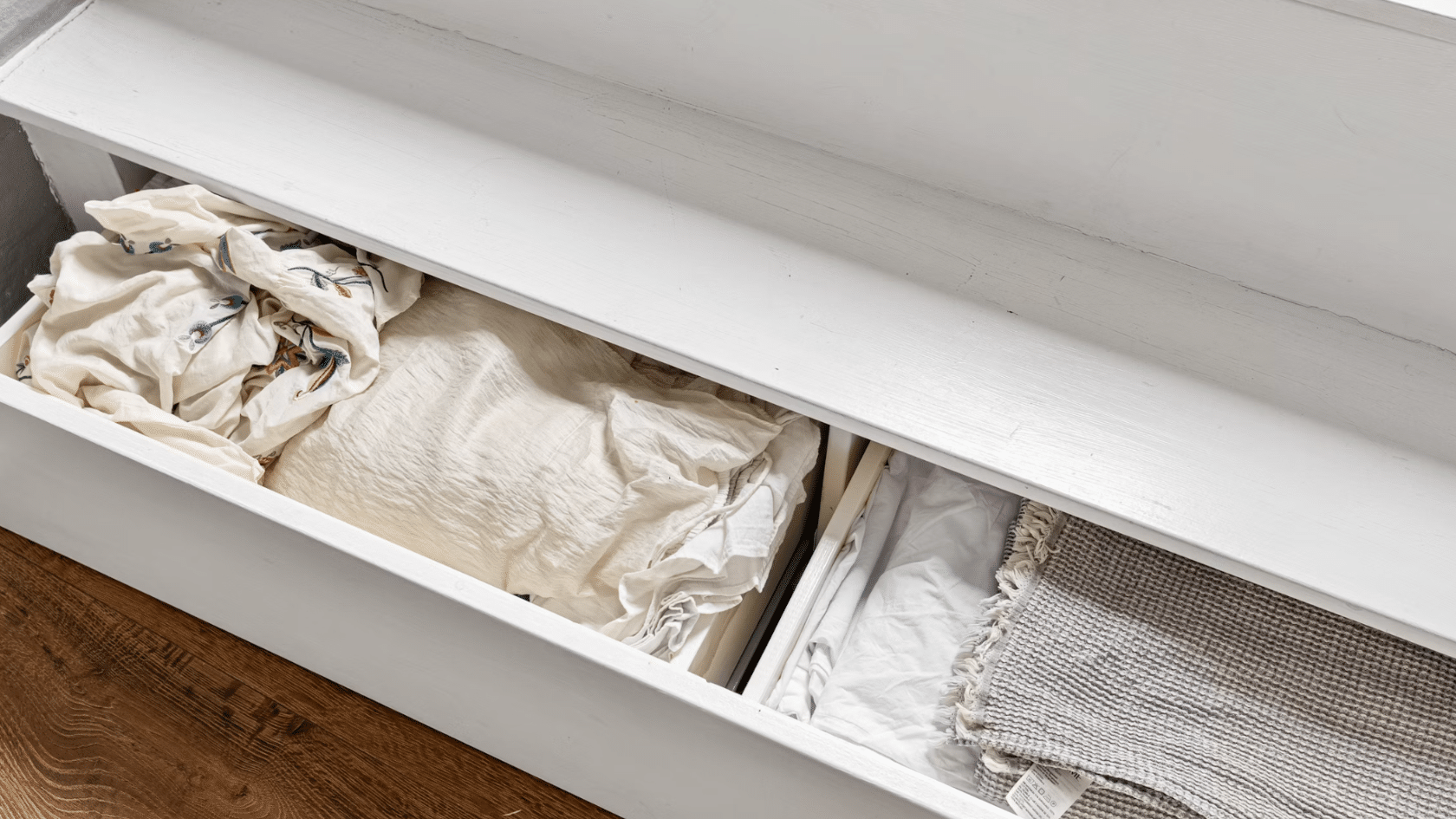
Shallow drawers, vacuum bags, and under-bed boxes turn the space beneath the bed into useful storage without adding clutter.
This area is one of the most consistently underused spaces in a small bedroom, and treating it as intentional storage rather than dead space makes an immediate difference in how organized the entire room feels.
Choose storage with lids or fabric covers to keep the area neat and organized.
Best for: Bedrooms with no closet at all or very limited wardrobe space that cannot accommodate off-season clothing, extra bedding, or bulky items anywhere else in the room.
Pro tip: Label each under-bed container clearly on the side facing outward so nothing has to be pulled out and searched through every time one specific item is needed during a rushed morning routine.
14. Use a Pegboard for Wall Storage
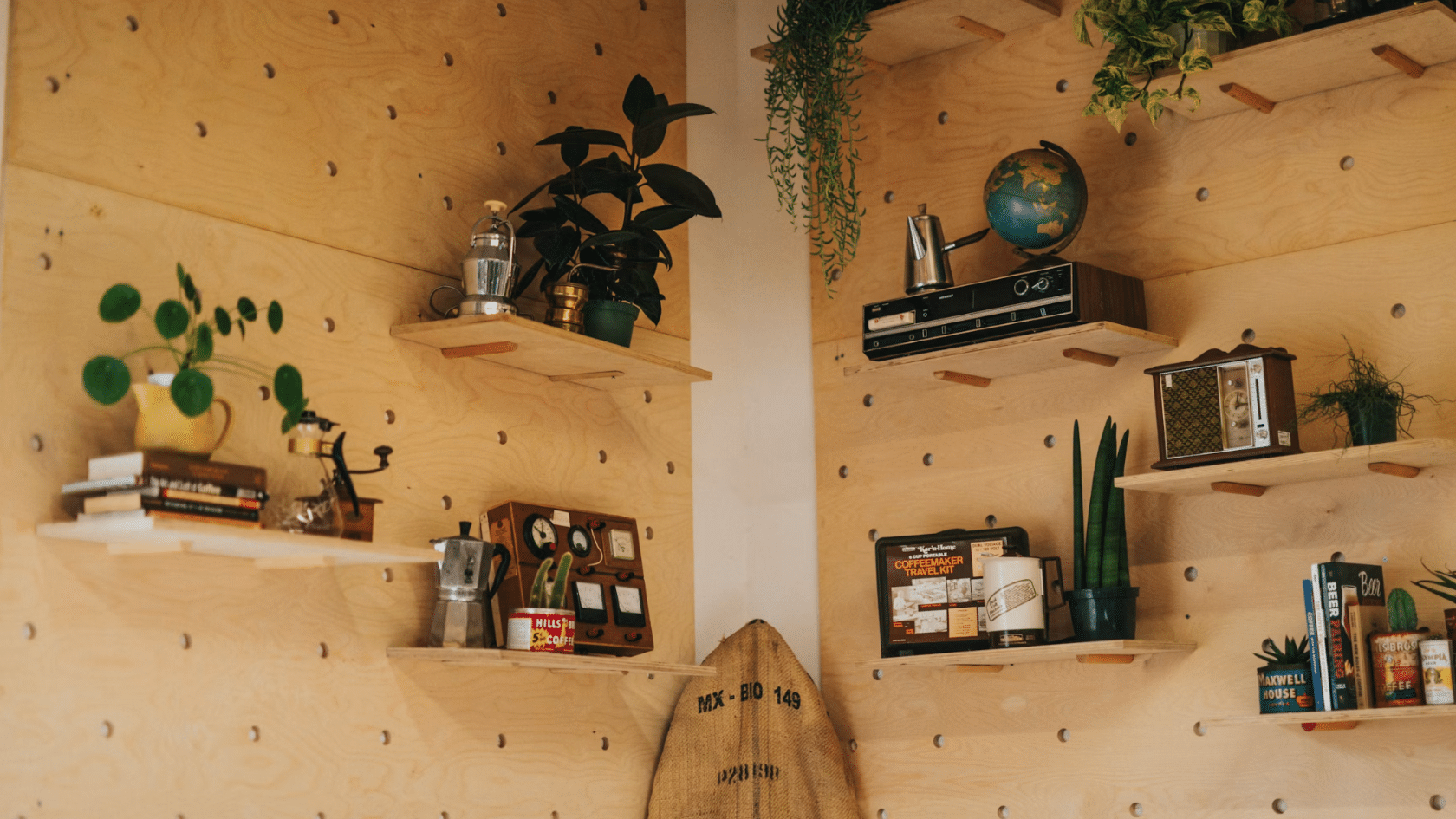
A pegboard mounted on one wall turns vertical surface area into functional storage for accessories, bags, jewelry, small baskets, and even trailing plants that would otherwise clutter your shelves and surfaces.
When styled well, a pegboard becomes a decorative focal point instead of just a utility board.
Paint it the same color as the wall for a built-in look. It keeps daily essentials visible and organized without taking up floor space.
Best for: Creative and fashion-forward people who want their accessories on display rather than buried in a drawer where they are forgotten and never actually worn or used on a daily basis.
Pro tip: Arrange your pegboard items by color or category so the whole display looks curated and intentional rather than like a random jumble of things that were simply hung up wherever there happened to be a free hook.
15. Use Sheer Curtains to Maximize Natural Light
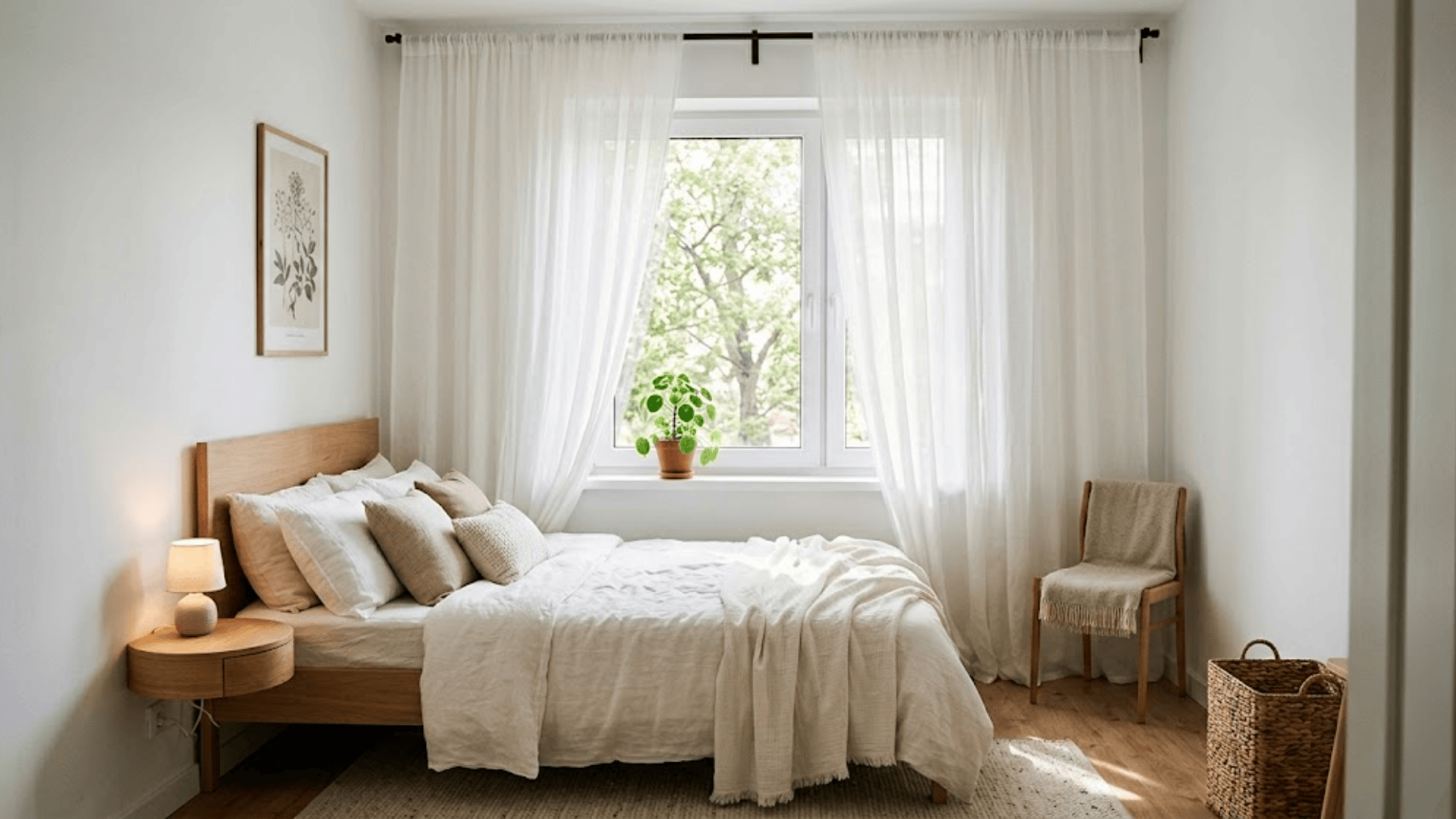
Swapping heavy curtains for sheer or semi-sheer panels lets sunlight filter softly into the room while still maintaining a comfortable level of privacy throughout the day.
Sheer curtains soften natural light, making a small bedroom feel brighter, lighter, and more open.
It is one of the easiest and most affordable upgrades that delivers an immediate and noticeable difference in how the entire room feels.
Best for: Bedrooms that face a garden, courtyard, or quiet street where privacy is less of a pressing concern during daytime hours and maximizing the quality of natural light entering the room is the primary goal.
16. Add the Vintage Map Wall
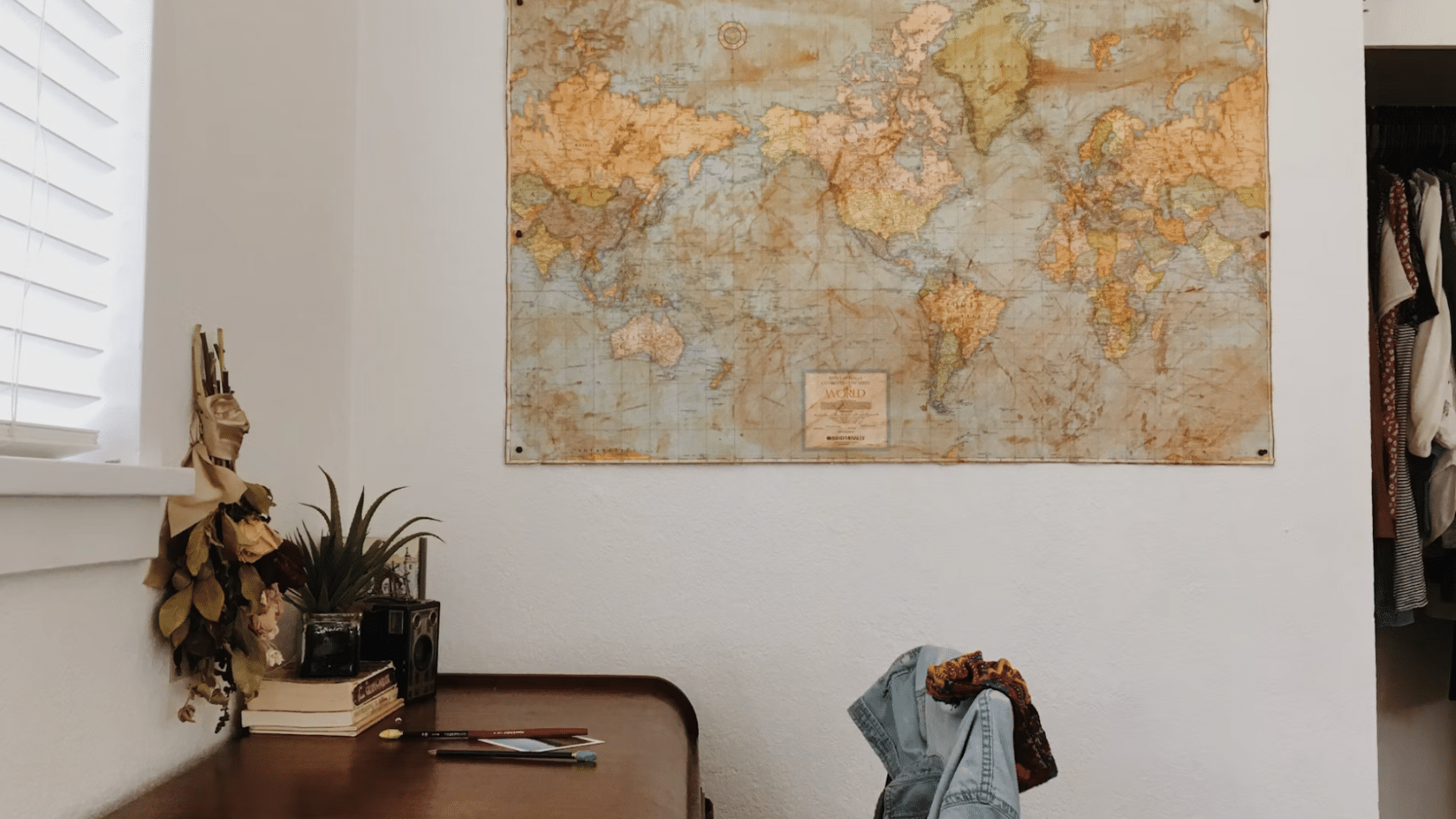
Cover one full wall with large vintage or antique-style maps to give a small bedroom a rich, layered focal point that tricks the eye into seeing more space.
The intricate detail and muted tones of old cartography fill the wall visually without making it feel heavy or closed in.
Arrange map prints side by side for a wallpaper look, or hang one large map behind the bed as a statement piece.
Best for: Small bedrooms that lack architectural interest or anyone who wants a bold accent wall without committing to permanent wallpaper or paint.
Pro tip: Print your maps at a local print shop on matte poster paper in the largest size available and mount them flush with removable adhesive strips.
17. Choose a Slim-Profile Bed Frame
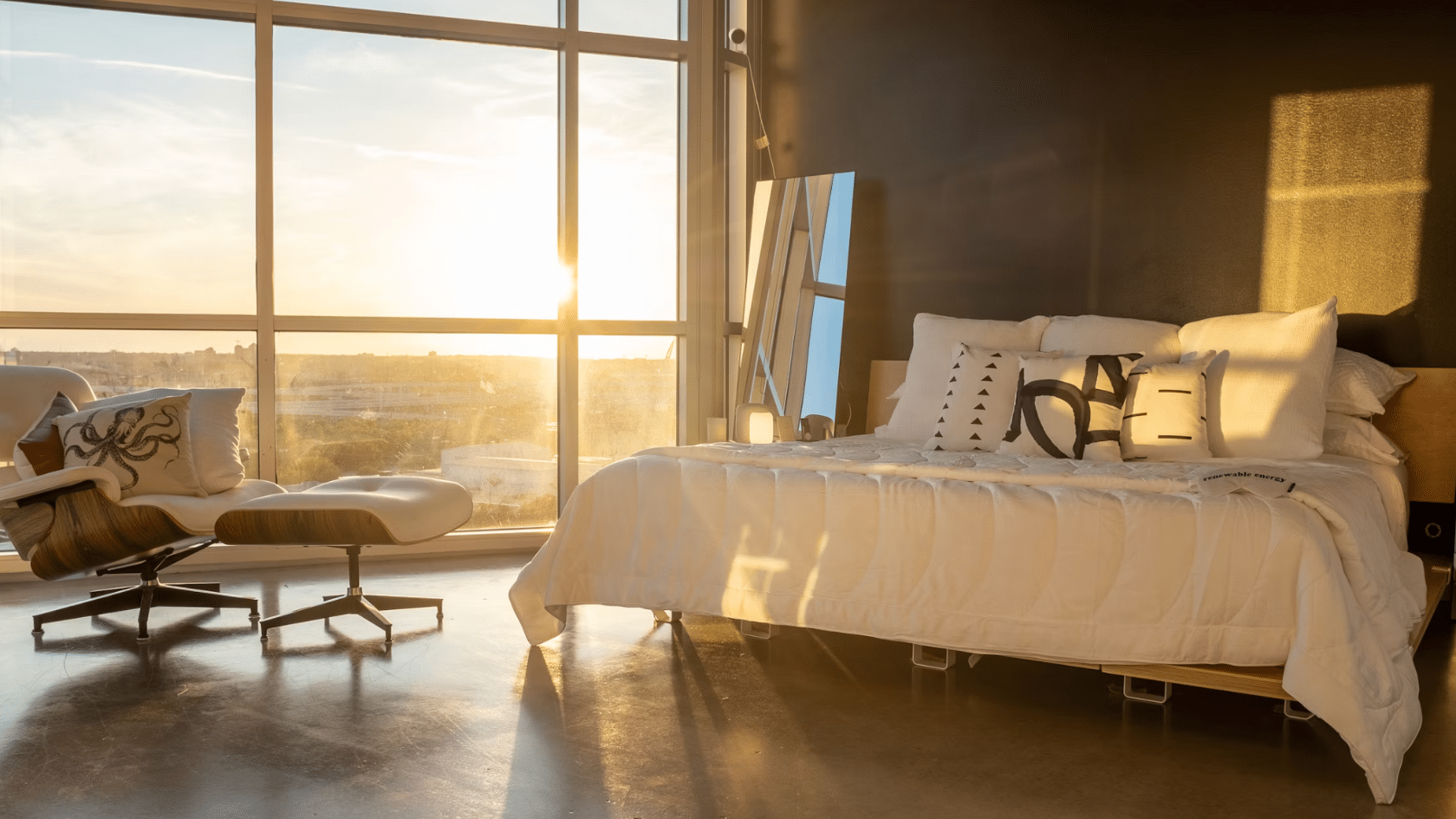
A slim-profile frame with clean lines and a low footprint keeps your bedroom feeling light and open rather than heavy and enclosed.
Platform beds sit low to the ground, making ceilings feel higher and small bedrooms seem more spacious.
Getting your bed frame right is one of the foundational decisions that everything else in your room builds around visually.
Best for: Modern and minimalist bedroom styles where visual lightness is your primary design goal, and you want every piece of furniture to feel like it belongs rather than crowd.
18. Add a Bedside Tray, Candle, or Small Plant
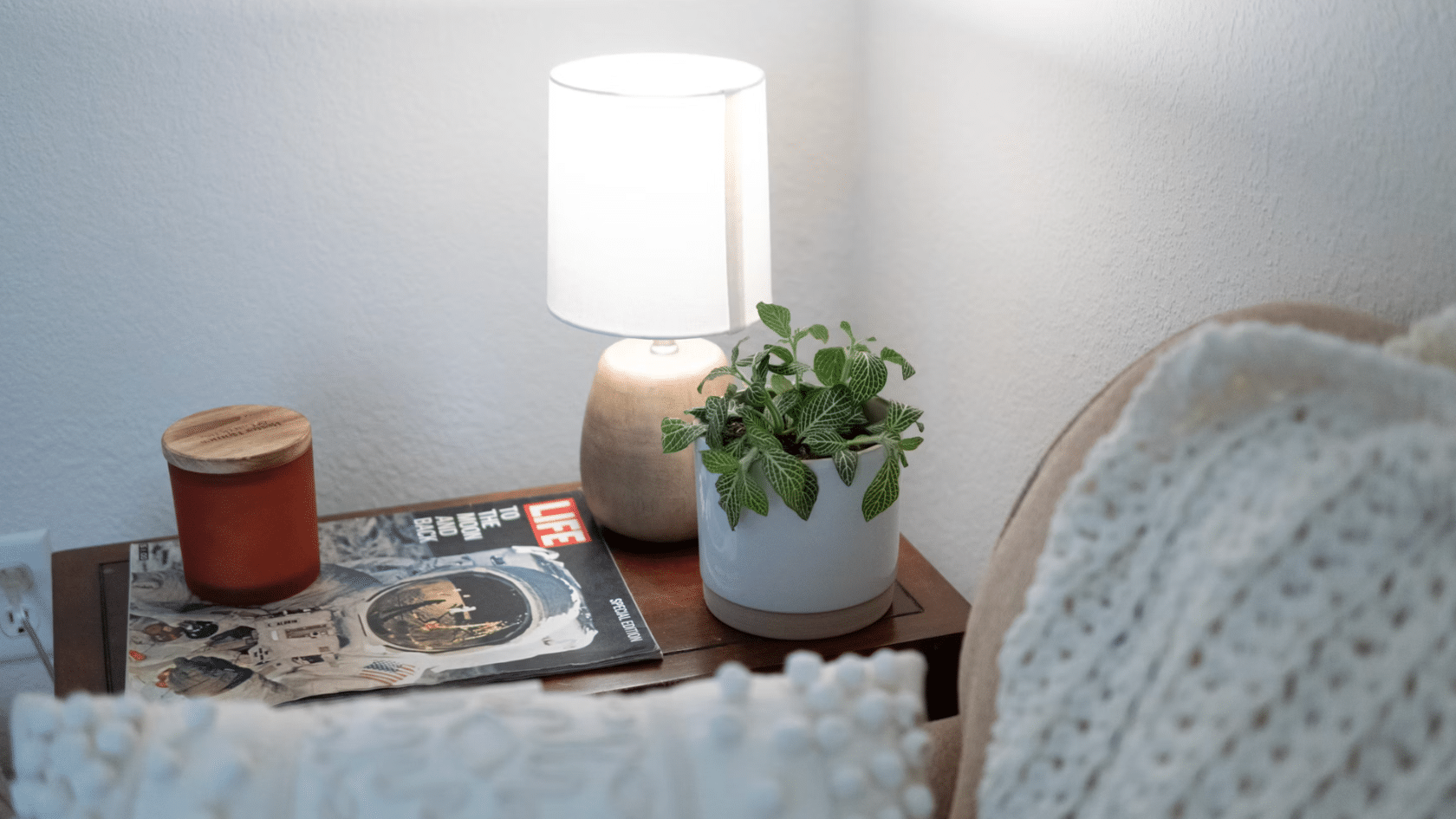
A small tray on the nightstand corrals loose items like a phone, lip balm, or a hair tie so every surface looks deliberately styled rather than casually cluttered at the end of a long day.
A single candle or a tiny succulent placed nearby adds warmth and life without demanding much space or attention.
These micro-details are what make a bedroom feel genuinely finished and considered rather than simply furnished and functional.
Thoughtfully styled surfaces make the whole room feel well-planned.
Best for: People who feel like their bedroom is almost there but still missing that final polished and put-together quality that separates a room that looks lived-in from one that looks genuinely designed.
19. Use Vertical Stripes to Add Height
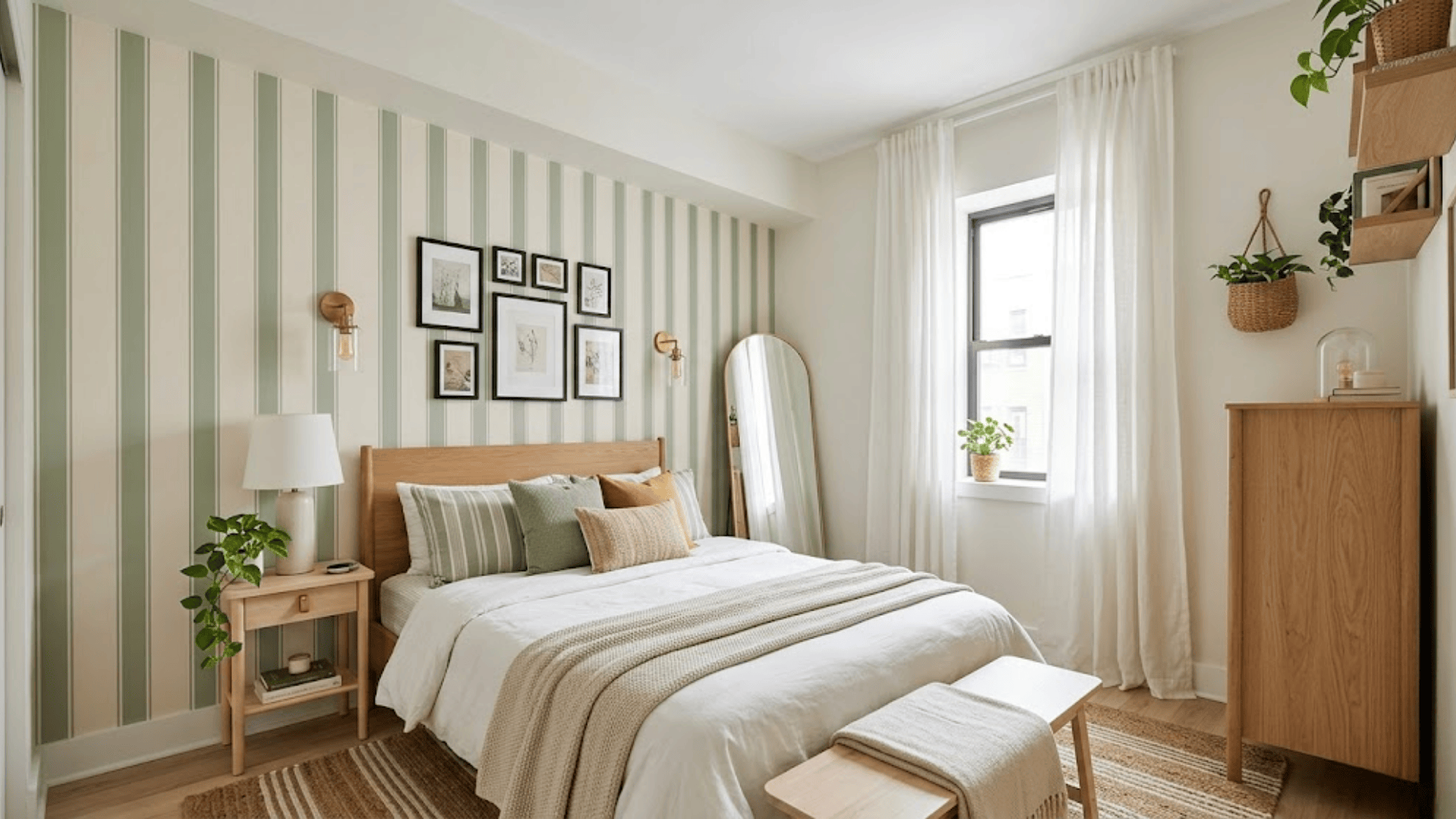
Vertical stripes make your low ceiling feel taller, and your room feel longer without touching a single structural element.
You can bring this effect in through striped wallpaper, striped bedding, striped curtains, or a painted stripe treatment directly on your wall, depending on how committed you want to be to the pattern.
Keep stripes narrow and colors subtle for a clean, balanced look in a small space.
Best for: Bedrooms with low or standard-height ceilings where you need a visual lift without making any structural changes or investing in expensive architectural alterations to achieve it.
Pro tip: I find that applying vertical stripes to just the headboard wall gives you the full height-enhancing effect you are looking for without requiring you to commit to the pattern across every wall in your entire bedroom.
20. Introduce Arch-Shaped Decor Elements
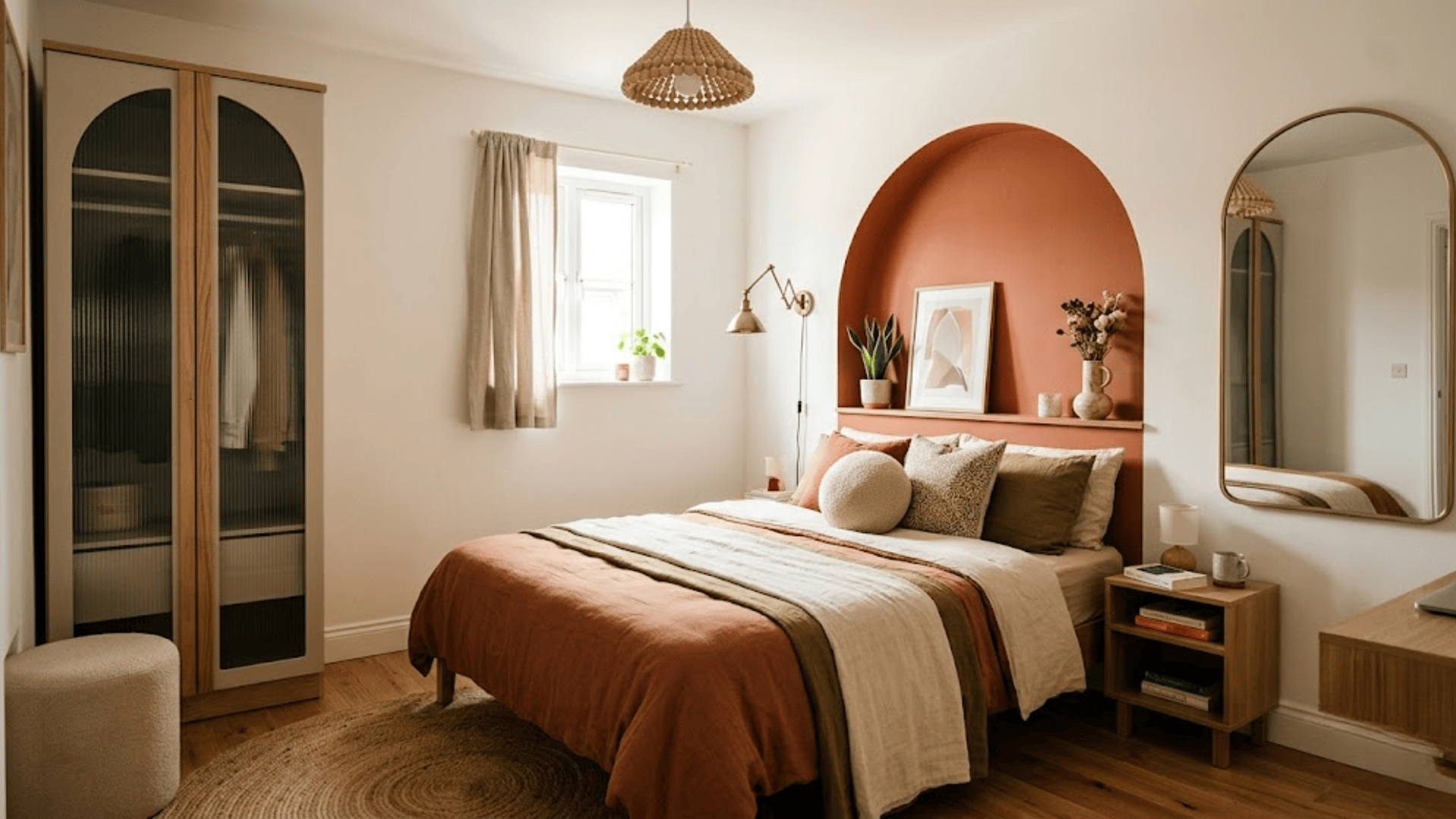
Arched mirrors, arch-topped headboards, curved shelving, and arched wall decals are having a major design moment and work beautifully in small bedrooms.
The arch shape is softer and more organic than straight lines, adding visual interest without the hard geometry that can make compact rooms feel rigid.
A single arch-shaped mirror or headboard can define the entire design direction of the room.
Best for: Bedrooms styled in Mediterranean, Moroccan, or soft contemporary aesthetics.
Pro Tip: If adding multiple arch elements, vary the scale one large arch and one small arch reads as intentional layering rather than a repetitive pattern.
21. Match Your Bedding to Your Wall Color
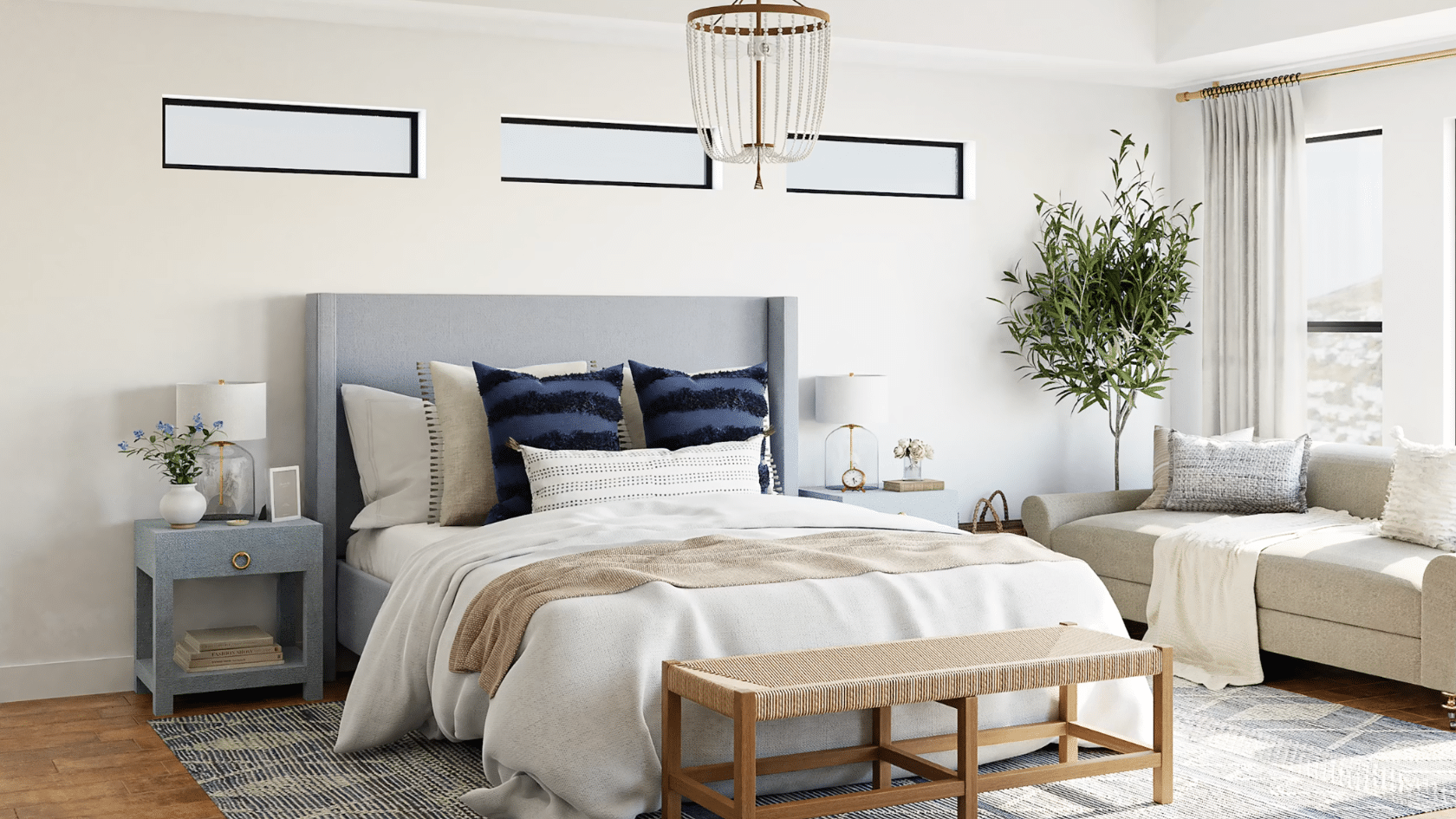
When your bed blends harmoniously with the walls behind it, your space feels unified and expansive rather than fragmented and busy.
You do not need an exact match. Similar shades or complementary colors create the same cohesive look with little effort.
I consider this one of the easiest ways to make a big difference without buying new furniture or decor.
Best for: People who want a genuinely designer-looking bedroom without hiring an actual interior designer or making any significant financial investment in new pieces to pull the whole room together.
Pro tip: Try tone-on-tone layering by mixing different textures within the same color family across your bedding, cushions, and wall color.
Common Mistakes to Avoid
Small mistakes can make a small bedroom feel even tighter and cluttered. Avoiding these helps your space feel open, clean, and easy to use.
- Using Too Many Dark Colors: Dark shades can make the room feel smaller and heavier, so balance them with light tones.
- Overcrowding Furniture: Too many pieces reduce movement space and make the room feel packed.
- Ignoring Storage: Lack of storage leads to clutter, which quickly takes over a small room.
- Blocking Natural Light: Placing furniture in front of windows can make the space feel dull and closed.
- Adding Too Many Decor Items: Too many decorations create visual clutter and make the room feel busy.
- Choosing Oversized Furniture: Large beds or bulky wardrobes can take up too much space and limit movement.
- Ignoring Vertical Space: Not using wall space for shelves or storage misses a chance to free up the floor area.
Conclusion
I hope this guide has shown you that a small bedroom is not something to work around. It is something to work with.
When you know how to decorate a small bedroom the right way, even the tiniest space can feel calm, stylish, and completely your own.
A well-decorated small space feels better than a cluttered large one. You do not need to change everything at once.
Pick one idea from this list today, whether it is clearing your nightstand, hanging your curtains higher, or adding a mirror, and start there. Small changes build up faster than you think.
If you found these small bedroom ideas helpful, share this post with someone who could use a little bedroom inspiration right now.
Frequently Asked Questions
How to Make a Small Bedroom Feel Less Claustrophobic?
Removing unnecessary furniture, switching to lighter wall colors, and maximizing natural light are the most effective ways to make a small bedroom feel open and breathable.
What Flooring Works Best for a Small Bedroom?
Light-colored flooring like pale wood, light laminate, or neutral carpet reflects light and makes the floor area appear larger than it actually is.
Should Wallpaper be Used in a Small Bedroom?
Wallpaper works well in a small bedroom when limited to one accent wall using subtle patterns like thin vertical stripes or soft botanical prints.
What Window Treatments Work Best for a Small Bedroom?
Sheer or semi-sheer curtains in a light neutral color hung from ceiling height allow maximum natural light while keeping the window area visually clean and uncluttered.