

Getting a real estate license looks simple at first. I used to think it was just a matter of taking a class, passing a test, and starting a new career.
Then I learned there are deadlines, paperwork, background checks, and state rules that can slow you down if you miss a step. Every state follows its own process, so small details matter more than most people expect.
Knowing what comes first and what to prepare for can save time, money, and frustration. A little planning now makes the entire licensing process much easier and helps you start your real estate career with confidence.
What Is a Real Estate License and Who Grants It?
A real estate license is a state-issued permission to legally represent buyers and sellers in property transactions.
There is no federal license. Every state runs its own licensing program, sets its own requirements, and issues its own credential, which is why the process looks different depending on where you plan to work.
There are two types: salesperson and broker. If you’re just getting started, you’re almost certainly going for the salesperson license. That’s what we’re walking through here.
One thing worth knowing early: some states recognize licenses issued by other states. That’s called reciprocity, and it’s not a universal shortcut; it depends entirely on your specific states and whether they agree with each other.
Do You Qualify? Baseline Eligibility Requirements
Before you sign up for a single class, check that you meet the basics. Here’s what most states require:
| Requirement | Details |
|---|---|
| Age | At least 18 in most states, 19 in some |
| Work authorization | Must be legally authorized to work in the US |
| Education | High school diploma or GED equivalent |
| Background check | Required in all states, timing varies |
The background check catches people off guard. In several states, you submit fingerprints before coursework begins, not after your exam. Undisclosed prior convictions are the most common reason applications get denied.
If you have a felony on your record, file a fitness determination petition first. That’s a formal request for the state to rule on your eligibility before you spend anything.
How the Licensing Process Works, Step by Step
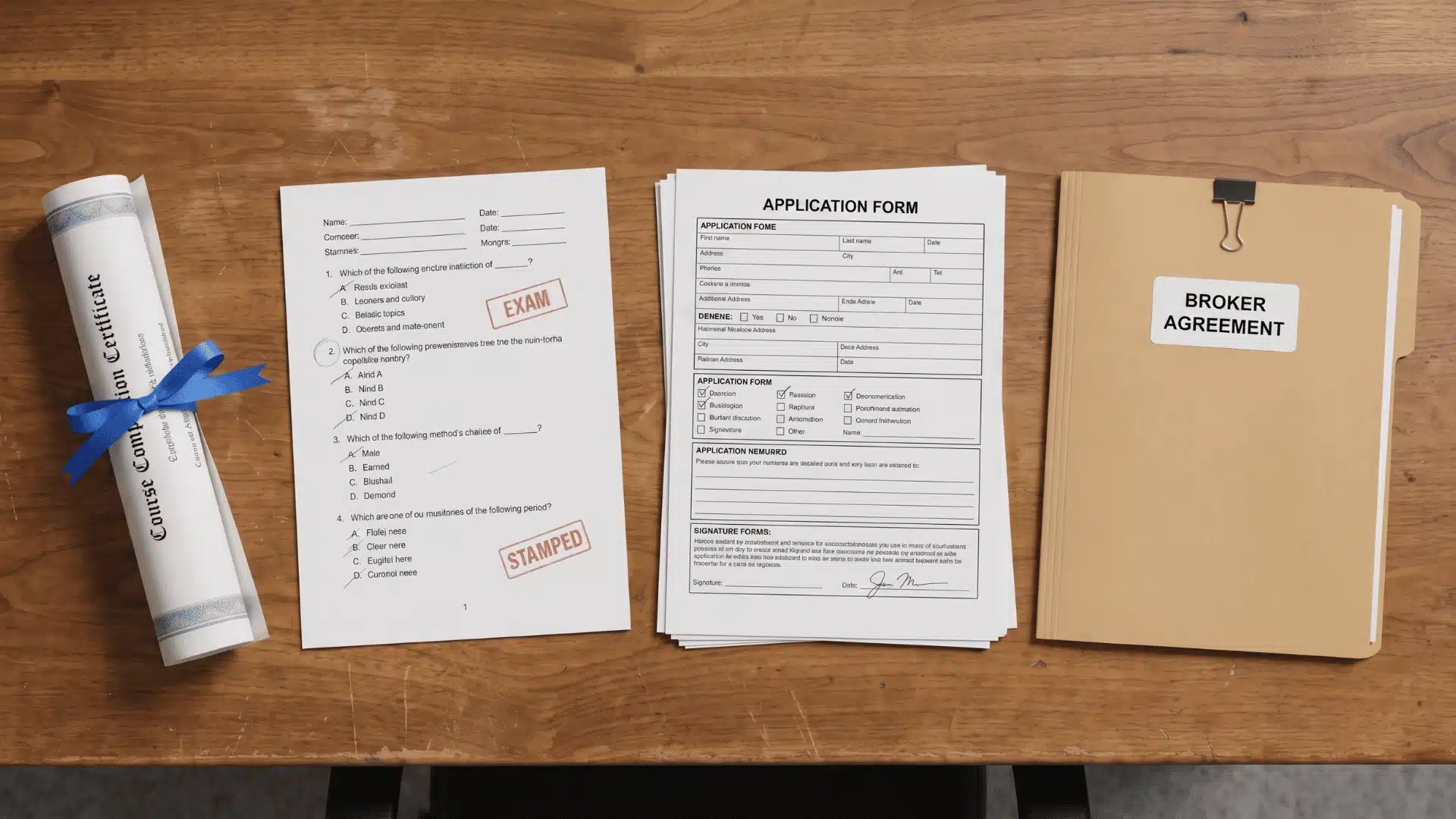
Getting a real estate license means completing steps in a fixed order. Every state controls its own process, but the sequence itself doesn’t change; you can’t skip ahead or reorder it. Here’s how it works from start to finish.
1. Complete Your Pre-Licensing Education
Before you can sit for the exam, you need to finish a state-approved pre-licensing course. The required hours vary by state, ranging from 40 to nearly 180.
You can study online or in person. Both work, as long as the provider is state-approved. For your state’s exact requirement, go straight to your state real estate commission’s website.
If you’re not sure which agency oversees licensing in your state, you can use the ARELLO to find your state’s real estate regulatory authority. Don’t rely on third-party figures; requirements change.
2. Pass the Licensing Exam
The exam has two parts: a national portion and a state portion. You need to pass both.
The national part covers general real estate principles. The state part covers local laws and rules. If you fail one, most states let you retake just that section, not both.
Check your state’s deadline for passing the exam after finishing your course. Miss that window, and you may have to retake the coursework.
3. Submit Your Application and Background Check
Once you’ve passed the exam, you submit your application and background check materials to the state. That means an application fee and fingerprints.
Fees vary and change over time; treat anything you read online as a rough guide. Verify the current amount directly with your state commission before budgeting.
Processing times differ by state. Some wrap it up in a few weeks; others take longer, so apply the moment you’re eligible.
4. Affiliate With a Sponsoring Broker
Your license doesn’t activate when the state approves it. It only becomes legal once it’s held under a licensed managing broker. Until then, you can’t do a single deal.
Picking a broker isn’t just a formality. Who you sign with affects your commission, your training, and how your early career takes shape.
Take your time with this decision. A broker who actively supports new agents is worth more in year one than a slightly better commission split would be.
Before you commit, look closely at four things:
- Commission split: What percentage of each deal you keep versus what goes to the brokerage. This varies widely; know the number before you sign anything.
- Desk fees: Some brokerages charge monthly fees in addition to a commission. That affects your take-home even on a good month.
- Training and support: Especially important in your first year. A broker who invests in new agents will save you from many costly early mistakes.
- Transaction volume: A busy office means more deals happening around you. That exposure accelerates your learning faster than any course will.
No broker is perfect across all four; decide which ones matter most to you before you start the conversation.
How Long Does It Take and What Does It Cost?
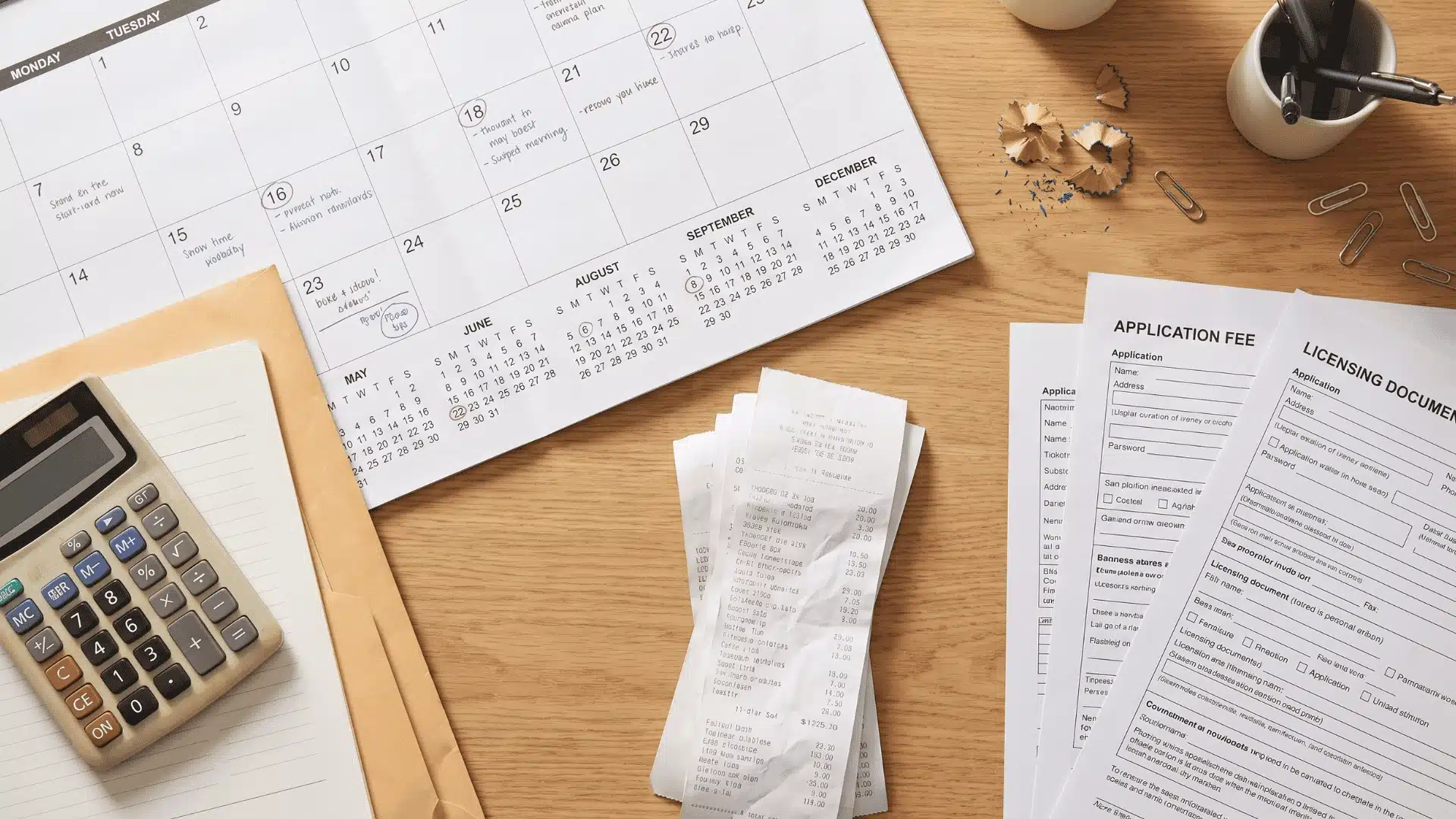
Getting licensed typically takes 2 to 6 months and costs between $300 and $1,500, but both numbers depend heavily on your state.
Time Breakdown
Understanding how long each stage of the real estate licensing process takes helps you plan better and set realistic expectations before starting the process.
| Timeline Type | Expected Duration | Notes |
|---|---|---|
| Full-time study (first attempt) | ~2 months | Only if everything goes smoothly and you pass the exam on the first try |
| Typical timeline | 3 to 4 months | Includes scheduling delays, processing time, and normal life interruptions |
| Higher-hour states | 4+ months | States with longer pre-licensing requirements (e.g., 150–180 hours) |
Most candidates finish within a few months, depending on state rules, study pace, and exam success, so planning ahead helps you stay on track efficiently.
What You’re Actually Paying For
Before getting a real estate license, it helps to understand the main costs involved so you can budget properly and avoid surprises during the process.
- Pre-licensing course fees: Usually the highest single cost. This varies most based on your state’s hour requirement and the provider you choose.
- Exam fee: Paid when you register to sit for the test. Retakes cost extra; budget for the possibility.
- State application fee: Paid when you submit your license application to the state commission.
- Background check fee: Covers fingerprinting and processing. Small but easy to forget when planning your budget.
Treat the $300–$1,500 as four separate costs, not one payment. People get caught off guard when they only plan for the course fee and forget the rest.
Note: For exact figures, go directly to your state’s real estate commission website. Anything you read elsewhere may already be outdated.
How Do You Confirm Your License Is Active?
Passing the exam and getting state approval does not make your license active. It stays inactive until a licensed sponsoring broker officially affiliates with it through the state.
Once that affiliation is processed, you can legally represent buyers or sellers.
To confirm your actual status, use your state real estate commission’s official license lookup tool and search by your name or license number. The listing will show whether your license is active, inactive, or pending.
If it remains pending after your broker submits the paperwork, contact the commission directly instead of assuming a delay, as processing errors occur and catching them early prevents missed transactions.
Wrapping Up
A real estate license is more than a requirement. It is the first step toward building a career in real estate. I believe the process feels much easier once you understand the order of each step and know what your state expects.
Take your time with the paperwork, prepare well for the exam, and choose a broker who supports your long-term growth instead of rushing the decision.
Those choices can make a big difference during your first year. If you have questions or want to share your experience, leave a comment below. I’d love to hear from you.
Frequently Asked Questions
Can I get a real estate license in one state and work in another?
Some states participate in reciprocity agreements that recognize out-of-state licenses, either fully or with additional coursework. Reciprocity is not universal; you must verify whether your target state has an agreement with your home state. Check the ARELLO directory or your target state’s licensing commission for current agreements.
What happens to my license if my sponsoring broker closes or I leave the brokerage?
Your license goes inactive when it is no longer affiliated with a managing broker. You cannot legally conduct real estate transactions with an inactive license. To reactivate it, you must affiliate with a new sponsoring broker and notify your state licensing authority, typically within a defined window.
Does a criminal record automatically disqualify me from getting a real estate license?
Not automatically. Most states evaluate criminal history on a case-by-case basis, considering the nature of the offense, how much time has passed, and evidence of rehabilitation. Some states allow applicants to file a fitness determination petition before enrolling in coursework to get a formal ruling before spending money on education.
Is the national portion of the real estate exam the same in every state?
The national portion covers general real estate principles and practices, and its content is largely the same across states. However, states use different testing vendors, such as PSI or Pearson VUE, to administer the exam. The state portion is unique to each state and covers local laws and regulations. Both portions must be passed to obtain a license, though they are sometimes taken in separate sittings.