

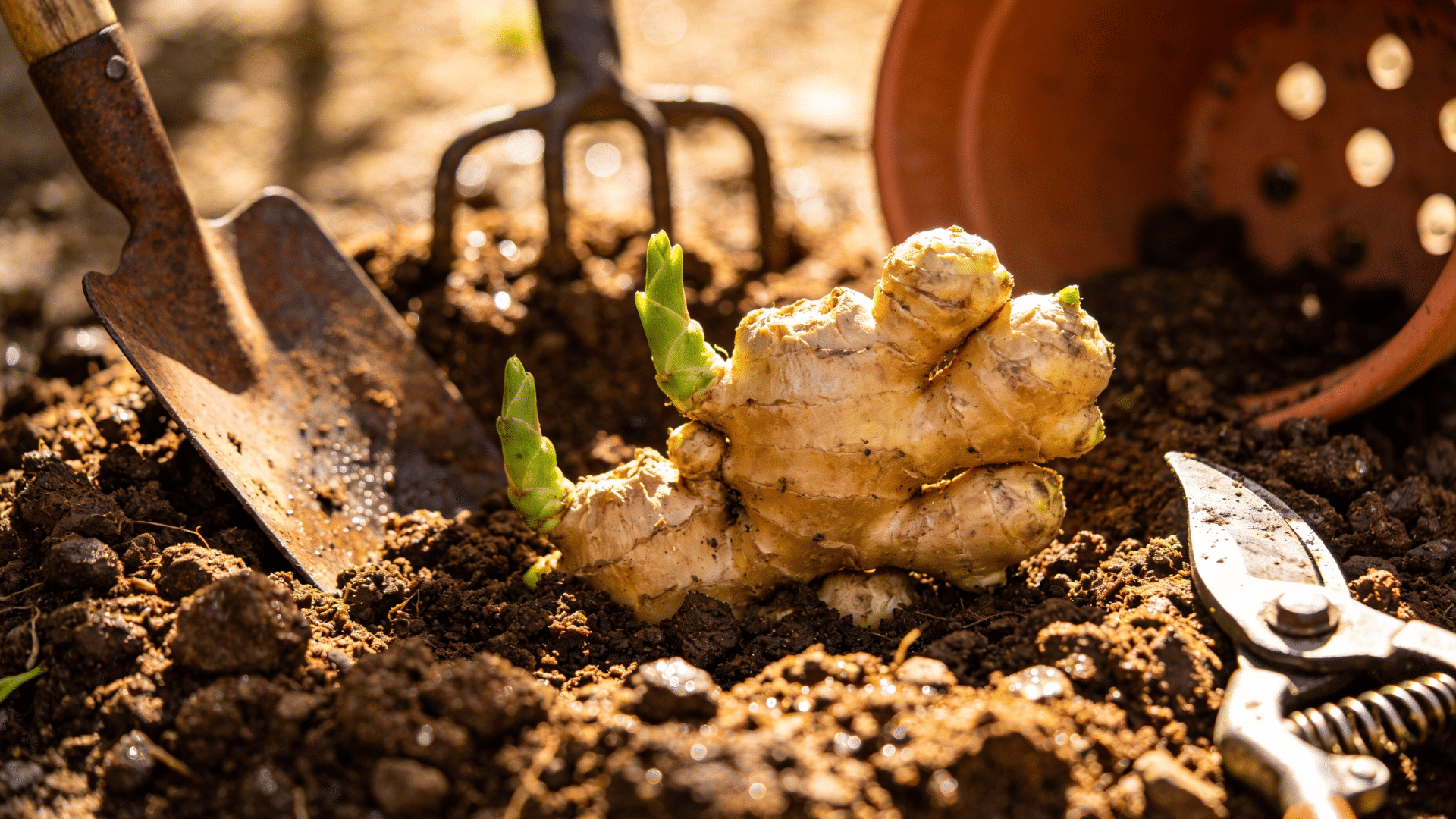
Ginger is one of the easiest and most rewarding plants to grow at home. With just a small section of ginger root, you can start your own supply right in your backyard, on a balcony, or even indoors in a pot.
It thrives in warm, humid conditions but can also adapt to cooler climates with a little extra care.
When used in cooking, teas, or natural remedies, fresh ginger from your own garden tastes better and costs less than store-bought.
This blog will walk through everything needed to successfully plant and grow ginger at home, including tips for different climates and growing methods.
What is Ginger and How Does it Grow?
Ginger (Zingiber officinale) is a flowering plant whose root (technically a rhizome) is used as a spice and for medicinal purposes.
It doesn’t grow from seeds. Instead, you plant a piece of the root, and over time, it sprouts and grows more roots underground.
Ginger prefers warm, humid conditions and rich, well-drained soil. It is a slow-growing plant, often taking 8 to 10 months to reach full maturity.
But with patience and the right setup, it can produce a good supply of fresh ginger for home use.
Benefits of Growing Ginger at Home
Growing ginger at home offers more than just a steady supply of fresh root. It’s a practical, low-maintenance plant with many advantages for gardeners of all experience levels.
- Fresh supply all year: No more buying store-bought ginger that’s dry or old.
- Chemical-free: Control what goes into your soil, no pesticides or additives.
- Saves money: Buying ginger frequently can add up. Growing it is more affordable long-term.
- Low maintenance: Ginger doesn’t need constant attention and grows well with basic care.
- Grows in pots or gardens: Even those without a backyard can grow ginger indoors.
Best Time to Plant Ginger
Ginger grows best in warm weather with no frost. The right time to plant depends on your location and climate. Use the table below to find the best time to start growing ginger root in your area.
| Region/Climate | Best Planting Time | Notes |
|---|---|---|
| Tropical (USDA Zones 10–12) | Year-round | Warm and humid all year; ideal for in-ground planting. |
| Subtropical (Zones 9–10) | Late winter to early spring | Plant once night temperatures stay above 50°F (10°C). |
| Temperate (Zones 6–8) | Early spring (indoors) | Start in pots indoors; move outside after the last frost. |
| Cooler climates (Zones 3–5) | Spring (indoors only) | Keep indoors with heat and light; grow in containers year-round. |
| Indoors (any climate) | Any time | Use a warm spot with filtered light; keep the soil moist and temperature stable. |
Tip: Ginger takes 8–10 months to fully mature, so planting early gives you more time before harvest.
Key Steps to Successfully Plant Ginger at Home
Growing ginger root at home is easy if you follow a few clear steps. Here’s how to do it, from choosing the right root to giving it the care it needs to thrive.
Step 1: Choose a Healthy Ginger Root
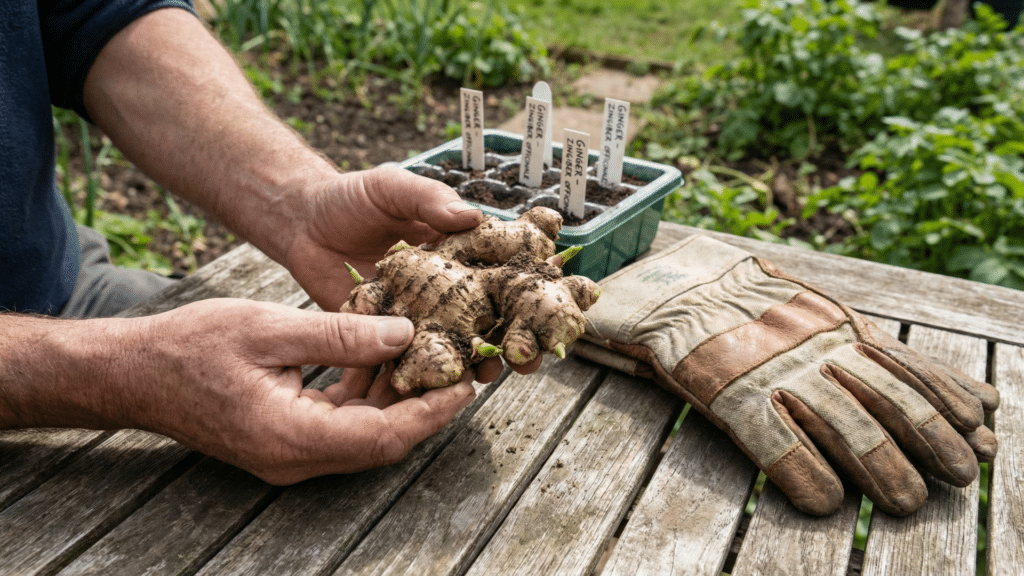
Look for a firm, plump ginger rhizome with visible “eyes” or buds; these are small points where new shoots will grow.
Avoid any that are soft, shriveled, or moldy. Organic ginger is best, as non-organic options may be treated with chemicals that stop sprouting. Roots with multiple fingers can be cut into pieces to grow more plants.
Step 2: Prepare the Root Before Planting
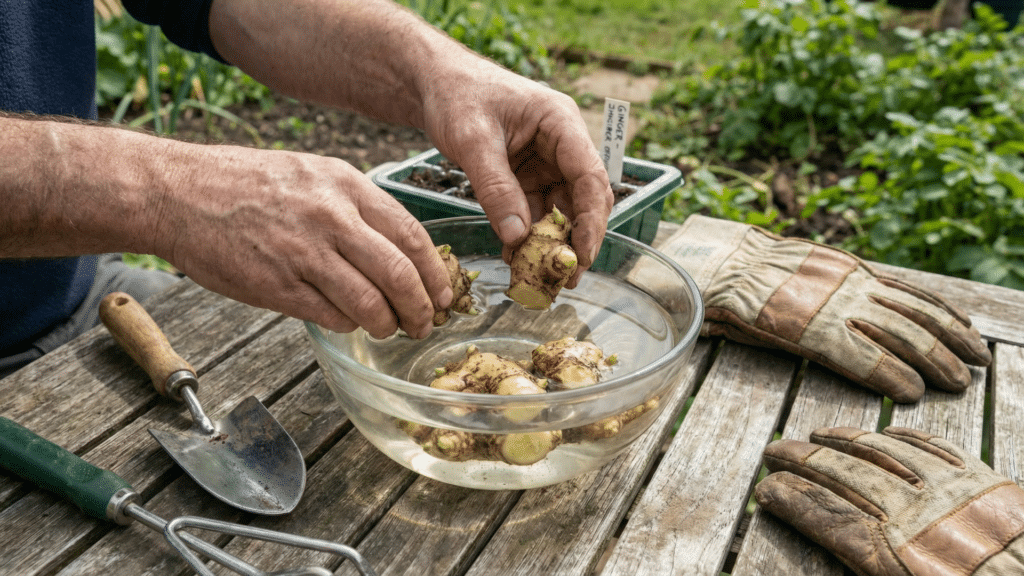
Soak the ginger in warm water overnight to help soften the skin and wake it up. If you’re using large pieces, cut them into 1–2-inch chunks, with at least one or two eyes on each. Let the cut pieces dry for a day or two before planting to prevent rot.
Step 3: Select the Right Location and Container
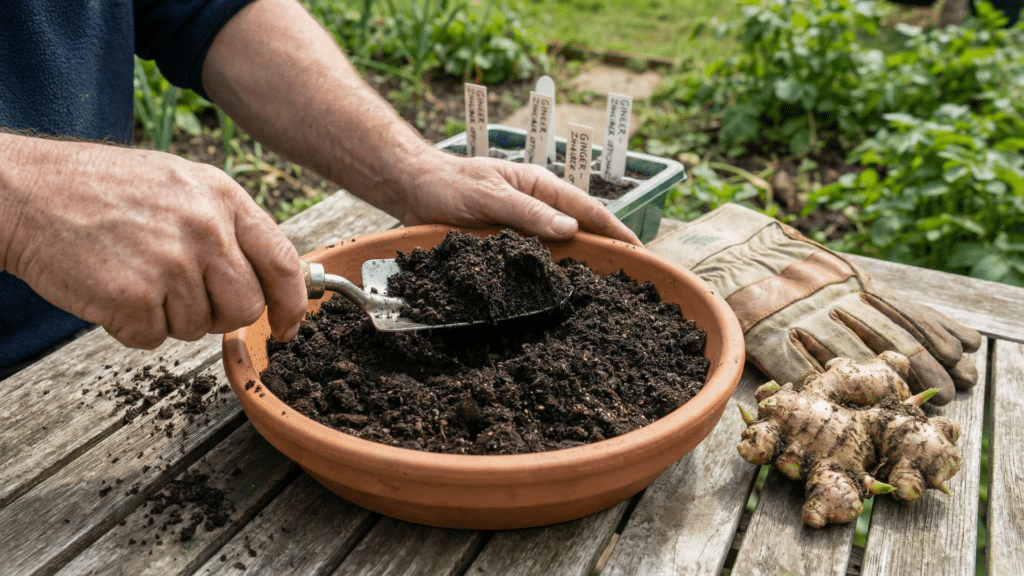
Ginger needs warmth, moisture, and filtered light. Outdoors, pick a spot with partial shade, like under a tree or beside a wall.
Indoors, place the pot near a sunny window that gets indirect light; east or south-facing windows work best. You can also grow ginger in a greenhouse or keep it inside year-round in cooler areas.
Use wide, shallow containers with good drainage. A pot that’s at least 12 inches wide and deep is ideal. If planting in beds, choose loose, well-draining soil and give the roots room to spread.
Step 4: Use Rich, Well-Draining Soil
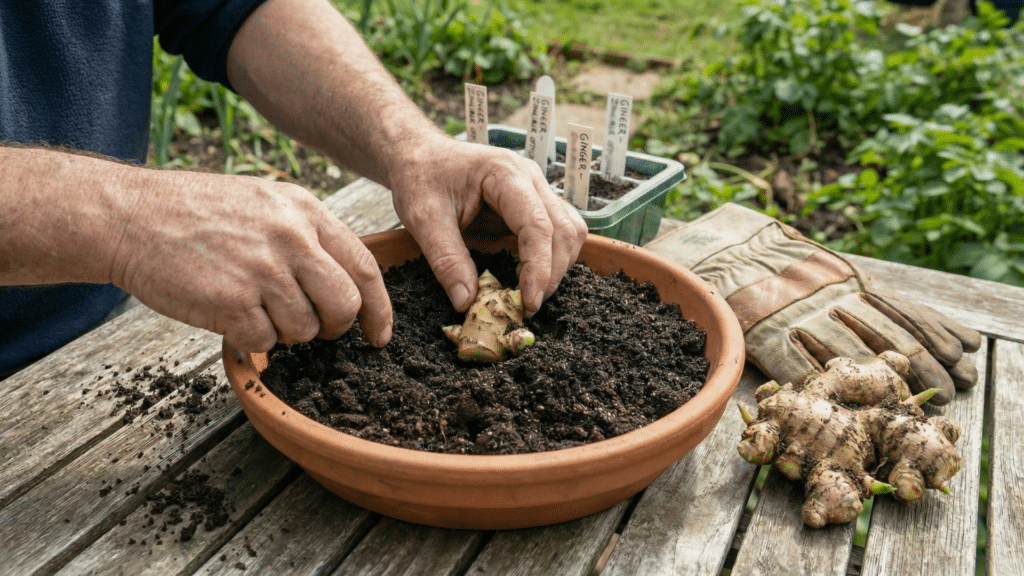
Ginger grows best in slightly acidic to neutral soil (pH 6.0–6.8) that drains well and holds some moisture. A good homemade mix includes:
- 1 part garden soil
- 1 part compost or aged manure
- 1 part sand or perlite for drainage
Avoid heavy clay soils. Before planting, fill your pot or bed with this mix and ensure it’s loose and airy.
Step 5: Plant and Care for the Ginger
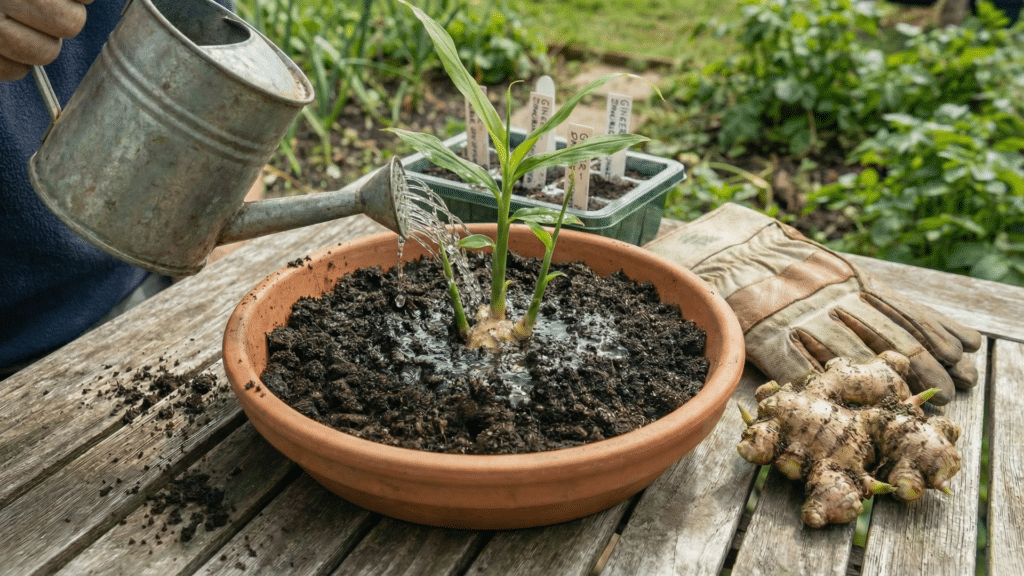
- Place the ginger piece flat, eyes facing up, and cover with 1–2 inches of soil.
- Water well and keep the soil moist but never soggy.
- Add a layer of mulch (like straw or leaves) to retain warmth and moisture.
- Fertilize every few weeks with compost tea or a mild, balanced fertilizer.
- Ginger grows slowly; sprouts may take 2–3 weeks to appear.
- Keep the area weed-free and maintain humidity, especially indoors (mist leaves if needed).
- Ideal growing temperatures range between 75°F and 85°F (24°C–29°C).
How Long Does Ginger Take to Grow?
Ginger is a slow-growing plant, but the wait is worth it. From planting to harvest, it goes through several stages. Here’s a breakdown of the timeline so you know what to expect at each step.
| Growth Stage | Timeframe | What Happens During This Stage |
|---|---|---|
| Sprouting | 2–3 weeks | New shoots appear from the planted root (rhizome). |
| Early Leaf Growth | 1–2 months | Leaves begin to grow above the soil; the root system starts to expand. |
| Rhizome Development | 3–4 months | Ginger root (rhizome) begins forming underground. |
| Partial Harvest (optional) | After 4–5 months | You can gently dig and use small pieces of immature ginger. |
| Full Maturity | 8–10 months | Leaves turn yellow; the rhizome is fully developed and ready to harvest. |
Tip: The longer you wait, the stronger the flavor and the larger the harvest.
Harvesting Ginger at Home
Ginger is ready to harvest when the leaves begin to turn yellow and dry out, usually around 8 to 10 months after planting. You can harvest the entire plant or just take what you need and leave the rest to continue growing.
When to Harvest
- Leaves turn yellow and wilt
- The plant has grown for at least 8 months
- You can also take small pieces after 4–5 months if needed
How to Harvest Ginger
Follow these simple steps:
- Gently loosen the soil around the base of the plant with your hands or a small shovel.
- Lift the plant and pull out the full root system (rhizome).
- Shake or rinse off the soil to reveal the fresh ginger root.
- Trim off the shoots and set them aside for composting or replanting.
- Select healthy pieces of the rhizome to replant for your next crop.
Partial Harvest Tip: You don’t need to dig up the entire plant. You can harvest one section of the root and leave the rest in the soil to grow more.
How to Store Fresh Ginger
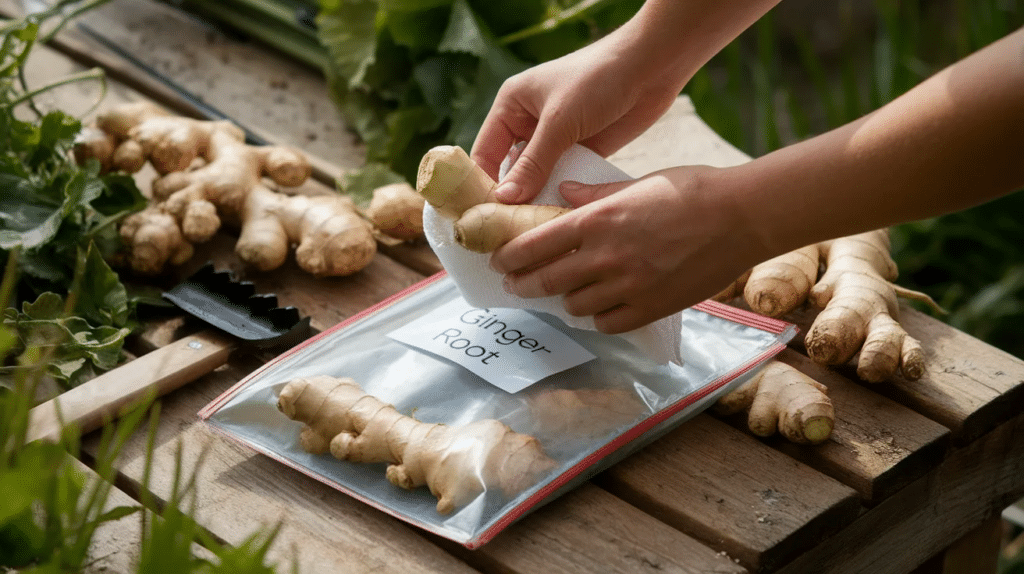
Proper storage keeps your homegrown ginger fresh and flavorful for weeks or even months. Choose a method that fits your plan for using it.
| Storage Method | Instructions | Shelf Life |
|---|---|---|
| Refrigerator | Wrap unpeeled ginger in a paper towel and place it in a zip-top bag. | Up to 3 weeks |
| Freezer | Peel and slice or grate; store in an airtight container or freezer bag. | 3–6 months |
| Drying | Slice thinly and dry in a food dehydrator or in an oven at low heat. | Several months |
| Sand or Soil Storage | Bury whole ginger roots in dry sand or loose soil; store in a cool, dark place. | 1–3 months |
Tips for Growing Ginger Indoors
Growing ginger indoors is a great option for people with limited outdoor space or those living in cooler climates.
- Use a wide pot with drainage holes so the roots can spread and water can escape.
- Place it near a bright window with indirect sunlight; east- or south-facing windows work best.
- Keep the room warm, ideally between 75°F and 85°F.
- Water lightly, keeping the soil moist but not soggy.
- Mist the plant or use a humidity tray if the indoor air is dry.
These simple steps can help you grow healthy ginger all year round.
Final Thoughts
Ginger is a slow but steady grower that rewards patience with a fresh, flavorful root. It doesn’t take a big garden or fancy tools to succeed, just the right timing, good soil, and regular care.
Once planted, it mostly takes care of itself. Even a small space like a balcony or windowsill can be enough to grow healthy ginger root.
It’s a practical crop with long-term value in the kitchen and beyond.
Try planting ginger at home and see just how simple homegrown can be. Start your ginger-growing journey today!