

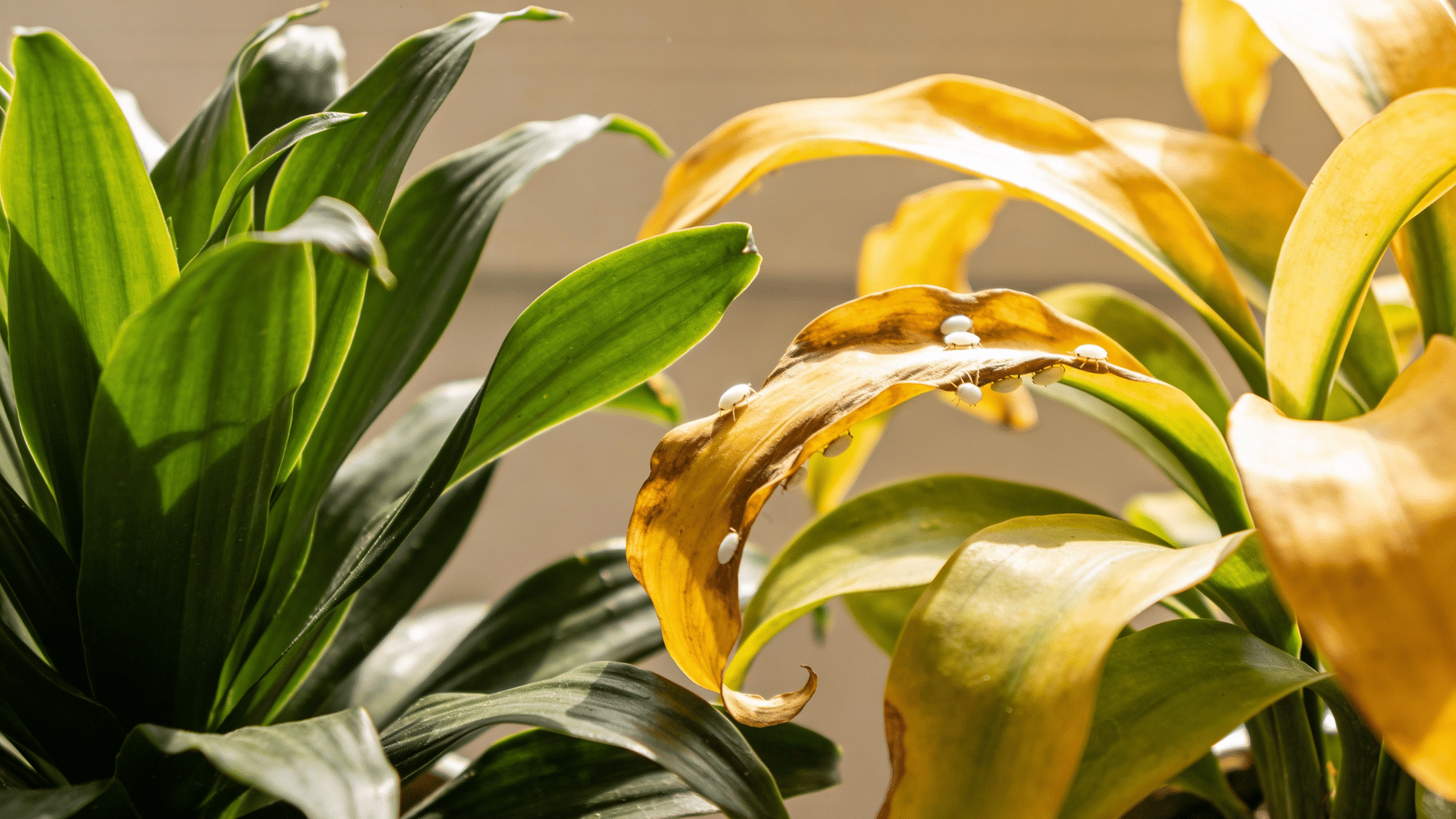
Houseplants need care, light, and water, but sometimes, even with the right care, something still goes wrong.
A leaf curls. New growth stops. Tiny spots or strange marks start to appear. These are often signs of pests. Insects can quietly move in, hiding on leaves or in the soil.
They feed on the plant, causing slow damage that’s easy to miss at first. Many plant owners don’t notice the problem until it gets worse.
Knowing what to look for can help stop pests early. This blog shares simple ways to spot signs of trouble and keep houseplants healthy without special tools or expert help.
Why It’s Important to Catch Pests Early?
Pests may seem harmless at first, but they don’t stay small for long. Many bugs lay eggs that hatch quickly, turning a small problem into a much bigger one.
Early pest damage is often mild and easy to treat, but the longer bugs are left alone, the more harm they do.
Leaves get weaker, roots can rot, and the whole plant may stop growing. Some pests even leave behind sticky waste or harmful mold.
By spotting bugs early, you avoid costly fixes and stop the spread to other plants. A quick check now can prevent weeks of damage and help your houseplants stay strong.
Where Houseplant Pests Like to Hide
Pests don’t sit out in the open. Most hide in places that are easy to miss:
- Under leaves
- On stems and leaf joints
- Near the base of the plant
- In the top layer of soil
- Around flower buds
- On new or soft growth
Use a flashlight or phone light when checking, and look closely. Some bugs are so small that they look like dirt or dust.
Signs Your Houseplant May Have Pests
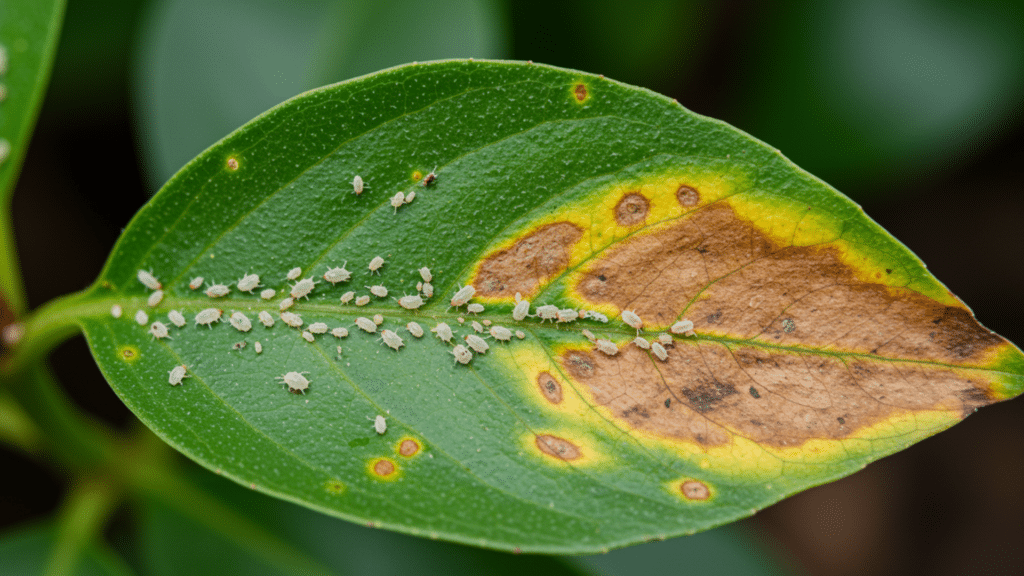
Houseplant pests leave behind signs that something isn’t right. Below is a table with common symptoms and what they might mean:
| Sign | What It Might Mean |
|---|---|
| Yellowing leaves | Plant Bugs may be sucking sap from the plant |
| Holes or bite marks | Chewing insects like caterpillars or beetles |
| Sticky spots on leaves | Sap-sucking pests like aphids or scale insects |
| White fuzz or powder | Mealybugs or fungal growth caused by pest waste |
| Fine webbing on leaves | Spider mites may be present |
| Drooping or wilted leaves | Root damage or bug feeding on stems |
| Slow or no new growth | Bugs are stressing the plant or harming the roots |
| Falling leaves | Severe pest damage or long-term stress |
| Tiny bugs on leaves or soil | Active pest infestation, such as fungus gnats |
Common Houseplant Pests and What They Look Like
Below are the most common pests found on houseplants. Each includes what they look like, how they act, and where to find them.
1. Aphids
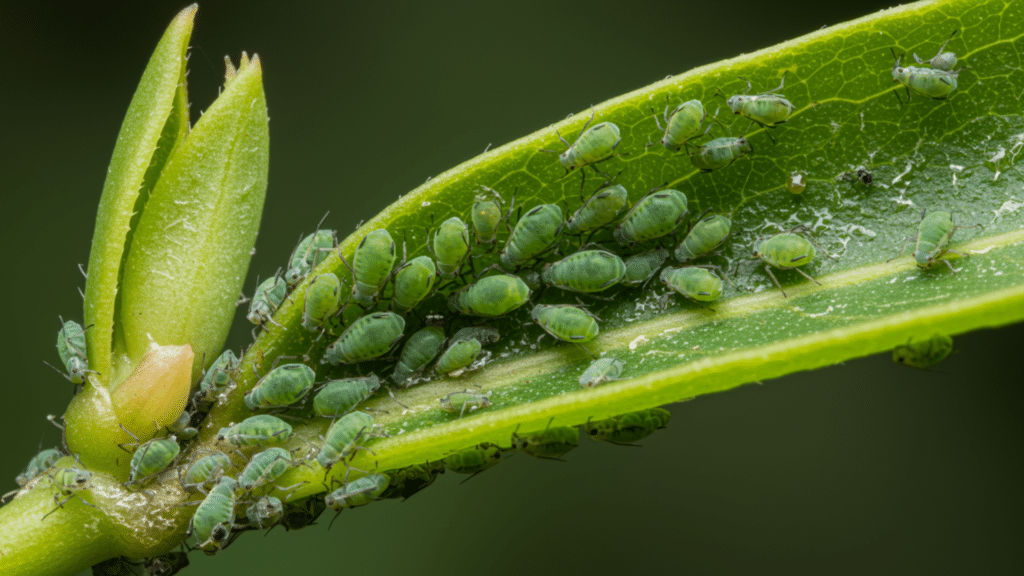
- Size: Very small (1–3 mm)
- Color: Green, black, yellow, or brown
- Shape: Pear-shaped body
- Where: Underside of leaves, near new growth
- Signs: Sticky leaves, curled or twisted growth
Aphids feed by sucking juice from plants. They move slowly and may form clusters. The sticky sap they leave behind can attract ants.
2. Mealybugs
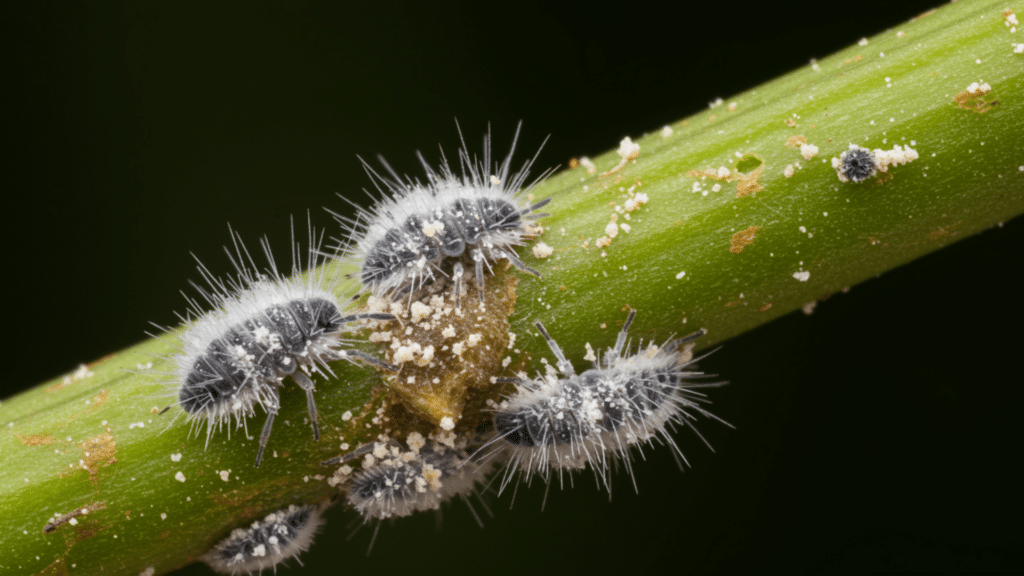
- Size: About the size of a sesame seed
- Color: White or light gray
- Shape: Soft body, covered in white fluff
- Where: Leaf joints, stem bases, roots
- Signs: White fuzzy patches, sticky residue, weak growth
These are easy to miss unless you know what to look for. Mealybugs often hide deep in the plant.
Related Tip: If you see white bugs on plants that look like bits of cotton, they’re likely mealybugs.
3. Spider Mites
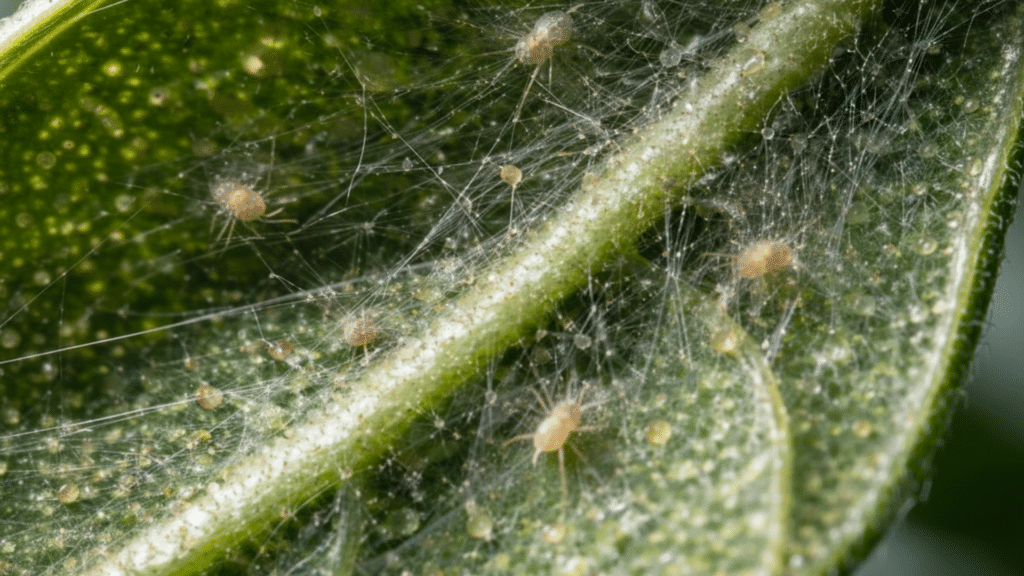
- Size: Tiny, nearly invisible
- Color: Red, brown, or light yellow
- Shape: Round body, eight legs
- Where: Underside of leaves
- Signs: Fine webbing, yellow dots on leaves, dry or speckled leaves
Use a magnifying glass or tap the leaf over white paper to see them move. They like dry, warm air.
4. Fungus Gnats
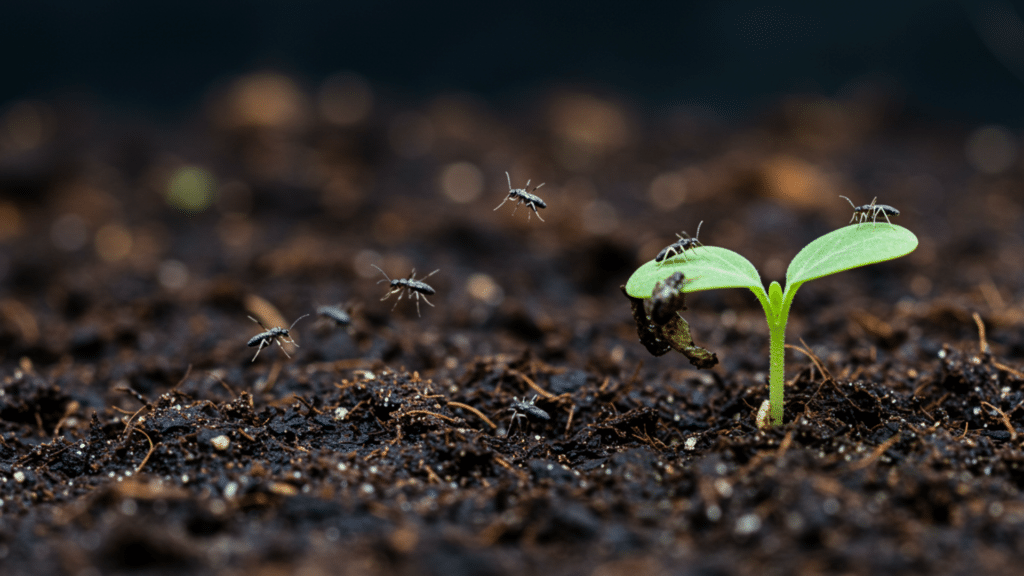
- Size: Like a fruit fly
- Color: Black or gray body
- Shape: Long legs and wings
- Where: Top layer of wet soil
- Signs: Tiny flying bugs, poor root health, wilting
These are less harmful than others, but they can still damage young roots. They breed in moist soil.
5. Scale Insects
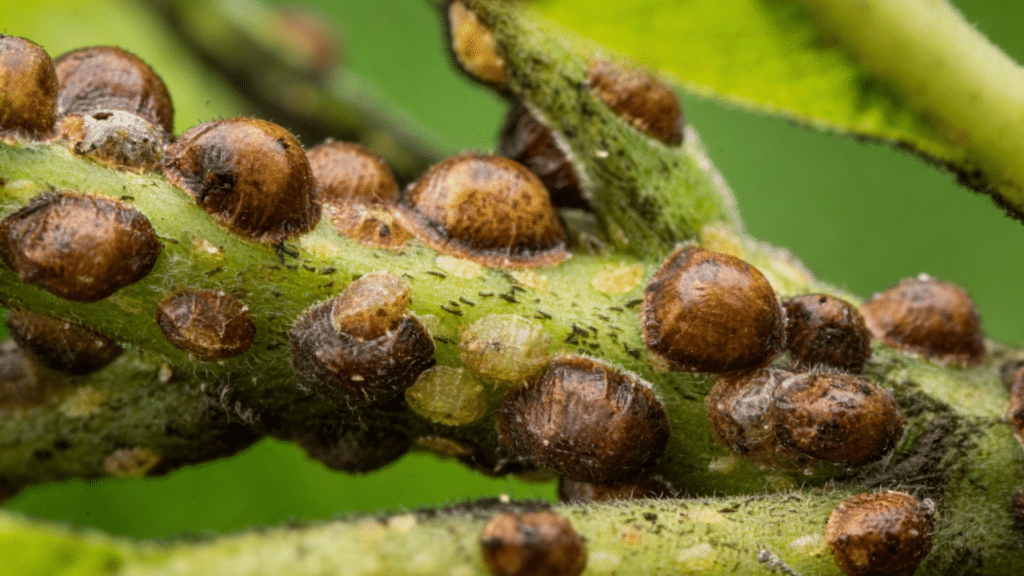
- Size: 2–5 mm
- Color: Brown, tan, or gray
- Shape: Dome-shaped shell
- Where: Stems, undersides of leaves
- Signs: Hard bumps on the plant, sticky sap, yellowing
Scales don’t move much and look like part of the plant. If you scrape them gently, they come off.
6. Whiteflies
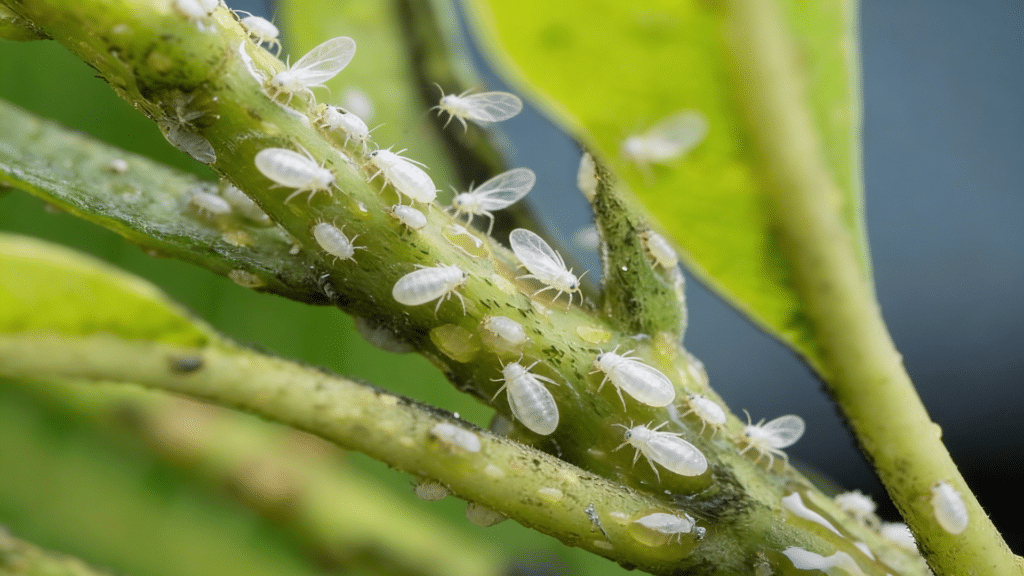
- Size: Like a tiny moth
- Color: White
- Shape: Small wings and soft body
- Where: Underside of leaves
- Signs: White bugs fly up when the plant is shaken, sticky residue
Whiteflies feed on sap and weaken the plant. Their babies stay stuck on leaves and are harder to remove.
7. Thrips
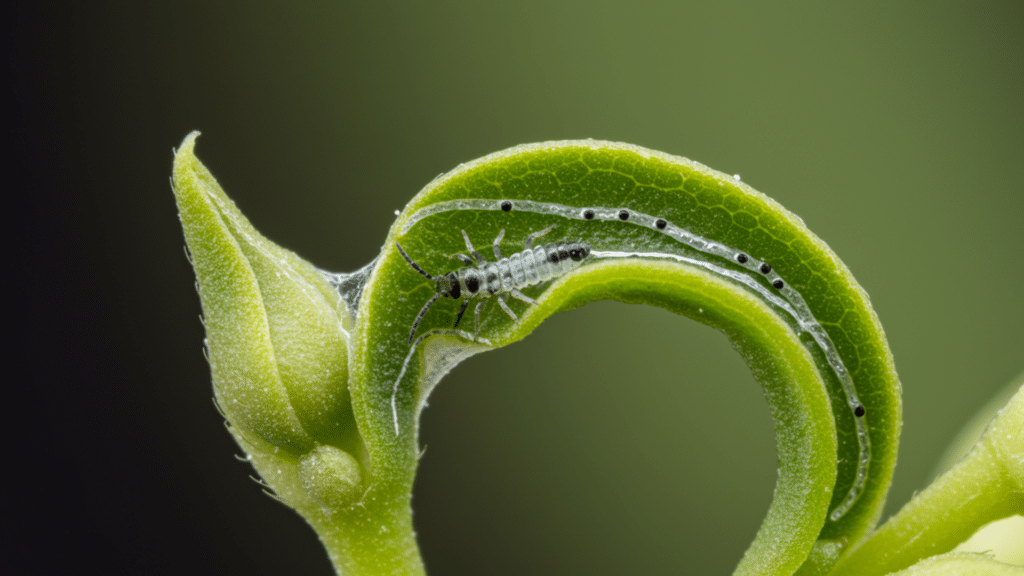
- Size: Very small, slender shape
- Color: Black, brown, or yellow
- Shape: Long body with fringed wings
- Where: Inside flower buds, on young leaves
- Signs: Silver streaks, black dots, twisted growth
Thrips feed fast and can move from plant to plant easily. They may be hard to see, but leave visible damage.
8. Root Aphids
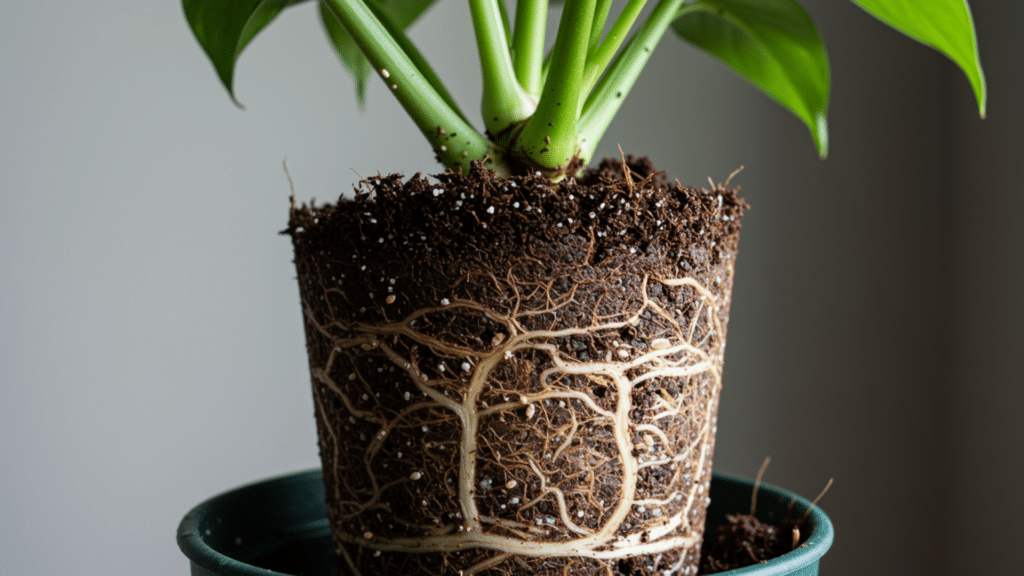
- Size: Small, similar to normal aphids
- Color: White or pale
- Shape: Round, soft body
- Where: In soil, around roots
- Signs: Slow growth, weak plant, yellowing
These live below the soil and are not easy to find. If the plant doesn’t get better even after watering, root aphids may be the cause.
White Bugs on Plants: What They Could Be
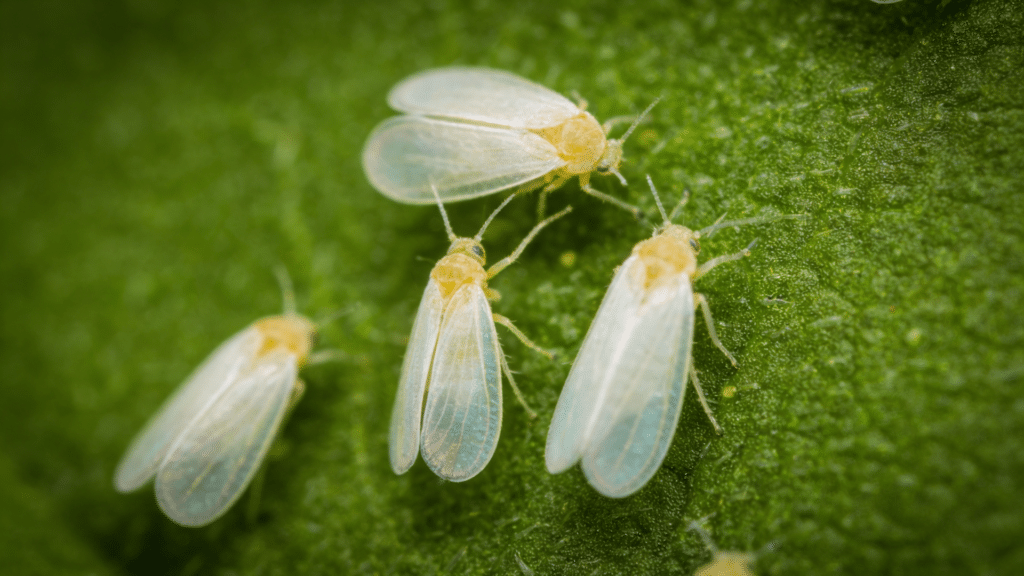
White bugs on plants are a common problem for indoor gardeners. Use the table below to help identify which white plant bugs may be living on your houseplants:
| Type of Bug | What They Look Like | Where They Hide | Signs to Watch For |
|---|---|---|---|
| Mealybugs | White, cotton-like, soft-bodied | Leaf joints, stems, and under leaves | White fluff, sticky sap, weak plant growth |
| Whiteflies | Tiny, moth-like, flies when touched | Underside of leaves | Flying white bugs, yellow leaves, sticky spots |
| Root Mealybugs | Tiny, white, soft-bodied (in soil) | Around roots, in wet soil | Poor growth, wilting, and white fuzz in the root area |
| Springtails | Very small, white, jump when disturbed | Top layer of moist soil | Fast jumping bugs, moist soil, not major damage |
How to Check Plants Step-by-Step
Checking your houseplants for pests doesn’t have to be hard. With a little practice, it becomes a quick and easy habit.
1. Start with the leaves. Look closely at both the tops and undersides. Some pests, such as whiteflies and spider mites, hide under leaves, where they are less likely to be seen. If the leaf is discolored, has small dots, or feels sticky, there may be pests nearby.
2. Look at the stems. Pay attention to areas where leaves meet the stem, and examine new growth. Mealybugs and scale insects often gather in these tight spots. Use a flashlight to see clearly into shaded parts of the plant.
3. Check the soil surface. Gently stir the top inch of soil with a stick or finger. This may reveal tiny crawling insects such as fungus gnats, springtails, or even root mealybugs. Moist soil can hide many pests.
4. Watch for movement. Hold a white sheet of paper under the plant and gently shake it. If small bugs fall onto the paper, it’s a sign there’s an active pest problem.
5. Use a flashlight. Shine light on the undersides of leaves, around the base, and even into the drainage tray. Many bugs move in low light, and a flashlight can help spot webbing or sticky spots that are otherwise missed.
6. Look for signs of damage. Holes, spots, curling, or yellowing may all be signs that bugs are feeding on the plant. Sticky leaves are also a strong clue that sap-sucking pests like aphids or mealybugs are present.
Repeat this check every week, especially if you’ve had plant bugs before. Catching bugs early helps prevent larger infestations and makes them easier to treat.
How to Keep Plant Bugs Away
Stopping pests before they show up is the best way to protect your plants:
- Check new plants before bringing them indoors.
- Use clean pots and tools.
- Avoid overwatering; wet soil attracts bugs.
- Give plants air; good airflow keeps bugs away.
- Wipe leaves once a week with a damp cloth.
- Use neem oil or insecticidal soap once a month as a safe cleaner.
When to Ask for Help
If plant bugs keep coming back, or your plant looks worse after treatment, it may be time to try something new.
Repotting in fresh soil can help remove pests hiding in the roots. If only part of the plant is healthy, take cuttings and grow a fresh one.
If you’re unsure what bug you’re dealing with, bring a photo or leaf to a local plant shop or nursery.
In severe cases, it may be best to remove the plant to protect the rest of the plant. Sometimes, starting over is the safest option.
The Bottom Line
Keeping houseplants free of pests takes time and care. Bugs may be small, but they can do real damage if not treated early.
Learning how to spot them helps keep your plants healthy and strong. Look for signs like white bugs on plants, sticky leaves, or slow growth.
Use simple tools, check often, and act fast when something seems wrong. Don’t wait for things to get worse. A quick check each week can make all the difference.
Want more plant care tips and bug guides? Save or share this blog and check back for more easy help.