

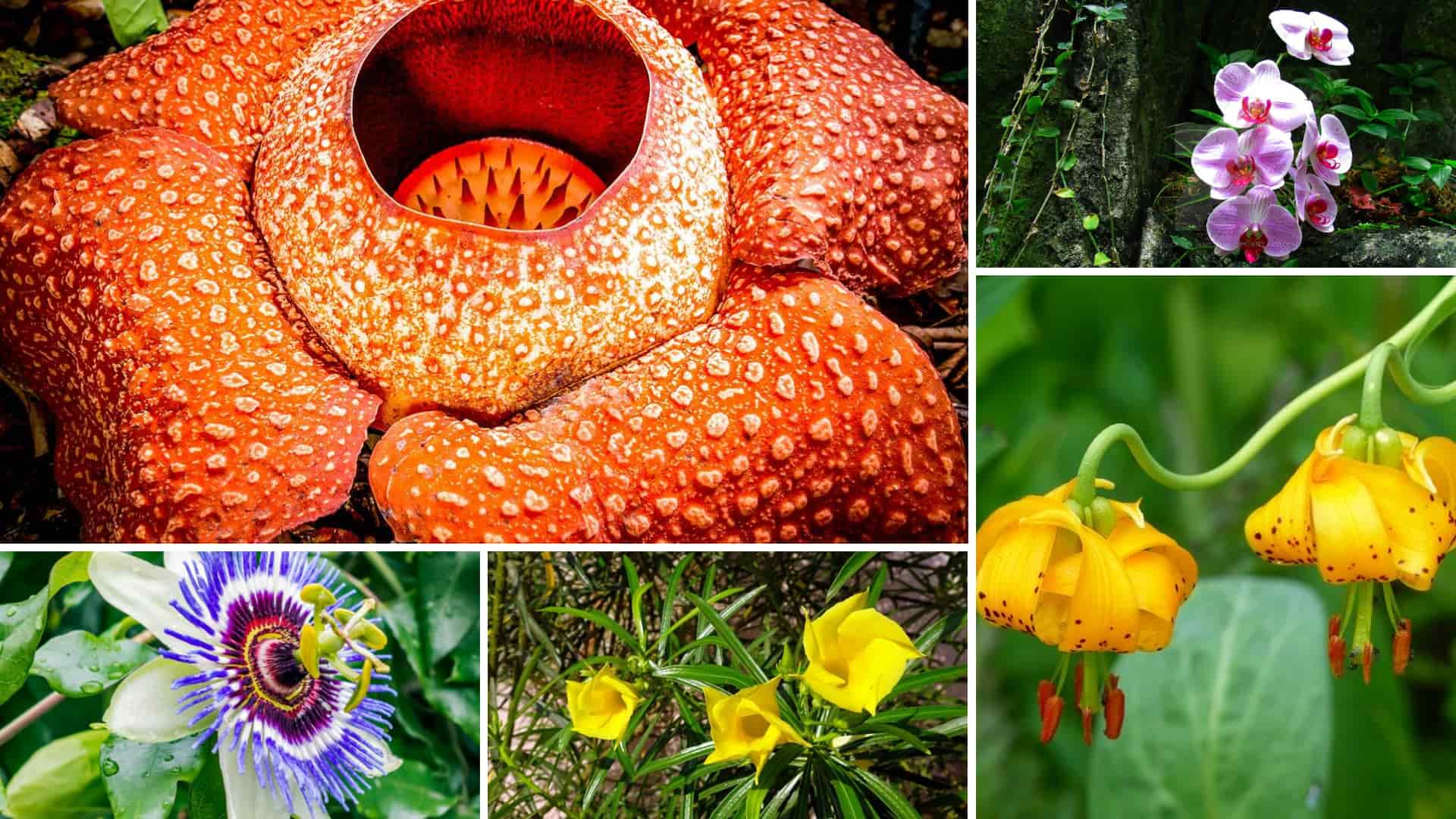
Most people have heard of the Amazon. Fewer people know that it holds over 40,000 plant species, many of which still do not have scientific names.
Tropical rainforest plants are not just background greenery. They are the source of chocolate, coffee, natural rubber, and a large share of the medicines used in hospitals today.
This blog covers real plants found in tropical rainforests, what makes each one worth knowing, how these plants survive some of the most competitive growing conditions on Earth, and why losing them would matter far beyond the forest itself.
What Are Tropical Rainforests?
Tropical rainforests are tall, dense forests found close to the equator, where temperatures stay warm year-round and rainfall reaches anywhere from 79 to 394 inches per year.
They exist across three main regions: the Amazon Basin in South America, the Congo Basin in Central Africa, and the forests of Southeast Asia.
These forests cover less than 6% of Earth’s surface but hold more than half of all known plant and animal species.
The constant heat, moisture, and competition for sunlight have shaped some of the most unusual plant life found anywhere on the planet.
The Four Layers of a Tropical Rainforest
A tropical rainforest is not one flat stretch of green. It is structured into four separate layers, each with its own light levels, moisture, and plant types. Understanding these layers helps explain why certain plants look and behave the way they do.
| Layer | Height | Sunlight Received | Key Plants |
|---|---|---|---|
| Emergent | 150 to 250 feet | Full, direct sunlight | Kapok tree, Brazil nut tree |
| Canopy | 60 to 90 feet | 75 to 98% of total light absorbed here | Orchids, lianas, rubber trees, bromeliads |
| Understory | 15 to 60 feet | Only 2 to 15% of total sunlight | Heliconia, philodendrons, passion flower |
| Forest Floor | Ground level | Around 2% of sunlight | Mosses, ferns, Rafflesia, some orchid species |
15 Tropical Rainforest Plants You Should Know About
Each of these plants lives in a different part of the forest, survives in a different way, and has a different relationship with the animals and people around it. Here they are, one by one.
1. Kapok Tree
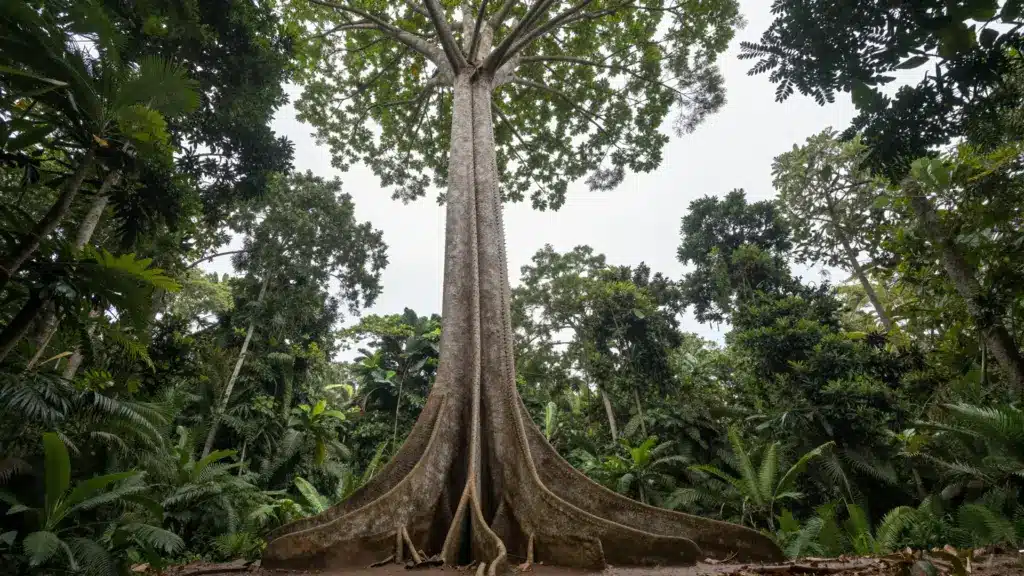
The Kapok tree is one of the tallest trees in any tropical rainforest, often rising above 200 feet. Its trunk is straight and lined with large, sharp spines that keep animals from climbing it. Up on its branches, dozens of other plant species grow, making it one of the most important host trees in the forest.
- Botanical Name: Ceiba pentandra
- Native Region: Amazon Basin (South America); also found in West Africa and Southeast Asia
- Forest Layer: Emergent
- Surprising Fact: The fluffy fibers attached to its seeds were once used to fill life jackets because they are water-resistant and buoyant
2. Rubber Tree
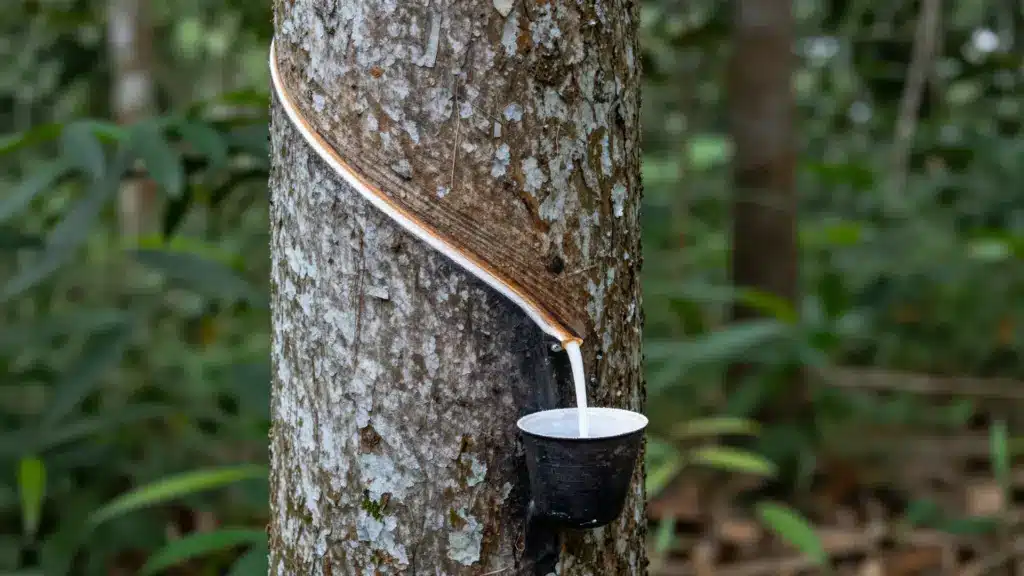
The rubber tree produces a milky fluid called latex inside its bark. Tappers collect this fluid by making shallow cuts in the bark and letting it drip into buckets. That latex becomes natural rubber, which goes into car tires, medical gloves, and hundreds of other products used daily around the world.
- Botanical Name: Hevea brasiliensis
- Native Region: Amazon Rainforest, South America
- Forest Layer: Canopy
- Surprising Fact: Over 1.9 million rubber trees grow in the Amazon alone, and the tree is now cultivated across tropical Asia and Africa after being introduced from its original home
3. Orchid
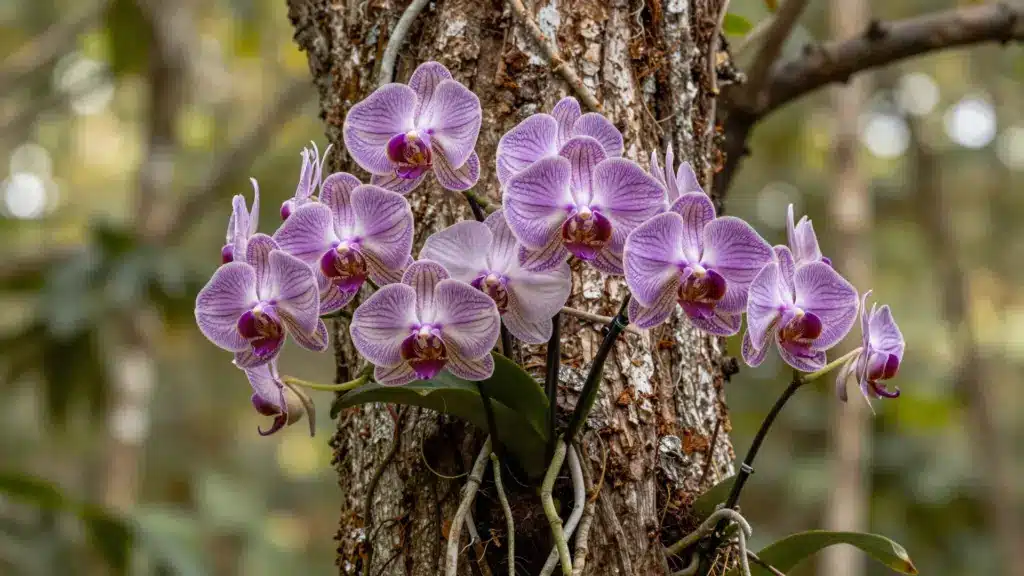
Orchids are the largest flowering plant family on Earth, with more than 25,000 species. In tropical rainforests, they grow on tree bark rather than in soil, pulling moisture directly from humid air.
Their flowers are built to attract specific pollinators, and many orchid species can only be pollinated by one particular insect or bird.
- Botanical Name: Orchidaceae (family)
- Native Region: All major tropical rainforests worldwide
- Forest Layer: Canopy and forest floor
- Surprising Fact: More than 10,000 orchid species grow specifically in tropical jungles, making them the single most common flower type in rainforest environments
4. Bromeliad
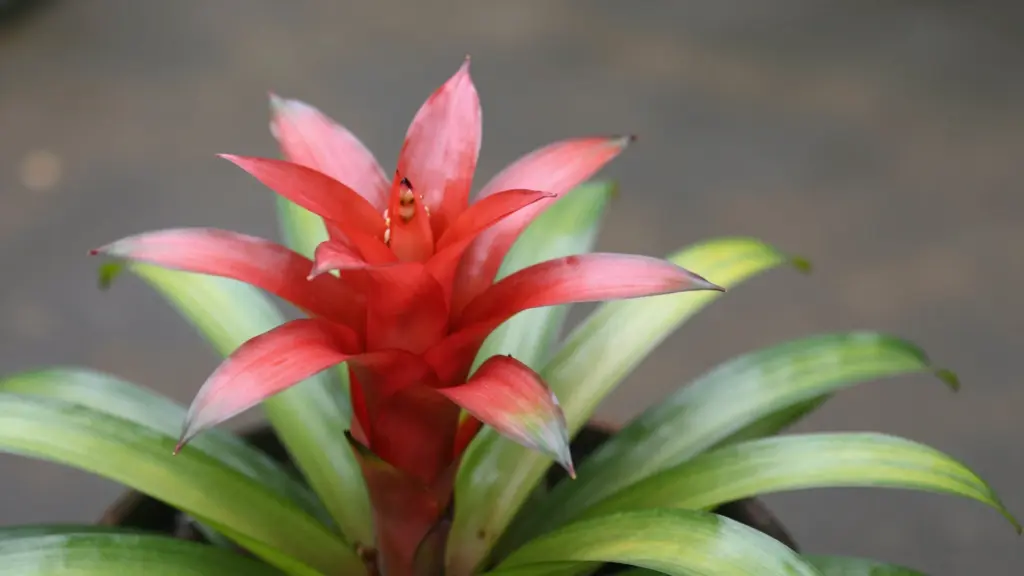
Bromeliads grow in a rosette shape, with stiff leaves arranged in a circle that forms a natural cup in the center. This cup collects rainwater and becomes its own small habitat.
Tree frogs lay eggs in it. Insects breed inside it. Some species of tiny crabs live in bromeliad water pools high up in the canopy.
- Botanical Name: Bromeliaceae (family)
- Native Region: Amazon and Central America
- Forest Layer: Canopy and understory
- Surprising Fact: A single bromeliad cup can hold enough water for frogs to complete their entire breeding cycle without ever touching the ground
5. Strangler Fig
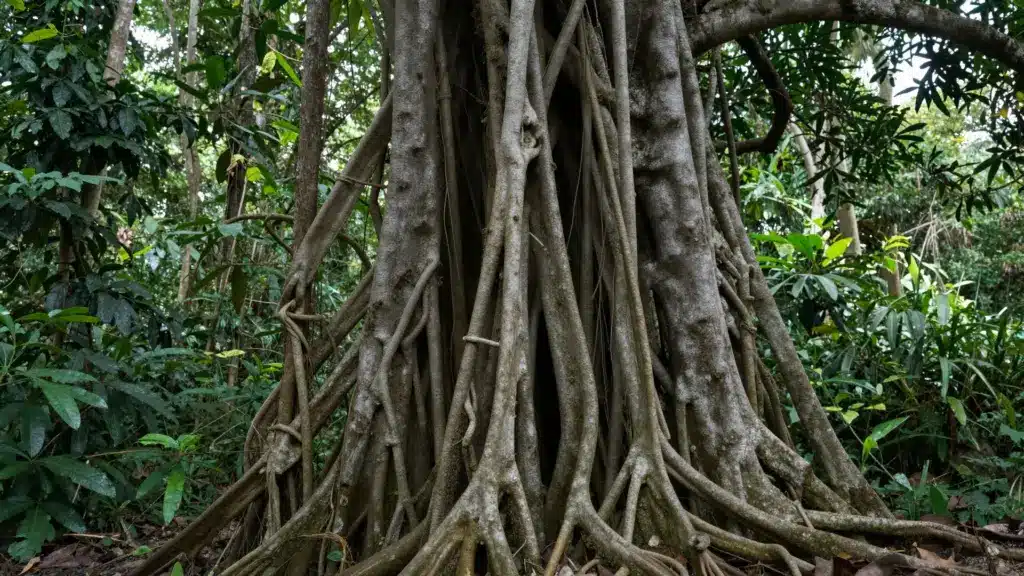
The strangler fig starts life as a seed deposited on a tree branch by a bird or bat. It grows downward, sending roots toward the ground while wrapping around its host tree.
Over time, it takes over the space completely. When the host tree eventually dies, the fig stands on its own, hollow inside, and becomes a shelter for dozens of animal species.
- Botanical Name: Ficus (multiple species)
- Native Region: Amazon, Southeast Asia, and other tropical regions
- Forest Layer: Canopy
- Surprising Fact: The fruit of the strangler fig feeds birds, monkeys, and bats, making it one of the most relied-upon food sources in the forest during dry periods
6. Heliconia
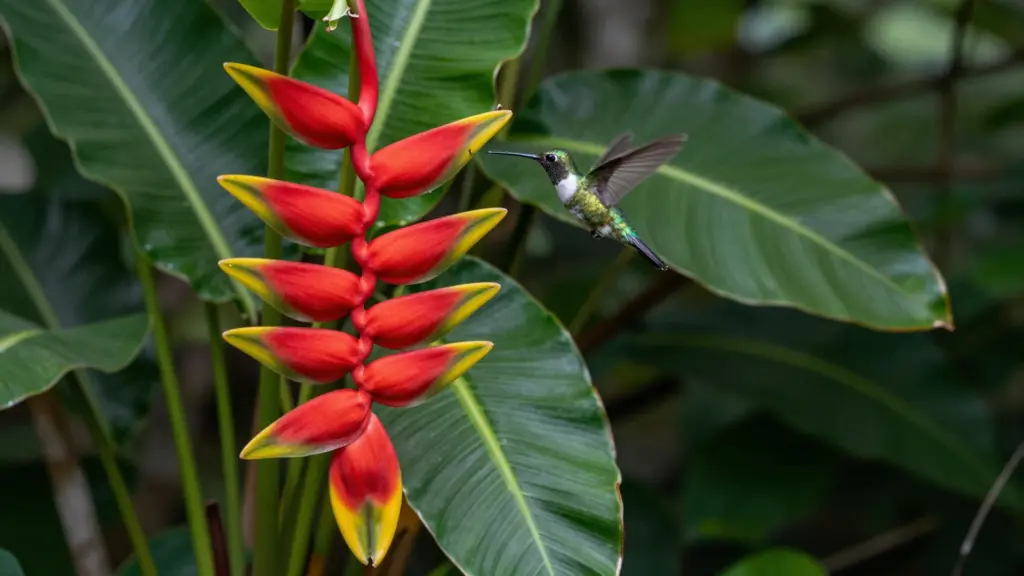
Heliconia is instantly recognizable by its bright red, orange, or yellow bracts that curve like the claws of a lobster.
Hummingbirds feed on the nectar inside those bracts and carry pollen from one plant to the next. Without hummingbirds, heliconia cannot reproduce. Without heliconia, hummingbirds lose one of their main food sources.
- Botanical Name: Heliconia (multiple species)
- Native Region: Amazon Rainforest, Central and South America
- Forest Layer: Understory
- Surprising Fact: This plant belongs to the same family as the bird of paradise flower, and is sometimes called the “Lobster Claw” or “Hanging Lobster Claw” because of how its flowers hang downward
7. Giant Water Lily
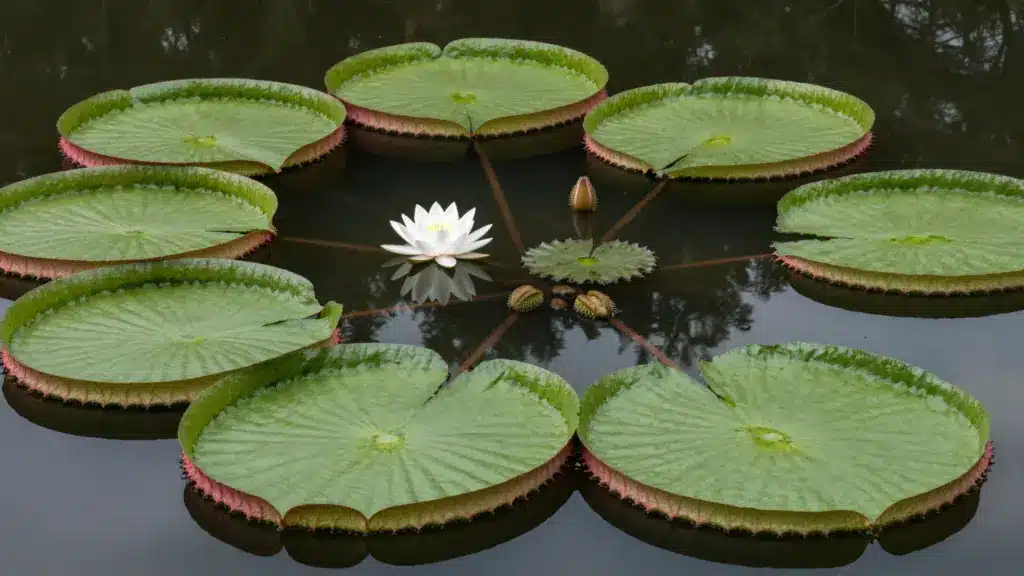
The Giant Water Lily grows in the slow-moving waters of the Amazon Basin. Its leaves are some of the largest in the plant world, reaching up to 10 feet wide.
The underside of each leaf has a web of stiff ribs that give it structural strength. Engineers studied this design in the 19th century and used the same pattern when building early iron structures.
- Botanical Name: Victoria amazonica
- Native Region: Amazon River Basin, South America
- Forest Layer: Aquatic (river and lake surfaces within the forest)
- Surprising Fact: The leaves are strong enough to hold up to 136 kilograms. Its flowers bloom only at night and change color from white to pink after they are pollinated
8. Cacao Tree
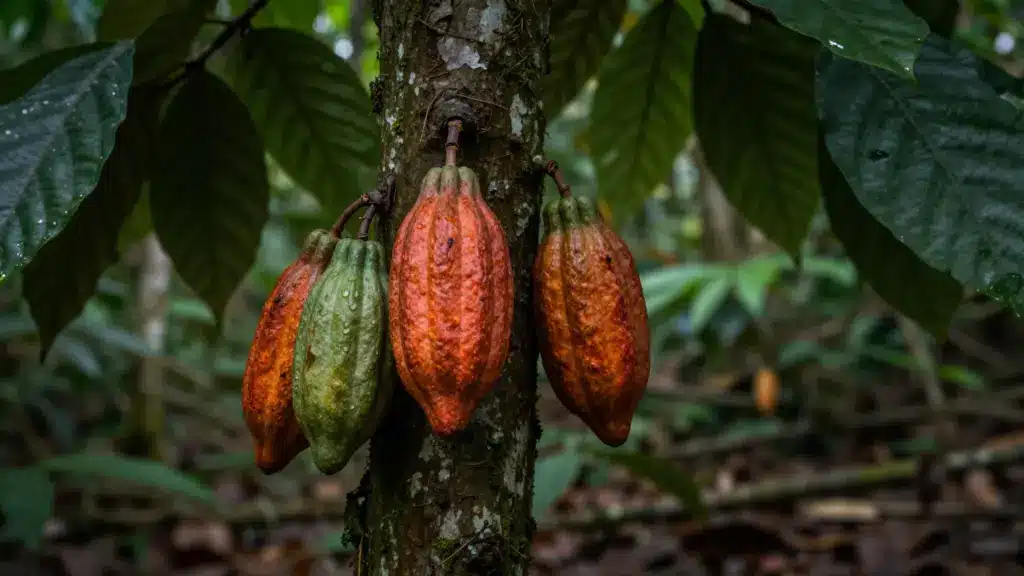
Every piece of chocolate in the world comes from the seeds of the cacao tree. This small tree grows in the shaded understory, and its pods grow directly out of the trunk rather than from branches.
Each pod holds between 30 and 60 seeds. Those seeds are fermented, dried, and processed into cocoa, which becomes chocolate.
- Botanical Name: Theobroma cacao
- Native Region: Amazon Rainforest understory, South America
- Forest Layer: Understory
- Surprising Fact: The name Theobroma comes from Greek and means “food of the gods.” The cacao tree grows its pods straight out of its trunk, a pattern called cauliflory that is common among understory trees in low-light environments
9. Coffee Plant
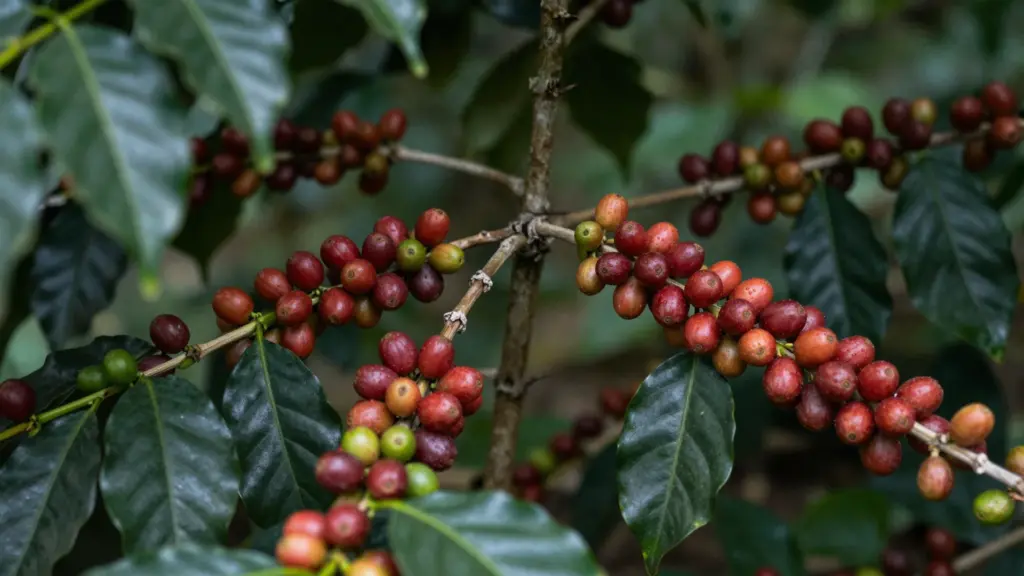
The coffee plant grows naturally in the shaded lower canopy of tropical rainforests. It produces small fruits called coffee cherries that start green and ripen to bright red or yellow.
Each cherry usually holds two seeds, which are the coffee beans. Bees are drawn to the plant’s flowers by nectar that contains caffeine.
- Botanical Name: Coffea arabica
- Native Region: East African rainforests; also found in the Amazon
- Forest Layer: Understory
- Surprising Fact: Coffee “beans” are not beans at all. They are seeds found inside the fruit. The plant produces caffeine as a natural defense against insects, but it also ends up attracting bees
10. Pitcher Plant
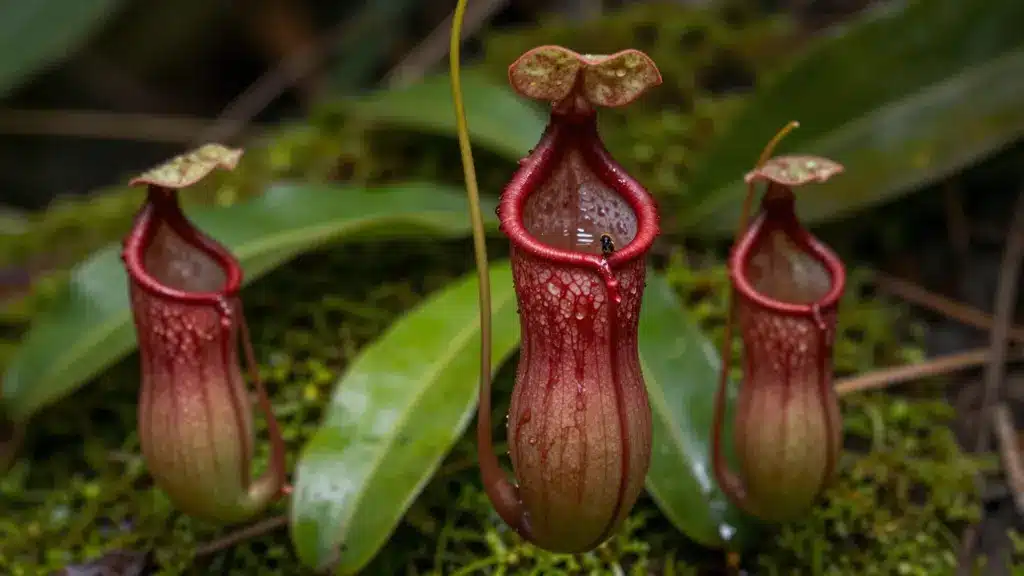
The pitcher plant lives in rainforest soil that is too poor in nutrients to support regular growth. So it gets those nutrients another way.
Its leaves have changed shape over thousands of years into deep, slippery cups filled with digestive fluid. Insects fall in and cannot get out. The plant then breaks them down and absorbs what it needs.
- Botanical Name: Nepenthes (multiple species)
- Native Region: Southeast Asian rainforests
- Forest Layer: Forest floor and lower canopy
- Surprising Fact: Some of the larger Nepenthes species are big enough to trap small frogs and rodents. Scientists have also found that certain species collect droppings from bats that rest inside the cups, using that as a nitrogen source instead of insects
11. Passion Flower
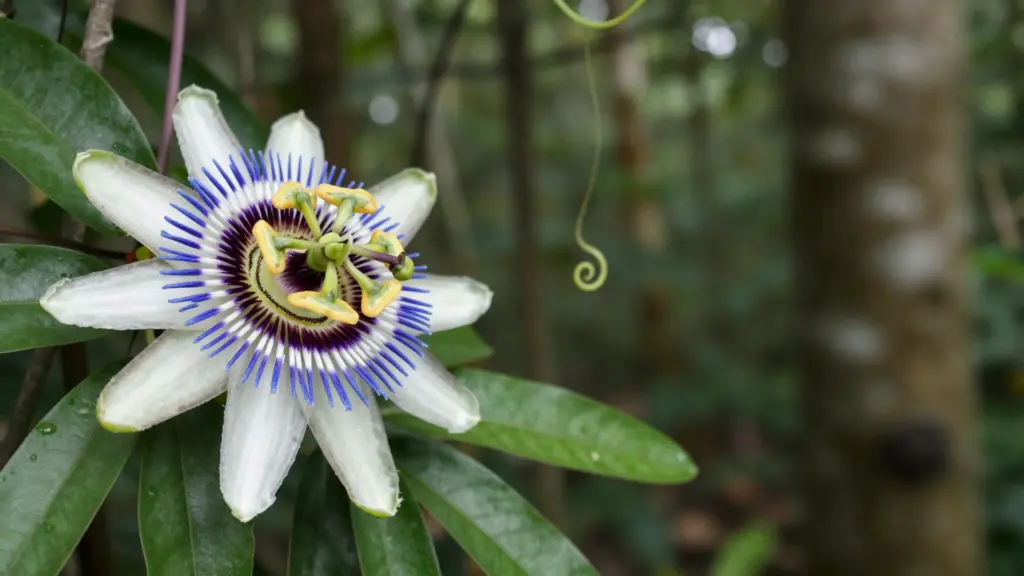
The passion flower is a climbing vine with flowers that have an almost artificial look, white petals surrounding a ring of blue or purple filaments.
More than 550 species of passion flower grow across tropical rainforests. Indigenous communities in the Amazon have used its leaves for centuries as a natural sedative and pain reliever. The fruit, called passion fruit, is eaten across the world.
- Botanical Name: Passiflora (multiple species)
- Native Region: Amazon and Central America, also Northern Argentina and Southern Brazil
- Forest Layer: Understory and climbing into the canopy
- Surprising Fact: Amazonian tribes used the leaves both as a sedative and to treat coughs. The vine grows 15 to 20 feet long and can tolerate dry conditions better than most other tropical forest plants
12. Bougainvillea
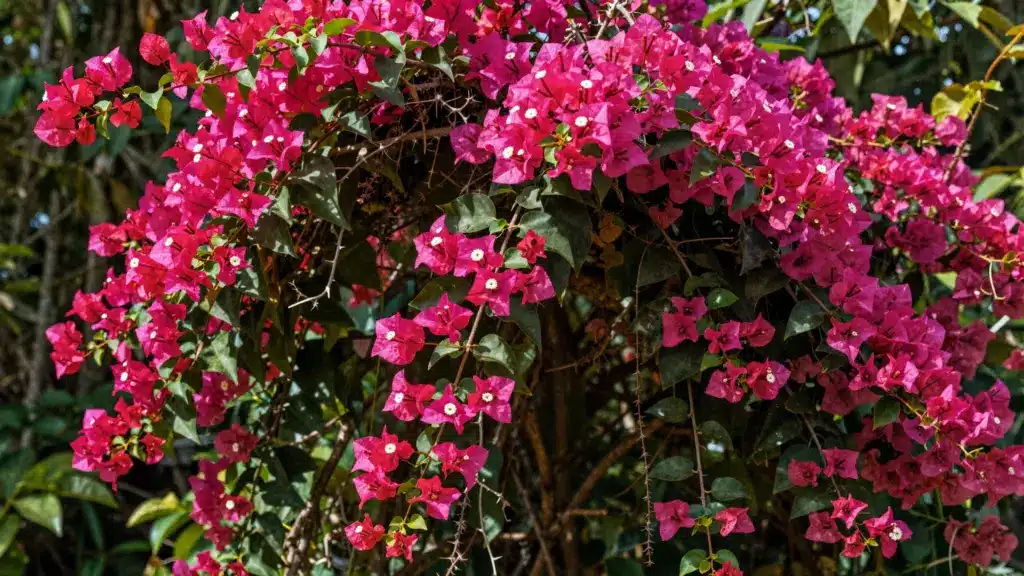
What most people think of as the bright pink or purple flowers of bougainvillea are not actually flowers. They are colored leaves called bracts.
The real flowers are tiny, white, and tucked inside those bracts. Bougainvillea is native to South American rainforests and grows fast as a climbing vine with thorns along its stems.
- Botanical Name: Bougainvillea (multiple species)
- Native Region: South American rainforests; widely cultivated worldwide
- Forest Layer: Understory and lower canopy
- Surprising Fact: Despite coming from a rainforest, bougainvillea is drought-tolerant. It actually blooms better with less water, which is why it thrives in dry gardens around the world far outside its original forest home
13. Rafflesia
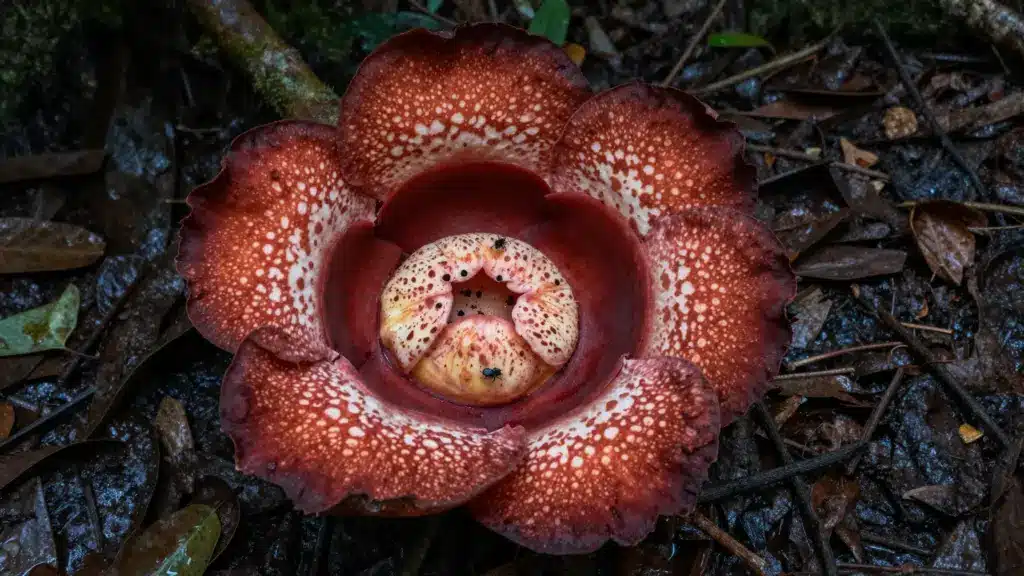
Rafflesia is one of the strangest plants in any rainforest. It has no leaves, no stem, and no roots. It lives entirely as a parasite inside a vine from the grape family, invisible until it is ready to flower.
When it does flower, it produces the largest individual flower of any plant on Earth, sometimes reaching 3 feet wide. That flower smells like rotting meat.
- Botanical Name: Rafflesia arnoldii
- Native Region: Southeast Asian rainforests, particularly Sumatra and Borneo
- Forest Layer: Forest floor
- Surprising Fact: The smell of decaying flesh is intentional. It attracts flies that carry pollen from one Rafflesia to another. The plant cannot grow in captivity, and each flower lasts only a few days before collapsing
14. Bamboo
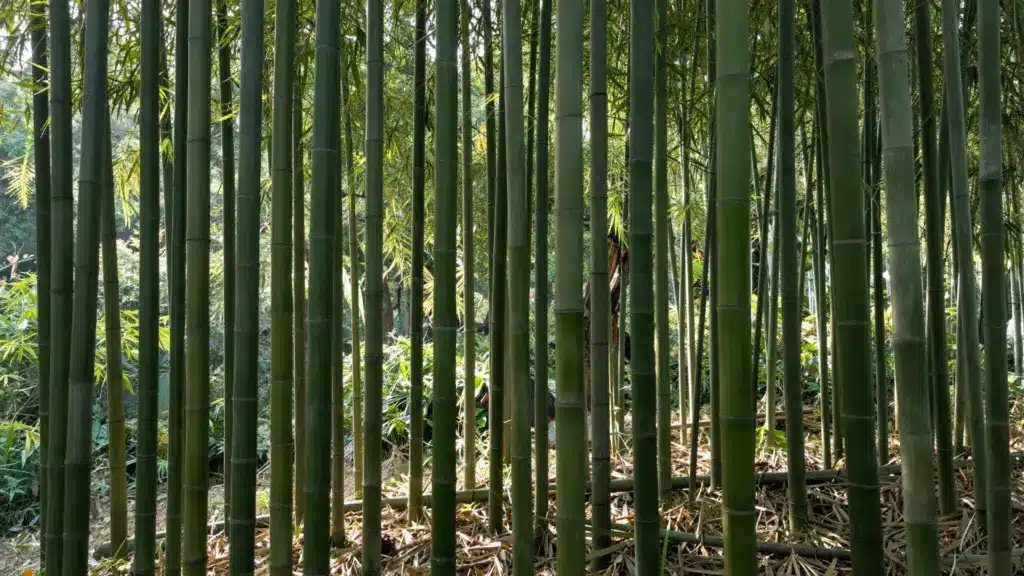
Bamboo is the fastest-growing plant on Earth. Some species add more than a meter of height in a single day.
Technically a grass, bamboo grows in dense thickets across tropical rainforests in Asia and South America. Its hollow, jointed stems are strong enough to be used in construction, and its shoots are eaten as food across many Asian cultures.
- Botanical Name: Bambusoideae (subfamily)
- Native Region: Tropical forests of Asia and South America
- Forest Layer: Canopy edges and forest clearings
- Surprising Fact: Despite growing at extraordinary speed, bamboo only flowers once in its lifetime. Some species wait 60 to 120 years to flower, then die shortly after. The exact trigger for this is still not fully understood by scientists
15. Liana
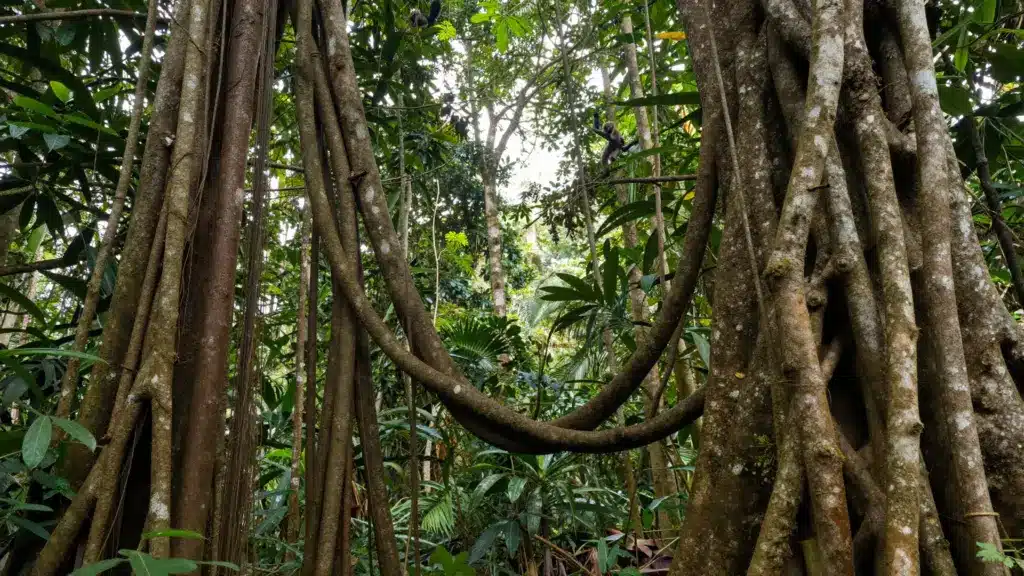
Lianas are thick, woody vines that use rainforest trees as support structures. They root in the ground, climb upward using the trunks and branches of other trees, and can stretch thousands of feet through the canopy.
Animals like spider monkeys and sloths use lianas as pathways, moving from tree to tree without ever coming down to the ground.
- Botanical Name: Various species across multiple plant families
- Native Region: All major tropical rainforests, including the Congo and Amazon
- Forest Layer: From forest floor all the way up to the canopy
- Surprising Fact: A single liana can grow to over 3,000 feet in length. In the Congo Rainforest, they form some of the main pathways that forest animals rely on for moving through the trees
How Do Tropical Rainforest Plants Survive?
The competition in a tropical rainforest is intense. Every plant is fighting for light, water, and nutrients in a space that is already packed.
Plants in the upper layers grow oversized leaves or spread wide to catch every ray of sunlight, while those on the forest floor develop extra-large leaf surfaces to absorb what little filtered light reaches them.
Many trees grow wide, flat buttress roots that fan out from the base of the trunk, giving them stability in soil that is often only a few inches deep.
Plants like orchids and bromeliads skip the soil entirely and grow on tree bark, absorbing moisture from humid air. Some, like the pitcher plant, evolved carnivorous feeding when soil nutrition ran out.
Others coat their leaves in waxy or toxic compounds to stop insects from eating them before they can reproduce.
Final Thoughts
Tropical rainforest plants have spent millions of years finding ways to grow, compete, and survive in one of the most crowded and demanding environments on Earth.
The results are extraordinary. A tree that holds 136 kilograms of weight in its leaves. A flower that smells like death to attract the right pollinator. A grass that grows a meter in a single day.
These are not just interesting facts. They are proof of how much life this planet can produce when conditions are right. If you have questions or want to know more about a specific plant, leave a comment below.