

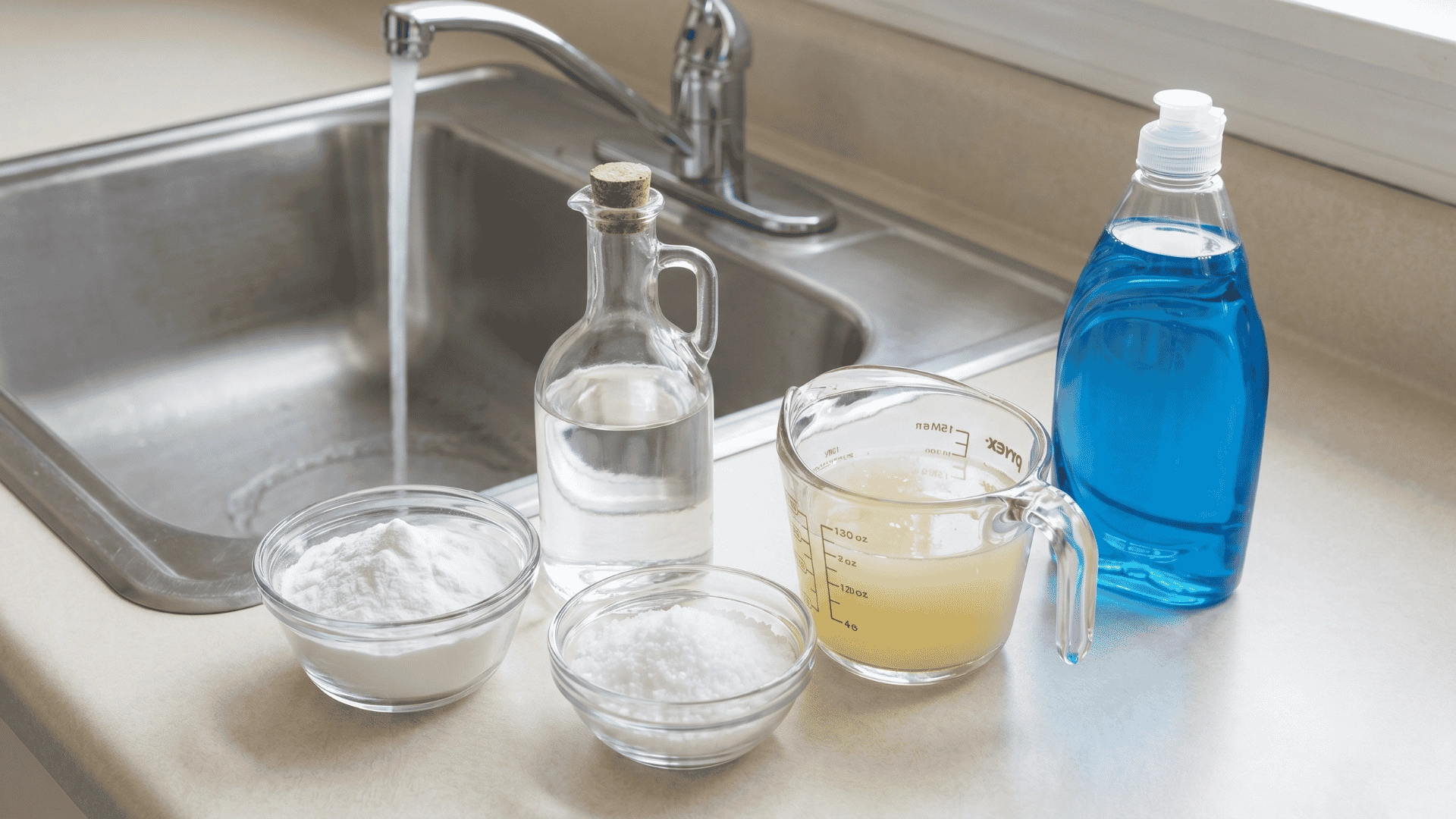
Most people reach for baking soda and vinegar when a drain slows down, but they pour them incorrectly, wait too little, and wonder why the clog barely budges. The issue usually isn’t the ingredients. It’s the method.
Homemade drain cleaners work by creating a mild chemical reaction or physical scrubbing action that breaks up grease, residue, and light organic buildup inside the pipe.
They are not designed for deep blockages, but for the slow drains and routine grime that build up over weeks, they work reliably and safely.
This guide covers the most effective homemade drain cleaner recipes, how to use each one correctly, and how to tell when a clog has moved beyond what any DIY method can fix.
Benefits of Using a Simple Homemade Drain Cleaner
Using a homemade drain cleaner offers several practical advantages over reaching for a chemical product every time a drain slows down.
- Easy to make and low cost: Most of the time, you already have the ingredients at home, so there is nothing extra to buy.
- Safer for your pipes: Strong chemical drain cleaners can corrode pipe interiors with repeated use, particularly in older metal pipes and PVC. Natural mixes are gentler when used correctly, making them a better option for regular maintenance.
- Better for your home environment: You avoid strong fumes and reduce chemical exposure, which matters especially in small spaces like kitchens and bathrooms.
Homemade Drain Cleaner Recipes Using Common Kitchen Ingredients
These recipes use items most households already have. They are organized from the most reactive and effective combination down to simpler maintenance methods.
1. Baking Soda and Vinegar
Baking soda and vinegar react to create carbon dioxide bubbles. The fizzing loosens grease, soap scum, and organic residue that plain water won’t shift.
How to make it:
- Measure half a cup of baking soda.
- Measure one cup of white vinegar.
- Have a drain stopper or flat plate ready.
How to use it: Pour baking soda into the drain first. Add vinegar on top, then immediately cover the drain. This keeps the reaction working inside the pipe.
Wait 15 to 30 minutes. Flush with hot but not boiling water. Repeat once if still slow. After two treatments with no result, the blockage is too deep.
2. Salt and Hot Water
Salt acts as a light abrasive that scours the pipe wall. Hot water melts soft grease deposits along the way. Good for mild clogs and maintenance.
How to make it:
- Measure half a cup of table or coarse salt.
- Heat water until hot but not boiling.
How to use it: Pour salt directly into the drain. Slowly pour hot water on top. Let it sit a few minutes, then rinse with a second pour of hot water.
No improvement after two or three consecutive days means the clog is beyond what this method can handle.
3. Dish Soap and Hot Water
Dish soap breaks the bond between grease and the pipe wall. Water then carries the residue away. Best for light grease buildup in kitchen sinks.
How to make it:
- Measure a few tablespoons of liquid dish soap.
- Heat water until hot but not boiling.
How to use it: Pour dish soap into the drain. Let it sit a few minutes to reach the grease. Slowly flush with hot water.
This won’t clear clogs from hair, food, or mineral scale. No response after two applications means the cause is likely something other than grease.
4. Vinegar and Hot Water
Vinegar’s mild acidity dissolves soap scum and mineral deposits on pipe walls. Best for bathroom drains. It is a maintenance option, not a clog-clearing method.
How to make it:
- Measure about one cup of white vinegar.
- Heat water until hot but not boiling.
How to use it: Pour vinegar into the drain. Let it sit five to ten minutes. Flush with hot water to clear residue.
If the drain is already running slow, skip this. Start with the baking soda and vinegar method instead.
5. Lemon Juice and Hot Water
Lemon juice is a mild acid that breaks down light mineral and soap residue. It also leaves a cleaner smell than vinegar.
How to make it:
- Measure about half a cup of lemon juice. Bottled works fine.
- Heat water until hot but not boiling.
How to use it: Pour lemon juice into the drain and let it sit briefly. Flush with hot water. Best for odor and light buildup only.
For slow or blocked drains, this won’t be enough. Use the baking soda and vinegar method instead.
6. Dish Soap and Vinegar
Dish soap targets grease while vinegar handles mineral residue. Together they work on both issues at once. A step up from plain dish soap for slow kitchen drains.
How to make it:
- Measure a few tablespoons of liquid dish soap.
- Measure about half a cup of white vinegar.
How to use it: Add dish soap into the drain first, then pour vinegar on top. Let it sit for about 10 minutes. Flush with warm water.
If the drain is still slow after flushing, move to the baking soda and vinegar method before trying a chemical cleaner.
7. Salt and Dish Soap
Salt scours the pipe wall while dish soap cuts through grease. Hot water carries both away. Useful for kitchen drains with cooking oil and food waste buildup.
How to make it:
- Measure about a quarter cup of salt.
- Measure a few tablespoons of liquid dish soap.
- Heat water until hot but not boiling.
How to use it: Add salt into the drain first, then pour in the dish soap. Wait briefly, then flush with hot water.
No improvement after two uses means the blockage has compacted past what surface cleaning can shift.
8. Hot Water Flush
A hot water flush melts soft grease deposits before they harden. Most effective as a preventive habit. It is not a solution for an active clog.
How to make it:
- Heat a full kettle or pot until hot but not boiling.
How to use it: Pour hot water slowly in stages so it moves through the pipe. Do not dump it all at once or it splashes back.
This won’t clear blockages from hair, debris, or hardened grease. No improvement after the first pour means a more active method is needed.
9. Vinegar and Salt
Vinegar and salt create a mildly abrasive acidic solution. It loosens light mineral scale and soft debris on pipe walls. Best for routine cleaning between deeper treatments.
How to make it:
- Measure about a quarter cup of table or coarse salt.
- Measure about half a cup of white vinegar.
How to use it: Pour salt into the drain first so it contacts the pipe surface. Then add the vinegar on top. Let it sit for five minutes.
Flush with warm water. For an active slow drain, this is less effective than baking soda and vinegar. Switch to that method if there is no response.
How to Use Your Homemade Drain Cleaner Safely

The ingredients in these recipes are low-risk, but a few precautions matter; particularly when it comes to your pipes and to mixing products.
Pour all liquids slowly and keep your face back from the drain, especially when adding vinegar to baking soda. The reaction produces gas that can cause liquid to bubble up quickly if the drain is partially blocked.
Note: Do not use any homemade method immediately after using a commercial chemical drain cleaner.
Chemical cleaners contain sodium hydroxide or sulfuric acid, and residue stays in the pipe. Adding vinegar or another acid on top of an alkaline chemical creates a reaction that can release heat and fumes and, in a confined pipe, push corrosive liquid back up toward the drain opening.
Use hot water, not boiling. Boiling water can soften or warp PVC pipe joints, which are common in most residential plumbing installed in the last 40 years.
Hot tap water or water brought to a boil and then allowed to cool for two to three minutes is effective for melting grease without the risk.
When to Use a Homemade vs. Store-Bought Cleaner
The right choice depends on how serious the clog is. Homemade methods work well for slow drains and regular maintenance. They are not the right tool for a drain that is fully blocked or one that has stopped responding after repeated treatments.
| Situation | Homemade Cleaner (DIY) | Store-Bought Cleaner |
|---|---|---|
| Light clogs or slow drains | Best choice for mild buildup and regular cleaning | Usually not needed |
| Tough or deep clogs | May not clear fully | More effective for stubborn blockages |
| Frequency of use | Safe for regular use | Should be used less often |
| Cost | Low cost, uses basic items | More expensive over time |
| Safety | Gentler on pipes and safer to handle | Can damage pipes if overused |
When to call a plumber: If you have tried the baking soda and vinegar method twice in one day, followed by a hot water flush, and the drain is still running slowly or if water is backing up entirely, the clog is likely past the trap and deeper in the drain line.
At that point, a drain snake or professional inspection is the appropriate next step. Continuing to pour liquids into a fully blocked drain risks overflow and does not fix the underlying problem.
Tips to Keep Your Drains Clean Longer
A few consistent habits prevent the slow buildup that eventually turns into a clog. These take under a minute each and are worth making routine.
- Weekly maintenance: Run hot water through your drain for 30 to 60 seconds once a week. Following it with a light baking soda and hot water rinse, no vinegar needed for maintenance; it clears small deposits before they accumulate. If the drain starts running noticeably slower during your weekly rinse, that is the signal to do a full baking soda and vinegar treatment before the week is out.
- What not to pour down drains: Avoid pouring grease, cooking oil, coffee grounds, or food scraps into the sink. These are the primary causes of kitchen drain blockages: grease, especially, because it is liquid when hot but solidifies on the cooler pipe wall and collects other debris as it hardens.
- Use a drain strainer: A strainer catches hair, food particles, and debris before they enter the pipe. Clean it after each use. Most drain blockages in bathroom sinks and showers start with accumulated hair — a strainer eliminates the problem at the source.
Common Mistakes to Avoid When Cleaning Drains
Small errors in technique reduce how well these methods work and can create new problems. These are the most common ones worth avoiding.
| Mistake | What Happens | How to Fix It |
|---|---|---|
| Using too much product | Buildup can get worse instead of clearing | Use small, measured amounts |
| Skipping wait time | The cleaner doesn’t break down the clog fully | Wait at least 10–15 minutes |
| Mixing harmful chemicals | Can create unsafe fumes | Use one method at a time |
Conclusion
Homemade drain cleaners are a reliable first response to slow drains and mild grease buildup; not a substitute for professional help when something is genuinely blocked.
The baking soda and vinegar combination is the most effective of these methods because it produces a physical reaction inside the pipe, not just a surface flush.
Use the simpler single-ingredient methods for weekly maintenance. Reserve the reactive combinations for drains that are already slowing down.
And when a drain stops responding to repeated treatments over two or three days, that is the signal to stop DIY and call a plumber before the problem gets worse.
Frequently Asked Questions
Can I use these methods on bathroom drains?
Yes, most homemade drain cleaner methods work on bathroom drains. White vinegar dissolves soap scum buildup in bathroom sinks because its mild acidity breaks down the mineral and soap residue that accumulates on pipe walls. The baking soda and vinegar combination handles light organic buildup in shower drains by producing a fizzing reaction that loosens debris without damaging PVC pipes.
What is a homemade drain cleaner without baking soda?
An effective homemade drain cleaner without baking soda uses dish soap and hot water, white vinegar and hot water, salt and hot water, or a combination of salt and dish soap. Dish soap and vinegar together is the strongest baking-soda-free option for a slow drain because the soap breaks down grease while the vinegar dissolves mineral residue. None of these methods produce the fizzing reaction that baking soda creates, so they work best for routine maintenance and light buildup rather than active clogs.
How often should I use a homemade drain cleaner?
Use a homemade drain cleaner once a week for prevention. A weekly hot water flush followed by a baking soda rinse keeps light deposits from accumulating. For a drain that is already running slow, apply the baking soda and vinegar method daily for two to three days. If the drain does not improve within that window, the clog is beyond what homemade cleaners can clear and a plumber or drain snake is the appropriate next step.
Can I store a premixed homemade drain cleaner for later use?
No, premixing a homemade drain cleaner reduces its effectiveness. The cleaning power of baking soda and vinegar comes from the reaction that occurs when they first meet inside the drain. Mixing them in advance means the carbon dioxide reaction is spent before the solution reaches the pipe, leaving plain liquid with no fizzing action. Always add baking soda to the drain first, then pour vinegar directly on top for the full effect.