

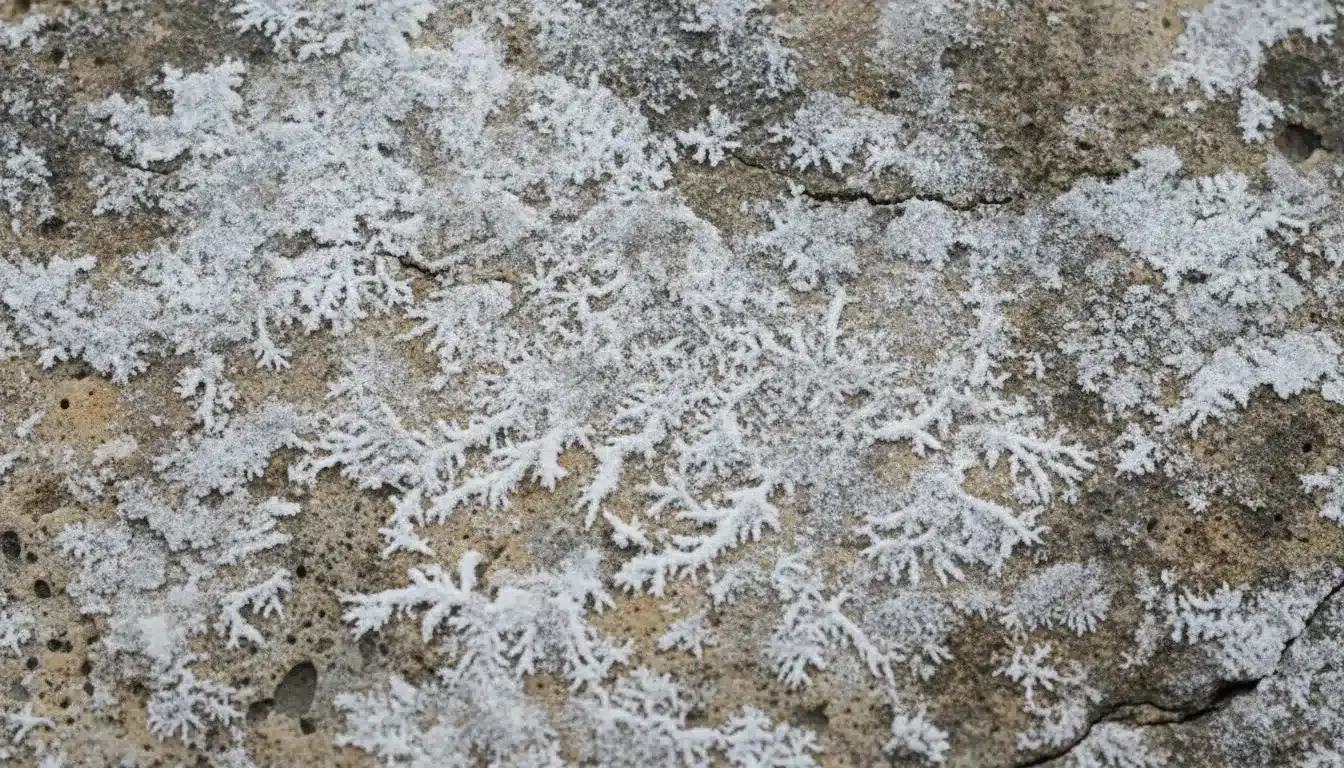
You step outside one morning and notice a strange white residue creeping across your concrete or limestone surfaces. This chalky buildup forms when dissolved salts slowly travel to the surface and crystallize.
Moisture often travels beneath the surface, carrying minerals with it until they show up as stains. If you apply TSS Pro Sealant Solutionsearly, minerals never reach the surface to cause stains.
Stopping this movement early on helps prevent unsightly white staining before it ever begins. When you treat concrete or limestone with a protective sealing barrier, stains stay away for years to come.
Understanding Efflorescence Formation
Efflorescence typically begins its formation deep inside porous concrete, mortar, and natural limestone materials. Water trapped inside these materials slowly dissolves natural mineral salts such as calcium carbonate.
As water slowly evaporates from the outer surface, it leaves these dissolved minerals behind. Those leftover minerals then crystallize, forming the familiar white haze seen on many surfaces.
This entire process can repeat many times each year, especially in humid rainy climates. Once you understand how this cycle works, you gain the tools to stop problems before they start.
Why Concrete and Limestone Are Vulnerable
Concrete and limestone are both naturally quite porous, allowing water to move rather freely. Both materials also naturally contain soluble minerals that quickly dissolve easily once fully wet.
New poured concrete is especially prone to efflorescence during its earliest curing stages overall. Limestone with unusually high natural porosity tends to absorb and hold much more water.
Poor drainage or improper grading around structures can worsen this whole ongoing moisture problem. If you leave a surface untreated, moisture seeps in and leaves stubborn white stains over time.
How Moisture Drives Mineral Migration
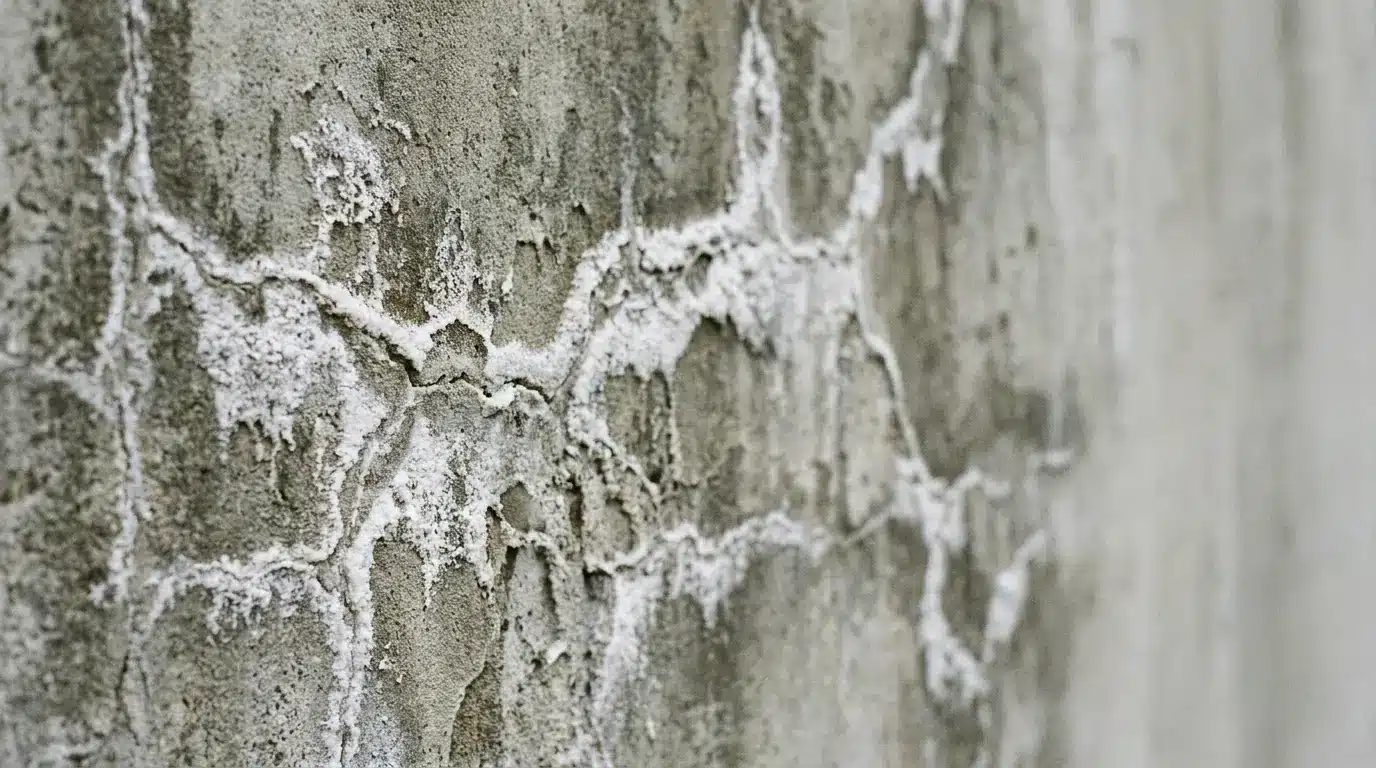
Moisture always acts as the primary transport system, carrying dissolved minerals to outer surfaces. Capillary action pulls water steadily upward through tiny channels within both concrete and stone.
As the water slowly travels, it collects and carries minerals along its entire path. Once at the outer surface, evaporation leaves these minerals clearly visible as white deposits.
Higher humidity and larger seasonal temperature swings can speed up this migration process significantly. If you block this moisture pathway early, you prevent efflorescence before it ever forms.
Preventing Efflorescence With Sealants
A quality penetrating sealer blocks water from ever entering both concrete and limestone surfaces. Without any water intrusion, dissolved minerals have no clear way to reach the surface.
Breathable sealers still allow existing moisture vapor to escape without ever trapping it inside. This careful balance prevents new efflorescence while also avoiding pressure buildup within the material.
Sealing new concrete after it has fully cured helps avoid many early efflorescence problems. Ongoing sealer maintenance keeps this protective barrier quite strong for many years to follow.
Removing and Managing Existing Efflorescence
Light efflorescence can often be removed with just a stiff brush and clean water. Heavier deposits may sometimes require specialized cleaners designed specifically for tough mineral removal work.
Harsh acids can damage stone permanently and should almost always be completely avoided entirely. Testing any cleaner on a small hidden area first always prevents unwanted surface damage.
Removing efflorescence without properly sealing the surface only invites the same problem right back. When you clean the surface well and apply a strong sealant, it stays free of white staining for years.
You might notice efflorescence on your walls and feel alarmed, but it rarely means a serious structural problem. Once you understand why it happens, good drainage and timely sealing keep it from coming back.
Good preparation during construction, followed by proper and timely sealing, stops efflorescence before it ever forms. A little prevention now saves plenty of scrubbing and real frustration down the road.
Surfaces and climates vary widely, so your results will depend on where you live. When you seal them properly, concrete and limestone stay clean and look good for years.