

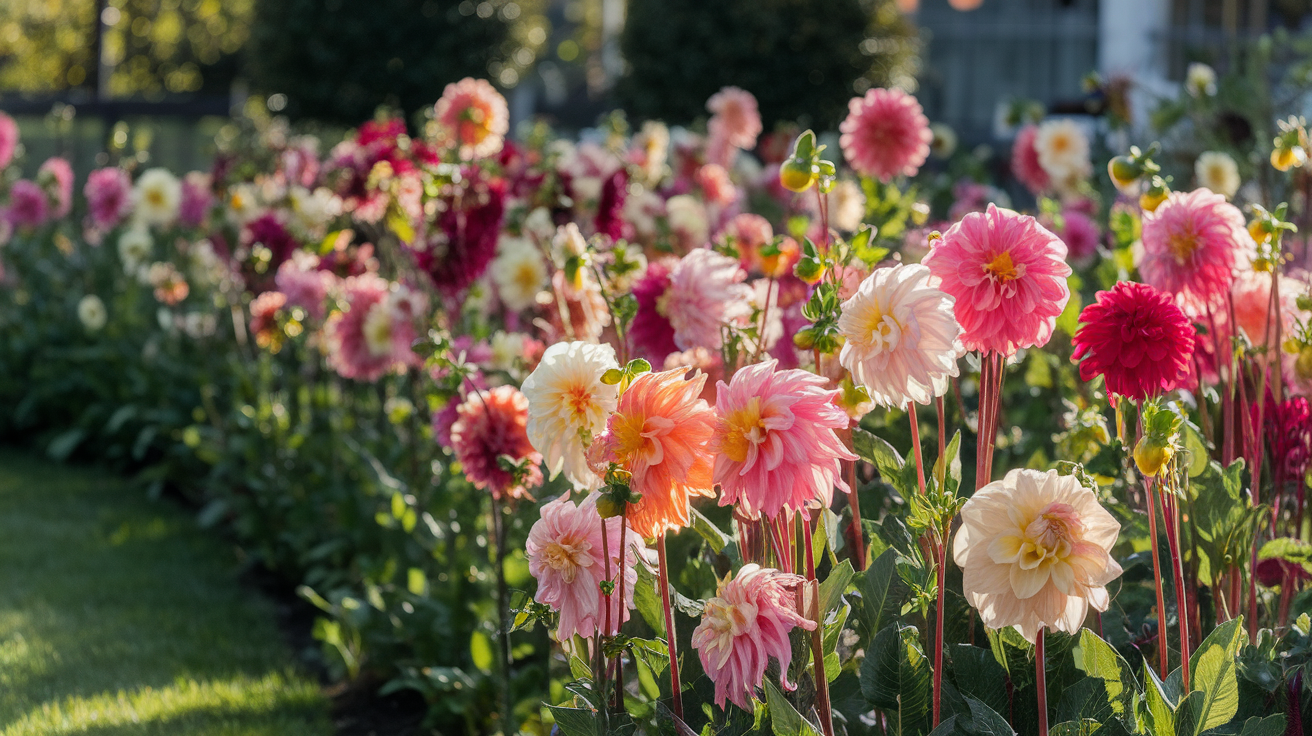
Dahlias are bright, bold flowers that add color to any garden. They come in many shapes and sizes, making them a favorite for flower lovers.
But to enjoy their full beauty, timing matters. Knowing when to plant dahlias is the first step to getting strong, healthy blooms.
This blog gives clear and simple tips to help gardeners plant with confidence. It also shares steps to make the process even easier.
With the right start, dahlias can grow tall and full. Keep reading to find out how to begin the planting journey the right way.
What Makes Dahlias So Unique?
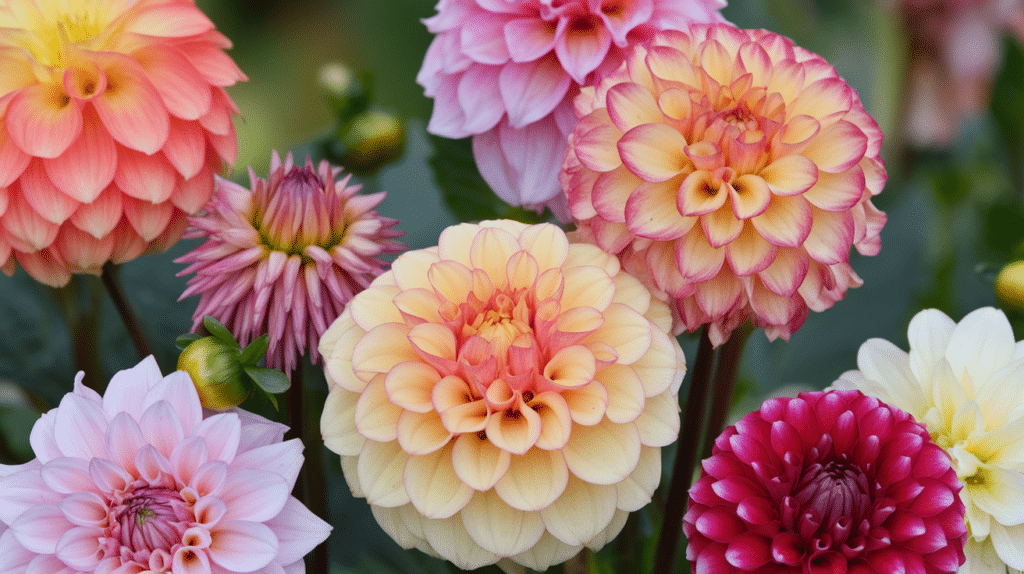
Dahlias are native to Meso-America, especially Mexico, where they are the national flower. There are over 40 species and more than 57,000 cultivars of dahlias.
Why so many? They have eight sets of chromosomes, allowing tons of variety in color, shape, and size.
Interestingly, there is no true blue dahlia, even after centuries of trying to create one. If it ever gets made, it will be a gardening game-changer!
When to Plant Dahlias by Region
The best time to plant dahlias depends on where you live. In most places, dahlias are planted in spring after the danger of frost is gone. Here’s a simple guide by region:
Northern States (Zones 3–5)
- Best planting time: Late May to early June
- Last frost date: Often mid to late May
- Tip: Start tubers indoors 4 weeks before planting outside
Midwestern and Central States (Zones 5–7)
- Best planting time: Mid to late May
- Last frost date: Early to mid-May
- Tip: Check soil temperature before planting
Southern States (Zones 7–10)
- Best planting time: Late March to early May
- Last frost date: Varies from February to April
- Tip: You may be able to plant earlier than most
West Coast (Zones 8–10)
- Best planting time: March to April
- Last frost date: Varies by area
- Tip: Dahlias grow well in cooler coastal summers
Always check your local frost date and soil temperature. This makes sure your dahlias get a strong start.
How to Plant Dahlias Step-by-Step
Planting dahlias doesn’t have to be hard. If you follow each step carefully, your flowers will grow strong and healthy. This section breaks down the whole process from tuber care to planting and support.
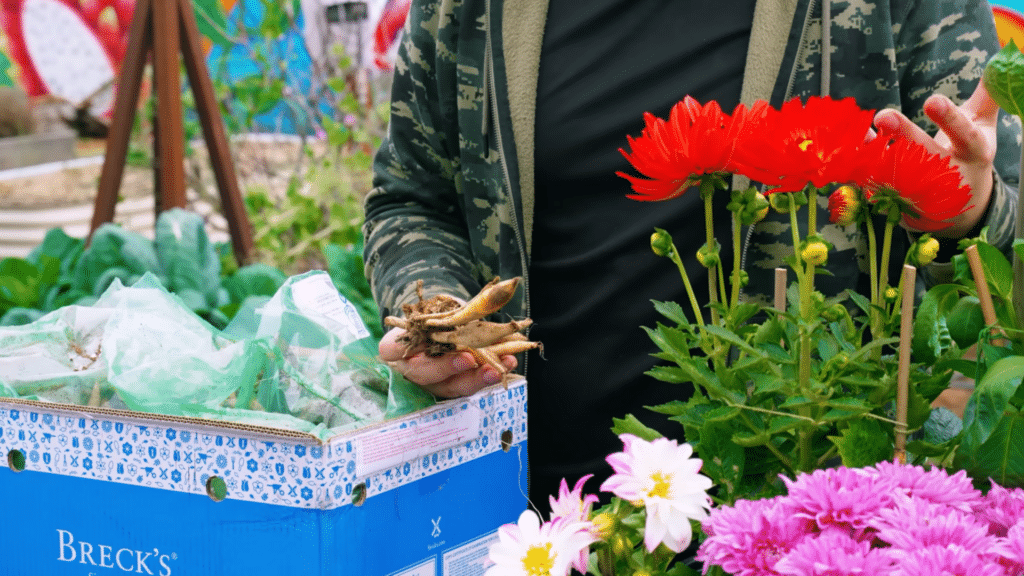
1. Know Your Tuber Parts

Before you plant, it’s good to understand what each part of the dahlia tuber does.
- Tail: The thin, root-like end
- Meat: The thick main part that stores nutrients
- Neck: Connects the meat to the crown
- Crown: Where all tubers connect
- Eye: The small bump where new growth starts
The eye is the most important part. Without it, the plant will not grow.
2. Divide Tubers

You can plant a full clump or split it into single tubers. Each piece must have an eye, or it won’t grow. Use clean tools and cut gently above the neck, making sure the eye is included in each piece. Dividing allows you to grow more plants from one clump.
3. Cold Zone Tips
If you live in a cold zone (below USDA Zone 8), you’ll need to dig up the tubers after the season ends. Store them indoors during winter to protect them from frost. In warmer zones (Zone 8+), you can leave tubers in the ground year-round.
4. Get Ready to Plant
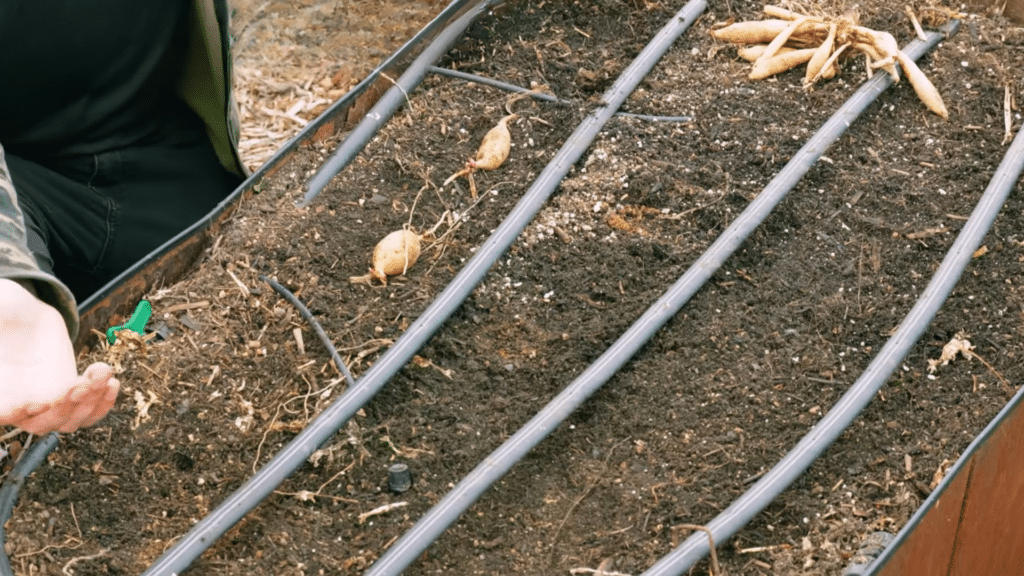
Choose a good spot in your yard or raised bed. Dahlias need:\n- 8 or more hours of sun per day
- Loose, rich, well-draining soil: Avoid watering right after planting. Wet soil can rot the tubers.
5. Plant a Single Tuber
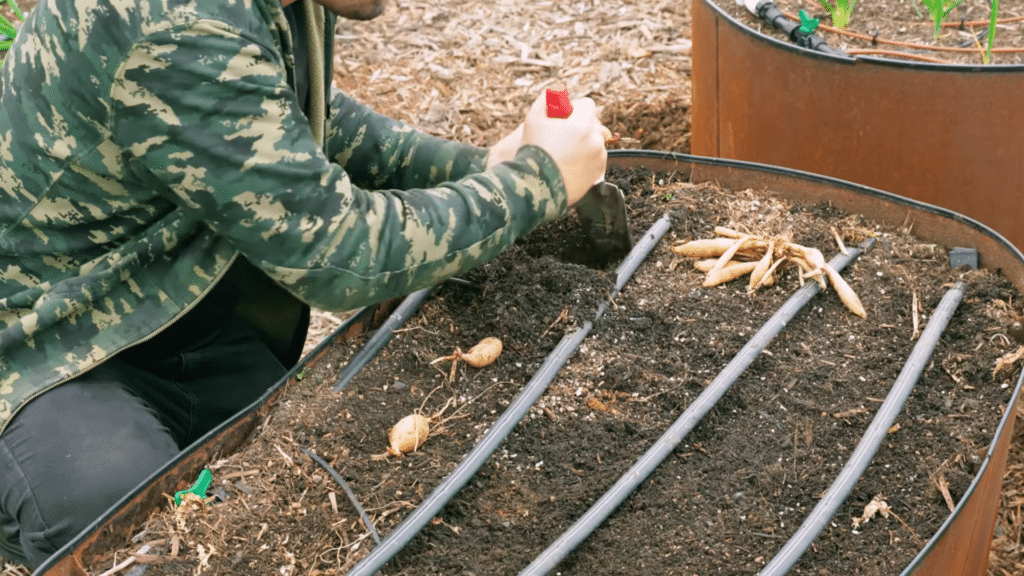
- Find the eye on the tuber.
- Lay it on its side, eye facing up.
- Plant it 4 to 6 inches deep.
- Do not water yet.
- Space each tuber about 18 inches apart.
- You can also plant the entire clump. Just dig a slightly deeper hole and gently place the clump inside.
Point the crown upward if possible, though exact orientation is less critical than with single tubers.
6. Choose Your Dahlia Type
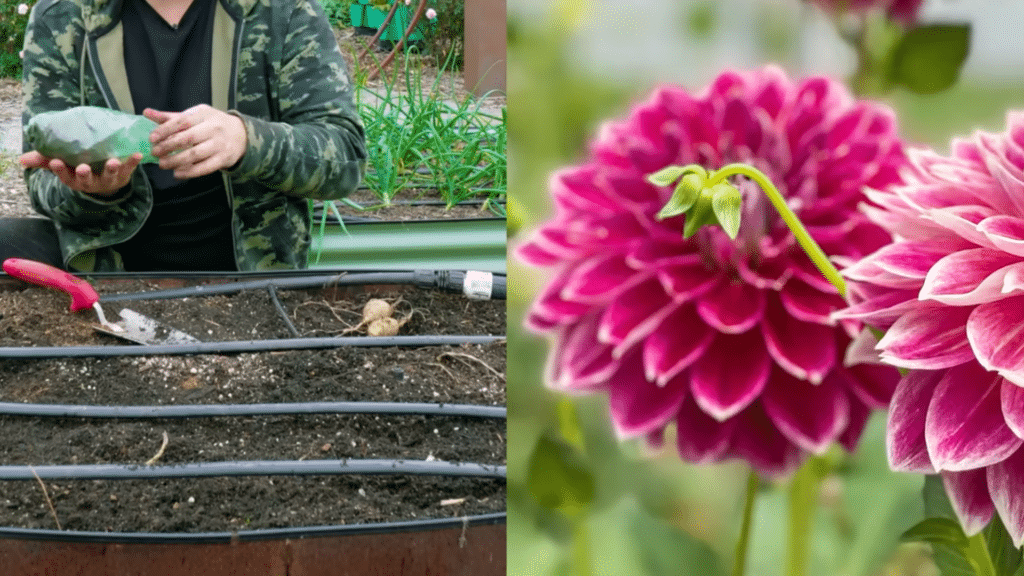
There are over 57,000 dahlia cultivars to pick from. Some popular types include:
- Color Spectacle (semi-cactus type)
- Temple of Beauty (decorative type)
Each variety has a unique shape, size, and bloom style, so pick one that fits your space and taste.
7. Spacing and Watering & Staking

Spacing:
-
Always give each plant room to grow. About 18 inches between plants works best.
Watering:
- Don’t water until shoots appear.
- Once growing, give 1 inch of water per week.
- When blooming, increase to 2 inches per week.
Staking:
- For tall varieties, insert a bamboo stake at planting time.
- This avoids poking into the tuber later when you add support.
8. Plant in the Ground

If you’re planting directly into the garden:
- Loosen the soil to at least 10 inches deep using a broad fork or shovel.
- Avoid compact, wet, or soggy soil, which can rot the tubers.
- Plant 4–6 inches deep, just like in containers.
Ground planting works well around beds, borders, or along pathways.
9. Pruning and Support
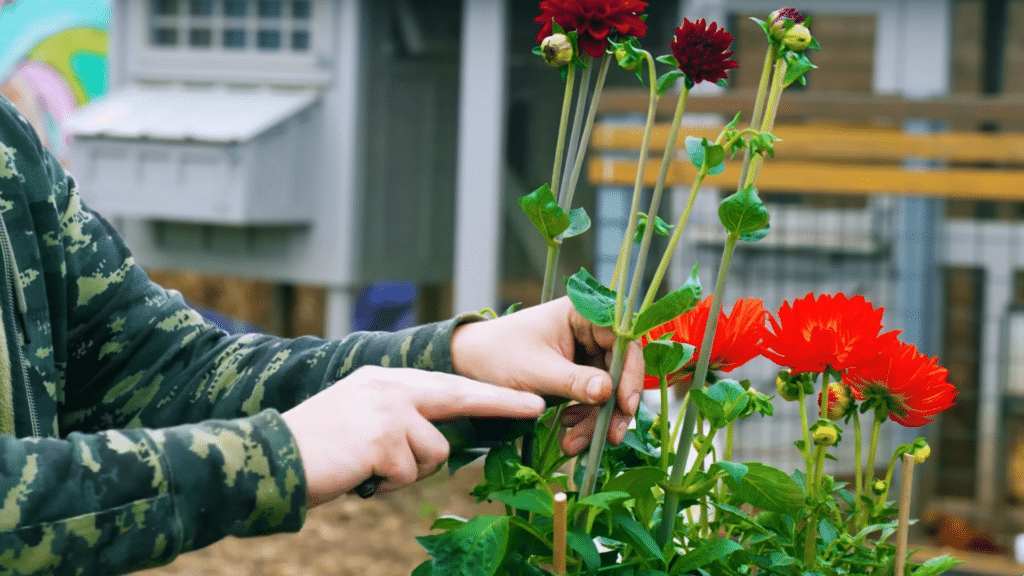
As the plant grows to about 12 inches, you can pinch or prune the top to make it bushier. This encourages more side shoots and a fuller plant. Use twine tied to bamboo stakes to help hold up heavy blooms and keep the plant upright.
For a more detailed guide, watch this YouTube tutorial by @epicgardening:
Common Problems and How to Fix Them
Even with the right care, dahlias can face a few issues. Here are some common problems and easy ways to fix them:
Tuber Rotting in Soil
- Cause: Cold or soggy soil
- Fix: Wait until the soil is 60°F (15°C) and well-drained before planting
No Sprouts After Planting
- Cause: The Tuber has no eye
- Fix: Always check for a visible eye before planting
Lots of Leaves but No Blooms
- Cause: Too much nitrogen in fertilizer
- Fix: Use a low-nitrogen fertilizer like 5-10-10
Plants Falling Over
- Cause: Tall varieties with no support
- Fix: Add a stake at planting time and tie gently with soft twine
Slugs or Snails on Leaves
- Cause: Damp, shady areas
- Fix: Use slug traps or sprinkle crushed eggshells around the plant
Aphids or Small Insects
- Cause: New growth attracts pests
- Fix: Spray leaves with a mix of water and mild dish soap
To Conclude
Planting dahlias is easy when you follow the right steps. Start with healthy tubers that have eyes. Wait until the soil is warm enough.
Give them sun, space, and good soil. Don’t water too early, and remember to stake tall plants. With the right care, your dahlias will grow big, bright blooms all season.
These flowers can make any garden look full and colorful. Try different types and enjoy how each one grows. If a problem comes up, just fix it and keep going.
Dahlias are worth the effort. Ready to plant dahlias? Use this guide and get started today.