

New to pool maintenance and already feel like the water changes its mood overnight? One day it looks perfect, the next day it looks a little dull, a little cloudy, or just not as inviting. The truth is, pool care is not hard.
A general rule of thumb you will want to live by is simple. Do the same small basics every week before the water forces you into a big fix. If you do that, your pool stays clean, safe, and ready to swim far more often. A robotic pool cleaner can be a great helper for day-to-day cleanup, especially for keeping debris off the floor.
The easiest way to remember the basics is the three C’s of pool care. Circulation, cleaning, and chemistry.
Circulation Comes First
If the water is not moving, your sanitizer cannot reach every corner, debris does not travel to the filter efficiently, and algae gets comfortable in quiet areas. Beginners often think circulation is just about running the pump, but it is really about consistent flow through the whole system.
When circulation is solid, everything becomes easier. Your filter captures more, your chemicals spread more evenly, and you spend less time chasing problems that keep coming back.
Pump Run Time Basics
Most pools do well when the pump runs long enough to move the full volume of water through the filter at least once per day. For beginners, a practical starting point is eight to twelve hours daily, then adjust based on temperature, swimmer load, and weather.
If you have a single speed pump, the most beginner friendly rule is the temperature rule. A general rule of thumb you’ll hear often is to run a single speed pump about one hour for every ten degrees Fahrenheit of the day’s high temperature.
When the high is around eighty degrees, eight hours is often fine. When the high is around one hundred, ten hours or more is usually safer. This is not about perfection. It is about staying ahead of the mess.
Variable speed pumps work differently, but the idea stays the same. Many pools benefit from a shorter high speed window for strong circulation and skimming, plus a longer low speed window for steady filtration. If you run equipment that needs higher flow, like certain cleaners, heaters, or salt systems, you may need to increase the time spent at higher speed.
Keep Water Flow Strong
Most circulation problems are not “my pump is broken.” They are small chokepoints that quietly reduce flow until you notice cloudy water or weak returns.
Start with the baskets. If the skimmer basket or pump strainer basket is full of leaves, circulation drops, and filtration performance drops with it. Make it a quick habit to check them often, especially after windy days, storms, or heavy pool use.
Learn your filter pressure gauge. The gauge is basically your early warning system. When pressure climbs well above the clean starting pressure, the filter is loading up and flow is falling. A common guideline is to clean or backwash when pressure rises about eight to ten psi above the clean baseline. That single habit prevents a surprising number of “why is my pool acting weird” moments.
Do not ignore your return jets. If you aim the jets so water travels around the pool instead of blasting one zone, you reduce dead spots.
Those dead spots are where algae typically starts first, especially near steps, corners, ledges, and behind ladders. Point jets slightly downward and adjust them so the surface gently moves across the whole pool, not just one side.
Make Pool Cleaning Simple
Beginner pool owners often fall into an all or nothing cycle. They ignore small debris for days, then spend a whole weekend doing a big cleanup. That approach works, but it makes pool care feel exhausting.
A better approach is short and frequent. A quick skim keeps leaves from sinking. A quick basket check protects flow. Small actions prevent large, messy problems. And this is where a swimming pool cleaner robot can be a genuinely useful helper.
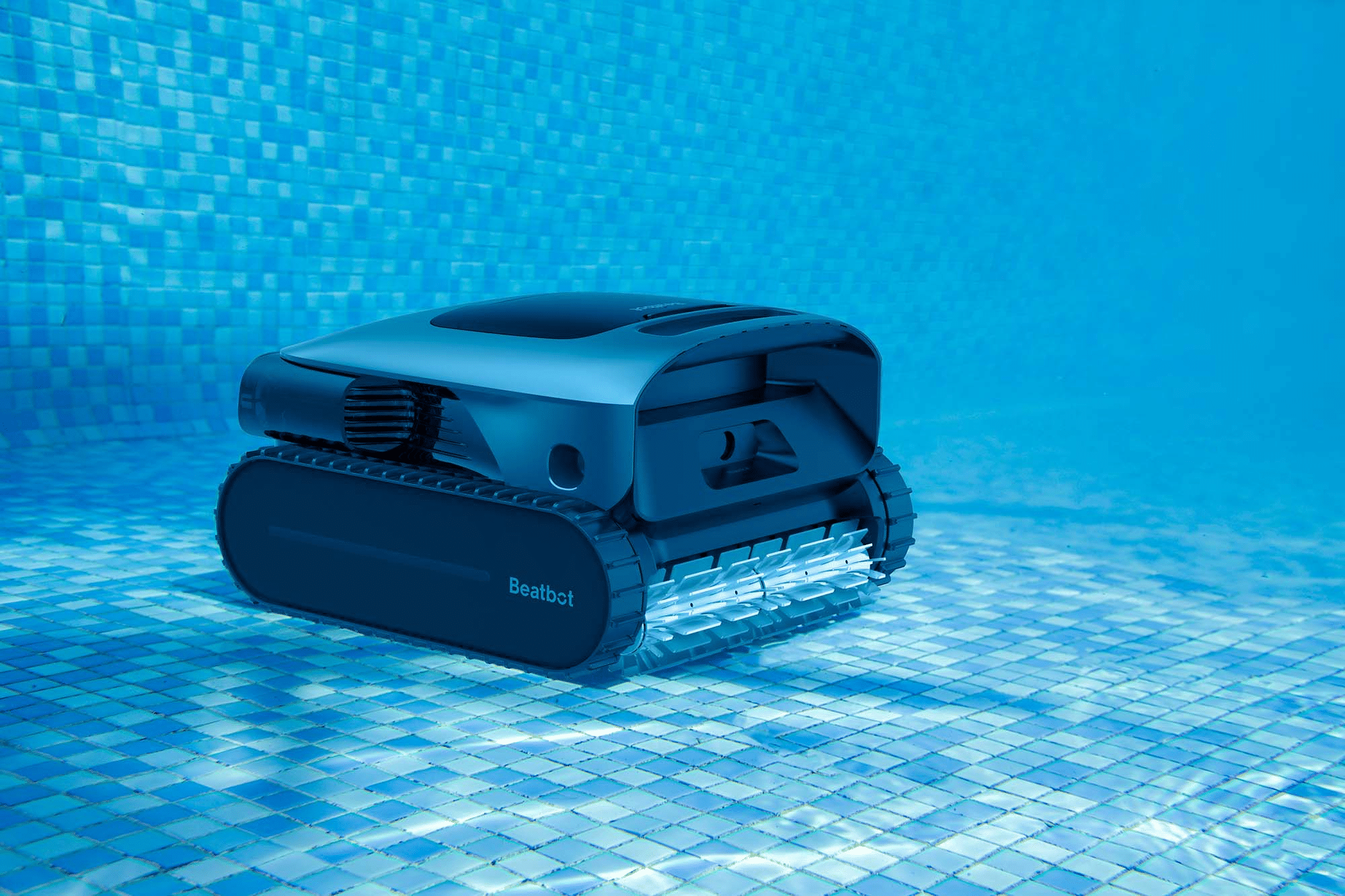
With the Beatbot AquaSense 2 Ultra, you can run a cleaning cycle whenever the pool needs it, which helps keep debris from building up and makes water quality feel more stable day to day. It also offers different cleaning modes, so you can match the cleanup to what the pool actually needs.
Even when you’re traveling, you can set it up ahead of time so it keeps cleaning on a schedule while you’re away.
If you want one simple habit, make it this. Remove debris before it breaks down. The longer leaves and bugs sit in the pool, the more they strain your sanitizer and your filter.
Automatic Cleaners Are Only Helpers
There are suction side cleaners, pressure side cleaners, and robotic cleaners. Each one can reduce your workload, but none of them fully replaces what beginners need most, which is simple surface removal and regular brushing.
Suction side cleaners use suction from your pool pump and typically connect to a skimmer or suction port. Pressure side cleaners use return side pressure and sometimes a separate booster pump, collecting debris into a bag or canister. Robotic cleaners are self contained and do not rely on your pool pump or filter system to operate, which many beginners like because they are plug in and go.
No matter which style you use, treat your cleaner like a helper. It can save time on the floor, but it will still miss the waterline, corners, steps, and other tricky zones.
Brush Weekly To Prevent Algae
Brushing sounds optional until you see that faint green tint or that dusty film that never quite disappears. Brushing does two important things. It removes buildup that makes surfaces look dull, and it knocks loose early algae and dirt so your sanitizer and filter can handle it.
If you only brush once per week, focus on the spots your circulation and cleaner miss most. Corners, steps, ledges, and the areas behind ladders are classic problem zones. If one spot keeps coming back, do not assume it is a chemistry failure. It is often a circulation and brushing issue first.
Also, brushing is one of the easiest ways to stop problems early. When algae is just starting, it clings to surfaces. Brushing breaks that grip before it becomes a bigger job.
Use Pool Vacuum For Quick Resets
Even when you have a cleaner, you still need a “back to normal” option after storms, during opening week, or anytime debris piles up fast. The good news is you don’t always have to drag out a hose and vacuum head anymore. A robotic pool cleaner can handle a lot of the same reset work by picking up heavy debris and fine sediment from the floor, which is exactly what makes the pool look dusty even when the water itself seems clear.
If your pool has a multiport valve, vacuuming to waste can still be useful for very large cleanups or specific situations, but for most day-to-day resets, running an extra robotic cycle is the simpler move. It keeps debris from getting pushed through the filter in one big hit, and it helps you get back to clean water faster with less effort.
Pool Chemistry Made Simple

People see cloudy water, dump something in, then the numbers swing, and now they are chasing the water every day.
The calmer approach is simple. Test first, then treat. For beginners, testing at least once per week is a solid baseline, and you should test more often after pool parties, heat waves, heavy rain, or any time the water looks off.
Most basic testing covers pH, total alkalinity, calcium hardness, cyanuric acid, and chlorine. You do not need to obsess over every number, but you do need to know what your pool is asking for before you add anything
Keep Chlorine Levels Steady
For many pools, a practical target for free chlorine is one to four parts per million. If cyanuric acid is higher, many owners aim higher within that range, often two to four parts per million when stabilizer is above about fifty parts per million. The key is consistency. A steady, appropriate chlorine level prevents problems. Big swings invite problems.
Weekly shocking can also help keep sanitizer working efficiently by breaking down contaminants that consume chlorine. Some pools use a non chlorine oxidizer when free chlorine is already adequate, and use a chlorine shock when chlorine is low or the pool needs a stronger sanitizing boost.
Whatever you add, stick to the safety rules every time. Read the label, never mix chemicals, and run the pump during and after dosing so the product distributes evenly. If you are ever unsure about swim wait time, the product label is the correct answer.
A Weekly Routine That Works
If you want a routine that does not feel like a long checklist, think in simple blocks.
Early in the week, do a quick skim, empty baskets, and glance at the filter pressure gauge. Midweek, test the water and make small adjustments instead of big corrections. Once a week, brush thoroughly, especially corners and steps, then decide if a weekly shock makes sense based on your current chlorine level and water clarity.
Any time weather or heavy swimming hits, add extra pump time and an extra test. That one adjustment prevents the classic beginner problem where everything looks fine until it suddenly does not.
Common Beginner Mistakes
If your pool keeps going cloudy, keeps growing algae in the same corner, or keeps feeling like it is never fully clean, it is usually not a mystery. It is typically one of the same patterns repeating.
The pump is not running long enough for the conditions. Baskets and filters are clogging and reducing flow. Dead zones are not being brushed. Chemicals are being added without testing. Or the pool is getting hit with high contamination events and the routine is not being adjusted afterward.
Conclusion
Do circulation, cleaning, and chemistry consistently every week, and increase effort right after heat, storms, or heavy use. That is how beginners avoid the cycle of “looks fine” to “why is it green.”
If you want, tell me your pump type, filter type, and whether you use tablets, liquid chlorine, or a salt system, and I will tailor this beginner routine so it matches your equipment without adding steps you do not need.