

A healthy lawn needs more than just water and sunlight. Many people don’t realize that a thick layer of dead grass and roots, called thatch, can build up over time.
This layer sits between the soil and the green grass on top. Too much thatch can stop water, air, and nutrients from reaching the roots.
That’s where dethatching comes in. It’s a simple lawn care step that helps remove that extra layer. But not all lawns need it. Knowing when to dethatch is important.
This blog shares helpful tips to understand what dethatching is, why it matters, and how to tell if it’s the right time to do it.
What is Thatch and Why Does it Build Up?
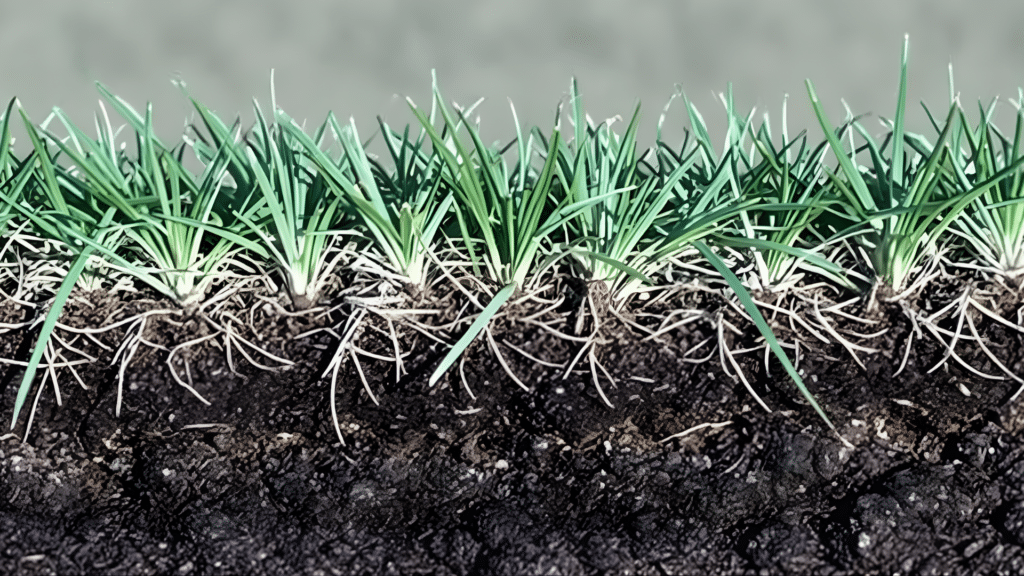
Thatch is a layer made of dead grass, roots, and stems. It sits on top of the soil but under the green blades of grass.
A small amount of thatch is normal and can be good for your lawn. It helps keep the soil moist and protects the roots from heat and cold.
But too much thatch can cause problems. When the layer gets thicker than ½ inch, it can block water, air, and nutrients from reaching the soil. This makes it harder for your grass to grow strong and healthy.
Thatch builds up when grass grows faster than it breaks down. This can happen if you:
- Use too much fertilizer, especially high-nitrogen types
- Water your lawn too often
- Use chemicals that harm helpful microbes in the soil
- Have grass types that grow thick and fast
- Cut your grass too short or too often
If the dead grass doesn’t break down quickly, the thatch keeps piling up. Over time, it forms a thick layer that chokes the roots and hurts your lawn. That’s when dethatching becomes important
What is Dethatching?
Dethatching means taking out the thick layer of dead grass and roots, called thatch, that builds up between the soil and the green grass.
When thatch gets too thick, it can block water, air, and nutrients from reaching the roots. This can make the grass weak or patchy.
Dethatching helps the lawn grow better by clearing out this layer so the soil can breathe and soak in water.
You can dethatch your lawn by using a rake or a machine. It’s not something you need to do every year, only when the thatch layer becomes too thick and starts causing problems.
Signs Your Lawn Has Too Much Thatch
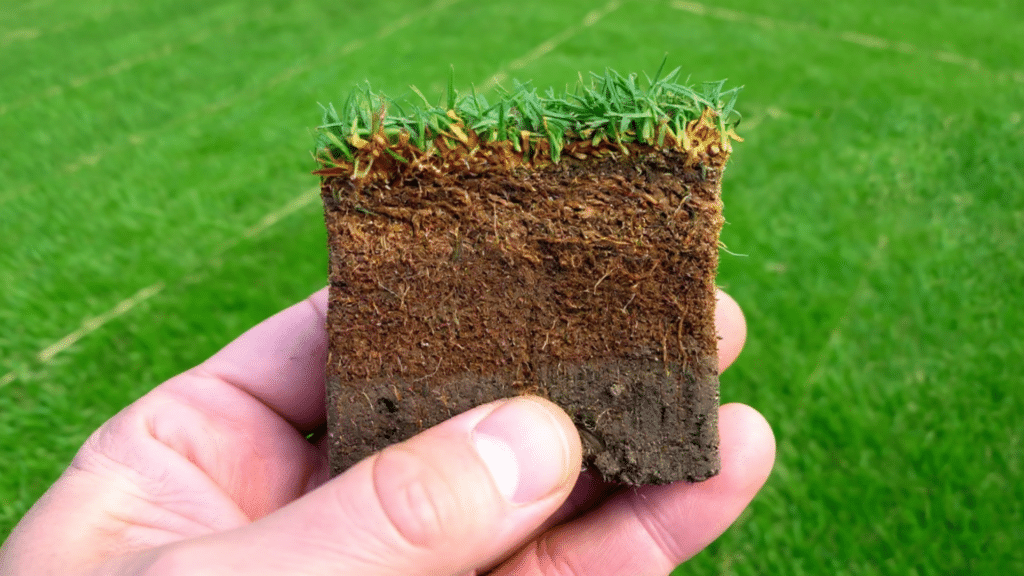
You can’t always see thatch by just looking at your lawn. Here are ways to tell if your lawn may need dethatching
- Spongy feel: The lawn feels soft or bouncy when walked on
- Water pooling: Water sits on the surface instead of soaking into the soil
- Dry grass: Grass looks brown or dry even after watering
- Weak growth: Grass grows thin or uneven in some areas
- Bare patches: Small dead or empty spots appear in the lawn
- Hard soil access: Water and air struggle to reach the roots
- Thick layer check: A visible thatch layer thicker than ½ inch between grass and soil
When to Dethatch Your Lawn
Dethatching should be done when the grass is growing actively. This helps it recover faster. The best time depends on the type of grass you have:
| Grass Type | Best Time to Dethatch | Season |
|---|---|---|
| Kentucky Bluegrass | Early Spring or Early Fall | Cool Season |
| Fine or Tall Fescue | Early Spring or Early Fall | Cool Season |
| Ryegrass | Early Spring or Early Fall | Cool Season |
| Bermuda Grass | Late Spring to Early Summer | Warm Season |
| Zoysia Grass | Late Spring to Early Summer | Warm Season |
| St. Augustine Grass | Late Spring to Early Summer | Warm Season |
Tip: Never dethatch during very hot, cold, or dry periods. Always choose a time when your lawn can bounce back quickly.
How to Dethatch Your Lawn
There are three main ways to dethatch: by hand, with a machine, or by hiring help. The best method depends on how big your lawn is and how thick the thatch layer has become.
1. Manual Dethatching (Small Lawns)
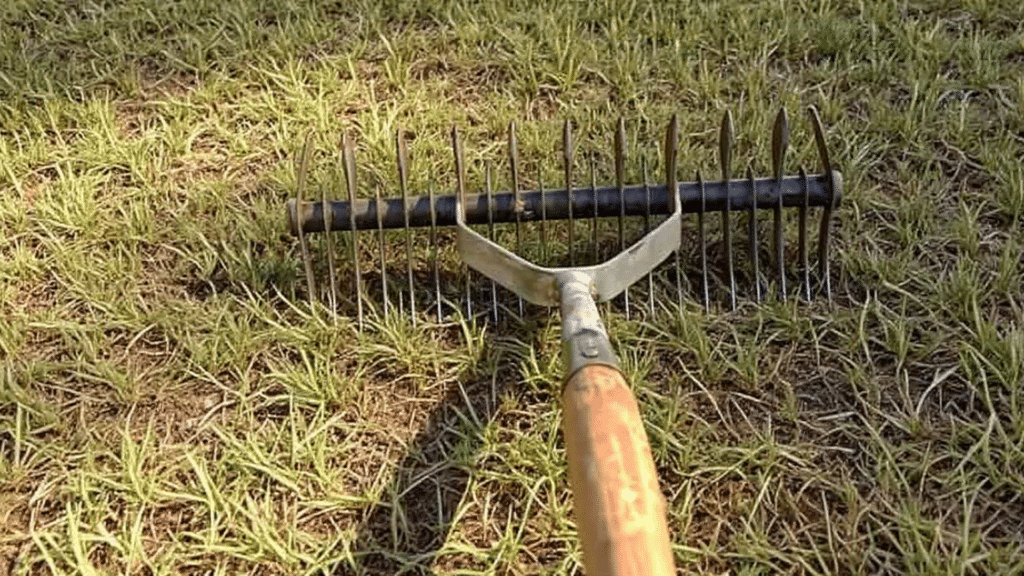
This method uses a dethatching rake, which has sharp blades designed to dig into the lawn and pull up thatch. To use it, press the rake firmly into the grass and pull it toward you, working in small sections. It may take time, but it’s very effective for small yards.
Pros:
- Cheap (you only need a rake)
- Great for small patches or spot treatment
- Easy to control without damaging the grass
Cons:
- Time-consuming and slow
- Requires strong arms and lots of effort
- Not good for large lawns or heavy thatch
This method is best for light thatch and small areas where a machine isn’t needed.
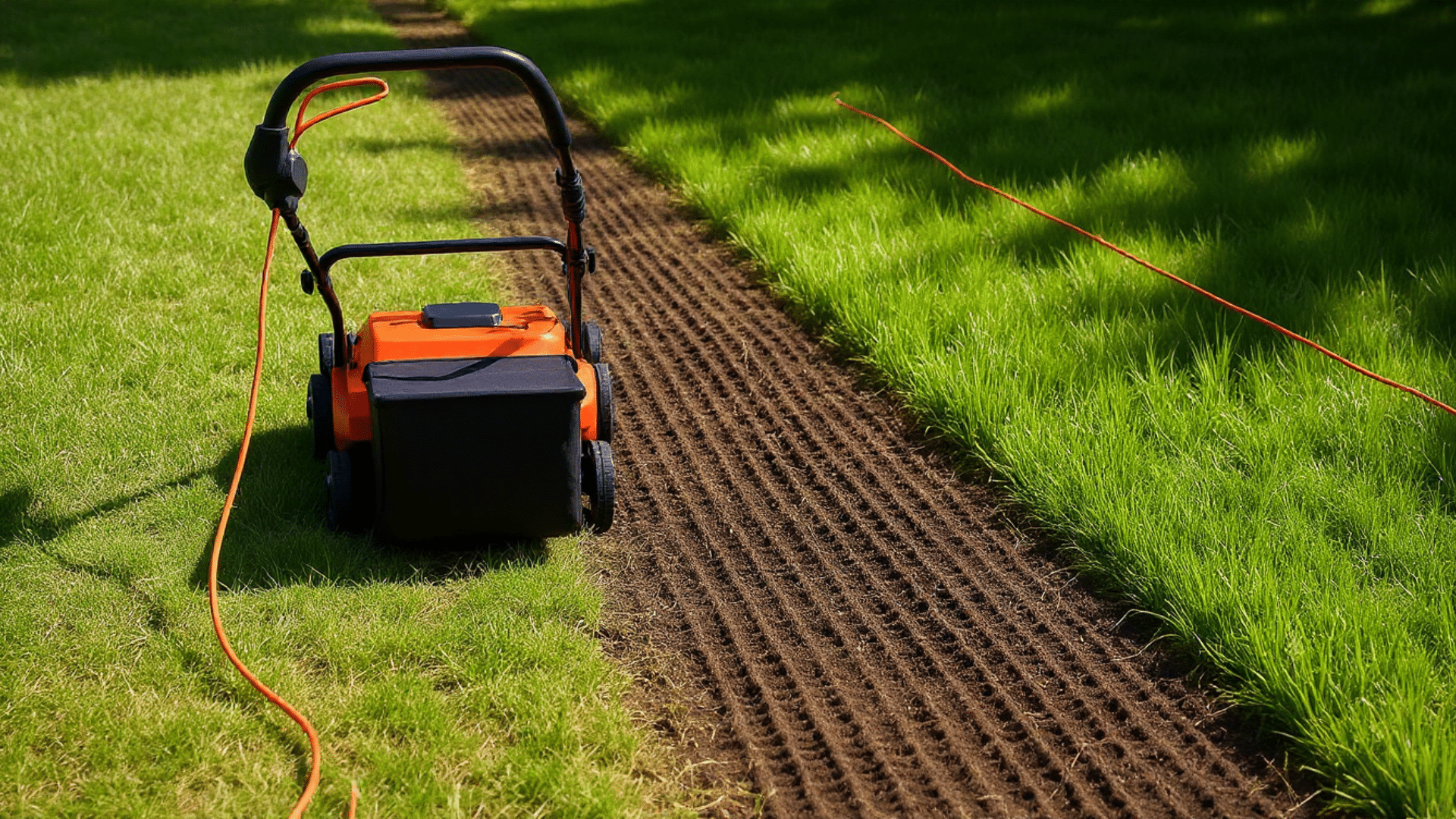
2. Power Rake or Dethatcher (Medium to Large Lawns)
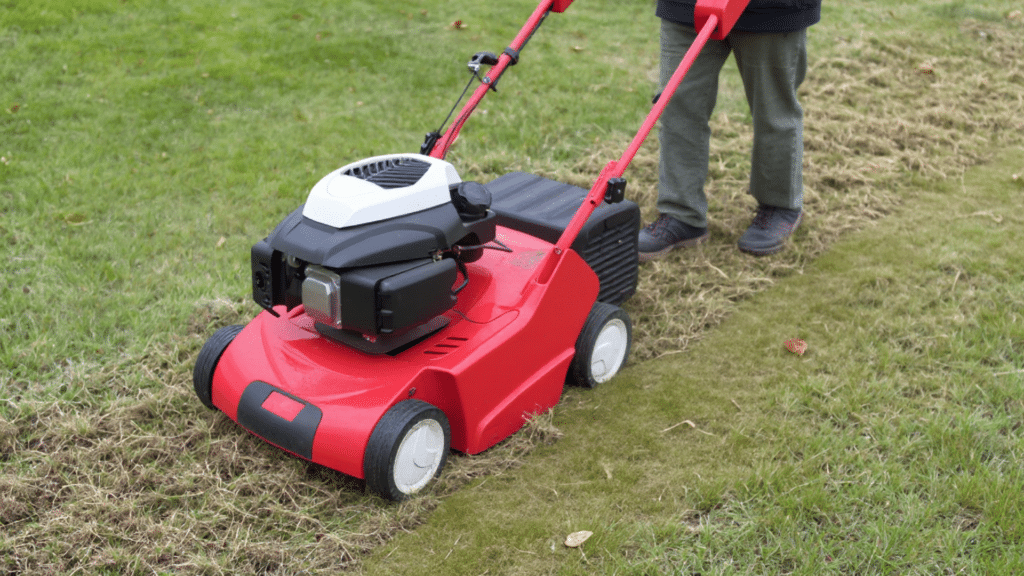
A power rake is a machine that has spinning blades or tines. These blades move through the lawn, digging into the thatch layer and lifting it to the surface. It’s much faster than doing it by hand and covers more space in less time.
Pros:
- Much faster than using a rake
- Works well for medium to large lawns
- Can remove a lot of thatch at once
Cons:
- It can damage healthy grass if not used carefully
- Rental fees can be high
- May need to make more than one pass over the lawn
You can rent a power rake from home improvement stores. Read the directions carefully, and test it on a small area before using it on the whole yard.
3. Vertical Mower (for Thick Thatch)
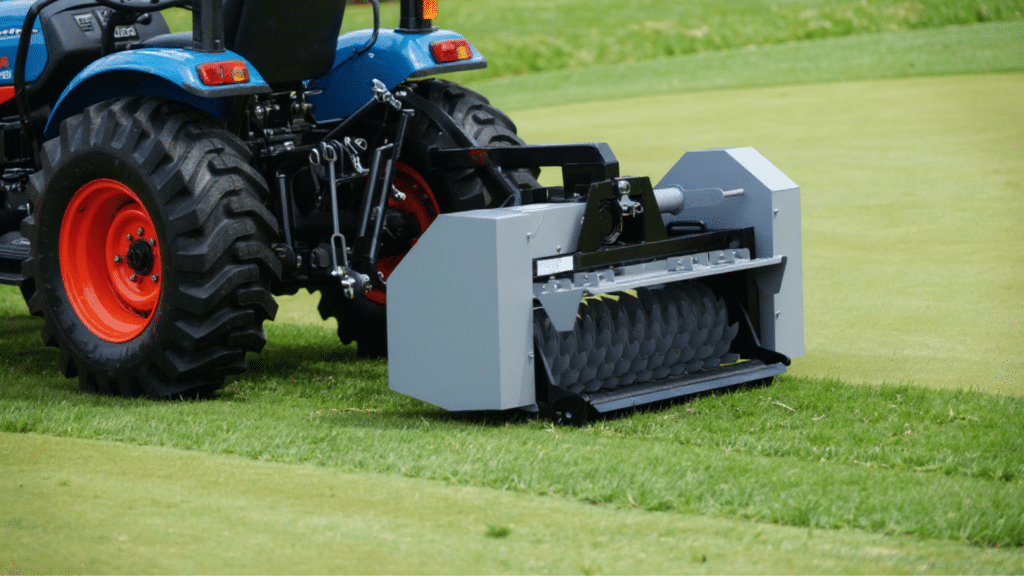
A vertical mower or verticutter is a heavy-duty tool for very thick thatch layers. It has vertical blades that cut deep into the thatch and soil. It pulls up even the most packed-down thatch. This method can be harsh, so it’s best used when the lawn is healthy and growing well.
Pros:
- Best for lawns with very thick or old thatch
- Cuts deeper than a power rake
- Prepares the lawn for overseeding
Cons:
- Can stress or scalp the lawn
- May require extra care after use
- More expensive if you hire someone to do it
Verticutters are usually used by professionals or experienced homeowners. They may be too aggressive for weak or newly planted lawns.
Tip: No matter which method you use, make sure to rake up the loosened thatch and water your lawn afterward. This helps the grass recover faster.
What to Do After Dethatching
Once you finish dethatching, your lawn needs some care to recover and grow strong again. Follow these simple steps:
- Rake up debris: Remove all loose thatch and dead grass from the surface
- Water the lawn: Give the grass a deep watering to help roots heal and recover
- Add grass seed (if needed): Overseed bare or thin areas to fill in gaps
- Fertilize lightly: Use a mild fertilizer to support new growth without stressing the lawn
- Avoid mowing right away: Wait a few days before cutting the grass again
- Keep foot traffic low: Stay off the lawn to allow it time to bounce back
- Watch for signs of stress: Water again if the grass looks dry, weak, or pale
Wrapping Up
Dethatching may sound like a big job, but it’s really just one smart step in keeping your lawn healthy. A thick, soft yard might feel nice, but hidden thatch can hold it back.
Taking the time to check your grass and remove buildup when needed can make a big difference over time.
You don’t need fancy tools or expert skills, just the right timing and a little care. A well-kept lawn starts with knowing what it needs.
Still not sure if your yard needs dethatching? Walk it, check it, and trust what you see. Ready to get started? Grab a rake and take the first step today.