

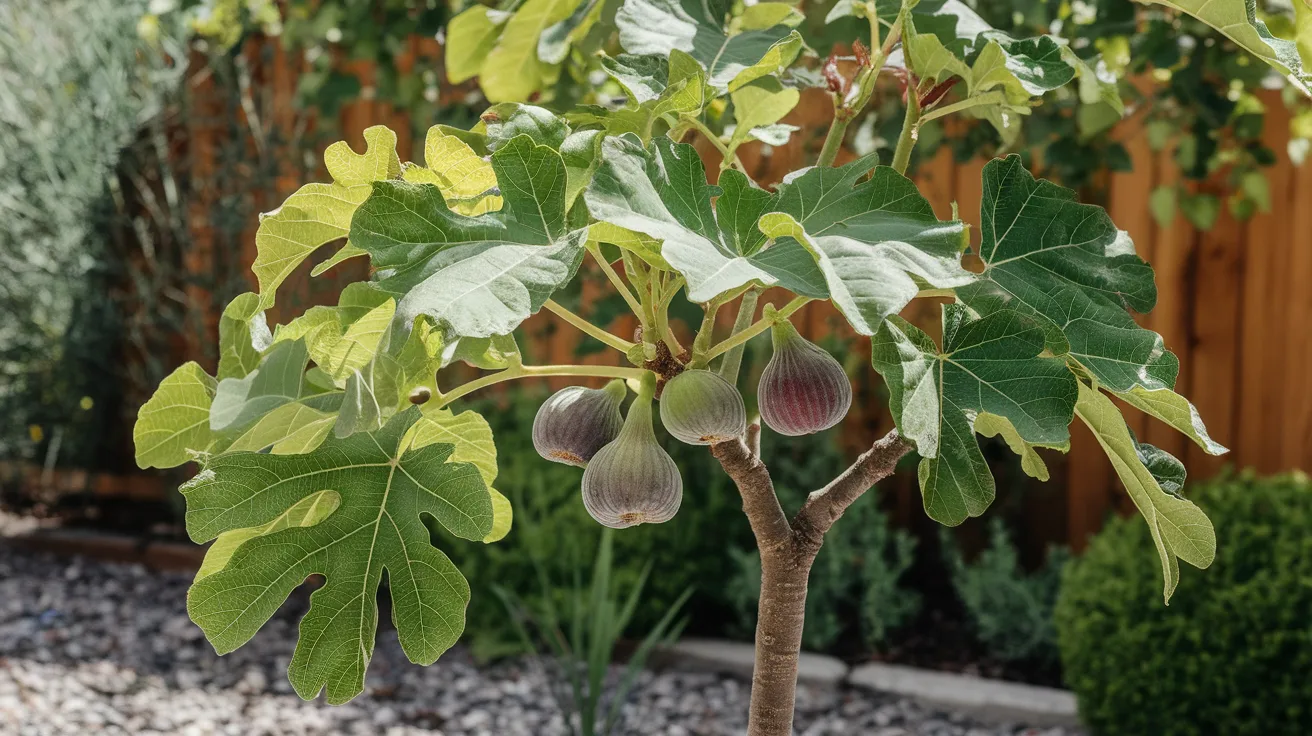
Fig trees are loved for their sweet fruit and rich green leaves. But to grow well, they need more than just sun and water.
Fertilizer plays an important role in keeping fig trees healthy and producing plenty of fruit. Without the right nutrients, a fig tree may grow slowly, drop leaves, or make fewer figs.
Feeding a fig tree the right way isn’t hard, but timing and method do matter. A good routine can make a big difference in how the tree grows.
This blog shares easy steps to help gardeners give their fig trees the care they need through proper fertilization, with simple, clear instructions for healthy growth.
Why Fertilization Matters for Fig Trees
Although fig trees are known to thrive in less-than-perfect soils, they are heavy feeders when it comes to fruit production.
Their nutritional demands increase significantly during the growing season, especially as they establish roots or begin forming fruit.
Proper fertilization:
- Enhances vegetative growth (strong branches and healthy foliage)
- Boosts fruit yield and quality (larger, sweeter figs)
- Improves disease resistance (via stronger cellular structures)
- Prepares the tree for seasonal stress (such as heat or drought)
Over time, even nutrient-rich soils can become depleted. That’s why a well-planned fertilizing strategy is critical to long-term success.
When to Fertilize Fig Trees
The timing of fertilizer application is just as important as the type of fertilizer used. Fig trees follow a predictable growth cycle and should be fertilized accordingly.
1. Spring (Primary Feeding Time)
Once fig trees break dormancy and new leaf buds begin to open, they are ready for their first dose of fertilizer. This typically occurs in early to mid-spring, depending on your region.
- Stimulates new growth
- Supports root expansion
- Prepares the tree for fruit set
2. Late Spring to Early Summer
A second feeding about 6–8 weeks after the first helps maintain energy levels during fruit development.
- Encourages proper fig formation
- Helps prevent premature fruit drop
3. Mid-Summer (Optional)
In some cases, particularly with container-grown trees or in poor soil, a third light feeding in July may be beneficial, but this is conditional. Over-fertilizing at this stage can cause excessive leaf growth at the expense of fruit quality.
4. Do Not Fertilize After Mid-Summer
Late-season fertilizing encourages tender new growth that may not harden off before winter, making the tree vulnerable to cold damage.
How to Read Fertilizer Labels for Fig Trees
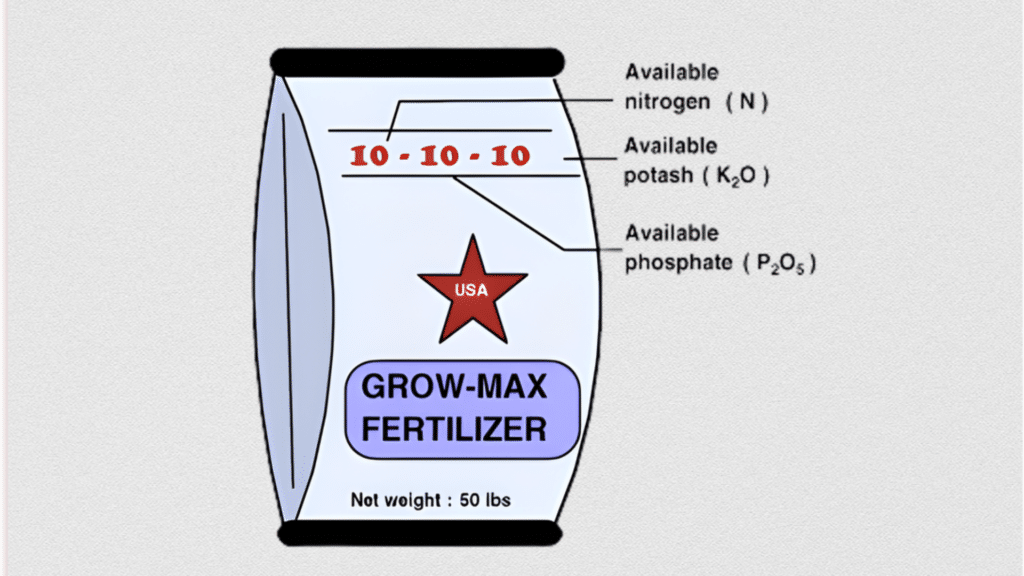
Fertilizer labels list three numbers, such as 10-10-10 or 5-10-10. These show the N-P-K ratio, Nitrogen, Phosphorus, and Potassium.
Knowing what each one does helps you pick the right fertilizer for your fig tree. The table below explains their roles:
| Label Element | What It Stands For | Purpose in Fig Trees | Best Used When… |
|---|---|---|---|
| N (Nitrogen) | Leaf and stem growth | Encourages leafy branches and green foliage | The tree is young or lacks leafy growth |
| P (Phosphorus) | Root and fruit development | Supports strong root systems and improves fig production | You want better fruiting, or are planting a new fig tree |
| K (Potassium) | Overall plant health | Boosts drought resistance, improves fruit size and taste, and strengthens immunity | Soil is poor, or fruit size/flavor is weak |
| 10-10-10 | Balanced fertilizer | Equal parts N, P, and K support overall growth | For general use on healthy, mature fig trees |
| 5-10-10 | Low-nitrogen fertilizer | Less leaf growth, more energy toward roots and figs | The tree is producing too many leaves but few fruits |
| 8-8-8 | Mild balanced option | Similar to 10-10-10 but more gentle | For regular maintenance or when unsure of soil nutrient levels |
Types of Fertilizer for Fig Trees
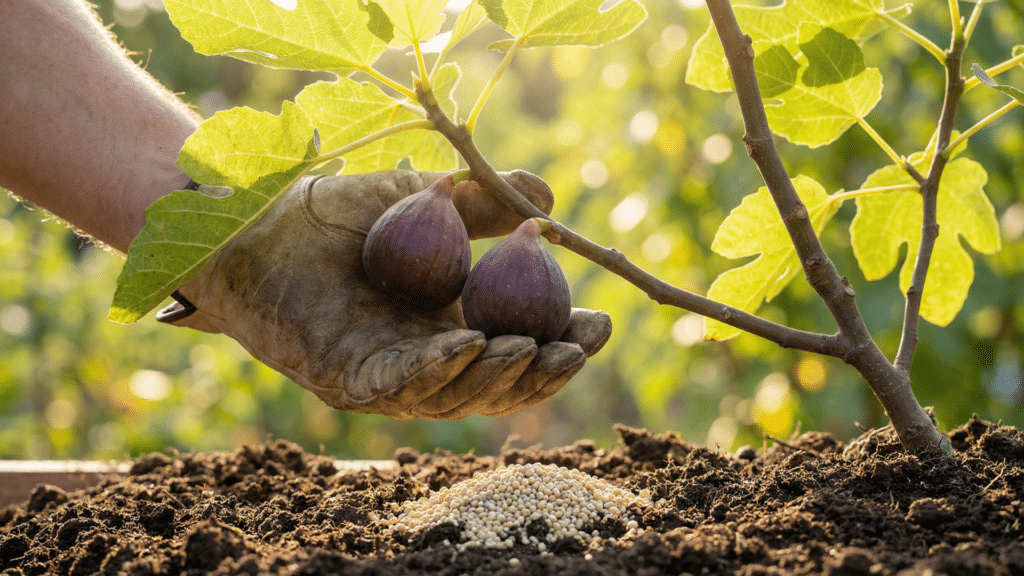
Not all fertilizers work the same way. Here are the four main types used for feeding fig trees, each with its own benefits:
1. Granular Fertilizers
Granular fertilizers come in the form of dry pellets or powder. They are sprinkled on the soil surface around the base of the tree and then watered in to help dissolve the nutrients.
Advantages:
- Easy to store and apply
- Provide a steady supply of nutrients over time
- Cost-effective for larger, in-ground fig trees
Best Use: Granular fertilizer is ideal for mature, established fig trees planted in garden soil. It works well when applied in spring and again in early summer. Always follow dosage instructions to avoid overfeeding.
2. Liquid Fertilizers
Liquid fertilizers are concentrated nutrients mixed with water and applied through regular watering. They act quickly and can be adjusted easily based on the tree’s needs.
Best for:
-
Potted or container-grown fig trees that require frequent feeding
- Situations where quick nutrient absorption is needed
- Trees showing signs of deficiency during the growing season
Why It Works: Because the nutrients are in liquid form, they are absorbed faster by the roots, making liquid fertilizers a great tool for correcting minor nutrient issues on short notice.
3. Slow-Release Fertilizers
These fertilizers come in coated pellets or capsules that release nutrients slowly over time, often 2 to 6 months, depending on the product.
Advantages:
- Requires fewer applications per season
- Minimizes the risk of over-fertilization
- Helps maintain consistent nutrient availability
Best Use: Slow-release fertilizer is excellent for busy gardeners or those looking for a low-maintenance approach. It’s also effective for in-ground fig trees, especially in sandy soils where nutrients tend to wash away quickly.
4. Organic Fertilizers
Organic fertilizers are made from natural sources like compost, manure, fish emulsion, seaweed extract, or bone meal. These enrich the soil while feeding the plant.
Benefits:
- Improve long-term soil structure and health
- Support beneficial soil microbes
- Provide slow, steady nutrition without the risk of chemical burn
Why Gardeners Prefer Them: Organic fertilizers are ideal for gardeners who want to build healthy soil over time and grow figs naturally. They’re especially useful when planting new trees or revitalizing poor soil.
Common Organic Options for Fig Trees:
- Compost: Boosts overall soil fertility and moisture retention
- Bone Meal: Rich in phosphorus, promotes root and flower development
- Fish Emulsion: A fast-acting nitrogen source for quick green-up
- Aged Manure: Provides a balanced nutrient supply and organic matter
How to Apply Fertilizer to In-Ground Fig Trees
Applying fertilizer the right way helps fig trees absorb nutrients more effectively and prevents waste or damage. Follow these simple steps for the best results:
Step 1: Calculate the Amount: A common rule is ½ pound of fertilizer per year of tree age, up to a maximum of 10 pounds for mature trees. Always check the product’s label, as nutrient concentrations can vary.
Step 2: Apply around the Drip Line: The drip line is the circle on the ground under the outer edges of the tree’s branches. Spread the fertilizer evenly in this area, never directly against the trunk.
Step 3: Water Thoroughly: Watering helps dissolve the fertilizer and carries nutrients down to the roots. Soak the area to a depth of at least 6 inches to ensure good penetration.
Step 4: Mulch (Optional but Helpful): Add a 2–3-inch layer of organic mulch (such as compost, straw, or shredded leaves) around the tree. This keeps moisture in the soil and allows for slow, natural feeding over time.
Soil Quality and Organic Nutrition for Fig Trees
The type of soil you have plays a major role in how well your fig tree absorbs nutrients from fertilizer. Matching your fertilizer strategy to your soil type and using organic materials when possible can lead to healthier trees and better fruit.
| Soil Type | Characteristics | Fertilizing Strategy |
|---|---|---|
| Sandy Soil | Fast-draining, low in nutrients | Apply lighter doses more often; consider using compost or slow-release fertilizer to retain nutrients. |
| Clay Soil | Holds nutrients well, poor drainage | Use balanced fertilizer and avoid overwatering. Watch for signs of nutrient lock-up (yellowing leaves, stunted growth). |
| Loamy Soil | Best mix of sand, silt, and clay | Ideal for fig trees. Fertilize moderately using organic or slow-release options for steady nutrition. |
Pro Tip: Do a soil test every 2–3 years to check nutrient levels and pH. Fig trees prefer soil with a pH between 6.0 and 7.0 (slightly acidic to neutral).
What Happens if You Over-Fertilize?
Over-fertilizing fig trees can do more harm than good. Too much nitrogen leads to rapid leaf growth but few or no fruits.
It may also cause leaf tips to turn brown or curl. In severe cases, the roots can burn, especially in potted trees, leading to stunted growth or even plant death.
Overfeeding also disrupts the balance of nutrients in the soil, blocking the uptake of key minerals.
If you suspect over-fertilization, flush the soil with water to remove excess salts and stop fertilizing for a few weeks. Always follow label directions and adjust based on the tree’s response.
Sample Feeding Schedule for In-Ground Trees
| Season | Fertilizer Type | Notes |
|---|---|---|
| Early Spring | Balanced (10-10-10) | Apply around the drip line, water deeply |
| Late Spring | Low-Nitrogen (5-10-10) | Supports fruit development |
| Mid-Summer | Organic compost or mild liquid | Only if needed, monitor tree growth |
| Fall | None | Let the tree harden off before winter |
Final Tips for Using Fertilizer for Fig Trees
Even with the right fertilizer, how you apply and manage it matters just as much. Keep these final tips in mind to get the best results and avoid common mistakes:
- Always water after applying dry fertilizer to prevent root burn and help nutrients absorb into the soil.
- Avoid contact with the trunk or leaves, as this can cause damage or chemical burn.
- Use mulch around the base to regulate soil moisture, reduce weeds, and slowly improve soil health.
- Adjust your fertilizing schedule based on climate; warmer regions may need a longer feeding period.
- Keep a simple log or notebook tracking what you applied, when, and how your fig tree responded over time.
Wrapping Up
Fertilizing fig trees the right way helps them grow strong and produce more fruit. The type of fertilizer, timing, and method all matter.
Healthy soil and good feeding habits lead to better roots, leaves, and figs. Start slow and watch how your tree responds.
Too much fertilizer can harm, but the right amount helps a lot. Keep your tree on a good schedule and make small changes as needed. With a little care, your fig tree can thrive for many years.
Ready to get started? Use this guide to plan your fig tree feeding routine today.