

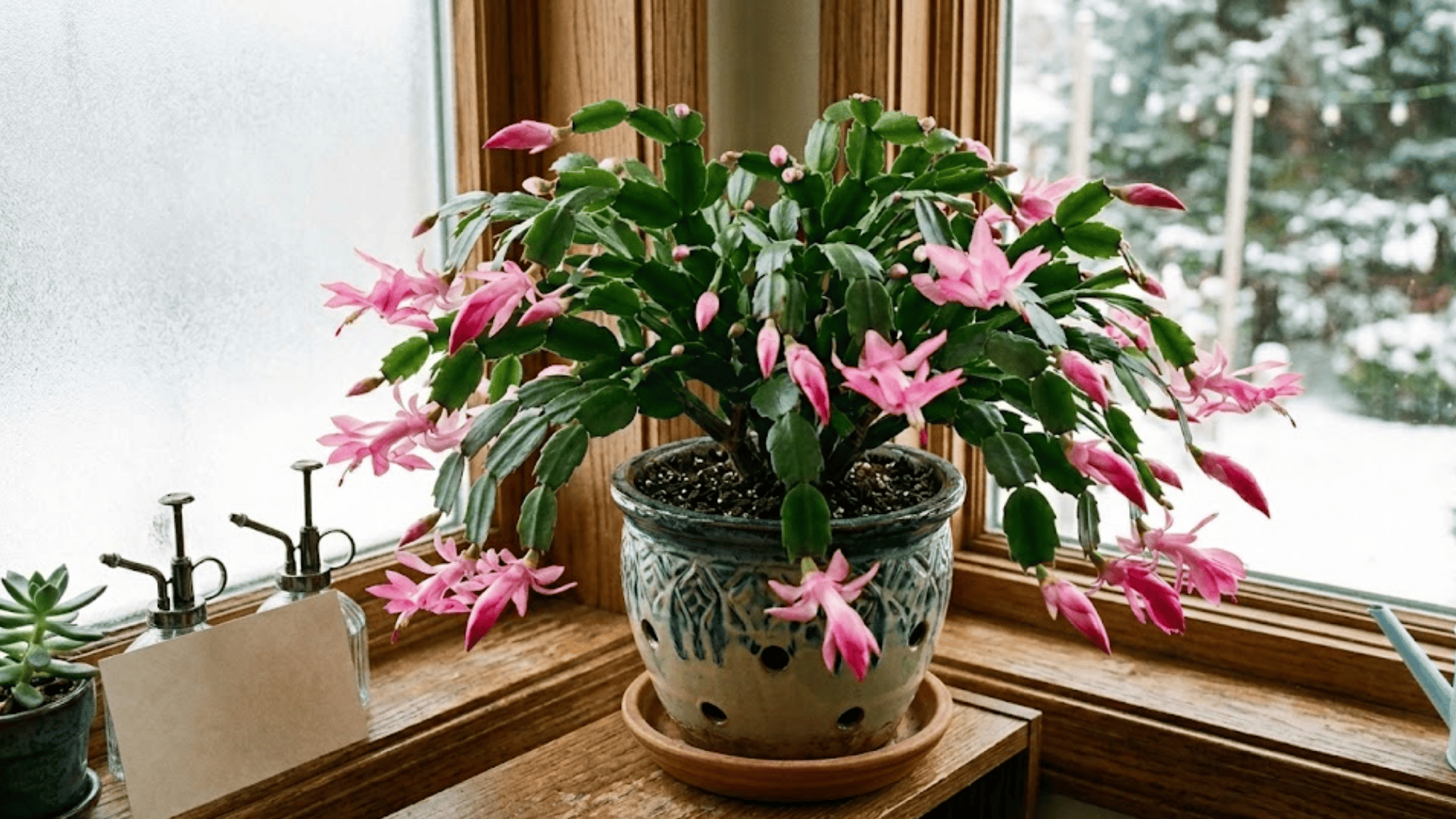
A Christmas cactus is one of those plants that looks impressive but is surprisingly easy to keep alive. The problem is that most people treat it like a desert cactus, and that’s where things go wrong.
I’ve been growing plants for years, and the Christmas cactus is one of the most misunderstood houseplants out there. Once I learned what it actually needed, it started blooming every single year without fail.
If you’ve been struggling to keep yours healthy or can’t figure out why it won’t bloom, you’re in the right place.
This guide covers everything you need to know about Christmas cactus care, from watering and light to soil, temperature, and how to get those beautiful blooms every season.
Simple steps. No complicated routines. Just clear, practical advice that actually works for real people at home.
What is a Christmas Cactus?
A Christmas cactus is a flowering houseplant that blooms around the holiday season, usually in late November or December.
Despite its name, it is nothing like the spiky desert cacti you might picture in your head.
This plant actually comes from the rainforests of Brazil, where it grows in the shaded branches of trees rather than dry, sandy soil. That means it needs more moisture and humidity than a typical cactus.
Its flat, segmented leaves are soft and green, and when it blooms, it produces beautiful tubular flowers in shades of pink, red, white, and purple.
If you’ve been caring for it like a desert plant, that’s likely why it’s struggling. It needs a completely different approach.
Christmas Cactus Growing Tips
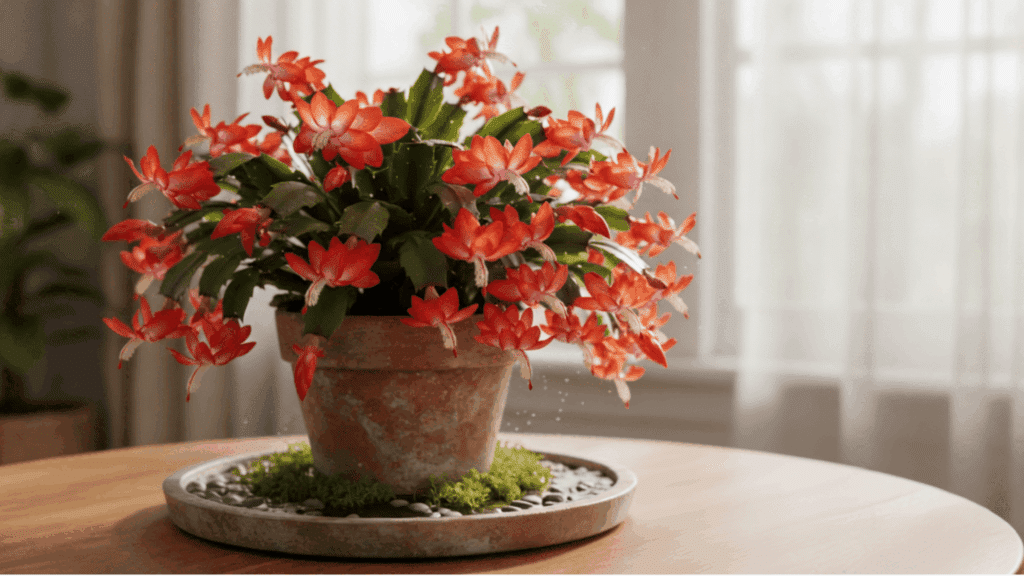
Keep it in one spot year-round and fertilize monthly in spring–summer, then stop in fall to support healthy blooming cycles
1. Light Requirements for Christmas Cactus
A Christmas cactus does best in bright, indirect light indoors. A spot near a north or east-facing window works well.
Avoid placing it in direct sunlight, as this can scorch the leaves and cause them to turn pale or yellow. Too little light will make the plant look dull and reduce blooming.
If the leaves start looking washed out, move them slightly away from the window. If it looks droopy and dark, it needs more light.
Why does it Matter?
- Prevents Leaf Burn: Indirect light keeps the flat green leaves from scorching or turning pale.
- Supports Growth: The right light level keeps the plant actively growing throughout spring and summer.
- Encourages Blooming: Proper light exposure sets the plant up for a strong bloom cycle later in the year.
2. Watering a Christmas Cactus the Right Way
Water your Christmas cactus when the top inch of soil feels dry to the touch. During spring and summer, water more regularly.
In the fall, cut back on watering to help trigger blooming. Overwatering leads to soft, mushy stems and root rot. Underwatering causes shriveled, wrinkled leaves.
This plant also likes humidity, so misting the leaves occasionally or placing a tray of water nearby helps keep it healthy and comfortable throughout the year.
Why does it Matter?
- Prevents Root Rot: Watering only when the soil is dry stops water from sitting at the roots too long.
- Triggers Blooming: Reducing water in the fall signals the plant to start producing flower buds naturally.
- Keeps Leaves Healthy: The right moisture level stops leaves from shriveling, yellowing, or dropping off early.
3. Best Soil for Christmas Cactus
A Christmas cactus needs well-draining soil that holds some moisture without staying soggy. The best mix is equal parts peat and perlite, which keeps the roots aerated and prevents waterlogging.
Never use heavy garden soil, as it compacts easily and suffocates the roots over time. Always plant in a pot with drainage holes at the bottom.
Without drainage, water collects at the roots and causes rot, which is one of the fastest ways to kill this plant entirely.
Why does it Matter?
- Prevents Waterlogging: Well-draining soil stops excess moisture from sitting around the roots and causing damage.
- Supports Root Health: Peat and perlite keep the soil loose and airy, giving roots room to grow freely.
- Reduces Rot Risk: Good drainage, combined with drainage holes, removes the biggest cause of plant death.
4. Temperature and Humidity Needs
A Christmas cactus grows best in temperatures between 60 and 70 degrees Fahrenheit indoors. Cooler fall temperatures, around 50 to 55 degrees, help trigger the blooming cycle.
Keep the plant away from heating vents, cold drafts, and air conditioners, as sudden changes in temperature can cause bud drop.
For humidity, mist the leaves lightly or use a small humidifier nearby to keep the air from getting too dry during the winter months indoors.
Why does it Matter?
- Triggers Blooming: Cooler fall temperatures signal the plant to start producing flower buds naturally.
- Prevents Bud Drop: Stable temperatures stop the plant from dropping its buds before they fully open.
- Supports Healthy Leaves: The right humidity keeps leaves firm, green, and free from shriveling or browning at the edges.
How to Care for a Christmas Cactus?
Caring for a Christmas cactus is simpler than most people think. Follow these nine steps and your plant will stay healthy, grow well, and bloom reliably every single season.
Step 1: Give Bright Indirect Light
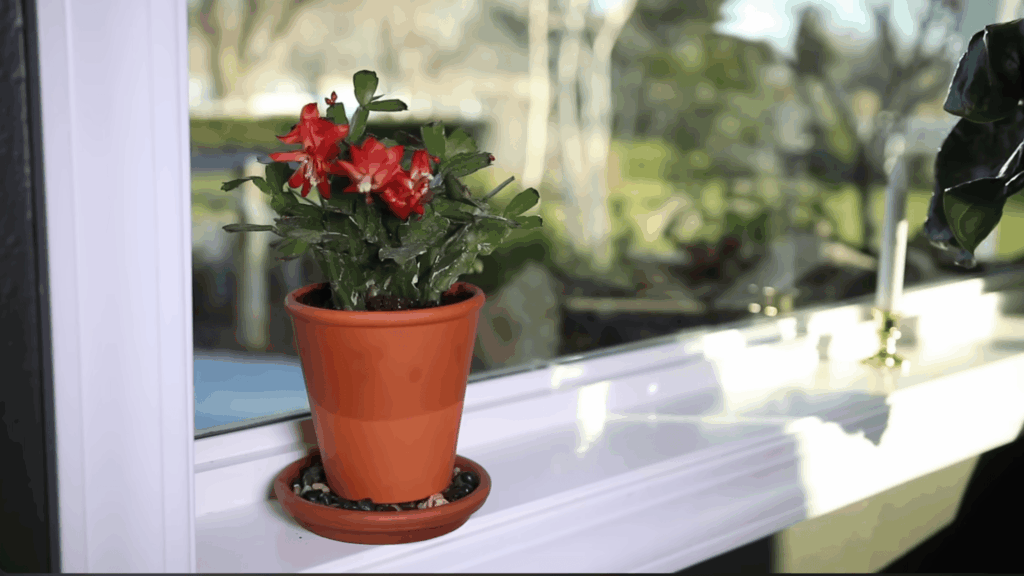
Place your Christmas cactus near a north or east-facing window where it gets bright natural light without direct sun hitting the leaves.
Direct sunlight can scorch and bleach the flat green segments, leaving them pale and damaged. If you notice the leaves turning yellow or washed out, move the plant slightly further from the window.
The goal is steady, filtered light throughout the day, without any direct afternoon sun reaching the plant.
Step 2: Water Carefully
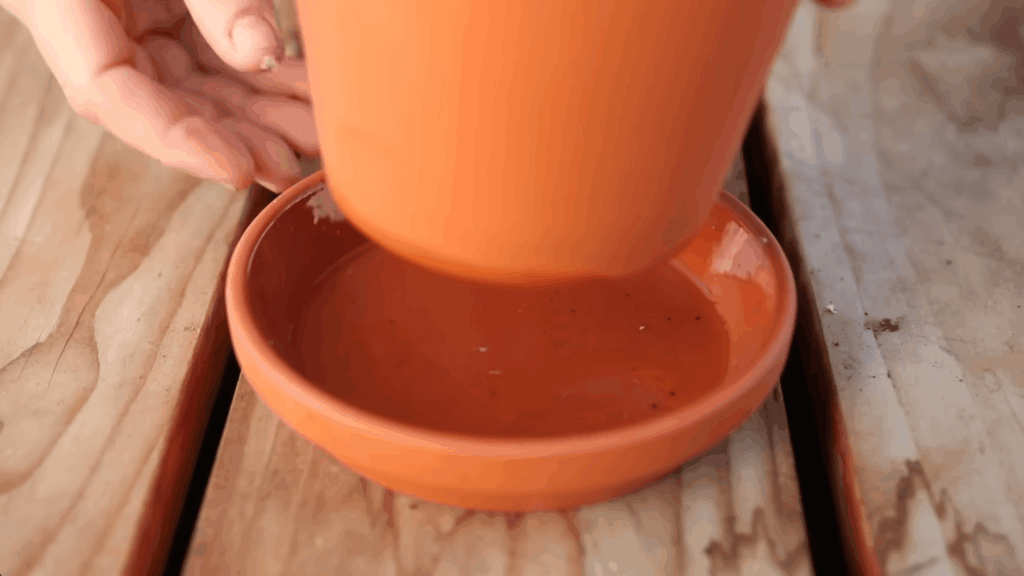
Check the soil every week by pressing your finger about an inch into the surface. If it feels dry, water the plant deeply until water runs out of the drainage holes.
Then let the soil dry out again before the next watering. Never let the plant sit in standing water, as this can quickly cause root rot and damage the roots beyond recovery.
Cut back on watering in the fall to help the plant prepare for its blooming season.
Step 3: Use Well-Draining Soil
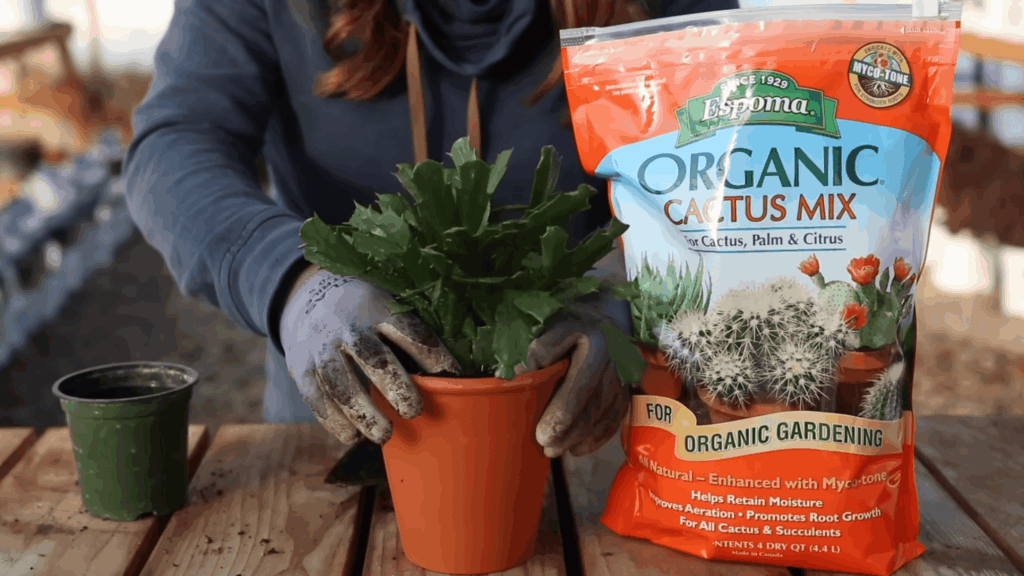
Plant your Christmas cactus in a cactus or succulent potting mix that drains well and doesn’t hold too much moisture.
You can also mix equal parts peat and perlite for a simple homemade blend. Always use a pot with drainage holes at the bottom.
Repot the plant every two to three years, ideally right after blooming ends in late winter. Moving up one pot size each time gives the roots enough room to keep growing comfortably.
Step 4: Maintain Ideal Temperature

Keep your Christmas cactus in a room that stays between 65 and 75 degrees Fahrenheit during the day. Slightly cooler nights around 60 degrees help support healthy growth and encourage the plant to thrive.
In the fall, dropping the temperature to around 50-55 degrees at night helps trigger the blooming cycle naturally.
Keep the plant away from heating vents, radiators, and cold drafts near windows, as sudden temperature changes are one of the main causes of bud drop.
Step 5: Increase Humidity
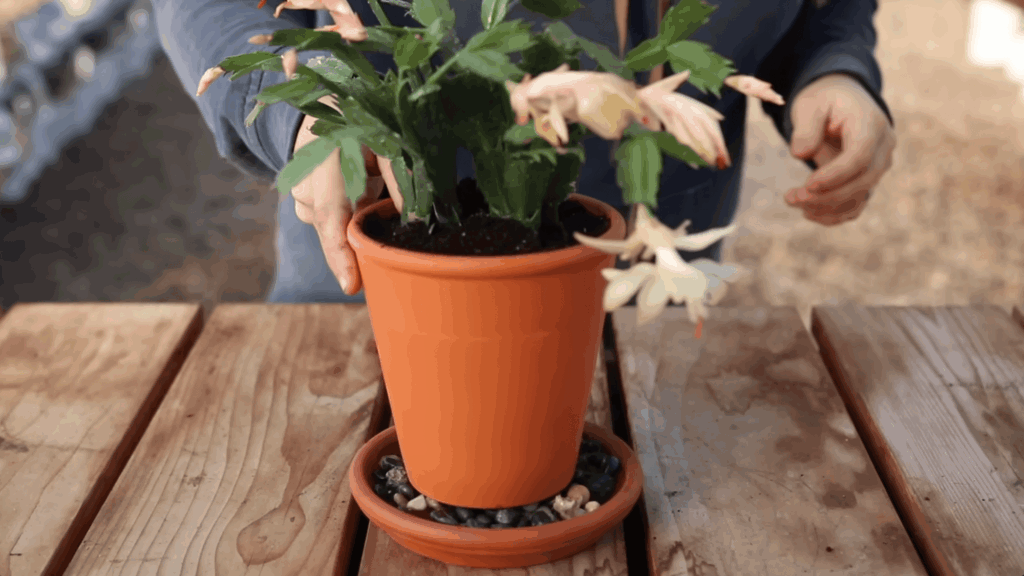
A Christmas cactus comes from a humid rainforest environment, so dry indoor air can stress the plant over time.
The easiest way to boost moisture around the plant is to place it on a shallow tray filled with small pebbles and water. As the water evaporates, it creates a gentle mist of humidity around the leaves.
You can also mist the leaves lightly with a spray bottle a few times a week, especially during dry winter months indoors.
Step 6: Fertilize Properly
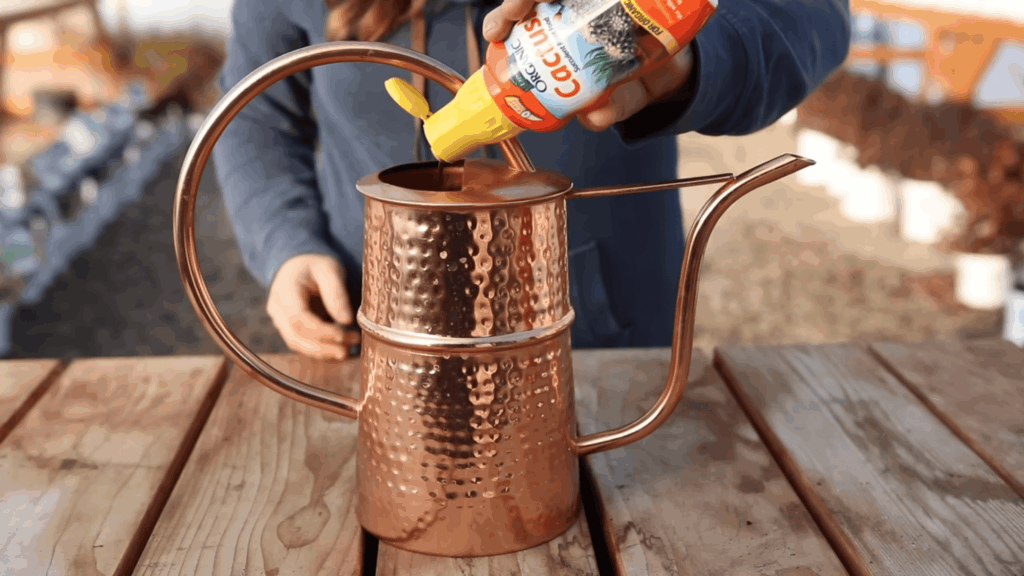
Feed your Christmas cactus with a balanced liquid fertilizer once a month during spring and early summer when the plant is actively growing.
A fertilizer with equal parts nitrogen, phosphorus, and potassium works well. Stop fertilizing completely by midsummer and do not feed the plant at all during fall and winter.
Fertilizing too close to the blooming season can push the plant to produce leaves instead of flowers, which is the opposite of what you want at that time.
Step 7: Help It, Bloom

About six to eight weeks before you want the plant to bloom, move it to a spot where it gets 12 to 14 hours of complete darkness each night.
A spare bedroom or a closet works well for this purpose. At the same time, keep the temperature cool, around 50 to 55 degrees Fahrenheit.
Reduce watering slightly and stop fertilizing completely during this period. Once small buds form at the tips of the leaves, move the plant back to its regular spot.
Step 8: Prune When Needed
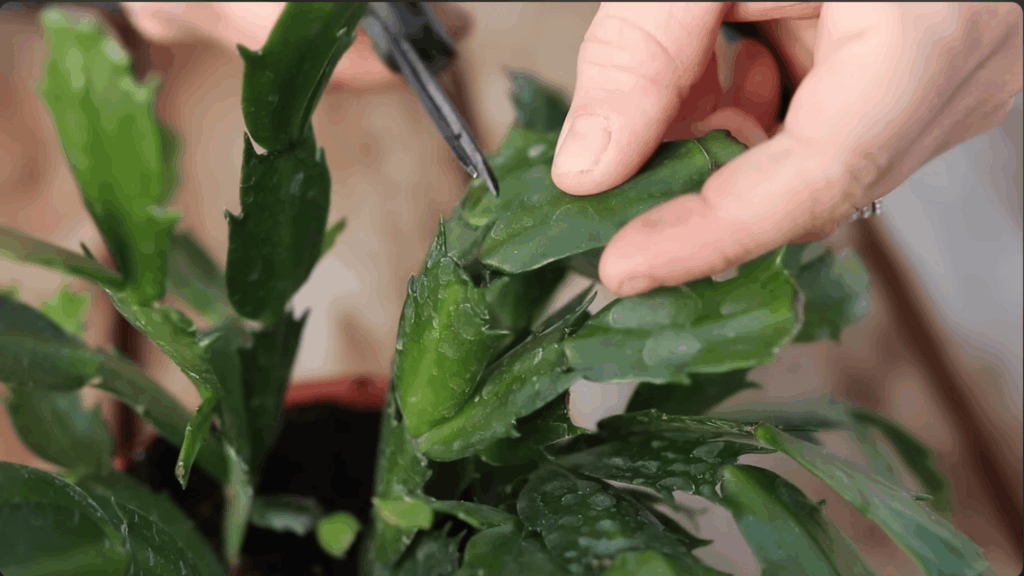
Pruning a Christmas cactus is simple and takes just a few minutes. After blooming ends, pinch or twist off a few segments at the natural joints between leaf sections to shape the plant and encourage fuller, bushier growth the following season.
You don’t need scissors for this. The segments twist off cleanly by hand. The cuttings can also be placed in moist soil to grow new plants.
Pruning regularly keeps the plant neat and helps it allocate more energy to producing flowers.
Step 9: Watch for Problems

Check your plant regularly for early signs of trouble. Soft or mushy stems usually mean overwatering and possible root rot.
Shriveled or wrinkled leaves suggest the plant is too dry. Pale or yellowing leaves can indicate too much direct sunlight or a nutrient deficiency.
Small white clusters on the stems are a sign of mealybugs, while fine webbing indicates spider mites. Catching these problems early makes them much easier to fix before they cause serious damage to the plant.
This tutorial is based on a helpful video by Garden Answer. You can check out the video here:
Christmas vs Thanksgiving vs Desert Cactus
These three plants share the name “cactus” but need very different care. Mixing them up is one of the most common reasons people struggle with their plants.
1. Christmas vs Thanksgiving Cactus
These two are almost the same plant. The only real differences are the leaf shape and bloom time. A Thanksgiving cactus has pointed edges while a Christmas cactus has smoother, rounded ones. If this guide works for one, it works for the other.
2. Christmas vs Desert Cactus
A desert cactus needs dry soil, full sun, and very little water. A Christmas cactus is a rainforest plant that needs moisture, humidity, and indirect light. Treating them the same way is where most people go wrong.
Here is a quick table representation:
| Feature | Christmas Cactus | Thanksgiving Cactus | Desert Cactus |
|---|---|---|---|
| Origin | Brazilian rainforest | Brazilian rainforest | Desert regions |
| Leaf Shape | Smooth, rounded | Pointed, claw-like | Thick, spiny |
| Bloom Time | December | November | Varies |
| Watering | Moderate | Moderate | Very little |
| Light | Indirect | Indirect | Direct sun |
Common Problems and Solutions
A Christmas cactus is easy to care for, but a few common problems can pop up along the way. Here is what to look out for and how to fix each one quickly.
- Dropping Buds: Bud drop is usually caused by sudden changes in temperature, light, or location. Keep the plant in a stable spot, away from cold drafts and heating vents.
- Yellow or Limp Leaves: Yellow leaves indicate overwatering or poor drainage. Check the soil before watering and make sure the pot has drainage holes at the bottom.
- Root Rot: Root rot happens when the plant sits in soggy soil for too long. Remove the affected roots, let the plant dry out, and repot it in fresh, well-draining soil.
- Pest Issues: Spider mites and mealybugs are the most common pests on a Christmas cactus. Wipe the leaves with a damp cloth or use a mild insecticidal soap to treat the problem.
- No Blooms: If your plant isn’t blooming, it likely needs more darkness and cooler temperatures in the fall. Give it 12 to 14 hours of darkness each night for six to eight weeks before the blooming season.
How to Make a Christmas Cactus Bloom?
Getting a Christmas cactus to bloom comes down to two things: darkness and cool temperatures. About 6 to 8 weeks before you want it to bloom, move it to a spot where it gets about 12 to 14 hours of darkness each night. A spare bedroom or a closet works well for this.
At the same time, keep the temperature cooler, around 50 to 55 degrees Fahrenheit. This combination signals to the plant that it’s time to produce flowers.
During this pre-bloom period, reduce watering slightly and stop fertilizing completely.
Common reasons it doesn’t bloom include too much artificial light at night, too warm temperatures, and overwatering during the trigger period. Consistency during these six to eight weeks makes all the difference.
Final Thoughts
A Christmas cactus is one of the most rewarding houseplants you can own. It blooms beautifully every year, lasts for decades, and doesn’t ask for much in return. The key is simply understanding what it actually needs.
Bright indirect light, moderate watering, well-draining soil, and a cool dark period in fall are the four things that make the biggest difference. Get those right, and the rest takes care of itself.
Don’t treat it like a desert cactus. Don’t overwater it. And don’t move it around once it starts budding. Stick to a consistent routine, and this plant will reward you with stunning blooms season after season.
Check out our full guide on the best indoor plants for beginners to find more easy-care plants that thrive at home.
Which tip helped you the most? Drop your answer in the comments below!