

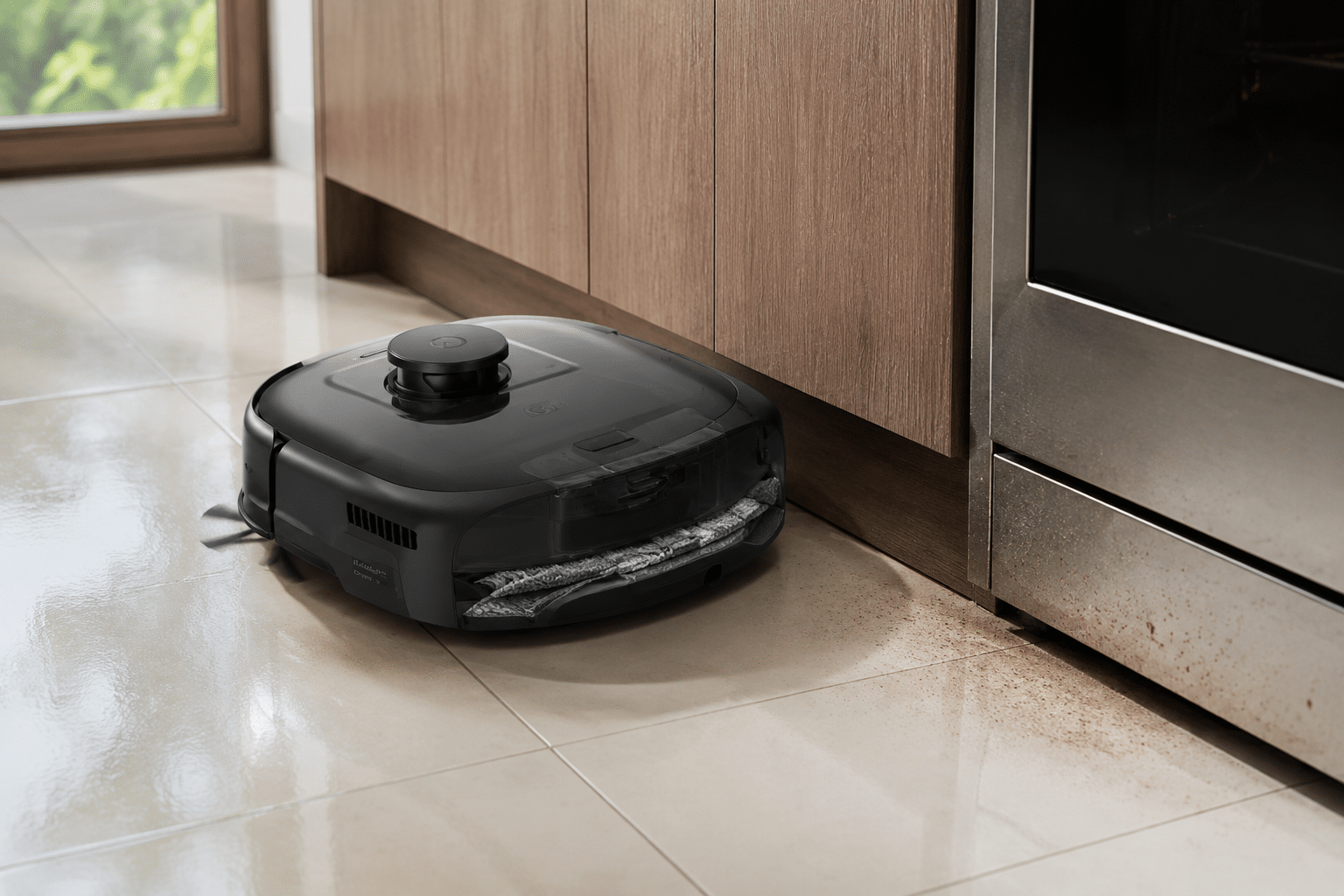
The robot ran its cycle, but the kitchen edge still feels tacky and the grout looks the same as before. So the question becomes: do you still need to pull out a regular mop? This article looks at the key factors that can help you solve these problems.
Will a Robot Vacuum and Mop Replace Your Regular Mop on Mixed Floors?
Switching to a robot vacuum and mop changes your cleaning routine more than it eliminates hand mopping altogether. The robot takes over the repetitive daily work—moving across hard floors while you are out, keeping dust and light footprints from building up—while a traditional mop stays useful for the occasional deep spot. The shift most people notice is that they end up hand mopping a few specific areas every few weeks rather than the whole floor every week. That is the realistic change to expect.
How Clean Does It Actually Get — by Mess Type
The most useful way to set expectations is not to ask “is this robot good?” but “what kind of mess am I dealing with?” Results vary significantly by mess type.
|
Mess type |
Robot result |
How often you’ll still need a mop |
|
Dry dust & daily foot traffic |
Eliminates gritty feel within days; matches weekly hand mopping |
Almost never |
|
Light grease films |
Reduces tacky feel and surface film on fresh spills |
Occasionally — cooked-on grease and edge buildup only |
|
Grout lines & textured tile |
Prevents surface haze from building up |
A few times a month, specific spots only |
Dry Dust and Daily Foot Traffic
This is where a robot vacuum and mop are strongest. For most homes, this means regular hand mopping can be reduced or eliminated almost entirely.
Light Grease Films in Kitchens and Dining Areas
With a clean pad and appropriate water output, the robot noticeably reduces the tacky feel and surface film. At the same time, it is worth keeping the habit of occasionally spot-cleaning cooked-on grease near the stove and edge buildup.
Grout Lines and Textured Tile
Regular robot mopping helps with surface haze and loose soil on textured tile, especially when pads are kept clean and runs are frequent. What it cannot do is remove embedded grime from deep grout lines—that requires brushing or higher physical pressure. For grout-heavy floors like bathroom tile, entryways, or outdoor-style indoor tile, occasional hand cleaning is still needed.
Why Does Mop Pad Hygiene Matter so Much for Mopping Results?
The mop pad is the only part that actually touches the floor. No matter how strong the suction is, how smart the route is, or how much water the robot uses, a saturated pad can only redistribute grime instead of removing it. In other words, pad cleanliness sets the ceiling for how clean the floor can get.
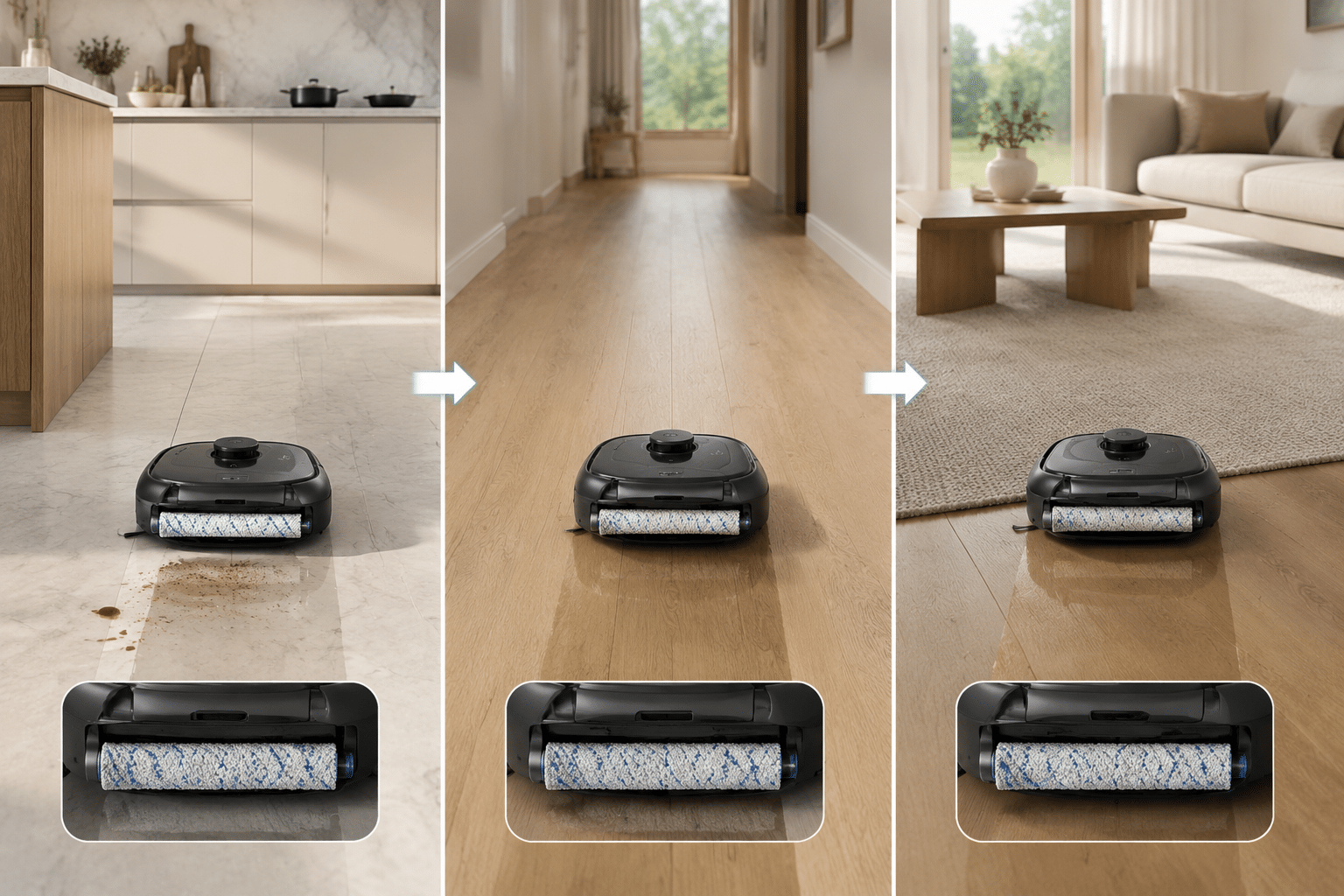
The problem with many robot mops is that the pad gets dirtier throughout the run. The eufy Robot Vacuum Omni E28‘s HydroJet™ system solves this by continuously washing the mop pad while the robot is cleaning. The pad stays closer to its starting condition as it moves from the kitchen to the hallway to the living room, so large-area cleaning is less likely to turn into second-half smearing.
What Other Factors Affect Mopping Results?
Lift Behavior and Carpet Detection
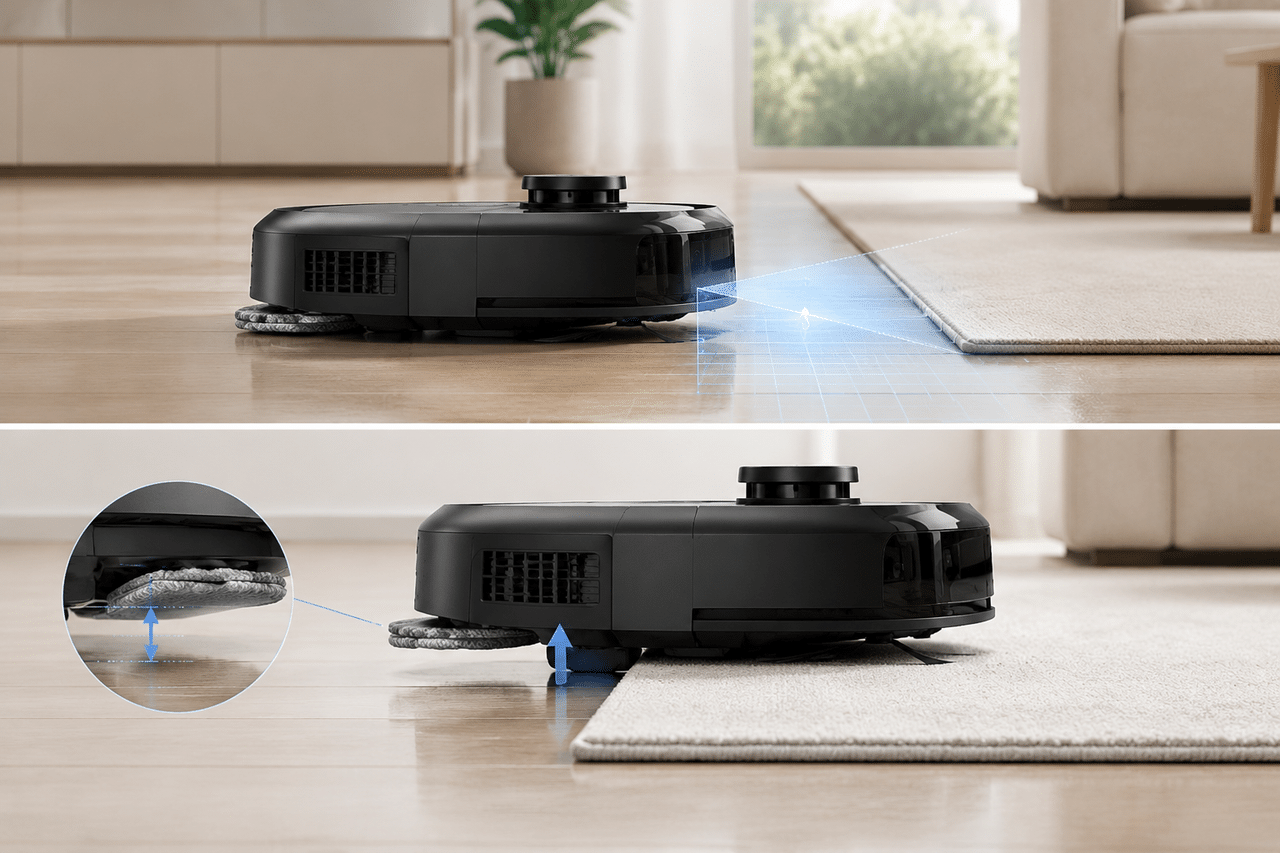
The Robot Needs to Identify Where Rugs and Carpet Zones Are, Then Decide What to Do: Lift the Mop Pad, Avoid the Area Entirely, or Split the Run Into a Vacuum Pass and A Separate Mop Pass. if This Behavior Is Unreliable, the Whole Cleaning Routine Breaks Down. the Eufy Omni Series Solves This with Auto-Lift Mop Technology that Raises the Pad up To 12mm when Carpet Is Detected, so Vacuuming and Mopping Can Happen in The Same Run without Getting Rugs Wet.
Water Output and Tank Strategy
More Water Does Not Automatically Mean Cleaner Floors. Higher Water Output Can Help with Dry Dust but Uses up The Tank Faster And, if The Pad Is Already Dirty, Spreads Grime Rather than Removing It. for Mixed Floors, the Most Reliable Setup Is Usually Lighter Water Output Combined with More Frequent Runs, Rather than Heavy Output on An Infrequent Schedule.
How Robot Mopping Compares to A Traditional Mop — and Which Floors It Suits
Where Results Are Close Enough — Sealed Floors and Dry Dust
On Sealed Hardwood, Smooth Tile, and Stone Floors Where the Main Challenge Is Dust, Light Footprints, and Surface Film, a Robot Vacuum and Mop Running Frequently Can Match or Exceed What Most People Actually Do with A Traditional Mop on A Weekly Schedule. the Robot Wins by Showing up Every Day; a Once-A-Week Hand Mop Never Can. for These Floors and This Mess Type, Robot-First Mopping Is a Genuine Replacement, Not Just a Supplement.
Note: For Unsealed or Wax-Finished Wood Floors, Check Manufacturer Guidelines Before Using Any Wet Mopping Method. the National Wood Flooring Association recommends Minimal Moisture for Routine Care.
Where You Will Still Reach for A Mop — Grease, Grout, and Textured Tile
Deep Grout Lines, Heavily Textured Tile, Cooked-On Kitchen Grease at Edges, and Any Space Where Carpet Covers Most of The Floor Will Still Need Occasional Hand Mopping. This Is Not a Failure of The Robot—it Is a Structural Limit of Low-Pressure Pad Contact versus A Human Applying Targeted Force. the Key Distinction to Make Is Between Occasional and Frequent. Most Homes that Make the Switch Find They Hand Mop a Few Times a Month in Specific Spots Rather than Every Week Across the Whole Floor. that Is Still a Meaningful Reduction in Effort.
Conclusion
A Robot Vacuum and Mop Is Best Understood as A Floor Maintenance Tool, Not a Full Replacement for Every Kind of Manual Cleaning. on Sealed Hard Floors, It Can Handle the Work Most People Actually Need Most Often: Dust, Light Footprints, Surface Film, and The Daily Grit that Makes Floors Feel Dirty.
Choose a model that can keep its mop pad clean, detect carpet reliably, and lift or avoid rugs without interrupting the whole routine. With the right setup, the realistic win is not never touching a mop again. It is keeping the floor cleaner day to day while turning full-floor hand mopping into a much less frequent job.