

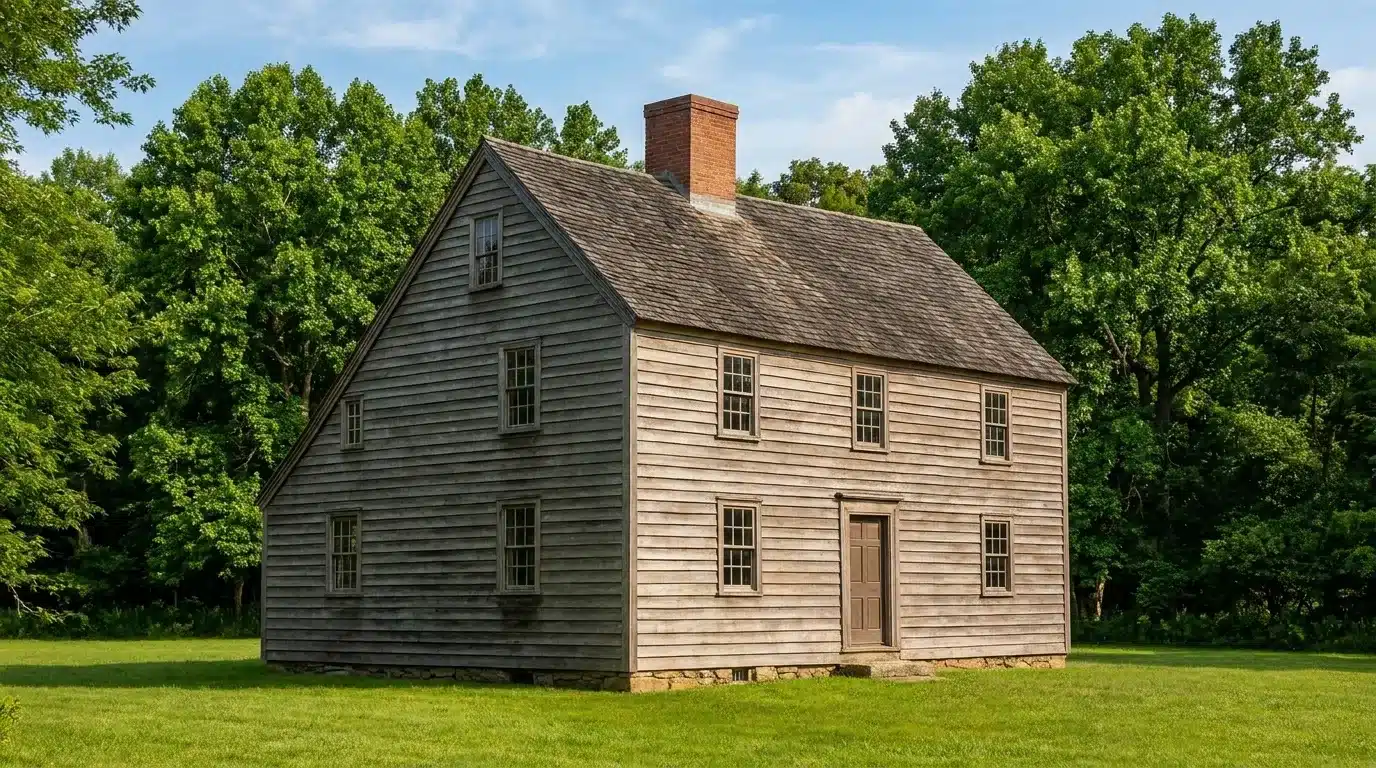
You have probably walked past a saltbox roof without knowing what it was called. That slightly uneven roofline, long on one side, short on the other, has a 400-year-old story behind it.
And it is not just about looks. This roof style handles snow, wind, and rain better than many standard options available today.
This guide breaks down everything about the saltbox roof: what it is, how it came to be, what it costs, and whether it makes sense for your home.
What Is a Saltbox Roof?
A saltbox roof is an asymmetrical gable roof with one long, steep slope on the back and one shorter, shallower slope on the front.
The ridge sits closer to the front of the house rather than in the center, which gives the structure its signature uneven profile.
The name comes from the wooden salt storage boxes used in colonial kitchens, those boxes had off-center lids that opened from the smaller side, and the roof looks just like one.
Where Did the Saltbox Roof Come From?
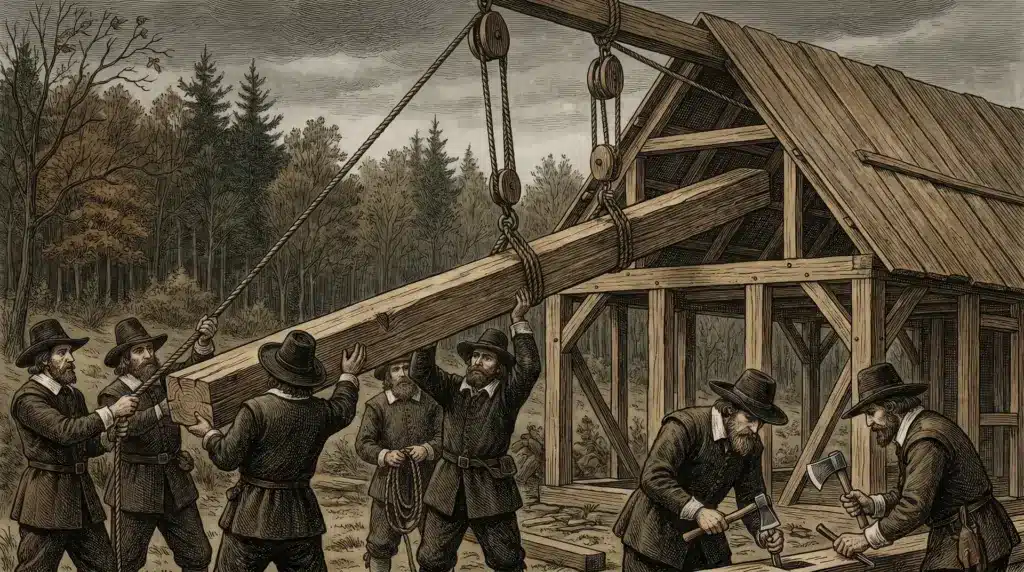
The design has colonial roots, and its origin story is more practical than planned.
Key dates and facts at a glance:
- 1620s: Puritan settlers brought the style from Kent and East Anglia in England to New England
- 1650s: The saltbox design appeared in early American homes for the first time
- 1600s to mid-1700s: Most common period for saltbox homes in Massachusetts, Connecticut, and Ohio
- Until 1820: Builders continued constructing saltbox homes well into the early American republic
Early settlers needed more space but could not afford to rebuild from scratch. So they added a lean-to shed to the back of a simple gable-roofed home.
The extended rear roofline that resulted became what we now call a saltbox. The structure used post-and-beam construction, large timber pieces joined with mortise and tenon joints and wooden pegs.
Metal nails were scarce and expensive, so they were used sparingly. Clapboard or wooden siding finished the exterior.
Over time, families in different parts of New England put their own stamp on the design. By the late 1700s, saltbox homes had more windows, longer footprints, and decorative touches that the first builders would not have recognized.
What Does a Saltbox Roof Look Like?
The silhouette is the easiest way to spot one. Here is a breakdown of its core visual and structural traits compared to other common roof types.
| Feature | Saltbox Roof | Standard Gable Roof |
|---|---|---|
| Slope symmetry | Asymmetrical (unequal sides) | Symmetrical (equal sides) |
| Ridge position | Shifted toward the front | Centered |
| Rear roofline | Long, steep, runs close to ground | Shorter, ends at eave height |
| Front roofline | Shorter and shallower | Equal to rear |
| Stories visible | Two stories front, one story rear | Equal on both sides |
| Central chimney | Common, traditional feature | Not standard |
| Attic space | Uneven, more on front side | Relatively even |
Types of Saltbox Roofs
The original colonial form has changed a fair amount over the centuries. Builders have adapted the basic shape to suit different climates, budgets, and personal styles. Here are the main variations you will come across today.
1. Traditional Saltbox
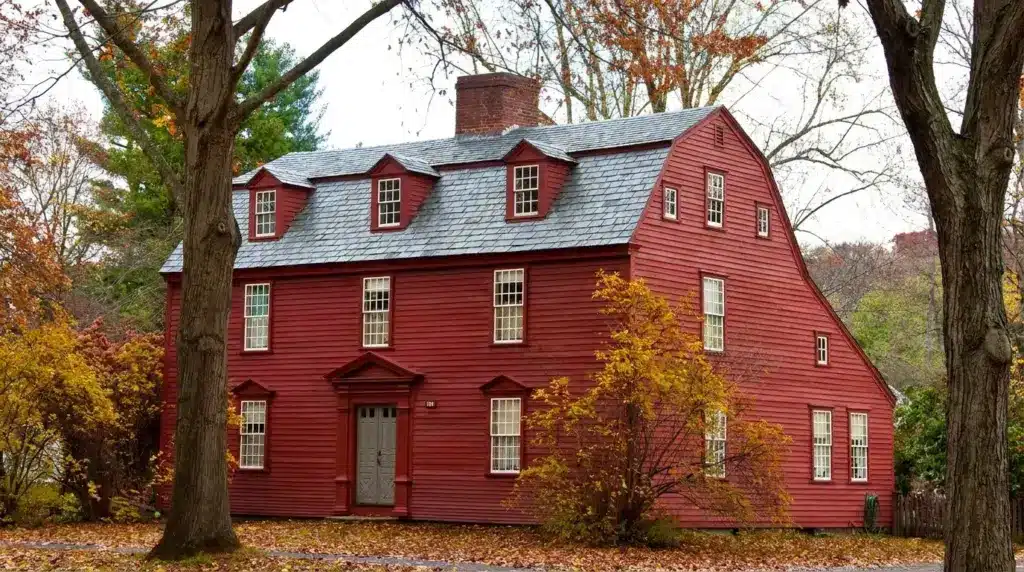
This is the original form, two stories in the front, one story in the rear, a central chimney, and timber framing. You will find these still standing in historic New England towns. Some have original oak clapboards intact.
2. Portsmouth (Gambrel) Saltbox
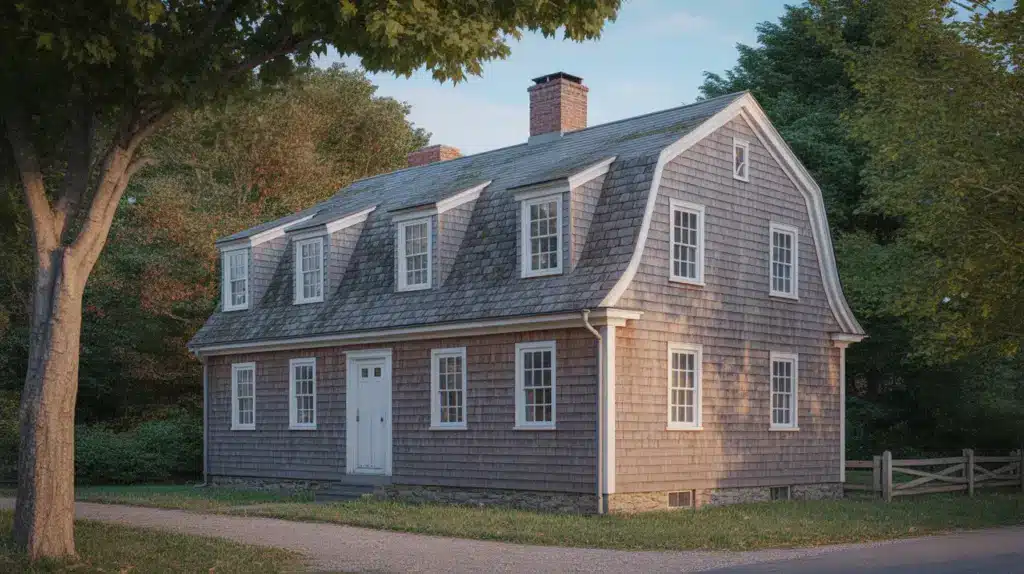
The Portsmouth version uses a gambrel roof rather than a single-pitch slope. The roof slopes twice on each side, which creates extra space on the top floor. It is a popular choice when families need more room without adding another full story.
3. Reverse Saltbox
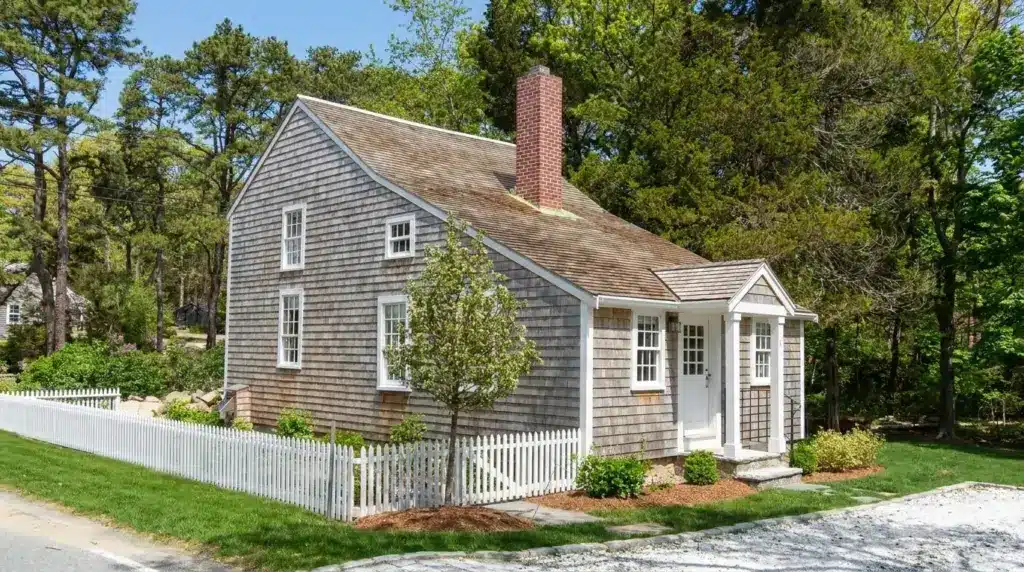
This flips the design. The long slope faces the front of the house instead of the back. Less common, but some architects use it to change how the house sits on a lot or to improve sun exposure.
4. Modern or Contemporary Saltbox
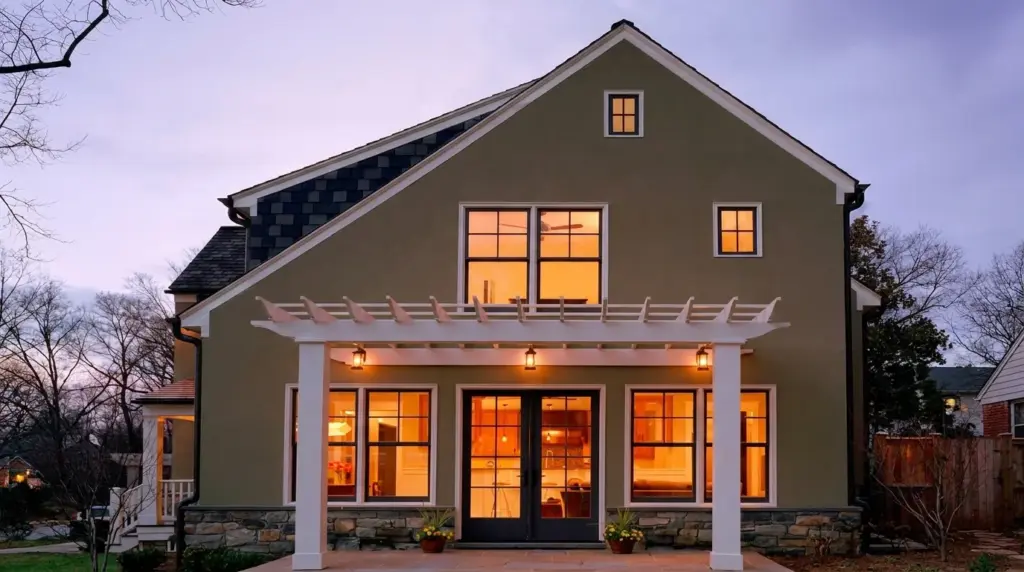
Today’s version keeps the asymmetrical shape but swaps in new materials and finishes. Think standing seam metal on one slope and fiber cement on the other. Some builders add large glass panels or open floor plans that older versions never had.
5. Saltbox with Dormers
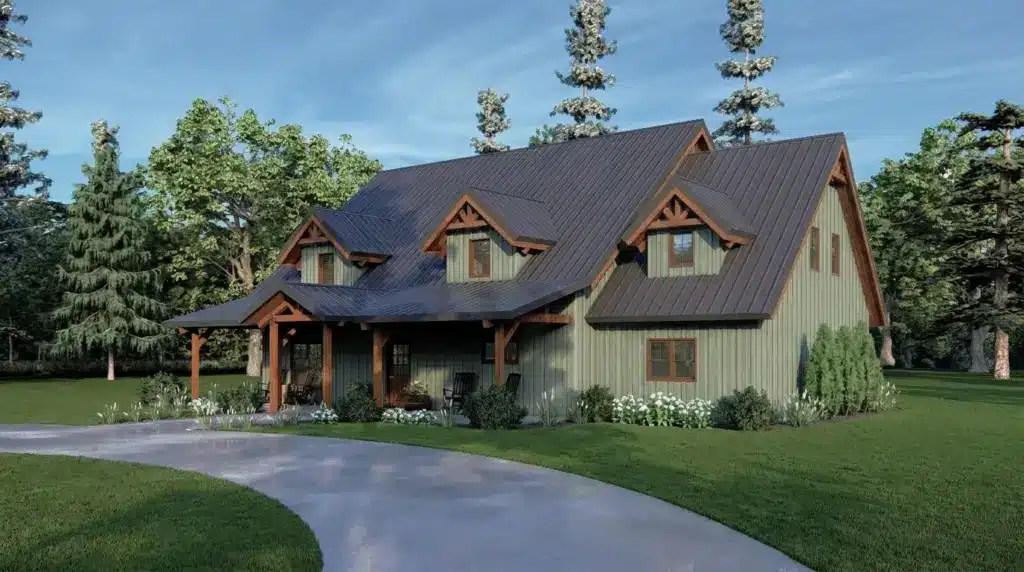
Dormer windows added to the longer rear slope bring in natural light and better airflow. This is a common update in renovations of existing saltbox homes that feel too dark on the rear side.
What Materials Are Used on a Saltbox Roof?
The right material depends on your climate, budget, and how long you want the roof to last before needing attention. Here is a quick rundown of what works well on a saltbox roof.
Asphalt Shingles The most affordable and widely used option. Available in many colors and styles. Lifespan runs about 25 to 30 years with regular upkeep.
Metal Roofing Standing seam metal is a strong choice for saltbox homes in areas with heavy snow or rain. It lasts 40 to 50 years and requires very little maintenance once installed.
Wood Shakes and Shingles Give the roof a natural, textured look that suits traditional saltbox designs well. Cedar is the most common wood used. Requires more upkeep than asphalt or metal.
Slate and Tile Premium options with lifespans that can exceed 75 years. Heavier than other materials, so the framing needs to support the added weight.
Synthetic or Composite Options Made to look like wood or slate but with better durability and lower maintenance. A practical choice for homeowners who want the classic look without the upkeep that natural materials demand.
Saltbox Roof Pitch: What You Need to Know
Pitch refers to how steep the slope is. On a saltbox roof, the two sides have different pitches by design.
The front slope typically runs at a 6:12 ratio, for every 12 inches of horizontal distance, the roof rises 6 inches.
The rear slope is steeper, usually between 9:12 and 12:12, which helps snow and water shed off quickly. This difference in pitch is what gives the saltbox its uneven look and what makes it perform well in harsh weather.
Pre-fabricated trusses can be built for asymmetrical spans, which speeds up the framing process on new builds.
Pros and Cons of a Saltbox Roof
Before committing to this roof style, it helps to know what you are actually getting, the good and the less ideal.
Pros:
- Wind resistance: The sloped design keeps air pressure low across the roof surface, which limits the damage that strong winds can cause
- Snow and rain drainage: No flat sections means water and snow slide off rather than pool — a real benefit in regions with heavy winters
- Extra living space: The taller front side creates usable headroom, which works well for a loft, small bedroom, or home office
- Lightweight build: No vertical supports are needed, which keeps the structure lighter than roofs built with metal or reinforced concrete
- Low long-term maintenance: Fewer flat areas and fewer leak-prone joints mean less to monitor over time
- Curb appeal: The asymmetrical silhouette stands out in a neighborhood of standard gable homes
Cons:
- Higher upfront cost: The complex framing takes more time and skilled labor, which pushes installation costs 20 to 30 percent above a standard roof
- Uneven attic space: The rear slope cuts into usable floor area, storage and finishing options are limited on that side
- Insulation challenges: The cathedral ceiling areas and varying slope angles make it harder to get consistent insulation coverage without gaps or cold spots
- Hard to expand later: Any future renovation or addition requires structural changes because the asymmetrical frame does not adapt easily
How Much Does a Saltbox Roof Cost?
The cost depends on whether you are replacing just the roof or building the entire structure. Here is a clear breakdown.
| Cost Item | Low Estimate | High Estimate |
|---|---|---|
| Roof installation only (materials + labor) | $5,000 | $20,000 |
| Full saltbox home construction (per sq ft) | $120 | $250 |
| Full saltbox home build (total) | $100,000 | $350,000+ |
| Architect fees (stock plans) | $2,500 | $15,000 |
| General contractor fee (% of total build) | 10% | 20% |
| Roof replacement (existing saltbox home) | $7,000 | $20,000+ |
Key factors that affect your final number:
- Roof size and total square footage
- Slope complexity and framing requirements
- Material choice (asphalt shingles vs. standing seam metal vs. slate)
- Local labor rates and permit costs
- Whether you need structural changes to an existing frame
For most homeowners, hiring a licensed contractor is the right call. DIY builds are possible but carry real risk on a roof with this level of framing complexity. Permit requirements vary by county, so check local building codes before you start planning.
Saltbox Roof vs. Other Roof Types
Comparing the saltbox against other popular roof styles can help you decide if it fits your home and goals.
1. Saltbox vs. Gable Roof
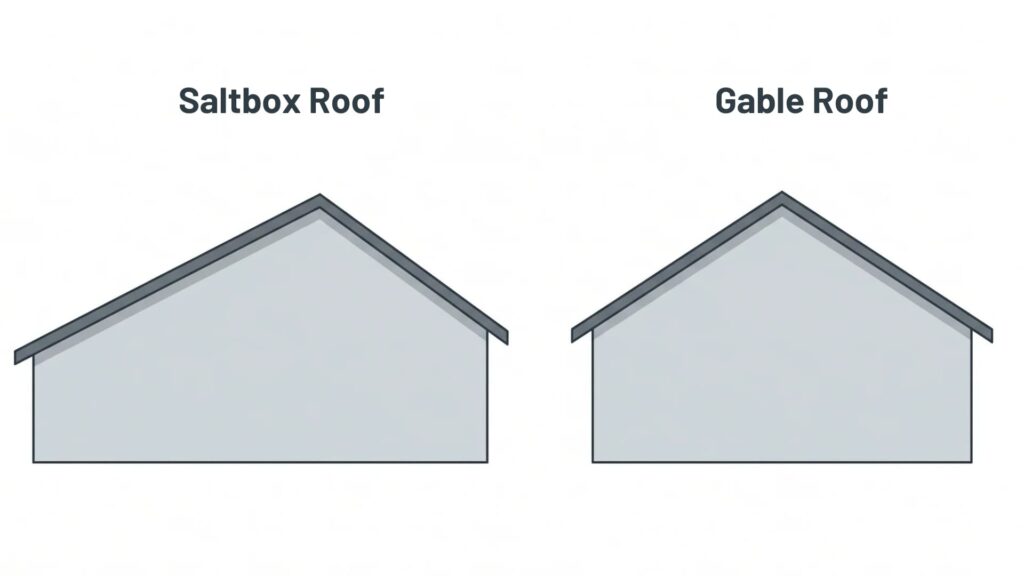
A standard gable roof has equal slopes on both sides with the ridge running down the center. The saltbox shifts that ridge forward and extends one slope much further down. The saltbox gives you more space on the rear interior, but costs more to frame.
2. Saltbox vs. Shed Roof
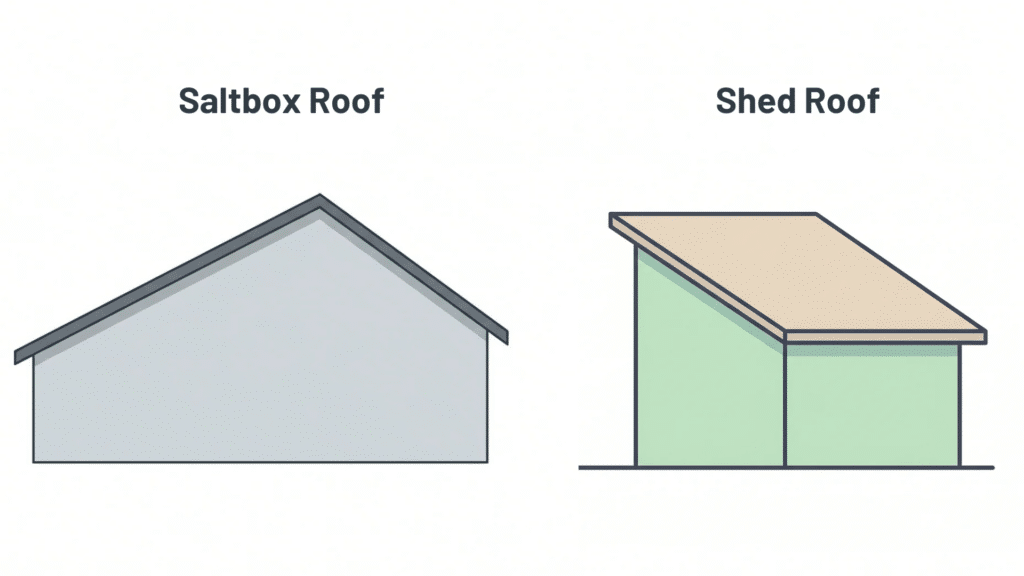
A shed roof has just one slope running in a single direction. It is simpler and cheaper to build. The trade-off is less interior headroom on the lower end and a very different look from what most homeowners want.
3. Saltbox vs. Gambrel Roof
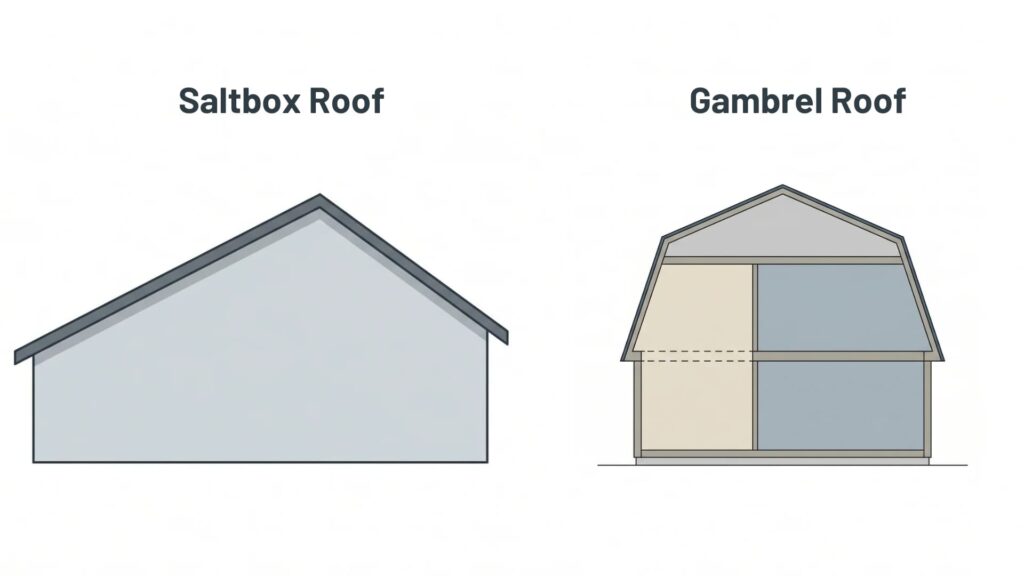
A gambrel roof slopes twice on each side, a shallow upper portion and a steeper lower section. It creates more usable space than a saltbox on both sides, but the two-break design is more complex and common in barn-style architecture.
4. Saltbox vs. Mansard Roof
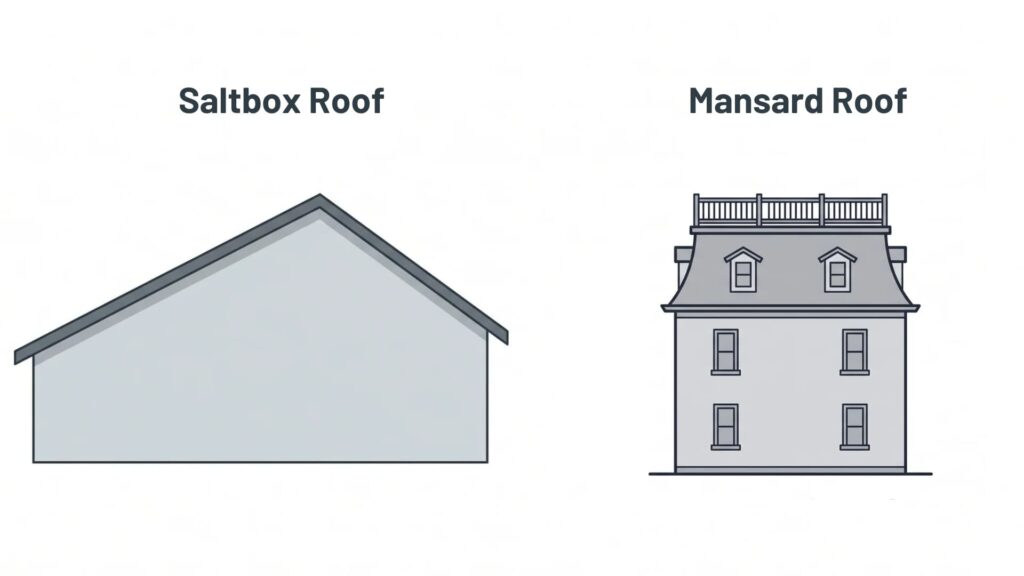
A mansard roof has four sloping sides with a flat top, creating a symmetric look often associated with French-inspired buildings. It offers more living space than a saltbox on all sides, but is significantly more expensive to build and maintain.
Maintenance Tips for a Saltbox Roof
The long rear slope and uneven drainage pattern mean you need to pay attention to a few specific areas. Here is what to stay on top of.
- Gutter sizing: Size gutters and downspouts correctly for each slope separately, the steep front sheds water fast, while the rear slope drains differently
- Annual inspections: Check for loose shingles, cracked flashing, or any signs of water entry at least once a year, ideally in fall before winter
- Ventilation checks: Poor airflow is the most common problem in saltbox homes, check vents in the roof and attic space each season
- Insulation gaps: Inspect the rear cathedral ceiling area for cold spots or moisture buildup, which signal insulation coverage problems
- Debris removal: Clear leaves and branches from the rear slope regularly, debris holds moisture against the roofing material
- Flashing around the chimney: The central chimney is a traditional feature, but its flashing is a common leak point if not checked and resealed periodically
Is a Saltbox Roof Right for Your Home?
A saltbox roof works best on homes in regions with heavy snow, rain, or regular high winds. The sloped design handles all three without needing extra protection.
It suits colonial and Cape Cod-style homes naturally, but modern minimalist builds also use the shape for visual contrast.
Before committing, check your local building codes, some counties require permits for structural roof changes, and the asymmetrical framing may need engineer approval.
If you are adding solar panels, the long rear slope can work well, but the varying pitch requires a site assessment to confirm sun exposure.
For anyone building new, the saltbox gives you functional loft space without adding a full second story, which keeps the build cost lower than a standard two-story home with a conventional roof.
Wrapping It Up
The saltbox roof has lasted for four centuries for a good reason. It started as a fix for families who needed more space without tearing down what they had, and it turned out to be one of the more weather-resistant roof shapes available.
The asymmetrical slope sheds snow and water efficiently, keeps wind pressure low, and adds usable interior space without a full second-story build.
The trade-off is a more complex installation and some limitations on attic layout. If your home sits in a climate with hard winters or strong winds, a saltbox roof is worth serious consideration.
Have a question about your specific situation? Drop it in the comments, we read every one.