

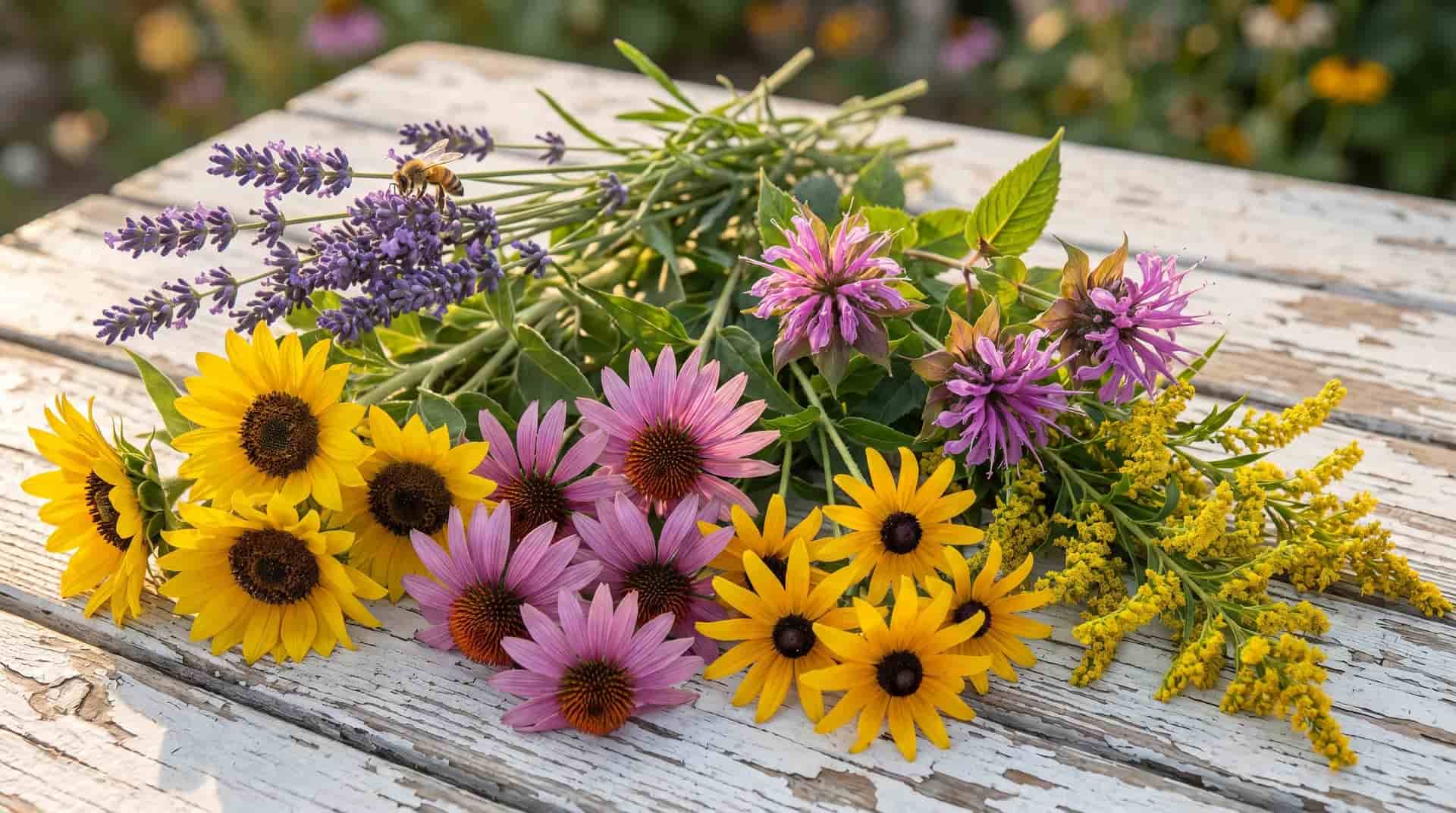
One out of every three bites of food you eat exists because a pollinator showed up to work. That’s USDA data, not a guess.
Yet managed honey bee colonies in the U.S. have dropped from 6 million in 1947 to under 2.5 million today. Pollinators are losing their food sources faster than they can adapt.
The right plants in your garden change that. Even a small patch with the right choices makes a real, measurable difference, and getting started is easier than you’d expect.
What Are Pollinator Plants?
Pollinator plants are flowering plants that provide nectar and pollen to insects and animals like bees, butterflies, hummingbirds, and moths.
These plants feed pollinators while pollinators carry pollen between flowers, helping plants reproduce.
Native species are especially valuable because they co-evolved with local wildlife and match the feeding habits of regional bee and butterfly populations.
13 Best Pollinator Garden Plants
The pollinator garden plants below cover all three things pollinators need: nectar, pollen, and bloom coverage from spring through fall. Each one has been selected based on performance across most U.S. growing regions, with notes on what makes each plant worth growing.
1. Milkweed
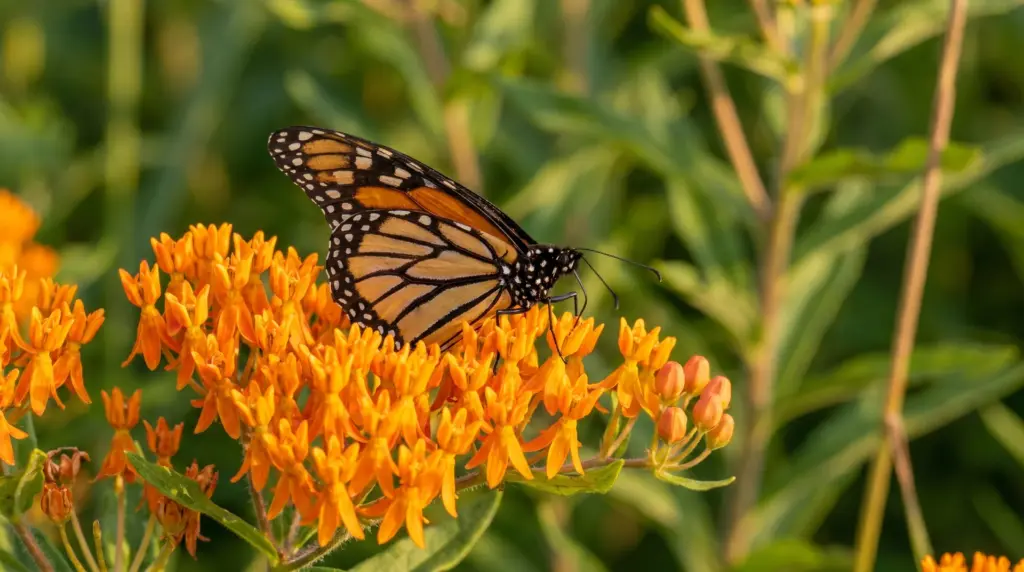
- Botanical Name: Asclepias tuberosa
- Common Name: Butterfly Weed
- USDA Hardiness Zone: 3 to 9
- Bloom Time: Mid to late summer
- Sun Requirement: Full sun
- Soil Type: Well-drained, average to dry
- Best Regions: Northeast, Midwest, Mid-Atlantic
- Pollinators Attracted: Monarch butterflies, native bees, small beneficial wasps
Milkweed is the only plant monarch butterflies use to lay their eggs. No milkweed means no monarchs, and that’s not a figure of speech. The plant also produces nectar-rich flowers that honeybees and native bees visit through mid to late summer, filling a gap when many other plants stop blooming.
Asclepias tuberosa (butterfly weed) is the better choice for home gardens over common milkweed because it spreads less aggressively. Plant it in full sun with well-drained soil and avoid hybrid varieties, they often lack usable nectar. Leave the seed pods at the end of the season to help with natural reseeding.
2. Bee Balm
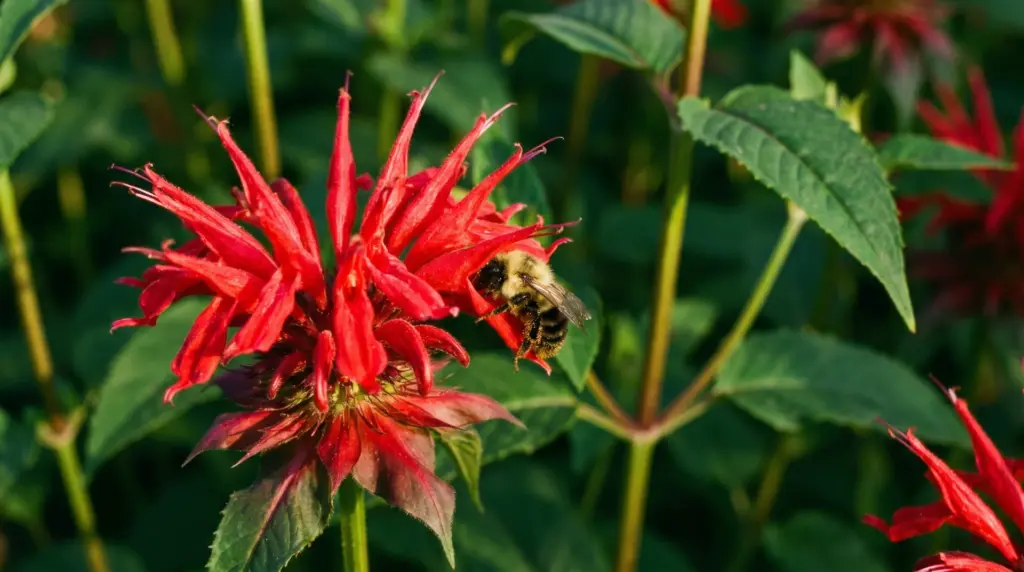
- Botanical Name: Monarda didyma / Monarda fistulosa
- Common Name: Bee Balm, Bergamot
- USDA Hardiness Zone: 4 to 9
- Bloom Time: Summer
- Sun Requirement: Full sun to part shade
- Soil Type: Moist, well-drained
- Best Regions: Most of the continental U.S.
- Pollinators Attracted: Native bees, honeybees, hummingbirds, butterflies
Bee Balm has tubular flowers shaped specifically for bees with longer tongues and for hummingbirds. It blooms through the hottest months of summer and keeps producing nectar even in warm conditions when some other plants slow down.
Choose disease-resistant varieties to avoid powdery mildew, which can be a problem in humid climates. Planting in full sun with good air circulation helps a lot. If you mix red and purple varieties in the same bed, you attract a wider range of pollinators at once.
3. Lavender
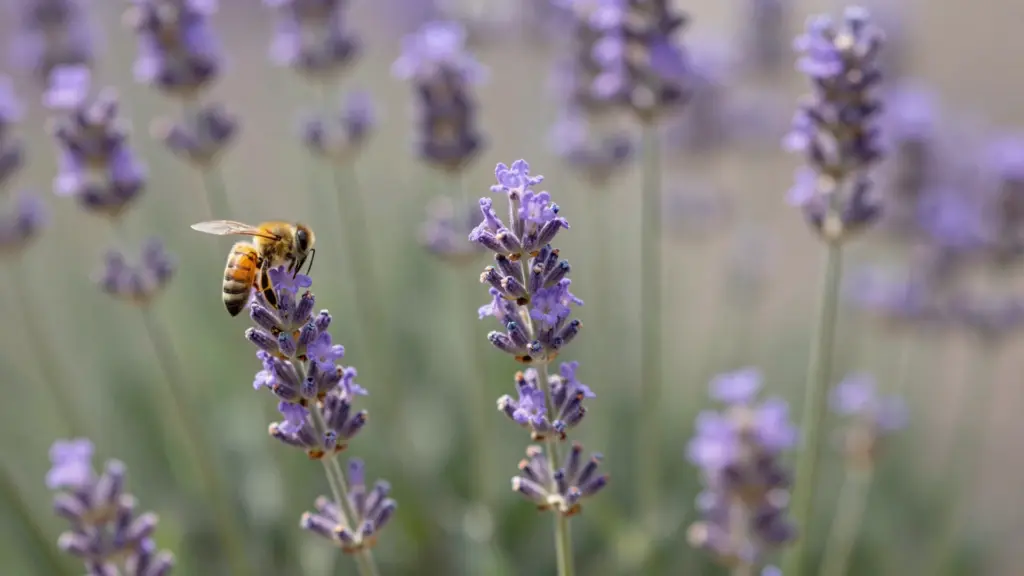
- Botanical Name: Lavandula angustifolia
- Common Name: Lavender, English Lavender
- USDA Hardiness Zone: 5 to 8
- Bloom Time: Mid-summer, reblooms with pruning
- Sun Requirement: Full sun
- Soil Type: Sandy, well-drained
- Best Regions: Most U.S. regions with good drainage
- Pollinators Attracted: Honeybees, bumblebees, solitary bees
Lavender is one of the highest nectar-yield plants per square foot. Bees return to it repeatedly throughout the day, and its long bloom season means it stays productive well into summer.
It is not native to all U.S. regions but still performs well for pollinators where it can grow. Sandy, well-drained soil and full sun are non-negotiable — lavender in clay or shade declines fast. Prune back by about a third after each bloom flush to push new flower growth instead of woody stems.
4. Sunflower
- Botanical Name: Helianthus annuus
- Common Name: Common Sunflower
- USDA Hardiness Zone: Annual across all zones
- Bloom Time: Summer through fall
- Sun Requirement: Full sun
- Soil Type: Average, well-drained
- Best Regions: All U.S. regions in full sun
- Pollinators Attracted: Bees, butterflies, pollen-feeding beetles
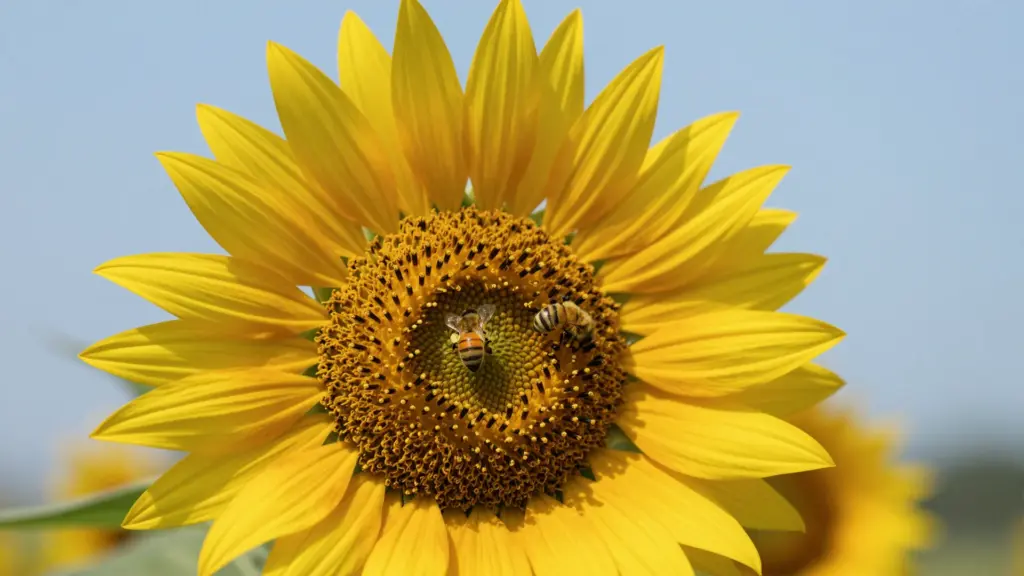
Sunflowers produce some of the most pollen-rich flowers in any garden. Bees can forage on a single sunflower for an extended time because the pollen supply is so generous. Branching varieties keep producing new flower heads across a long season rather than giving you one bloom and stopping.
Plant seeds directly in the ground after your last frost date. No need to start them indoors. Deadhead spent flowers regularly to push the plant toward making new buds. Once flowering ends, leave the seed heads up, birds will feed on them through fall and winter.
5. Goldenrod
- Botanical Name: Solidago spp.
- Common Name: Goldenrod
- USDA Hardiness Zone: 3 to 9
- Bloom Time: Late summer through fall
- Sun Requirement: Full sun to light shade
- Soil Type: Average, tolerates poor soil
- Best Regions: Most of the continental U.S., especially the Southeast and Midwest
- Pollinators Attracted: Migrating monarch butterflies, native bees, honeybees
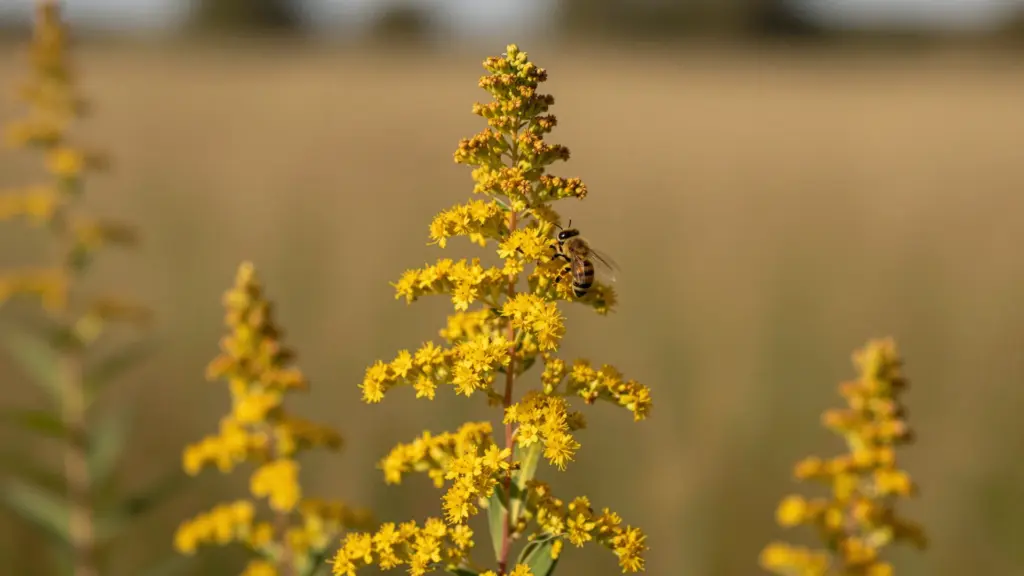
Goldenrod is one of the most valuable late-season plants you can grow for pollinators. It blooms when most garden plants have stopped, giving migrating monarchs and fall-active bees a food source when almost nothing else is available.
One common misconception worth clearing up: goldenrod does not cause hay fever. Ragweed, which blooms at the same time and produces wind-borne pollen, is the actual culprit. Goldenrod pollen is heavy and sticky, designed to travel by insect, not air. It spreads by rhizomes, so give it room or plant it in a contained bed.
6. Coneflower
- Botanical Name: Echinacea purpurea
- Common Name: Purple Coneflower
- USDA Hardiness Zone: 3 to 9
- Bloom Time: Midsummer
- Sun Requirement: Full sun
- Soil Type: Average to dry, well-drained
- Best Regions: Northeast, Midwest, Southeast, Plains
- Pollinators Attracted: Native bees, bumblebees, butterflies, goldfinches (for seed heads)
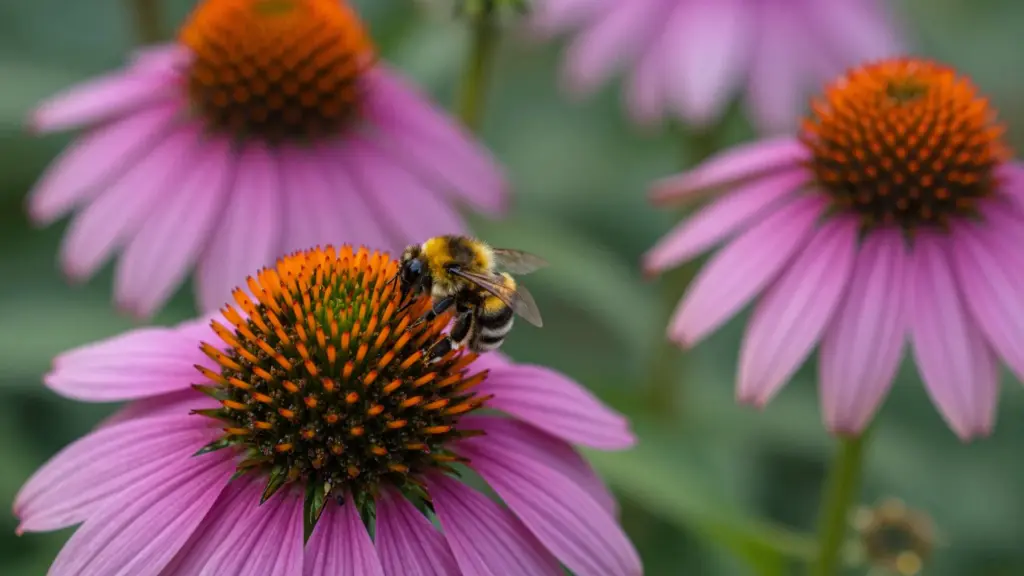
Coneflower is a North American native that supports specialist bees alongside generalist pollinators. Its open, flat center makes pollen accessible to a wide range of insects, including beetles and smaller bees that struggle with more complex flower shapes.
Leave the seed heads standing through winter. They feed birds like goldfinches through the cold months and shelter solitary insects. Coneflower is also drought-tolerant once it establishes, making it a practical choice for gardeners who want low-maintenance plants that still deliver for wildlife.
7. Black-Eyed Susan
- Botanical Name: Rudbeckia hirta
- Common Name: Black-Eyed Susan
- USDA Hardiness Zone: 3 to 9
- Bloom Time: Summer through early fall
- Sun Requirement: Full sun
- Soil Type: Tolerates poor, dry soil
- Best Regions: All continental U.S. regions
- Pollinators Attracted: Butterflies, native bees, beetles
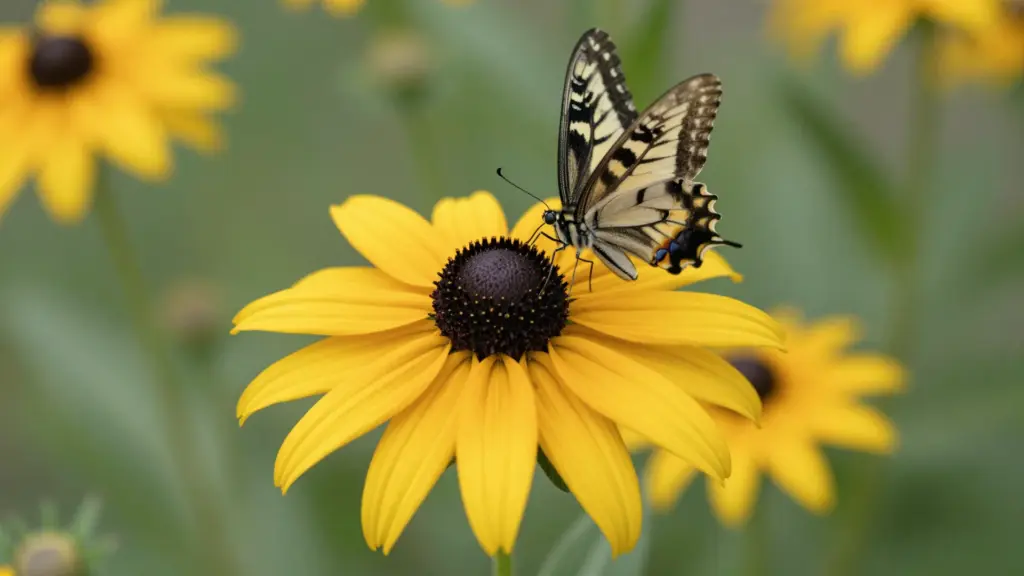
Black-Eyed Susan is one of the most accessible plants for a wide variety of pollinators. Its flat, open flower face gives butterflies a clear landing pad and puts nectar within easy reach for short-tongued bees and beetles.
It tolerates poor soil and dry conditions better than most flowering plants, which makes it a reliable choice in spots where other plants struggle. It also self-seeds freely, so you get new plants each season with no replanting required. For a full-season effect, combine it with Goldenrod so something is blooming even after the Susan finishes.
8. Catmint
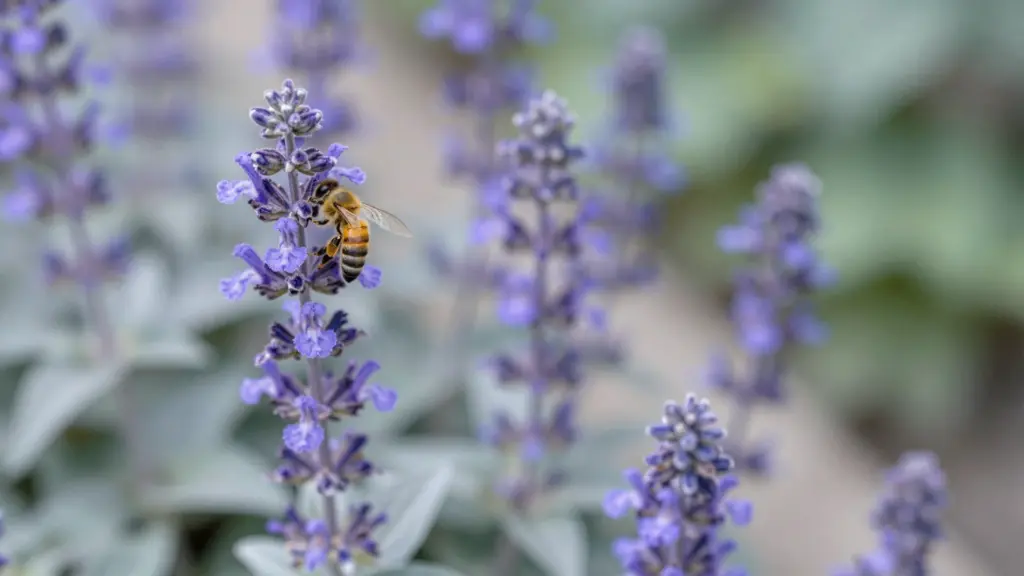
- Botanical Name: Nepeta x faassenii / Nepeta racemosa
- Common Name: Catmint
- USDA Hardiness Zone: 3 to 8
- Bloom Time: Late spring through summer, reblooms in fall
- Sun Requirement: Full sun
- Soil Type: Dry to average, well-drained
- Best Regions: Most U.S. regions
- Pollinators Attracted: Honeybees, bumblebees, butterflies, hummingbirds
Catmint blooms earlier in the season than many pollinator plants, giving hungry bees a food source when spring is just getting started. Bees return to it throughout the day and across the whole bloom period rather than visiting once and moving on.
Cut the plant back by about half after the first big bloom flush and it will rebloom in late summer or fall. It is also deer and rabbit resistant, which matters in garden areas where those are a regular problem. Groundcover types work well tucked between taller plants, filling gaps with flowers close to the ground.
9. Salvia
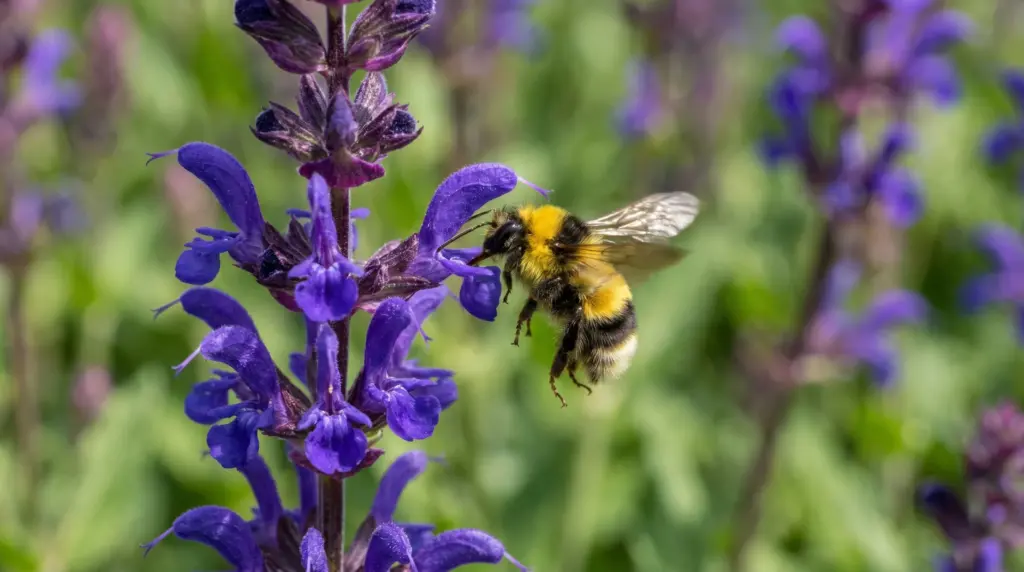
- Botanical Name: Salvia nemorosa
- Common Name: Woodland Sage, Ornamental Salvia
- USDA Hardiness Zone: 4 to 9
- Bloom Time: Late spring through fall, depending on variety
- Sun Requirement: Full sun
- Soil Type: Well-drained, average
- Best Regions: Most U.S. regions
- Pollinators Attracted: Bumblebees, native bees, hummingbirds, butterflies
Salvia’s tubular flower structure is built for bees with longer tongues and for hummingbirds that hover and feed. It produces nectar consistently across a long season and deadheads easily to keep new spikes forming.
For hummingbirds specifically, red and deep blue salvia varieties draw the strongest response. If your goal is bees, purple and blue varieties like ‘Caradonna’ and ‘May Night’ perform well. Salvia pairs naturally with Catmint and Lavender in a border designed for early to midsummer coverage.
10. Joe Pye Weed
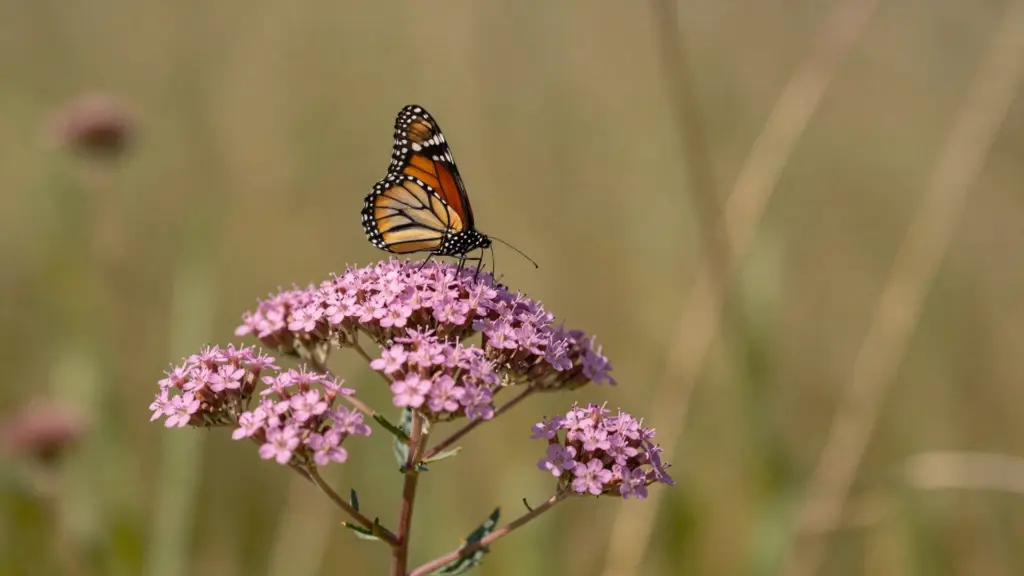
- Botanical Name: Eutrochium purpureum
- Common Name: Joe Pye Weed, Sweet Joe Pye Weed
- USDA Hardiness Zone: 4 to 9
- Bloom Time: Late summer to early fall
- Sun Requirement: Full sun to part shade
- Soil Type: Moist, average to fertile
- Best Regions: Eastern and Central U.S.
- Pollinators Attracted: Monarch butterflies, swallowtails, native bees
Joe Pye Weed is a tall, late-blooming native that monarch butterflies rely on during fall migration. Its large, domed flower clusters let multiple pollinators feed at once, and it blooms at a time when garden options get thin.
Plant it at the back of a bed because it grows 4 to 7 feet tall. It tolerates moist soil, making it useful in low spots where other plants fail. The combination of Joe Pye Weed and Goldenrod in the same fall garden covers both the butterfly and bee populations through the last weeks of warm weather.
11. Wild Bergamot
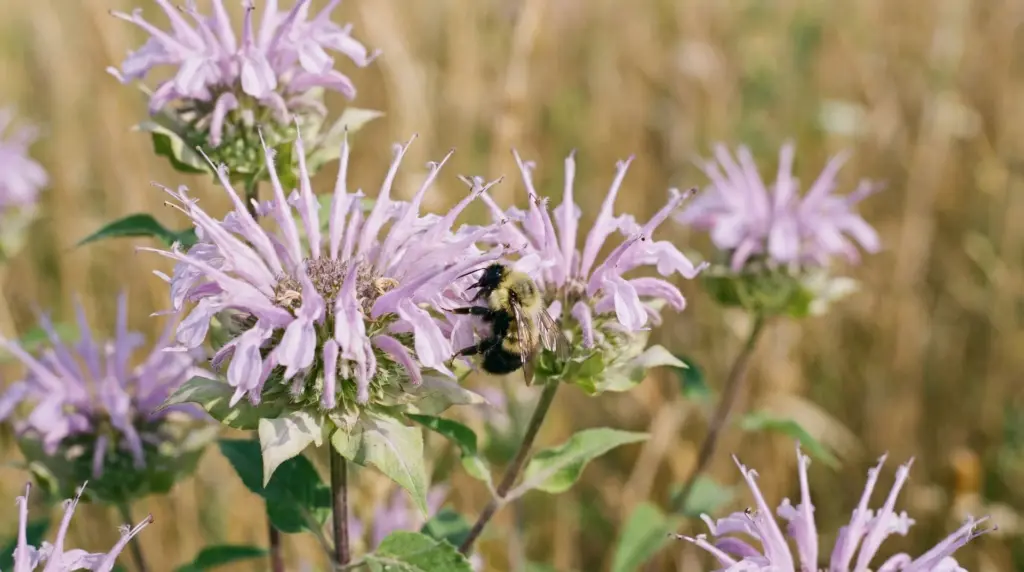
- Botanical Name: Monarda fistulosa
- Common Name: Wild Bergamot, Lavender Bergamot
- USDA Hardiness Zone: 3 to 9
- Bloom Time: Midsummer
- Sun Requirement: Full sun
- Soil Type: Dry to average, tolerates poor soil
- Best Regions: Native across most of the continental U.S.
- Pollinators Attracted: Native bees (specialist Monarda bees), bumblebees, butterflies
Wild Bergamot is the more drought-tolerant cousin of standard Bee Balm and native across a wider range of the U.S. It attracts specialist native bees that depend specifically on Monarda pollen, making it a plant that supports bee species you cannot feed with anything else.
It grows in dry, average soil where traditional Bee Balm would struggle, which gives it an edge in garden areas with poor water retention. Once established, it needs almost no care and spreads slowly into small colonies, building a natural-looking patch over time.
12. Sedum / Stonecrop
- Botanical Name: Hylotelephium spectabile (formerly Sedum spectabile)
- Common Name: Stonecrop, Showy Sedum
- USDA Hardiness Zone: 3 to 9
- Bloom Time: Late summer through fall
- Sun Requirement: Full sun
- Soil Type: Poor to average, well-drained
- Best Regions: Most U.S. regions
- Pollinators Attracted: Bees, butterflies, beneficial beetles
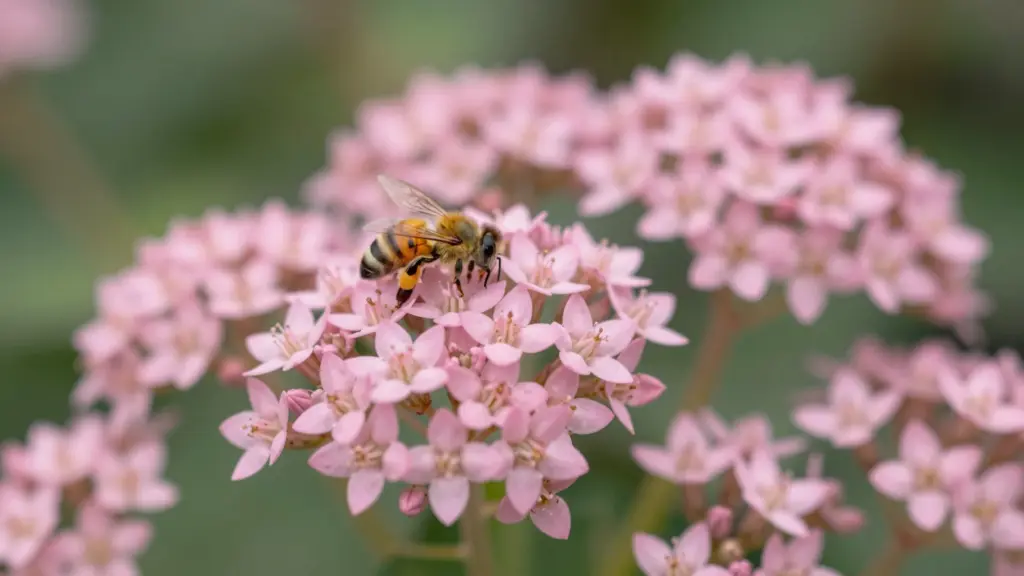
Sedum groundcover types sit close to the ground, and that matters more than it sounds. Bees have a harder time foraging in windy conditions, and lower flowers give them a more stable landing spot. Sedum stays in bloom through late fall when most other plants have already finished.
It is one of the lowest-maintenance plants on this list. Poor soil, minimal water, full sun, Sedum actually performs better without extra fertilizing. Leave the seed heads standing over winter because they add structure to the dormant garden and give insects a place to shelter.
13. Liatris / Blazing Star
- Botanical Name: Liatris spicata
- Common Name: Blazing Star, Spike Gayfeather
- USDA Hardiness Zone: 3 to 8
- Bloom Time: Midsummer
- Sun Requirement: Full sun
- Soil Type: Average to dry, well-drained
- Best Regions: Eastern and Central U.S.
- Pollinators Attracted: Monarch butterflies, bees, hummingbirds, goldfinches
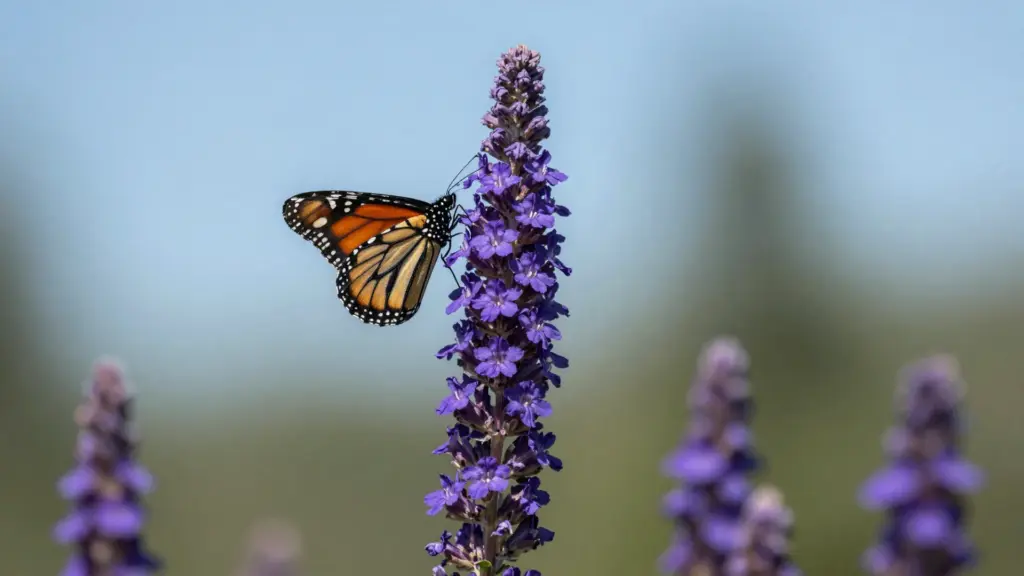
Liatris opens its flowers from the top of the spike downward, which is unusual. This means early-opening flowers at the top serve different pollinators than later-opening ones at the base, extending the feeding window on a single plant. Monarch butterflies are particularly drawn to it during late summer migration.
Plant corms in fall for midsummer bloom. It is also deer and rabbit resistant, which makes it a practical choice in areas where browsing animals are a problem. Goldfinches feed on the seed heads in fall, so leave them standing after bloom ends.
Why Pollinators Are Disappearing?
Pollinators are losing ground because their habitat is shrinking, their food sources are being replaced by lawns and pavement, and pesticides, particularly neonicotinoids, are affecting bee health at the colony level.
According to the USDA, managed honey bee colonies have fallen from 6 million in 1947 to under 2.5 million, and a 2025 study published in the Proceedings of the National Academy of Sciences found that more than one in five North American pollinator species now faces elevated extinction risk.
Habitat loss, climate change shifting bloom times out of sync with insect emergence, and the ongoing spread of invasive plants are all contributing factors.
Pollinators contribute $34 billion annually to the U.S. economy, and over 100 commercial crops depend on them, yet there are currently not enough pollinator-friendly plantings across the country to meet the need.
Key Takeaways
These pollinator garden plants cover the full season, from Catmint’s early spring flowers to Sedum and Goldenrod carrying food sources into fall.
Together they give bees, butterflies, and hummingbirds what they need: nectar, pollen, and a consistent supply from the time they emerge to the time they overwinter.
Start with three plants that cover different seasons. Add a shallow water source. Leave the stems standing through winter. Then pay attention to what shows up.
Which of these pollinator garden plants are you adding to your yard this season? Share it in the comments below.
For more garden inspiration and ideas, browse our full Gardening section to find guides on everything from plant care to outdoor design.
Frequently Asked Questions
How to Layout a Pollinator Garden?
Place taller plants like Joe Pye Weed at the back, medium plants like Coneflower and Bee Balm in the middle, and low groundcovers like Sedum and Catmint at the front; then group 3 or more of the same plant together so pollinators can find them easily.
When Should I Plant a Pollinator Garden?
Plant most perennials in spring or fall, and direct-sow annuals like Sunflower after your last frost date.
What Plant Attracts the Most Pollinators?
Lavender, Bee Balm, and Coneflower consistently draw the widest range of pollinators, including bees, butterflies, and hummingbirds, across most U.S. growing regions.
Which Is the Best Pollinator Plants for Vegetable Garden?
Bee Balm, Black-Eyed Susan, and Lavender planted near vegetable beds bring in the bees that pollinate tomatoes, squash, cucumbers, and beans, which directly improves your harvest.