

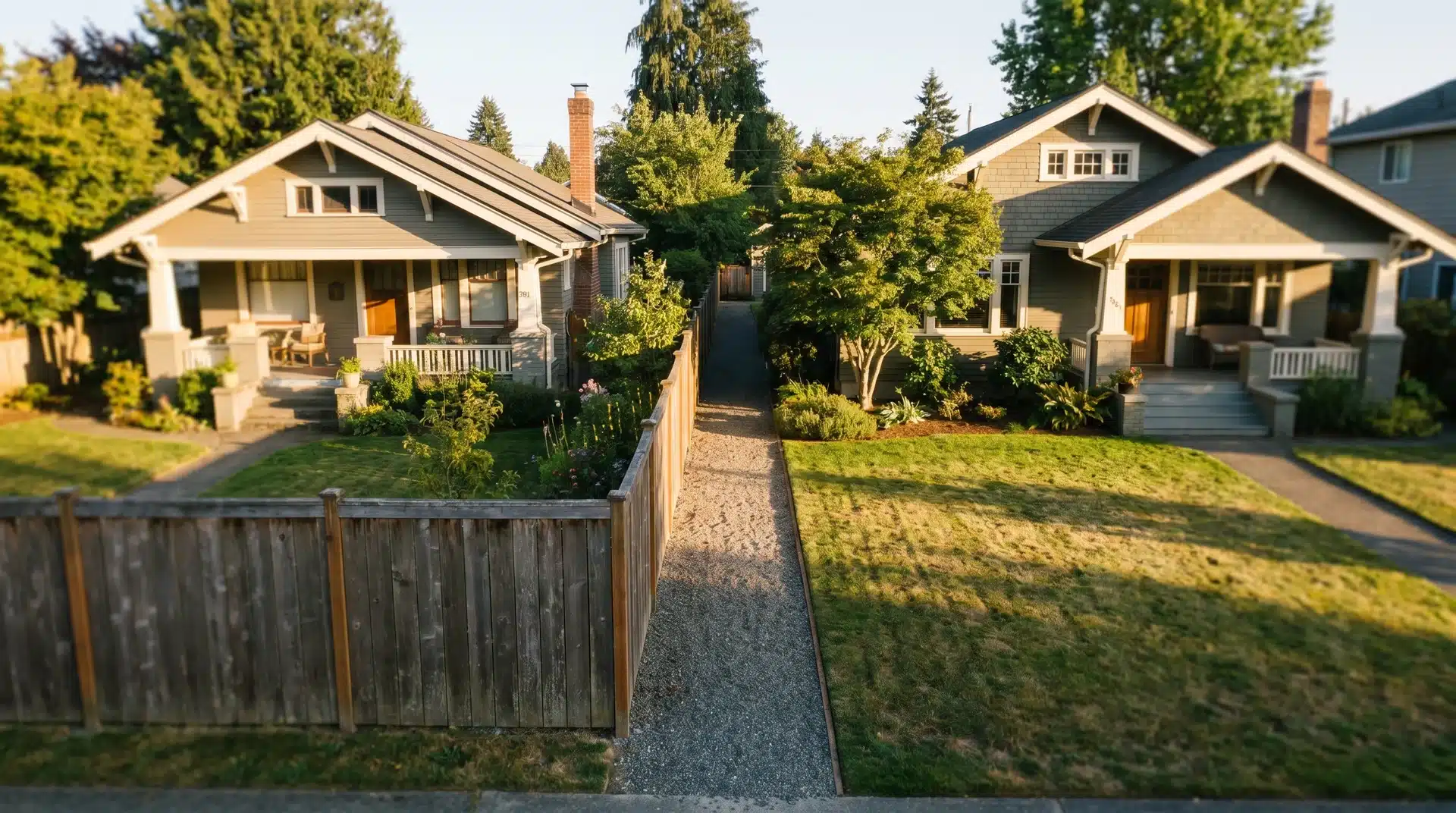
You find a house you love. The price is right, the location works, and then your agent mentions there’s an easement on the property. Suddenly, you’re not sure what you’re buying into.
Easements show up in real estate deals often, but most buyers and owners don’t know what they actually mean until one affects them.
This guide breaks down what an easement is, the types you’re likely to run into, how they get created, and what they mean for you as a property owner.
What Is an Easement?
An easement is a legal right that lets a person, company, or government agency use part of someone else’s property for a specific purpose, without owning it.
The property owner keeps full title to the land. The easement holder only gets permission to use it in the way the agreement describes, nothing more.
Key Terms You Need to Know
Before you read any easement document, knowing the basic terms will save you a lot of confusion. These definitions come up in almost every property easement situation.
- Dominant Estate: The property that benefits from the easement
- Servient Estate: The property that carries the burden of the easement
- Easement Holder: The person or group with legal rights to use the land
- Grantor: The property owner who gives the easement
- Appurtenant: Attached to the land itself, not to a specific person
- In Gross: Attached to a person or company, not tied to a specific property
How Does a Property Easement Work?
A property easement works by giving the holder a defined right to access or use a section of land they do not own.
For example, if your neighbor’s lot is surrounded on all sides by other properties and the only way out is through your yard, a court or written agreement can grant them a legal right to cross your land to reach the road.
You still own the yard. They just have permission to pass through it.
Types of Easements
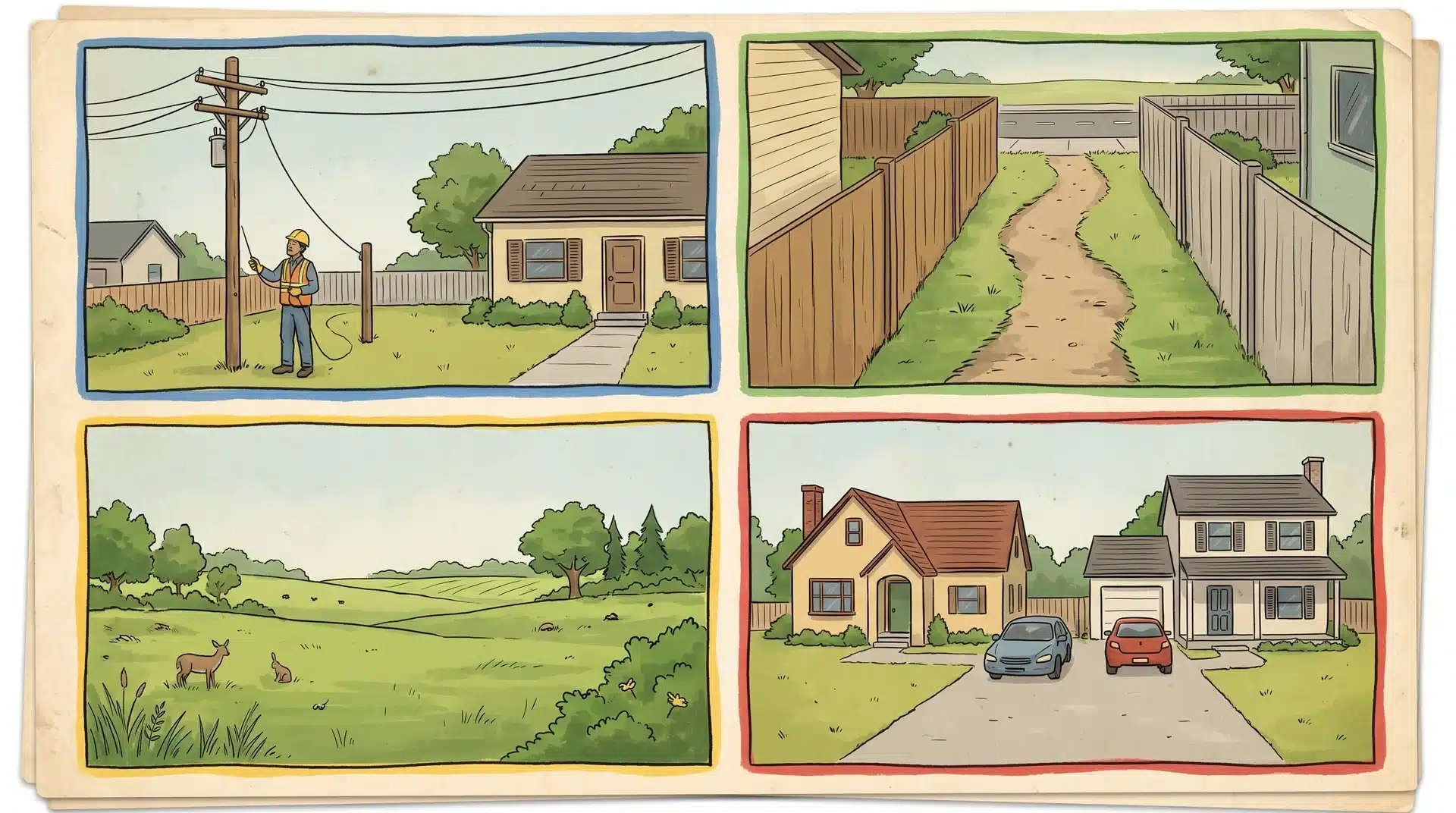
There are several categories of easements, and they each work a little differently depending on who benefits, how they were created, and what they allow. Getting clear on the type matters because it tells you what rights apply and whether the easement stays with the property when it sells.
1. Affirmative vs. Negative Easements
Affirmative easements allow the holder to do something on your land. A utility company running a power line across your property is a classic example.
Negative easements do the opposite. They stop you, the property owner, from doing something that would otherwise be legal.
For instance, if your neighbor holds a negative easement over your lot, they might be able to stop you from building a wall that blocks their access to natural light. Negative easements are rare and courts treat them carefully.
2. Easement Appurtenant vs. Easement in Gross
An easement appurtenant involves two properties: one that benefits (dominant estate) and one that carries the burden (servient estate).
This type of easement runs with the land, meaning it transfers to the new owner automatically when the property is sold. A landlocked lot that has legal crossing rights over an adjacent parcel is a textbook case.
An easement in gross ties to a specific person or company rather than a property. A utility company’s right to access your land for maintenance is an easement in gross.
If you sell your home, the utility easement stays. But if a personal easement in gross was granted to a specific individual, that right typically does not pass to the new owner.
3. Private vs. Public Easements
A private easement benefits a specific person or a neighboring property. A shared driveway between two homeowners is a good example. A public easement gives the general public access to a piece of land, like a sidewalk, a public trail, or a beach access path.
Common Specific Easement Types
- Utility Easement: Granted to utility providers (electric, gas, water, sewer, or telecom companies) so they can install and maintain infrastructure on your land. These are usually permanent and recorded in the deed. You cannot build over a utility easement or block access to it.
- Right-of-Way Easement: Lets someone cross your property to reach another location. Common in rural areas where a landlocked parcel depends on crossing neighboring land to reach a public road.
- Conservation Easement: A voluntary agreement between a landowner and a government agency or land trust. It limits development on the land to protect its agricultural, natural, or scenic value. Conservation easements are permanent and bind future owners. Under IRS Section 170(h), landowners who grant conservation easements may qualify for federal tax deductions.
- Driveway or Access Easement: Allows a neighbor to use part of your driveway or a shared access road. If it is set up as an easement appurtenant, it transfers to future owners automatically.
How Are Easements Created?
Easements come into existence in different ways depending on the situation.
- Written Agreement: Both parties sign a formal document that gets recorded with the county. This is the most straightforward method.
- Court Order: A judge creates the easement when parties cannot agree or when one property becomes landlocked after a sale.
- Prior Use: Courts can recognize an implied easement when a property has historically depended on access or utilities from an adjacent parcel, even without a written document.
- Prescriptive Use: Long-term, open, and continuous use of another’s land without permission can eventually become a legal right if not challenged within the state’s timeframe.
- Government Action: Public authorities can acquire easements through eminent domain, and they must pay fair market compensation to the property owner.
Who Owns the Land in an Easement?
The property owner always keeps full title and ownership of the land. The easement holder gets a right to use a portion of it for a stated purpose, nothing more.
They cannot sell the land, build permanent structures on it, or use it in ways the easement does not allow. The owner can still use the land personally and can exclude everyone except the easement holder from the area.
Rights and Responsibilities of Each Party
Knowing who is responsible for what can prevent disputes. Here’s a clear breakdown:
| Party | Rights | Responsibilities |
|---|---|---|
| Property Owner | Continue using the land; exclude anyone other than the easement holder | Cannot block legal easement access; must disclose easement when selling |
| Easement Holder | Use the land for the stated purpose only | Maintain the easement area; stay within the scope of the agreement |
| Utility Company (In Gross) | Access property for installation and maintenance | Restore the property after work; stay within the designated strip |
The easement document itself usually spells out maintenance duties. If it does not, state law generally puts the responsibility on the holder of the easement to keep the area in good condition.
How Does an Easement Affect Your Property?
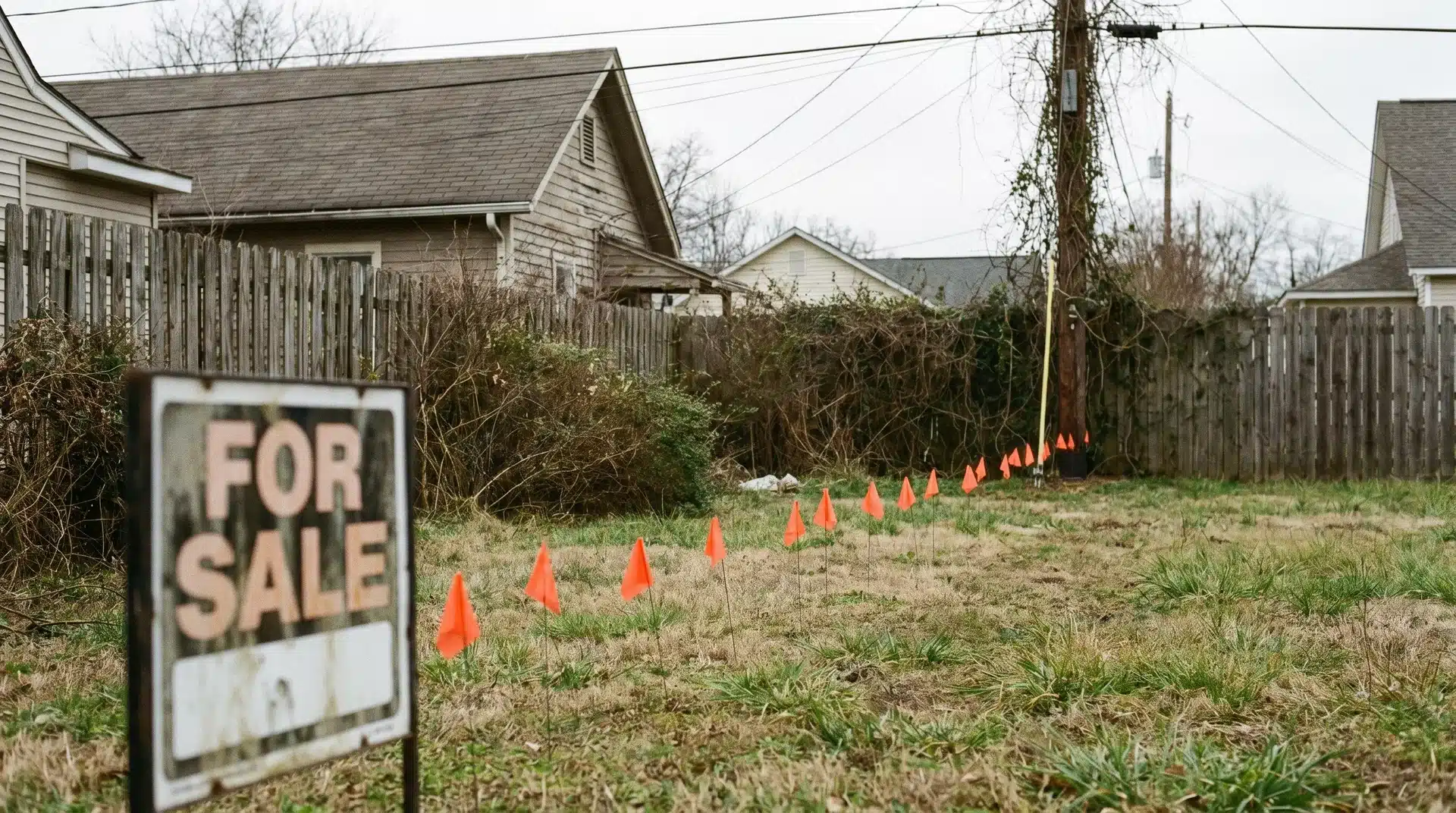
The impact of an easement depends on its type, size, and location on your land. Here is what to watch for:
Effect on property use:
- You may be barred from building structures within the easement area
- Fences, trees, or any additions that block access to the easement can be removed by the holder
- Utility easements often restrict what you can do within a defined strip of land
Effect on property value:
- Minor utility easements on large lots often have little to no effect on value
- Large or restrictive easements can reduce value by 5% to 25% or more
- A study of over 5,400 vacant lots in South Carolina found that properties directly next to high-voltage power lines lost an average of 44.9% in value, while properties 1,000 feet away still saw a 17.9% decline
- Conservation easements can cause the largest drops because they lock in restrictions permanently, though IRS deductions can offset some of that loss
- In active real estate markets, the value impact is smaller; in slower markets, buyers use easements as a reason to push the price down
What to Do Before Buying a Property with an Easement
Finding out an easement exists after you close is one of the more frustrating situations in real estate. Here is a simple checklist to work through before you make an offer:
Ask your real estate agent directly if any easements are recorded on the property
Order a title search through a licensed title company to check public records
Request a land survey to confirm exactly where the easement sits on the property
Read the full easement document, not just the summary
Check whether the easement is permanent or has an expiration date
Confirm who is responsible for maintaining the easement area
Talk to a real estate attorney if anything in the document is unclear
Factor the easement into your offer price if it limits your plans for the property
Sellers in most U.S. states are legally required to disclose known easements. Still, verify through public records on your own. County recorder offices and title companies are your best resources.
Can an Easement Be Removed?
Yes, but it is not always simple. An easement can end in several ways, and the method depends on how it was created and what both parties agree to.
The most straightforward path is a written release. If the easement holder agrees to give up their rights, both parties sign a release document and record it with the county.
Another common way is merger, which happens when the same person buys both the dominant and servient properties. At that point, there is no longer a need for the easement, and it ends.
Courts can also terminate easements. If the easement is no longer necessary, if the dominant estate has abandoned it for a long period, or if there is a change in circumstances that makes it unreasonable to keep, a judge may end it.
Government condemnation through eminent domain is another way easements can be terminated.
Before you take any steps to challenge or remove an easement, talk to a real estate attorney. Courts put a heavy burden of proof on the party trying to end an easement.
Mistakes Property Owners Make with Easements
These mistakes come up regularly and each one can lead to legal trouble or financial loss.
| Mistake | What Goes Wrong |
|---|---|
| Not checking for easements before buying | Buyers find out after closing and cannot build what they planned |
| Building inside an easement area | The structure may need to be removed at the owner’s expense |
| Assuming a verbal agreement is enough | Verbal easements are hard to enforce and rarely hold up in court |
| Blocking access to a utility easement | The utility company has the legal right to remove the obstacle |
| Not disclosing an easement when selling | Can lead to legal disputes or a canceled sale |
| Accepting a conservation easement payment without review | Long-term value loss often exceeds the initial payment |
| Ignoring a prescriptive easement claim | Failing to challenge unauthorized use within your state’s timeframe can result in the user gaining legal rights |
When to Talk to a Real Estate Attorney?
A real estate attorney is worth bringing in whenever an easement could affect your money or your plans for the property.
If you are buying a home and the title report shows an easement you do not fully understand, get a legal opinion before you close.
The same applies if a utility company or government agency approaches you about granting a new easement.
Their first offer is rarely their final one, and you have more negotiating room than you may realize.
If a neighbor is using your land and you want to know whether it has crossed into prescriptive easement territory, or if you are in a dispute over easement boundaries, those are situations where an attorney’s help protects your rights.
Closing Remarks
An easement gives someone the legal right to use part of your land for a specific reason, but ownership stays entirely with you. These agreements are more common than many owners realize.
According to the U.S. Census Bureau, roughly one in three residential properties has at least one easement on record.
Knowing what type of easement is on a property, what it allows, and how it affects your ability to build or sell is part of making a sound real estate decision.
Before you buy, sell, or make changes to any property, check for easements. If you find one you are unsure about, a real estate attorney can walk you through what it means for your specific situation.
Got questions about an easement on your property? Drop them in the comments below.