

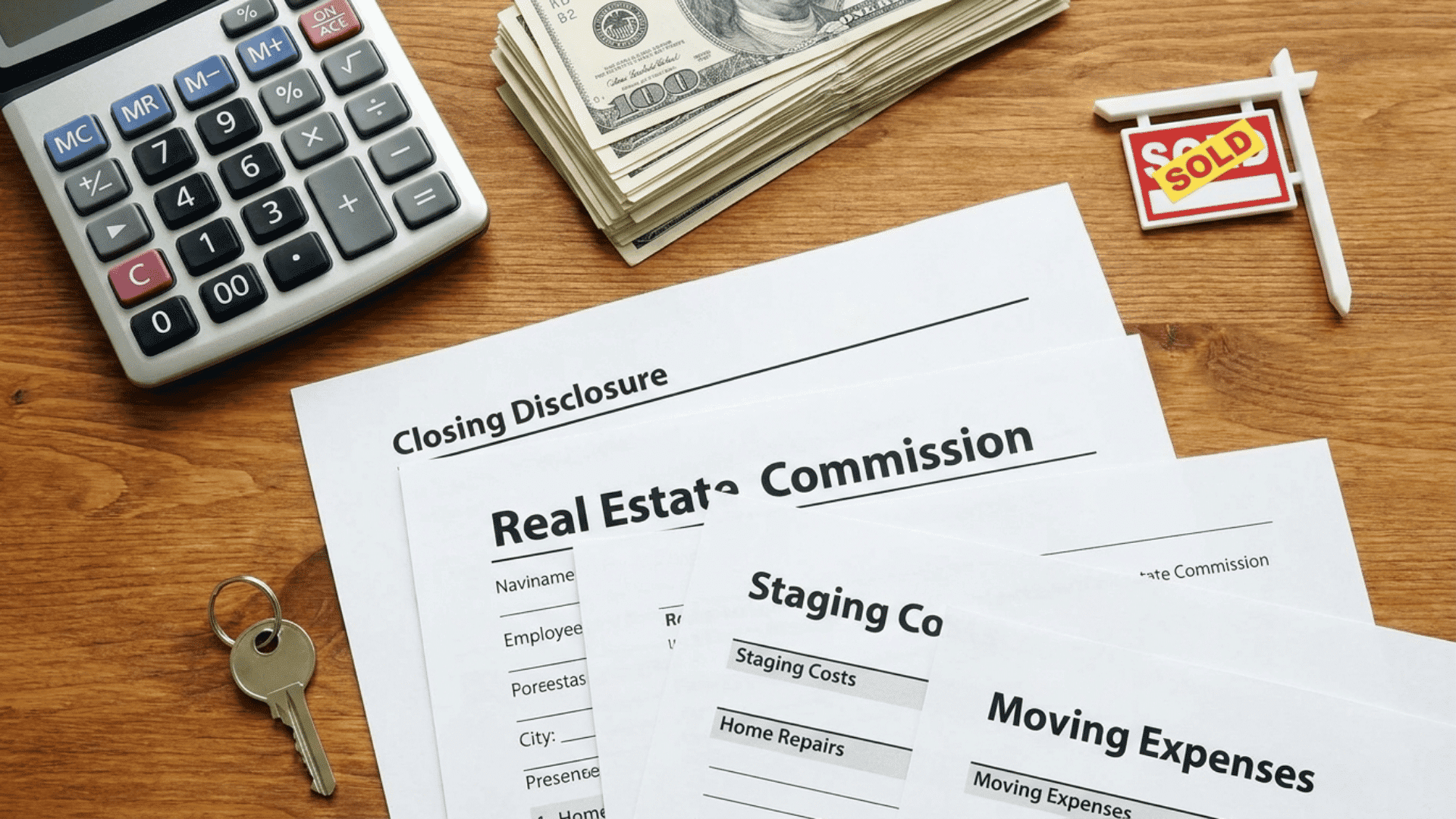
Selling a home sounds simple at first, but I’ve seen how quickly costs can add up. You might expect to pay an agent and be done, but there’s more to it.
From repairs to closing fees, the cost of selling a house can surprise many sellers. This guide will walk you through each expense step by step in a clear and simple way.
You’ll learn about agent commissions, closing costs, taxes, and even the smaller fees people often miss along the way.
My goal is to help you plan better so you don’t feel caught off guard.
When you know what to expect, you can make smarter choices, stay in control, and keep more money from your final sale.
What Is the Average Cost of Selling a House this Year?
When I talk to sellers, the first thing they want to know is how much they’ll actually spend. In most cases, the total cost of selling a house falls between 6% to 10% of the home’s sale price.
This range covers agent fees, closing costs, and other common expenses.
For a simple example, if you sell your home for $300,000, you might pay around $18,000 to $30,000 in total costs. That’s a big chunk, so it’s worth planning ahead.
The final amount can change based on a few things.
Your location matters, since fees and taxes vary by state. The condition of your home also plays a role, especially if repairs are needed.
Even your agent’s commission and how you market the home can affect the total cost. Let’s understand with an example
| Cost Category | Estimated Cost | Example (Based on $400,000 Home) |
|---|---|---|
| Real Estate Agent Commission | 5% – 6% | $20,000 – $24,000 |
| Closing Costs | 1% – 3% | $4,000 – $12,000 |
| Home Repairs & Improvements | 1% – 2% | $4,000 – $8,000 |
| Staging Costs | Fixed | $500 – $3,000 |
| Marketing & Listing Expenses | Fixed | $300 – $1,500 |
| Taxes (if applicable) | Varies | Depends on profit |
| Moving Costs | Fixed | $500 – $2,000 |
| Utility & Holding Costs | Fixed | $500 – $2,000 |
| Total Estimated Cost | ~7% – 10%+ | $29,800 – $52,500 |
Quick takeaway: If you sell a $400,000 home, you might spend around $30K to $50K+, depending on your situation and choices
Breakdown of Closing Costs for Home Sellers
These final fees come up near the end of the process and are needed to complete the sale. A quick look at them helps you avoid last-minute confusion.
- Title Fees: These cover checks to confirm legal ownership of the property. I’ve seen this step protect both you and the buyer from future issues. (Estimated: $500 – $1,500)
- Escrow Fees: Paid to a third party that manages the transaction. They handle documents and funds to keep everything secure and fair. (Estimated: $500 – $2,000)
- Transfer Taxes: These are set by your state or local area. You may need to pay them when ownership is officially transferred. (Estimated: 0.5% – 2% of the sale price)
- Who Pays What: In many cases, you, as the seller, cover most of these costs. Still, some fees can be shared depending on the agreement.
- Typical Cost Range: Closing costs for sellers usually fall between 1% to 3% of the sale price. It may seem small, but it still adds to your total expenses.
Real Estate Agent Commission: How Much Do You Pay?

For most sellers, this is the highest cost. When I break it down, the standard agent commission is usually around 5% to 6% of the sale price. This amount is taken from the final sale, not paid upfront.
That commission is typically split between two agents. One represents you as the seller, and the other represents the buyer. So, each side often gets about half.
The exact rate can vary, though. Some agents offer lower fees, especially in competitive markets or with higher-priced homes. You can also try to negotiate.
It doesn’t always work, but it’s worth asking before you sign anything.
Home Repairs and Improvements Before Selling
A quick check of your home before listing can save time and stress later. It also helps you stay in control of costs and buyer expectations.
- Fix Necessary Repairs First: I always suggest starting with essential fixes like leaks, broken fixtures, or safety issues. These problems can push buyers away or lead to lower offers.
- Focus on Simple, High-Return Updates: You don’t need a full remodel. Small changes like fresh paint, updated lighting, or basic landscaping can improve how your home looks without high costs.
- Consider a Pre-Inspection: A pre-inspection helps you spot issues early. This gives you time to fix them before buyers find them, which can prevent delays or last-minute negotiations.
Staging Costs: Is It Worth the Investment?
Staging is about making your home look clean, open, and ready for buyers. I’ve seen it help homes stand out, especially in busy markets.
The average staging cost can range from $500 to $3,000+, depending on how much work is needed.
For example, a small home with light staging might cost around $800, while a larger home with full furniture staging could go up to $2,500 or more.
It can also affect how fast your home sells. A well-staged home often looks more inviting, which may lead to quicker offers and sometimes a better price.
In some cases, homes sell 1%–5% higher than unstaged ones.
You don’t always need a pro. DIY staging, like decluttering and rearranging furniture, can cost little to nothing. But professional staging can give your home a more polished look if your budget allows.
Marketing and Listing Expenses Explained
Getting your home in front of buyers takes more than just putting up a sign. I’ve found that good marketing can make a big difference in how fast your home sells.
Most listings include professional photos ($150–$500) and sometimes video tours ($200–$1,000). These help your home look its best online.
Some sellers also pay for extra features like highlighted listings or ads ($100–$500).
Online promotion can add to the cost, but it helps your home reach more people. The good news is that many agents cover basic marketing as part of their service.
Still, not everything is included. It’s smart to ask your agent what they pay for and what you may need to cover yourself.
Taxes When Selling a House: What to Expect
Taxes can feel confusing, but I’ll keep this simple. When you sell your home, you may deal with capital gains tax, which is based on the profit you make from the sale.
The good news is that many sellers qualify for an exemption.
If the home is your main residence, you can often exclude up to $250,000 (single) or $500,000 (married) from taxes, as long as you meet the basic rules.
Taxes usually apply if your profit goes above those limits or if the home wasn’t your primary residence. That’s why it helps to know your numbers before you sell, so there are no surprises later.
Hidden Costs of Selling a House You Should Know
Some expenses show up quietly during the process and can catch you off guard. It helps to know where these extra costs may come from.
- Ongoing Utility Bills: While your home is listed, you still pay for electricity, water, and internet. These costs continue until the sale is complete.
- HOA Fees, Insurance, and Moving Costs: You may need to cover HOA dues, keep insurance active, and plan for moving expenses. These can add up more than expected.
- Cleaning and Storage Costs: Even small services like deep cleaning or renting storage can increase your total spend if you need them.
- Last Minute Repairs: I’ve seen buyers request fixes after inspection. These unexpected repairs can come late in the process, so it’s smart to keep extra funds set aside.
How Much Do Sellers Pay at Closing?
When you reach the closing table, all your costs come together.
I like to think of this as the final tally of everything you’ve agreed to pay. It usually includes agent commission, closing fees, and any remaining expenses.
In most cases, sellers pay around 7% to 10% of the home’s sale price in total. This can vary, but it gives you a solid idea of what to expect.
For example, if you sell your home for $300,000, your total closing costs could range from $21,000 to $30,000.
Seeing the full amount at once can feel like a lot, but it’s easier when you’ve planned for it ahead of time.
Cost of Selling a House Without a Realtor
Selling without an agent can save money, and it is understandable why many people consider it. The biggest benefit is avoiding agent commission fees, which can be a large part of your total cost.
But you’ll take on more work. You’ll handle pricing, listing, showings, and paperwork yourself. It can take time, and you’ll need to stay organized.
There are also some risks. Without experience, it’s easier to underprice your home or miss important details in the deal.
I’ve seen cases where the savings didn’t always make up for the added stress and effort.
Realtor vs FSBO
Here’s a simple side-by-side comparison to make it easier to understand:
| Realtor (Agent) | FSBO (For Sale By Owner) |
|---|---|
| You get help with pricing, marketing, and paperwork | You handle pricing, marketing, and paperwork yourself |
| Easier and less time-consuming | Takes more time and effort |
| You pay commission fees (5%–6%) | You save on commission costs |
| The agent manages showings and negotiations | You handle showings and negotiations |
| Lower stress, more guidance | More control, but more responsibility |
| Good if you want a smooth process | Good if you want to save money and feel confident |
Tips to Reduce the Cost of Selling Your Home
Small, practical steps can make a real difference in how much you spend. Focus on smart choices that keep costs low without hurting your sales.
- Price Your Home Right From the Start: I’ve seen that a well-priced home attracts buyers faster. This helps you avoid extra months of paying utilities, taxes, and upkeep.
- Negotiate Agent Commissions and Fees: You don’t always have to accept the first rate offered. Some agents are open to lower fees, especially if your home is easier to sell.
- Focus on Low-Cost Preparation: Instead of big upgrades, stick to simple fixes. Cleaning, decluttering, and small repairs can improve your home’s appeal without adding high costs.
Cost of Selling a House by State
This table gives a quick look at how selling costs can vary by state. I’ve included average percentages, key factors, and example costs based on a $400,000 home.
It helps you see how taxes, fees, and local rules affect your total. Use it as a general guide, since actual costs can change based on your city, agent, and home condition.
| State | Estimated Total Cost (%) | Key Cost Factors | Example Cost ($400K Home) |
|---|---|---|---|
| California | 8% – 10% | High transfer taxes, agent fees | $32,000 – $40,000 |
| New York | 8% – 10% | Transfer taxes, legal fees | $32,000 – $40,000 |
| Florida | 6% – 9% | Lower taxes, standard commissions | $24,000 – $36,000 |
| Texas | 6% – 9% | No state income tax, moderate fees | $24,000 – $36,000 |
| Illinois | 7% – 10% | Higher closing costs, local taxes | $28,000 – $40,000 |
| Ohio | 6% – 8% | Lower fees overall | $24,000 – $32,000 |
| North Carolina | 6% – 9% | Moderate taxes and commissions | $24,000 – $36,000 |
Net Proceeds: How Much Will You Actually Make?
At the end of the sale, what really matters is what you keep. I like to keep it simple. Yournet proceeds = sale price minus all costs and any remaining loan.
Here’s a quick example. If you sell your home for $300,000 and your total costs are $30,000, plus you still owe $150,000 on your mortgage, you’d walk away with about $120,000.
Planning ahead makes a big difference. When you know your numbers early, you can avoid surprises and make better decisions during the sales process.
At the End
Selling a house comes with more costs than most people expect, but now you have a clearer picture of what to plan for.
From agent fees to small hidden expenses, each part adds up, and knowing this ahead of time can really help you stay in control.
I always believe that the more prepared you are, the smoother the process feels. When you understand your costs, you can make better choices and avoid last-minute stress.
Every home sale is a little different, so your experience may not look the same as someone else’s. That’s okay.
If you’ve sold a home before, I’d love to hear from you. What costs surprised you the most? Share your experience in the comments below and help others learn from it.
Frequently Asked Questions
What Factors Can Lower Your Home’s Value the Most?
Poor location, bad condition, and outdated features reduce value. Issues like damage, old systems, noise, or bad smells can quickly turn buyers away.
What is the 3-3-3 Rule When Selling a Home?
If no offers in 3 weeks, adjust price. Low showings after 3 months may mean issues with marketing or condition.
What is the Slowest Month to Sell a House?
January is usually the slowest. Fewer buyers are active after the holidays, and weather can delay decisions.
Why do Some Homes Struggle to Sell?
Overpricing is the main reason. Poor photos, weak marketing, or needed repairs can also reduce buyer interest.