

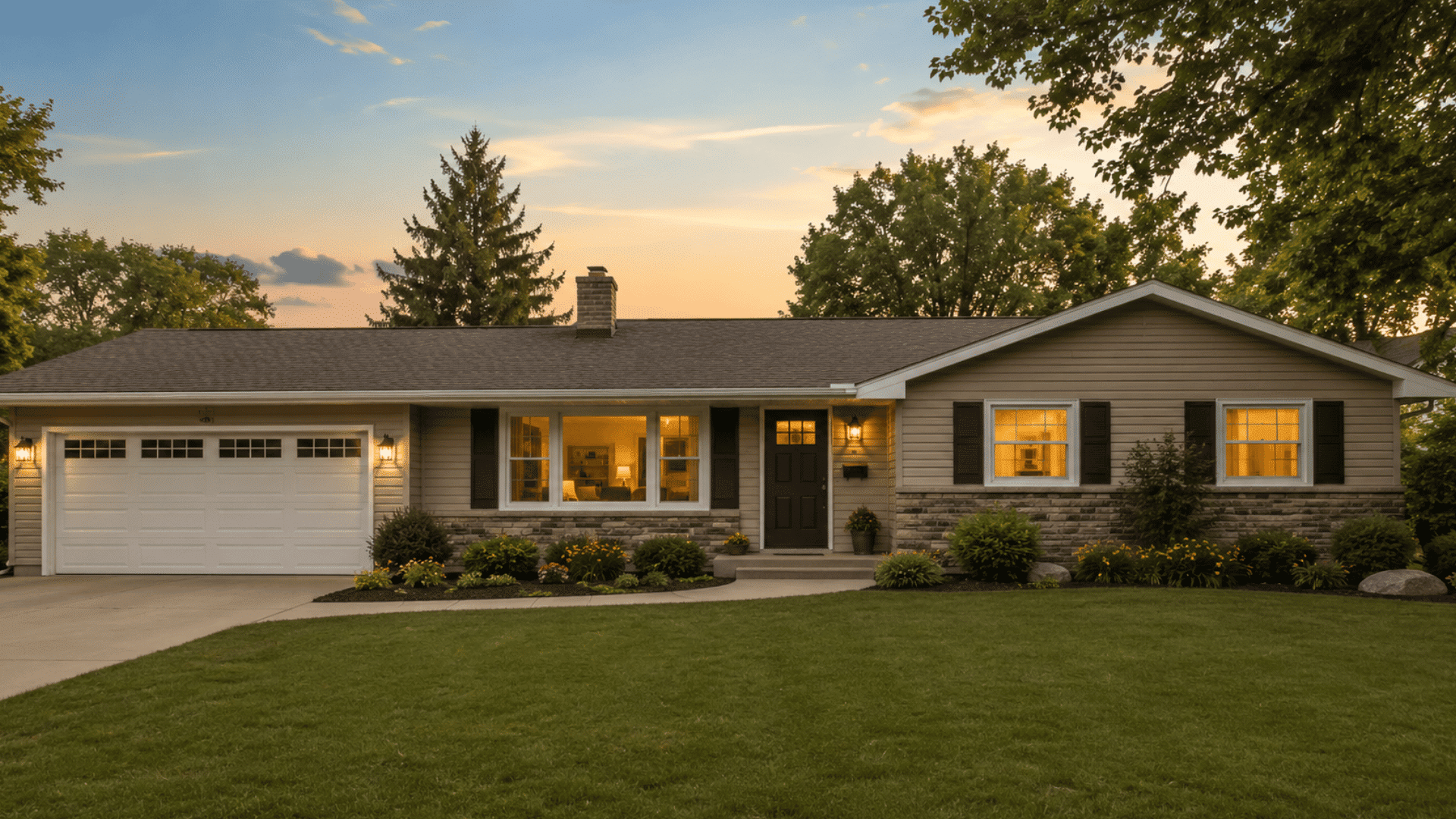
If you’ve been browsing home listings, you may have seen the term “ranch style house” and wondered what it means.
I’ve noticed that many people are unsure about the defining features of a true ranch house, especially since the style has evolved over the years.
You might also be comparing ranch homes with other house styles or trying to decide if one fits your needs.
In this guide, I’ll share the key characteristics of ranch-style houses in simple terms.
You’ll learn where this home style came from, what it typically looks like, the different types you may see, and the pros and cons homeowners often discuss.
By the end, you’ll have a clearer understanding of ranch homes and whether they might be the right choice for you.
Quick Answer: What Is a Ranch Style House?
A ranch-style house is a single-story home with a low, wide design, open layout, and strong connection to outdoor spaces.
Ranch-style homes became popular in the United States during the 1950s and 1960s. They are known for their wide, horizontal shape, large windows, and attached garages.
Most ranch houses have single-level living spaces, making them convenient for families, older adults, and anyone who wants to avoid stairs.
Another common feature is the connection between indoor and outdoor living. Many ranch homes include sliding glass doors that open to a patio, backyard, or deck.
While designs vary, the focus remains the same: a functional layout, plenty of natural light, and a relaxed, easy-to-live-in feel.
The History and Origin of Ranch Houses
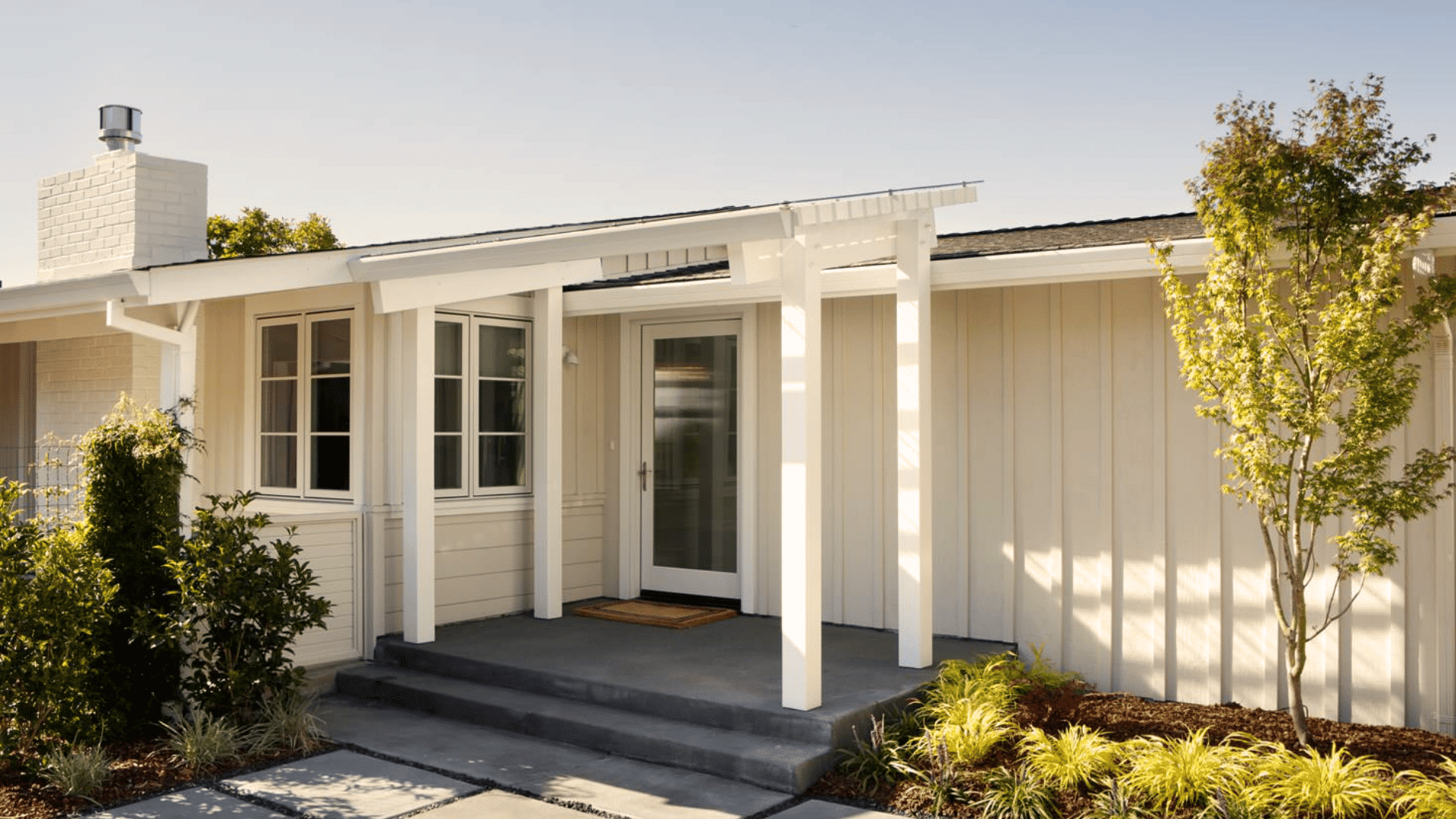
Ranch houses originated in the United States during the early 20th century, inspired by the sprawling ranches of the American West.
They gained widespread popularity after World War II due to their affordability, practicality, and family-friendly design.
The ranch-style home grew from Spanish Colonial and Western ranch designs in California during the 1920s and 1930s.
Designer Cliff May helped popularize the style with practical indoor-outdoor living. After World War II, growing suburbs and demand for affordable homes increased its popularity.
Its single-story layout, open floor plan, attached garage, and large windows appealed to middle-class families.
By the 1950s and 1960s, ranch houses became one of the most popular home styles in the United States and had a lasting impact on home design.
What Materials Are Used in Ranch-Style Homes?
Ranch-style homes commonly use durable and practical materials that support their simple design, long-lasting performance, and connection to the outdoors.
- Wood Siding: A traditional exterior material that adds warmth, natural character, and versatility while complementing the home’s low-profile design.
- Brick Veneer: Frequently used for durability and curb appeal, providing a timeless appearance with relatively low maintenance requirements.
- Stone Accents: Often incorporated around entrances or facades to enhance texture, visual interest, and architectural charm outdoors.
- Stucco: Common in Southwestern and California ranch homes, offering a clean look and excellent resistance to weather conditions.
- Concrete Foundations: Provide structural stability and long-term durability while effectively supporting the home’s wide, single-story footprint.
- Large Glass Windows: Used to maximize natural light, improve outdoor views, and strengthen the connection between indoor and outdoor spaces.
- Steel Or Aluminum Frames: Commonly used for windows and sliding doors because they are durable, lightweight, and low-maintenance.
- Hardwood Flooring: Adds warmth, durability, and classic appeal while complementing the open layouts found in many ranch-style homes.
Key Features of a Ranch Style Home
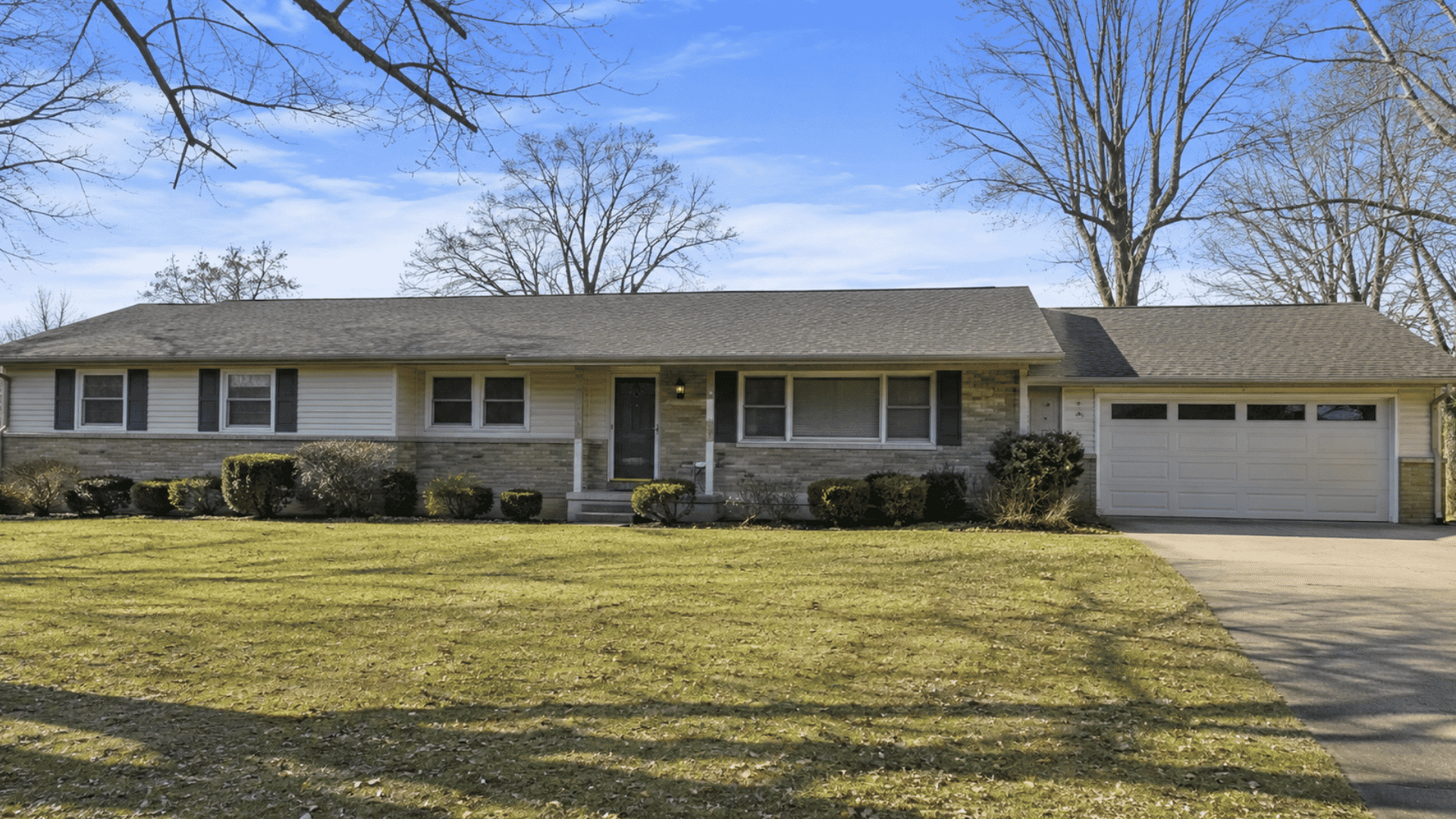
Ranch-style homes share several design elements that make them easy to recognize and practical for everyday living.
1. Single-Story Layout
One of the most recognizable features of a ranch-style home is its single-story design. Unlike multi-level houses, all living spaces are located on one floor, making movement throughout the home simple and convenient.
This layout is particularly attractive to families with young children, older adults, and individuals who prefer avoiding stairs.
The single-level structure also creates a more open flow between rooms, contributing to a comfortable and highly functional living environment.
2. Open Floor Plan
Ranch homes are often designed with open-concept interiors that connect key living areas such as the kitchen, dining room, and living room.
This layout encourages better interaction among family members and creates a spacious feel, even in moderately sized homes.
Fewer interior walls allow natural light to travel more freely throughout the space.
The open floor plan also provides greater flexibility for furniture arrangement and modern lifestyle needs, making the home feel welcoming and adaptable.
3. Low-Pitched Rooflines
A defining architectural characteristic of ranch-style homes is their low-pitched roof.
These roofs typically feature wide eaves that extend beyond the exterior walls, adding visual appeal while providing shade and weather protection.
The horizontal emphasis created by the roofline helps the home blend naturally with its surroundings.
This design element contributes to the ranch home’s relaxed appearance and distinguishes it from taller, more vertically oriented architectural styles commonly found in other residential designs.
4. Strong Indoor-Outdoor Connection
Ranch-style homes are designed to encourage easy access to outdoor spaces. Large sliding glass doors, patios, decks, and backyard living areas are common features.
These elements create a seamless transition between indoor and outdoor environments, allowing homeowners to enjoy natural light and fresh air more easily.
The design supports outdoor entertaining, gardening, and family activities while making the home feel larger.
This close relationship with the outdoors remains one of the style’s most appealing characteristics.
5. Long and Horizontal Design
Most ranch homes feature a long, low-profile structure that stretches horizontally across the lot.
This architectural approach creates a balanced and understated appearance while maximizing interior living space on a single level.
The horizontal layout often allows for larger room dimensions and improved traffic flow throughout the home. It also contributes to the home’s casual and approachable aesthetic.
This design principle is one of the key reasons ranch homes are easily recognizable across many American neighborhoods.
6. Large Windows and Natural Light
Ranch-style homes frequently incorporate large windows to bring in abundant natural light.
Large windows, wide front-facing windows, and expansive glass doors help brighten interior spaces and create a stronger visual connection to the surrounding landscape.
More daylight can make rooms feel larger and reduce the need for artificial lighting during the day.
This emphasis on natural illumination enhances both the comfort and functionality of the home’s interior environment.
7. Attached Garage
An attached garage is a common feature in many ranch-style homes. This design provides direct access from the garage to the main living area, improving convenience and security for homeowners.
Attached garages also contribute to the home’s overall horizontal layout and often blend seamlessly with the exterior design.
In addition to vehicle storage, these garages frequently serve as spaces for tools, equipment, and household storage. Their practicality aligns perfectly with the functional nature of ranch-style architecture.
8. Simple and Functional Design
Ranch-style homes prioritize practicality over excessive ornamentation. Their straightforward architectural design focuses on efficient use of space, comfortable living, and everyday functionality.
Exterior details are typically clean and understated, while interiors emphasize usability and convenience.
This simplicity makes ranch homes easier to maintain and renovate than more elaborate architectural styles.
The emphasis on functionality has helped ranch-style homes remain popular with generations of homeowners seeking a balance of comfort and practicality.
9. Easy Accessibility
Because ranch homes are built on a single level, they offer excellent accessibility for people of all ages and mobility levels.
The absence of staircases reduces physical barriers and can make daily living safer and more convenient.
This feature is particularly beneficial for aging homeowners who wish to remain in their homes long-term.
Accessibility also simplifies tasks such as moving furniture, carrying groceries, and performing household maintenance, making ranch homes a practical choice for a wide range of residents.
10. Flexible Remodeling Potential
Many ranch-style homes offer strong remodeling and expansion opportunities due to their straightforward layouts.
Homeowners can often update kitchens, open walls, add rooms, or modernize interiors without significantly altering the home’s overall structure.
Their simple design makes renovations easier than in many older or more complex home styles.
This flexibility allows homeowners to adapt the property to changing needs while preserving the classic characteristics that define ranch-style architecture.
Types of Ranch Style Houses
Over time, ranch homes evolved into several distinct variations, each offering unique design features while maintaining the style’s signature single-story living and practical layout.
| Type of Ranch Style House | Description |
|---|---|
| California Ranch | The original ranch style features a long, low profile, an open floor plan, and a strong indoor-outdoor connection. |
| Suburban Ranch | A compact version developed for growing suburban neighborhoods, often with simple layouts and attached garages. |
| Split-Level Ranch | Combines ranch-style design with multiple floor levels, connected by short staircases, to create added living space. |
| Raised Ranch | Features the main living area above a partially below-grade lower level, often including a garage or additional rooms. |
| Storybook Ranch | Incorporates decorative elements such as brick, stone, shutters, and charming architectural details for added character. |
| Modern Ranch | Updates the traditional ranch with contemporary materials, larger windows, sleek finishes, and open-concept interiors. |
| L-Shaped Ranch | Designed in an “L” configuration, creating a more private backyard or patio area. |
| U-Shaped Ranch | Forms a “U” around a central courtyard or outdoor living space, enhancing privacy and outdoor access. |
Tips for Ranch-Style House Landscaping
The low-profile design of ranch homes pairs well with landscaping that emphasizes balance, openness, and curb appeal.
- Highlight The Horizontal Design: Use long flower beds and low-growing plants to naturally complement the home’s wide, single-story architectural profile.
- Create A Welcoming Front Walkway: Define pathways with pavers, edging, or lighting to guide visitors while enhancing curb appeal and accessibility.
- Choose Native Plants: Native species require less maintenance, conserve water, and blend naturally with the surrounding environment and climate.
- Add Layered Plantings: Combine ground covers, shrubs, and small trees to create depth, texture, and year-round visual interest outdoors.
- Maintain an Open Front Yard: Avoid overcrowding with large plants to preserve clear sightlines and showcase the home’s exterior design.
- Add Shade Trees Strategically: Properly placed trees provide cooling benefits, enhance privacy, and contribute to long-term landscape value.
- Keep The Design Simple: Clean lines, organized plant groupings, and uncluttered layouts complement the practical and understated ranch-style aesthetic.
What Reddit Users Say About Ranch Style Homes?
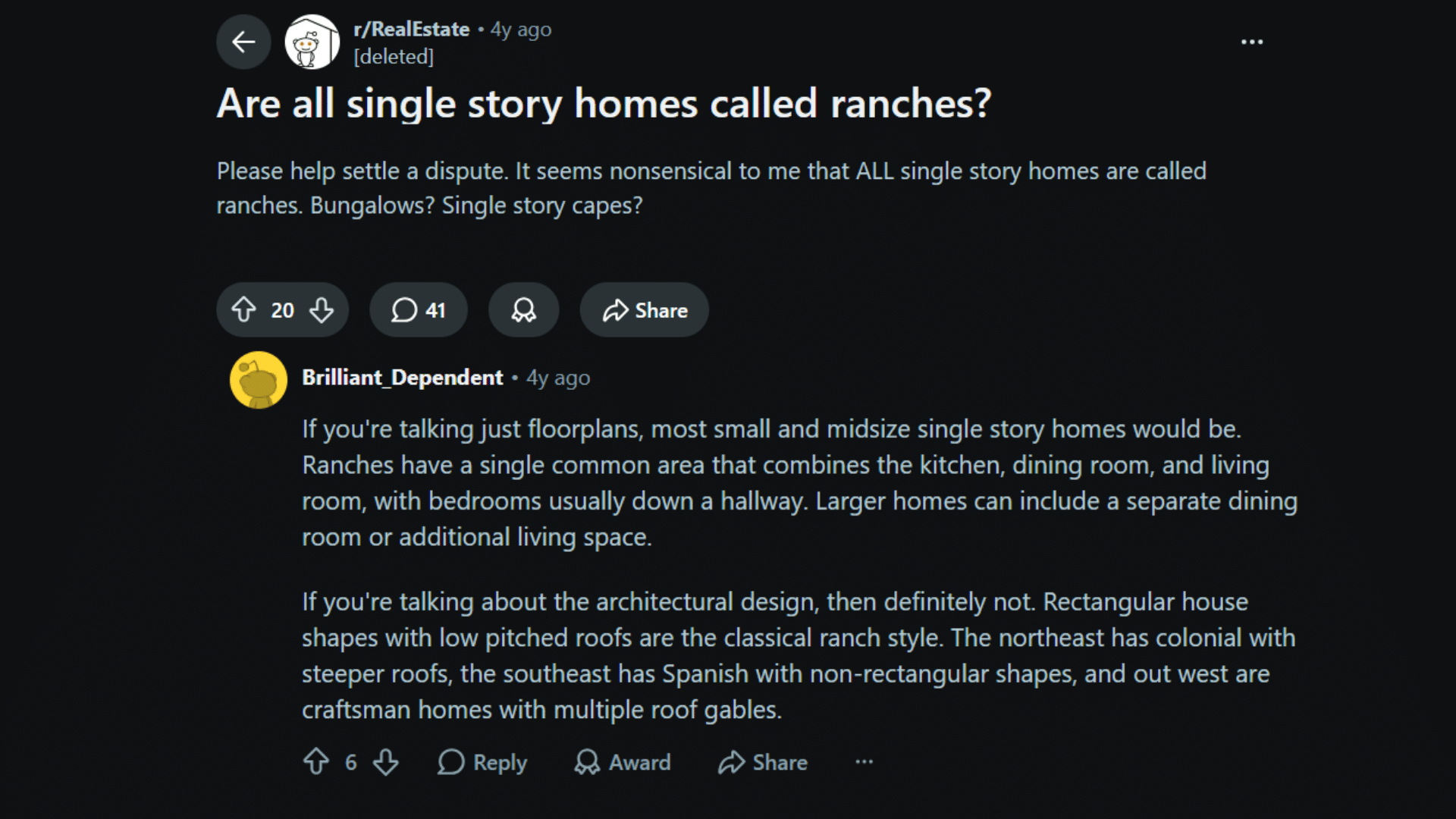
Reddit discussions about ranch-style homes often highlight the practicality, comfort, and accessibility associated with this popular architectural design.
Many homeowners appreciate the single-story layout, noting that it simplifies daily living, maintenance, and long-term mobility needs.
Open floor plans, large windows, and strong indoor-outdoor connections are frequently mentioned as desirable features that create a spacious and inviting atmosphere.
Attached garages and straightforward layouts also receive positive feedback for convenience and functionality.
Some discussions point out drawbacks, including the larger lot size often required and potentially higher roofing or utility costs due to the home’s wide footprint.
Overall, community opinion views ranch-style homes as practical, comfortable, and well-suited to a wide range of lifestyles.
How Much Does It Cost to Build a Ranch-Style Home?
Building a ranch-style home typically costs between $150 and $300 per square foot.
Most homeowners spend around $300,000 to $600,000 to build a 2,000-square-foot ranch home, not including the cost of land.
Ranch homes are popular for their single-story design, open floor plans, and easy accessibility.
While the simple layout can help reduce construction complexity, the larger foundation and roof required for a one-story structure may increase overall costs compared to some multi-story homes.
Final pricing depends on factors such as location, labor rates, building materials, home size, and custom features.
High-end finishes, energy-efficient systems, and outdoor spaces can raise costs. Getting quotes from local builders is the best way to estimate your budget.
Ranch Vs. Rambler-Style Homes: Key Differences
Ranch and rambler homes share many similarities, but the terms can have slightly different meanings depending on the region and design details.
| Feature | Ranch Style Home | Rambler-Style Home |
|---|---|---|
| Definition | A broad architectural style popular across. | Often considered a regional term for a ranch home. |
| Layout | Usually single-story with an open floor plan. | Typically single-story with a long, horizontal layout. |
| Origin | Developed in California during the early 20th century. | Became popular in suburban developments, especially in the Midwest and Northwest. |
| Design Focus | Indoor-outdoor living and modern functionality. | Practical living with simple, family-friendly layouts. |
| Exterior Style | May include modern, rustic, or contemporary features. | Generally simpler and more traditional in appearance. |
| Roof Design | Low-pitched roofs with wide eaves. | Similar low-pitched rooflines and horizontal emphasis. |
| Popularity | Common nationwide. | More commonly used as a regional name for ranch homes. |
| Key Difference | Refers to a specific architectural style. | Often describes a ranch-style home, though usage varies by location. |
Do Ranch Style Homes Have Basements?
Yes, many ranch-style homes have basements, especially in regions with colder climates. However, some ranch homes are built on slab foundations or crawl spaces instead.
Ranch homes became popular across the United States during the 1950s and 1960s.
In areas such as the Midwest and Northeast, basements were commonly included because building foundations below the frost line was necessary.
Adding a basement provided extra storage, utility space, and room for future expansion.
In warmer regions, builders often choose slab-on-grade foundations or crawl spaces due to local soil conditions, higher water tables, and lower frost-depth requirements.
As a result, the presence of a basement in a ranch-style home usually depends on the home’s location and original construction design.
How to Know a Ranch-Style House Is Right for You?
The practicality and layout of a ranch home can make it an excellent choice for certain lifestyles and long-term housing needs.
- You Prefer Single-Level Living: A one-story layout eliminates stairs, making daily movement easier, safer, and more convenient for all household members.
- Accessibility: Ranch homes better accommodate changing mobility needs, offering comfortable living for families, seniors, and long-term homeowners.
- You Like Outdoor Living: Large windows, patios, and backyard access make ranch homes ideal for entertaining, relaxing, and enjoying nature.
- Easy Maintenance: Single-story homes simplify cleaning, repairs, and exterior upkeep by reducing the challenges associated with multiple levels.
- You Have A Larger Lot: Ranch homes typically require more land because their living space extends horizontally rather than vertically.
- You Plan To Age In Place: The stair-free design supports long-term comfort and accessibility, allowing homeowners to remain independent longer.
- Simple Design: Ranch homes emphasize functionality, comfort, and straightforward architecture without excessive decorative elements or complexity.
- Remodeling Flexibility: Their simple structure often makes renovations, room additions, and modern updates easier than in many homes.
Pros and Cons of a Ranch-Style House
Like any home design, ranch-style houses offer a mix of advantages and drawbacks that can influence whether they are the right fit for a homeowner’s needs and lifestyle.
| Pros | Cons |
|---|---|
| Single-story layout improves accessibility and convenience. | Requires more land due to its wider footprint. |
| Easier to move around without stairs. | Can be more expensive to build on smaller lots. |
| Open floor plans create a spacious feel. | Less privacy between rooms compared to multi-story homes. |
| Simple design often makes maintenance easier. | Roof repairs can be more expensive due to the larger roof |
| Strong connection to outdoor living spaces. | Heating and cooling costs may be higher in larger single-story layouts. |
| Ideal for families with children and older adults. | Limited space expansion without building outward. |
| Easier and safer for cleaning and routine upkeep. | Some older ranch homes may have smaller bedrooms or storage areas. |
| Flexible for remodeling and modern updates. | May lack the dramatic look of some multi-story home styles. |
Conclusion
Ranch-style homes remain popular because they offer comfort, practicality, and lasting appeal.
If the goal is easier accessibility, a functional layout, or a stronger connection to outdoor living spaces, this home style continues to meet the needs of many homeowners.
Understanding the key features, pros, and cons can help you decide if a ranch home fits your needs and lifestyle.
I hope this guide has provided a clearer picture of what makes ranch-style houses unique and why they remain a favorite choice across the United States.
Have you lived in a ranch-style home or considered buying one? Share your thoughts, experiences, or questions in the comments below.
Frequently Asked Questions
What Is the Least Desirable Style House?
There is no universally least desirable house style; buyer preferences vary by location, market trends, and personal taste.
What Kind of House Can Be Built for $250,000?
A modest single-family home, typically 1,000–1,800 square feet, depending on local construction and land costs.
What Is the Unhappiest State to Live In?
West Virginia is frequently ranked as the unhappiest U.S. state based on well-being and quality-of-life studies.
What Is the #1 Least Educated State?
West Virginia is commonly ranked as the least educated U.S. state based on educational attainment and school quality metrics.