

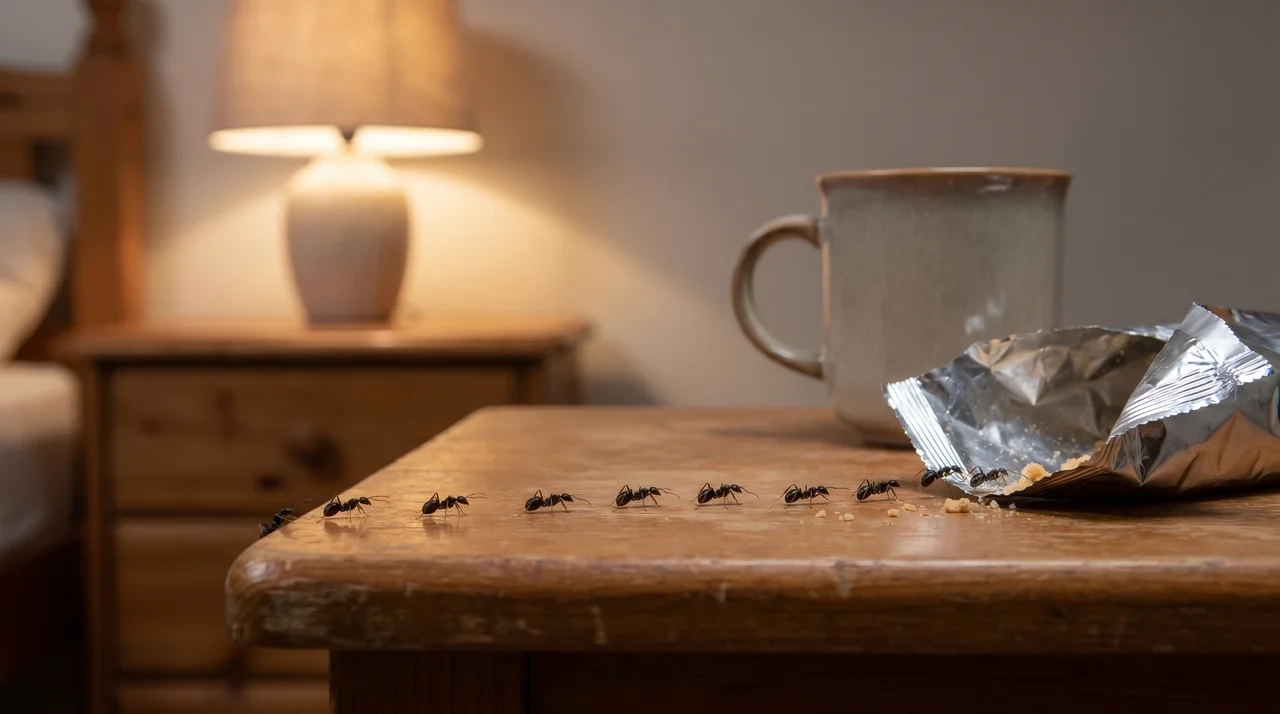
You wake up, reach for your phone, and see a line of ants moving across your nightstand. Not the kitchen. Not the bathroom. Your bedroom.
It feels random, but it is not. Ants follow food, moisture, and scent trails. A bedroom actually provides all three more often than people think.
Here, I’ll lay out a simple removal sequence that goes after the colony, not just the ants you can see. That difference is what decides whether they’re gone for good or back again in a few weeks.
Why Do Ants Come Into Your Bedroom?
Ants show up for the same reasons they’d go anywhere: food, water, or an easy way in. That’s basically the starting point for how to get rid of ants in bedroom situations too. You always end up tracing it back to those three things.
The food part isn’t always obvious, especially outside the kitchen. Things like:
- A forgotten candy wrapper
- sugar from a lip balm on your nightstand
- lotion residue on your skin
It does not take much for them to pick up a signal, and once that happens, moisture becomes the next big pull. A few common triggers include:
- A water glass left out overnight
- damp clothes on the floor
- overwatered plant
- soil in your houseplants
Here’s the tricky part. Even after you remove what brought them in, they don’t just go away. The first ant leaves a scent trail, and the others keep following it like a path. You have to get rid of both the food source and that trail. If you miss one, they’ll keep coming back.
How to Get Rid of Ants in Your Bedroom
Order matters here. If you jump straight to sealing gaps or putting up barriers without dealing with the colony, it won’t really stop anything. The queen keeps producing workers, so the problem just continues in the background.
1. Remove Food and Moisture First
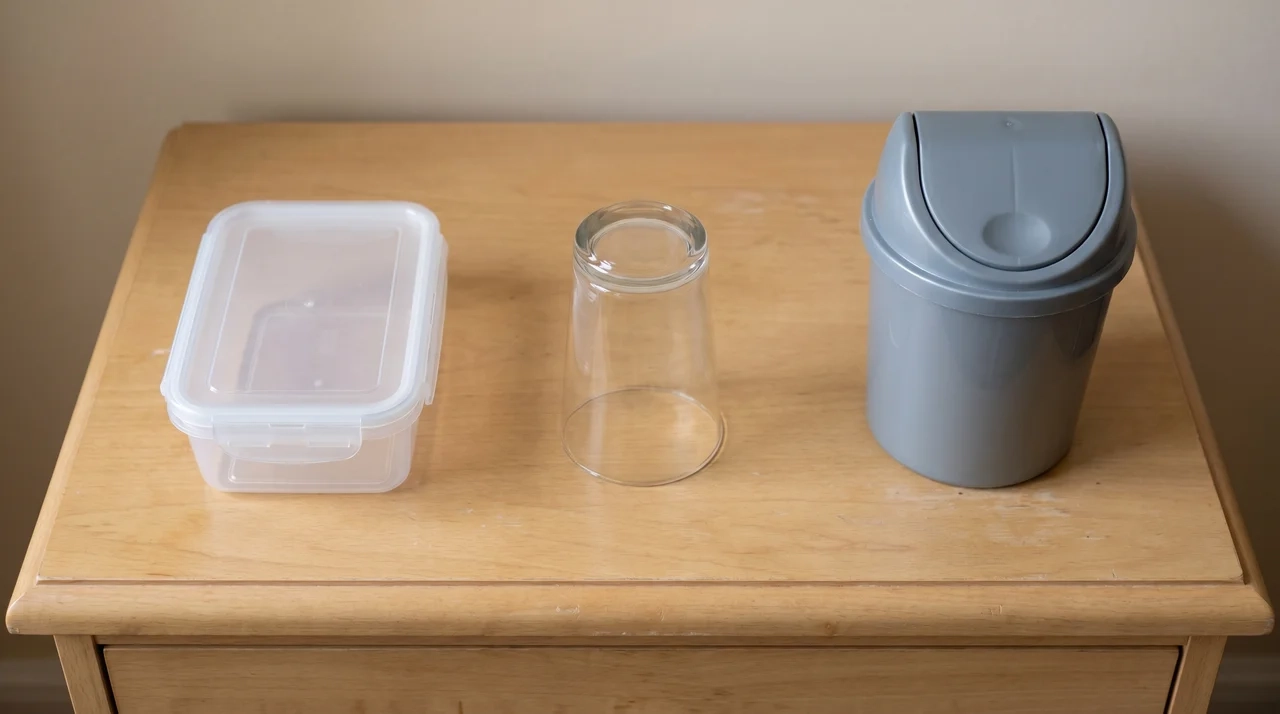
Get rid of anything that’s drawing them in first. Food should go into sealed containers, and crumbs shouldn’t sit around for long. Water glasses are better off emptied before bed, and damp towels shouldn’t be left on the floor.
If a pet sleeps in your room, the same applies. Pick up their bowl as soon as they’re done and wash it right away. Leftover bits of food or residue can still attract ants even if the main meal is gone.
If the room is still giving them food or water, nothing else will hold for long
2. Set a Borax Bait to Kill the Colony
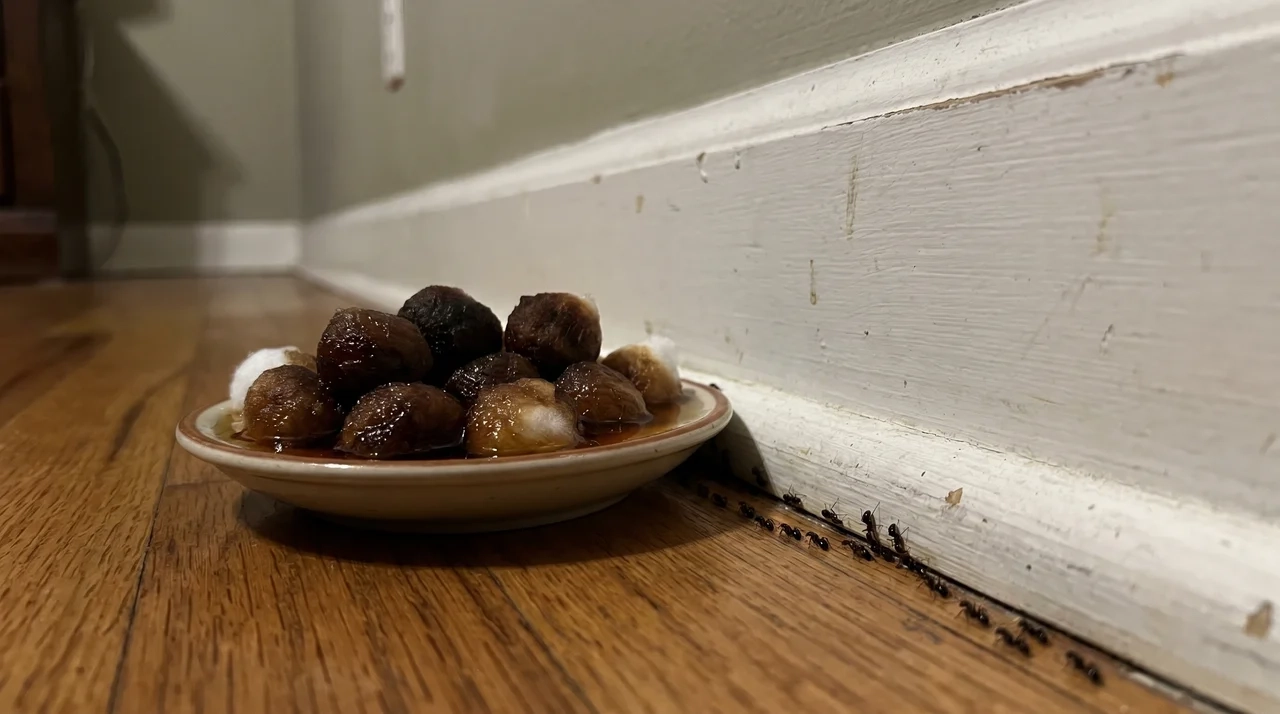
Spraying the ants you see doesn’t really fix the problem long term. The queen keeps producing more, so the colony just replaces them. What actually works is getting something into the nest, and letting the worker ants carry it back.
This is the step that actually shuts things down. Everything before this just manages what you can see. A simple sugar-borax bait targets the colony at the source:
- Step 1: Mix half a teaspoon of borax with 8 teaspoons of sugar and one cup of warm water.
- Step 2: Stir until it dissolves.
- Step 3: Soak a few cotton balls and put them near the trail, along the baseboard, or at the entry point.
The worker ants take the bait back to the nest and share it with the queen and larvae. It usually takes about a week to fully work, and that delay is actually important because it spreads through the whole colony.
A lot of people pull it out after two days because nothing looks different. That’s often when it’s actually doing its job. It’s better to leave it for at least seven days.
Keep it away from children and pets. Borax is harmful if swallowed.
3. Wipe Out the Scent Trail With White Vinegar
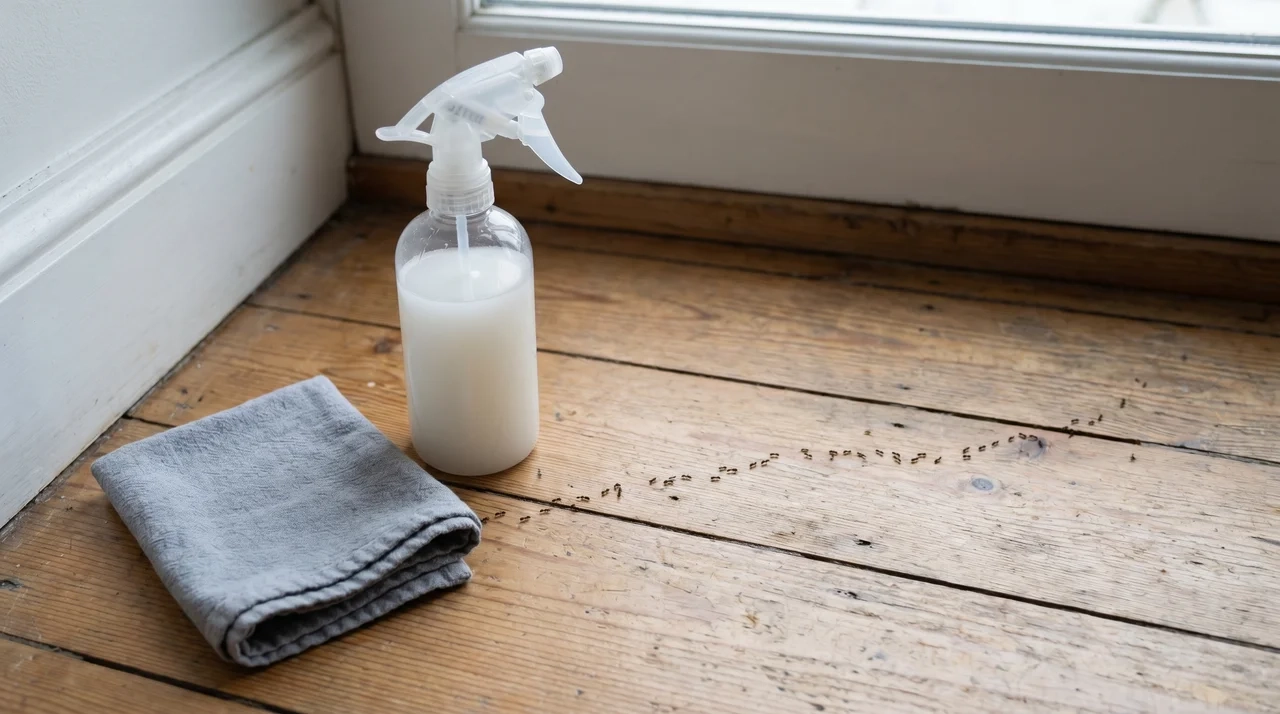
Killing the ants you can see only clears half the problem. Every ant that walked through left a pheromone trail. New ants follow it automatically, even after you’ve cleaned the room.
Mix equal parts white vinegar and water. Wipe down every surface the ants crossed: floors, skirting boards, the nightstand, window sills, and the path from the entry point to wherever they were heading.
You stop noticing the smell pretty quickly, but ants don’t. They can still pick it up long after it fades for you, which is what makes it effective.
If you don’t have vinegar, a strong soap and water mix works just as well.
4. Vacuum the Entire Room, Including Dead Ants
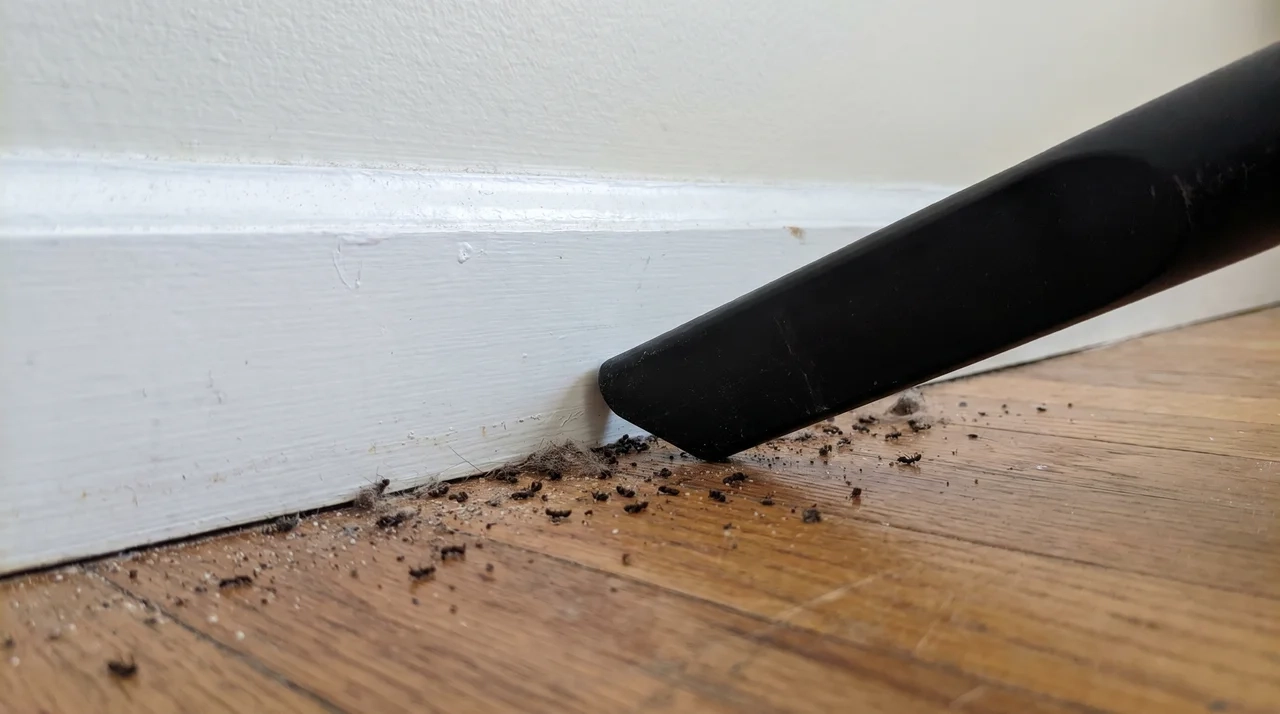
Dead ants cause the same problem as live ones. When one dies, it puts out a pheromone that signals distress to nearby colony members. Leave them on the floor and you’re calling more in.
Vacuum the full floor, along the baseboards, under the bed frame, and down the carpet edges. Take the bag or canister straight outside and empty it.
Then follow up with the white vinegar wipe to get what the vacuum leaves behind.
5. Apply Diatomaceous Earth Along Baseboards
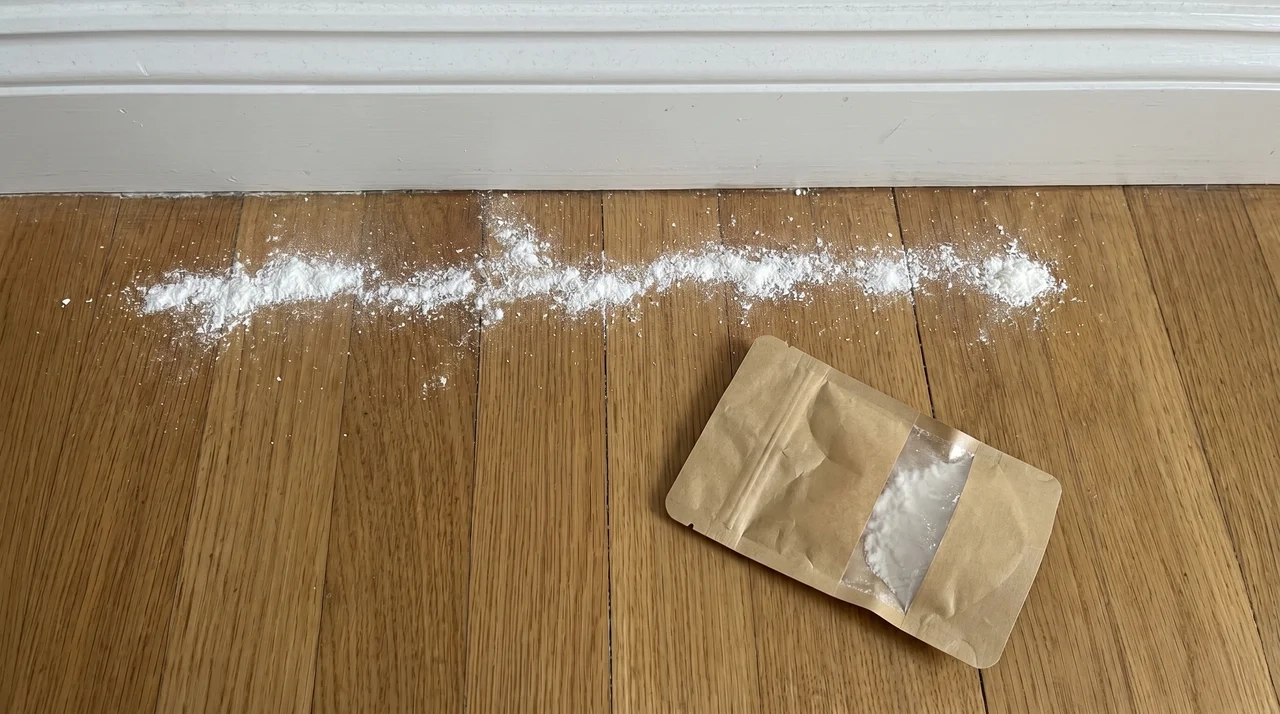
Diatomaceous earth kills ants by soaking up the oils in their outer shell and drying them out. It is not a poison; it works more like a physical breakdown, which is why people often use it in bedrooms.
Sprinkle food-grade diatomaceous earth along baseboards, under the bed frame, and in window sill tracks. Keep it dry, because once it gets wet, it stops working.
Also, avoid breathing it in while putting it down since it can irritate your lungs, even though it is safe on skin.
6. Use Peppermint or Tea Tree Oil at Entry Points
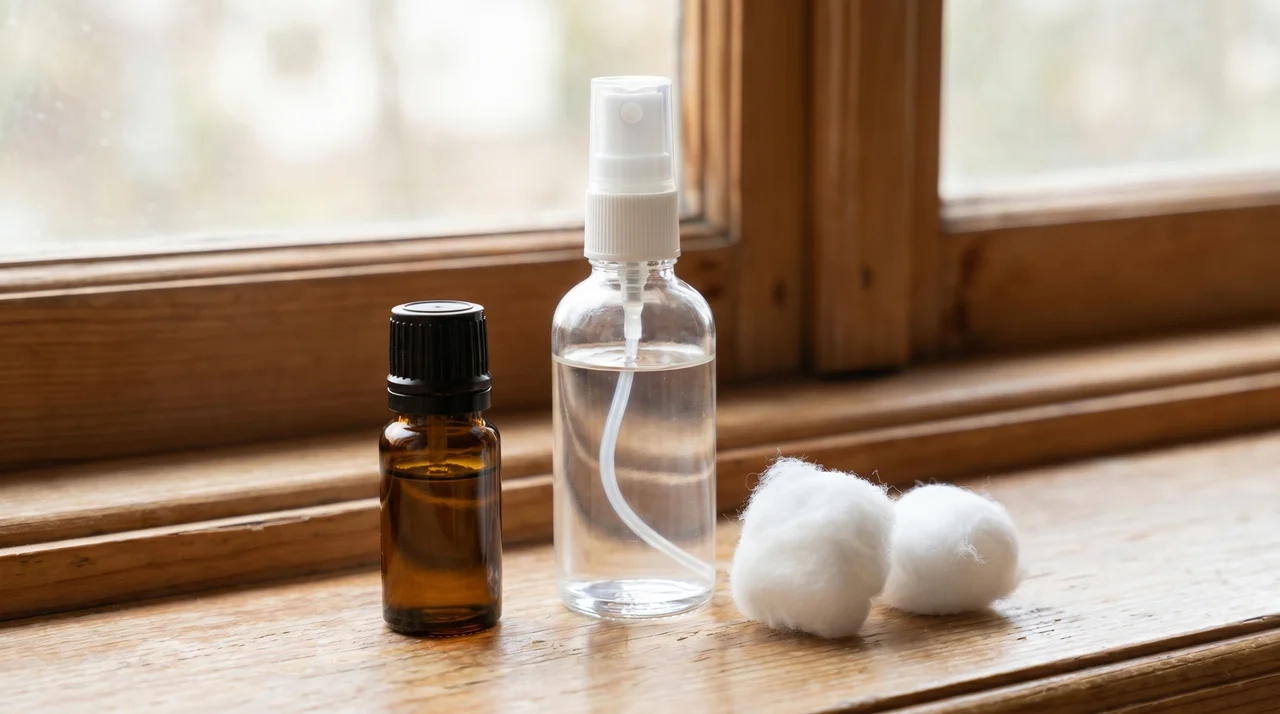
Essential oils won’t kill a colony. But they do break up trails and put scouts off entering, which makes them a solid supporting layer when you’re already running the bait.
Mix 10 to 20 drops of peppermint oil into 2 cups of water and spray along baseboards, window frames, and the door threshold.
Or soak cotton balls and place them at the entry points for a slower release.
Note: Keep peppermint and tea tree oils away from cats both are toxic to them even in small doses.
7. Lay a Cinnamon or Pepper Line at The Door
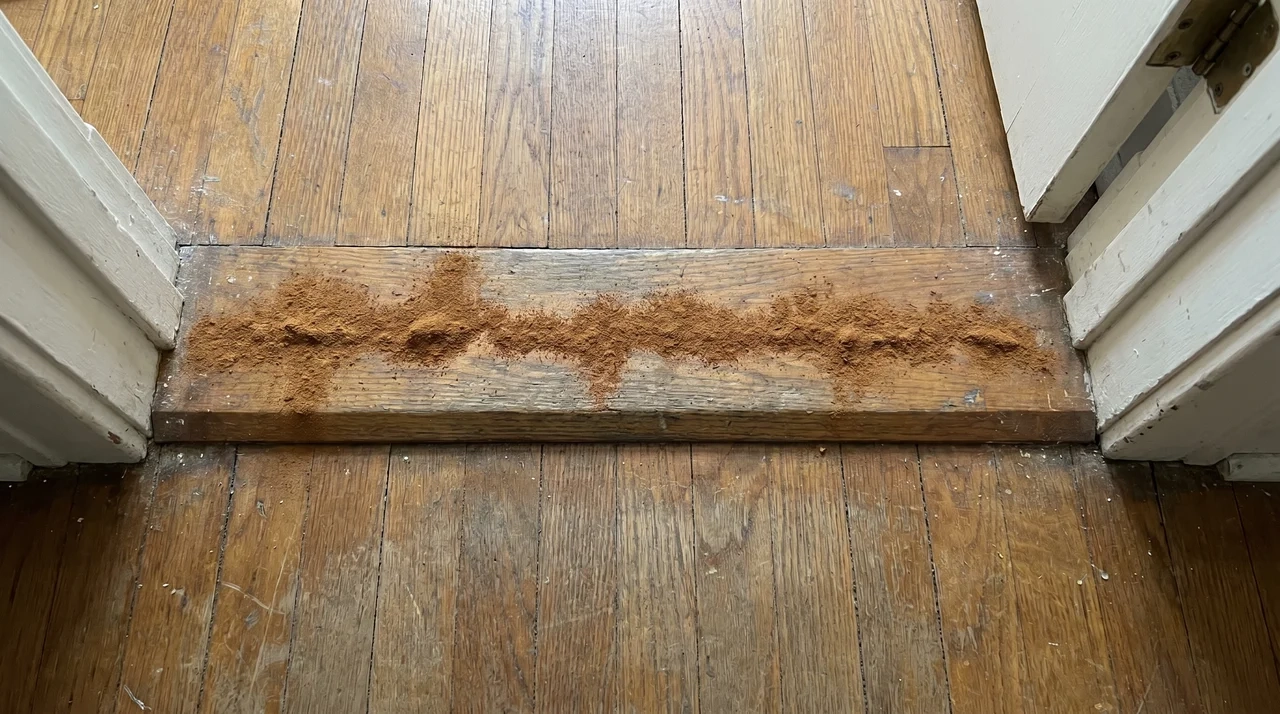
Draw a thin line of ground cinnamon across the door threshold. Ants won’t cross it. Cayenne or black pepper works the same way. Refresh it every few days or after you’ve swept.
This won’t fix an infestation on its own. While the borax bait is running, though, it cuts down the number getting through each night.
8. Seal Cracks and Entry Gaps
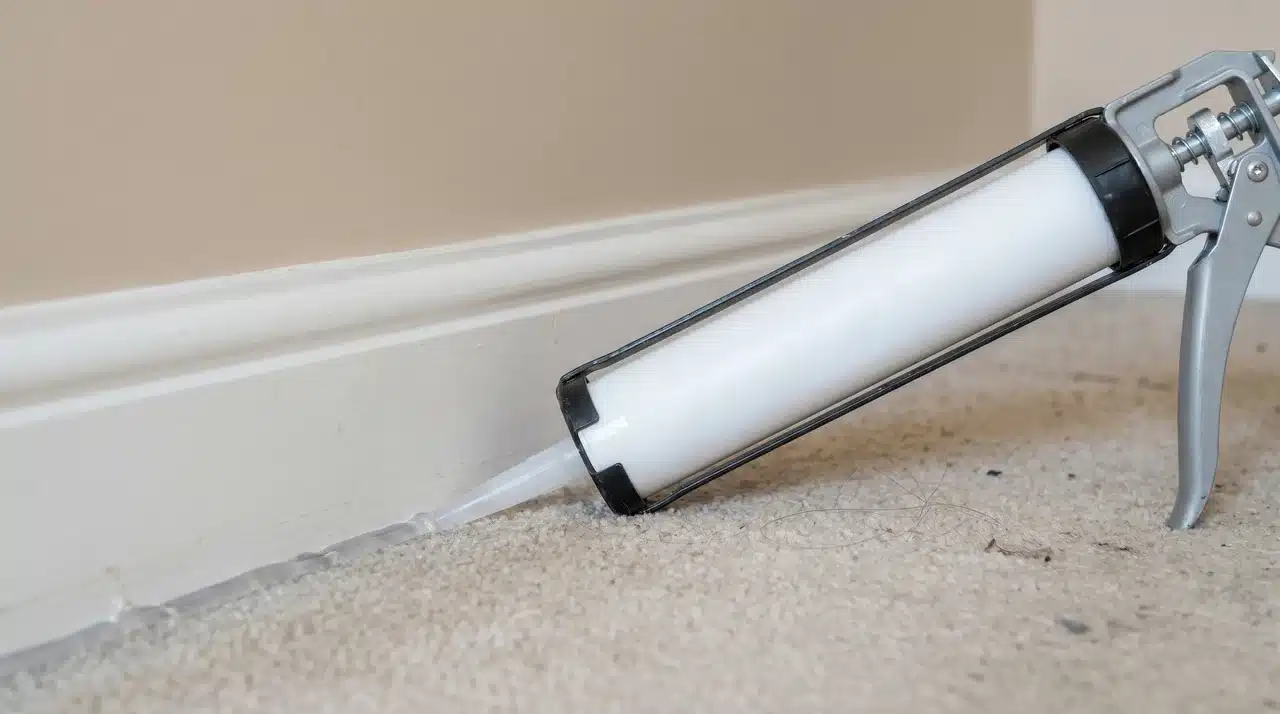
Everything works better once you’ve blocked the easy routes in. Work through the room: the gap behind the skirting, wall-floor corners, outlet plates, window frame edges, and the gap under the door.
Clear caulk handles wall cracks and skirting gaps. Weatherstripping takes care of the door. Check your window screens too a small tear is a regular entry point.
If you’re dealing with Pavement Ants or Carpenter Ants, this step is non-negotiable. Both species come in through structural gaps, not open doors.
9. Check and Treat Bedroom Houseplants
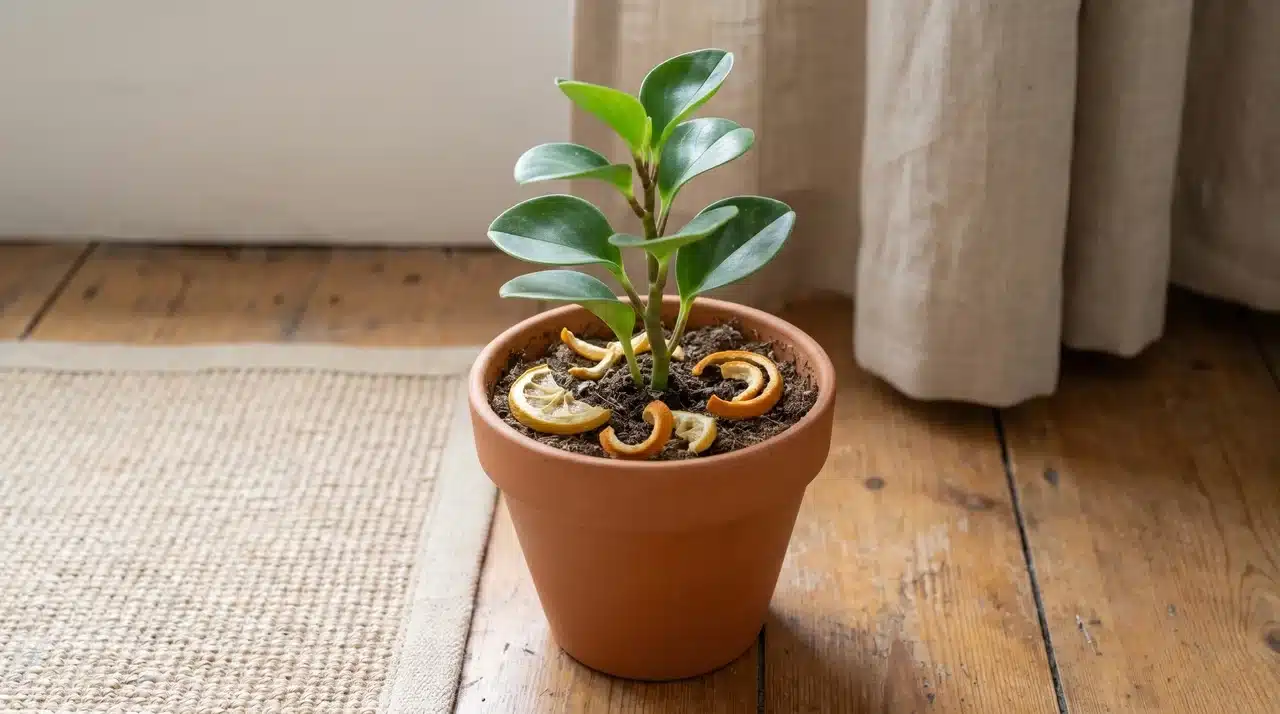
Ants nest in houseplant soil. If that plant is in your bedroom, the colony is already inside the room. Take out any plant that shows signs of infestation.
If you want to keep the plant, let the top layer of soil dry out between waterings. Damp soil is exactly what ants look for.
Put citrus rinds from lemons or oranges around the base to push them off. Replace the rinds every few days before they dry out.
10. Use Commercial Bait Stations as a Last Resort
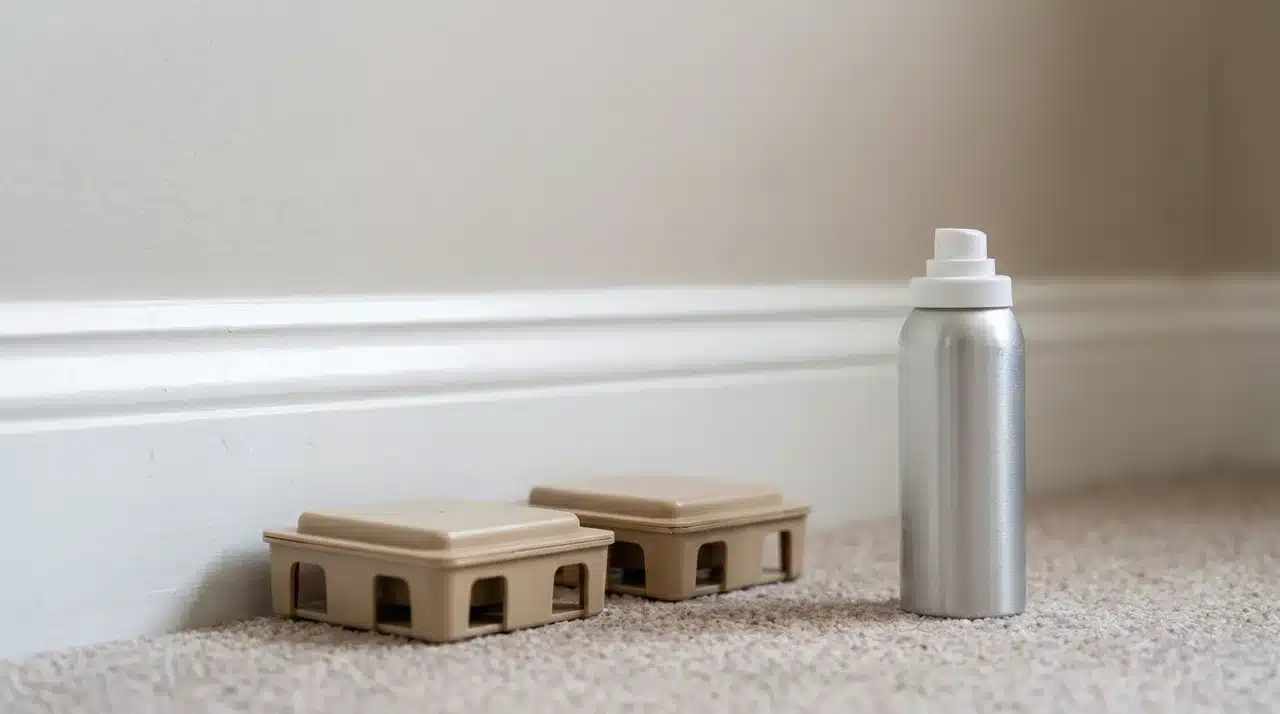
If you’ve done everything above and ants are still active, commercial products are a fair next step. Enclosed bait stations attract ants, which carry the bait back through the colony.
Enclosed stations beat open sprays in a bedroom the active ingredient stays contained, which matters near where you sleep.
Check the label before you buy. Some commercial baits use hydramethylnon, which is harmful to children, pets, and some plants.
If you use a spray, air the room out before you go back in and keep products away from bedding and pillows.
How to Get Rid of Ants Overnight (Quick-Action Checklist)
Need to do something right now? Work through these six steps tonight. The colony won’t be gone by morning, but you’ll see a real drop in activity.
- Set borax bait traps along every visible ant trail
- Wipe all surfaces and baseboards with white vinegar and water
- Vacuum the whole room, including under the bed and along skirting boards
- Spray peppermint oil along the room perimeter and across the door threshold
- Sprinkle diatomaceous earth along the baseboards and window sills
- Remove all food, open drinks, and rubbish from the room before you sleep
Leave the bait in place for at least a week. Tonight’s steps reduce what you see. The bait handles the rest.
Ants in Your Bed or On Your Mattress?
Ants on the mattress itself is a different problem. The bed is a contained surface you can cut off their route entirely, not just manage the room around it. Do that first, then let the colony treatment run its course.
These six steps target the bed directly. All of them work alongside the borax bait, not instead of it:
Step 1: Strip and Wash All Bedding
Hot wash everything right away. Heat kills ants at every life stage and removes scent traces from the fabric.
Step 2: Inspect the Bed Frame Joints and Mattress Seams
These are the two places ants nest or travel through most. Check them before you assume the problem is coming from somewhere else.
Step 3: Move the Bed Away from The Wall
Ants use the wall as a road. A few inches of gap cuts that direct route to the mattress.
Step 4: Put Bed Legs in Bowls of Soapy Water
Soapy water breaks surface tension. Ants can’t climb up through it. It’s one of the fastest physical barriers you can set up tonight.
Step 5: Smear Petroleum Jelly Around Each Bed Leg
A thin band stops ants cold. No smell, no toxins, and it works on any floor type.
Step 6: Wash Off Sweet-Scented Products Before Bed
Some moisturizers, lip balms, and hand creams have sugar-based compounds in them. Switching to unscented at night takes that draw away completely.
Isolate the bed, run the bait for a week, and you’re dealing with both ends of the problem at once.
Natural vs. Chemical Methods: Which Should You Use?
The honest answer: it depends on how bad the infestation is and how close the treatment sits to where you sleep not on which approach sounds cleaner.
For most bedroom infestations, start natural. The remedies are odorless, non-toxic in normal use, and they work. Reach for chemical products when the natural methods aren’t enough after a full week.
| Criteria | Natural Methods | Chemical Methods |
|---|---|---|
| Safety | Generally pet and child friendly, with some exceptions | Check labels carefully, especially in bedrooms |
| Speed | Slower, typically days to a week | Faster, often hours to a day |
| Effectiveness | Works well for mild to moderate infestations | Better for severe or persistent infestations |
| Cost | Very low most items are already at home | Low to moderate, depending on the product |
| Best For | Prevention and ongoing deterrence | Active, large-scale colony problems |
| Bedroom Suitability | High most options are odorless and non-toxic | Moderate ventilation and placement matter |
In a bedroom, natural wins by default as a starting point. Placing chemical products close to pillows and bedding is a different calculation than using them in a kitchen or hallway.
When Should You Call a Professional Exterminator?
Call a professional when the nest is inside the structure of your building, not just when you’re seeing a lot of ants. High numbers aren’t the trigger. Location is.
Here’s what tells you DIY has run out of road:
- Flying ants appearing inside the walls: That’s a nest established inside the building structure, not ants coming in from outside.
- Ants return within weeks of a full treatment cycle: The nest is somewhere you can’t reach a wall void, under a concrete slab, or in the ceiling cavity. Bait won’t get there. A professional will.
- Large Carpenter Ant activity near wooden structures: Carpenter Ants hollow out galleries in load-bearing wood. If they’re inside a bedroom wall, floor, or bed frame, the colony is in the structure. That’s not a bait trap job.
- Frass or wall sounds at night: Frass is a fine, sawdust-like material near skirting boards. Rustling inside the walls after dark is the second sign. Both mean the nest is already internal.
I’d call a professional the moment I spotted frass or heard movement in the walls. Once the colony is behind the plaster, you’re not solving it yourself.
Conclusion
Ants in the bedroom are fixable, but only if you go after the colony, not the trail. The ants you see are just a symptom. The queen producing replacements behind the wall is the real problem.
Borax bait and a white vinegar wipe-down do the heavy lifting. One hits the source, the other breaks the route. When you understand how to get rid of ants in bedroom at the colony level, everything else like barriers, repellents, and sealing just supports those two steps.
If the problem comes back after a full week of treatment, that is not a failure. It usually means the nest is somewhere you cannot reach.
That is when a professional is the right call for how to keep ants out of house situations where DIY stops being enough.
Frequently Asked Questions
How do I stop ants from coming into my bedroom?
Remove food and moisture from the room drinks left out overnight, scented lotions on the nightstand, damp laundry on the floor. Seal gaps along skirting boards and under the door. Wipe surfaces with white vinegar and water to break any pheromone trails already in place. Ants follow signals. Take the signals away.
How do I get rid of ants permanently in my bedroom?
You have to kill the colony, not just the ants you can see. Set a borax-sugar bait along active trails and leave it for at least a week. Workers carry it back to the queen. Once the colony is gone, seal entry points and keep food and moisture out of the room so a new one doesn’t move in.
Why do ants suddenly appear in my bedroom?
A scout found something worth reporting food residue, moisture, or a scented product on your nightstand. It left a pheromone trail on the way out. The ants you see the next day are following that map. Remove the attractant and wipe the trail with white vinegar, and the flow stops.
Can ants infest a mattress?
Yes, though it’s not common. Ants get onto a mattress when there’s a food source close by crumbs in bedding, scented products on skin, or a nest already inside the bed frame. Strip and hot-wash all bedding, check the frame joints, and move the bed away from the wall to cut off the route.