

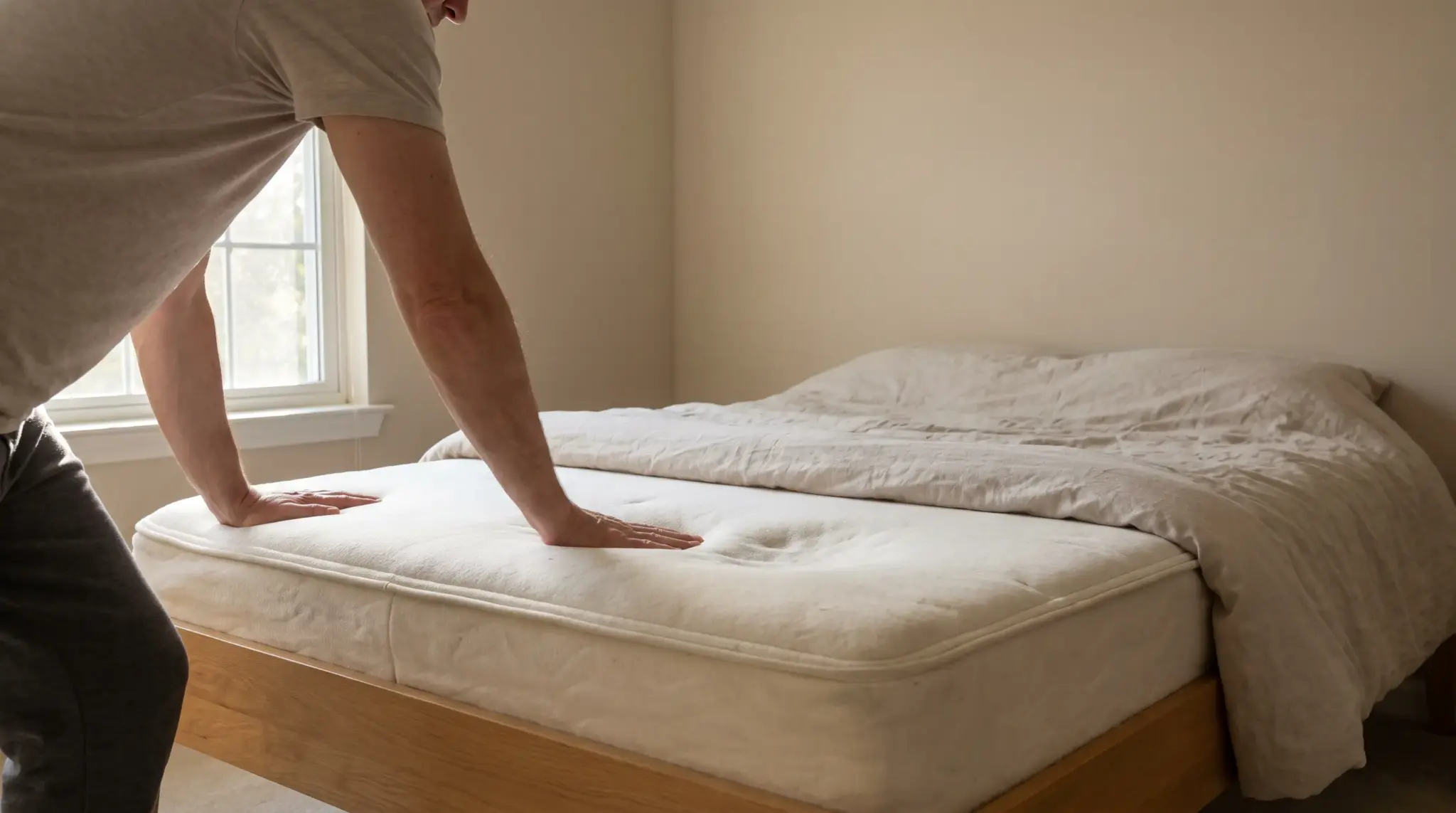
Waking up sore isn’t always about a bad night. Sometimes it’s the bed itself quietly failing you.
You toss and turn, blame your pillow or your posture, and never think to check what’s underneath you. That’s where I come in.
How long does a mattress last depends on more than just its age, and I want to help you figure out what’s really going on with yours.
By the end of this, you’ll know what to look for, when wear becomes a real problem, and how to tell if your mattress is the reason your mornings feel harder than they should.
How Long a Mattress Typically Lasts
Most mattresses last about 7 to 10 years under regular nightly use, but the real lifespan depends on materials, build quality, body weight, sleep position, and care.
Innerspring and pillow-top models may lose support sooner, while high-quality latex or dense foam mattresses can remain comfortable longer. Age alone should not decide replacement.
A mattress may need changing earlier if it develops deep sagging, uneven support, noisy coils, persistent odors, or causes morning stiffness and poor sleep. A weak foundation can create similar problems, so check whether you have the right mattress base before assuming the mattress has failed.
Check the surface, edge support, comfort, and how the body feels after sleeping. Replace the mattress when support and sleep quality decline, even if it has not reached the average age range.
Average Mattress Lifespan by Type
Mattress materials and construction affect durability. The table below compares the typical lifespan of common mattress types and the problems that often lead to replacement.
| Mattress Type | Typical Lifespan | Common Reason for Replacement |
|---|---|---|
| Innerspring | 5–8 years | Sagging or noisy coils |
| Memory foam | 7–10 years | Soft spots or reduced support |
| Latex | 10–15 years | Material breakdown or firmness changes |
| Hybrid | 7–10 years | Foam compression or coil wear |
| Pillow-top | 5–7 years | Flattened comfort layer |
| Air mattress | 5–8 years | Leaks or pump problems |
These ranges are general estimates. Mattress quality, nightly use, sleeper weight, foundation support, and maintenance can shorten or extend the actual replacement timeline.
How Often You Should Replace Your Mattress

Most people should consider replacing a mattress every 7 to 10 years, but this range is only a general benchmark.
The right timing depends on how often the bed is used, the mattress type, sleeper weight, and whether comfort or support has declined. A primary mattress used every night may wear out faster than a guest-room mattress that is used occasionally.
Children’s mattresses may also need replacement sooner as their bodies grow and support needs change. Choosing the right mattress size can provide enough room for changing sleep needs, body size, and shared sleeping arrangements.
Replace it earlier if sleep quality drops or pain becomes frequent. A mattress in good condition may last longer, but age should never outweigh comfort, alignment, and reliable support.
Signs Your Mattress Needs Replacing
A mattress may need replacing before its expected lifespan ends. Physical wear, reduced comfort, and declining sleep quality are the clearest warning signs.
- Visible sagging or permanent body impressions
- Waking with back, neck, shoulder, or hip discomfort
- Feeling coils, lumps, or uneven areas
- Increased creaking or movement transfer
- Sleeping better in hotels or on another bed
- Allergy symptoms caused by accumulated dust or allergens
- Difficulty finding a comfortable sleeping position
Before replacing it, consider whether lighting, temperature, noise, or ventilation may also be affecting rest. A sleep-friendly bedroom design helps separate mattress problems from issues caused by the surrounding environment.
Why Real-Life Mattress Lifespans Vary
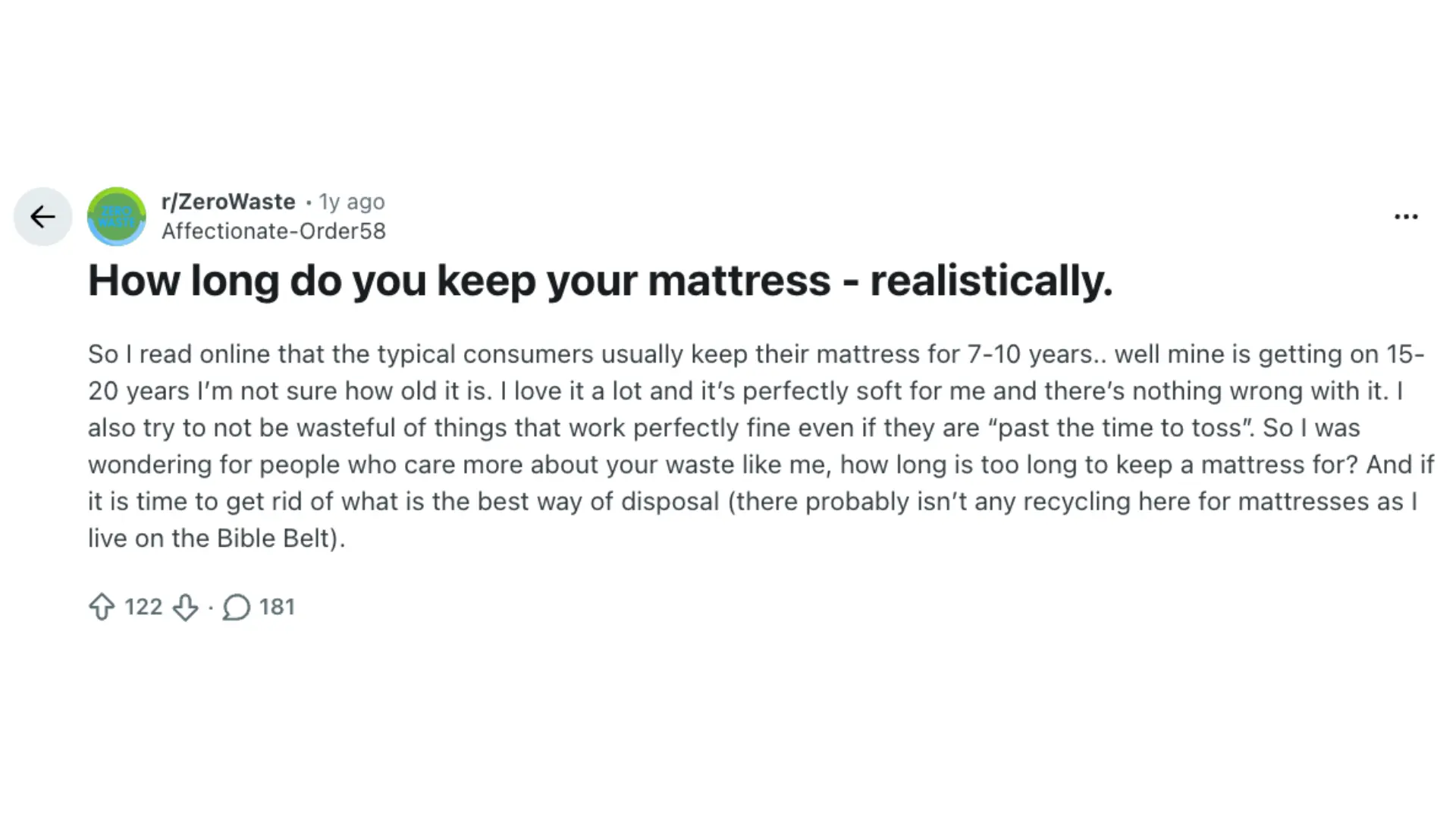
Mattress lifespan varies because materials, sleepers, usage, and maintenance differ between households. Higher-quality foams, durable coils, and stronger covers generally last longer than cheaper construction.
Body weight and sleeping position also affect how quickly comfort layers compress or develop impressions. Couples place greater pressure across the surface, while guest-room mattresses receive less frequent use.
Proper foundation support, regular rotation, clean bedding, and a mattress protector may slow wear. Moisture, spills, pets, poor ventilation, and repeatedly sitting on one edge can shorten durability.
Reddit user jinpop reported that a four-year-old mattress had already sunk and caused morning aches.
In contrast, Affectionate-Order58 still found a 15-to-20-year-old mattress comfortable, while Itavan reported using one for more than 38 years without sagging.
Why Some Mattresses Fail Before Seven Years
Some mattresses wear out before seven years because their materials and support systems cannot handle regular pressure. Low-density foam may soften quickly, develop body impressions, or lose its original firmness.
Weak coil systems can bend, become noisy, and create uneven support across the sleeping surface. Poor edge construction may also collapse from repeated sitting or getting in and out of bed.
Using an incorrect foundation can cause premature sagging, even when the mattress itself is relatively new. Moisture buildup, spills, and limited ventilation may weaken foam and encourage odors or mildew.
Failing to rotate the mattress allows pressure to remain concentrated in the same areas. Choosing the wrong firmness for body weight or sleeping position can also increase compression, discomfort, and early structural wear.
How to Check Whether Your Mattress Is Still Supportive
A simple comfort and support check can reveal whether the mattress still maintains proper alignment or has started affecting sleep quality and morning comfort.
- Inspect the surface for sagging, dips, and permanent body impressions.
- Lie down in the sleeping position used most often.
- Notice whether the spine feels naturally aligned and supported.
- Compare sleep quality with another bed or hotel mattress.
- Track morning stiffness, soreness, or discomfort for one week.
- Examine the bed frame, slats, and foundation for damage.
- Review the warranty terms for sagging and structural defects.
Several negative findings usually indicate declining support. Check the foundation first, then consider replacing the mattress if discomfort, sagging, or poor sleep continues.
How to Extend the Life of a Mattress
Proper care can help a mattress maintain its comfort, cleanliness, and support for several additional years. Start by using a compatible bed frame or foundation that prevents uneven pressure and sagging.
Rotate the mattress every three to six months, when the manufacturer permits it, to help distribute wear across the surface. Add a washable mattress protector to block sweat, dust, spills, and other moisture from reaching the inner materials.
Clean accidental spills immediately and allow the mattress to dry completely before replacing the bedding. Vacuum the surface occasionally to remove dust, hair, and debris.
Avoid jumping on the bed or repeatedly sitting along the same edge, as concentrated pressure can damage the support layers. Keep the bedroom dry and well ventilated, and always follow the manufacturer’s cleaning, rotation, and foundation instructions.
When to Replace the Foundation or Bed Frame
A damaged foundation or bed frame can make a good mattress sag, shift, or feel less supportive. Check the slats for cracks, bowing, or uneven placement, since weak slats can create dips across the sleeping surface.
Wide gaps between slats may also allow foam or hybrid mattresses to sink between them. Larger beds usually need reliable center support to prevent the middle from dipping over time.
Replace noisy, broken, or weakened box springs that no longer hold the mattress evenly. Tighten loose bolts and inspect joints if the frame moves, squeaks, or feels unstable.
Before buying a new mattress, place the current one on a flat, supportive surface for a short test. If sagging improves, the foundation or frame is likely the real problem and should be replaced.
Final Decision
Your mattress won’t announce its decline with a single obvious sign. It shows up slowly, in stiffer mornings and restless nights you might blame on everything else.
I’ve covered how lifespan changes by material, why some mattresses fail early, and the simple checks that reveal support problems before sagging becomes visible.
Knowing how long a mattress lasts matters less than knowing how to test yours right now. A few minutes checking your sleeping zones can save you months of poor sleep.
Try the checks I shared tonight, and see what you notice. If this helped, share it with someone who’s been blaming their pillow instead of their bed.
Frequently Asked Questions
Can a Mattress Last 20 Years?
A high-quality latex mattress may last 20 years with light use and careful maintenance. That lifespan is uncommon for other mattress types.
A 20-year warranty does not promise 20 years of comfort. It usually covers manufacturing defects rather than gradual softening or reduced support.
How Do You Know When You Need a New Mattress?
Check for lasting impressions, slow surface recovery, uneven support, and repeated morning discomfort. Compare heavily used areas with a less-used mattress edge.
Inspect the bed base and track your sleep before deciding. Feeling consistently better in another bed can provide useful confirmation.
Does Mattress Type Affect How Long It Lasts?
Yes. Innerspring mattresses often last 5 to 7 years, while memory foam and hybrid mattresses generally last 8 to 10 years.
Latex can last 10 to 12 years or longer. Coir and cotton mattresses may last 2 to 5 years because their fibers flatten faster.
Can a Mattress Topper Extend Mattress Life?
A topper can reduce direct pressure on the mattress surface and improve short-term comfort. It may help slow minor wear on newer mattresses.
However, it cannot repair sagging, compressed foam, or weakened coils. Replace the mattress if its support layers have already failed.