

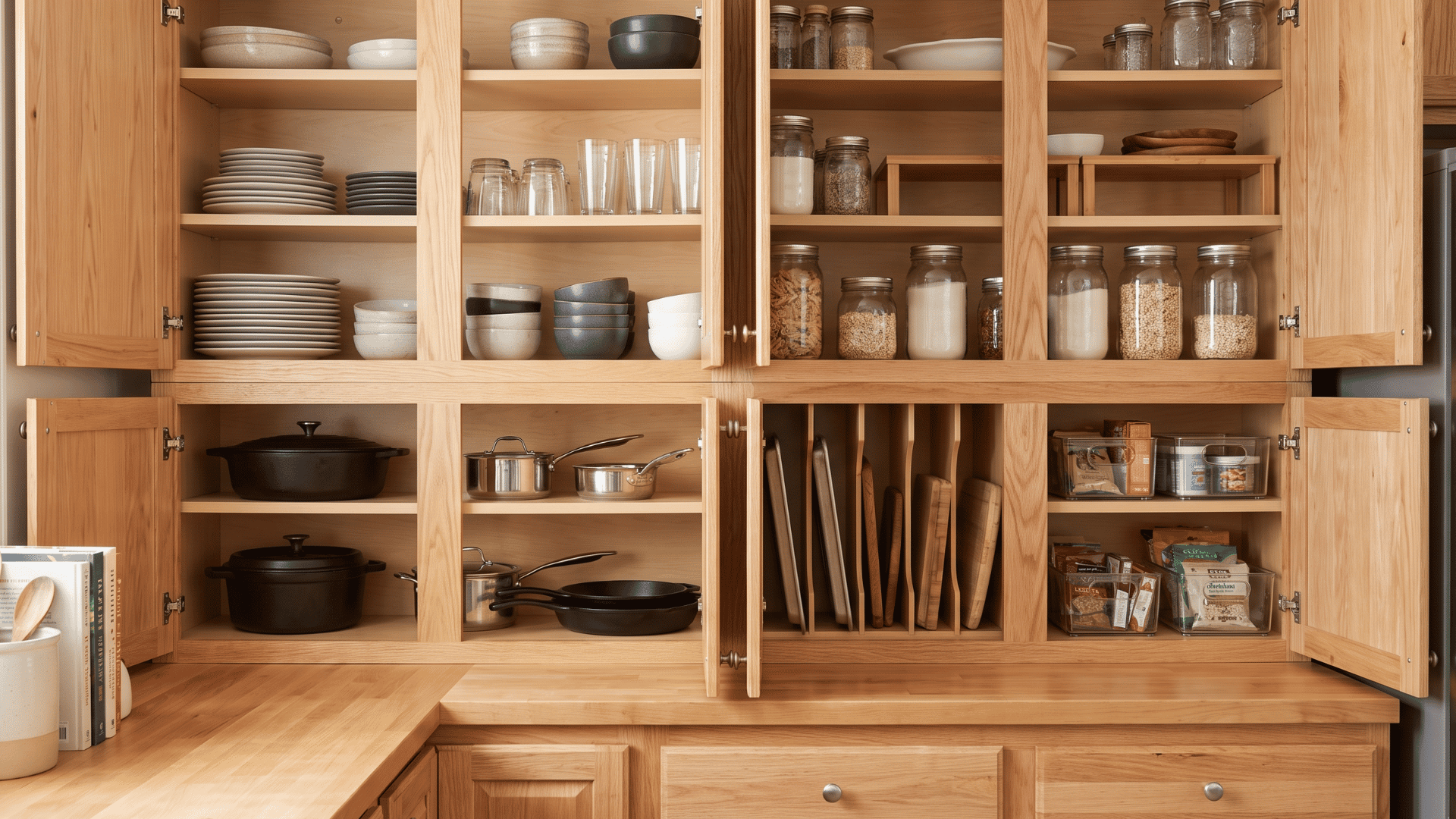
Messy kitchen cabinets can slow down cooking before you even start. You reach for one pan, move three lids, search behind a stack of bowls, and still cannot find what you need.
I know cabinets can get disorganized quickly when dishes, cookware, food containers, and small appliances all compete for limited space. Learning how to organize kitchen cabinets helps you create a setup where everyday items are easier to reach and simpler to put away.
This process covers decluttering, cabinet zones, shelf placement, useful storage tools, and practical layouts for different cabinet types. The goal is a kitchen that works better without filling every shelf with organizers.
Why Organized Kitchen Cabinets Matter
Kitchen cabinets affect nearly every part of cooking, serving, and cleanup. When related items are scattered across different areas, simple tasks require more walking, searching, and rearranging.
A better cabinet layout puts frequently used items close to where they are needed. Cooking tools can stay near food-prep areas, dishes can remain convenient for unloading, and less-used pieces can move away from prime storage.
Organization can also help you see duplicates before buying more, reduce unstable stacks, and make better use of cabinet height and depth. The same logic works well as part of a full home declutter, not just inside one set of cabinets.
The goal is not to create picture-perfect shelves. A useful cabinet system should make everyday tasks faster and allow everyone in the household to understand where things belong.
How to Organize Kitchen Cabinets Step by Step
Start by planning where everything should go before emptying a single cabinet.
Step 1: Plan Kitchen Zones with Sticky Notes
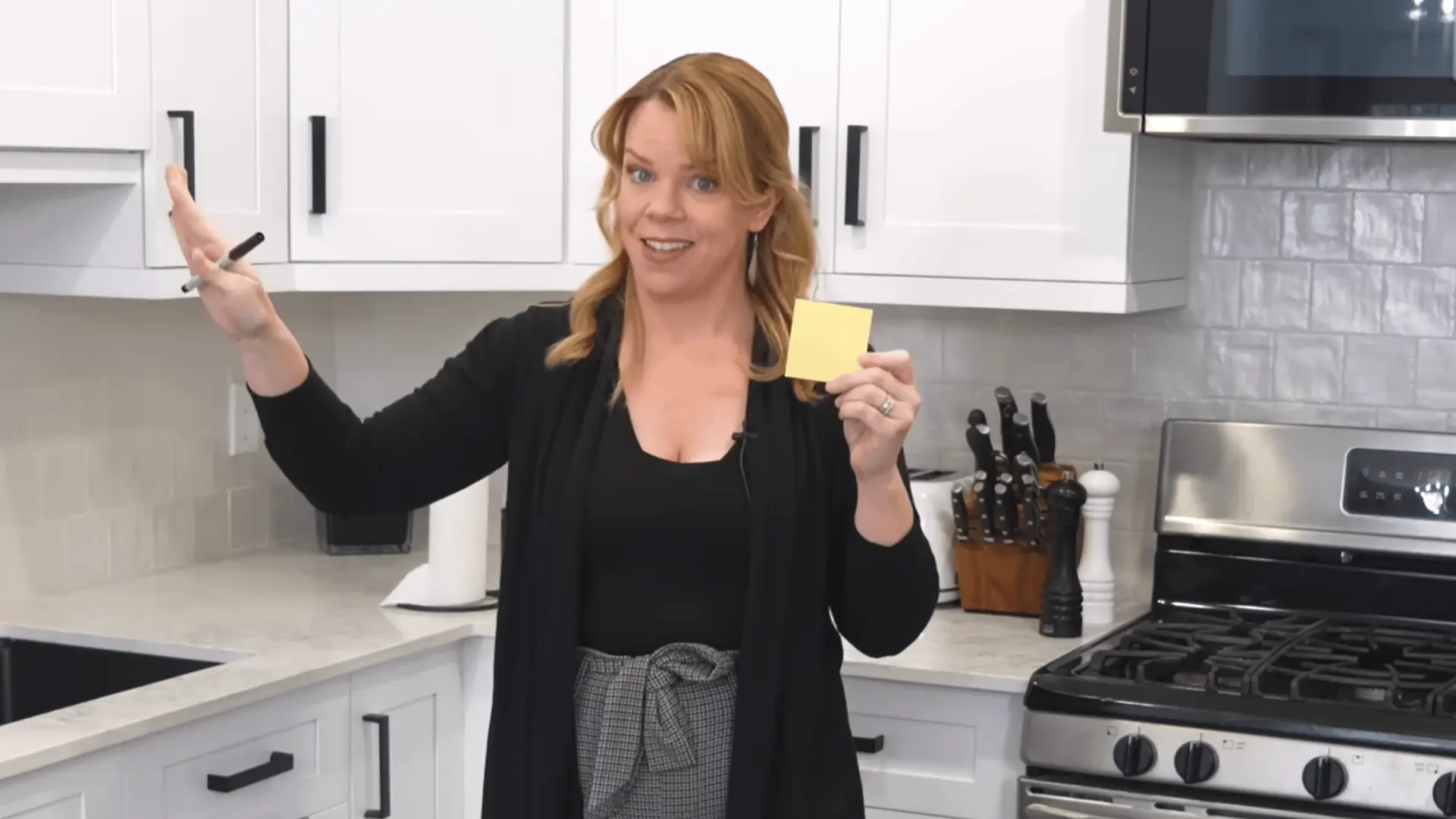
Walk through your kitchen and identify the items you use every day. Write each category on a separate sticky note before moving anything from cabinets.
Place each note where its category would be easiest to use. Move the notes freely until every proposed location supports your normal cooking routine well.
Step 2: Give Everyday Items the Best Storage Space
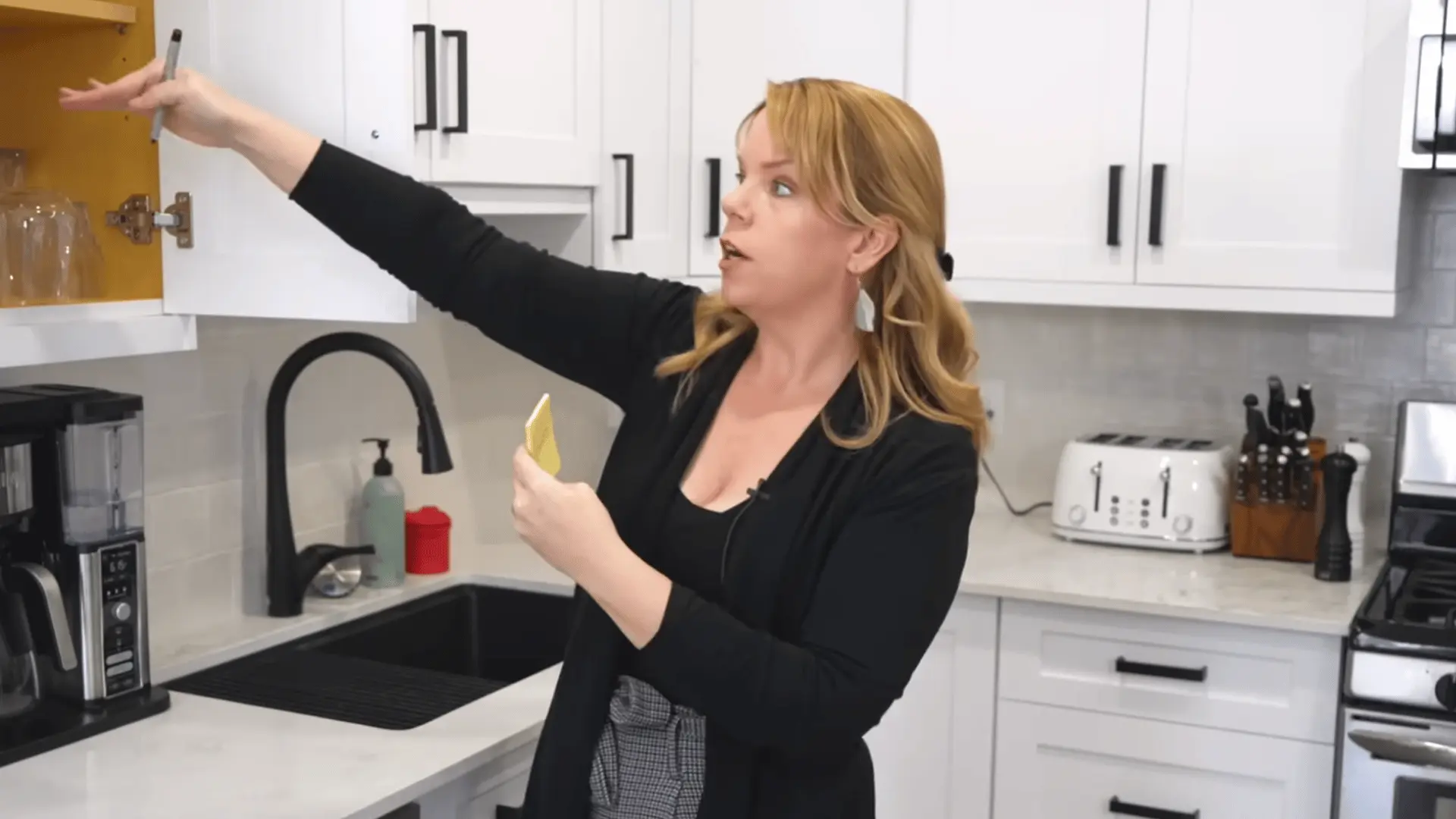
Treat the space between your waist and eye level as valuable storage space. Reserve these easy-to-reach drawers and shelves for items used several times daily.
Keep everyday plates and glasses near the dishwasher for faster unloading. Store utensils, spices, pots, and pans beside the stove whenever available space allows it, and consider freeing up drawer space for anything that doesn’t sit well on open shelves.
Step 3: Move Items One Cabinet at a Time
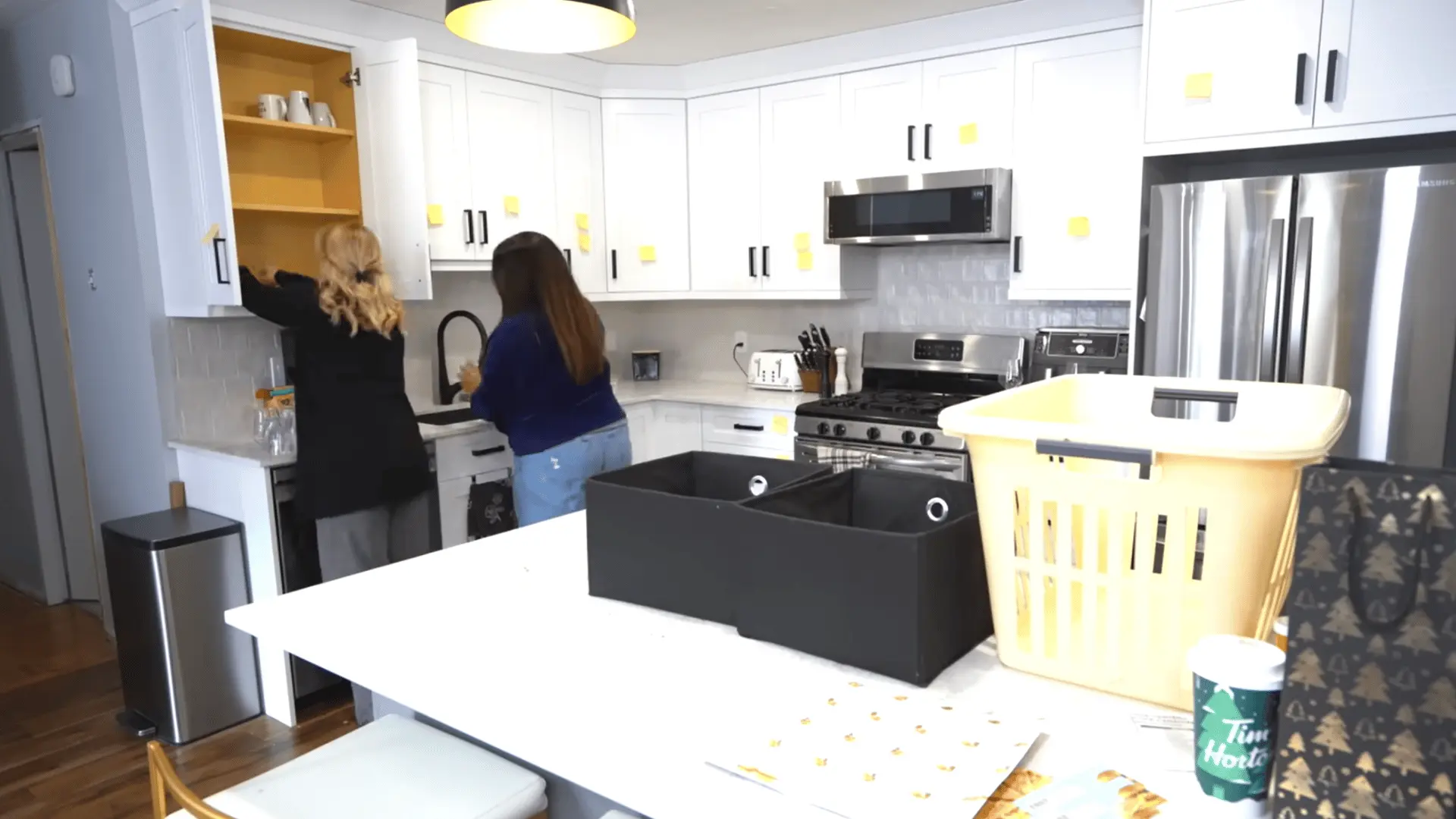
Choose whether you will reorganize one cabinet at a time or follow categories around the kitchen. The first method usually feels less overwhelming overall today.
Empty one cabinet, clean it, and place its newly assigned category inside. Move the removed contents into their planned zones before opening another cabinet nearby.
Step 4: Remove Duplicates and Excess Items
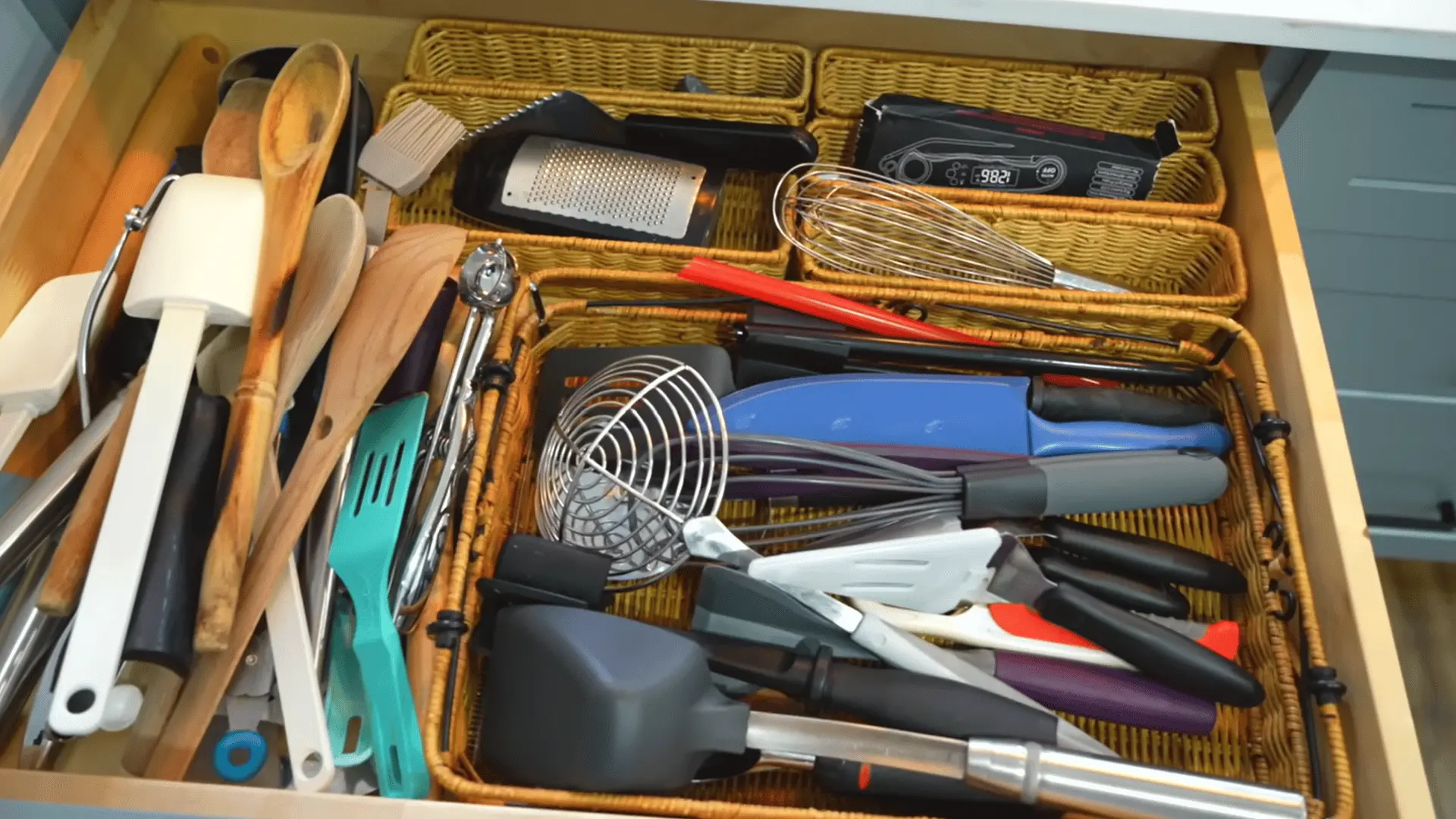
Let each drawer and cabinet limit how much you keep inside. Once that space is comfortably full, remove duplicate, broken, or rarely used pieces promptly.
Keep only the best versions of frequently used utensils and tools. Match every food container with its lid, then discard unmatched lids and container bottoms.
Step 5: Create Zones for Kitchen Activities
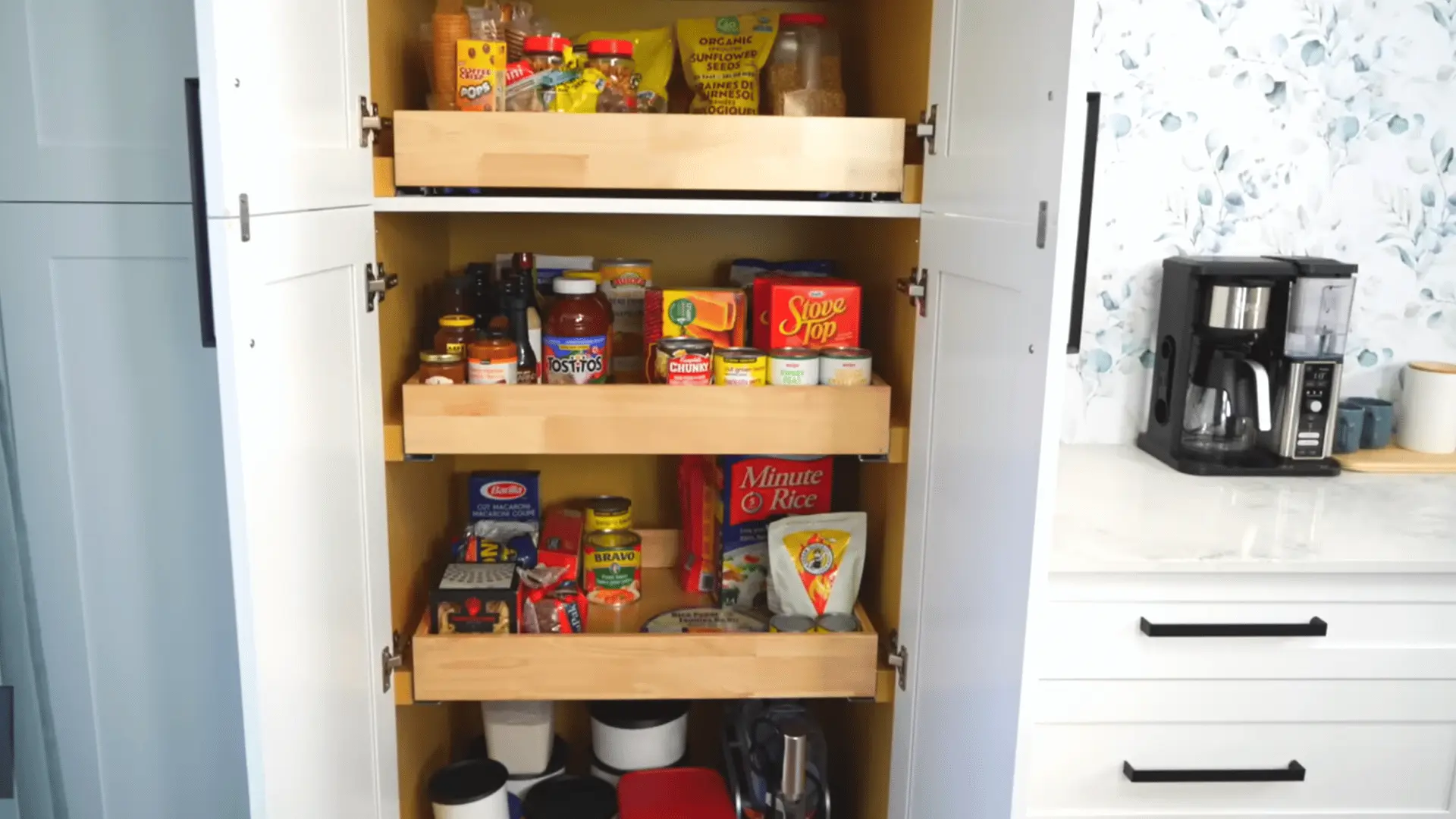
Create separate zones for activities such as baking, breakfast, coffee, drinks, food storage, and entertaining. Keep every zone close to the counter where it happens.
Group pantry foods by category instead of mixing cans, snacks, sides, and breakfast items. A dedicated pantry space makes this kind of grouping much easier to maintain. Give each shelf one clear purpose so everything remains visible daily.
Step 6: Test and Adjust the New Layout
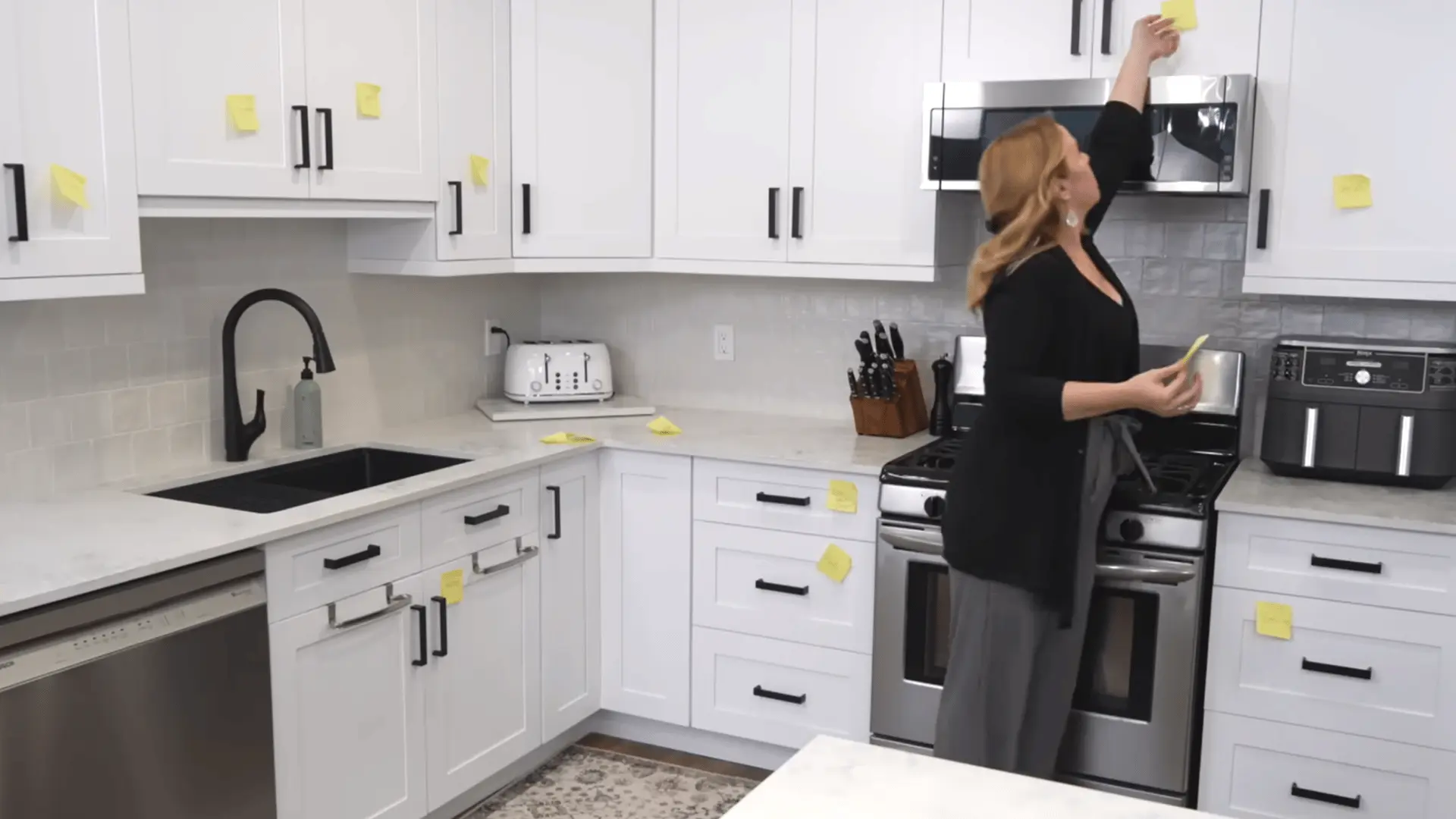
Remove the sticky notes after every category has reached its final home. Walk through common tasks and check whether the new placement reduces unnecessary steps.
Adjust any zone that still feels awkward, crowded, or difficult to reach. The kitchen should support daily routines without requiring extra walking, searching, or reshuffling.
Once every zone supports your routine, daily cooking and cleanup should feel faster and easier.
Watch this video to organize your kitchen in one day:
Kitchen Cabinet Storage Tools Worth Using
Cabinet organizers can improve awkward spaces, but not every cabinet needs them. The best tool depends on the problem you are trying to solve.
| Storage Tool | Best Use | Skip It When |
|---|---|---|
| Shelf risers | Plates, bowls, mugs, short pantry items | Shelf height is already limited |
| Vertical dividers | Baking sheets, boards, trays, lids | Cabinet is too narrow |
| Lazy Susan | Spices, oils, jars, bottles | Items are large, or cabinet is shallow |
| Clear bins | Snacks, packets, food storage accessories | Bin hides or crowds contents |
| Pull-out shelves | Deep lower cabinets and cookware | Existing cabinet depth is limited |
| Lid organizer | Pot lids and food container lids | You own only a few lids |
| Door rack | Lightweight wraps, packets, cleaning supplies | Rack interferes with shelves or hinges |
The best cabinet organizer is one you can use without adding extra steps. If you have to move the organizer every time you need something, it probably isn’t solving the right problem.
Best Kitchen Cabinet Storage Ideas
Different cabinet shapes create different storage problems. Instead of applying the same system everywhere, match the organization method to the type of cabinet you have.
1. Upper Kitchen Cabinets
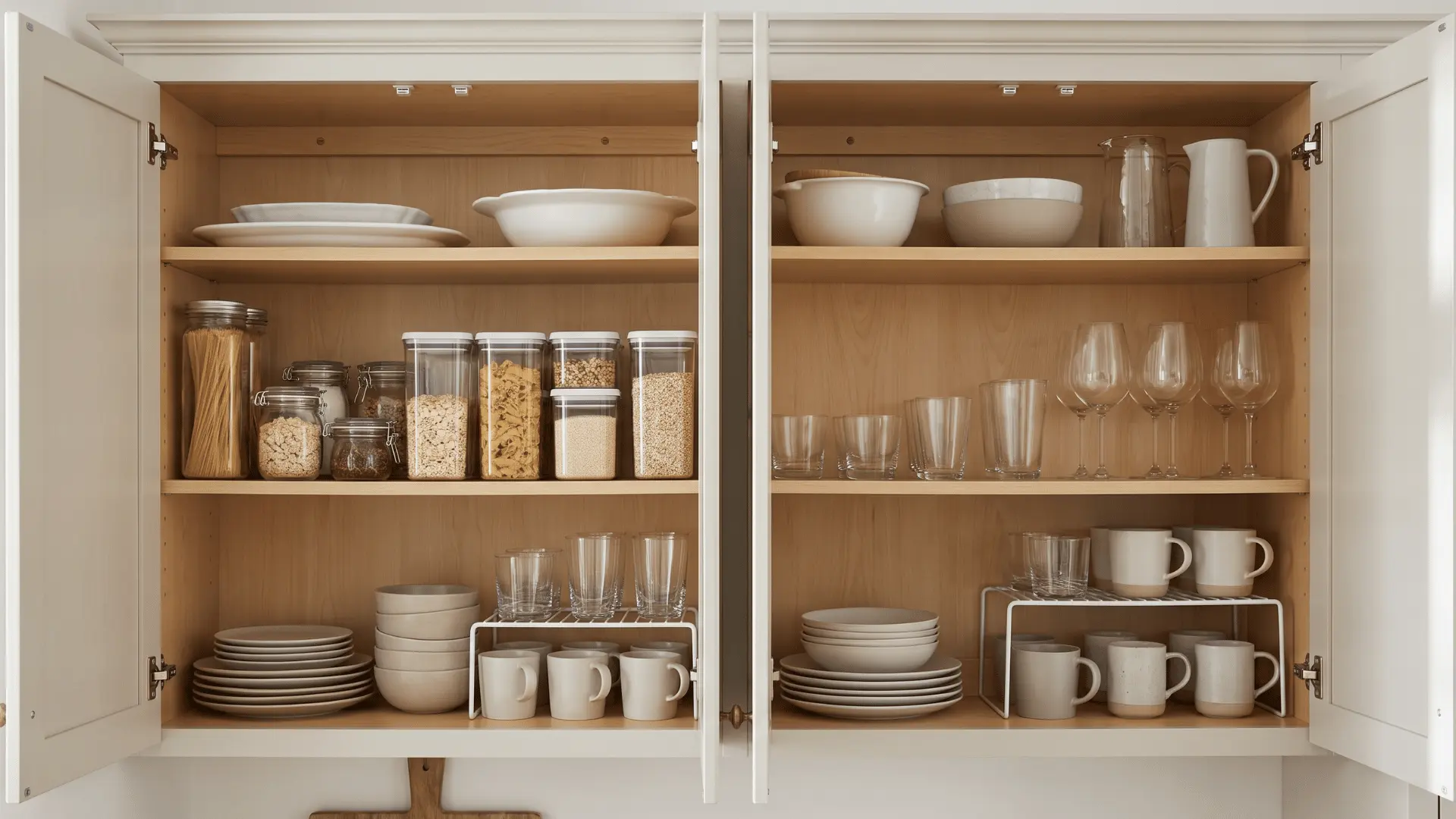
Upper cabinets work well for lightweight items such as plates, bowls, mugs, glasses, and pantry foods. Keep everyday pieces on the lowest accessible shelves and move occasional serving dishes higher.
Avoid placing very heavy appliances overhead. If there is unused height above short stacks, an adjustable shelf or riser can make the space more practical.
2. Deep Lower Cabinets
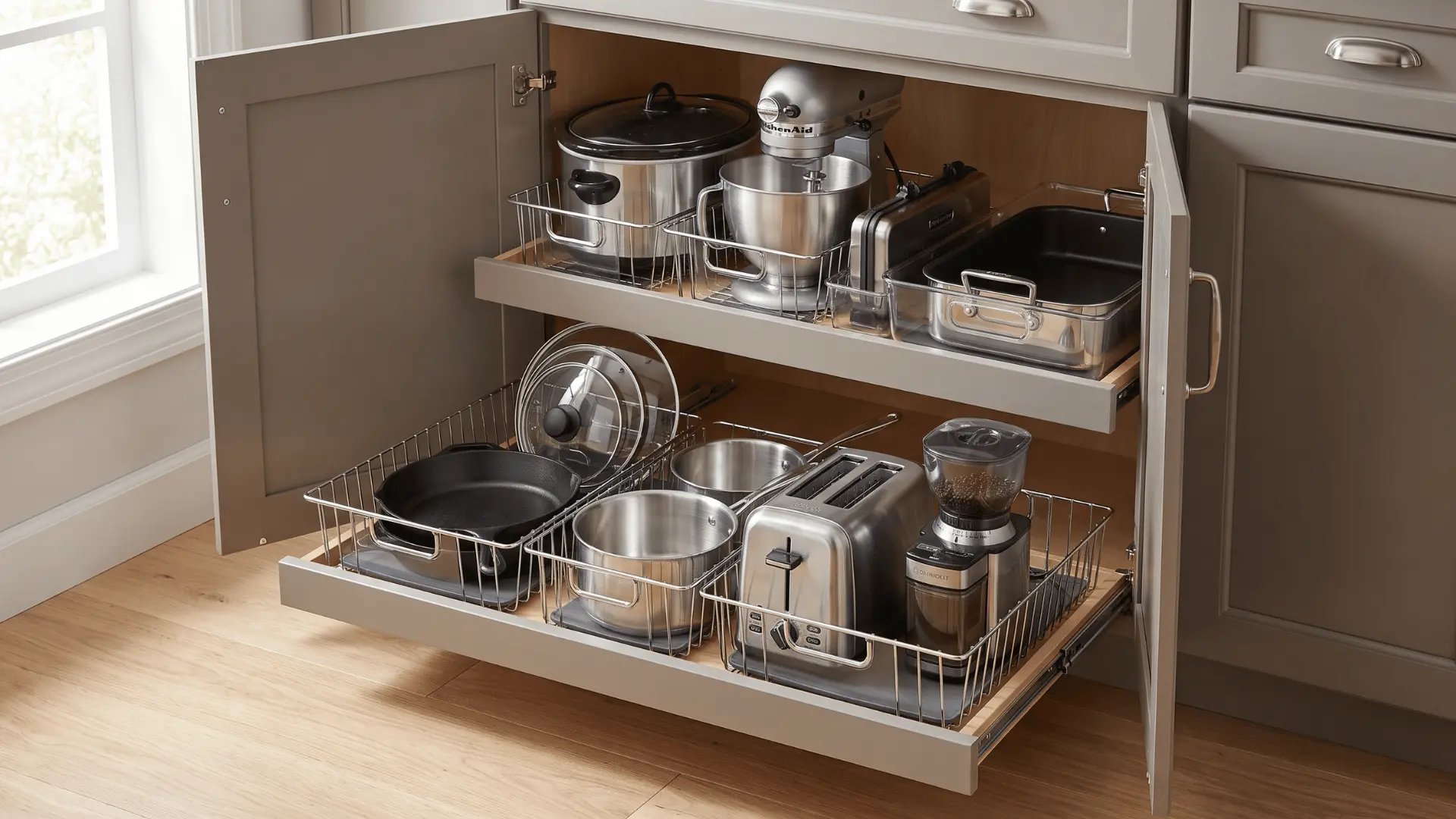
Deep cabinets often become difficult because cookware and appliances disappear behind the front row. Use the front for regularly used pieces and the rear for less-frequent items.
Pull-out shelves or handled bins can bring deep contents forward. Avoid filling the space with many small loose objects because they are difficult to see and easy to forget.
3. Corner Cabinets
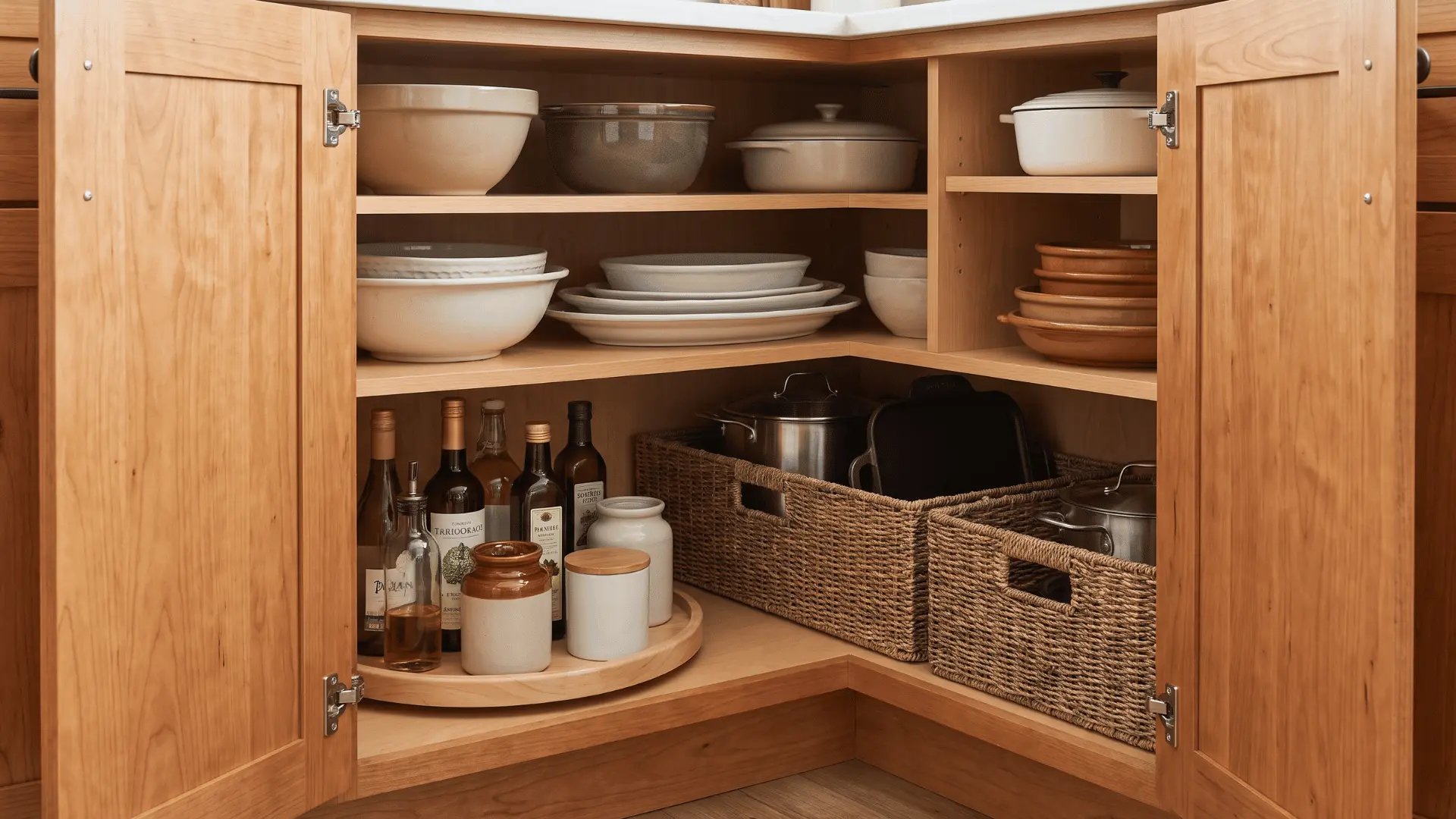
Corner cabinets offer plenty of room but can be awkward to reach. Larger bowls, serving dishes, or occasional cookware are easier to manage here than many small pieces.
A rotating tray can make bottles or jars easier to access. If the cabinet is very deep, removable baskets can prevent items from being permanently lost in the back corner.
4. Narrow Cabinets
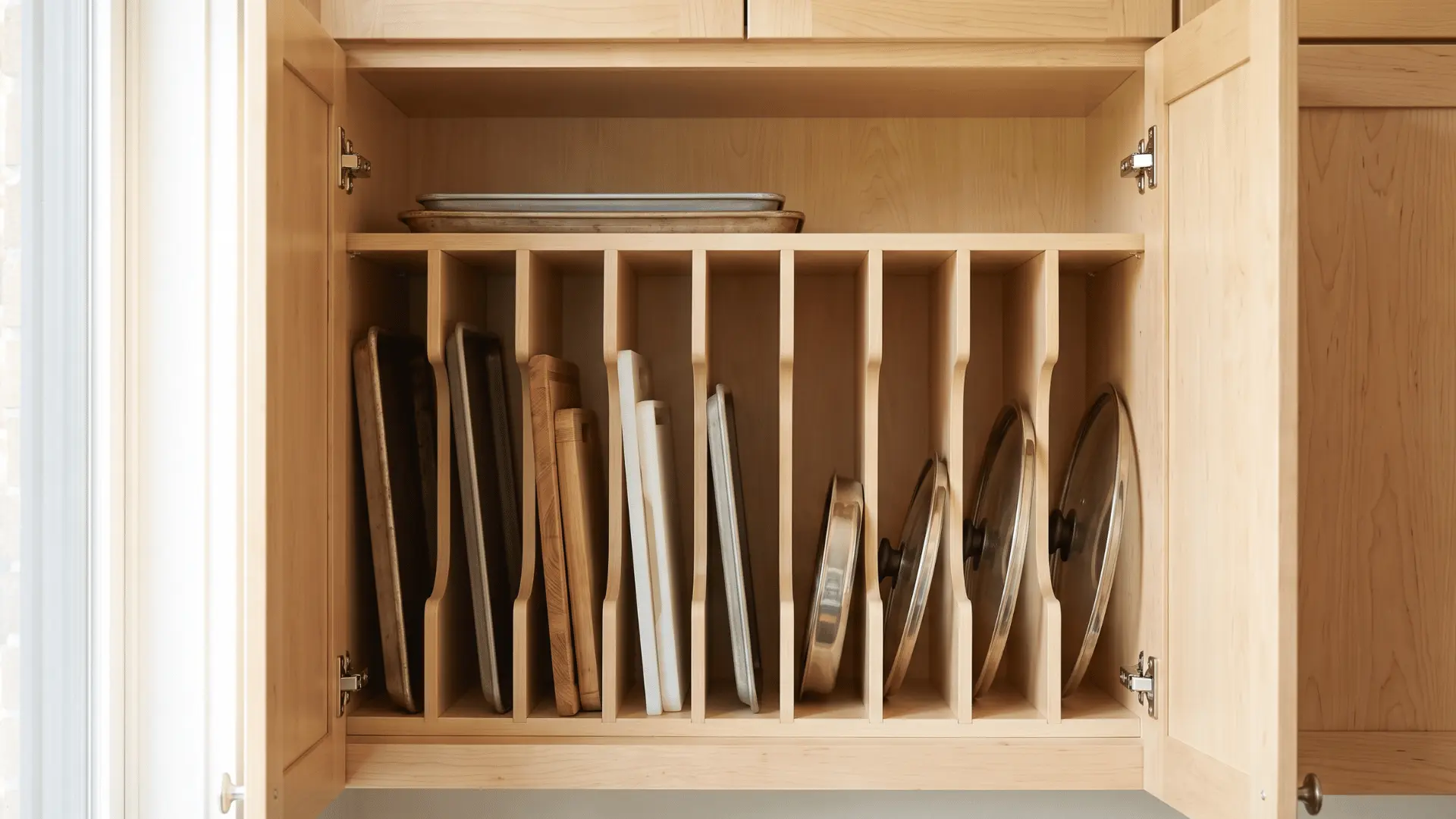
Narrow cabinets can be useful when you store items vertically rather than creating traditional stacks. Baking sheets, cutting boards, trays, and pan lids fit well in these spaces with simple dividers.
Avoid forcing bulky cookware into a narrow cabinet. The best use is usually one clear category that benefits from upright storage and easy individual access.
5. Small-Kitchen Cabinets
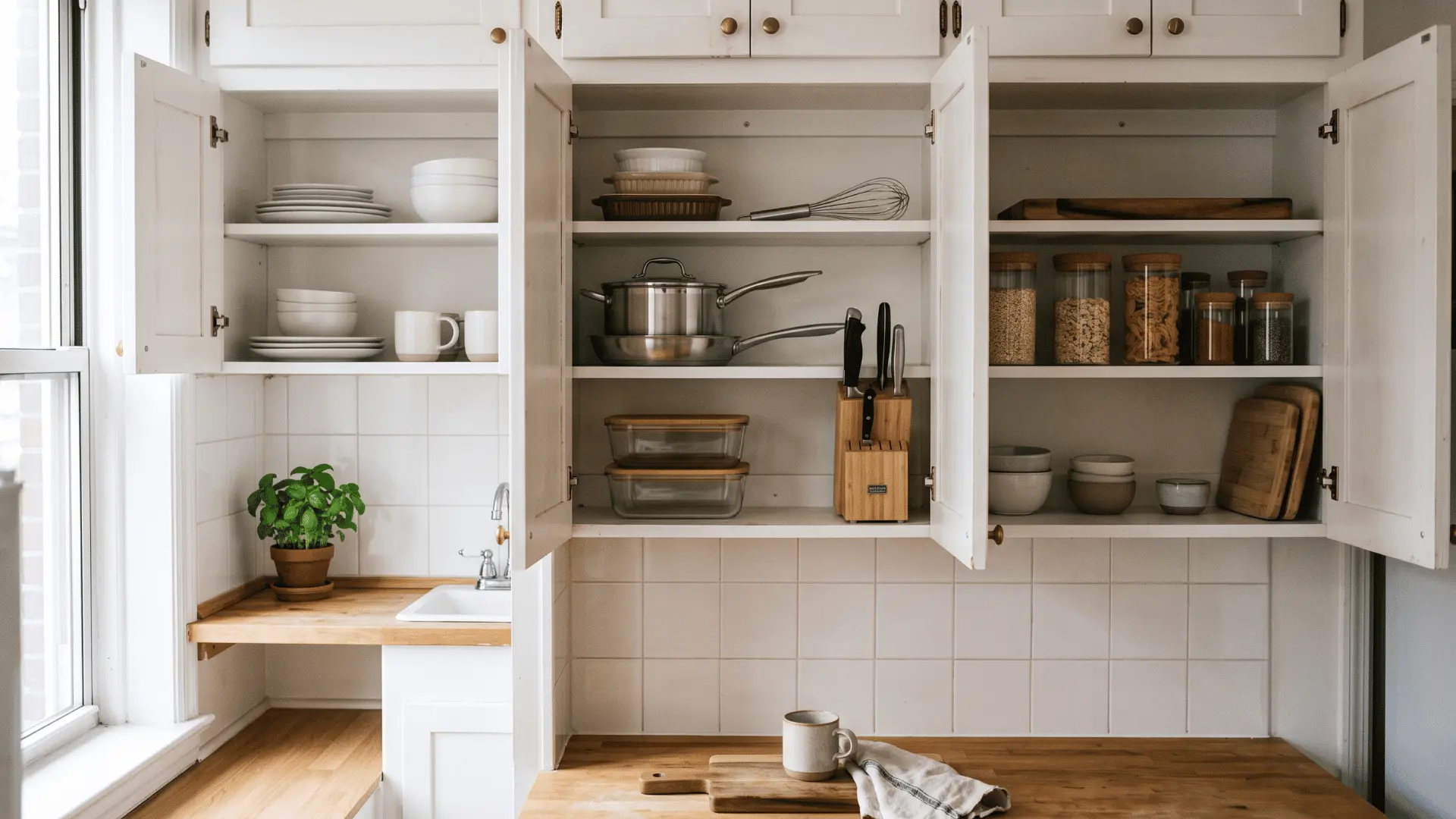
In a small kitchen, cabinet organization starts with limiting duplicates. Keep the dishes, cookware, containers, and gadgets that support your normal routine.
Use cabinet height carefully and nest compatible pieces where practical. Avoid filling every inch. Leaving some open space makes it easier to remove items, put groceries away, and maintain the setup after busy cooking days.
Best Places for Common Kitchen Items
A functional kitchen places items close to where they are normally used.
Plates and bowls: Keep them in an accessible cabinet close to the dishwasher, sink, or dining area.
Cookware: Store pots and pans in sturdy lower storage with enough room to remove individual pieces.
Baking supplies: Group pans, measuring tools, and baking accessories together rather than scattering them across several cabinets.
Food containers: Keep containers and matching lids in one defined area near your usual leftover or lunch-packing space.
Coffee and tea: Create a small beverage zone close to your coffee maker or kettle.
Occasional serving pieces: Use higher or less convenient storage so everyday items can occupy better shelves.
This placement reduces unnecessary movement without requiring every kitchen to follow the same layout.
What Not to Buy Before Organizing Cabinets
Buying storage products before decluttering usually creates more work. First determine what you actually need to store and which spaces are causing problems.
- Matching bins for every shelf: Cabinets don’t need identical containers unless the bins improve access or keep small items contained.
- Oversized shelf risers: Large risers can reduce usable height and make taller dishes harder to store.
- Deep storage bins: Avoid bins that are difficult to pull forward or encourage forgotten items to collect at the back.
- Complicated stacking systems: If reaching one piece requires removing several organizers, the system is not practical.
- Too many labels: Label shared or similar categories when useful, but obvious cabinets do not need labels everywhere.
- Bulk organizers: Buying a multipack before measuring can leave you with pieces that do not fit your actual cabinets.
Organize first, then purchase only what fixes a clear storage problem.
Kitchen Cabinet Organization Mistakes to Avoid
Even a freshly organized cabinet can become messy again if the setup is crowded, inconvenient, or too complicated to maintain during everyday cooking.
| Mistake | Why It Causes Problems | Better Approach |
|---|---|---|
| Overfilling shelves | Crowded shelves make it hard to remove and return individual items. | Leave enough open space to reach items easily. |
| Keeping too many duplicates | Extra mugs, utensils, gadgets, and containers use up valuable storage space. | Keep the versions you regularly use and remove unnecessary extras. |
| Ignoring accessibility | Frequently used items become frustrating when stored too high or too deep. | Give everyday essentials the easiest-to-reach locations. |
| Creating miscellaneous cabinets | Unassigned spaces quickly collect unrelated items and become cluttered. | Give every cabinet a clear category or purpose. |
| Choosing appearance over function | Attractive containers cannot fix poor placement or difficult access. | Prioritize convenience before matching bins or containers. |
| Using complicated systems | Extra steps make it less likely that items will be returned correctly. | Choose simple storage arrangements that are easy to maintain. |
The best cabinet organization should support your normal routine. If a system requires constant rearranging, simplify it until cooking, cleanup, and restocking feel natural.
The Bottom Line
A well-organized kitchen cabinet is one where you can find what you need without moving several other things first. That is the simplest way to judge whether your system works.
When learning how to organize kitchen cabinets, focus first on what you use, where you use it, and how easily you can reach it. Then adjust cabinet zones and add storage tools only when they solve a real access problem.
If one cabinet becomes messy again after a few days, do not restart the entire kitchen. Look at that specific category and change its location, reduce its contents, or simplify its storage.
Good kitchen organization develops through small adjustments until the layout fits the way you actually cook.
Frequently Asked Questions
How Do You Decide Where to Put Things in Kitchen Cabinets?
Start with frequency and location of use. Put items near the activity they support and reserve the easiest shelves for frequently used pieces. Less-used items can occupy higher or deeper storage.
What Should Go in Upper Kitchen Cabinets?
Upper cabinets generally suit plates, bowls, glasses, mugs, pantry foods, and lightweight serving pieces. Place everyday items on accessible shelves and move occasional items higher.
Where Should Pots and Pans Be Stored?
Cookware usually works best in sturdy lower storage. Choose a cabinet or drawer that lets you remove individual pans without lifting several heavy pieces first.
How Do You Organize Tupperware in a Cabinet?
Match each container with its lid, remove unmatched pieces, and nest compatible containers. Keep lids upright or collected in one holder so individual sizes are easy to identify.
Can You Organize Kitchen Cabinets Without Buying Anything?
Yes. Decluttering, relocating items, creating functional zones, and improving shelf placement can make a major difference without purchasing storage products. Add organizers only when a specific problem remains.