

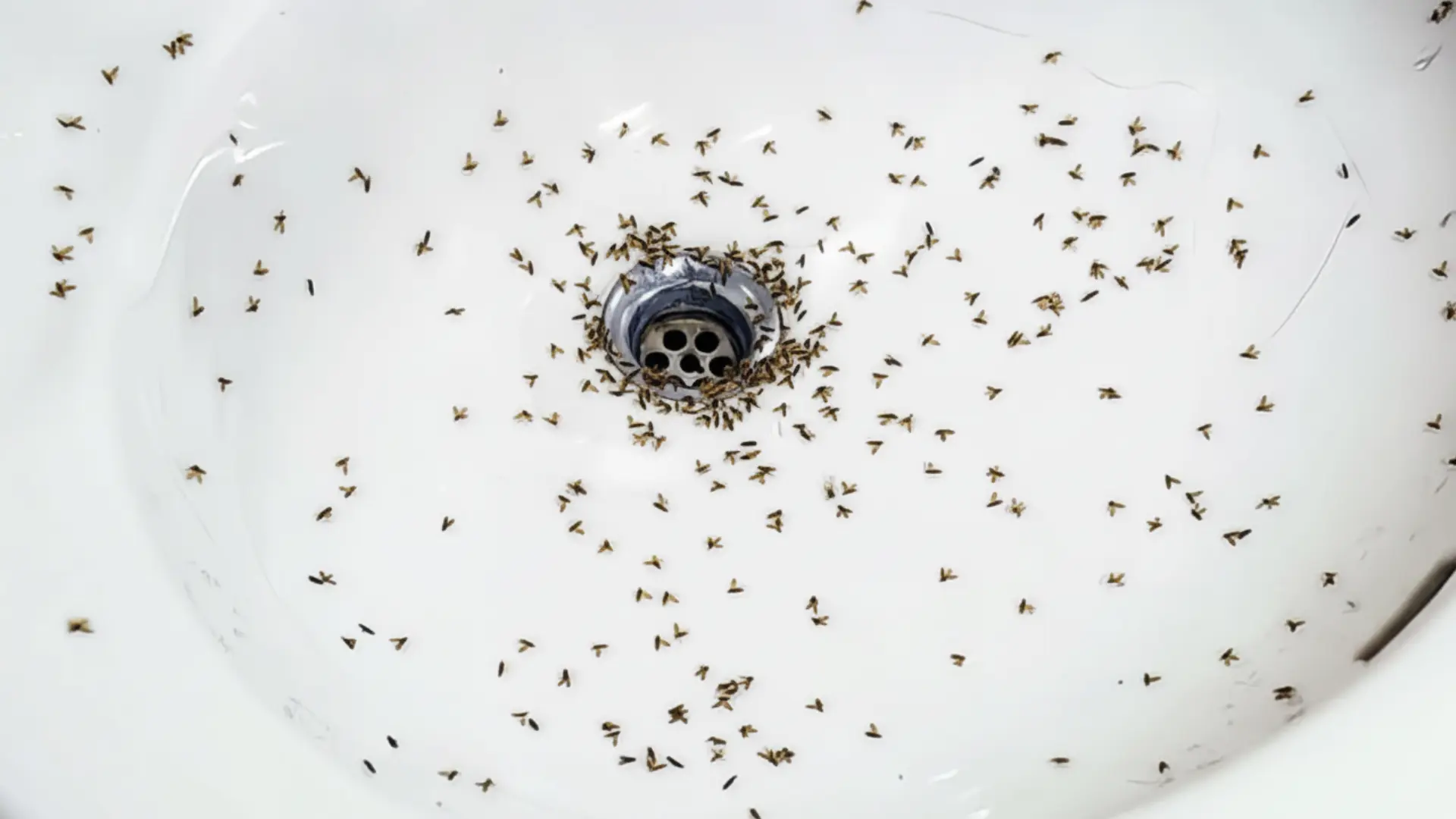
Those tiny, fuzzy bugs near your sink are called drain flies. They’re small and slow, but they can make a clean room look messy.
Drain flies in bathroom sinks and tubs often show up quietly and hang around for a while. The upside is that getting rid of them is pretty simple. A quick look around your bathroom can tell you a lot.
You’ll soon know exactly where these bugs spend their time.
Below, I’ll share the steps that worked for me. I’ll also cover easy habits to help keep them from returning. You can follow along at your own pace, drain by drain. Clean drains, calm mind, and no more flies.
Why Are Drain Flies So Difficult to Eliminate?
Drain flies are easy to spot on walls and mirrors. The real problem is what you can’t see. Their eggs and larvae hide deep inside the drain.
They live in a slimy film that builds up on the pipe walls. Regular cleaning often misses this gunk. Sometimes more than one drain is feeding the problem, too.
So even after you swat every fly in sight, new ones keep showing up. Fresh adults hatch from the hidden larvae day after day.
That’s why killing only the flying adults gives you a short break, not a fix. To stop them for good, first confirm what you’re dealing with, then find where they breed.
How to Get Rid of Drain Flies in the Bathroom
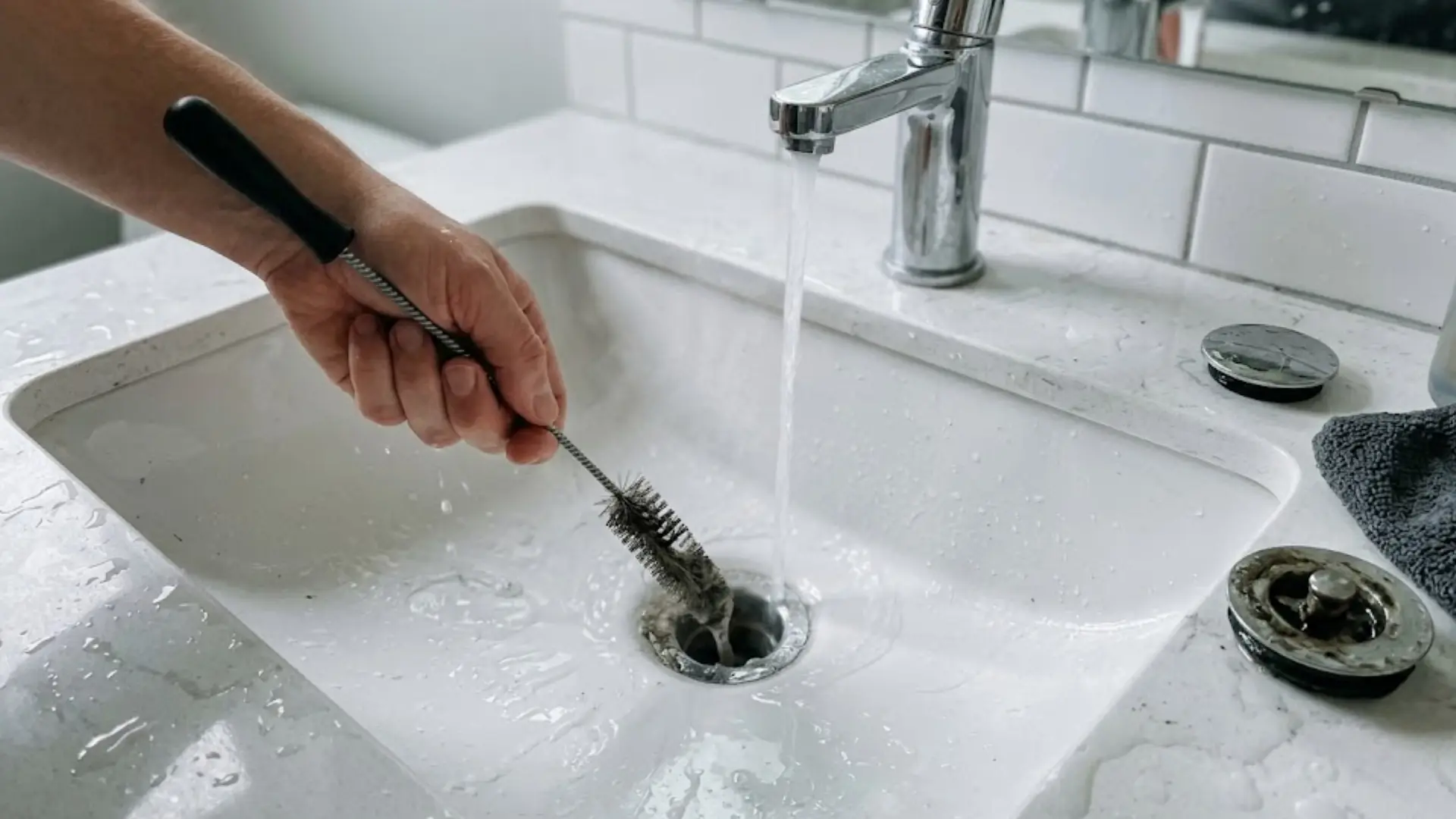
The best way to beat drain flies, I’ve found, is to remove the slimy buildup where their larvae grow. Traps help cut down the adults too, and these are the methods that have worked best for me:
1. Deep-Clean the Drain With a Brush
Scrubbing is one of the most important steps in the whole fight. Drain fly larvae live in the slimy film that coats the inside of your pipes.
That gunk is both their home and their food. If it stays, the flies keep coming back. A brush breaks it loose in a way sprays and pours can’t. Once the slime is gone, the larvae have nowhere left to grow.
How to Do It:
- Take out the stopper or drain cover if it comes off.
- Pull out hair, soap scum, and any gunk you can see.
- Push a long drain brush down and scrub the pipe walls, focusing on the slimy film.
- Flush the drain with water to wash away everything you loosened.
2. Flush the Drain With Hot Water
Hot water is a helpful partner to scrubbing, but it won’t do the job alone. It rinses away the grime your brush has already broken loose.
That keeps the pipe cleaner and gives larvae less to feed on. Still, pouring boiling water down a drain won’t wipe out an established infestation. The slimy film sticks too well to rinse off with water alone.
How to Do It:
- Run hot water or pour a kettle of hot water down the drain after brushing.
- Let it carry away the loosened residue.
- Repeat a few times while you clean if the water still looks dirty.
- Use hot tap water instead of boiling water if you have plastic pipes.
3. Try Baking Soda and Vinegar
Baking soda and vinegar are a cheap, gentle option you likely have at home. The fizzing can loosen light grime and help clear up bad smells.
I’ve used this combo on my bathroom sink, and it worked well when the buildup was light. But when the pipe had a thick layer of slime, it barely made a dent.
That’s why I use it alongside brushing, not instead of it.
How to Do It:
- Pour about half a cup of baking soda into the drain.
- Follow it with about a cup of white vinegar.
- Let it fizz and sit for 15 to 30 minutes.
- Flush the drain with hot water.
4. Use an Enzyme or Biological Drain Cleaner
Enzyme and biological cleaners break down organic gunk like hair, soap, and slime. That’s the exact buildup drain fly larvae need to survive.
These cleaners are gentler than harsh chemicals and safe for most pipes. They’re also handy when the buildup sits deeper than your brush can reach. They work slowly, so give them time to do their job.
How to Do It:
- Pick a drain product labeled as enzyme-based or biological.
- Pour it in following the directions on the label.
- Leave it for the full contact time listed, often overnight, before flushing.
- Repeat only as often as the label says.
5. Make an Apple Cider Vinegar Trap
An apple cider vinegar trap is an easy way to catch adult drain flies. The sweet smell draws them in, and they can’t get back out. It also shows you how many flies are still around.
Just remember, this trap only catches adults. The larvae inside the drain stay untouched, so you still need to clean the drain itself.
How to Do It:
- Pour a little apple cider vinegar into a shallow bowl or cup.
- Add a drop of dish soap so the flies sink and can’t escape.
- Place it near the drain where you see the most flies.
- Or cover it with plastic wrap and poke a few small holes in the top.
6. Use Sticky Traps Near the Drain
Sticky traps are great for monitoring the problem. They catch adult flies resting near the drain and show you where the most activity is.
This one helped me figure out which drain was the real troublemaker in my bathroom. You can also use them to see if your cleaning is working.
They won’t touch the breeding source, though, so treat them as a tracking tool.
How to Do It:
- Place small sticky traps close to the drains you suspect.
- Keep them away from spots where water splashes.
- Check which trap catches the most flies after a day or two.
- Swap in fresh traps once they fill up or lose their stickiness.
7. Clean the Sink or Tub Overflow Opening
The overflow opening is that small hole near the top of your sink or tub. Most people never think to clean it. But soap scum and moisture build up inside, making a perfect spot for larvae.
If flies keep showing up after you clean the main drain, this is a likely culprit. It’s a quick step that’s easy to miss.
How to Do It:
- Find the overflow opening on your sink or inside your tub.
- Wipe away any soap scum or residue you can reach.
- Use a narrow brush to scrub just inside the opening.
- Rinse it by pouring a little hot water through it.
8. Fix Leaks and Standing Water
Drain flies love damp places, not just drains. A slow leak under the sink or a wet spot near the toilet can give them another place to breed.
Even a small puddle that never dries out can cause trouble. Fixing moisture problems takes away extra breeding spots. It also helps protect your cabinets and floors from damage.
A dry bathroom is less inviting to pests overall.
How to Do It:
- Check under the sink and around the base of the toilet.
- Look for drips at pipe connections and fix any leaking fixtures.
- Dry out damp cabinets or flooring.
- Get rid of containers or spots where water sits still.
9. Vacuum or Wipe Away Adult Drain Flies
Vacuuming is the fastest way to reduce the flies you can see. Adults like to rest on walls, ceilings, and tiles near the drain.
Clearing them out makes your bathroom feel better right away. But this fix is only temporary. New flies will keep hatching unless you also remove the larvae in the drain.
How to Do It:
- Vacuum adult flies off bathroom walls and ceilings.
- Wipe down tiles and nearby surfaces with a damp cloth.
- Empty the vacuum or toss the bag outside right after.
How to Get Rid of Drain Flies in the Shower, Sink, and Floor Drain
Each drain in your bathroom needs a slightly different approach. Use this quick guide to treat the one causing your fly problem:
| Drain Area | Where Larvae Hide | How to Clean It | Tools Needed |
|---|---|---|---|
| Shower Drain | Under the cover and along the drain walls | Remove the cover, clear hair and soap, scrub, then flush | Screwdriver, drain brush, hot water |
| Bathroom Sink | On the stopper and inside the overflow | Remove the stopper, clean off slime, brush the drain and overflow | Narrow brush, pipe brush, hot water |
| Floor Drain | Sludge at the bottom of the drain | Lift the grate, scrub inside, clear sludge, then flush | Gloves, stiff brush, bucket of water |
Start with the drain that has the most flies around it. Once it’s clean, check the others so no hidden spot keeps the problem going.
How to Prevent Drain Flies From Coming Back
Getting rid of drain flies is only half the job. A few simple habits will keep them from moving back in:
- Clean drains before gunk builds up: Scrub bathroom drains every few weeks so slime never gets thick. Pull hair from drain covers often to keep water flowing freely.
- Fix leaks and drips: Repair any dripping faucets or leaking pipes right away. Even a small leak can create a damp spot where flies breed.
- Keep the bathroom dry: Wipe up wet floors and counters after use. Run the exhaust fan after every bath or shower to clear out moisture.
- Don’t forget hidden spots: Clean the overflow openings on your sink and tub. Run water through rarely used drains so they don’t sit dry or dirty.
- Watch for problem areas: Empty any containers or floor drains holding still water. If flies keep returning to the same spot, have your plumbing checked.
Staying on top of these habits takes just a few minutes each week. Trust me, it’s much easier than dealing with a full infestation again.
Frequently Asked Questions (FAQs)
Are Drain Flies Harmful to Humans?
Drain flies don’t bite or sting, so they’re mostly just a nuisance. However, they can carry bacteria from dirty drains, and their dust may bother people with allergies or asthma.
How Long Do Drain Flies Live?
An adult drain fly usually lives about two weeks. In that short time, a female can lay dozens of eggs, which is why numbers can grow so quickly.
Are Drain Flies the Same as Fruit Flies?
No, they’re different insects. Drain flies are fuzzy, moth-like, and hop in short bursts. Fruit flies are smaller, have red eyes, and hang around ripe fruit and trash.
The Bottom Line
Getting rid of drain flies in bathroom drains comes down to steady, simple care. These bugs aren’t hard to handle once you know where they live.
I’ve found that small efforts done often beat big cleanups done rarely. Pay attention to your bathroom, and you’ll notice changes quickly.
Give the steps some time, since flies may not disappear right away. A few extra days of patience usually does the trick.
Before long, your bathroom will feel clean and comfortable again. It’s a small job with a nice payoff. Share the trick that worked best for you in the comments below!