

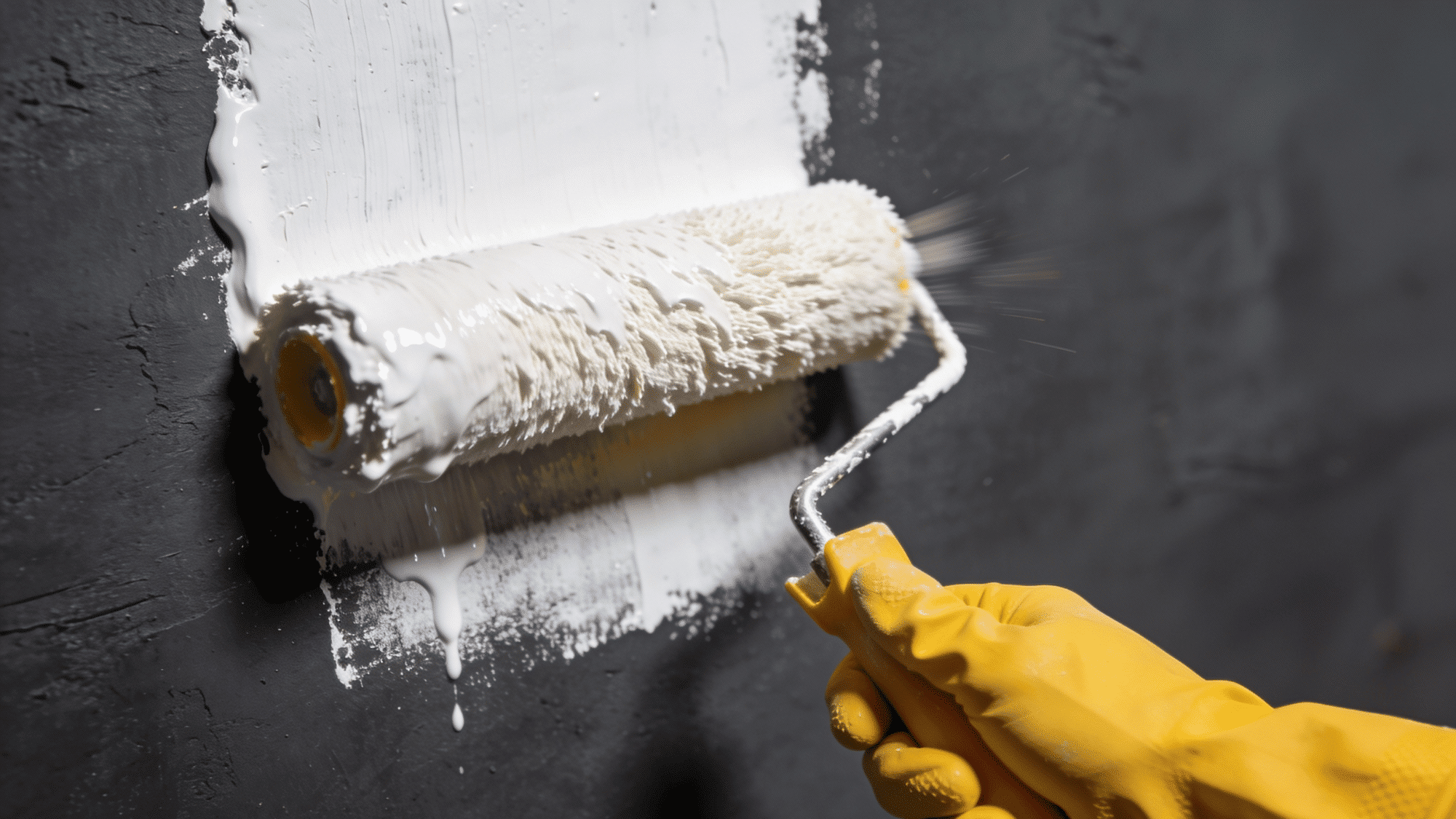
Painting projects come with plenty of questions. And this one’s a common head-scratcher. Exterior paint sits in the garage after finishing the deck.
The living room needs a fresh coat. It’s tempting to grab that leftover can and get started, right?
But exterior and interior paints aren’t quite the same. They’re formulated for different environments, different challenges, and different purposes. The chemicals, durability, and finish all vary between the two.
So before cracking open that exterior paint for an indoor job, there are some important factors to consider. Health, safety, and practicality all come into play here.
Is Exterior Paint Safe to Use Indoors?
Safety comes first when painting indoors. Exterior paints contain higher levels of volatile organic compounds, or VOCs. These chemicals help the paint withstand harsh weather, UV rays, and temperature swings.
But indoors? That’s a different story. VOCs release fumes that linger in enclosed spaces. Poor ventilation makes it worse.
Headaches, dizziness, and respiratory irritation can occur. Some exterior paints also include mildewcides and fungicides. Great for outdoor surfaces, but not ideal for daily breathing.
Kids and pets are especially sensitive to these chemicals. The risk isn’t worth it. Interior paints are specifically designed with lower VOC levels for safer indoor air quality.
Exterior vs Interior Paint: What’s the Difference?
Exterior and interior paints serve different purposes. Understanding their key differences helps explain why mixing them up causes problems. The formulations vary significantly based on where they’re meant to be used.
| Feature | Exterior Paint | Interior Paint |
|---|---|---|
| VOC Levels | High VOC content for durability | Low VOC for safer indoor air |
| Additives | Mildewcides, fungicides, UV blockers | Minimal additives, stain-resistant |
| Durability | Weather-resistant, fade-proof | Scuff-resistant, washable |
| Finish | Harder, glossier, rubbery texture | Softer, smoother, varied sheens |
| Odor | Strong chemical smell, slow to dissipate | Mild smell, fades quickly |
| Curing Time | Several weeks to fully cure | Days to a week |
| Flexibility | Expands and contracts with temperature | Less flexible, stable environment |
| Cost | Generally more expensive | More affordable options |
| Breathability | Less breathable, moisture-resistant | Allows walls to breathe naturally |
Pros and Cons of Using Exterior Paint Inside
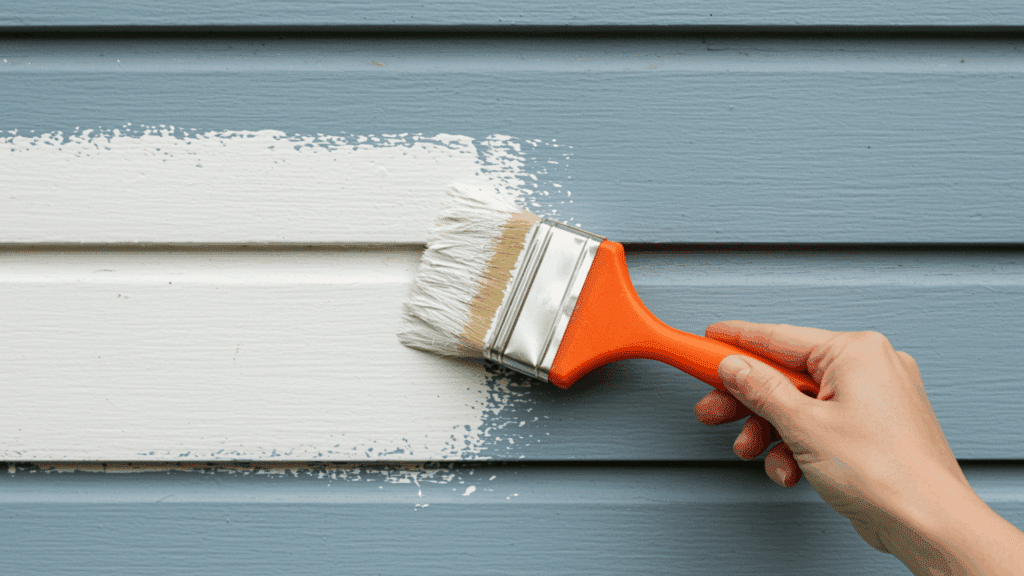
Every painting decision has trade-offs. While exterior paint indoors isn’t recommended, some situations might seem to justify it. Here’s the breakdown.
Pros:
- Exterior paint offers superior durability and resists wear in high-traffic areas.
- Moisture resistance helps in humid spaces like basements or laundry rooms.
- The harder finish withstands scrubbing and cleaning better than most interior paints.
- Leftover exterior paint saves money instead of buying new interior paint.
Cons:
- High VOC levels create health risks and unpleasant odors for extended periods.
- Chemical additives like mildewcides aren’t safe for continuous indoor exposure.
- The glossy, rubbery finish looks out of place on interior walls.
- Long curing times mean rooms remain unusable for weeks rather than days.
When Might Exterior Paint Be Okay to Use Indoors?
There are rare exceptions to the rule. Certain spaces don’t follow typical indoor guidelines.
Garages, unfinished basements, and storage sheds blur the line between interior and exterior. These areas often lack climate control and face moisture issues. Ventilation is usually better than living spaces.
Direct contact with occupants stays minimal. Exterior paint might work in these scenarios.
But even then, precautions matter. Proper airflow during application and curing is essential. Choosing low-VOC exterior formulas helps reduce risks. Spaces where people don’t spend much time are safer candidates.
Still, interior paint remains the better choice for most indoor projects, even in these marginal areas.
Rooms Where You Should Not Use Exterior Paint
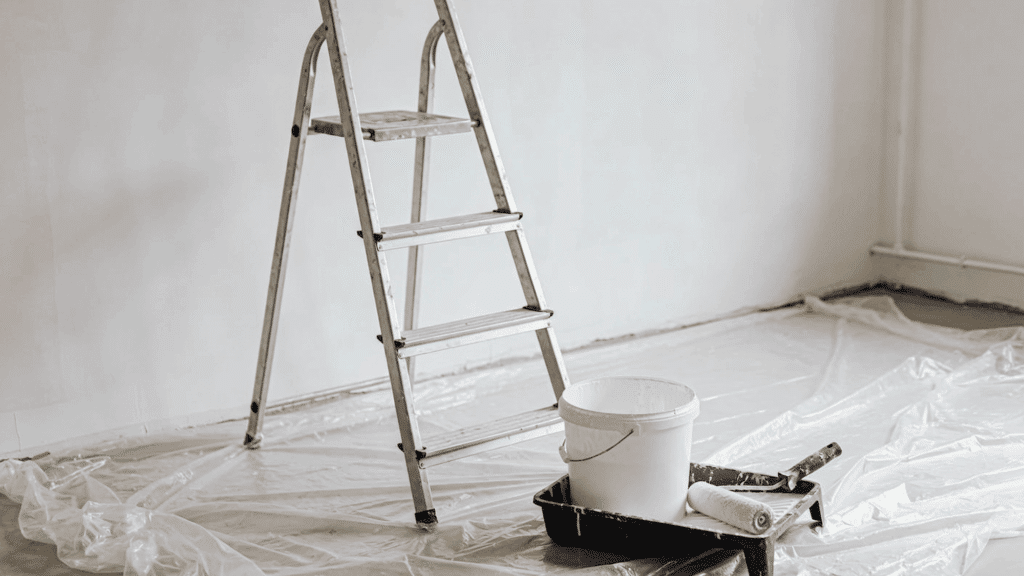
Some rooms are absolutely off-limits for exterior paint. The health risks multiply in spaces where people sleep, eat, or spend extended time daily.
Bedrooms and Nurseries
Bedrooms require the safest possible air quality. People spend roughly eight hours sleeping here each night. Exterior paint’s VOCs and chemical additives continuously contaminate the air.
Nurseries are even more critical. Babies and young children have developing respiratory systems that are extremely vulnerable. Their smaller bodies absorb toxins more quickly.
The off-gassing from exterior paint can cause sleep disruptions, headaches, and long-term health issues.
Kitchens and Dining Areas
Food preparation and eating happen in these spaces daily. Exterior paint fumes can contaminate food and beverages. The chemical odors affect taste and appetite.
Mildewcides and fungicides in exterior formulas aren’t food-safe. They release particles that settle on countertops, dishes, and cooking surfaces. Families gather here for meals and conversations.
Constant exposure to harmful VOCs poses serious health risks. Interior paints formulated for kitchens offer grease resistance without the toxic chemicals.
Poorly Ventilated Rooms
Bathrooms, closets, and interior rooms without windows trap fumes. Air circulation is limited or nonexistent. VOCs accumulate to dangerous levels quickly.
Opening doors doesn’t provide adequate ventilation for the exterior paint’s heavy off-gassing. The chemicals linger indefinitely without proper airflow. Moisture in bathrooms actually intensifies the release of toxic compounds.
Small enclosed spaces concentrate fumes, making exposure more severe. These rooms need interior paints specifically designed for low-ventilation environments.
Mistakes to Avoid When Painting Indoors
Indoor painting projects go wrong in predictable ways. Avoiding these common mistakes saves time, money, and protects health. Here’s what not to do.
- Using exterior paint in living spaces where people sleep, eat, or spend significant time.
- Skipping ventilation during and after painting, which traps harmful fumes indoors.
- Ignoring VOC content on paint labels and choosing high-VOC formulas for enclosed areas.
- Rushing the project without allowing proper drying and curing time between coats.
- Painting over dirty or unprepared surfaces that cause poor adhesion and peeling.
- Mixing exterior and interior paints, thinking it will dilute the harmful chemicals.
- Overlooking primer application, which affects paint coverage and final appearance.
- Letting children or pets back into freshly painted rooms before the fumes have completely dissipated.
To Conclude
The answer is clear: skip the exterior paint for indoor projects. Sure, it might seem like a money-saving shortcut, but the risks far outweigh any benefits.
Health comes first, and those VOCs aren’t something to mess around with. Interior paints exist for good reasons. They’re designed with indoor air quality in mind, cure faster, and look better on walls.
Bedrooms, kitchens, and living spaces deserve safer options. Save that exterior paint for the deck, fence, or siding where it belongs.
When it comes to indoor painting, choose products made specifically for the job. Your lungs will thank you.