

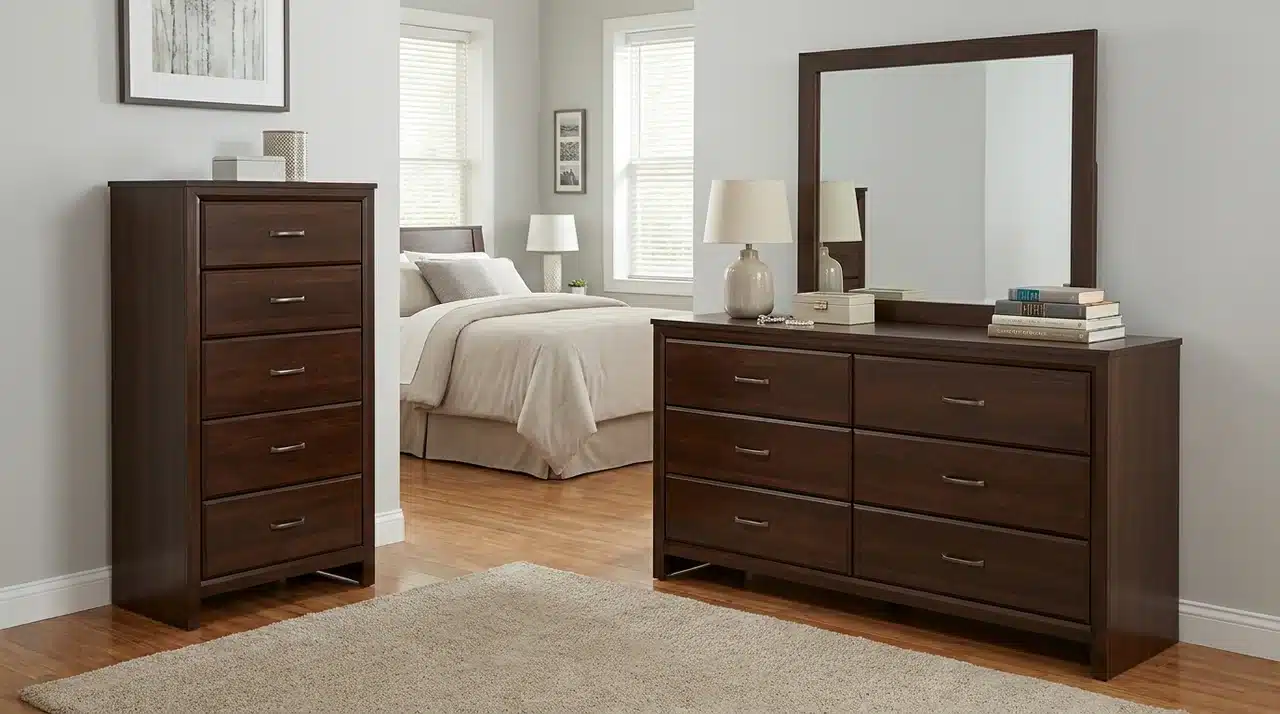
Adding bedroom storage sounds simple until you start comparing furniture names. I have seen many people get stuck between a chest of drawers and a dresser because both seem to solve the same problem at first.
The difference usually becomes clear once you look at how you use your room. One piece saves floor space by going upward, while the other gives you more width and surface area for daily items. If you’re still sorting out various furniture piece categories, the distinction gets easier once you know what each one is actually built for.
In this chest of drawers vs dresser comparison, I’ll break down the differences, room fit, storage needs, and common buying mistakes so you can choose what works best for your home.
What Is a Chest of Drawers?
A chest of drawers is a tall storage piece with multiple drawers stacked on top of each other. Unlike wider bedroom furniture, it uses vertical space, making it a practical choice when floor area is limited.
Most designs have one column or a few narrow rows of drawers. They work well for folded clothes, socks, accessories, and smaller items that need separate storage.
A chest of drawers fits nicely in apartment bedrooms, guest rooms, narrow spaces, or empty corners where a wider piece may not fit. It can hold plenty of clothing, but the smaller top surface gives you less room for mirrors, lamps, or daily essentials.
What Is a Dresser?
A dresser is a wider bedroom storage piece with multiple drawers arranged side by side. It usually sits lower than a chest of drawers and takes up more horizontal space, making it useful for rooms with extra wall area.
Many dressers come with a mirror, turning them into a convenient getting-ready area. The wider top surface also gives you space for lamps, photos, jewelry boxes, and other daily items.
A dresser works well for clothing storage, shared bedrooms, and larger spaces where you need easy access to your belongings. Along with the bed and nightstand, it’s one of the essential bedroom furniture pieces most people plan their room around first.
The term “dresser” is also commonly used for bedroom drawer storage in the US, which is why people often use the names interchangeably.
Chest of Drawers vs Dresser: Key Differences
I have found that the biggest confusion between these two pieces comes from their similar purpose. Both store clothes, but the way they fit into a bedroom can feel completely different.
A chest of drawers works around limited space, while a dresser focuses more on wider storage and everyday convenience. The better choice depends on your room layout, clothing collection, and how you use your furniture.
1. Shape and Size: Tall Storage vs Wide Storage
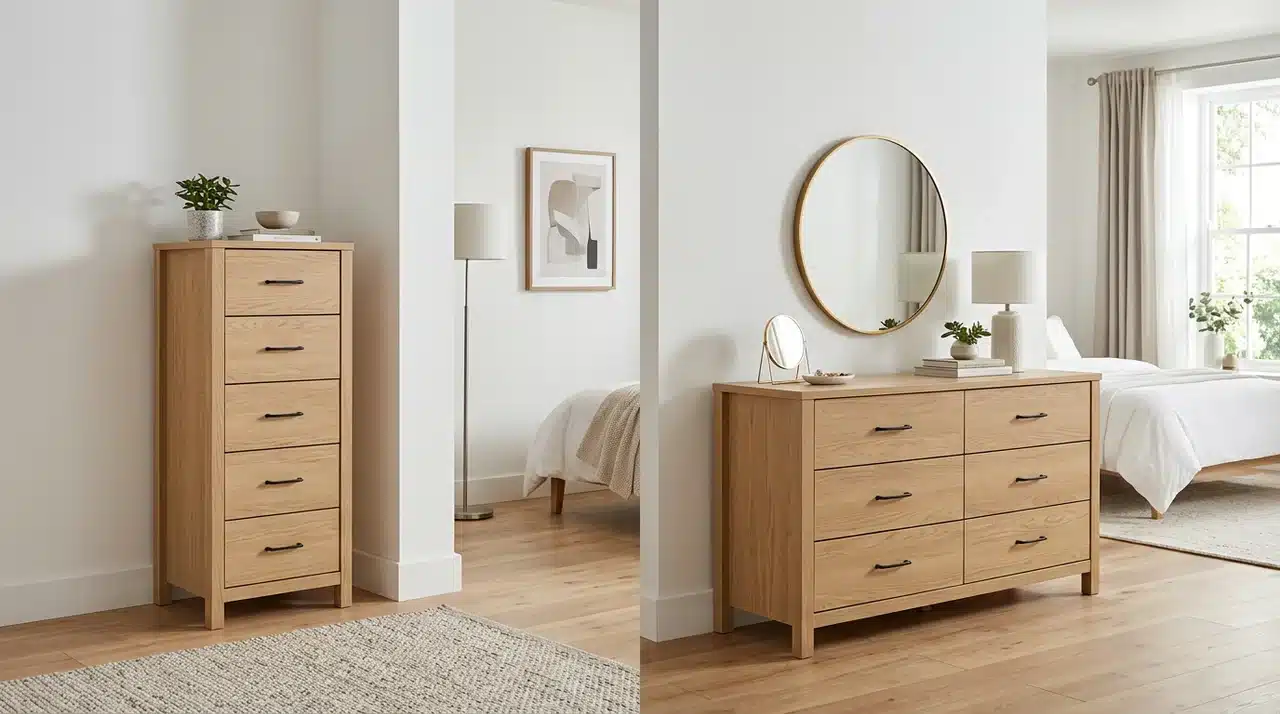
The easiest way to tell a chest of drawers and a dresser apart is by looking at their shape.
A chest of drawers is built upward with stacked drawers. It takes up less floor space, making it a good fit for narrow bedrooms, apartments, or rooms where every inch matters.
A dresser is wider and sits lower to the ground. It needs more wall space but gives the room a larger storage piece that is easier to use daily.
If your bedroom has limited floor space, a chest of drawers usually fits better. If you have a wide empty wall, a dresser may be the better choice.
2. Drawer Layout and Storage Capacity
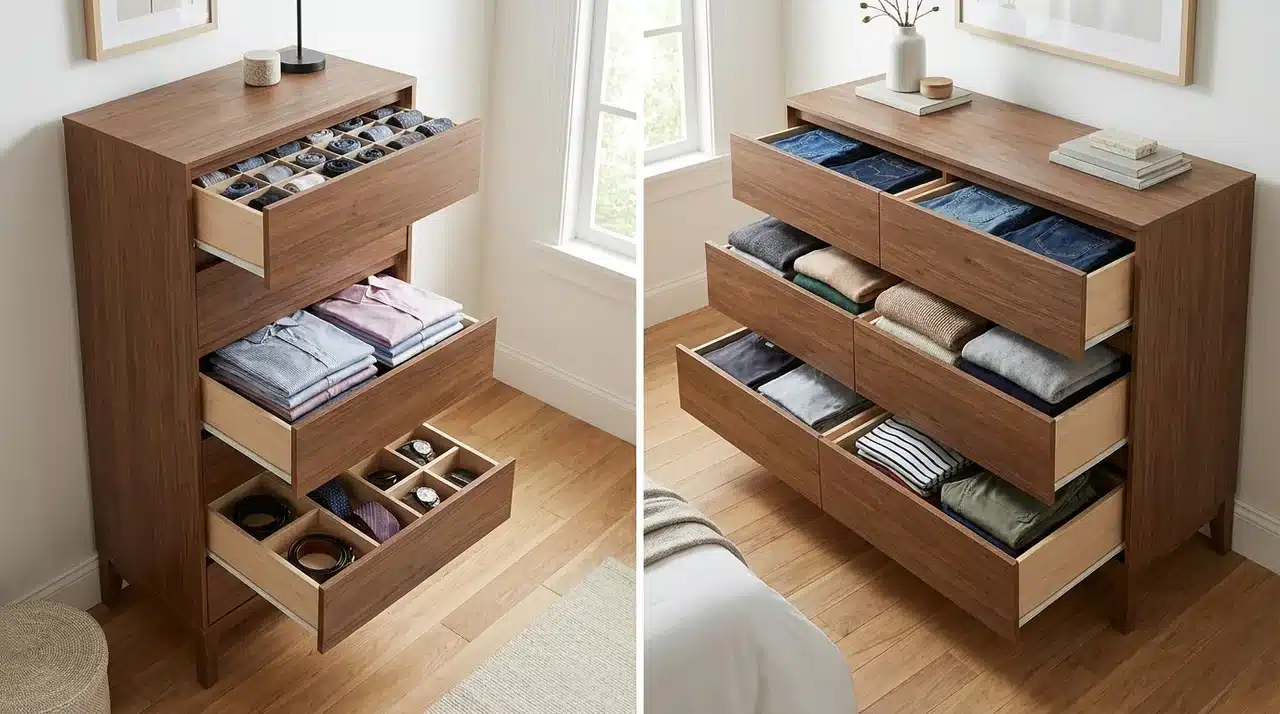
The way drawers are arranged changes how easy it is to organize your clothes.
A chest of drawers usually has a vertical stack of drawers. This setup works well for sorting socks, shirts, accessories, and smaller clothing items into separate sections.
A dresser usually has wider drawers placed side by side. This makes it easier to store larger items like jeans, sweaters, and everyday clothing that you want to grab quickly.
The number of drawers does not always decide storage space. Drawer width and depth often matter more when choosing the right piece.
3. Floor Space and Room Placement
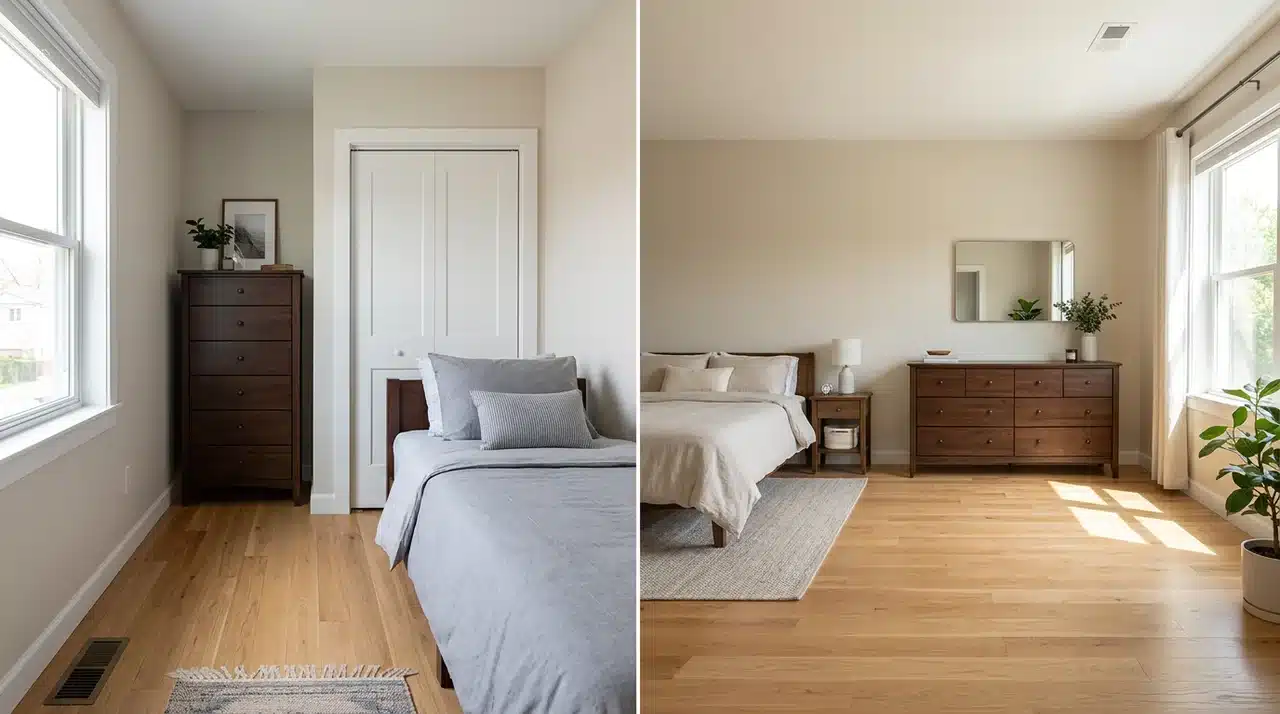
Where you place your furniture can make a big difference in how your bedroom feels.
A chest of drawers fits easily into corners, narrow spaces, and smaller rooms. It keeps more floor area open, which can make compact bedrooms feel less crowded.
A chest of drawers fits easily into corners, narrow spaces, and smaller rooms. It keeps more floor area open, which can make compact bedrooms feel less crowded.
If you’re working with a tight footprint, a few compact bedroom layout tips can help you decide where either piece will actually fit.
4. Top Surface and Everyday Function
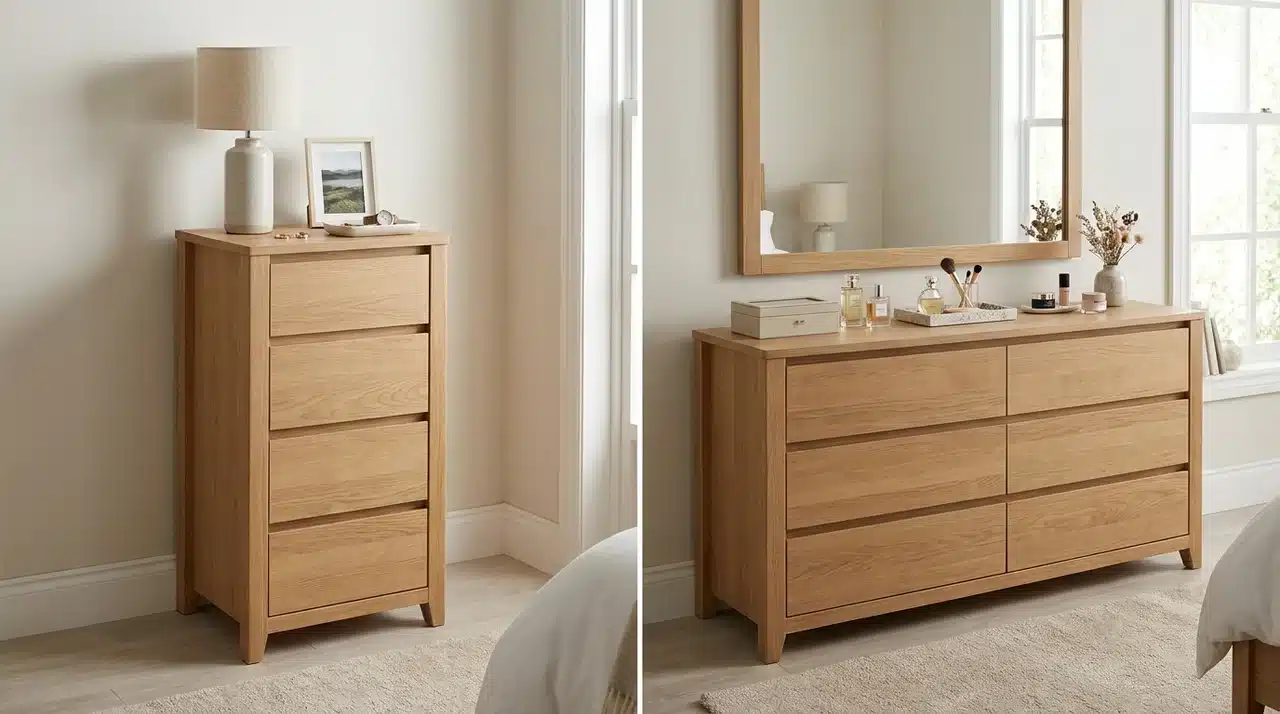
The top area is another major difference between the two.
A chest of drawers has a smaller surface, so it usually works for simple items like a lamp, photo frame, or a few personal belongings.
A dresser gives you a wider surface that can hold a mirror, jewelry box, decor, or items you use every day. Many people use a dresser as both storage and a getting-ready area.
If you like having a dedicated spot for your morning routine, a dresser may offer more convenience.
5. Style Options and Extra Features
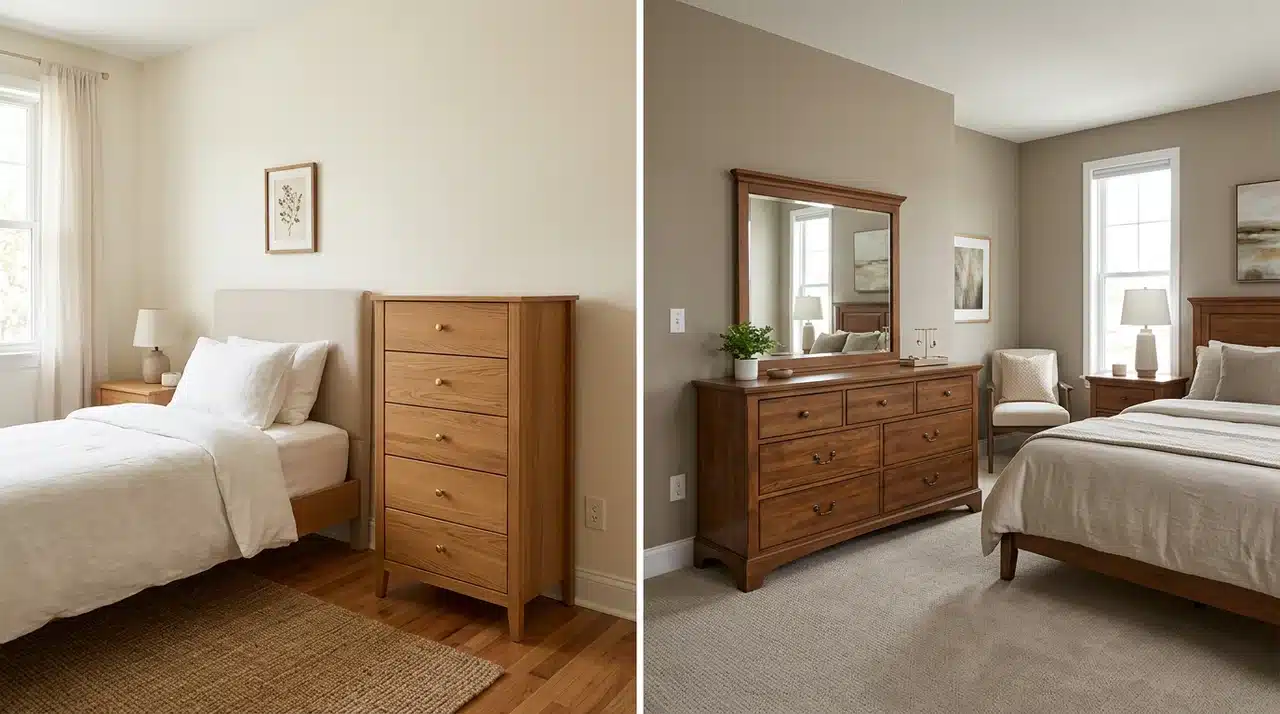
The design of each piece also affects how it fits into your bedroom setup.
A chest of drawers usually has a simple vertical shape. It works well when you need storage but do not want a large piece taking over the room.
A dresser often comes with mirrors, matching furniture pieces, or wider designs that give you more setup options.
The better choice depends on your room size, storage needs, and how you use your furniture each day. A smaller piece that fits your routine can be more useful than one that simply offers more storage.
Can a Chest of Drawers Replace a Dresser?
A chest of drawers can replace a dresser in the right bedroom setup, especially when saving space is your main concern. Its tall, narrow design gives you useful storage without taking up a large part of the room, making it a practical choice for apartments, small bedrooms, and rooms with limited wall space.
It works well if you mainly need a place for folded clothes, accessories, and smaller belongings. A chest of drawers can also be a good addition when you already have a closet or other furniture for hanging clothes and larger items.
However, it does have some limits. The smaller top surface means less room for a mirror, lamp, jewelry box, or daily essentials. The narrower drawers may also make it harder to store bulky clothing like sweaters, blankets, or larger items.
A dresser may still be the better option if you want wider drawers, a getting-ready area, or a larger surface for everyday use. The right choice depends on how much storage you need and how your bedroom is arranged.
Which Storage Piece Fits Your Bedroom Best?
When helping someone choose bedroom storage, I usually start with the room instead of the furniture. The available space, storage habits, and daily routine often make the decision much easier.
A smaller bedroom may need a piece that keeps the floor open, while a larger room may benefit from extra drawer space and a wider surface.
Choose a Chest of Drawers for Compact Spaces
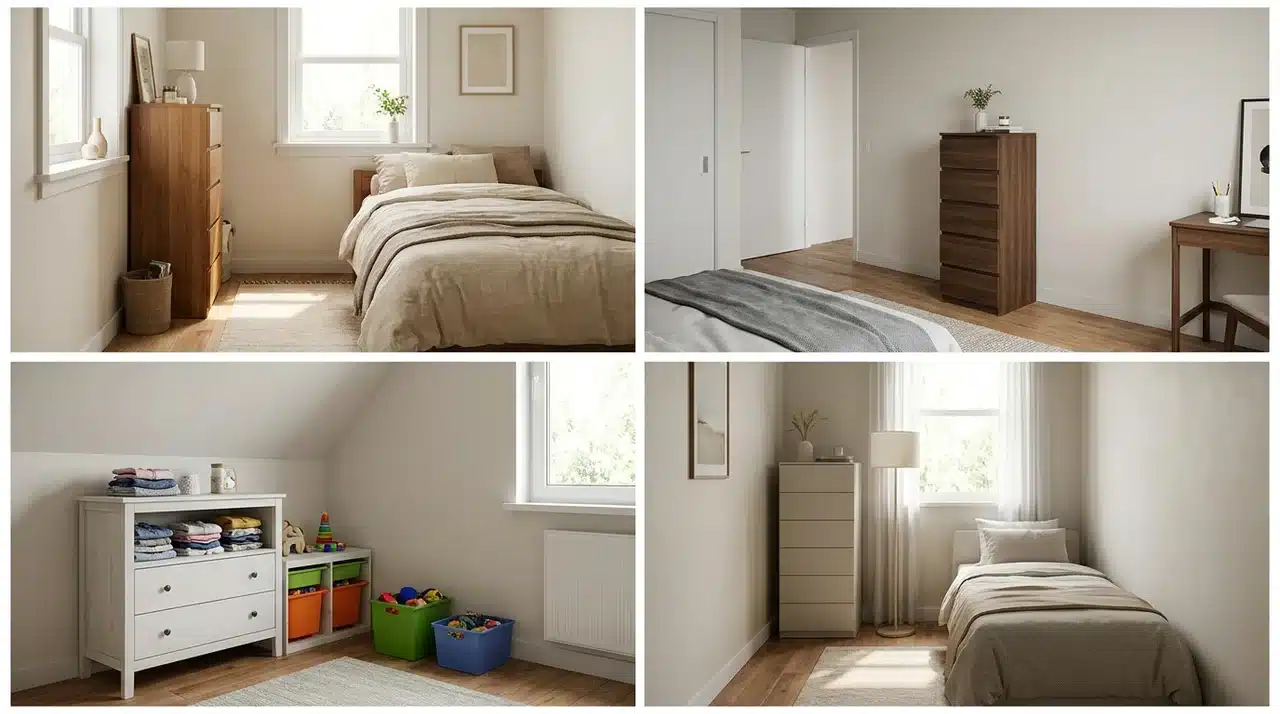
A chest of drawers is usually the better option when floor space is limited. Its tall, narrow shape uses vertical space, allowing it to fit beside a closet, against a short wall, or in an unused corner without restricting movement.
It works especially well in:
- Small bedrooms: Adds storage while preserving walking space.
- Apartments: Makes better use of limited floor area.
- Kids’ rooms: Separates clothes, toys, and smaller belongings.
- Compact guest rooms: Provides useful storage without dominating the room.
Choose this option when you need extra drawers but do not have enough space for wide furniture.
Choose a Dresser for Larger Bedrooms
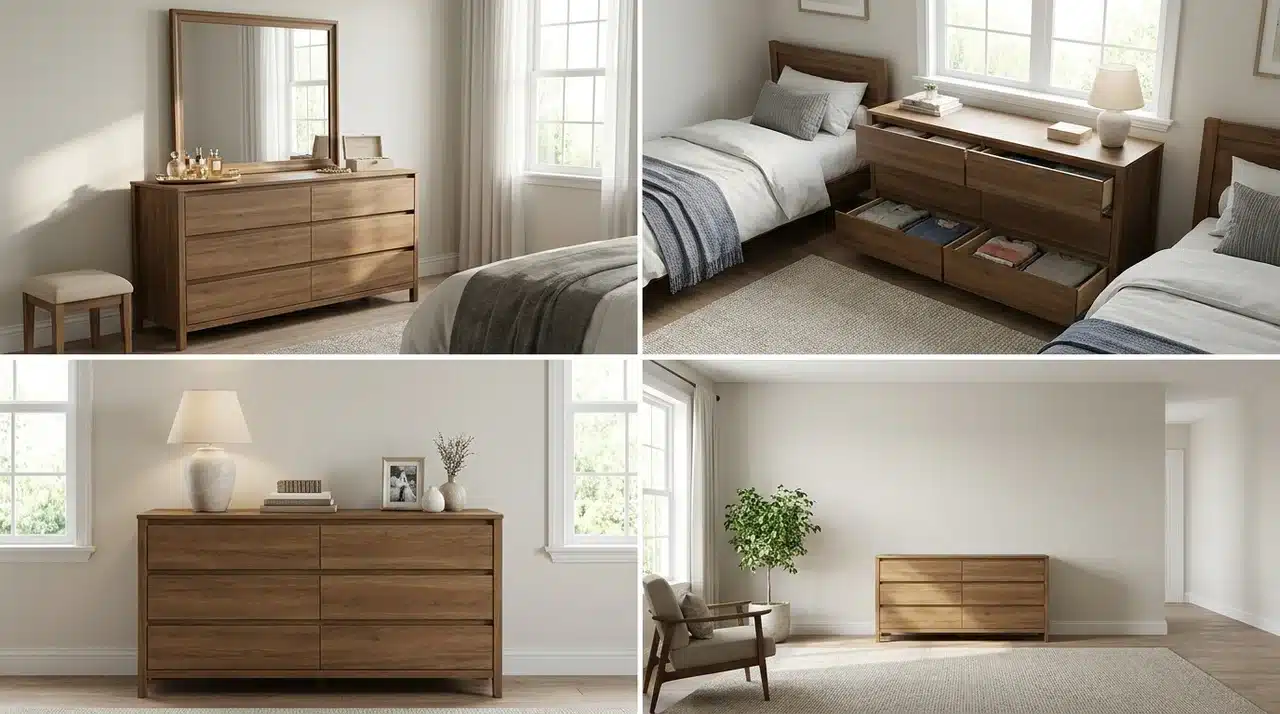
A dresser works best when the room has a long, open wall and enough floor space for a wider furniture piece. Its broad drawers hold larger clothing items, while the top provides room for a mirror, lamp, jewelry, photos, or daily essentials.
It is particularly useful in:
- Master bedrooms: Offers more storage and can create a getting-ready area.
- Shared bedrooms: Gives two people wider drawers and easier access.
- Large guest rooms: Provides visitors with storage and a surface for personal items.
- Open layouts: Helps fill a long wall without making the room feel unbalanced.
Choose a dresser when storage capacity and surface area matter more than saving floor space.
Best Choice by Room Type
I have noticed that furniture choices often go wrong when people focus only on appearance. A piece can look great but still feel inconvenient if it does not match the room.
Before choosing between a chest of drawers and a dresser, think about where it will sit, how often you will use it, and what you need to store.
| Room Type | Better Option | Why It Works |
|---|---|---|
| Small bedroom | Chest of drawers | Uses vertical space and leaves more room to move around. |
| Apartment bedroom | Chest of drawers | Adds storage without occupying a long section of wall. |
| Kids’ room | Chest of drawers | Keeps smaller clothes, toys, and accessories separated. |
| Compact guest room | Chest of drawers | Provides occasional storage without crowding the room. |
| Large guest room | Dresser | Gives visitors drawers and a surface for luggage or personal items. |
| Master bedroom | Dresser | Offers larger drawers, more surface space, and room for a mirror. |
| Shared bedroom | Dresser | Provides wider, more accessible storage for two people. |
A chest of drawers is generally better for compact rooms and supplemental storage. A dresser is more practical for larger bedrooms, shared wardrobes, and spaces that need both drawers and a functional surface.
Chest of Drawers vs Dresser: Pros and Cons
Both storage pieces organize clothing, but their dimensions, surface space, and room fit create different benefits. This table highlights the main trade-offs.
| Furniture Type | Pros | Cons |
|---|---|---|
| Chest of Drawers | Uses vertical space efficiently, fits narrow walls and corners, provides several separate drawers, and works well in small bedrooms or apartments. | Offers limited surface space, may be difficult for children to reach, can feel top-heavy, and usually cannot hold a large mirror. |
| Dresser | Provides wide drawers, offers a large surface for décor or daily items, can support a mirror, and suits shared or spacious bedrooms. | Requires more floor and wall space, may crowd small rooms, offers fewer stacked drawers, and can be heavier to move. |
Choose a chest when floor space is limited and vertical storage matters. Pick a dresser when you need wider drawers, display space, or a mirror.
Chest of Drawers vs Dresser: Which One Saves More Space?
When space is limited, the shape of your storage furniture matters just as much as the amount of storage it provides. A chest of drawers and a dresser can both hold clothes, but they use your bedroom area in different ways.
A chest of drawers saves more floor space because it uses height instead of width. Its narrow design makes it easier to place in small bedrooms, apartments, corners, or beside a closet. It keeps more open space around your bed and makes the room feel less crowded.
A dresser takes up more floor and wall space because of its wider design. However, it can give you more storage in one place with larger drawers and a useful top surface for a mirror, lamp, jewelry box, or daily items.
If your main goal is keeping the room open, a chest of drawers is usually the better choice. If you have enough space and want storage plus extra surface area, a dresser can make better use of a larger bedroom. The right option depends on how much space you have and what you need the furniture to do.
Best Chest of Drawers and Dressers to Consider
These options cover small spaces, larger storage needs, modern styles, mirrored designs, and budget-friendly bedroom furniture.
- IKEA MALM Chest: Tall, simple, and ideal for small bedrooms or apartments with limited floor space.
- Target Chests and Dressers: Affordable options available in different sizes, colors, and styles.
- Wayfair Bedroom Storage: A large selection of chests and dressers across different budgets and drawer layouts.
- Ashley Furniture Dressers: Wider designs with generous storage, including several options with matching mirrors.
- West Elm Dressers: Modern dressers with clean lines, quality materials, and useful top surfaces.
- Amazon Dressers: Budget-friendly choices ranging from compact fabric units to traditional bedroom dressers.
- Ashley Mirrored Dressers: Practical matching sets that combine clothing storage with a bedroom mirror.
Measure the available space, check drawer dimensions, and choose a design that provides storage without overcrowding the bedroom.
Common Mistakes When Buying Bedroom Storage Furniture
Avoiding common buying mistakes can help you choose bedroom storage furniture that better fits your space, needs, and future plans.
- Ignoring Measurements: Check wall space, walking room, and drawer clearance before buying. A piece that looks right online may feel too large in your bedroom.
- Buying Based Only on Appearance: Good looks aren’t enough if the storage doesn’t match your needs. Check drawer size, space, and everyday usability.
- Forgetting Future Needs: Think about changes like a growing clothing collection, moving homes, or shared storage. Choose a piece that can handle your future needs.
- Choosing the Wrong Height: Tall furniture may not work well under low ceilings, shelves, or windows. Check the room layout before choosing a chest of drawers.
Final Choice
The right storage piece should make your bedroom easier to use, not simply fill an empty wall. I would choose based on room size, drawer needs, surface space, and how often you use the furniture.
The chest of drawers vs dresser decision becomes simpler once you compare their shapes.
A chest suits compact rooms because it uses vertical space, while a dresser works better when you need wider drawers, a mirror, or a larger top surface. Measurements, drawer clearance, and future storage needs also matter before you buy.
Use these points to review your bedroom layout, compare suitable options, and choose furniture that keeps your space organized, comfortable, and easy to move around,
Frequently Asked Questions
What should I measure before buying a chest of drawers or dresser?
Before buying, measure the available wall space, floor area, and the space needed to open drawers fully. Also check nearby doors, closets, and windows to make sure the furniture fits comfortably without blocking movement.
Do dressers hold more clothes than chest of drawers?
Not always. A dresser usually has wider drawers, which can make it easier to store larger clothing items. A chest of drawers uses vertical space and can still hold plenty of clothes if the drawer depth works for your needs.
Can you use a chest of drawers in a living room?
Yes. A chest of drawers can work outside the bedroom as extra storage for items like blankets, books, games, or household supplies. Its narrow shape makes it useful in smaller areas where wider furniture may not fit.
How long does bedroom storage furniture usually last?
The lifespan depends on the material, construction, and daily use. Solid wood pieces often last longer, while lower-cost options may need replacement sooner. Checking drawer quality and hardware can help you choose a piece that holds up well.