

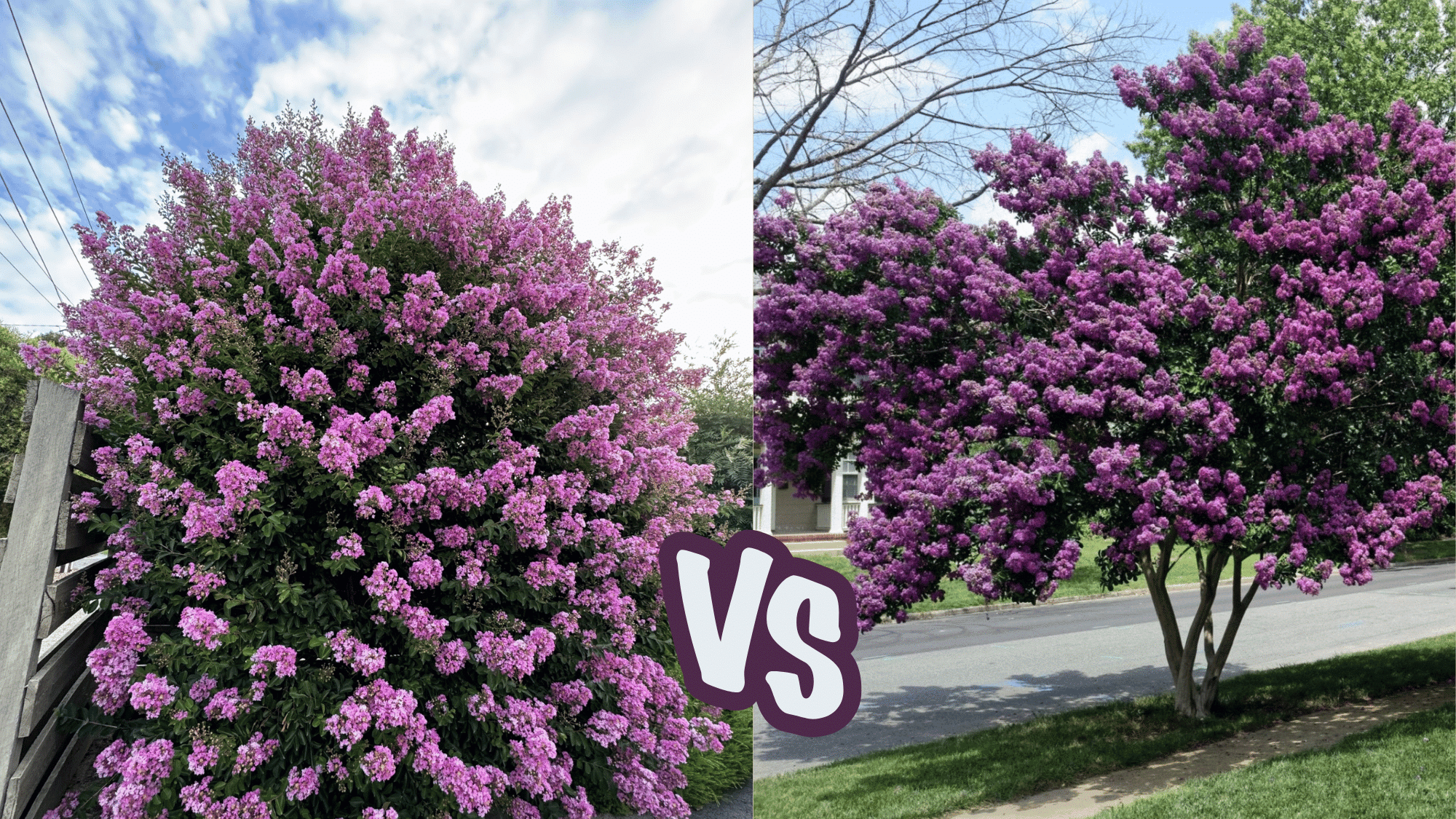
Crepe myrtles are one of those plants that show up in almost every yard, every neighborhood, every street corner. Wondering if it’s a bush or a tree?
The two look so much alike that even seasoned gardeners get them mixed up. Same flowers. Same peeling bark. Sometimes even the same height.
So what really sets them apart? Is it the size? The shape? Or is it something else entirely?
The answer might be a little more layered than one might think. This blog breaks down everything needed to tell a crepe myrtle bush apart from a tree.
What is a Crepe Myrtle Bush?
A crepe myrtle bush is a shorter, multi-stemmed version of the crepe myrtle plant. Instead of growing tall and straight like a tree, it spreads out low to the ground.
Most bushes stay between 2 and 5 feet tall, making them a popular pick for borders, hedges, and smaller garden spaces.
They bloom just as boldly as their taller cousins, think clusters of pink, white, red, or purple flowers all summer long. The main difference is scale.
A bush stays compact, easy to manage, and fits well in spots where space is limited.
What is a Crape Myrtle Tree?
A crape myrtle tree is the taller, more upright version of the same plant. Unlike the bush, it grows on one or a few main trunks and can reach 15 to 30 feet tall, sometimes even more.
That height makes it a great fit for larger yards, driveways, and open landscapes.
The tree form shows off something the bush doesn’t quite match, that beautiful, peeling bark that reveals smooth layers underneath. It still blooms with the same showy flowers each summer.
But the overall look is more structured, more vertical, and definitely more dramatic in a big outdoor space.
Growth Habit Differences Between Crepe Myrtle Bush and Tree
Growth habits are where the bush and tree really start to show their differences.
| Feature | Crepe Myrtle Bush | Crepe Myrtle Tree |
|---|---|---|
| Growth Form | Multi-stemmed, low, and spreading | Single or few trunks, upright |
| Spread | Wide and bushy | Narrow and structured |
| Growth Rate | Moderate | Moderate to fast |
| Branch Pattern | Branches from the base | Branches from the upper trunk |
| Overall Shape | Rounded, compact | Tall, vase-like |
Do Bush and Tree Varieties Bloom the Same?
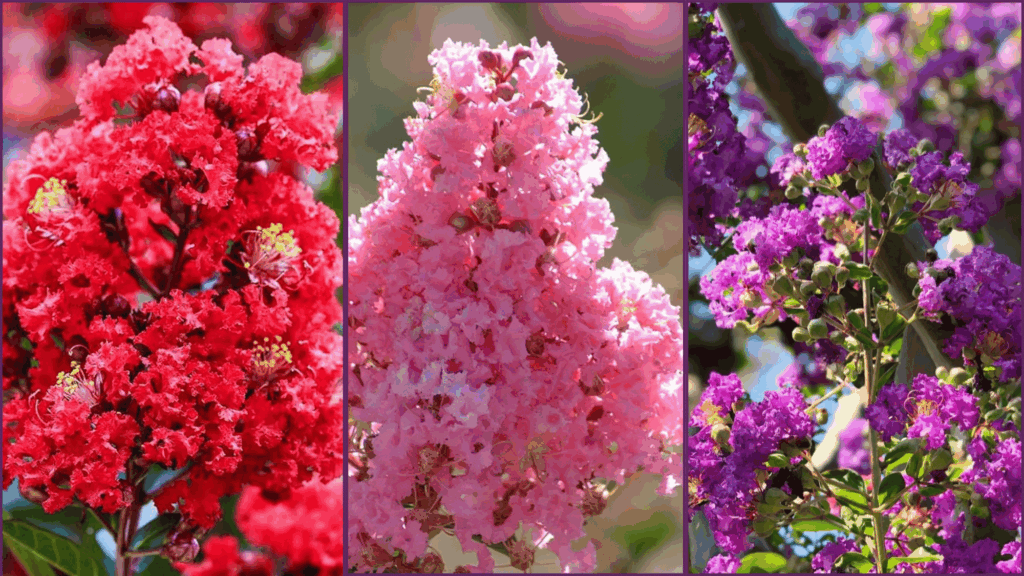
Both the bush and tree varieties bloom pretty much the same way. They both produce those big, showy flower clusters in shades of pink, red, white, lavender, and purple.
And both put on their best show during the summer months, often blooming from June all the way through September.
The flowers themselves look identical. Same texture, same shape, same color range. So from a purely visual standpoint, one won’t outdo the other in the blooming department.
Where things differ slightly is volume. A full-grown crape myrtle tree, with its larger size, tends to carry more blooms overall.
A bush produces fewer clusters, but they still make a solid statement in any garden or yard. Neither disappoints come summertime.
Pruning Requirements: Bush vs Crape Myrtle Tree
Pruning needs vary quite a bit between the two. Getting it right keeps the plant healthy and looking its best.
Crepe Myrtle Bush:
- Trim Lightly in Late Winter or Early Spring: This encourages fresh new growth and keeps the bush looking neat without stressing the plant out.
- Remove Dead or Crossing Branches: Clearing out old wood helps air move freely through the plant and cuts down on disease risk.
- Avoid Heavy Cutting: Bushes don’t need aggressive pruning. Taking off too much can reduce blooms and throw off the natural shape.
- Shape for Size Control: Light shaping once a year keeps the bush compact and fitting well within its space.
Crape Myrtle Tree:
- Skip the Topping Always: Cutting the main trunks down hard, known as “crape murder,” weakens the tree and leads to ugly, knobby regrowth over time.
- Prune in Late Winter Before New Growth Starts: This is the best time to clean up the tree without interrupting the coming bloom cycle.
- Remove Suckers from The Base: Small shoots that sprout from the roots or base of the trunk drain energy from the main tree and should come off.
- Thin out Crowded Interior Branches: Opening up the canopy lets light and air reach all parts of the tree, keeping it strong and blooming well.
Crepe Myrtle Bush vs Tree: Water, Soil, and Sun Requirements
Both varieties share similar basic needs, but there are a few small differences worth knowing before planting either one.
| Requirement | Crepe Myrtle Bush | Crape Myrtle Tree |
|---|---|---|
| Water Needs | Moderate; water deeply once a week | Moderate; drought-tolerant once established |
| Soil Type | Well-draining, slightly acidic soil | Well-draining, adaptable to most soil types |
| Sun Exposure | Full sun, at least 6 hours daily | Full sun, at least 6 to 8 hours daily |
| Soil pH | 5.0 to 6.5 | 5.0 to 6.5 |
| Moisture Tolerance | Moderate; avoid waterlogged soil | Low to moderate; handles dry spells well |
| Fertilizer Needs | Light feeding in early spring | Light feeding in early spring |
Can You Turn a Crepe Myrtle Bush into a Tree?
Technically, yes. But it takes time and patience. A crepe myrtle bush can be trained to grow more like a tree by selectively removing most of its stems and leaving just one or a few strong central trunks.
Over several growing seasons, those trunks thicken up, and the plant starts to take on a more tree-like form.
That said, it won’t ever grow as tall as a true crape myrtle tree variety. The genetics of the plant still set the limits.
So while the shape can change with consistent pruning and training, the overall size will always reflect the original variety planted in the ground.
The Bottom Line
At the end of the day, choosing between a crepe myrtle bush and a tree comes down to one thing: space.
Got a small garden bed or a tight corner? The bush fits right in. Working with a wide-open yard or a long driveway? The tree is the better call.
Both varieties reward with stunning summer blooms and minimal fuss once settled in. The key is picking the right form for the right spot from the start.
So take a good look at the space available, match it with the right variety, and let the crepe myrtle do what it does best: grow and bloom beautifully.