

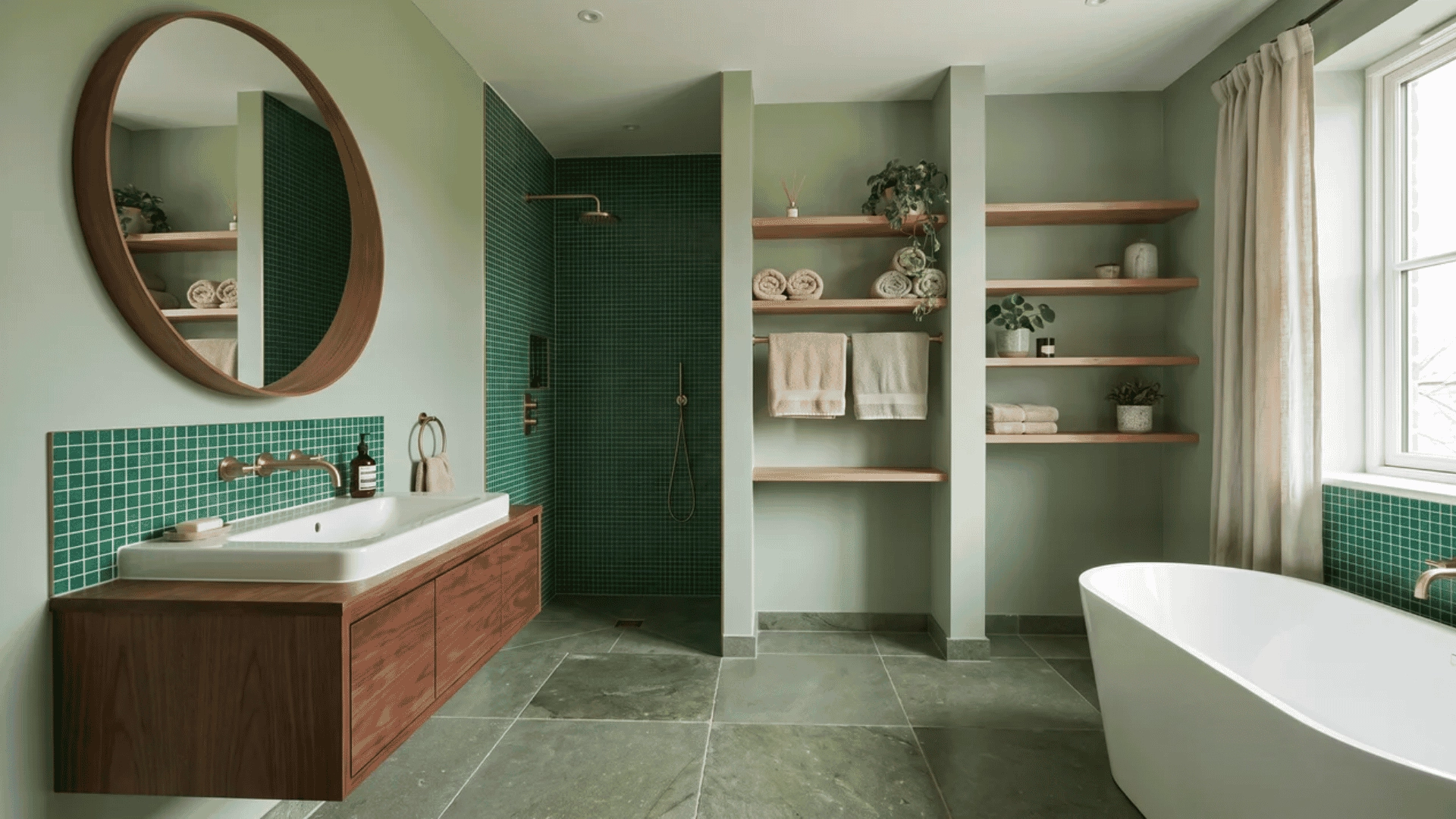
Bathroom design has moved beyond being purely functional. It is now one of the spaces where homeowners experiment with personality, comfort, and stronger visual choices.
Green is becoming a popular direction because it sits between neutral and bold. It can feel familiar without looking plain, making it easier to introduce color without overwhelming the room.
The challenge is finding the right balance. A color decision that works in a large, bright bathroom may feel completely different in a smaller space with limited lighting.
Here, I’ll share green bathroom ideas across soft, dramatic, and natural styles, along with practical details to help you create a balanced space.
Why Green Works Well in a Bathroom
Green suits bathrooms because it feels fresh without making the room look cold or plain. Soft shades such as sage, mint, and seafoam reflect more light, helping compact bathrooms feel open and restful.
Deeper tones, including forest, olive, and emerald, create a cozy setting with more depth. The final effect also depends on the materials placed nearby.
White fixtures keep green walls crisp, while wood adds warmth and a relaxed feel. Brass fittings bring out the richness of darker shades, and black accents create a sharper, modern finish.
Green also works across several surfaces, including painted walls, tile, cabinetry, wallpaper, and accessories.
Since the color offers both pale and deep options, it can suit bright family bathrooms, small powder rooms, and low-lit spaces without limiting the overall design. If your footprint is on the tighter side, it helps to plan the palette around clever small bathroom layouts that make the most of every corner before you commit to a color.
Spa-Calm Green Bathroom: Sage, Eucalyptus, and Pale Seafoam
Soft green shades work well when you want a bathroom to feel relaxed and balanced. They pair best with natural textures, lighter surfaces, and finishes that keep the color gentle rather than intense.
1. Sage Green Painted Walls With White Shaker Cabinetry
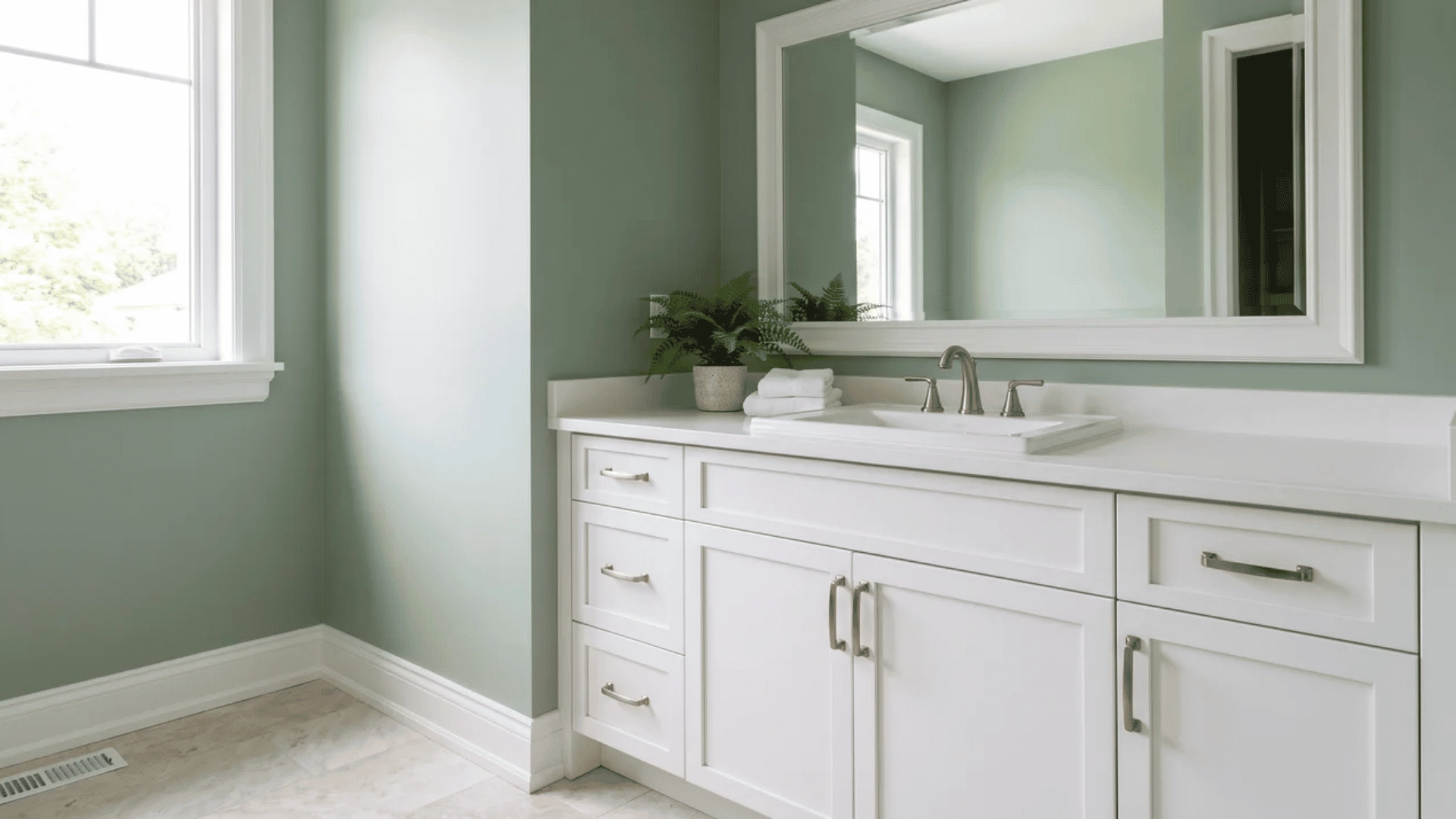
Sage green walls create a calm bathroom backdrop with a soft, balanced appearance. The muted shade adds color without overwhelming the room, making it suitable for relaxed and timeless interiors.
Use a blue-leaning sage paint to avoid yellow undertones, especially in bathrooms with limited natural light. Test samples across different walls before painting, then pair the finish with white shaker cabinetry, warm metal hardware, and light surfaces.
If you want a broader view of what works alongside this shade, these sage green pairings include neutrals and metals that complement it in any room.
2. Honed Sage Marble Tile, Floor to Ceiling
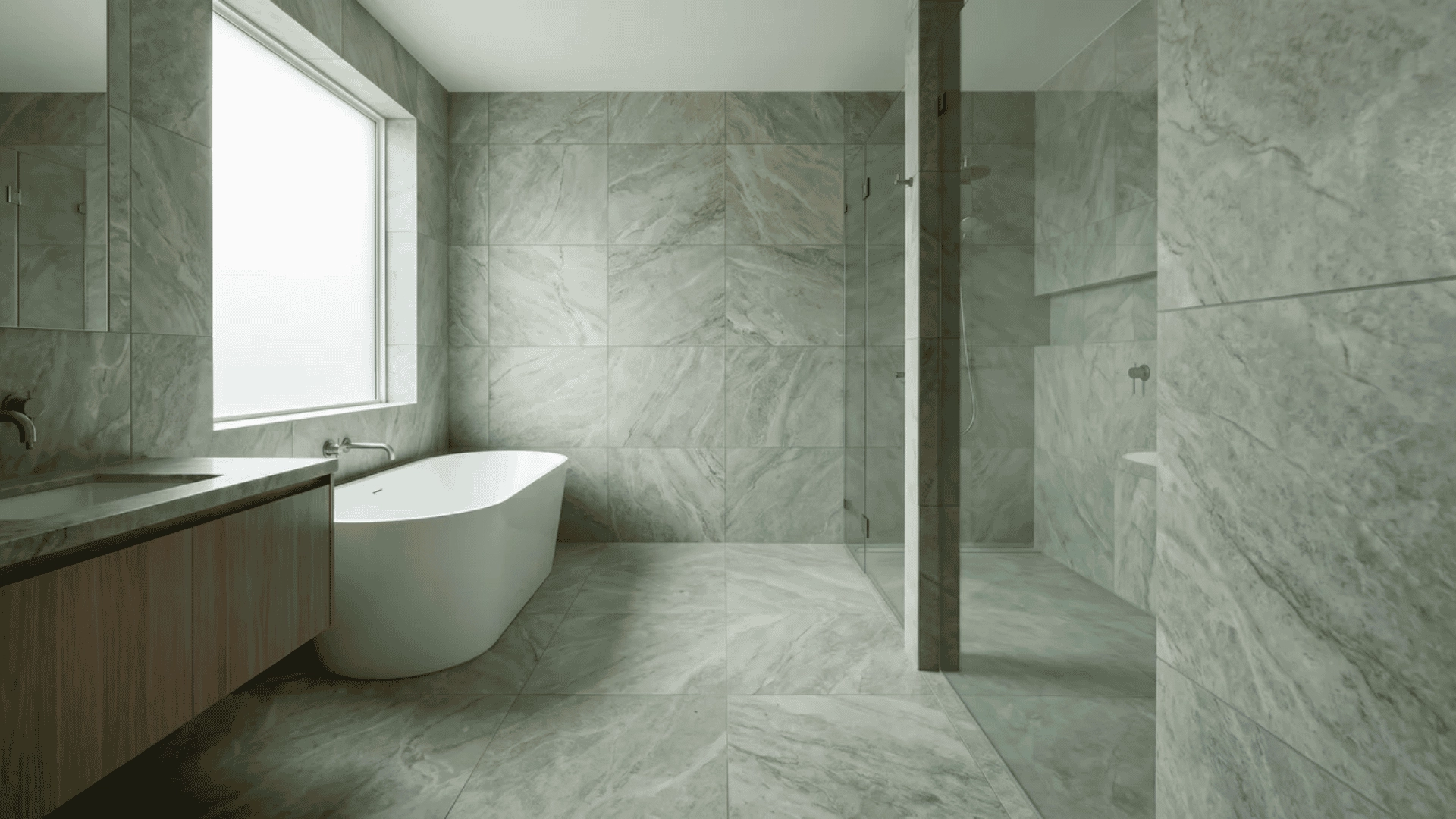
Honed sage marble creates a spa-inspired bathroom through natural stone variation and a soft matte finish. The surface feels quieter than polished marble while adding depth through subtle color movement.
Install the marble across shower walls, floors, or both surfaces for a continuous appearance. Use matching grout tones to blend the pattern, and seal the stone properly to protect against moisture and daily wear.
3. Eucalyptus Shiplap Accent Wall Behind a Freestanding Tub
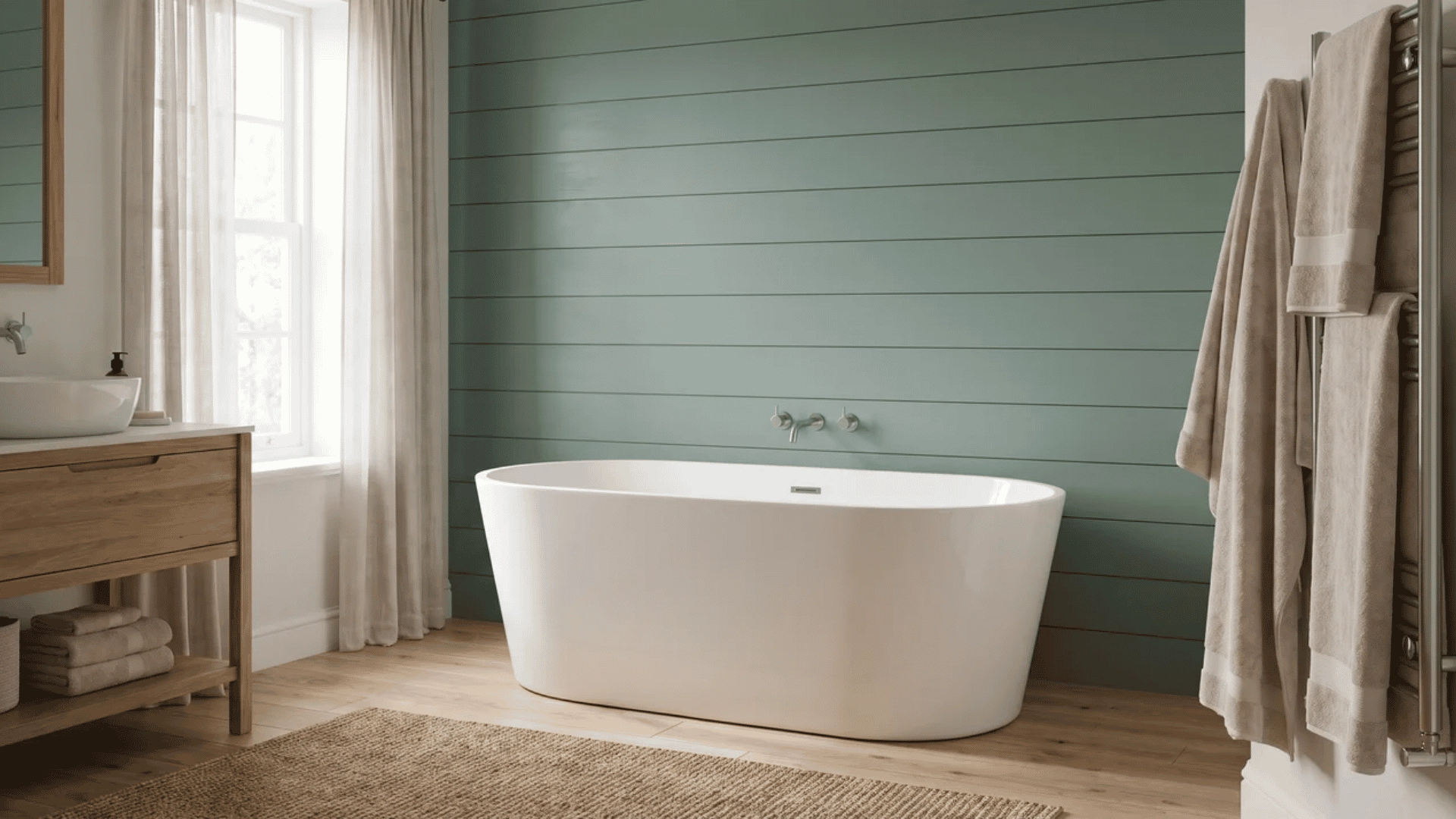
A eucalyptus shiplap wall adds muted green color with architectural texture. The soft grey-green tone creates a relaxing backdrop behind a freestanding bathtub.
Install moisture-resistant shiplap on one wall behind the tub and use bathroom-safe paint or sealant to protect the surface. Leave surrounding finishes neutral with white, beige, or stone tones to maintain balance.
4. Pale Seafoam Zellige Tile Shower Surround
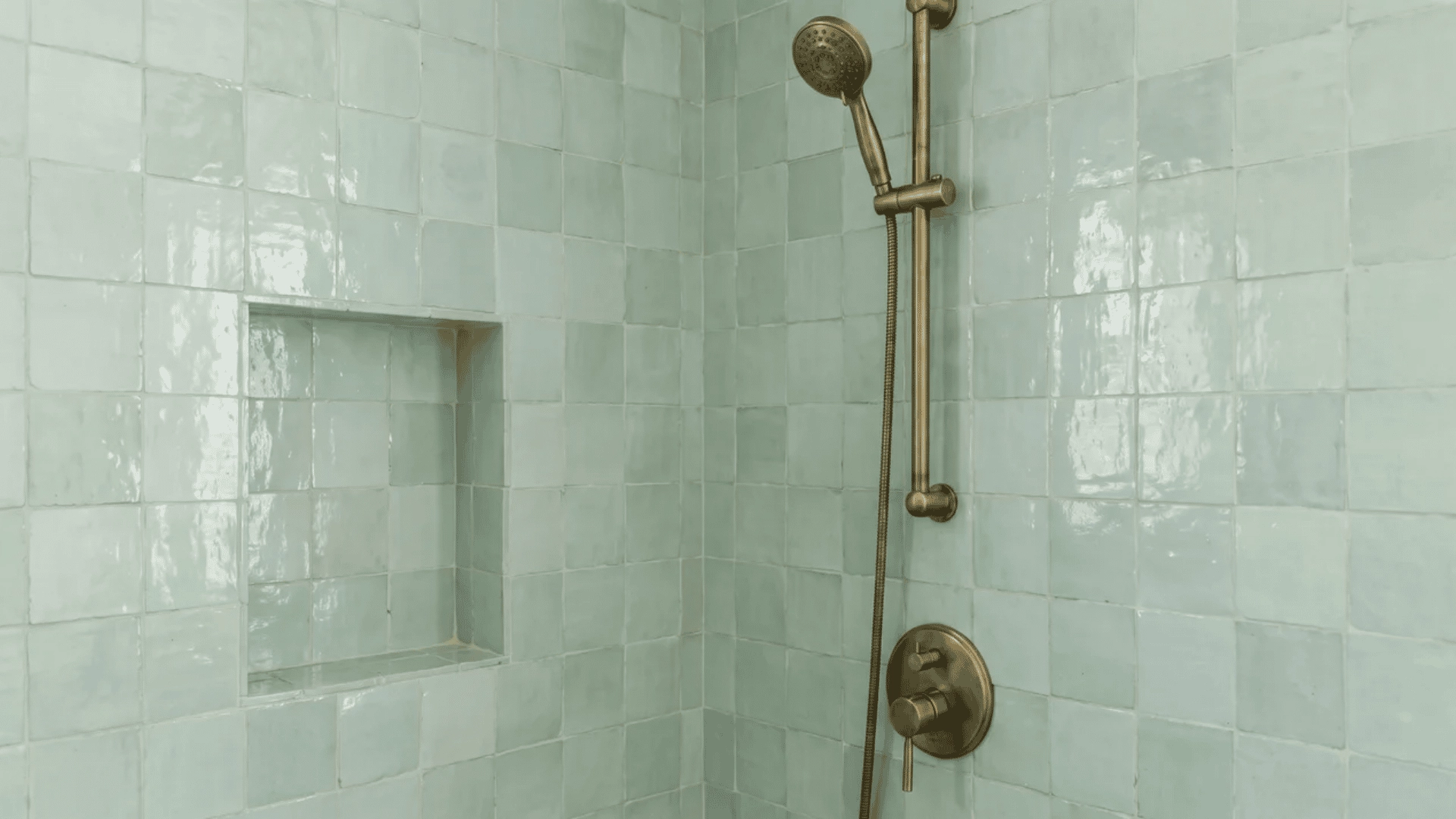
Pale seafoam zellige tiles introduce gentle green color through handmade texture and uneven glazing. The surface variation creates a softer shower area with a relaxed, natural appearance.
Cover the shower surround with individual zellige tiles and plan the layout before installation. Use simple grout tones and minimal fixtures so the handcrafted texture remains visible without creating too much visual noise.
Finding a few creative tile layouts beforehand can help you decide how much pattern movement you actually want before tiling begins.
5. Sage and White Large-Format Floor Tile With Green Grout
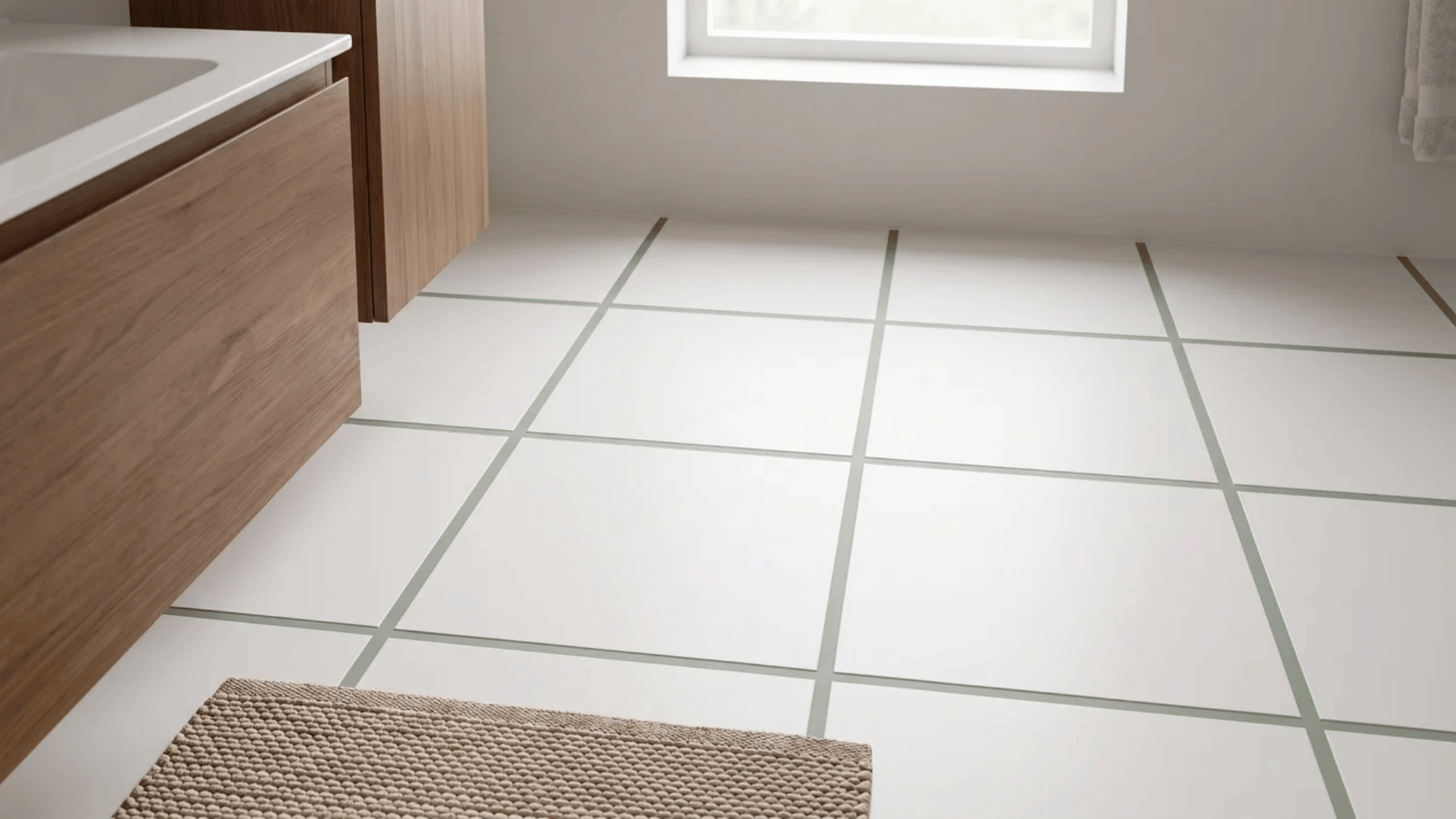
Sage floor tiles add controlled color through the surface rather than covering the entire bathroom. The combination creates a subtle foundation while keeping the room bright and open.
Choose large-format tiles to reduce visible grout lines and create a cleaner floor appearance. Match the grout shade with the green tones in the tile, then pair the flooring with lighter walls and fixtures.
6. Eucalyptus Linen Wallpaper in a Powder Room
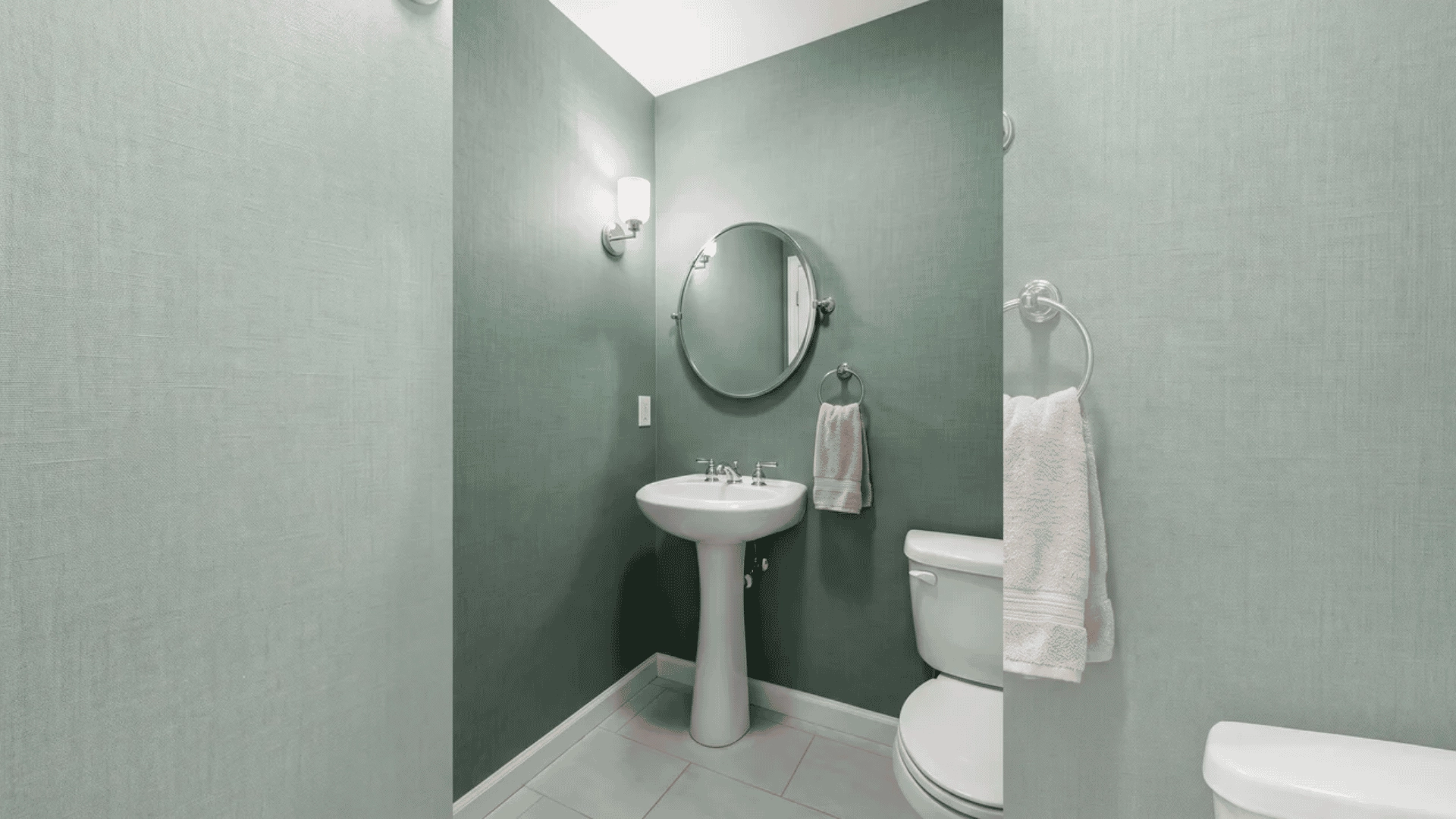
Eucalyptus linen wallpaper adds softness through muted color and fabric-like texture. It gives smaller powder rooms a warmer appearance without requiring extensive changes to fixtures or surfaces.
Apply moisture-resistant wallpaper only in areas with limited water exposure. Prepare the wall properly before installation, and combine the pattern with simple mirrors, lighting, and neutral fixtures to avoid visual competition.
7. Sage Green Freestanding Bathtub as the Sole Color Statement
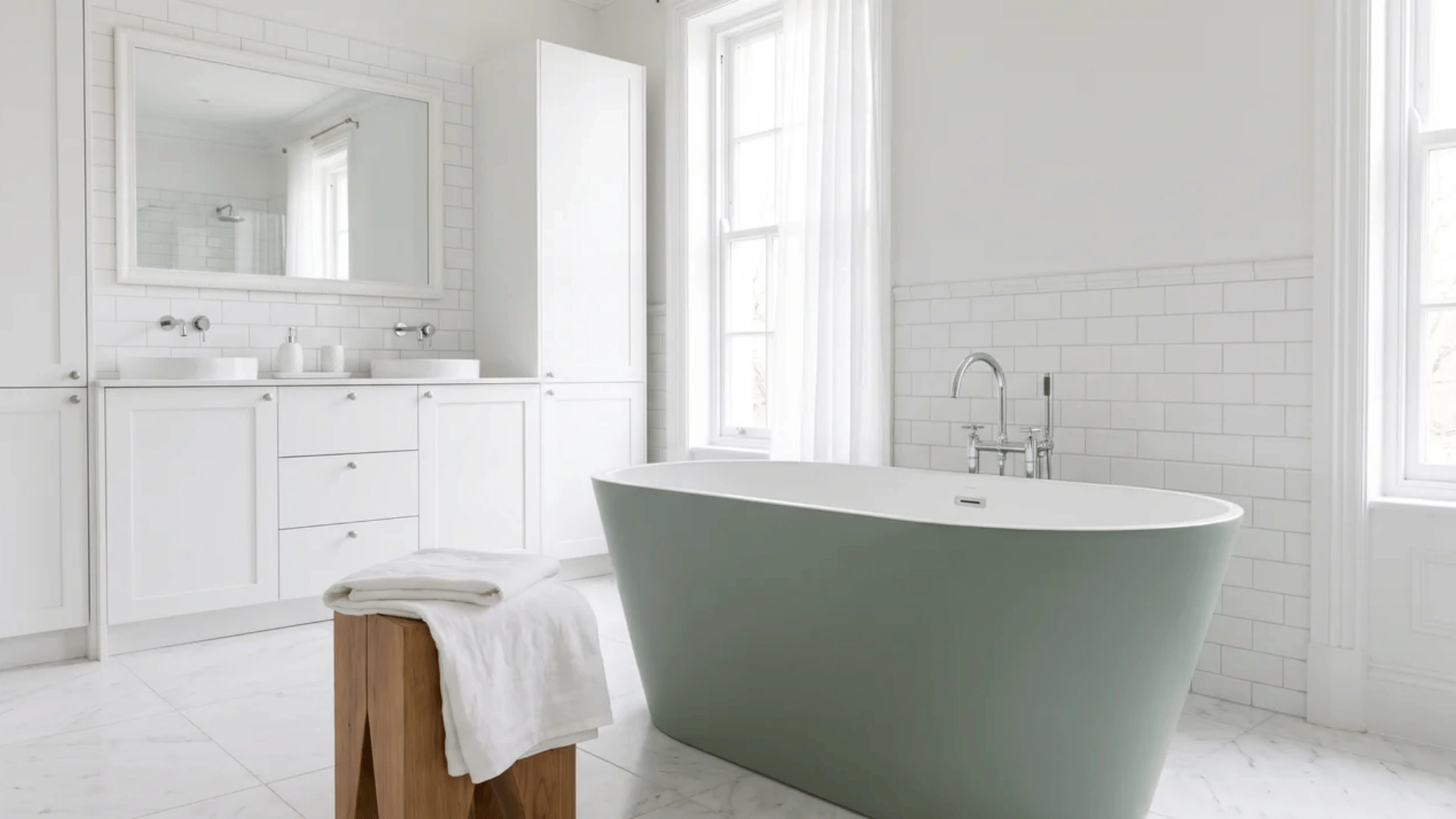
A sage green freestanding bathtub creates a focused color feature without requiring a complete bathroom redesign. The fixture adds personality while surrounding surfaces remain calm and neutral.
Select a bathtub finish that complements existing floors and walls. Allow enough open space around the tub for visibility, then support the design with warm hardware, simple accessories, and soft lighting.
Dramatic-Moody Greens: Forest, Emerald, Hunter, and Moss
Deep greens create a stronger visual impact and work best when the color feels intentional.
These shades usually suit bathrooms where you want more depth, especially when paired with warm lighting, textured surfaces, and carefully chosen hardware.
8. Deep Forest Green Painted Walls and Ceiling
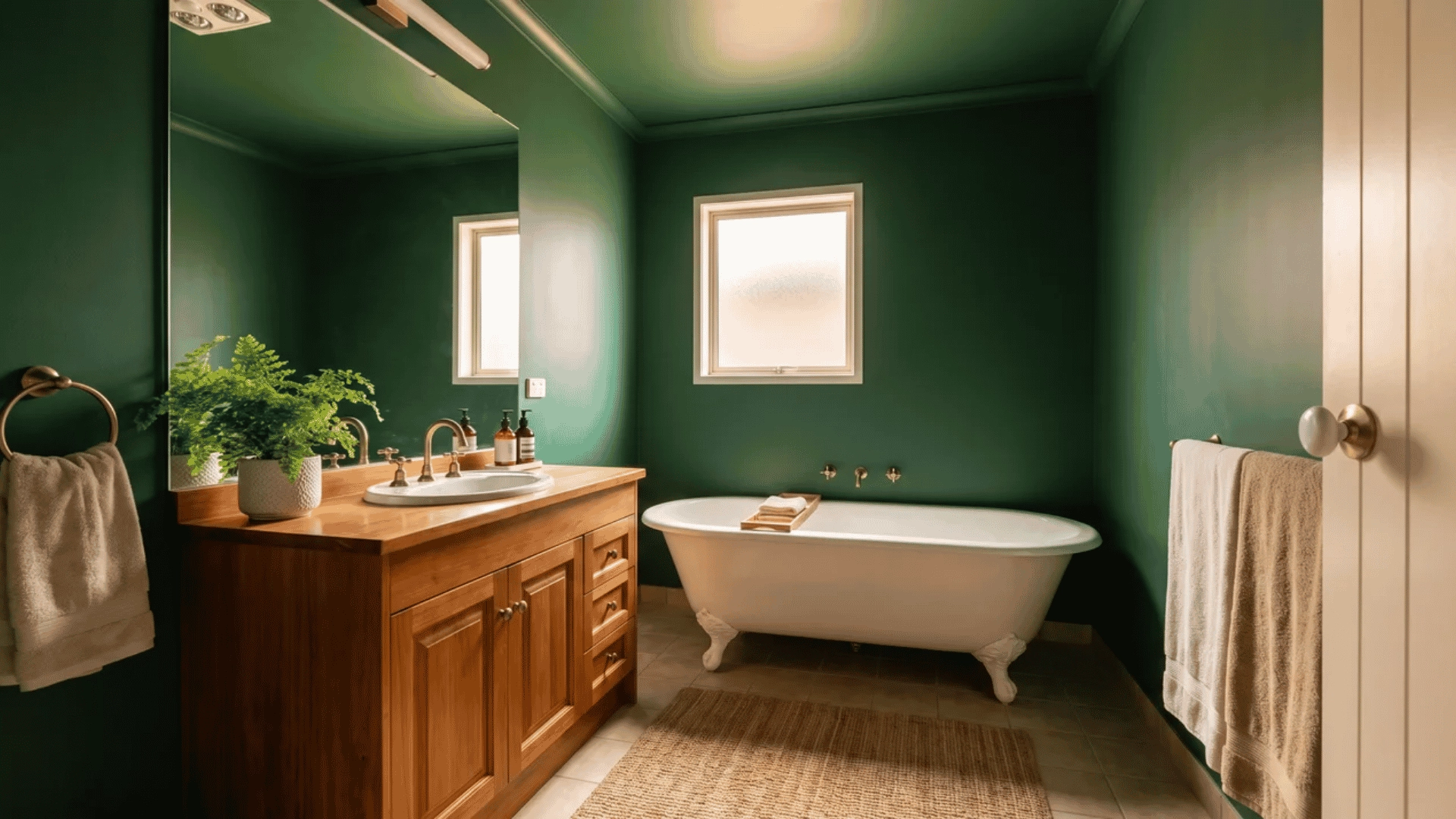
Forest green walls and ceilings create a dramatic bathroom atmosphere with a stronger sense of depth. The darker shade gives the room a bold, enclosed feel while adding a refined appearance.
Paint the ceiling and walls in the same tone for a seamless effect. Balance the darker surfaces with warm lighting, light stone, reflective mirrors, or metallic hardware to prevent the room from feeling too heavy.
9. Emerald Glazed Brick Tile Shower, Full Enclosure
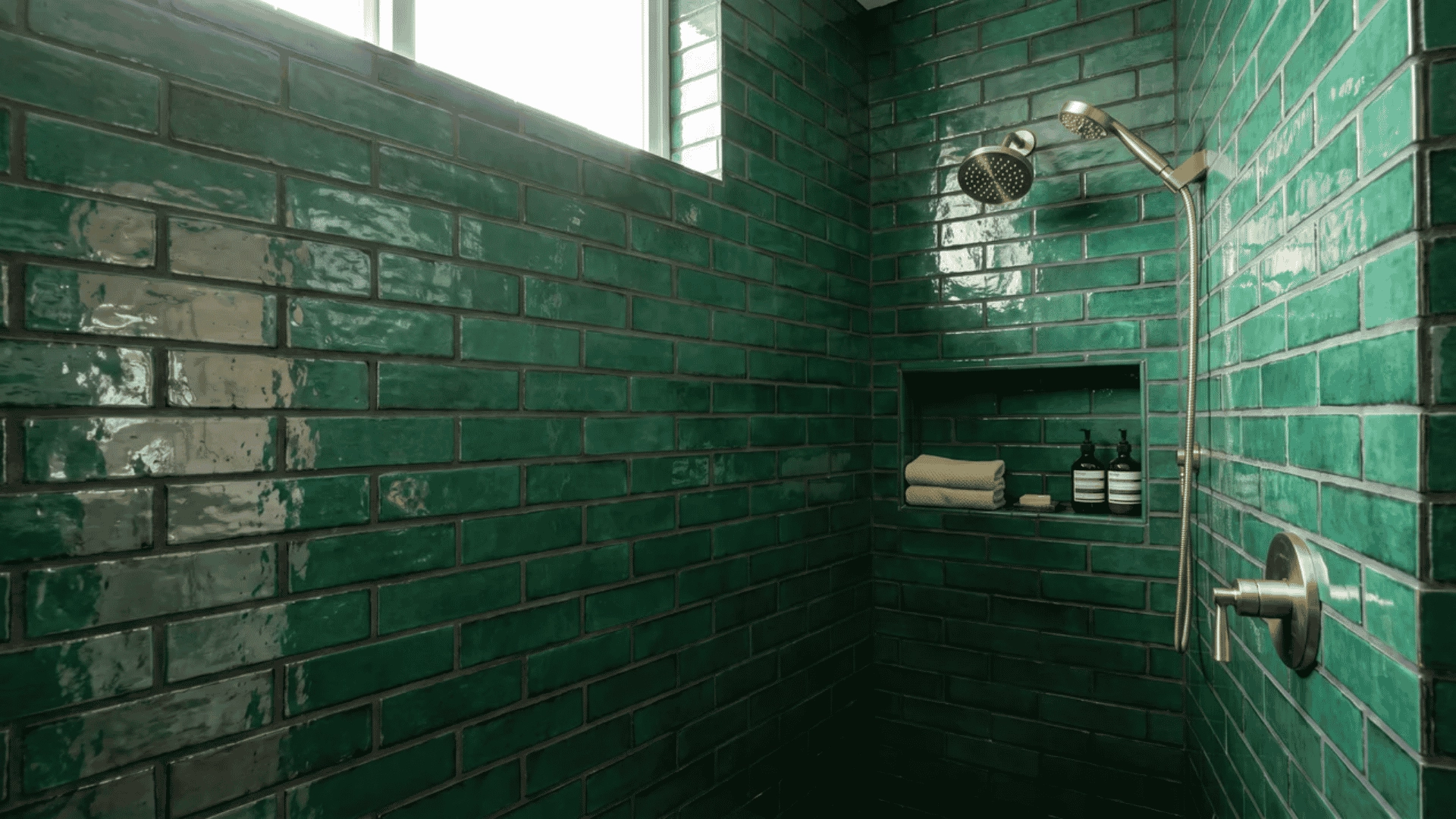
Emerald glazed brick tiles bring richness through deep color and reflective surfaces. The glossy finish adds movement while the brick shape creates texture inside the shower area.
Install the tiles across the full shower enclosure and use darker grout to define each piece. Pair the saturated green with simple fixtures and neutral flooring so the shower remains the main feature.
10. Hunter Green Vanity Unit With Integrated Stone Top
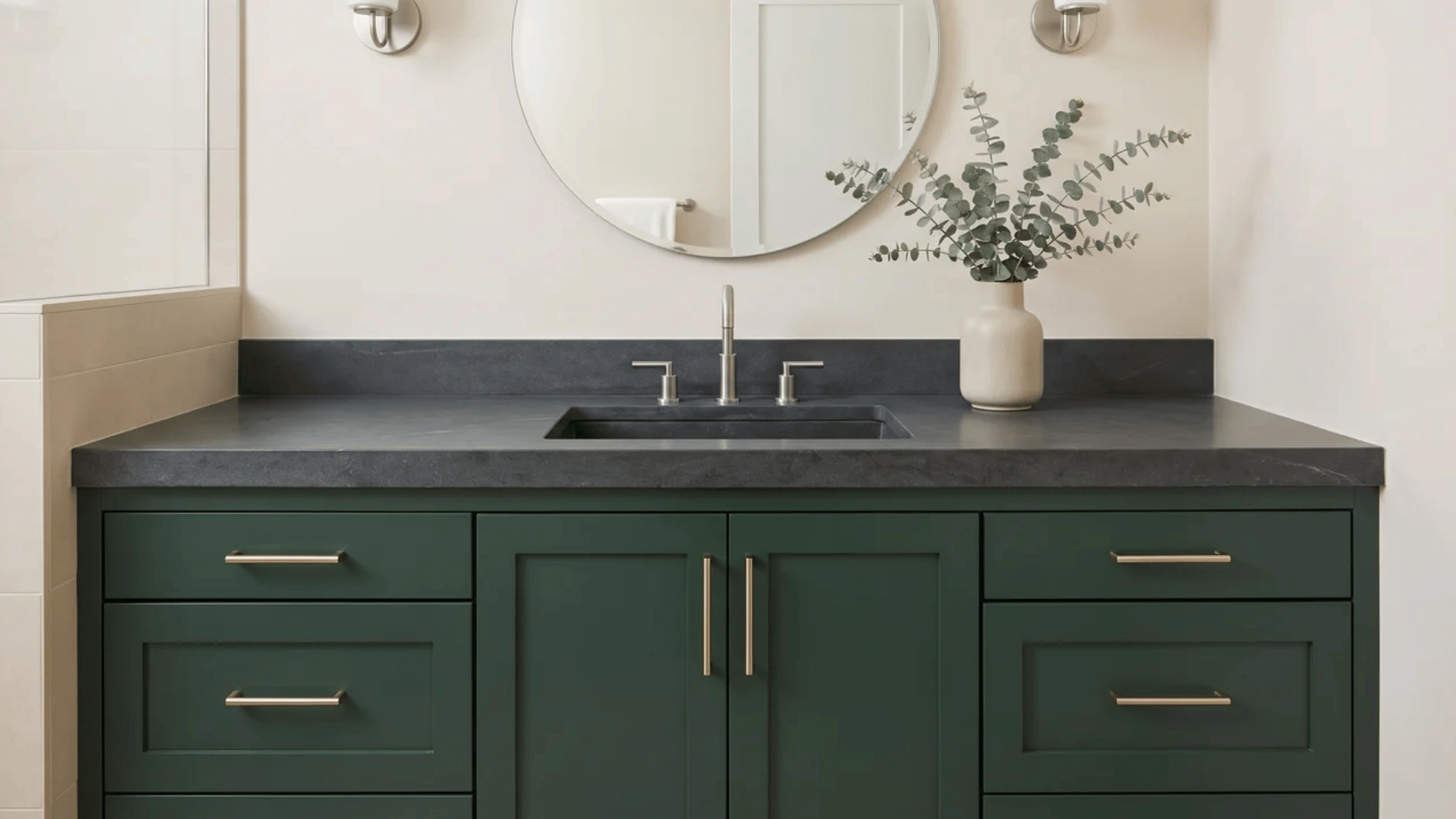
A hunter green vanity adds depth while keeping the color focused in one functional area. The darker green tone creates a furniture-like feature that works well in traditional and modern bathrooms.
Select a durable stone countertop and pair the vanity with hardware that complements the warmer green shade. Position lighting around the mirror carefully so the color remains rich rather than appearing too dark.
11. Moss Green Encaustic Floor Tiles With Warm Timber Vanity
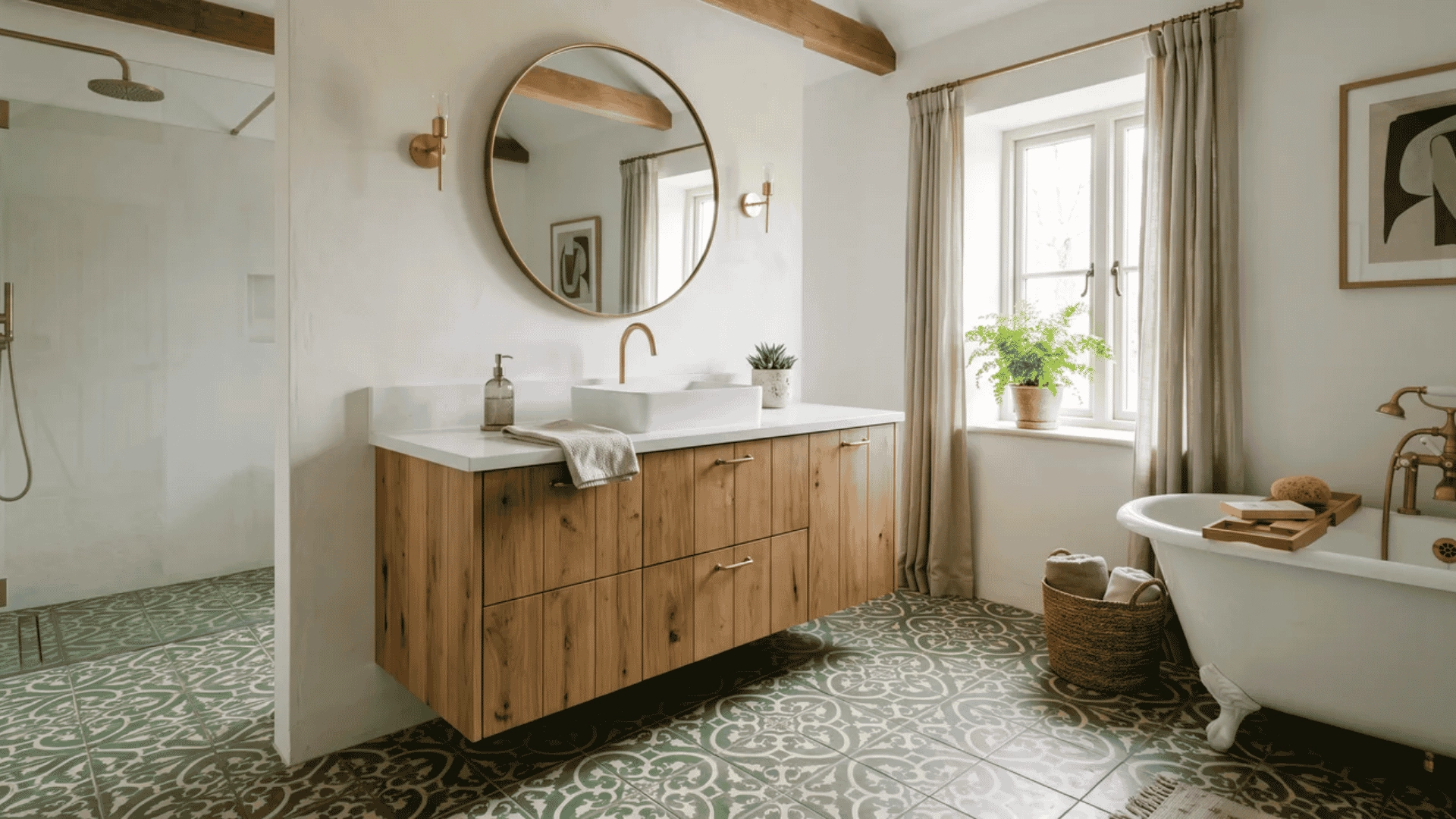
Moss green encaustic tiles create an earthy bathroom foundation through muted color and patterned surfaces. The matte finish gives the room a grounded appearance while adding visual character.
Seal the tiles before regular use to protect them from moisture and stains. Combine the flooring with a timber vanity, natural textures, and simple fixtures to balance the patterned surface.
12. Dark Green Tongue-and-Groove Panelling From Floor to Dado Height
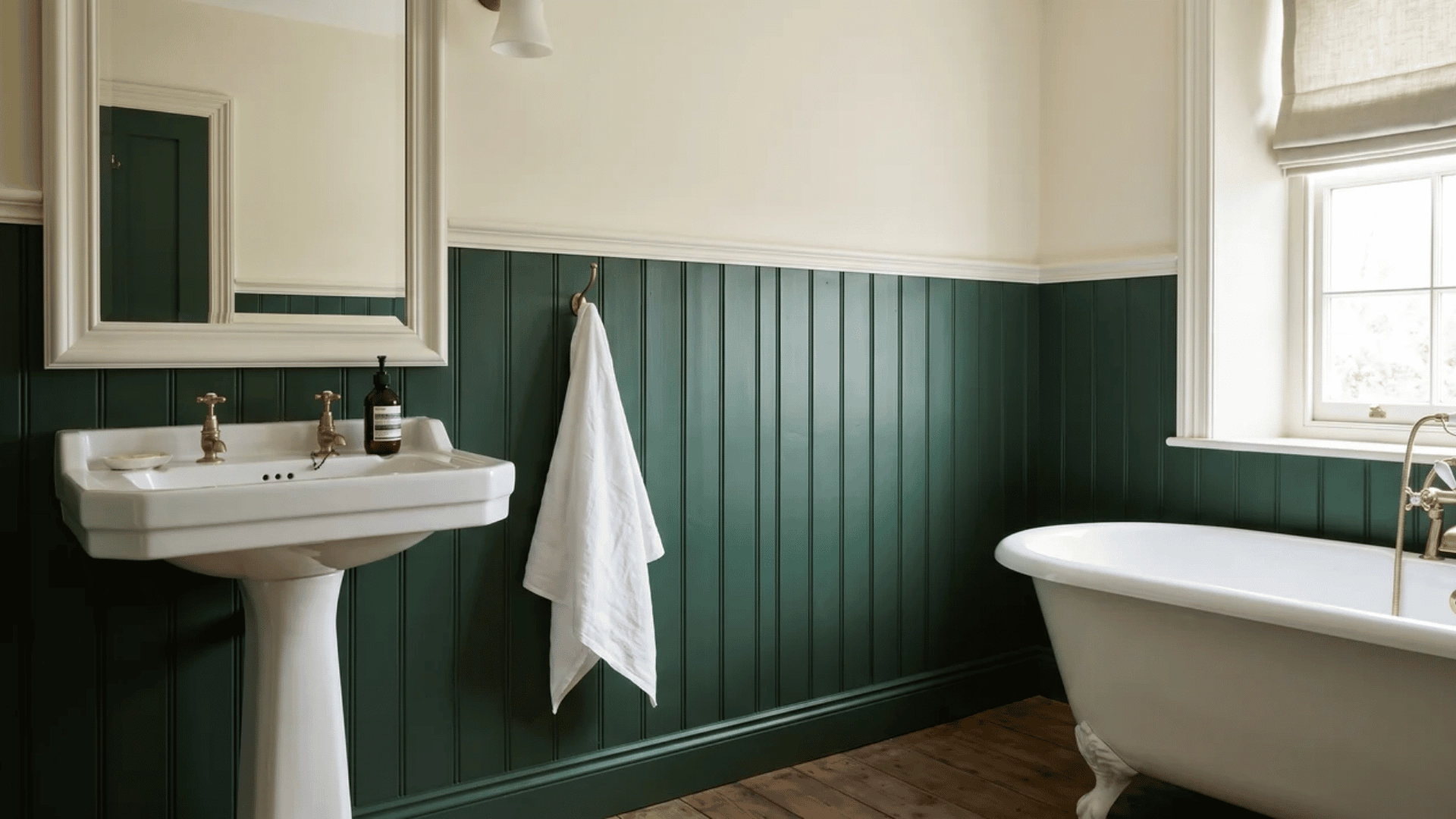
Dark green tongue-and-groove panelling adds architectural detail while introducing color in a controlled way. The lower wall treatment creates a traditional look without covering the entire bathroom in a deep shade.
Use lighter paint above and install the panelling below dado height to maintain openness. Match the hardware finish with the style of the room, such as brass for warmth or chrome for a cleaner look.
13. Emerald Green Freestanding Bath in an All-White Bathroom
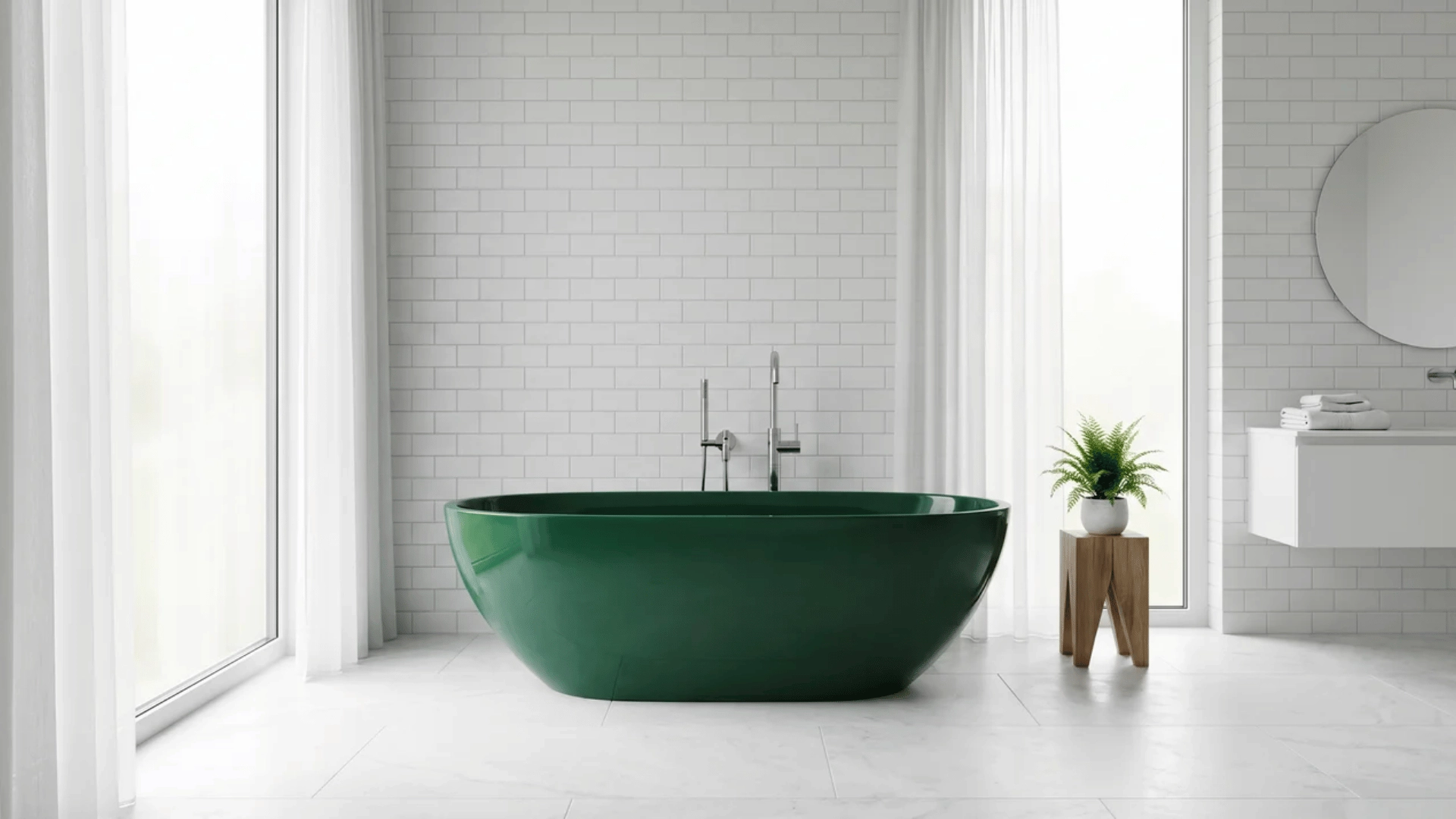
An emerald green freestanding bath creates a bold focal point against an otherwise white bathroom. The strong color contrast allows the fixture to become the main design feature.
Position the bath where it can be viewed clearly from the entrance or main walkway. Surround it with simple finishes, minimal accessories, and soft lighting so the emerald shade remains the dominant element.
14. Emerald Green Mosaic Shower Niche as a Feature Panel
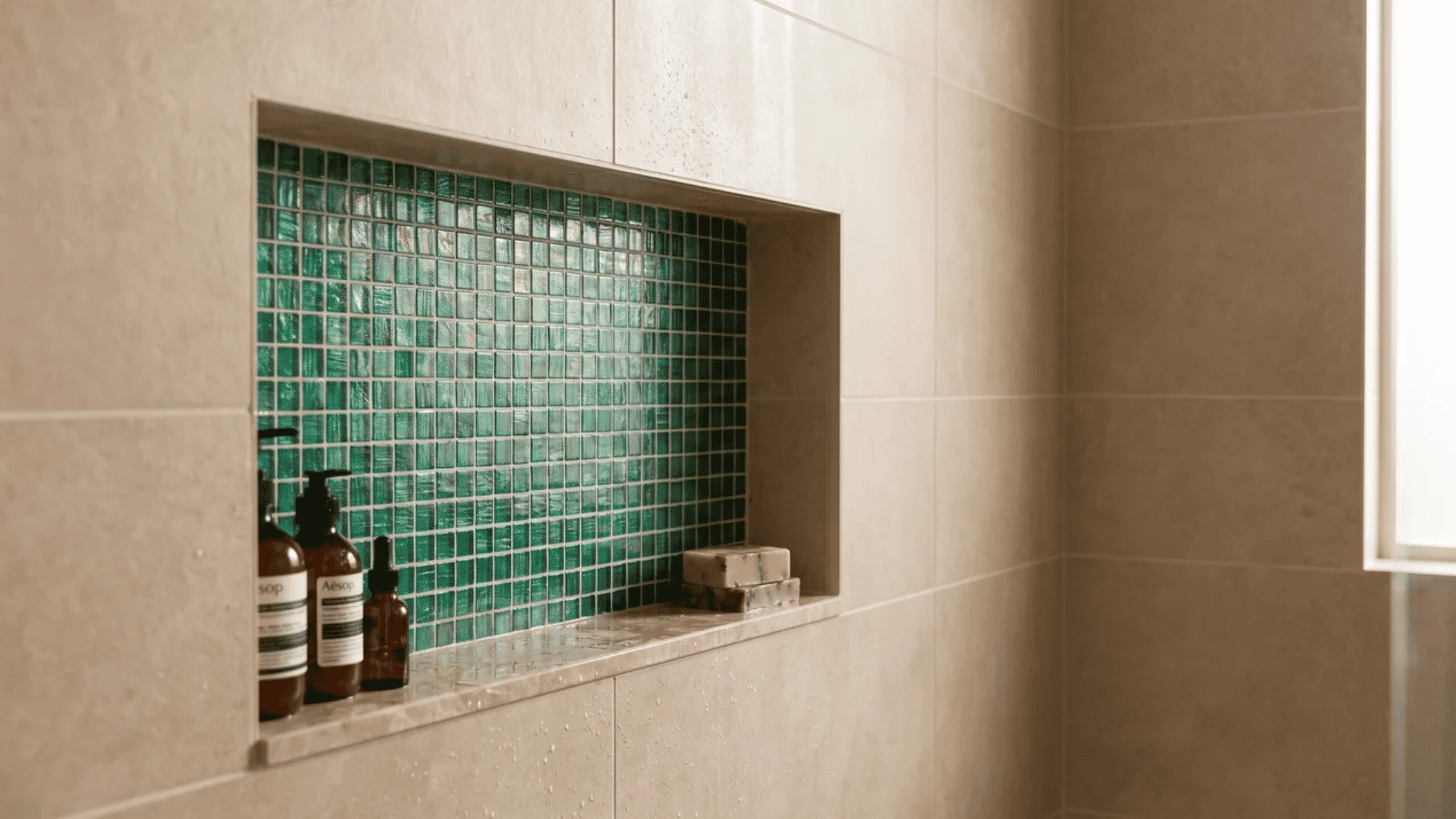
An emerald mosaic shower niche introduces strong green color without covering the entire shower area. The smaller tiles add texture and reflection while keeping the feature controlled.
Place the mosaic inside a recessed niche surrounded by neutral tiles. Use matching grout and simple shower fixtures to highlight the detailed tilework without competing with the rest of the space.
Fresh-Natural Greens: Fern, Botanical Mid-Tones, and Leaf Green
Fresh greens bring an outdoor feeling into a bathroom and work well with natural materials. These shades are strongest when paired with timber, linen, plants, and lighter surfaces that support the botanical feel.
15. Fern Green Painted Vanity in an Otherwise Neutral Bathroom
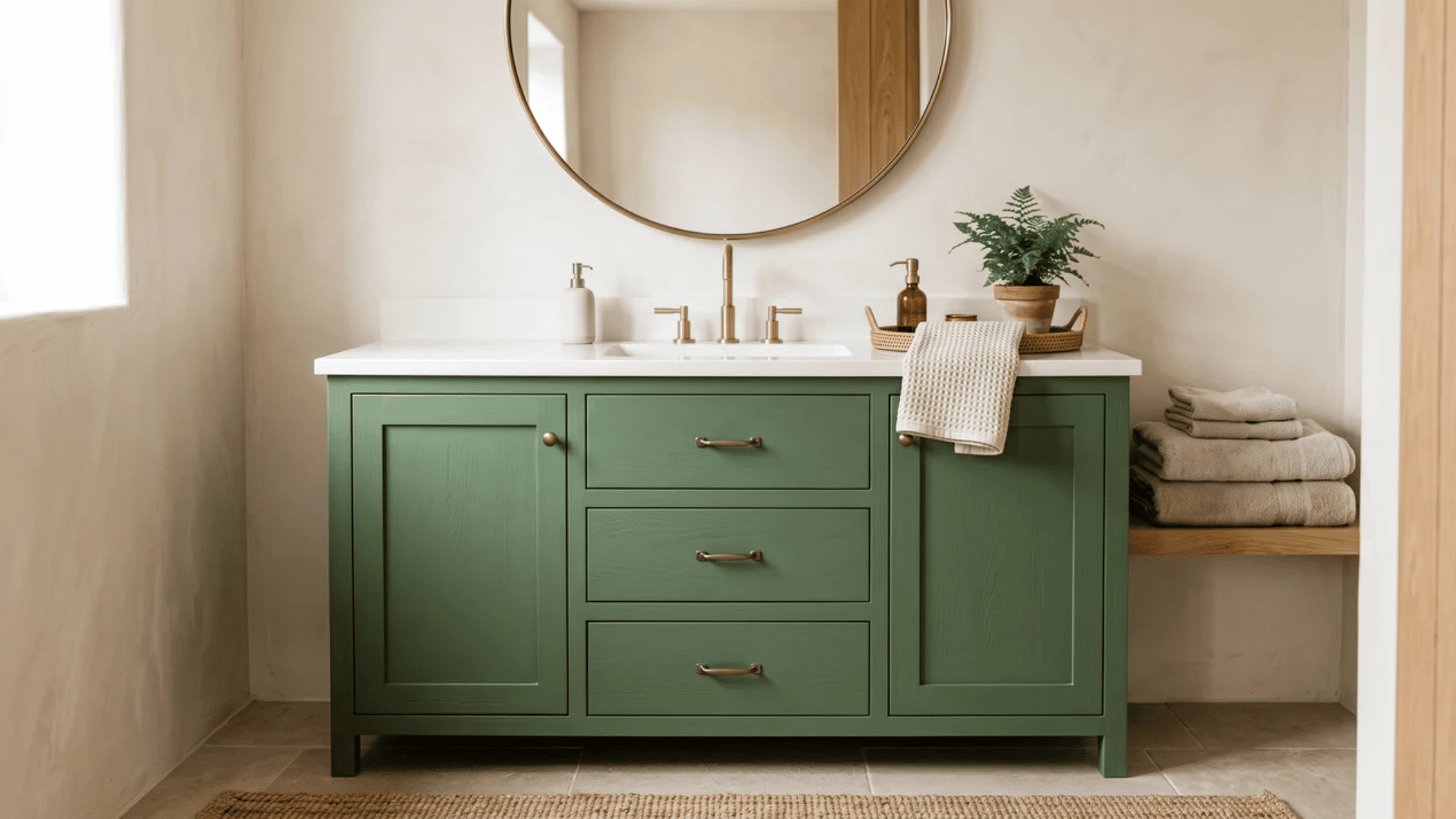
A fern green vanity adds personality while allowing the rest of the bathroom to remain adaptable. The yellow-leaning green creates a fresh botanical feel without overwhelming the space.
Apply the shade to cabinetry and pair it with white ceramic, natural wood, and soft textiles. Test the paint under different lighting conditions because fern tones can shift between warm and cool throughout the day.
16. Botanical Green Zellige Splashback Behind a Wall-Hung Basin
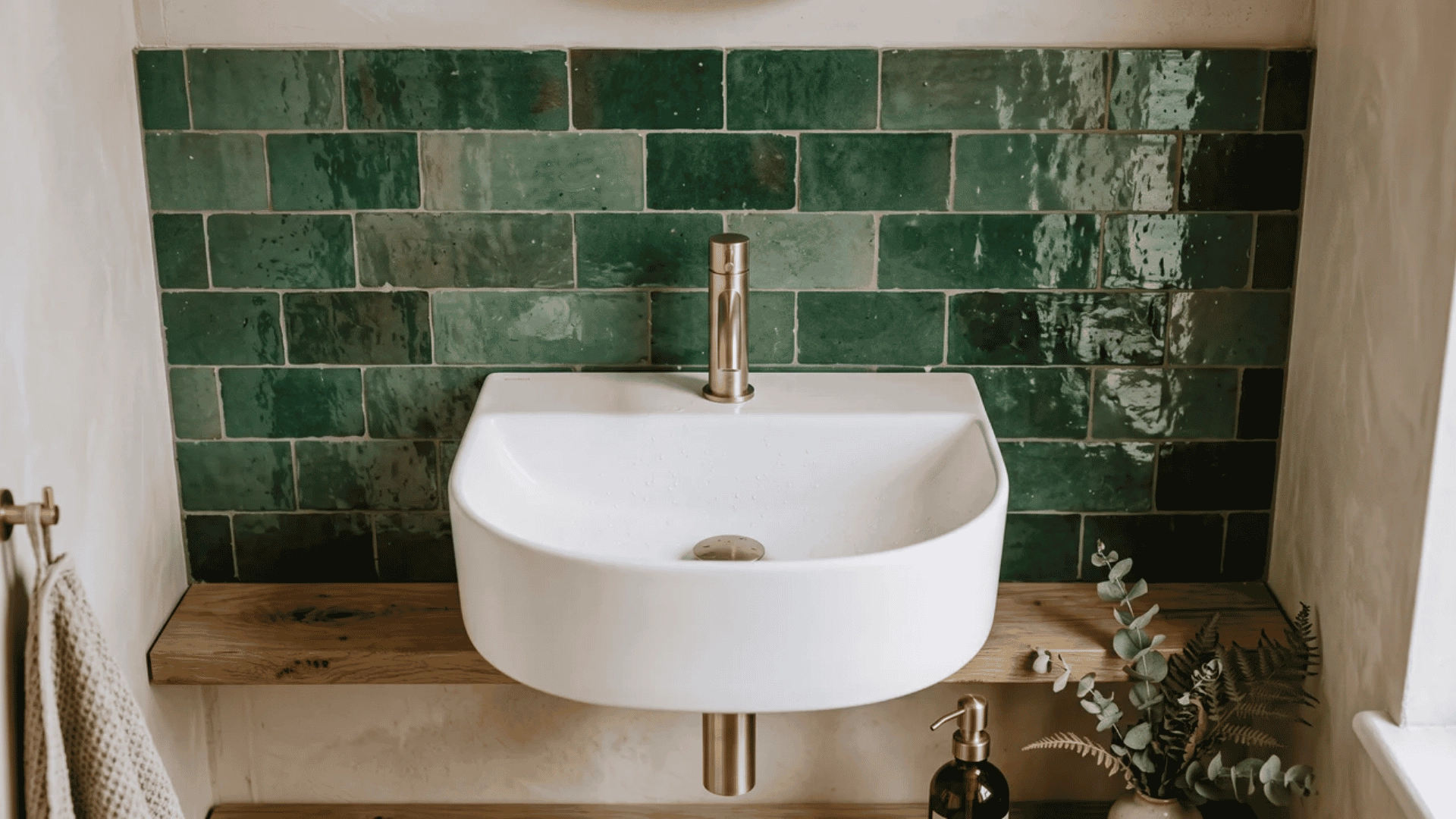
Botanical green zellige tiles create a textured splashback with handmade variation and a fresh natural appearance. The small surface area allows the color to stand out without dominating the bathroom.
Install the tiles behind the basin and combine them with a wall-hung vanity for a lighter visual effect. Pair the green surface with wood details and neutral walls to maintain balance.
17. Leaf Green Painted Ceiling in an Otherwise White Bathroom
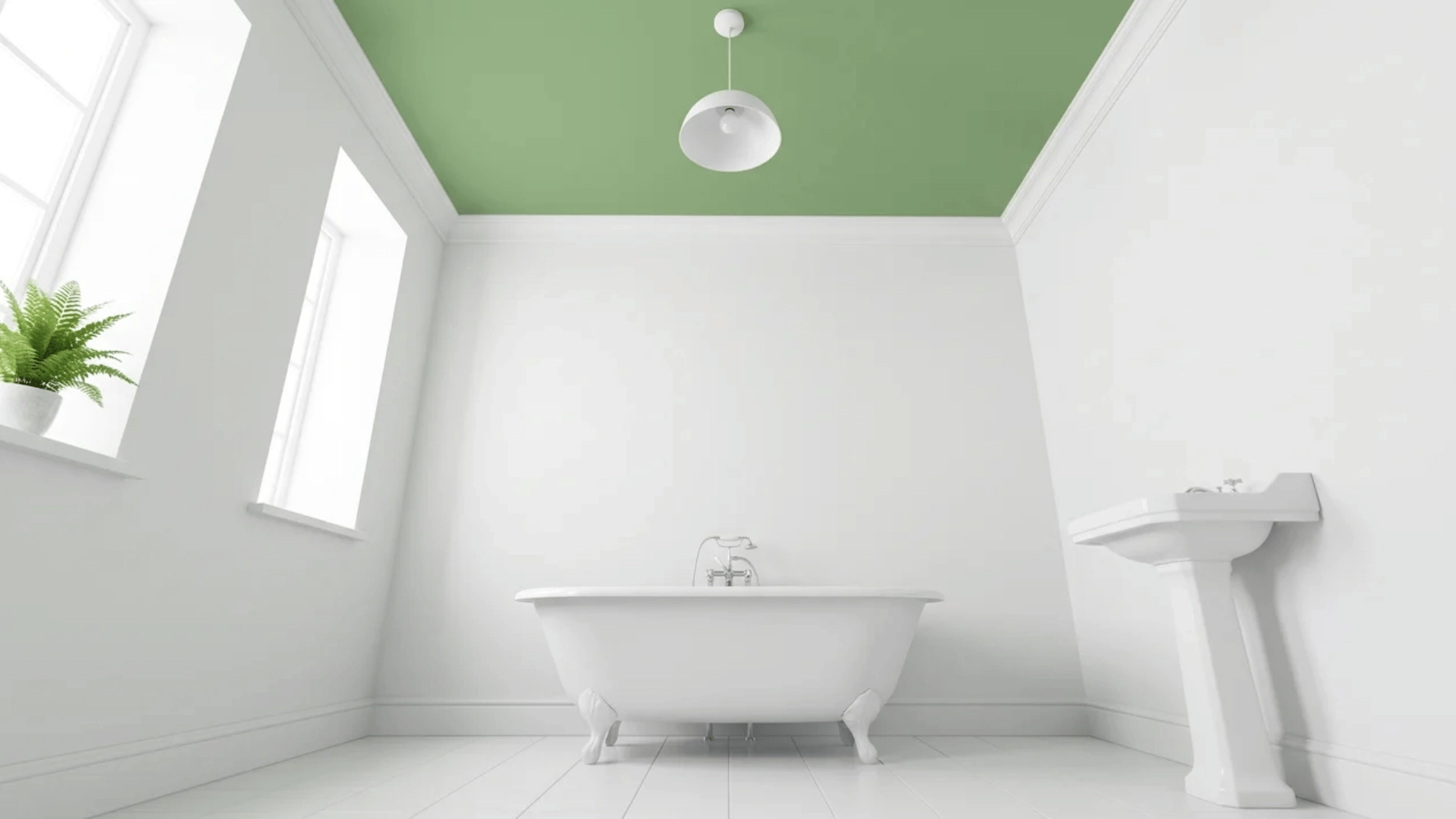
A leaf green ceiling introduces unexpected color while leaving walls and floors bright. The overhead shade creates a unique design moment without requiring major changes throughout the bathroom.
Paint only the ceiling surface and use clean white finishes elsewhere to highlight the contrast. Bright lighting and reflective surfaces help the green tone feel fresh rather than enclosed.
18. Fern Green Wainscoting With Botanical Wallpaper Above
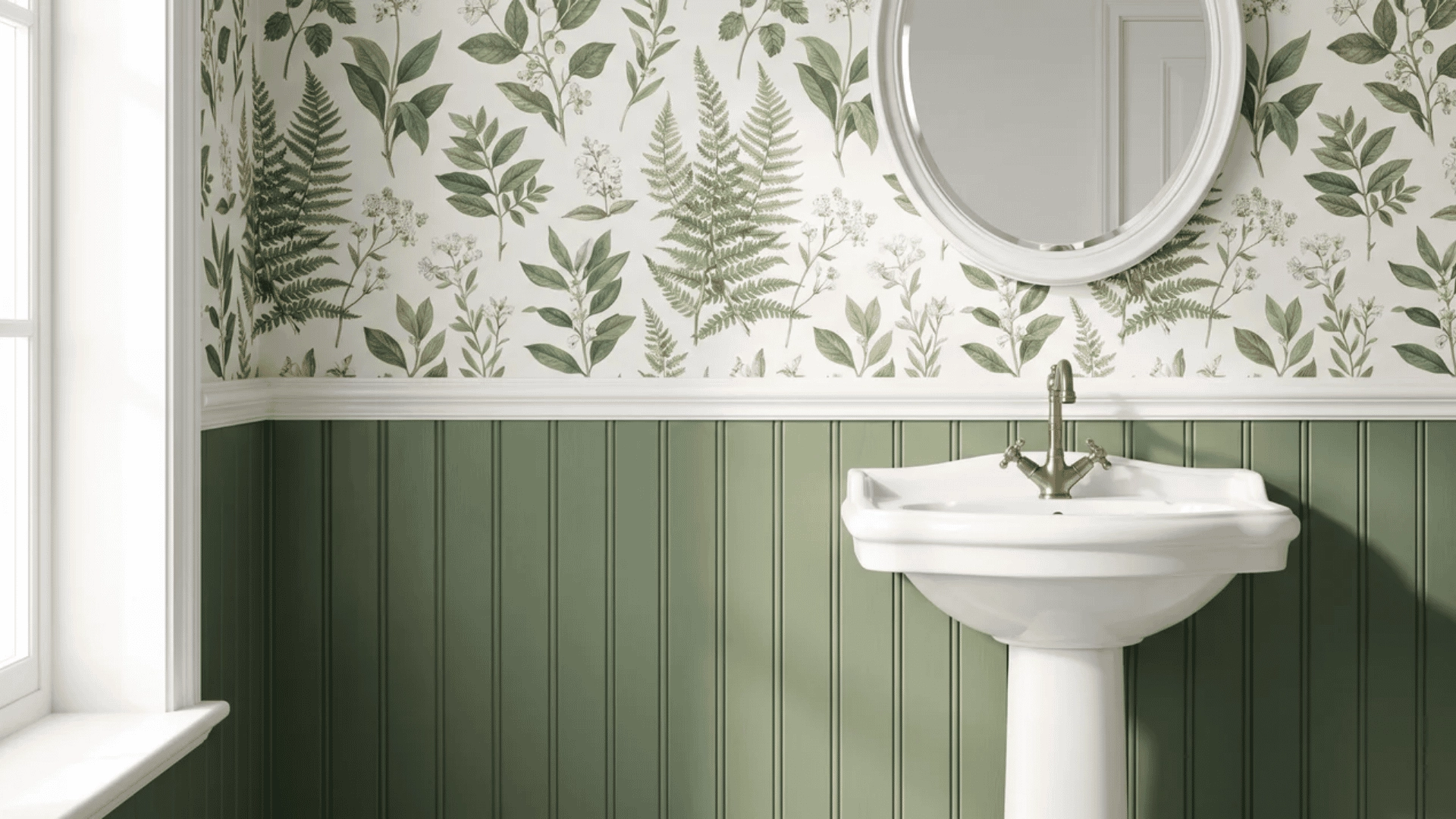
Fern green wainscoting combined with botanical wallpaper creates a layered wall treatment with both color and pattern. The lower panel adds structure while the wallpaper brings additional texture.
Match the green undertones between the painted panels and wallpaper before installation. Use lighter trim and ceilings to separate the layers and prevent the room from feeling visually crowded.
19. Green Penny Round Tile Floor With White Subway Tile Walls
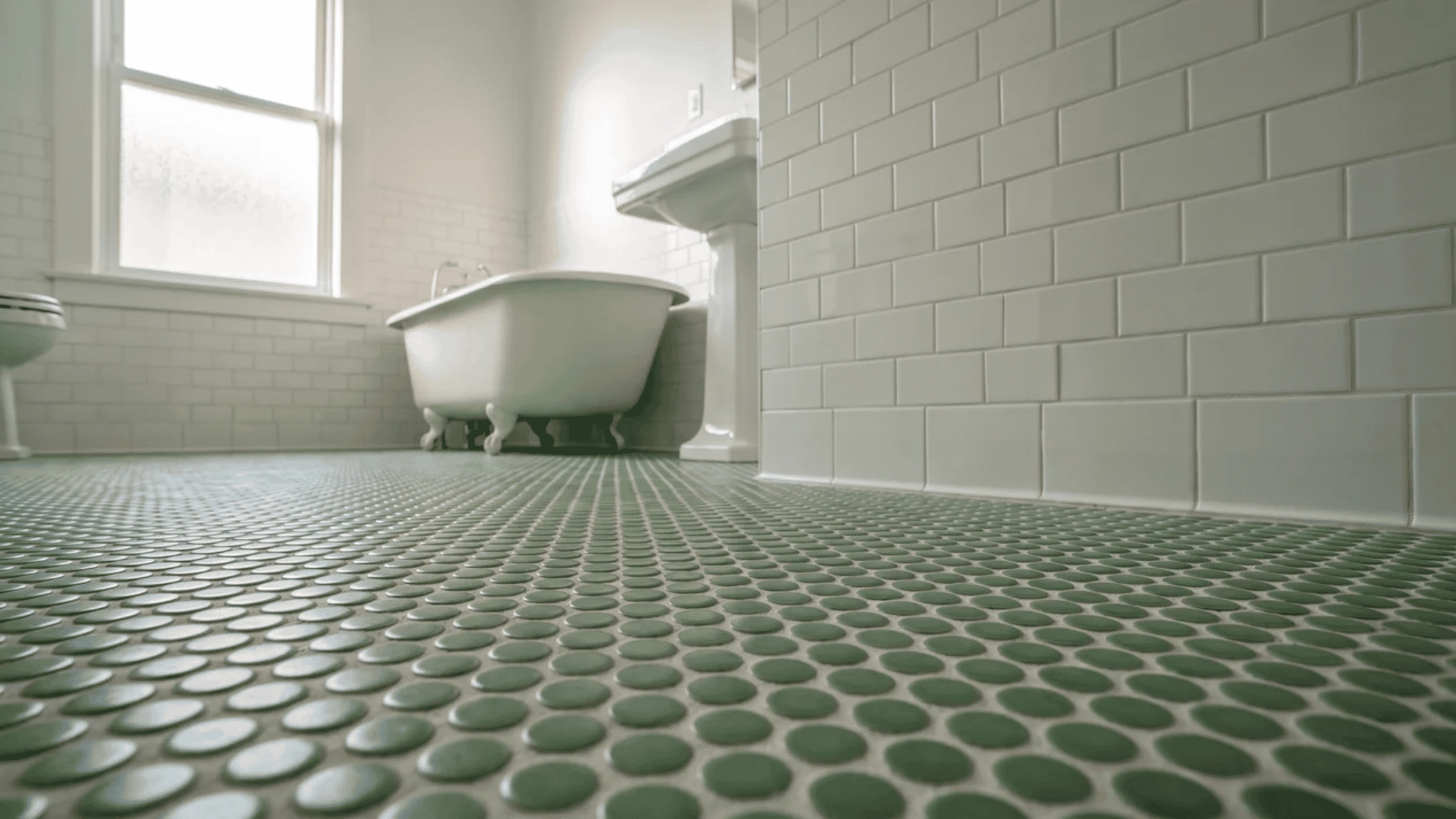
Green penny round tiles introduce color through shape and texture rather than large solid surfaces. The small tile format creates detail while keeping the bathroom visually balanced.
Install the penny tiles across the floor and pair them with simple white subway tiles on the walls. Use consistent grout tones to connect the surfaces and prevent the pattern from feeling busy.
20. Sage-to-Fern Gradient Zellige Wall in a Wet Room
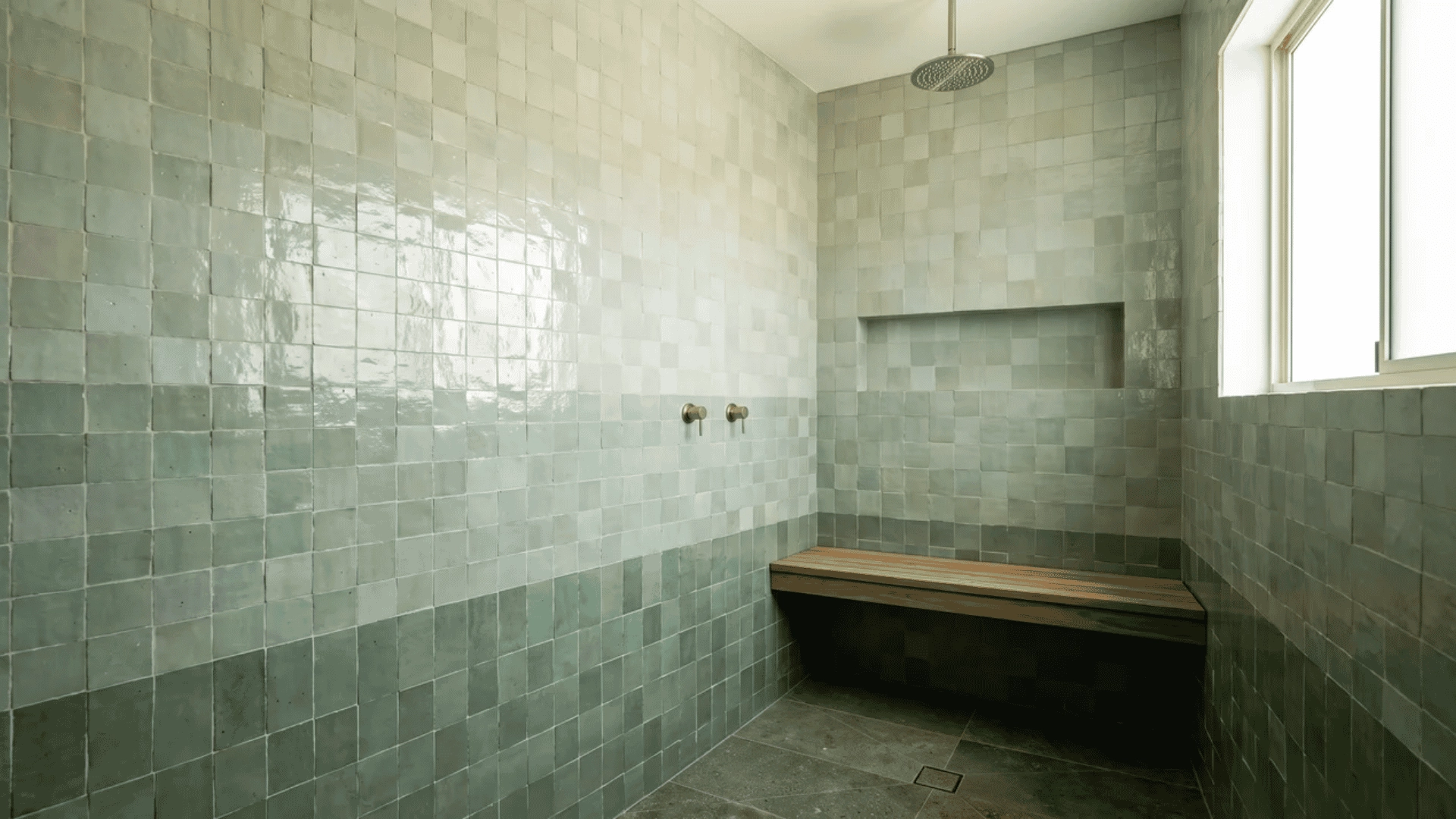
A sage-to-fern gradient zellige wall creates a gradual shift between soft and deeper green tones. The handmade surface adds movement while maintaining a natural, relaxed appearance.
Plan the tile layout before installation to preserve the gradient transition. Support the feature with neutral flooring, simple fixtures, and natural materials that allow the color progression to stand out.
21. Potted Botanical Styling as the Sole Green Element
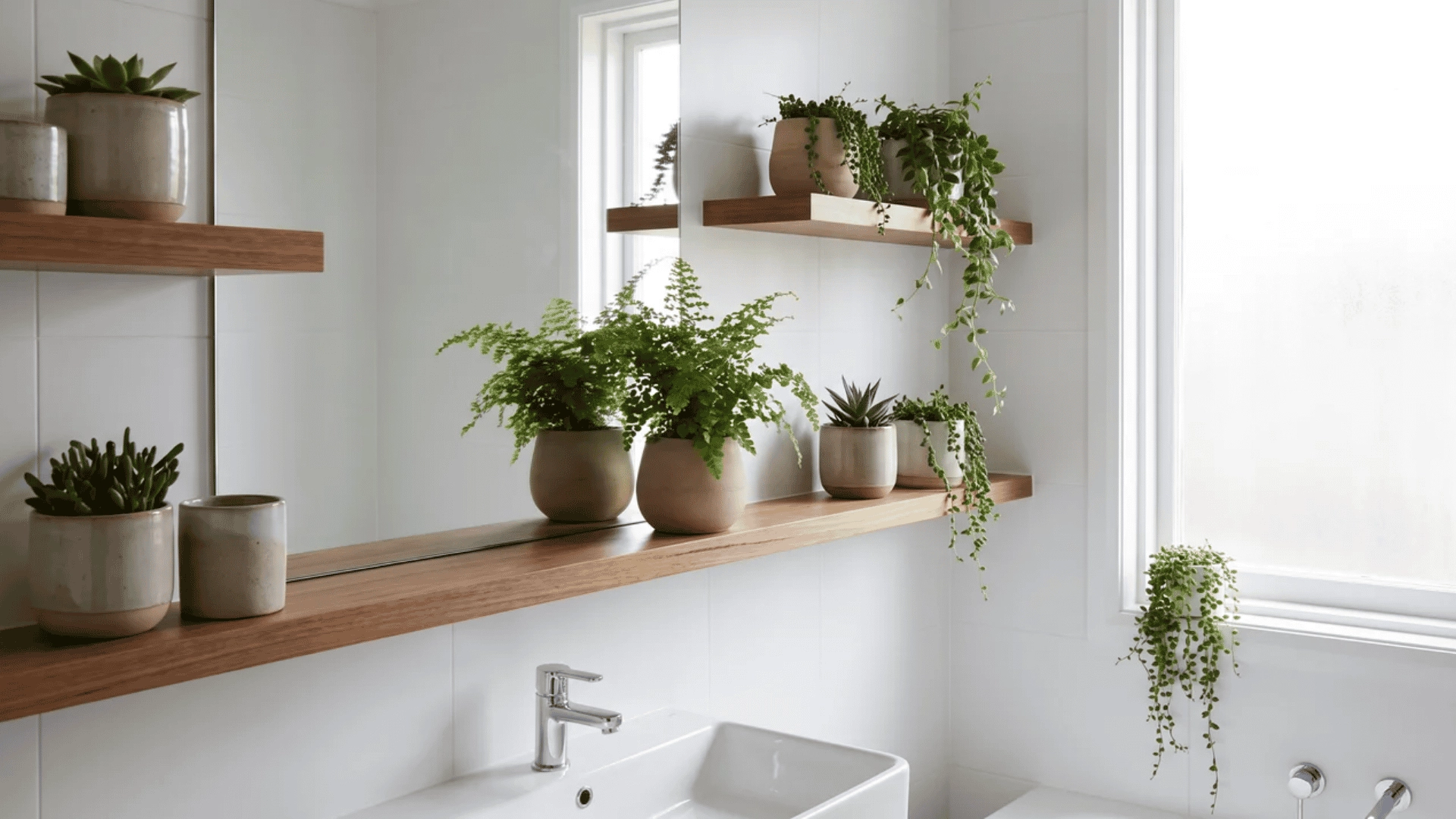
Potted plants introduce natural green without permanent changes to walls, tiles, or fixtures. The approach adds softness while keeping the bathroom design flexible.
Select plants suited to bathroom humidity and available light, then arrange them on shelves, counters, or stands. Use simple ceramic or woven pots to add texture while maintaining a clean overall look.
How to Choose the Right Shade of Green
Room size, natural light, and the feeling you want should shape your choice. Compare each green under daytime and artificial bathroom lighting.
- Sage Green: Best for small or medium bathrooms with moderate light. Its muted tone creates a calm, soft, and welcoming mood.
- Mint Green: Suits small bathrooms with limited natural light. The pale color feels clean, bright, and cheerful without appearing too bold.
- Olive Green: Works well in medium or large bathrooms with warm natural light. It creates an earthy, cozy feel beside wood and brass.
- Emerald Green: Best for medium or large, well-lit bathrooms. Its rich color creates a bold, polished mood, especially on tile or cabinetry.
- Forest Green: Suits larger bathrooms or small powder rooms with good lighting. The deep shade produces a cozy, dramatic, and grounded effect.
- Seafoam Green: Fits small bathrooms with plenty of daylight. Its light blue undertone creates an airy, relaxed setting beside white or pale gray.
Test samples beside the flooring, fixtures, and vanity before deciding. Existing undertones can make the same green look warmer, cooler, lighter, or darker.
What Colors Go With a Green Bathroom?
The right supporting color can soften, brighten, or deepen green. Consider the shade’s undertone and your bathroom’s lighting before choosing nearby finishes.
| Pairing | Best Green Shades | Result |
|---|---|---|
| Warm white | Sage, forest, emerald | Keeps the bathroom bright and clean while softening the intensity of deeper green walls, tile, or cabinetry. |
| Natural wood | Sage, mint, olive | Brings warmth and texture to cooler greens, creating a relaxed look that feels grounded rather than overly polished. |
| Soft pink | Sage, mint, emerald | Provides a gentle contrast that adds personality without competing with the main green surfaces. |
| Black | Forest, emerald, olive | Gives rich green shades a crisp, modern edge through taps, shower frames, mirrors, or cabinet hardware. |
| Brass | Sage, olive, emerald | Introduces a warm metallic finish that complements green vanities, painted walls, and richly colored tiles. |
| Gray | Seafoam, mint, forest | Creates a quiet, balanced color scheme, especially when used for flooring, stone counters, grout, or towels. |
Repeat the supporting color across two or three details, such as hardware, towels, and frames, to keep the bathroom consistent without making it feel overdone.
Conclusion
A bathroom should reflect how you want the space to feel every day, not just follow a design trend. The right color direction comes from understanding your routine, your home, and the atmosphere you want to create.
When I work through a room update, I find the best results usually come from starting with one element that feels right and building around it. A single decision can guide the rest of the space without forcing every detail to match.
Green gives you room to experiment because it can feel subtle or expressive depending on how it is introduced. The important part is creating a connection between the color, the finishes, and the way you use the bathroom.
Take your time with samples, textures, and lighting before committing. A thoughtful choice will feel more personal than simply copying a look from a photo.
Frequently Asked Questions
Is Green a Good Color for a Small Bathroom?
Yes, green can work well in small bathrooms when the shade and finish match the lighting. Softer sage greens create a calm feeling, while deeper greens can add depth when used intentionally.
What Shade of Green Is Most Popular for Bathrooms?
Sage and forest green remain popular choices because they create two different styles. Sage works well for calm, spa-inspired bathrooms, while forest green creates a richer and more dramatic look.
What Colors Go Well With Green in a Bathroom?
Warm brass, matte black, white, and natural wood pair well with different green shades. The best combination depends on whether your green leans blue or yellow and how much contrast you want.
Can I Use Green in a Bathroom With No Natural Light?
Yes, but shade selection matters more in darker bathrooms. Blue-leaning greens and matte finishes usually perform better because they are less likely to shift under artificial lighting.