

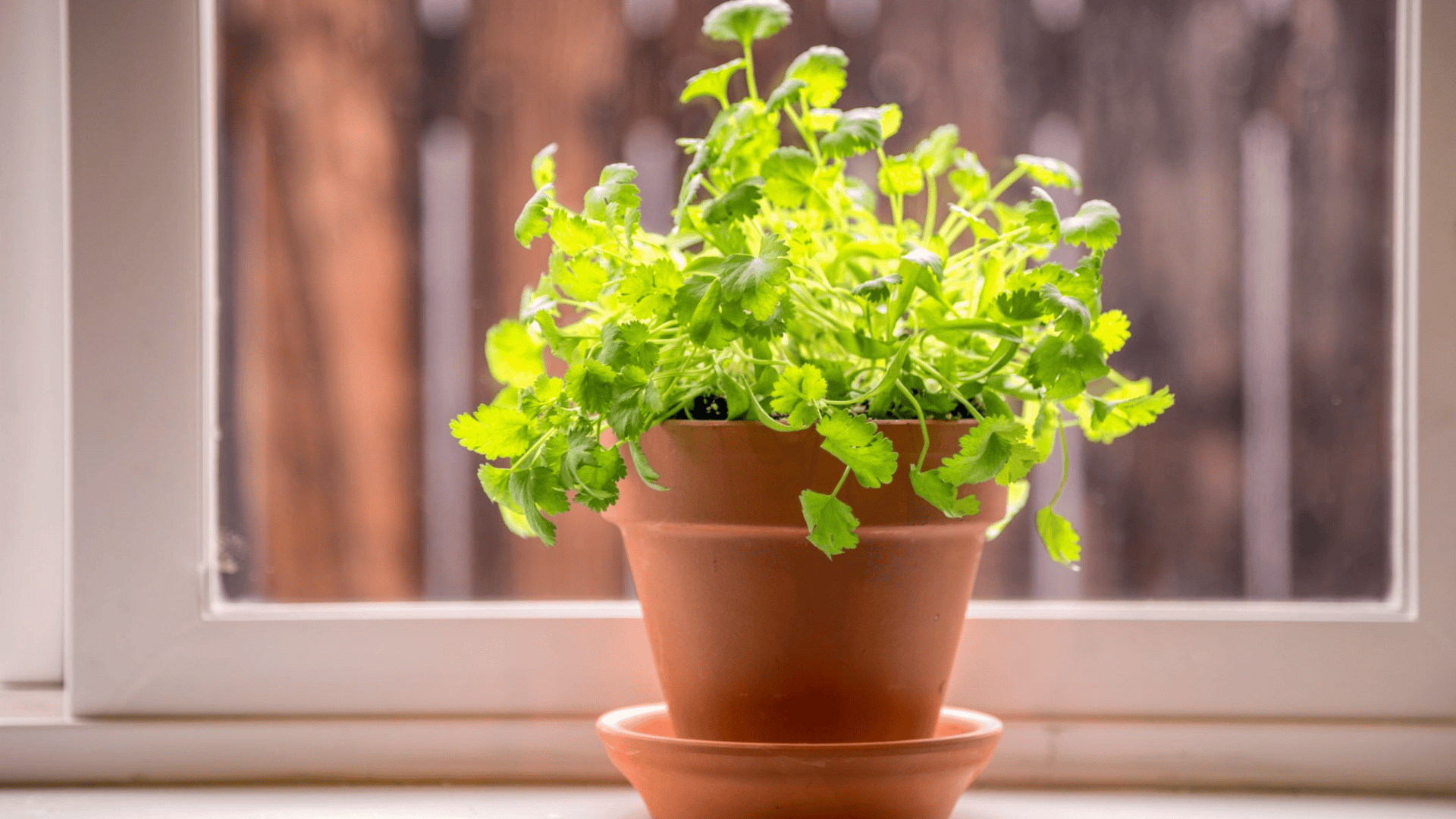
Cilantro is easy to grow and needs only basic care, but many home gardeners still wonder how to grow it in different climates.
It adapts well to garden beds, pots, and indoor spaces, which makes it a great choice for beginners.
In this guide, you’ll learn what helps cilantro grow well, what slows it down, and how small changes can improve your results.
I have shared simple ways to grow cilantro in garden beds, containers, or indoors, based on your space.
You’ll see how light, water, soil, and timing all play a role. By the end, you’ll feel more sure about growing cilantro and fixing small issues before they turn into bigger problems.
Cilantro Plant Specifications and Growth Details
Cilantro is a fast-growing herb that is easy to manage at home. It usually takes 30 to 45 days from planting to reach harvest size.
Most cilantro plants grow to an average height of 12 to 24 inches, depending on care and space.
The leaves are soft, flat, and bright green, and they grow in clusters from thin stems. Cilantro has a shallow taproot system, which means it does best in loose soil and does not like being disturbed.
Plants should be spaced about 6 to 8 inches apart to allow proper airflow and leaf growth.
Cilantro produces usable leaves for several weeks before it starts to flower. Once flowering begins, leaf production slows down.
Regular harvesting can help extend the leaf-growing period and keep the plant productive longer.
Cilantro Plant Specifications
- Scientific Name: Coriandrum sativum
- Plant Type: Annual herb
- Seed Germination Time: 7–14 days
- Preferred Soil pH: 6.2–6.8
- Light Requirement: Full sun to partial shade
- Water Needs: Moderate, consistent moisture
- Cold Tolerance: Light frost-tolerant
- Heat Sensitivity: Bolts quickly in high heat
- Harvest Method: Cut outer leaves first
- Edible Parts: Leaves, stems, seeds
How to Grow Cilantro in Garden Beds?
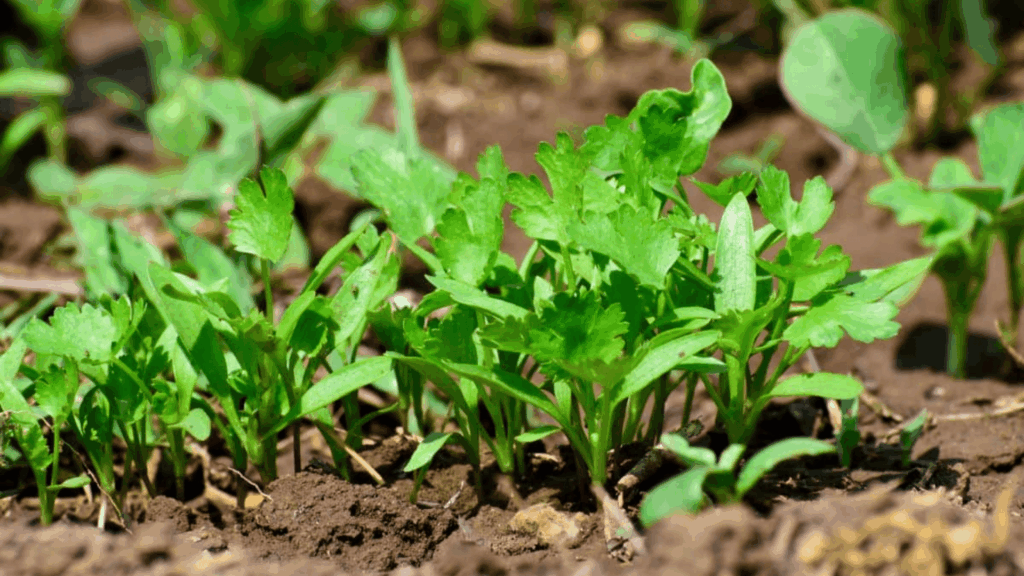
Growing cilantro in garden beds starts with choosing a spot that gets morning sun and some afternoon shade.
Prepare loose, well-draining soil and mix in compost before planting. Sow seeds directly in the bed, since cilantro does not like transplanting.
Plant seeds about half an inch deep and keep the soil lightly moist until sprouts appear.
Space plants six to eight inches apart for airflow. Water deeply when the top inch of soil dries. Avoid soaking the bed. Add a thin mulch layer to keep the soil cool.
Watch temperatures and protect plants from heat to slow bolting.
Begin harvesting outer leaves once plants reach six inches tall. Cut often to encourage new growth and steady leaf production throughout the season.
Use direct sowing, keep deep watering steady, and rely on regular harvesting to maintain healthy beds all season long easily.
Best Cilantro Growing Conditions
Cilantro grows best when its basic needs stay balanced and steady. Paying attention to soil, light, water, and temperature helps the plant grow full leaves and stay productive longer.
1. Soil Requirements for Cilantro
Cilantro grows best in loose, well-draining soil that allows roots to spread easily. Heavy or compact soil can trap water and cause root stress, which leads to weak growth.
A light garden soil mixed with compost works well and improves drainage.
The soil should hold moisture but never stay soggy. Cilantro prefers neutral to slightly acidic soil, but it can still grow in average soil if drainage is good.
Avoid clay-heavy soil unless it is amended. Healthy soil supports faster growth and better leaf production.
2. Sunlight Needs for Healthy Growth
Cilantro needs enough light to grow strong leaves, but it does not like harsh heat.
Around six hours of sunlight each day works best. In warm areas, morning sun with afternoon shade helps slow bolting. Too much direct sun can cause stress and quick flowering.
Indoors, place cilantro near a bright window that gets steady light.
If natural light is limited, a basic grow light can help. Even light exposure helps cilantro grow evenly and stay leafy longer.
3. Watering Routine for Cilantro
Cilantro prefers consistent moisture, but overwatering can cause problems.
Water the plant when the top inch of soil feels dry to the touch. Deep watering encourages stronger root growth, while shallow watering can weaken roots.
Make sure extra water drains out freely, especially in pots. Wet soil for long periods can lead to yellow leaves and slow growth.
A regular watering schedule helps cilantro grow evenly and keeps the leaves fresh and tender.
4. Ideal Temperature Range for Cilantro
Cilantro grows best in cooler temperatures between 50°F and 75°F. Heat above this range often causes the plant to bolt early.
In hot climates, planting during cooler seasons helps extend leaf growth.
Indoors, normal room temperatures work well if airflow is good. Avoid placing cilantro near heaters or hot windows. Sudden temperature changes can stress the plant.
Keeping temperatures steady helps cilantro grow at a slower pace and produce usable leaves longer.
Growing Cilantro in Pots and Containers
Growing cilantro in pots and containers works well when space is limited. Choose a container that is at least 8 to 10 inches deep so the roots have room to grow.
Make sure the pot has drainage holes to prevent water from sitting at the bottom.
Use loose, well-draining potting soil and avoid heavy garden soil. Sow seeds directly into the container since cilantro does not like transplanting.
Place the pot where it gets morning sun and light shade later in the day. Water when the top inch of soil feels dry, but do not overwater. Containers dry out faster, so check moisture often.
Rotate the pot every few days for even growth.
Start harvesting once plants reach six inches tall. Regular cutting helps keep cilantro producing fresh leaves longer.
How to Grow Cilantro Indoors Successfully?
Growing cilantro indoors allows you to have fresh leaves year-round. With proper light, watering, and airflow, cilantro grows well inside your home.
1. Choosing the Right Indoor Location
Place cilantro near a bright window that receives at least four to six hours of light daily.
South- or west-facing windows work best. Avoid dark corners, as low light leads to weak growth. Keep plants away from heat vents and drafty areas.
Stable room conditions help cilantro grow evenly.
If sunlight is limited, using a basic grow light for a few hours daily supports healthy leaf growth and prevents leggy stems.
2. Using Proper Containers and Soil
Select a pot that is at least eight inches deep with drainage holes.
This gives roots enough space and prevents water buildup. Use light, well-draining potting soil instead of garden soil. Loose soil allows better airflow to roots and supports steady growth.
Avoid packing the soil tightly.
Good drainage and the right pot size help indoor cilantro grow strong and reduce common root issues.
3. Watering and Indoor Care Routine
Water indoor cilantro when the top inch of soil feels dry. Pour slowly until water drains from the bottom. Do not let the pot sit in standing water.
Indoor air can be dry, so light misting may help during winter.
Ensure good airflow around the plant to reduce moisture buildup on leaves. A steady care routine keeps cilantro healthy and productive indoors.
4. Managing Light and Temperature
Indoor cilantro grows best in cooler room temperatures between 60°F and 70°F.
Too much heat can cause early bolting. Rotate pots every few days so all sides receive light. If using grow lights, keep them a few inches above the plant.
Balanced light and temperature help cilantro grow evenly and maintain fresh, usable leaves longer.
When and How to Harvest Cilantro?
The best time to harvest cilantro is when the plant is6 to 8 inches tall and has full, green leaves.
I usually harvest in the morning, after the dew dries but before the sun gets too hot, because the leaves taste better then.
To cut cilantro the right way, use clean scissors and snip the outer leaves first, about one inch above the soil. This lets the center keep growing. Never pull the plant out or cut all the leaves at once.
You can harvest cilantro every 1 to 2 weeks as long as you only take up to one-third of the plant each time.
This keeps the plant healthy and productive.
If you notice flower stems starting to form, harvest right away since the leaves can turn bitter fast. Regular cutting helps cilantro last longer.
Tips for Growing Healthy Cilantro Anywhere
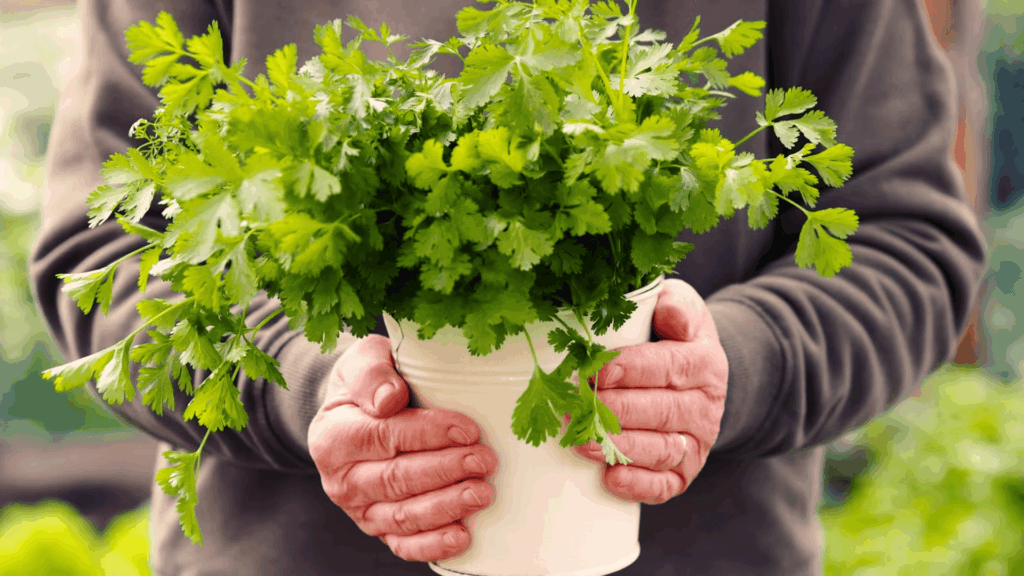
Small care changes can make a big difference in how long cilantro stays productive. These tips help improve leaf growth and reduce early flowering.
- Harvest outer leaves first to allow the center to keep growing
- Cut leaves often to slow flowering and extend harvest time
- Provide light shade during hot afternoons to reduce stress
- Keep soil evenly moist but never waterlogged
- Use loose, well-draining soil to support steady root growth
- Avoid disturbing roots once the plant is established
- Rotate containers for even light exposure
- Remove flower stalks as soon as they appear
- Grow new batches every few weeks for a steady supply
Common Cilantro Growing Problems
Cilantro can face a few common growing problems, but most are easy to fix. Bolting happens when the plant gets too much heat or direct sun.
Move it to partial shade and water regularly to slow this down.
Yellow leaves often point to overwatering or poor drainage, so let the soil dry slightly between watering. Slow growth is usually caused by low light or compact soil.
Improve light exposure and loosen the soil if needed. Pests like aphids may appear on new growth, especially indoors.
Rinse leaves gently with water or wipe them off by hand. Avoid harsh sprays when possible.
Keeping airflow steady, soil well-drained, and care consistent helps prevent most issues and keeps cilantro healthy and productive.
Conclusion
Growing cilantro does not have to feel complicated or frustrating. Once you understand its basic needs, the plant becomes easy to manage and rewarding to grow.
Paying attention to light, soil, water, and temperature makes a big difference in how long cilantro stays productive.
Whether you grow it in a garden bed, a container, or indoors, the same simple care habits apply. Choose the setup that fits your space and daily routine, and adjust as needed as the plant grows.
Cilantro responds well to regular harvesting and steady care, even in changing conditions.
If you have been unsure about growing herbs before, cilantro is a great place to start.
Try one method, learn as you go, and see what works best for you. Share your cilantro growing experience or tips in the comments below.