

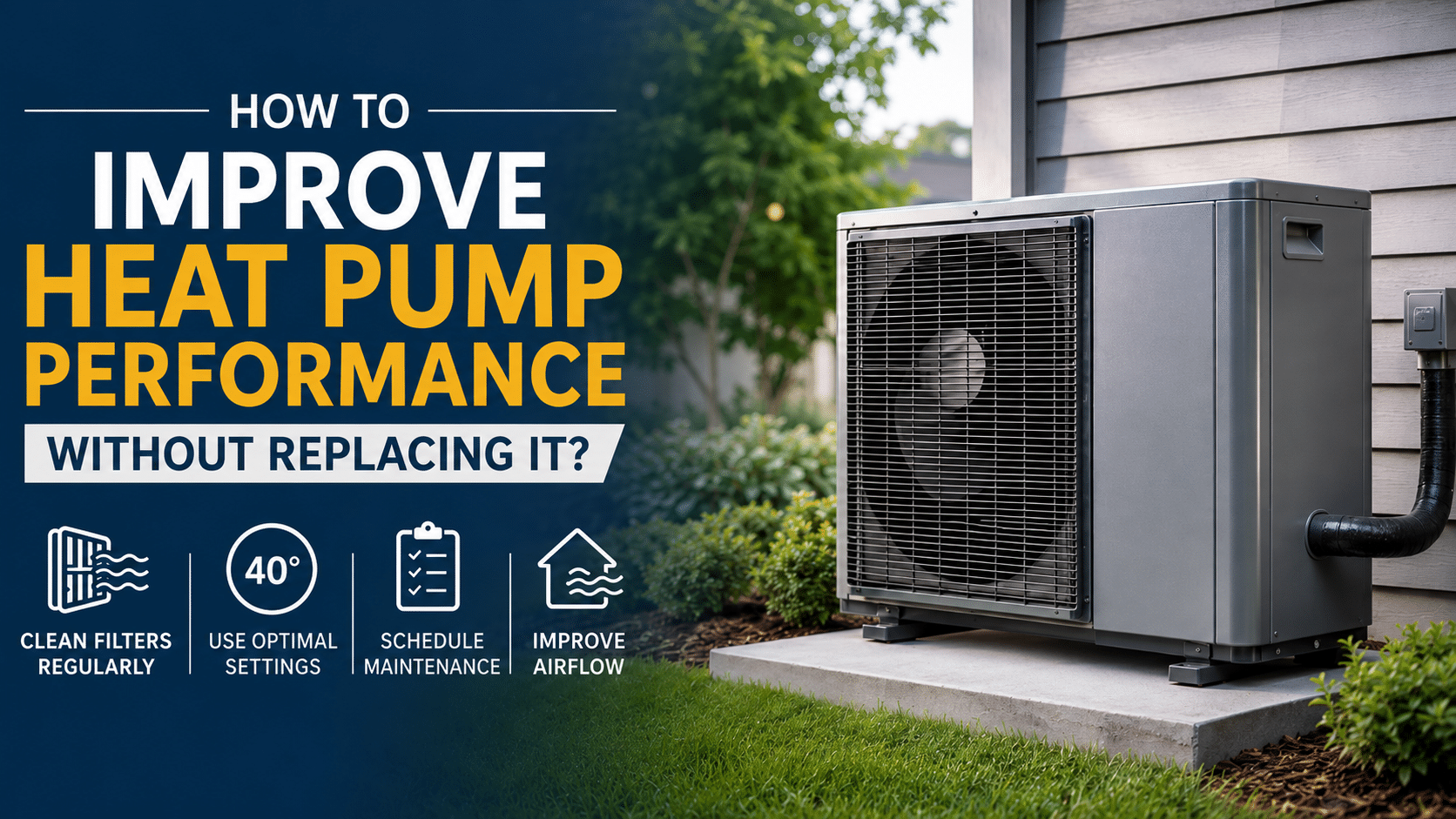
Many homeowners assume that if their heat pump is not performing well, the only solution is to replace it. In reality, that is rarely the case.
Some systems are condemned after only a few years, even though the heat pump itself is working correctly. The real problem may be poor settings, incorrect controls, restricted flow, or a system that was never properly commissioned.
Before spending thousands on a replacement, it is worth asking: How to Improve Heat Pump Performance by correcting the way the existing system operates
1. Optimise the Flow Temperature
One of the biggest factors affecting efficiency is the flow temperature.
Many heat pumps are left running at unnecessarily high temperatures because they have been set up like a traditional gas boiler. Heat pumps normally work best when producing lower-temperature heat over longer periods.
Lowering the flow temperature allows the system to operate more efficiently while still keeping the home comfortable. The correct setting depends on the radiators, the property’s heat loss, and the original design.
Small changes, followed by monitoring, can reduce electricity consumption
2. Enable Weather Compensation
Modern heat pumps can adjust their flow temperature automatically as the outside temperature changes.
This feature, known as weather compensation, is often disabled or incorrectly configured.
When set up correctly, the system raises the flow temperature during colder weather and lowers it when conditions are milder. This helps maintain a consistent indoor temperature while allowing the heat pump to run efficiently.
If homeowners are asking, How to Improve Heat Pump Performance without changing the unit, checking weather compensation is one of the best places to start.
3. Balance the Heating System
An unbalanced heating system can leave some rooms too warm while others struggle to reach temperature.
Homeowners may increase the thermostat or flow temperature to compensate. The heat pump then works harder even though the real issue is poor heat distribution.
Balancing radiators or underfloor heating circuits ensures that heated water reaches each area correctly. This may involve checking flow rates, valves, and manifolds.
The result is better comfort and a system that does not have to work as hard.
4. Check the Controls
Many performance issues are not caused by the heat pump itself.
Incorrect programmer settings, thermostats, hot water schedules, heating curves, or zone controls can all affect efficiency. Frequent cycling can also increase electricity use and make temperatures less stable.
Sometimes, correcting a thermostat position or changing a hot water schedule can make a noticeable difference without changing hardware.
5. Review the Original Design
Not every heat pump is installed or commissioned to the same standard.
Small design improvements can make a significant difference. This might include adjusting flow rates, reviewing radiator capacity, checking system water volume, cleaning filters, or confirming pump settings.
The system should also be checked for trapped air, blocked strainers, incorrect sensor placement, or unnecessary use of backup electric heating.
For homeowners still wondering how to Improve Heat Pump Performance, a detailed assessment can identify problems that are not obvious from the heat pump display alone.
If these checks do not identify the cause, homeowners may benefit from independent heat pump troubleshooting support before considering a replacement.
UK Heat Pump Help reviews the system make and model, controller settings, fault codes, flow and return temperatures, commissioning information, and details of any recent changes.
This allows the team to identify likely causes of poor performance and provide clear, practical recommendations for improving the existing system.
When Might Replacement Be Necessary?
There are occasions where replacing a heat pump is the right decision.
If the unit has suffered major component failure, reached the end of its service life, or was significantly undersized or oversized for the property, replacement may be the best long-term option.
Replacement may also be necessary where repeated repairs are becoming uneconomical. However, these situations are less common than many homeowners believe.
Improve Before You Replace
A poorly performing heat pump does not automatically mean you need a new one.
Many systems can be improved through careful diagnosis, correct settings, proper balancing, and professional optimisation. Small adjustments can improve comfort, lower running costs, and help the system operate as intended.
Before committing to a costly replacement, it is worth finding out whether the existing heat pump simply needs expert attention.
A proper review can separate equipment failure from installation, control, and commissioning issues, helping homeowners make a more informed decision.