

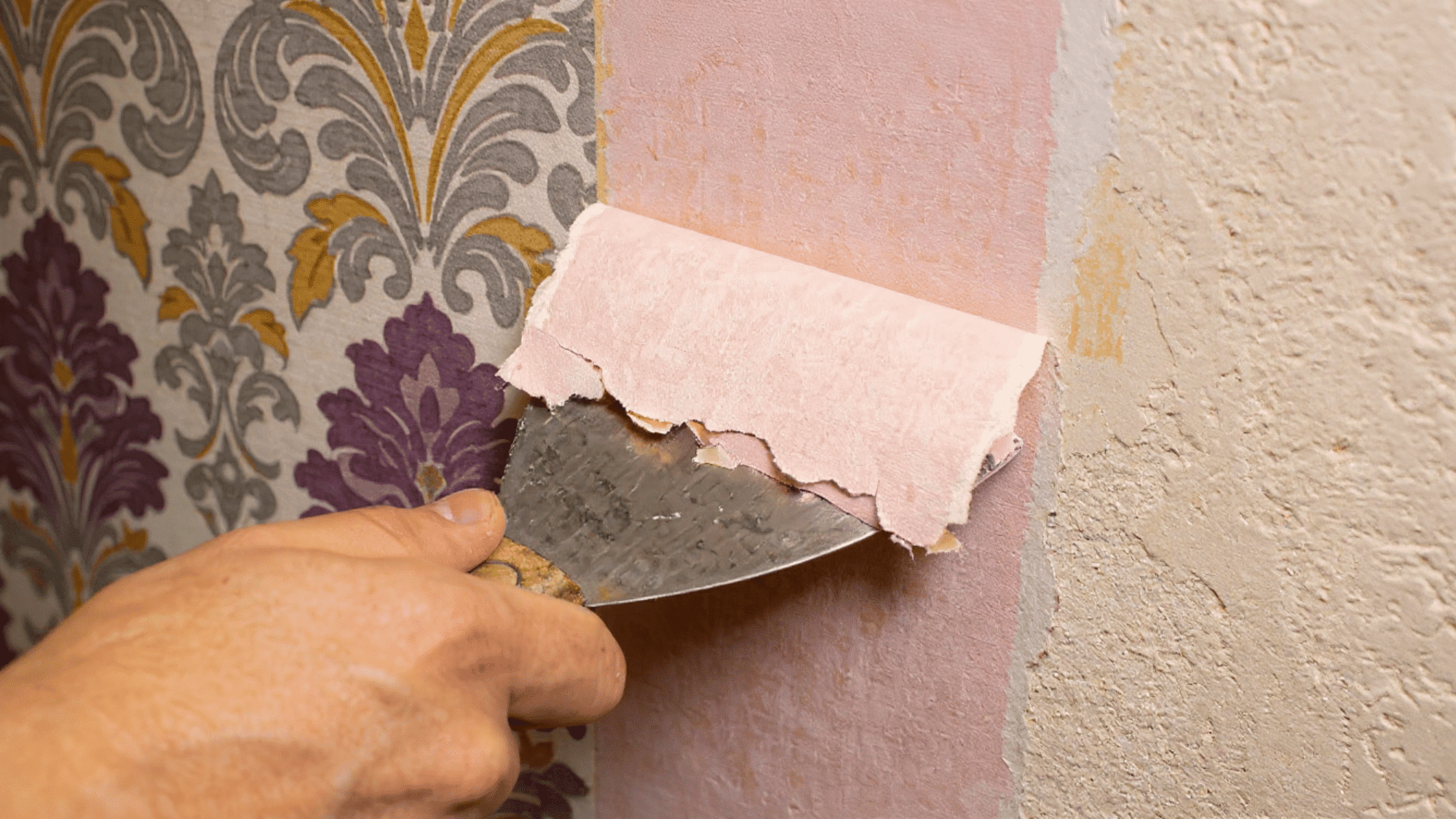
Paint spills on concrete can be a real headache. They look messy and seem impossible to clean.
But removing paint from concrete isn’t as tough as it sounds. Several tried-and-tested methods actually work.
Some use simple household items, while others need special tools. The right approach depends on the type of paint and how long it’s been there.
This blog breaks down the most effective techniques to get a concrete-looking clean again. Each method comes with clear steps that anyone can follow.
Essential Safety Gear for Paint Removal Projects
Safety gear protects against harmful fumes, chemicals, and debris during paint removal. Proper equipment prevents injuries and health issues. Never skip these basics when working with paint strippers or power tools.
| Safety Gear | Function |
|---|---|
| Safety Goggles | Shield eyes from paint chips, dust, and chemical splashes |
| Respirator Mask | Filters toxic fumes and airborne particles from chemical strippers |
| Heavy-Duty Gloves | Protects hands from harsh chemicals and prevents skin irritation |
| Long-Sleeved Clothing | Covers skin to avoid direct contact with paint removers |
| Knee Pads | Provides cushioning and comfort when working on floor surfaces |
| Closed-Toe Shoes | Guard feet from dropped tools and spilled chemicals |
Why Testing Paint Age Before Starting Removal is Important?
Paint age makes a huge difference in removal methods. Fresh paint comes off easier than old, stubborn layers that have bonded with concrete for years.
Testing helps choose the right approach and saves time. Old paint might need stronger chemical strippers, while newer spills respond well to gentler methods. This prevents wasted effort on techniques that won’t work.
Age also affects safety concerns. Paint from decades ago might contain lead, which requires special handling. Modern paints use different formulas that need specific removers.
A simple scratch test reveals a lot. If the paint flakes off easily, it’s probably newer.
Hard, tough layers that resist scraping indicate older paint. This quick check determines whether to use mechanical methods, chemicals, or a combination of both approaches.
Top Proven Methods to Remove Paint from Concrete
Removing paint from concrete ranges from simple washing to professional blasting. Choose methods based on paint age, thickness, area size, tools available, safety needs, and desired surface finish quality level.
1. Pressure Washing Fresh Paint
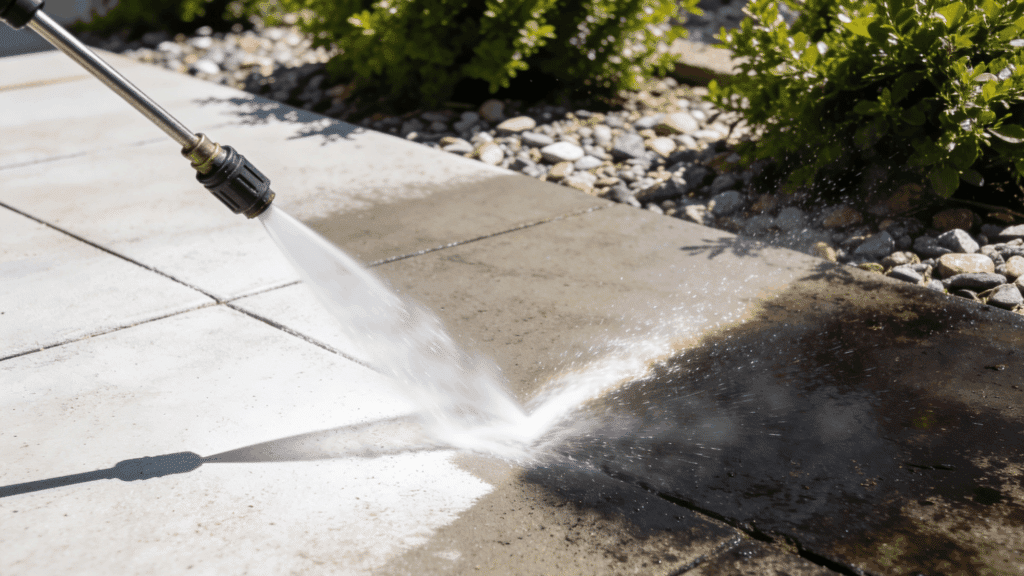
Best for fresh, thin paint drips. Low pressure and soap loosen paint without damaging concrete, especially outdoors, making it fast, inexpensive, and beginner-friendly for large driveways or patio areas.
Tools Required: Garden hose or low-PSI washer, mild detergent, safety glasses
Stepwise Instructions:
- Sweep and pre-wet the concrete surface thoroughly.
- Mix mild detergent with water in the washer or a bucket.
- Spray at a 45-degree angle using low PSI.
- Let soapy water sit briefly, then rinse clean.
2. Hot Water and Scrubbing
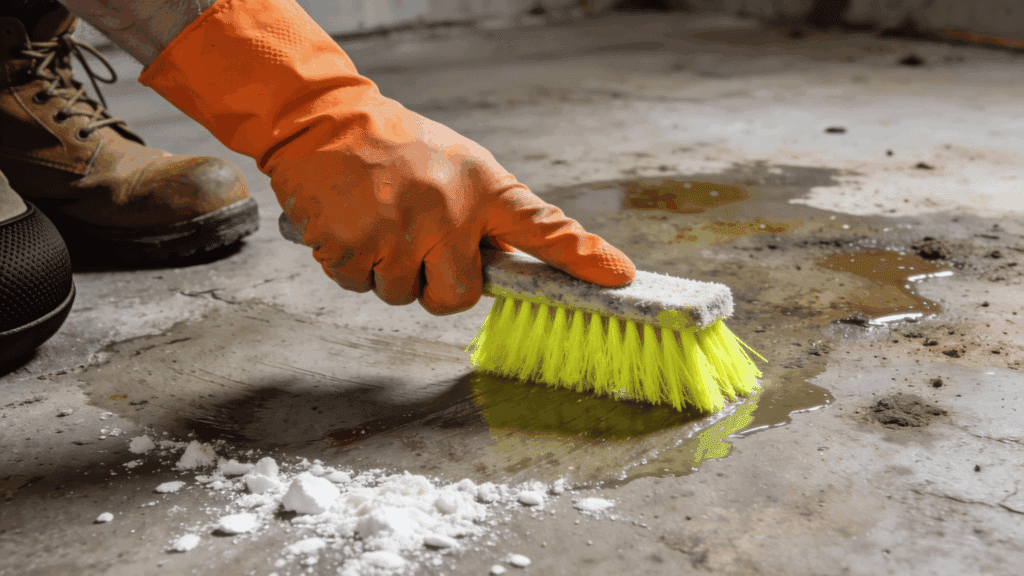
Heat softens paint bonds, allowing manual scrubbing to lift residue. Effective for small spots, indoor areas, or situations without power tools, though it requires physical effort and time investment.
Tools Required: Kettle or pot, stiff broom or deck brush, heat-resistant gloves
Stepwise Instructions:
- Boil water and carefully pour it over the paint.
- Let the heat penetrate the paint for several minutes.
- Scrub firmly using a stiff brush or broom.
- Rinse and repeat if paint remains.
3. Wire Brush or Hand Scraping
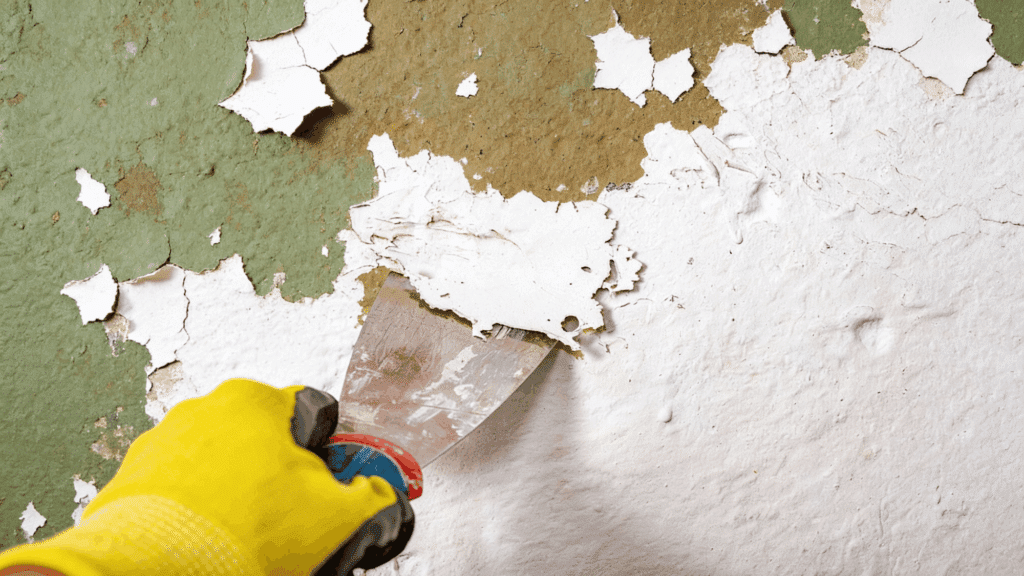
Mechanical abrasion removes cured latex paint efficiently.
Ideal for targeted areas, edges, or corners, but can leave surface marks, requiring cleanup and washing afterward for smooth results and uniform appearance.
Tools Required: Wire brush or scraper, drill, gloves, dust mask
Stepwise Instructions:
- Attach a wire brush to the drill or prepare a scraper.
- Work over-painted areas slowly.
- Apply even pressure to avoid gouging.
- Vacuum or sweep debris thoroughly.
- Wash the surface to remove residue.
4. Vinegar or Baking Soda Paste
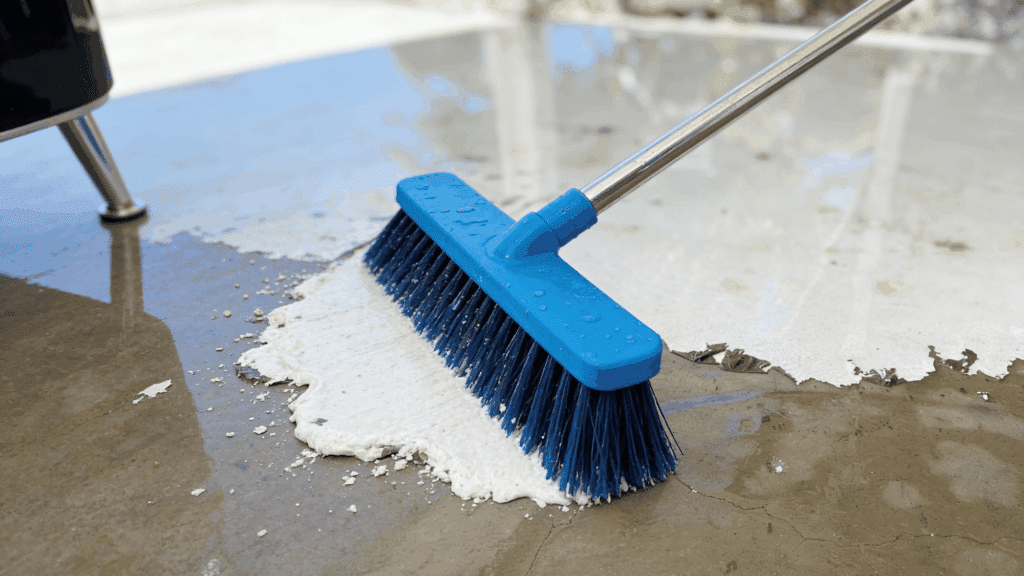
Natural acids or alkaline pastes weaken paint adhesion gradually. Suitable for light coatings and eco-conscious users, but slower results demand longer dwell times and repeated agitation for effective removal.
Tools Required: White vinegar or baking soda, brush, bucket, gloves
Stepwise Instructions:
- Apply a vinegar soak or a thick baking soda paste.
- Cover the area and wait one to two hours.
- Scrub the surface with a stiff brush.
- Rinse thoroughly with clean water.
5. Chemical Paint Strippers
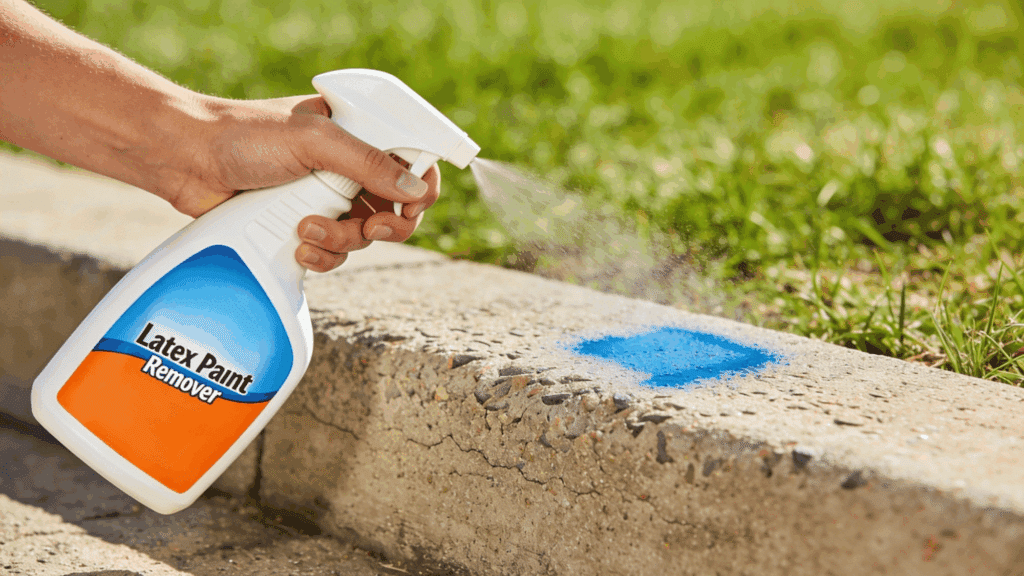
Chemical gels penetrate thick, stubborn paint layers effectively.
They minimize manual labor but require careful handling, ventilation, and neutralization to protect surfaces, users, and surrounding environments from damage, spills, and exposure.
Tools Required: Chemical stripper, scraper, gloves, goggles, respirator
Stepwise Instructions:
- Apply gel stripper evenly with a brush or roller.
- Allow recommended dwell time.
- Scrape softened paint carefully.
- Neutralize the surface as instructed.
- Rinse and dispose of waste safely.
6. Grinding or Sanding
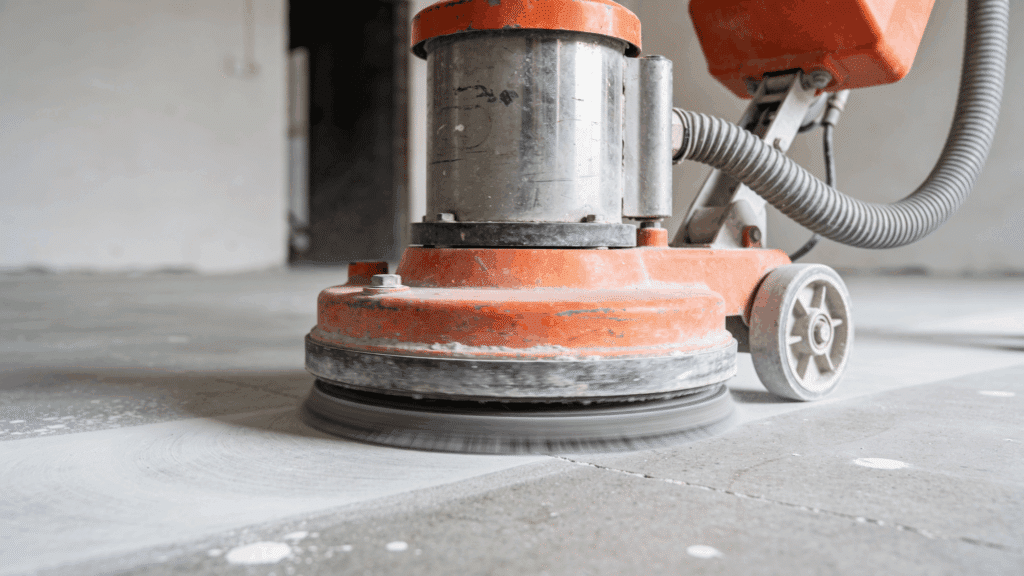
Aggressive mechanical removal grinds paint and concrete together. Best for heavily coated floors, but generates dust, noise, and surface roughness, demanding protective equipment and controlled technique to avoid damage risks.
Tools Required: Angle grinder, diamond cup wheel, respirator, ear protection
Stepwise Instructions:
- Fit a diamond cup wheel to the grinder.
- Work in small, controlled sections.
- Maintain steady pressure and movement.
- Control dust using a vacuum attachment.
- Clean and inspect surface finish.
7. Soda or Dustless Blasting
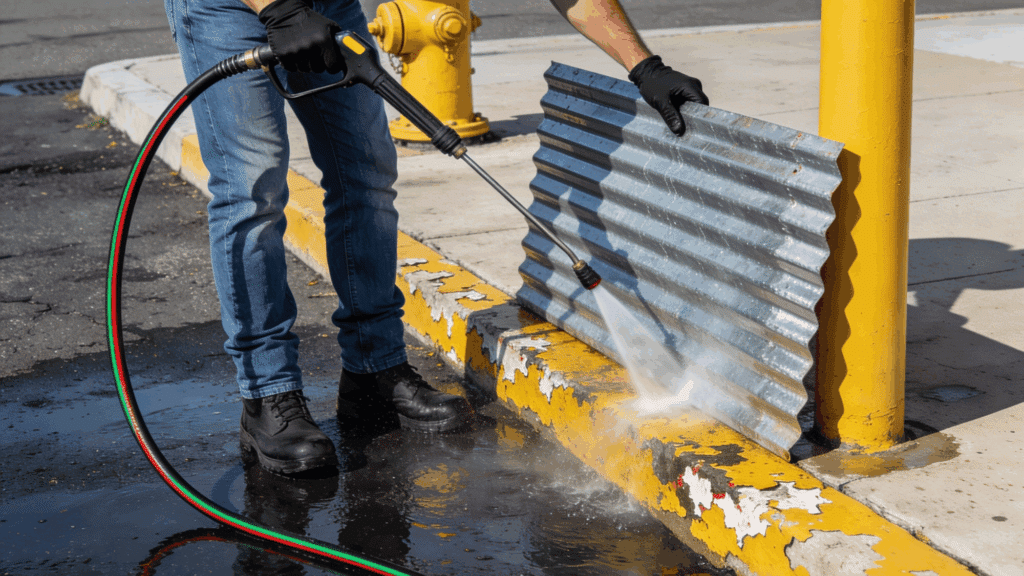
Professional abrasive blasting strips paint uniformly without chemicals.
Highly effective for large or commercial areas, but expensive, skill-intensive, and risky if incorrect pressure damages concrete surfaces, finishes, and profiles permanently.
Tools Required: Blasting machine, abrasive media, full PPE, training, or professional service
Stepwise Instructions:
- Seal surrounding areas to contain debris.
- Set blasting pressure appropriately.
- Test on a small inconspicuous section.
- Blast evenly across the surface.
- Inspect and clean finished concrete.
What to Do if The Paint Does Not Come Off?
Sometimes paint refuses to budge, no matter what method is used. This happens with old, thick layers or certain paint types that bond strongly with concrete.
Don’t give up yet. There are backup options that work when standard methods fail.
Combining different techniques often does the trick. For example, using a chemical stripper followed by pressure washing can break down stubborn paint.
Professional-grade tools might be necessary for extremely tough cases. Grinding or sandblasting equipment removes even the most resistant paint layers.
These powerful methods should be last resorts since they require experience and can damage concrete if misused.
Common Mistakes When Stripping Paint from Concrete Floors
Avoiding common errors saves time, money, and frustration. These mistakes can damage concrete surfaces or make paint removal harder than it needs to be.
- Skipping the test patch and applying chemicals to the entire floor at once.
- Using the wrong type of paint stripper for the specific paint formula.
- Not allowing enough dwell time for chemical strippers to work correctly.
- Scrubbing too aggressively and damaging the concrete surface underneath.
- Forgetting to neutralize chemical strippers after paint removal is complete.
- Working in poorly ventilated areas without proper airflow and fresh air.
Conclusion
Removing paint from concrete takes patience and the right approach. Each method has its place, from gentle scrapers to powerful chemical strippers.
Safety should never be an afterthought. Proper gear protects against fumes and chemicals that can cause real harm. Testing small areas first prevents costly mistakes and surface damage.
Some projects go smoothly, while others need multiple attempts. That’s completely normal. Stubborn paint doesn’t mean failure; it just means trying a different strategy or calling in professionals.
Clean concrete is within reach. The methods outlined here have helped countless people restore their surfaces. Now it’s time to pick the proper technique and get started on that paint removal project.