

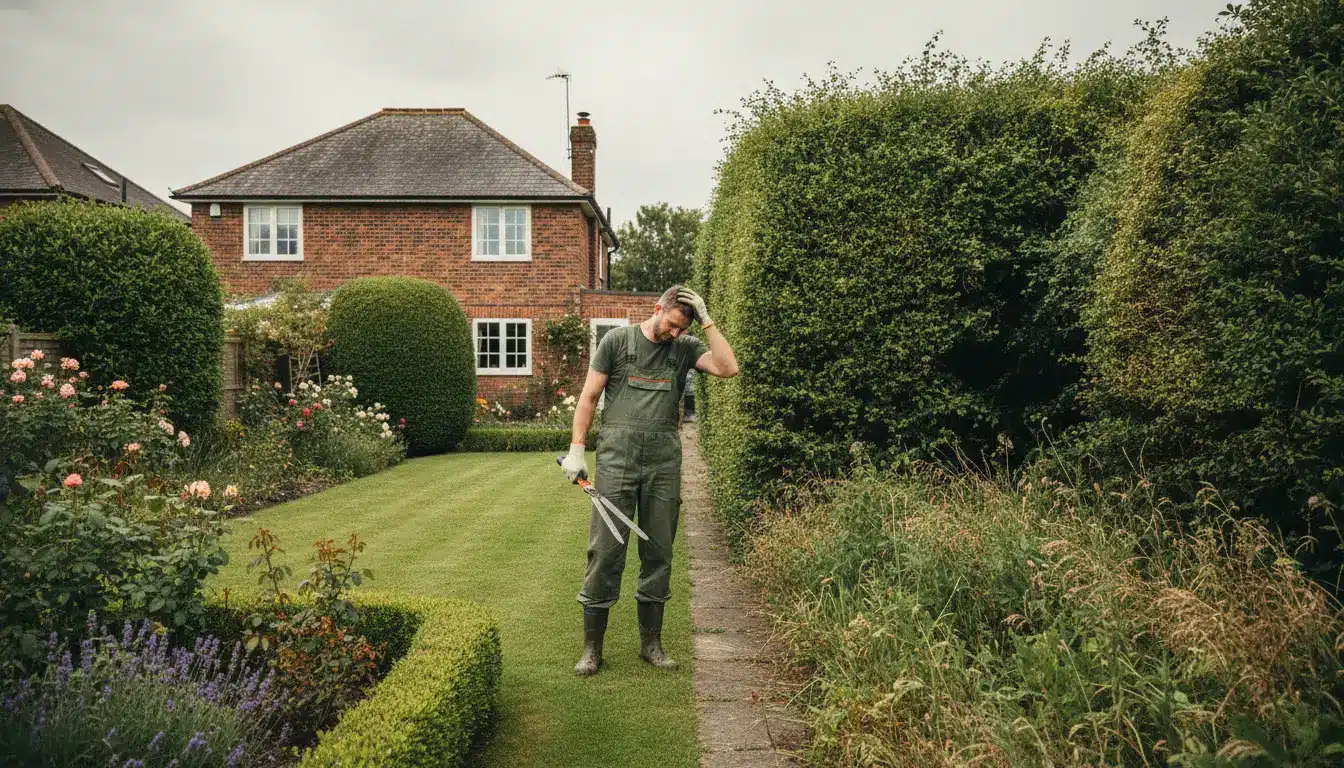
We all start the spring with grand visions of pristine topiary and a lawn that would make the groundkeepers at Wimbledon weep with envy.
The reality is usually a frantic Saturday morning spent wrestling with a petrol mower that has decided to take an early retirement.
Maintaining a bit of paradise in the UK has never been a cheap hobby, but lately, the price of keeping the weeds at bay is climbing. So, let’s take a look at why the price of a tidy hedge is heading north in 2026.
The Economy Is Pruning Our Budgets
It’s no secret that the cost of living across the UK has been doing its best impression of a climbing rose lately.
When the price of bread and milk goes up, it’s only a matter of time before the price of mowing the grass follows suit. Inflation affects every corner of the gardening world, from the cost of high-quality grass seed to the plastic pots for your geraniums.
Gardeners and landscaping firms have to balance their own rising domestic bills while trying to keep their businesses afloat and functional.
Because the general cost of running a household has spiked, professionals have to increase their rates just to maintain their standard of living. It’s a simple chain reaction where the extra pound you pay for a coffee eventually blooms into a higher bill for your flowerbeds.
A Growing Shortage of Green Fingers
Finding a reliable gardener nowadays can feel like trying to find a four-leaf clover in a field of tall fescue. There is a genuine shortage of skilled horticultural workers, and those who remain are understandably charging extra for their expertise.
This lack of available labour means that the few professionals left have diaries that are booked up until the next leap year.
When demand far outstrips the number of people willing to take on physically demanding outdoor work, the market rate for their time naturally increases. You’re no longer just paying for someone to trim the ivy; you’re paying for a rare and dwindling set of skills.
This shortage is also forcing many firms to spend more on recruitment and training to ensure their staff meet high standards. These internal costs are naturally passed on to the customer, resulting in a higher hourly rate for even basic maintenance tasks.
It’s a clear example of how a lack of vocational training can eventually impact your personal weekend budget.
The Price of Going Green Is Increasing
We’re all trying to be a bit more environmentally conscious, which is wonderful for the local bee population and the planet.
However, switching from traditional chemical pesticides to organic, eco-friendly alternatives often comes with a much higher price tag for the homeowner.
Sustainable gardening practices often require more manual labour, such as hand-weeding, which takes significantly more time than a quick spray of weedkiller.
Many UK residents are also requesting battery-powered tools to reduce noise pollution and carbon emissions during their weekly garden maintenance. While they’re much quieter, the initial investment for the gardener is quite steep.
Being a friend to nature is a noble pursuit, but it’s one that definitely requires a slightly heavier wallet in the current economy.
Equipment and Fuel Are Reaching New Heights
If you’ve visited a petrol station recently, you’ve probably considered trading your car for a sturdy pair of walking boots or a bicycle.
Most professional gardening equipment still relies on fuel, and transporting heavy machinery across the UK isn’t getting any cheaper for local businesses.
Every time the price at the pump jumps, the cost of getting a mower to your front door climbs right along with it. And it isn’t just the fuel that is expensive; the cost of the machinery itself has seen a significant increase over the last year.
Replacement parts for high-end equipment can now be significantly more expensive than they were a few years ago.
To keep their equipment in safe working order, professionals must invest heavily in maintenance, which inevitably reflects in the final quote you receive.
Regulatory Changes and Compliance Costs
One of the biggest hidden drivers of garden maintenance costs is the increasingly complex world of professional waste disposal. It wasn’t that long ago that you could simply leave a few bags of clippings at the curb and expect them to vanish.
Now, many local councils charge significant fees for green waste collection, and commercial rules are even stricter.
Professional gardeners must hold specific licences to transport and dispose of waste, which adds another layer of bureaucracy and cost. They often have to pay by the tonne to drop off organic matter at commercial composting sites, which is far from cheap.
These disposal fees are a non-negotiable part of the job that must be covered by the homeowner as part of the service.
There are also stricter regulations regarding the use of certain tools and the timing of work to protect nesting birds and local ecosystems. Compliance with these laws requires time and sometimes even specialised insurance that protects the worker and the property.
While these rules are beneficial for the environment, they certainly add to the administrative burden of running a gardening business.
The Seasonal Rush Creates a Pricing Peak
The British weather is famously unpredictable, but we all seem to have the exact same idea the moment the sun comes out.
As soon as the first warm weekend arrives, every phone in the country starts ringing with requests for an emergency lawn makeover.
This seasonal surge creates a massive bottleneck, where gardeners are forced to prioritise their most loyal or highest-paying clients first.
Many homeowners find that garden maintenance costs are a worthwhile investment when they guarantee a stress-free transition to a well-kept outdoor space.
By the time the hedges need their first trim of the year, the best professionals in the UK are already working ten-hour days.
Planning your maintenance in the off-season or booking far in advance is often the only way to ensure you secure the best help available.
Conclusion
At the end of the day, a well-kept garden is a little slice of heaven that adds incredible value to your property and your mood.
While the rising costs might make you want to pave over everything and buy a plastic flamingo, the effort is usually worth the result.
So, don’t let the numbers get you down; just remember that a smaller lawn is much faster to mow and leaves more time for tea.
Happy gardening, and may your weeds be few and your compost pile be surprisingly well-behaved this season!