

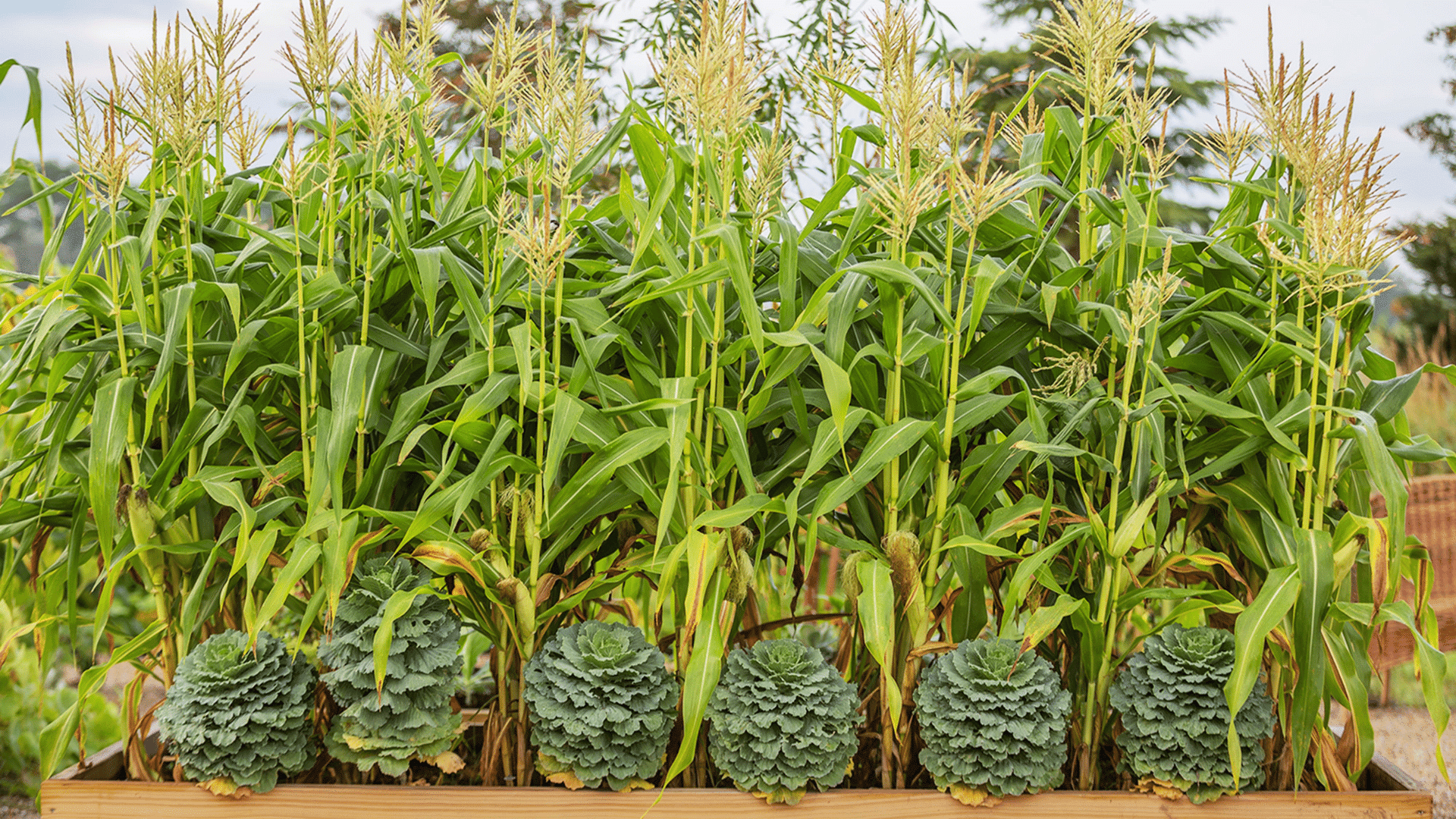
Growing corn successfully takes more than fertile soil and regular watering. The right neighboring plants can help create a healthier, more productive garden while making better use of available space.
Corn companion plants can provide natural ground cover, attract beneficial insects, support climbing crops, and even reduce weed growth when chosen carefully.
I have found that understanding how each plant benefits corn makes planning a garden much easier and more rewarding.
In this guide, you’ll learn the best companion plants for corn, which plants to avoid, and practical tips for creating a thriving vegetable garden that delivers a better harvest.
Why Grow Companion Plants with Corn?
Companion planting helps make better use of garden space while supporting a healthier growing environment for corn and nearby crops.
- Better Use of Vertical Space: Tall corn allows climbing plants like pole beans to grow upward instead of taking up extra ground space.
- Natural Ground Cover: Low-growing companions spread across the soil, helping protect exposed ground from direct sunlight.
- Improved Moisture Retention: Ground-covering plants reduce evaporation by shading the soil, helping it stay moist longer.
- Reduced Weed Growth: Dense companion plants cover bare soil, leaving less room and sunlight for weeds to become established.
- Habitat for Beneficial Insects: Flowering companions attract pollinators and predatory insects, contributing to a more balanced garden ecosystem.
- Productive Use of Corn Shade: Shade-tolerant vegetables can grow around mature corn, using areas with filtered sunlight.
- More Efficient Use of Small Beds: Combining compatible crops allows gardeners to harvest more from limited space without overcrowding plants.
Best Corn Companion Plants
The best corn companion plants either complement corn’s tall growth habit or serve a practical purpose, such as covering bare soil, attracting beneficial insects, or making better use of available garden space.
1. Pole Beans
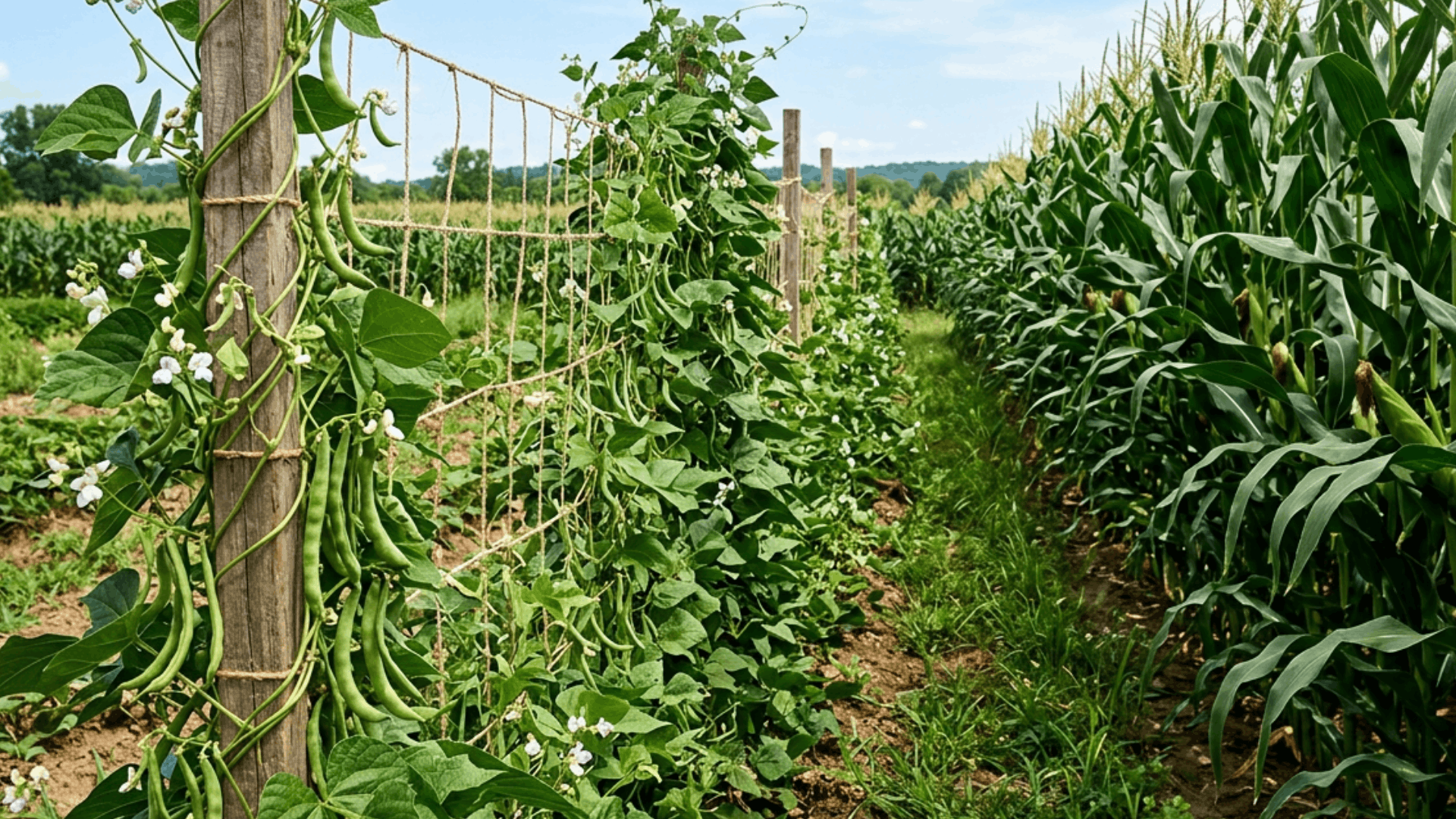
Pole beans are among the most popular companion plants for corn because they naturally climb sturdy corn stalks rather than needing a separate trellis.
As legumes, they fix nitrogen through bacteria living on their roots, although that nitrogen is not immediately available to growing corn.
Plant corn first and wait until the stalks are strong before sowing pole beans so the vines have reliable support without pulling young plants over.
2. Winter Squash
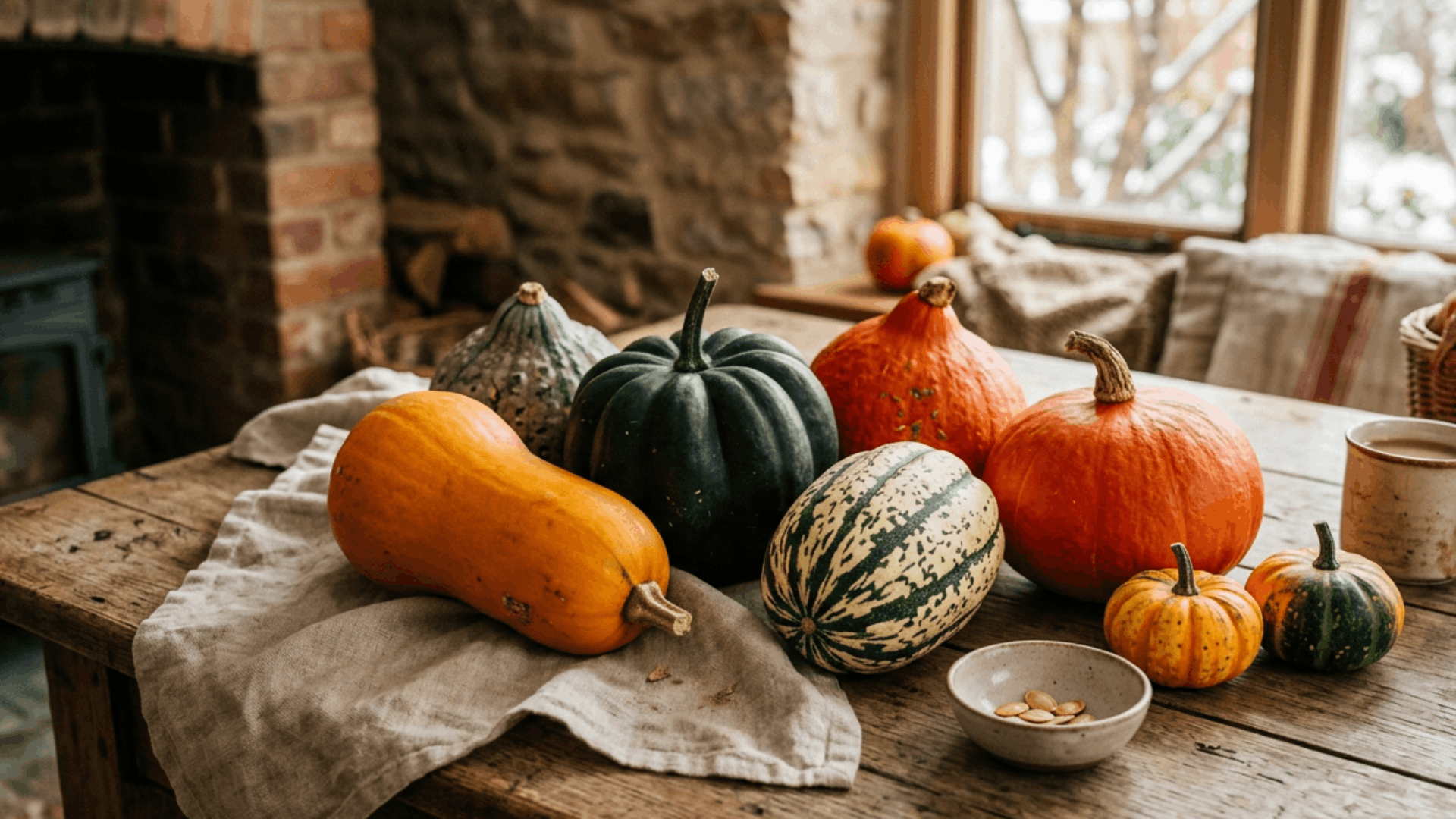
Winter squash grows broad, spreading vines with large leaves that shade the soil beneath corn. This natural ground cover helps reduce moisture loss while limiting open areas where weeds can grow.
The sprawling vines also make efficient use of unused garden space around tall corn.
Because winter squash can spread aggressively, leave plenty of room between plants and avoid growing it in narrow beds where it may overwhelm nearby crops.
3. Pumpkins
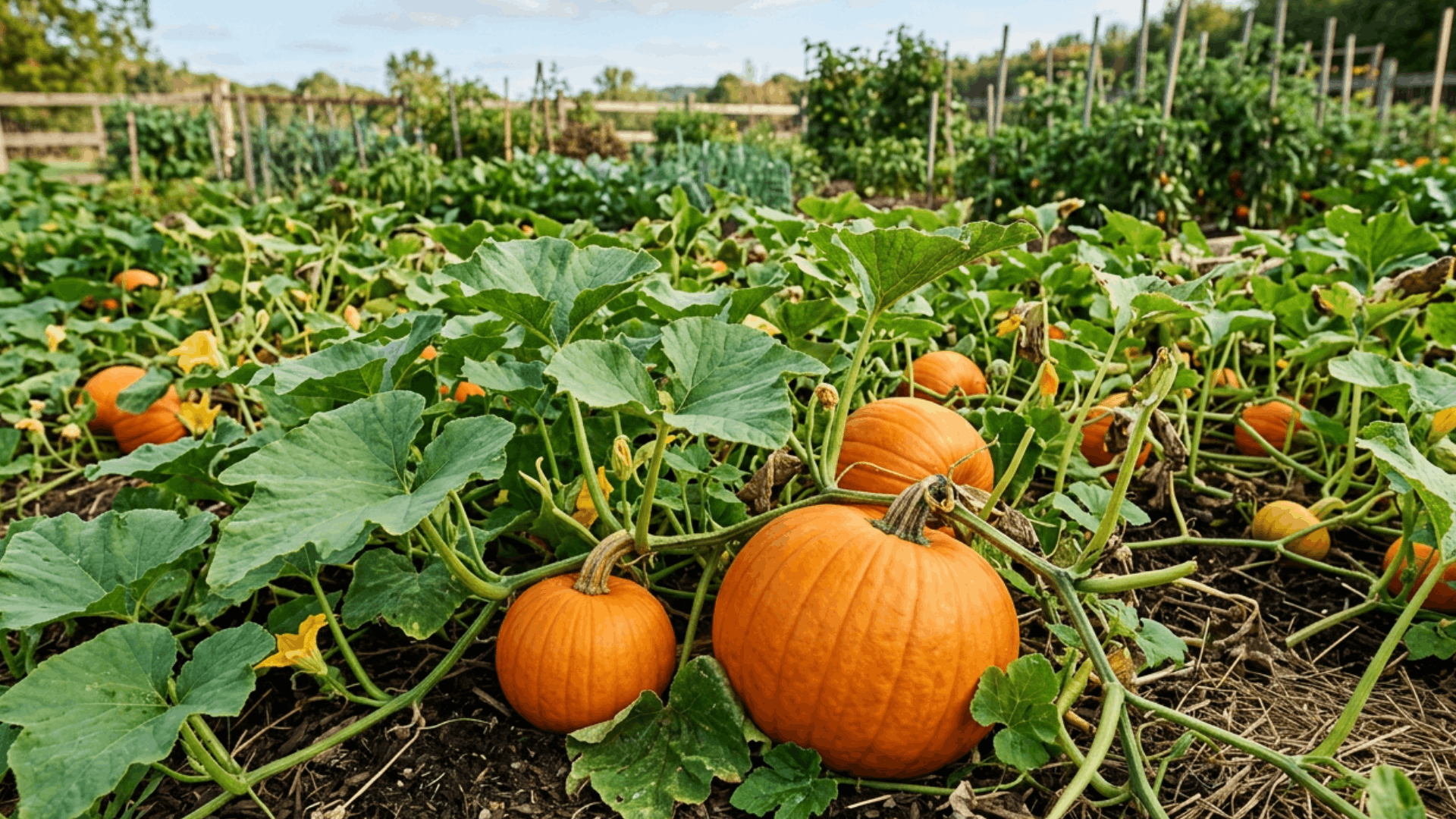
Pumpkins provide many of the same benefits as winter squash by spreading across the soil beneath corn and acting as a living mulch.
Their large leaves help conserve moisture and reduce weed growth throughout the growing season.
Since pumpkin vines can become extensive, guide them toward garden edges or open pathways rather than letting them wrap around corn stalks or block access for watering and harvesting.
4. Cucumbers
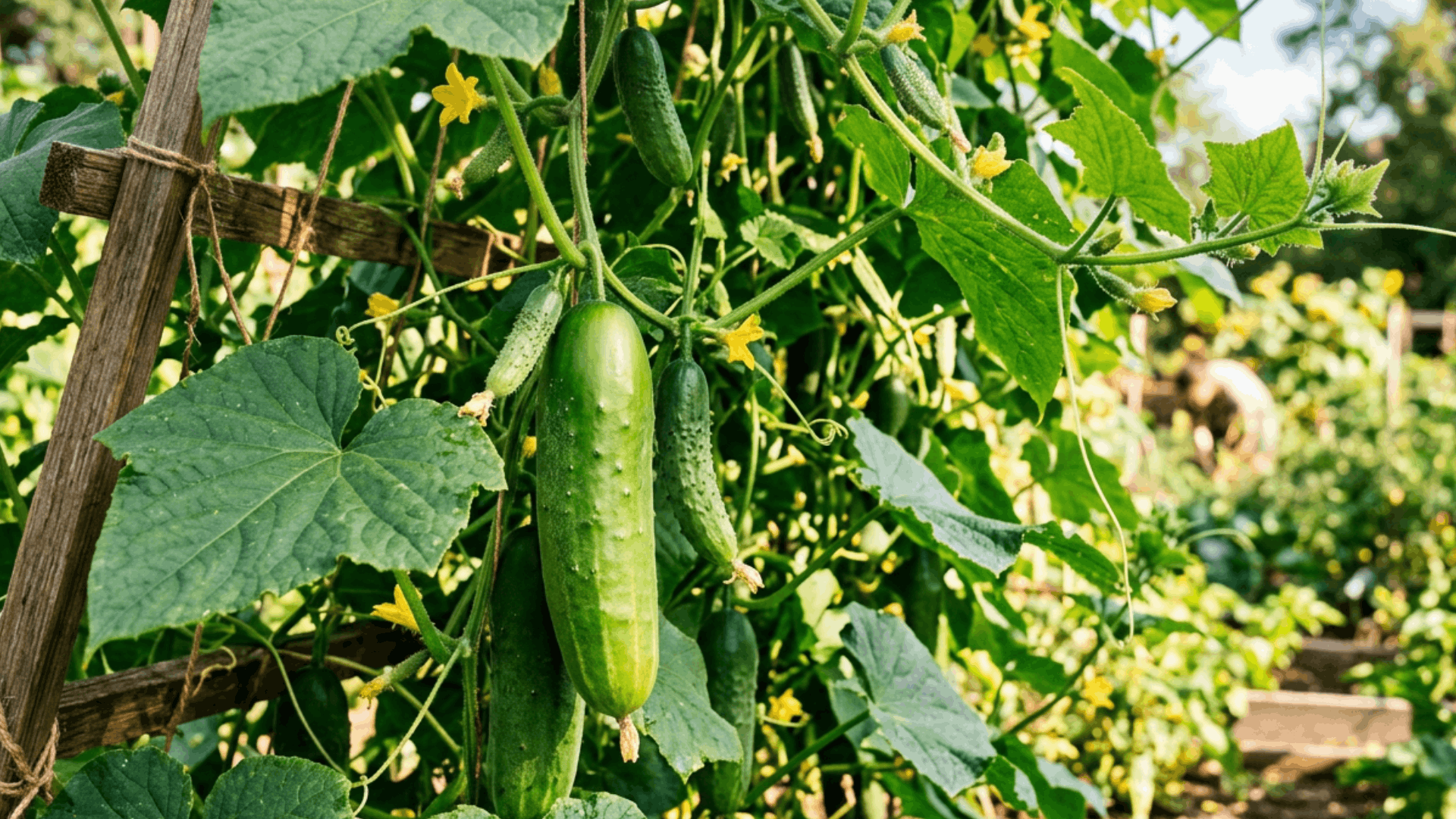
Cucumbers can serve as an effective living ground cover around corn, especially in larger vegetable gardens.
Bush cucumber varieties are often the best choice for smaller spaces because they stay more compact and are easier to manage.
If growing vining types, direct the vines away from young corn plants so they do not climb or weigh down developing stalks while still making good use of available ground space.
5. Melons
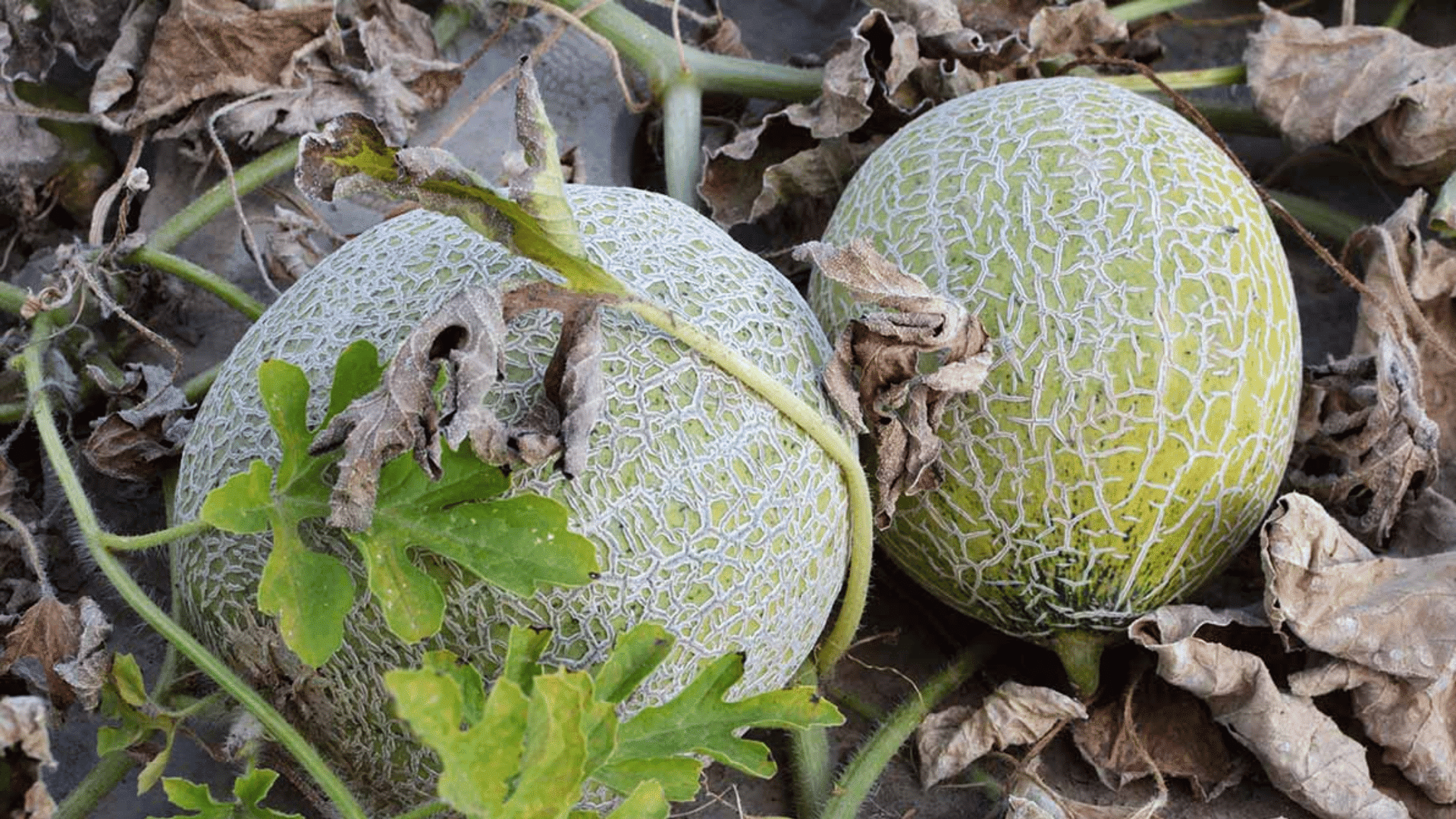
Melons thrive in the same warm growing conditions that corn enjoys and help cover exposed soil with their trailing vines.
Their dense foliage can reduce moisture evaporation while making productive use of otherwise empty garden space.
However, melon plants require generous spacing to grow properly. Avoid planting them directly beside every corn stalk, and allow enough room for vines to spread without restricting airflow or crowding neighboring plants.
6. Peas
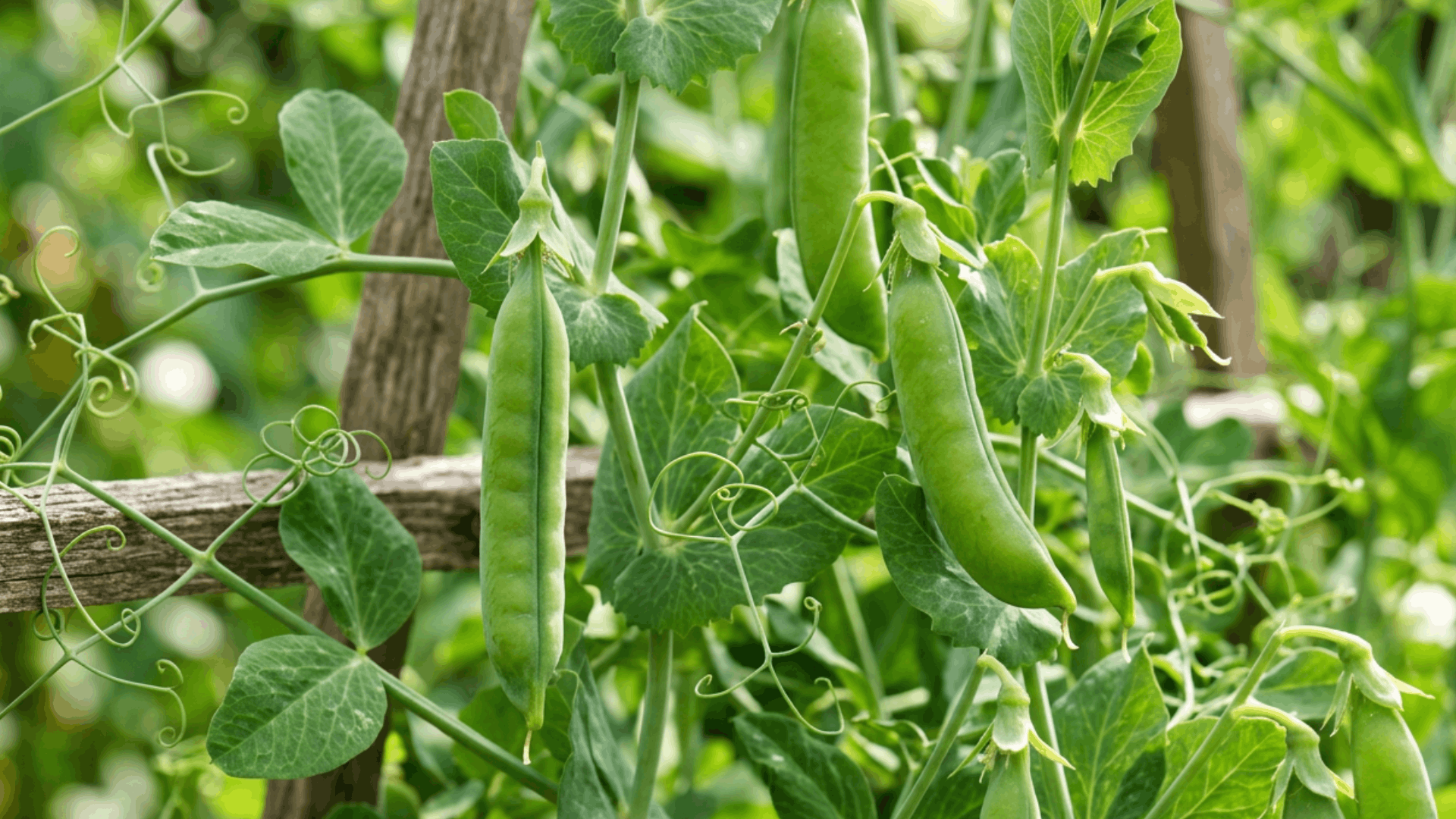
Peas are nitrogen-fixing legumes that can complement corn, but their growing season differs from most corn varieties.
Since peas prefer cool temperatures, they usually perform better as an early-season crop before corn reaches full size or as part of a succession planting.
Climbing pea varieties can also benefit from nearby support, although they are generally less suitable than pole beans for midsummer companion planting in many regions of the United States.
7. Lettuce
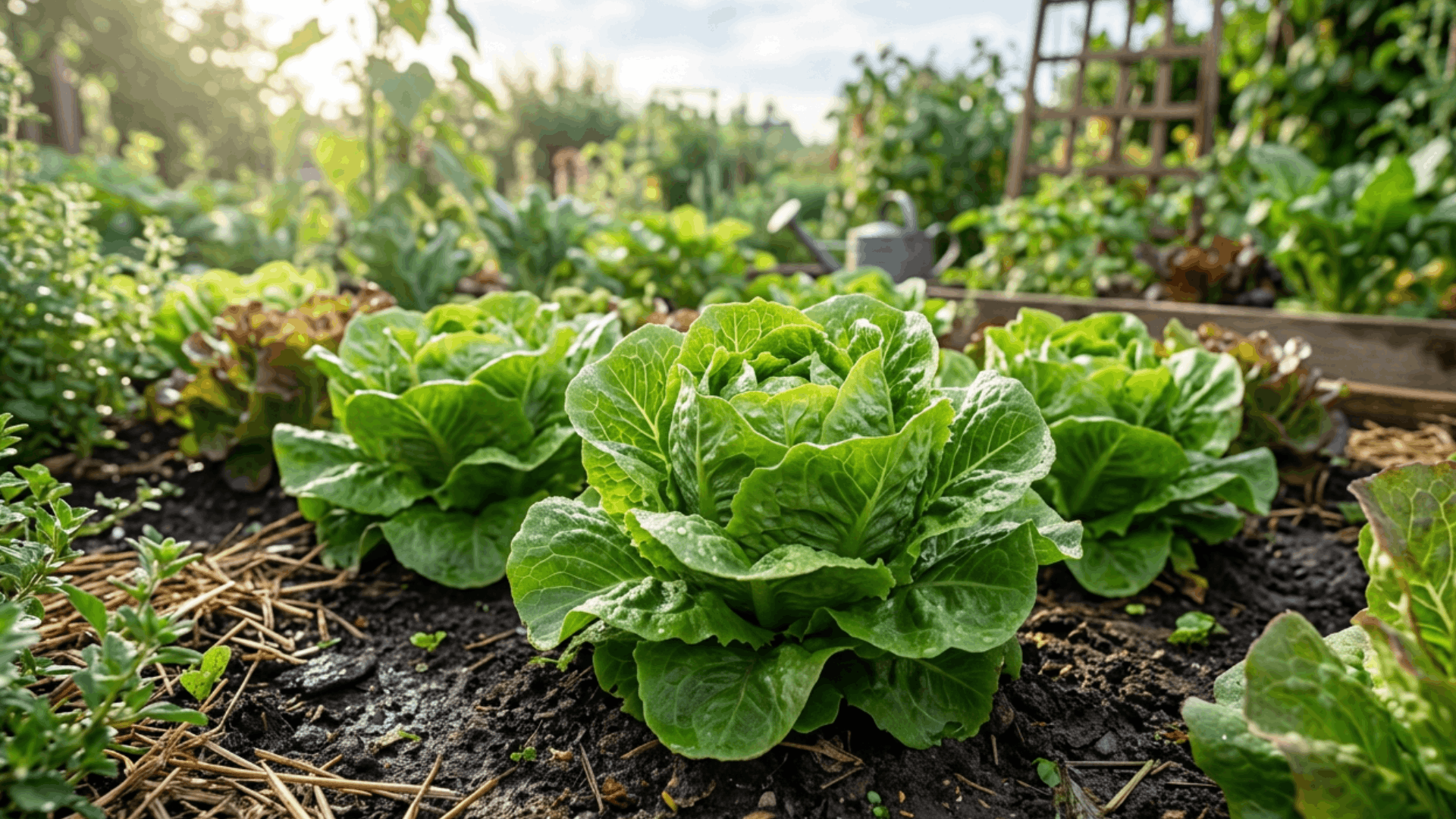
Lettuce benefits from the filtered shade created by mature corn during the hottest part of summer. The partial shade helps slow bolting and allows lettuce to remain productive longer than it would in full sun.
Plant lettuce along the outer or northern sides of the corn patch where it receives enough morning sunlight while avoiding intense afternoon heat.
This pairing also makes efficient use of otherwise unused growing space.
8. Spinach
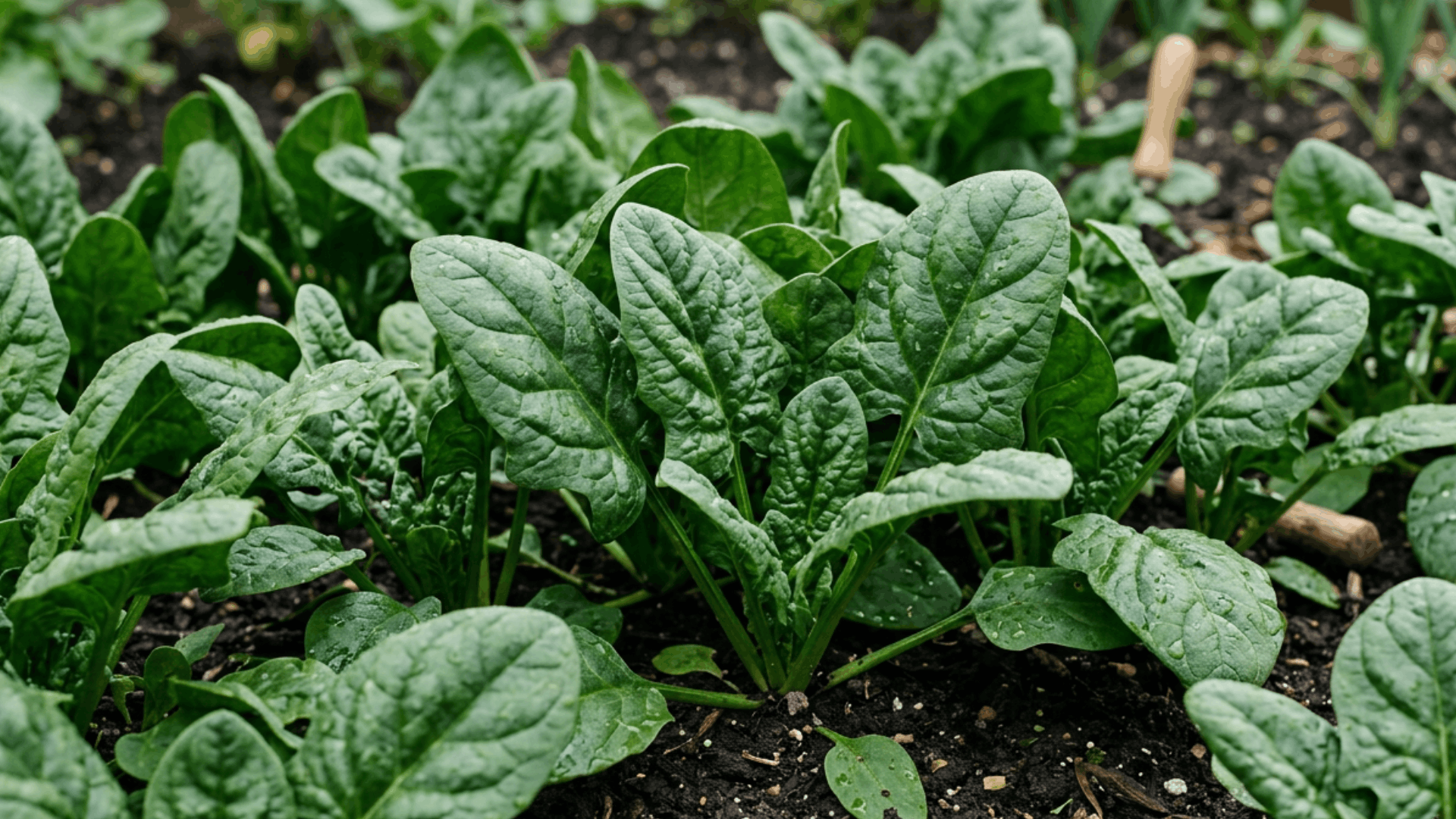
Spinach is another cool-season crop that pairs well with corn when planting is carefully timed. Sow spinach early in the season so it grows before corn develops a dense canopy.
By the time corn needs additional nutrients and space, most spinach will already be ready for harvest.
This succession planting approach allows gardeners to maximize production from the same bed without creating unnecessary competition between the two crops.
9. Radishes
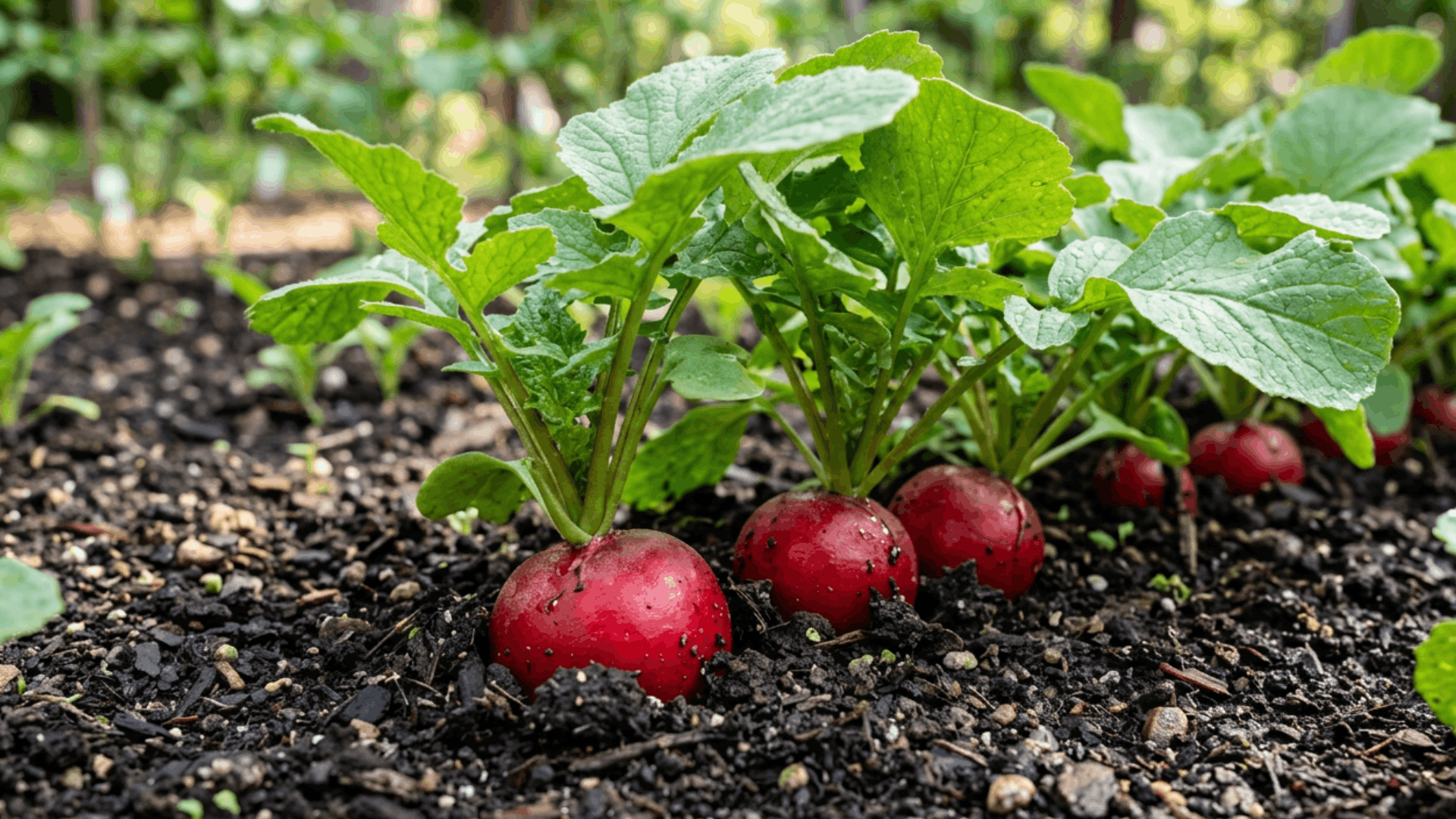
Radishes grow quickly, develop shallow root systems, and fit easily between young corn plants without taking up much room.
Their fast growth allows gardeners to harvest them before corn reaches its full size, making excellent use of open soil early in the season.
While some gardeners believe radishes repel pests, research offers limited evidence for this claim. Their greatest benefit comes from efficient use of space rather than reliable pest control.
10. Nasturtiums
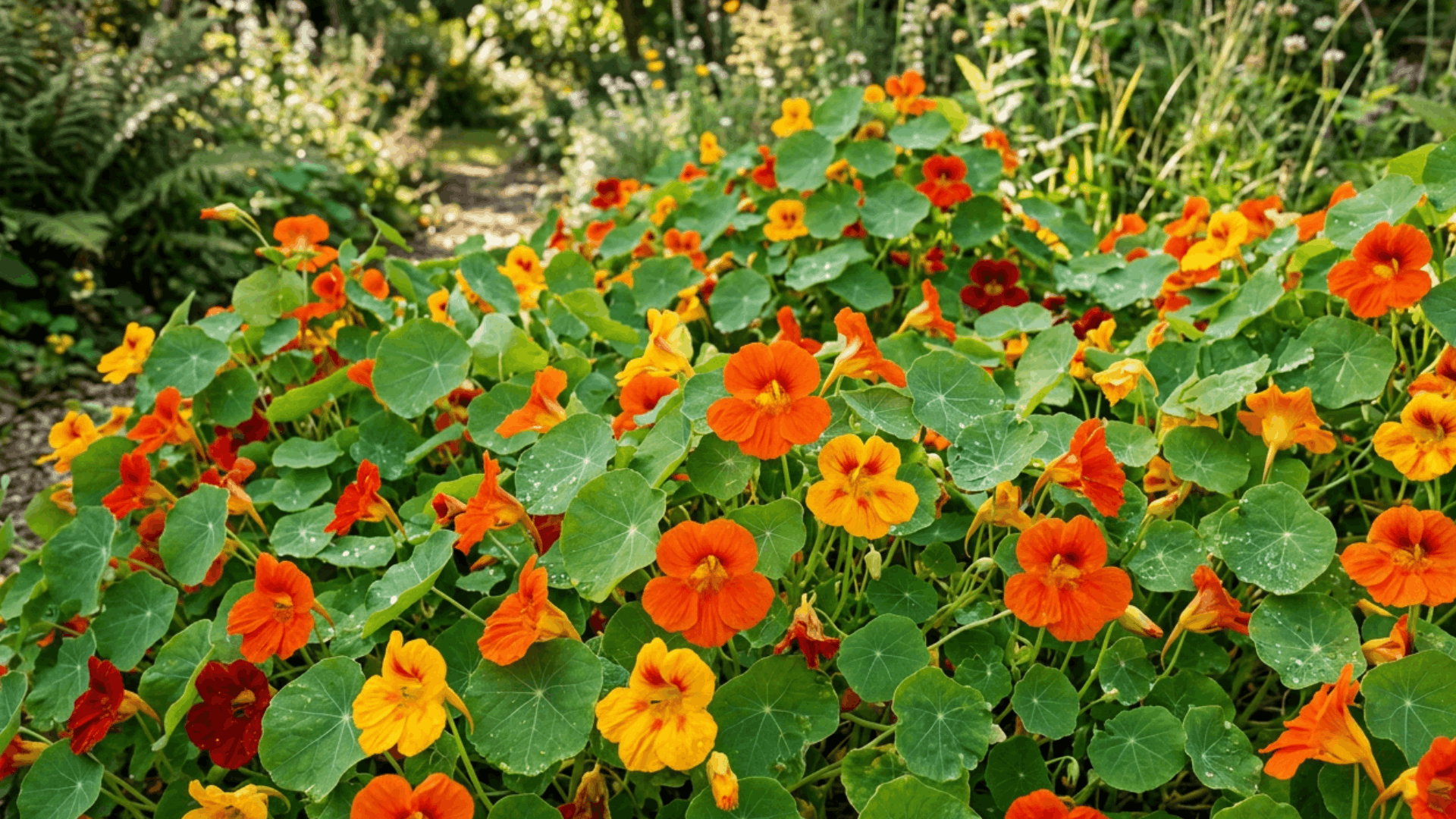
Nasturtiums spread attractively around corn while producing colorful edible flowers that attract pollinators and other beneficial insects.
Some gardeners also use them as trap crops to draw certain pests away from vegetables, although results vary depending on growing conditions.
Their vigorous growth should be monitored throughout the season because dense patches can compete with young corn seedlings if planted too closely or left unmanaged.
11. Marigolds
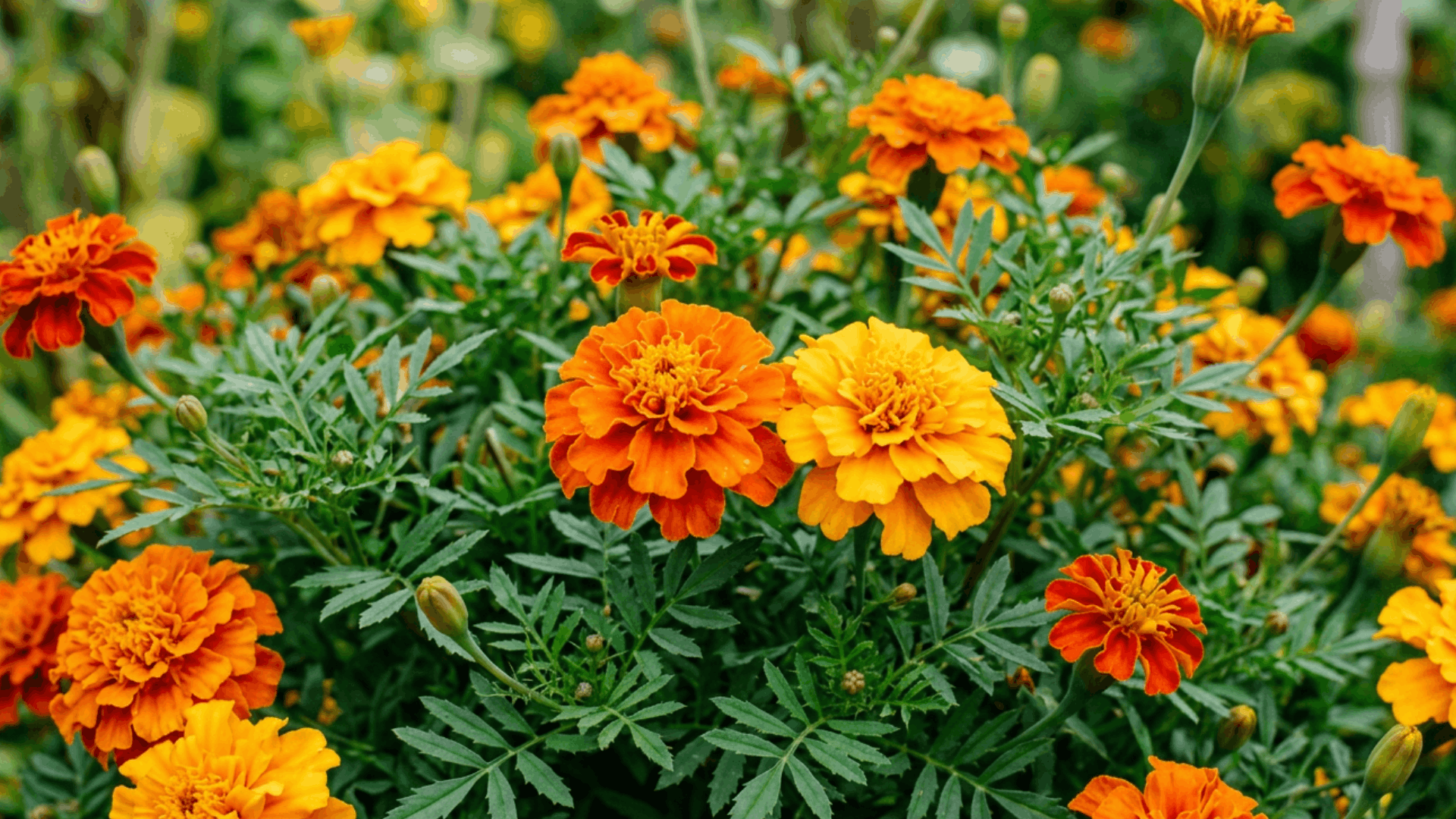
Marigolds are widely grown near vegetables because their bright flowers attract pollinators and beneficial insects, increasing biodiversity within the garden.
They also provide attractive borders around corn plantings without requiring much maintenance. However, marigolds should not be viewed as a guaranteed solution for pest problems.
Their effectiveness depends on the pest species, planting density, and overall garden conditions, making them a helpful companion rather than a complete pest-control strategy.
The Three Sisters: Corn, Beans, and Squash
The Three Sisters is a traditional Indigenous farming system developed by Native communities across North America, with planting methods adapted to local climates, soils, rainfall, and crop varieties.
Instead of competing, the three crops support one another in different ways. Corn grows tall and provides a natural structure for climbing pole beans, while the beans contribute nitrogen through beneficial root bacteria.
Squash spreads across the ground, shading the soil to reduce moisture loss and limit weed growth.
Together, these crops occupy different layers of the garden, making efficient use of space while creating a balanced planting system.
Although the basic concept remains the same, mound size, spacing, and layout vary by region and tradition.
How to Plant a Three Sisters Garden?
- Choose a location that receives full sun.
- Improve the soil with compost or aged organic matter.
- Create broad planting mounds or a block-style bed.
- Plant several corn seeds together first.
- Wait until the corn stalks are established before sowing pole beans.
- Plant squash around the outer edge of each mound.
- Guide squash vines away from young corn plants.
- Water deeply and monitor plant growth throughout the season.
Corn Companion Planting Layouts for Home Gardens
The right planting layout helps companion plants work with corn rather than compete with it. Matching the layout to your available space improves airflow, simplifies maintenance, and allows each plant to perform its intended role.
| Garden Layout | Recommended Planting Arrangement | Best Companion Plants |
|---|---|---|
| Traditional In-Ground Garden | Plant corn in short blocks instead of a single long row. Grow companions around the outer rows, leaving pathways for harvesting and airflow. | Pole beans, pumpkins, winter squash, lettuce |
| Raised Bed | Use a bed at least 4 × 4 feet so corn can be planted in a block for proper pollination. Place low-growing companions around the edges rather than between every stalk. | Bush cucumbers, lettuce, spinach, marigolds |
| Small Garden | Choose compact or dwarf corn varieties. Combine them with controlled vines, edge-planted flowers, and quick-growing greens to maximize limited space. | Radishes, lettuce, nasturtiums, marigolds |
| Three Sisters Garden | Plant corn first in grouped mounds. Once stalks are established, sow pole beans around the corn, then plant squash around the outside of each mound. | Pole beans, winter squash or pumpkins |
| Pollinator-Friendly Layout | Grow flowering herbs and flowers around the perimeter of the corn patch instead of between rows to attract beneficial insects without restricting airflow. | Dill, borage, marigolds, nasturtiums |
What Should You Not Plant Near Corn?
Some plants are poor companions for corn because they compete for nutrients, water, and sunlight, share common pests, interfere with pollination, or naturally grow better in separate parts of the garden.
- Tomatoes: Both corn and tomatoes are heavy feeders and can attract corn earworm (also called tomato fruitworm). Their dense growth may also reduce airflow and make harvesting more difficult.
- Eggplants: Eggplants require many of the same nutrients as corn and may share some common pests. Growing them separately also makes crop rotation and pest monitoring easier.
- Brassicas: Cabbage, broccoli, cauliflower, kale, and Brussels sprouts can compete with corn for nutrients and often receive too much shade once corn reaches full height.
- Fennel: Fennel is generally kept away from most vegetables because it may inhibit the growth of nearby plants and grow into a large, space-consuming crop.
- Black Walnut Trees: Corn should not be planted near mature black walnut trees because of juglone exposure, heavy root competition, and excessive shade that limits healthy corn growth.
- Other Corn Varieties: Sweet corn, popcorn, flint corn, and field corn can cross-pollinate because corn relies on wind for pollination. Plant different varieties far apart or stagger planting times to preserve kernel quality.
How Far Apart Should Corn and Companion Plants Be?
Proper spacing helps companion plants support corn without competing for sunlight, nutrients, or growing space. Position each companion according to its mature size and growth habit rather than planting everything close together.
| Companion Type | Suggested Position | Main Reason |
|---|---|---|
| Pole Beans | Near established corn stalks | Provides natural climbing support once corn is strong enough. |
| Squash and Pumpkins | Around the outer rows of corn | Leaves room for spreading vines while covering the soil. |
| Cucumbers and Melons | Along bed edges or open gaps | Prevents vines from overcrowding or climbing corn. |
| Lettuce and Spinach | Outer rows or partially shaded areas | Benefits from filtered sunlight during hot weather. |
| Radishes | Between young corn plants | Makes efficient use of open soil before corn matures. |
| Flowers and Herbs | Around the garden perimeter | Attracts beneficial insects while keeping rows accessible. |
| Sunflowers | In a separate edge row or nearby bed | Reduces competition for sunlight, water, and nutrients. |
How to Care for Corn and Its Companion Plants?
Good companion planting works best when corn and neighboring crops receive the right light, water, nutrients, and ongoing care throughout the growing season.
- Provide Full Sun: Plant corn in it area that receives at least 6–8 hours of direct sunlight. Place shade-tolerant companions around mature corn so they receive filtered light instead of deep shade.
- Prepare Nutrient-Rich Soil: Corn is a heavy feeder, so enrich the soil with compost and apply fertilizer as needed. Companion planting supports garden health but does not replace proper soil preparation or nutrition.
- Water Deeply and Consistently: Keep the soil evenly moist, especially during tasseling and ear development.
- Protect Corn Pollination: Grow corn in blocks rather than single rows to improve wind pollination. In very small plantings, gently shake the stalks during tasseling to help distribute pollen.
- Control Aggressive Vines: Guide squash, pumpkin, cucumber, and melon vines away from young corn plants to prevent them from climbing stalks or blocking garden pathways.
- Monitor Shared Pests: Watch for corn earworms, armyworms, cutworms, aphids, cucumber beetles, squash bugs, and vine borers, depending on the companion plants growing nearby.
- Rotate Crops the Following Year: Move corn and its companions to a different location each season. Crop rotation helps reduce pest and disease buildup that companion planting alone cannot prevent.
Conclusion
Choosing the right corn companion plants can help you create a healthier, more productive garden while making better use of available space.
Pairing corn with compatible plants improves soil coverage, attracts beneficial insects, and boosts garden efficiency.
Whether you use the traditional Three Sisters method or simply add a few well-matched companions, careful planning and proper spacing can make a noticeable difference throughout the growing season.
I hope this guide helps you build a thriving corn garden with confidence.
If you found these tips helpful, share this article with fellow gardeners and let us know your favorite corn companion plants in the comments.
Frequently Asked Questions
What Is the Easiest Companion Plant to Grow?
Radishes are among the easiest companion plants because they germinate quickly, require minimal care, mature fast, and fit easily between young corn plants without competing for space.
Is October Too Late to Plant Corn Companion Plants?
It depends on the climate and the crop. In most U.S. regions, October is too late for warm-season companions, but cool-season vegetables like spinach and lettuce may still grow.
What Vegetables Grow in Three Months?
Bush beans, cucumbers, lettuce, spinach, radishes, zucchini, and many summer squash varieties can be harvested in about three months under suitable growing conditions.