

Most homeowners spend hours picking the right paint color or flooring. But the eaves? They barely get a second look.
That’s a mistake. The eaves of a house do a lot more than most people think. They sit right at the edge of the roof, quietly working in the background. And when something goes wrong with them, the damage can spread fast.
Rotting wood. Water stains. Pest problems. These are just some of the things that bad or ignored eaves can cause.
So before any roofing decision gets made, it helps to understand what eaves actually are. What they do. Why they matter. And how to spot when they need attention.
What are the Eaves of a House?
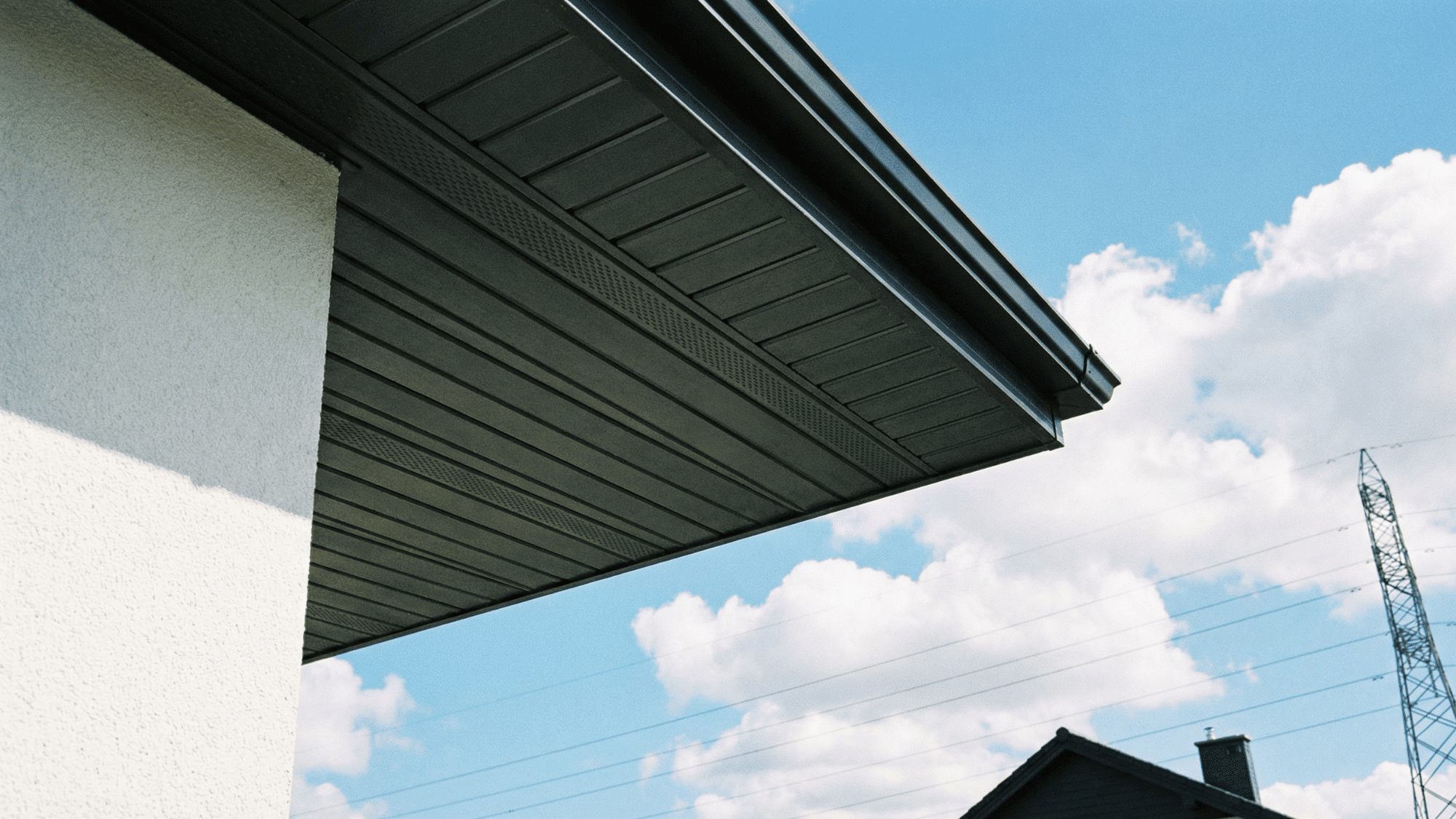
The eaves are the part of the roof that sticks out past the walls of a house. They hang over the edge, creating that slight overhang seen on most homes.
Every roof has them. But not every homeowner knows what they are called or what they actually do.
At their core, eaves are made up of a few key parts working together. The fascia, the soffit, and the rafters all play a role.
Each one has a job. And together, they protect the home more than most people realize.
What is the Purpose of Eaves on a Roof?
Eaves do a lot of heavy lifting for a home. Their main job is to move rainwater away from the walls and foundation.
Without them, water would run straight down the side of the house. And that causes serious damage over time.
But water control is just one part of the job. Eaves also block harsh sunlight from hitting the windows directly. That keeps the inside of the home cooler during hot months.
On top of that, they help with airflow in the attic. Good ventilation means less moisture buildup. And less moisture means fewer problems with mold, rot, and structural damage down the line.
Main Components of Roof Eaves
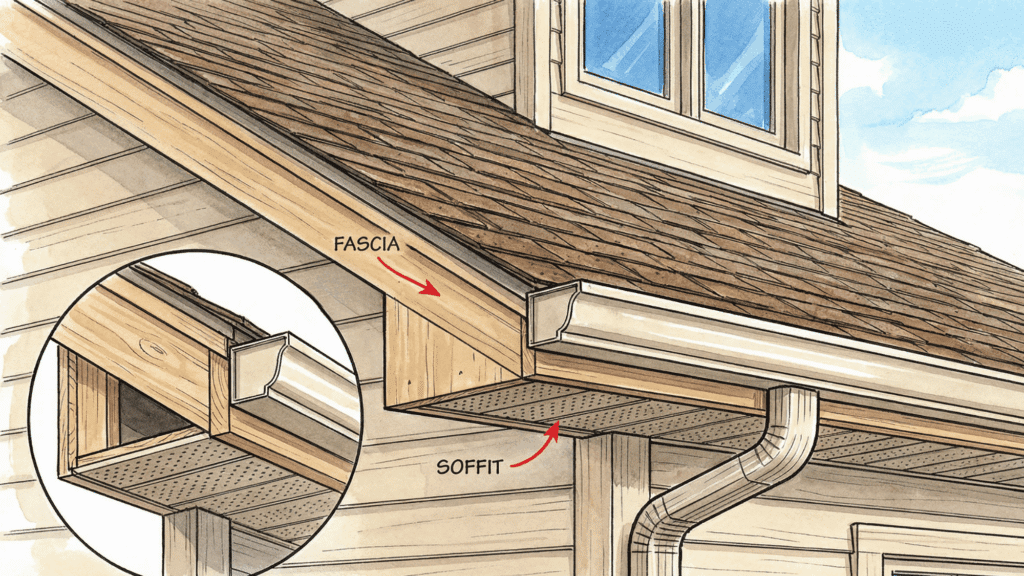
Roof eaves are made up of several parts. Each component has a specific role in keeping the home protected and well-maintained.
- Fascia Board: This is the vertical board running along the roofline. It supports the gutters and gives the eaves a clean, finished look.
- Soffit: The soffit is the underside of the eave overhang. It covers the gap between the wall and the roofline while allowing air to flow into the attic.
- Rafters: These are the beams that extend past the wall to create the overhang. They form the base structure that holds everything else in place.
- Gutters: Gutters attach to the fascia board. They collect rainwater and direct it away from the home’s walls and foundation.
Different Types of Eaves Roof Designs
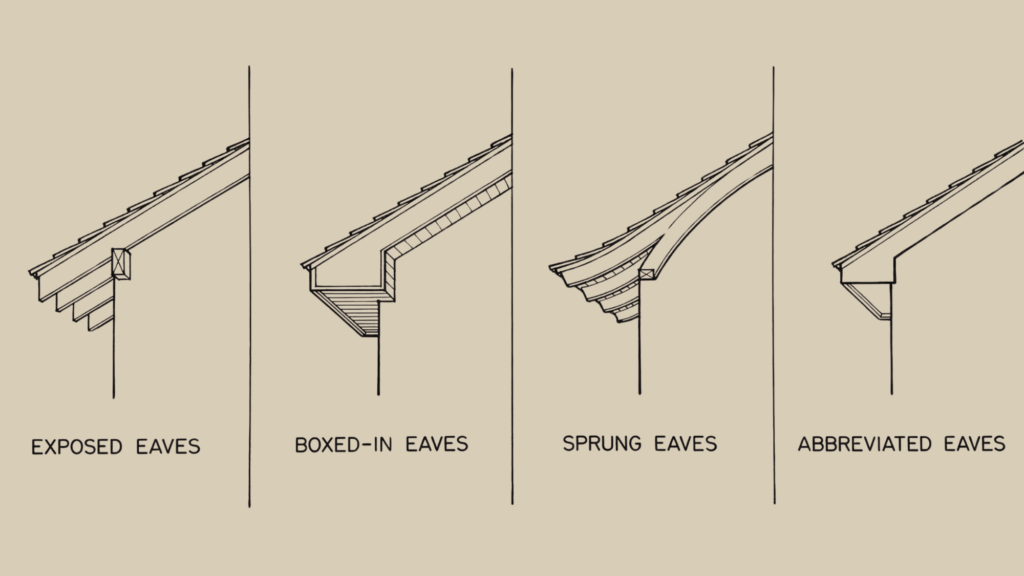
Eaves come in more than one style. The type used on a home depends on the roof design, climate, and the look the homeowner wants.
1. Exposed Eaves
Exposed eaves have no soffit covering the underside. The rafters are left open and visible. This gives the home a more raw, structural look.
It is common in older homes and certain architectural styles.
While they add character, exposed eaves need regular checks. Without a soffit, birds and pests can nest in the open rafter spaces fairly easily.
2. Boxed-In Eaves
Boxed-in eaves have a soffit panel that covers the underside completely. This gives the roofline a clean and neat appearance.
They are one of the most common types found on modern homes. The enclosed design keeps pests out and protects the rafters from moisture. They also make the home look more polished from the outside.
3. Sprung Eaves
Sprung eaves have a slight curve where the roof meets the overhang. This angled design helps water flow away from the walls more efficiently.
They are often seen on older cottages and traditional-style homes. The curved shape adds a soft, distinctive look to the roofline.
However, they can be more costly to build and repair than standard flat eave designs.
4, Abbreviated Eaves
Abbreviated eaves have a very short overhang. They barely extend past the wall at all. This style is common in areas where strong winds are frequent.
A shorter overhang means less surface area for wind to catch and lift. The downside is that walls and foundations get less protection from rain compared to longer overhang styles.
Standard Eaves Overhang: How Far Should Eaves Extend?
The right overhang length makes a real difference. Too short, and the walls get soaked every time it rains. Too long and strong winds can catch the eaves and cause damage.
For most homes, the standard overhang sits between 16 and 24 inches.
But that number is not fixed. It depends on the roof pitch, the local climate, and the style of the home.
Steeper roofs usually need a shorter overhang. Low-pitched roofs often need more extension to move water far enough away from the walls.
A roofing professional can assess the home and recommend the right overhang length. Getting this measurement right from the start saves a lot of repair costs later.
Why Eaves are Important for Roof Ventilation
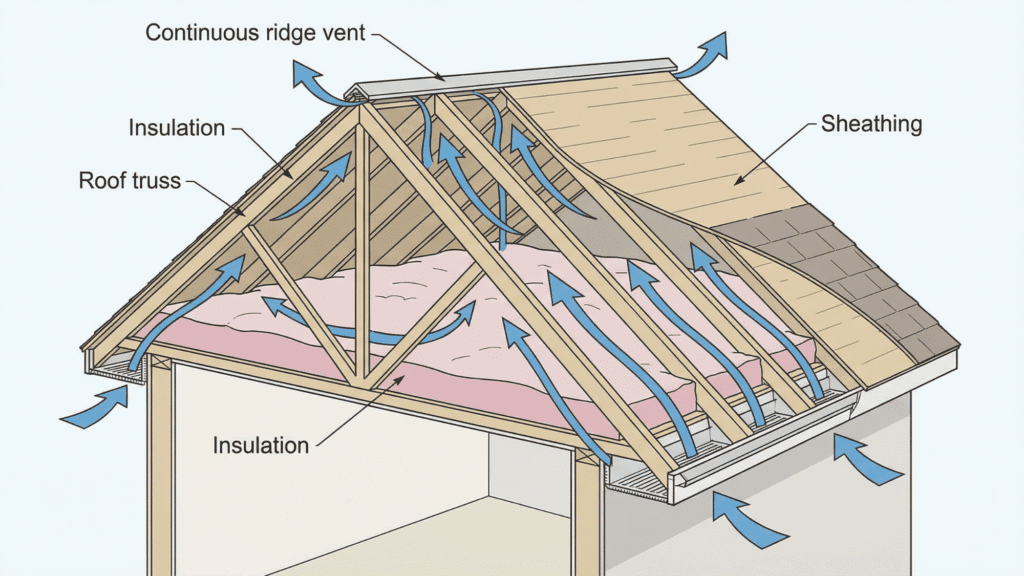
Most people think of eaves as just a water shield. But they play a big role in keeping the attic ventilated, too.
Soffits installed under the eaves have small vents built into them. These vents pull fresh air into the attic from outside. That air then travels up and exits through the ridge vents at the top of the roof.
This constant airflow keeps the attic from trapping heat and moisture. And that matters more than most homeowners realize.
A poorly ventilated attic leads to mold growth, rotting wood, and higher energy bills. In winter, trapped moisture can even cause ice dams to form along the roofline. Proper eave ventilation stops all of that before it starts.
Common Problems with the Eaves of a House
Eaves can run into several problems over time. Catching these issues early prevents bigger and more costly damage to the rest of the home.
1. Rotting Wood: Moisture is the biggest enemy of eaves. When water sits on the fascia or soffit for too long, the wood begins to rot and weaken.
2. Pest Infestation: Birds, wasps, and rodents love to nest in and around eaves. Open gaps in the soffit make it easy for them to get inside.
3. Peeling Paint: Water damage and sun exposure cause the paint on eaves to crack and peel. This leaves the wood underneath open to further moisture damage.
4. Blocked Gutters: When gutters clog up, water backs up and sits against the fascia board. Over time, this causes serious wood decay and structural damage to the eaves.
5. Sagging Eaves: Rotting rafters or damaged fascia boards can cause the eaves to sag. This is a clear sign that the structure needs immediate inspection and repair.
Can You Replace or Extend Roof Eaves?
Yes, roof eaves can be replaced or extended. But it is not a simple weekend DIY project. It requires proper planning, the right materials, and, in most cases, a skilled roofing contractor.
Replacing damaged eaves usually means fixing or swapping out the fascia boards, soffits, or rafters. The sooner the damage gets addressed, the less it costs to repair.
Extending eaves is a bigger job. It involves modifying the existing roof structure to add more overhang. This is often done to improve water protection or update the look of the home.
Before starting either project, checking local building codes is important. Some areas require permits for structural roof changes.
Getting professional advice first saves time, money, and a lot of headaches down the road.
The Bottom Line
Eaves are a small part of the home that carry a big responsibility. They manage water, support ventilation, and protect the walls and foundation every single day.
Do not wait for visible damage to start paying attention to the eaves. Regular checks of the fascia, soffit, and gutters go a long way in preventing costly repairs.
A little maintenance now saves a lot of trouble later.
For anyone planning a roof repair or a full replacement, make sure the eaves are part of that conversation. A roofing professional can spot problems early and recommend the best course of action.