

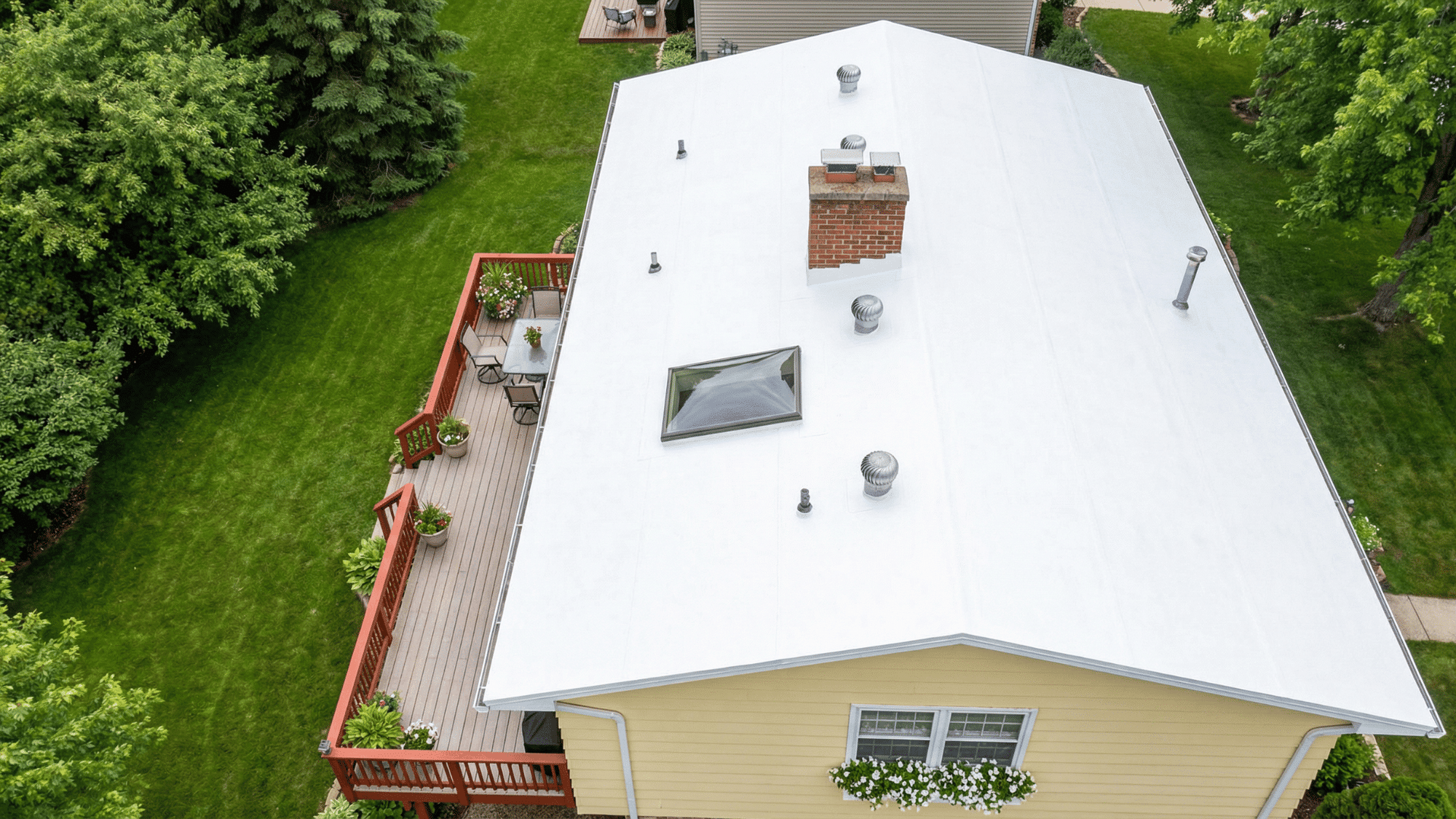
Most homeowners never think about their roof until it starts leaking. And when that happens, the repair bills hit hard.
That’s when many start hearing about TPO roofing. It sounds technical. Maybe even a little confusing. But it’s actually one of the most talked-about roofing options for flat and low-slope roofs today.
So, what exactly is a TPO roof? And more importantly, how much does it cost to get one installed?
This blog breaks it all down, from what TPO roofing actually is to what someone should expect to pay for it.
What is a TPO Roof?
TPO stands for Thermoplastic Polyolefin. It is a single-ply roofing membrane used on flat or low-slope roofs.
In simple terms, it’s a flexible sheet of material that gets laid across a roof to keep water out. It’s made by combining rubber and plastic compounds together.
TPO roofing has grown quite popular over the last two decades. Today, it holds one of the largest shares in the commercial roofing market.
It works well for commercial buildings, warehouses, and even some residential properties with flat roofs. It’s practical, lightweight, and gets the job done.
Understanding the Layers of a TPO Roofing
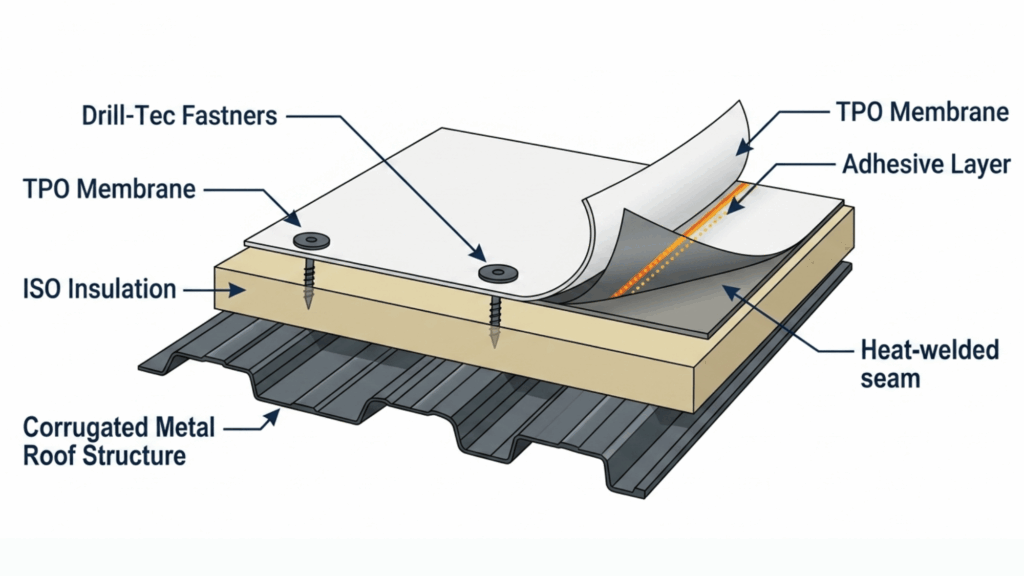
A TPO roof isn’t just one sheet of material. It’s a system built from multiple layers working together.
1. Roof Deck: The base foundation of the entire roofing system. It’s typically made from wood, metal, or concrete.
2. Underlayment: Sits right above the deck and acts as a secondary barrier against moisture and water infiltration.
3. Vapor Barrier: An optional layer that controls condensation buildup. Especially useful in humid or monsoon-prone climates.
4. Insulation: Usually polyiso or EPS foam. It boosts energy efficiency and helps with proper water drainage across the roof.
5. Cover Board: Protects the insulation layer underneath and provides a smooth, stable surface for the membrane above.
6. Bonding Adhesive: Used in fully adhered systems to firmly secure the TPO membrane to the cover board below.
7. TPO Membrane: The outermost layer. It forms the weatherproof shield that keeps rain, UV rays, and debris out.
Pros and Cons of TPO Roofing
Every roofing material has its strengths and weaknesses. Here’s a quick look at what TPO roofing brings to the table.
Pros:
- Energy efficient: TPO’s white reflective surface bounces sunlight away, helping cut down cooling costs significantly.
- Cost-effective: Compared to other single-ply membranes, TPO tends to be easier on the budget.
- Durable and flexible: It holds up well against tears, punctures, and harsh weather conditions.
- Easy to install: TPO is lightweight, which makes the installation process quicker and simpler.
Cons:
- Inconsistent quality: Not all TPO products are made the same. Quality varies widely across brands.
- Shorter track record: TPO hasn’t been around as long as other roofing materials like EPDM.
- Heat-welded seams can fail: If not installed correctly, the seams may weaken over time.
- Limited color options: TPO is mostly available in white, grey, and tan; not much variety.
TPO Roof Installation Cost Breakdown
TPO roof installation costs typically range from $4 to $16 per square foot. For a standard roof, most homeowners end up spending somewhere between $7,700 and $14,000 in total.
The size of the roof plays the biggest role. A 1,000 sq ft roof costs around $4,000–$10,000. A 2,000 sq ft roof can run anywhere from $8,000–$20,000.
Larger roofs generally cost less per square foot since materials and labor get spread out more.
| Cost Component | Price Per Sq Ft |
|---|---|
| TPO Membrane (materials) | $1–$2.50 |
| Insulation | $0.50–$3 |
| Labor | $2.50–$7 |
| Old Roof Removal | $1–$2 |
What Factors Affect TPO Roofing Cost?
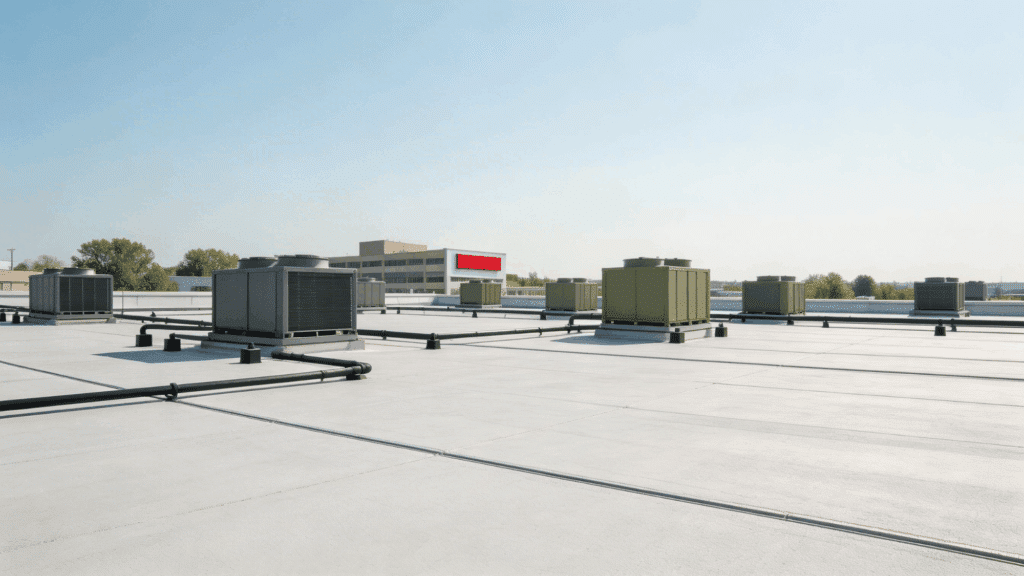
TPO roofing costs don’t follow a fixed number. Several factors push the final price higher or lower than expected.
1. Roof Size and Complexity
Roof size is the biggest cost driver. The larger the roof, the more materials and labor it needs. However, bigger roofs often get a lower per-square-foot rate.
Complex roofs with multiple angles, edges, or penetrations like vents and chimneys take longer to cover, and that adds to the overall bill.
2. Membrane Thickness
TPO membranes come in different thicknesses: typically 45, 60, and 80 mil. Thicker membranes cost more upfront but tend to last longer.
A 60-mil or higher membrane offers better durability against punctures and harsh weather. Premium brands like GAF or Firestone also raise material costs slightly.
3. Installation Method
There are three main ways to install TPO: ballasted, mechanically fastened, or fully adhered. Each method carries a different price tag.
- Ballasted installation runs around $1.80–$2.50 per sq ft.
- Mechanically fastened costs $2–$3.10.
- Fully adhered is the priciest at $2.80–$3.50 per sq ft due to extra labor and adhesive.
4. Old Roof Removal
If there’s an existing roof that needs to come off first, that adds $1–$2 per square foot to the total cost.
Tear-off and disposal fees vary by location and roof size. Skipping removal by layering over the old roof can save money short-term, but may cause problems later.
5. Location and Labor Rates
Labor costs vary widely depending on where the property sits. Urban areas tend to have higher labor rates than rural ones.
Local market conditions, contractor availability, and regional demand all play a role. Costs can shift by 15–20% based on location alone, so getting multiple quotes always helps.
How Much Does TPO Roof Maintenance Cost
One of the biggest advantages of TPO roofing is how little it costs to maintain. Compared to other roofing types, the yearly upkeep stays pretty manageable.
- Annual inspections typically run between $200 and $500.
- Professional cleaning for debris, algae, or mold costs around $300 to $700.
- On average, most property owners spend under $1,000 per year keeping a TPO roof in good shape.
- Repairs are a separate story. Minor fixes, such as patching punctures, cost $600–$1,000.
- Moderate issues, such as seam or flashing repairs, range from $1,000–$3,000.
- Major damage can push costs even higher.
How Long Does a TPO Roof Last
A well-installed TPO roof can last anywhere between 15 to 30 years. That’s a solid lifespan for a flat roofing system.
The actual lifespan depends heavily on a few things: membrane thickness, installation quality, and how well the roof gets maintained over the years. A thicker membrane, say 60 mil or higher, tends to hold up longer than a thinner one.
Regular inspections, timely repairs, and proper drainage all play a big role in pushing that lifespan toward the higher end.
Skipping maintenance, on the other hand, can cut that number down significantly, sometimes by nearly half.
Signs Your TPO Roof Needs Repairs
Catching roof problems early saves a lot of money. These are the most common signs that a TPO roof needs attention.
- Visible punctures or holes: Foot traffic, falling debris, or sharp objects can pierce the membrane and let water in fast.
- Pooling water: Standing water after rain signals poor drainage. Left untreated, it weakens the membrane and causes leaks.
- Cracked or shrinking membrane: Extreme temperature changes cause TPO to expand and contract, leading to cracks over time.
- Seam separation: If the heat-welded seams start pulling apart, water finds its way in almost immediately.
- Bubbling or blistering: Air or moisture trapped beneath the membrane creates bubbles, a clear sign that something’s wrong underneath.
- Stains on interior ceilings: Water stains or damp patches inside the building often point directly to a failing roof above.
TPO vs EPDM vs PVC: Cost Comparison
Not sure which single-ply roofing membrane fits best? This side-by-side look shows how TPO stacks up against EPDM and PVC.
| Aspect | TPO | EPDM | PVC |
|---|---|---|---|
| Cost Per Sq Ft | $5–$9 | $4–$8 | $6–$10+ |
| Lifespan | 15–30 years | 20–40 years | 20–30 years |
| Best For | Energy savings, heat | Cold climates | Chemicals, fire |
| Seams | Heat-welded | Adhesive/tape | Heat-welded |
| Energy Efficiency | High | Low (unless coated) | Moderate |
| Upfront Cost | Mid-range | Most affordable | Most expensive |
Wrapping Up
TPO roofing checks a lot of boxes: it’s cost-effective, energy-efficient, and relatively low-maintenance. For flat and low-slope roofs, it remains one of the most practical options available today.
Costs can range from $4 to $16 per square foot, depending on roof size, membrane thickness, and location. Maintenance stays affordable, and with proper care, the roof can last up to 30 years.
The right choice always comes down to the building’s specific needs and budget.
For anyone seriously considering TPO roofing, getting at least three quotes from certified local contractors is a smart next step before making any final decisions.