

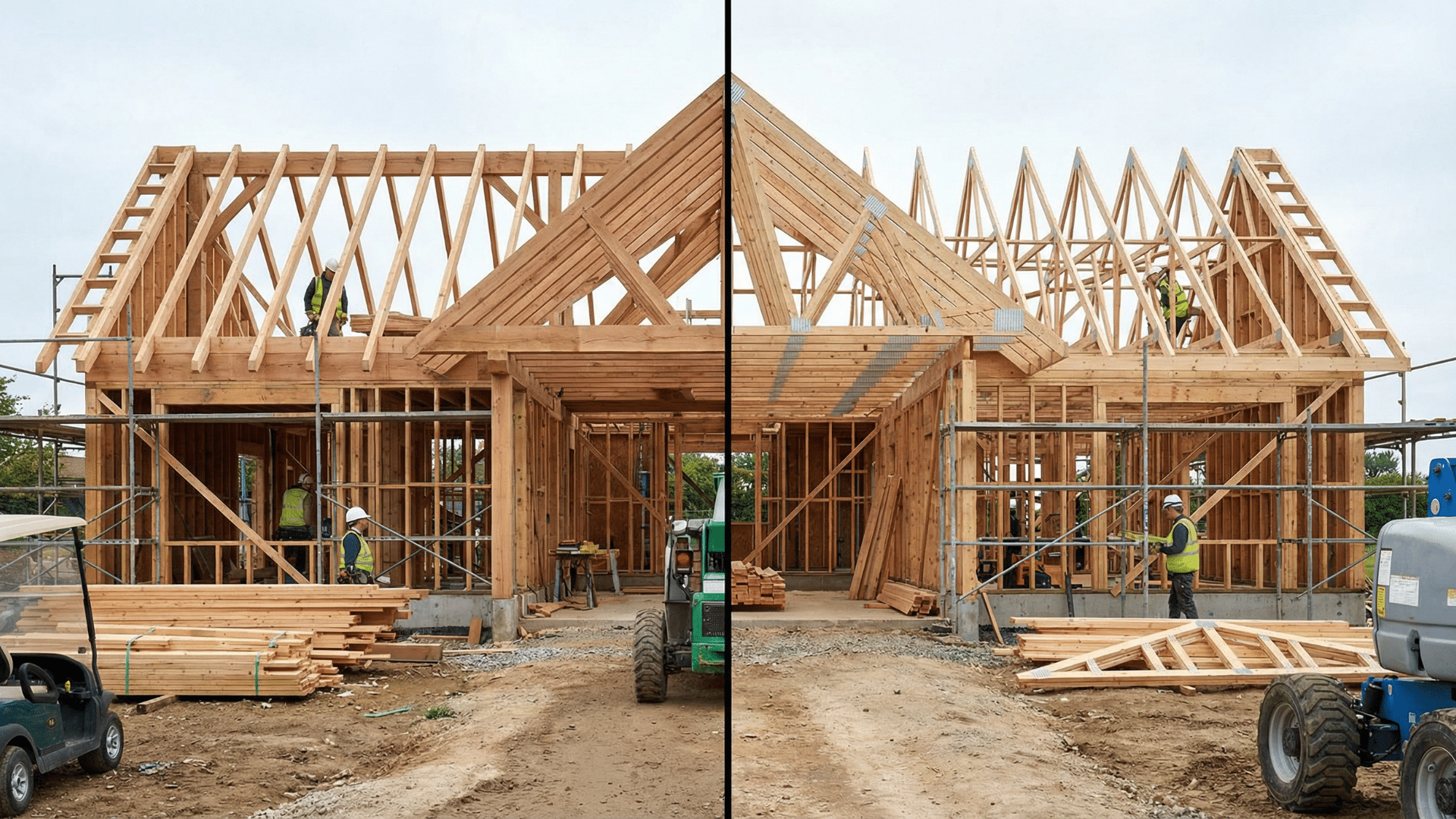
When planning a new roof, one of the first decisions involves the framing system. Rafters and trusses are two common options used in residential construction.
Each supports the roof in a different way and affects how the structure is built. The choice can influence cost, design flexibility, and construction time.
Homeowners and builders often compare these systems before moving forward with a project. This guide breaks down the main differences between rafters and trusses.
It explains how each system works and which factors to consider before making a final decision.
What are Rafters?
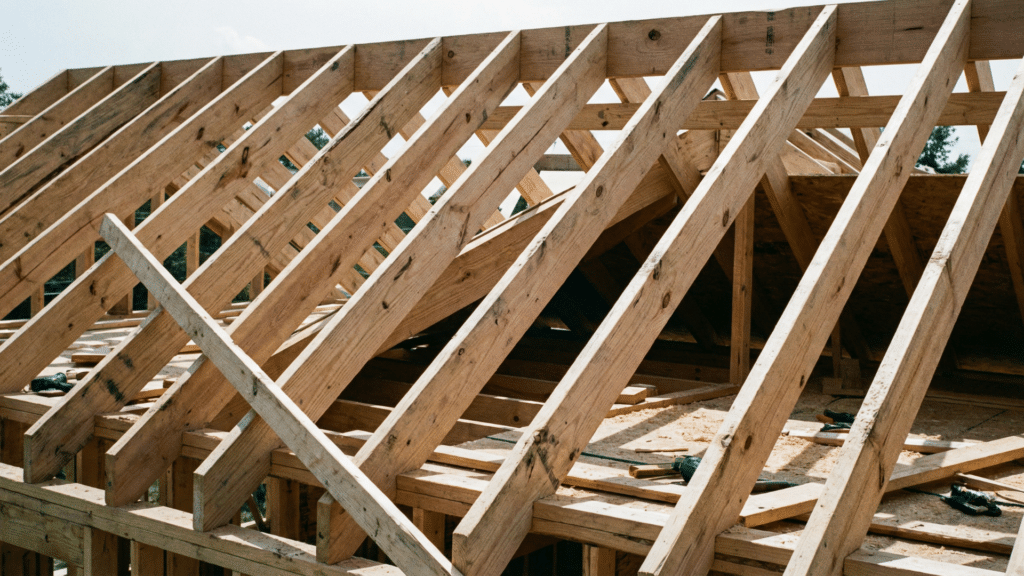
Rafters are traditional roof framing members made from individual pieces of lumber. They run from the peak of the roof down to the exterior walls, forming the slope that supports the roof deck and covering.
Rafters are usually built and installed on site by carpenters. Each board is measured, cut, and fastened into place during construction.
This system has been used for centuries and is common in older homes. Rafters create an open space beneath the roof, which can be used for storage or converted into living space later.
Because they are assembled piece by piece, they allow more flexibility in roof shape and layout. However, that flexibility often comes at the cost of greater labor time and expense.
Pros and Cons of Rafters
| Pros of Rafters | Cons of Rafters |
|---|---|
| Provide open attic space | Higher labor costs |
| Allow easier attic conversions | Longer installation time |
| Better for custom roof designs | Require skilled carpenters |
| Easier to adjust during construction | Can use more lumber |
| Suitable for complex roof shapes | May cost more overall |
What are Trusses?
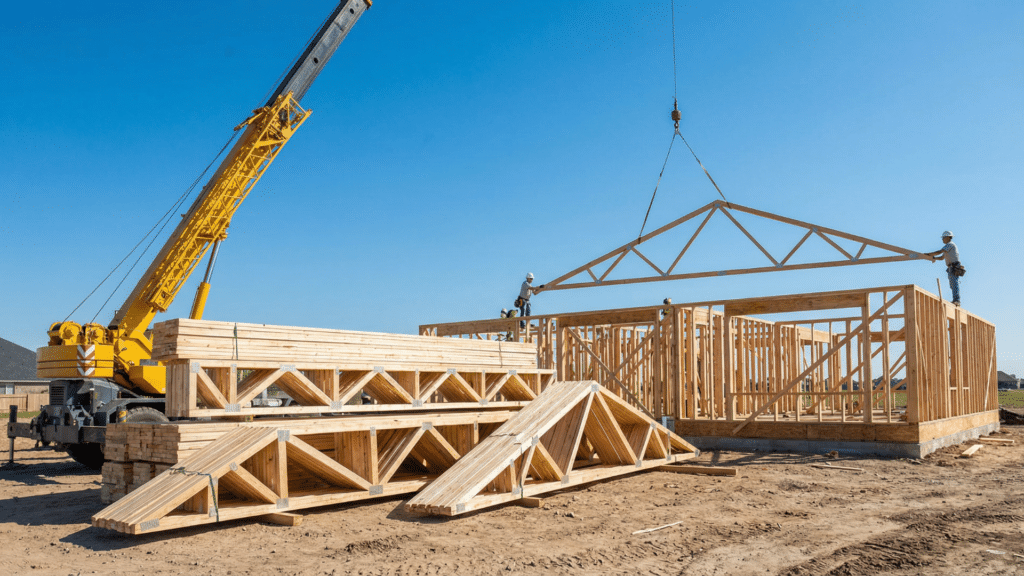
Trusses are pre-engineered roof structures made from multiple pieces of lumber connected in a triangular framework.
They are designed in a factory and delivered to the job site as complete units. Once delivered, they are lifted into place and secured to the walls.
The triangular web design allows trusses to distribute weight evenly across the structure. This makes them strong and efficient. Because they are manufactured under controlled conditions, they offer consistent quality and precise measurements.
Installation is usually faster than rafters, which helps reduce labor costs. However, the internal webbing often limits usable attic space and makes future changes more difficult.
Pros and Cons of Trusses
| Pros of Trusses | Cons of Trusses |
|---|---|
| Faster installation | Limited attic space |
| Lower labor costs | Difficult to modify later |
| Engineered for strong load support | May require lifting equipment |
| Consistent factory-built quality | Less flexible for custom designs |
| Cost-effective for large projects | Changes must be planned in advance |
Key Differences Between Rafters and Trusses
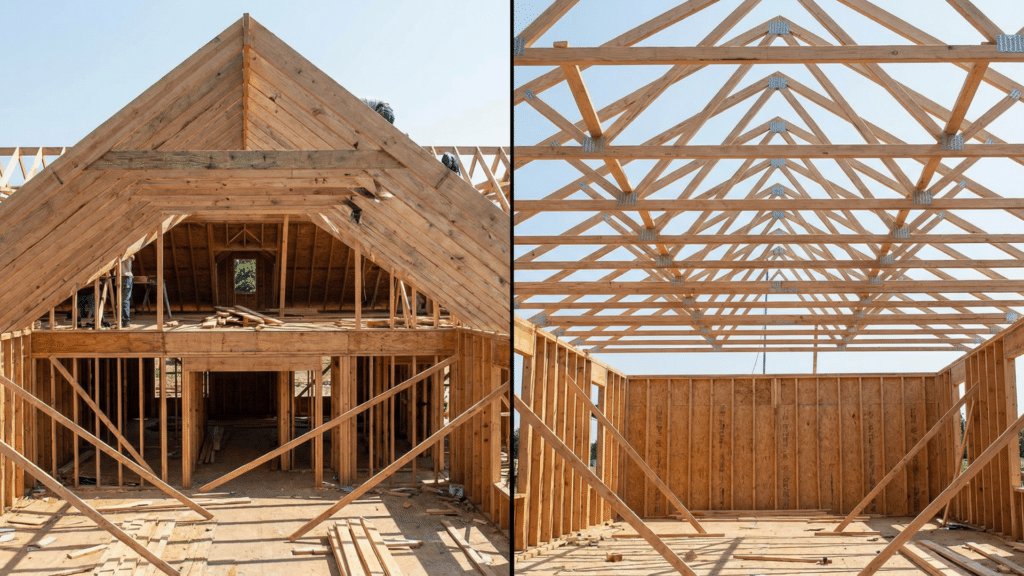
Rafters and trusses both support a roof, but they differ in their construction, installation, and use. These differences affect cost, strength, design options, and long-term flexibility.
Construction Method
Rafters are constructed piece by piece on the job site. Carpenters measure, cut, and fasten each board to form the roof’s slope. This hands-on method allows adjustments during the build but takes precision and time.
Trusses, in contrast, are engineered in a factory using pre-measured lumber and metal connector plates. They arrive at the site as complete triangular units ready for installation.
Installation Time
Rafter installation typically takes longer because each component must be cut and assembled on-site. Weather conditions and job site delays can also slow progress.
Trusses speed up the framing stage since they are prebuilt. Once delivered, a crew can quickly lift and secure them in place, sometimes completing the roof structure in a single day on standard homes.
Labor Requirements
Rafters require experienced carpenters who understand roof angles, load paths, and precise measurements. The work demands careful layout and strong framing skills.
Trusses reduce the need for on-site detailed cutting. A framing crew positions and braces them according to the manufacturer’s layout plan. While equipment may be needed for lifting, the process generally requires less specialized carpentry.
Material Efficiency
Rafters often use larger dimensional lumber, such as 2×8 or 2×10 boards, depending on the roof design. This can increase lumber usage, especially for wider spans.
Trusses use smaller pieces of wood arranged in triangular patterns, which improves strength while reducing material waste. The engineered design allows efficient use of lumber without sacrificing structural performance.
Cost
Rafters may appear less expensive in raw lumber cost, but the additional labor time can raise the total price.
Trusses often lower overall construction expenses because they install faster and require fewer skilled labor hours. For large residential projects, this efficiency can lead to noticeable savings.
Structural Strength
Rafters rely on ridge boards, ceiling joists, and exterior walls to support roof loads. Their strength depends on proper spacing and secure connections.
Trusses use interconnected triangles to distribute weight evenly across the structure. This design increases stability and reduces stress on individual components. As a result, trusses often provide consistent load performance under heavy snow or wind conditions.
Span Capability
Trusses are designed to span long distances without needing interior load-bearing walls. This makes them suitable for open floor plans and larger rooms.
Rafters can also span wide areas, but they often require support beams or interior walls for stability. For homes that prioritize wide, open spaces, trusses typically offer greater flexibility in span.
Attic and Storage Space
Rafters create a more open attic area because they lack the internal webbing found in trusses. This open space can be used for storage or converted into a finished attic room.
Trusses, however, include diagonal braces that fill much of the attic space. While attic truss designs exist, standard trusses usually limit usable overhead space.
Design Flexibility
Rafters allow more flexibility during construction. Builders can adjust angles or make small design changes as needed. This makes them useful for custom homes or unique roof shapes.
Trusses must be designed and approved before manufacturing. Once produced, changes are difficult and often costly, so the roof layout must be finalized early in the planning process.
Future Modifications
Rafter systems are generally easier to modify during renovations. Contractors can reinforce or adjust individual boards if structural changes are needed.
Trusses, however, are engineered systems. Cutting or altering any part of a truss can weaken its integrity and compromise safety. Most modifications require review and approval from a structural engineer.
Best Use Cases of Rafters vs Trusses
Choosing between rafters and trusses often depends on the type of project, budget, timeline, and long-term plans for the home. The table below highlights where each system tends to perform best.
| Building Scenario | When Rafters Make More Sense | When Trusses Are the Better Option |
|---|---|---|
| Custom Design Projects | Ideal for complex rooflines and detailed architectural features. | Works best when the roof design is finalized and consistent. |
| Large-Scale Developments | Suitable if build time is flexible and craftsmanship is prioritized. | Preferred for production homes where speed and efficiency matter. |
| Future Attic Living Space | Best choice if the attic may be converted into a room later. | Suitable when attic space will not be used for living areas. |
| Home Renovations or Additions | Easier to adjust or modify during remodeling. | Better for homes where structural changes are unlikely. |
| Fast Construction Schedules | May slow down framing due to on-site assembly. | Speeds up installation with prebuilt units. |
| Open Interior Layouts | May require additional support beams for large spans. | Spans wide areas without interior load-bearing walls. |
| Cost-Controlled Projects | Higher labor costs are acceptable within the budget. | Reduces overall framing cost in many standard builds. |
| Simple Roof Structures | Can be used, but may not be the most efficient choice. | Very efficient for straightforward roof shapes. |
Final Thoughts
A roof framing decision affects more than just how the structure looks. It influences build time, future renovation options, and even long-term maintenance.
A well-planned choice can improve structural stability and reduce unexpected costs over the life of the home. Clear drawings, accurate measurements, and professional input matter just as much as the framing system itself.
Rushing this decision can lead to complications that are expensive to correct later. Take time to review your construction plans carefully and align them with your goals.
For the best results, consult a qualified builder or structural engineer before finalizing your roof framing strategy.