

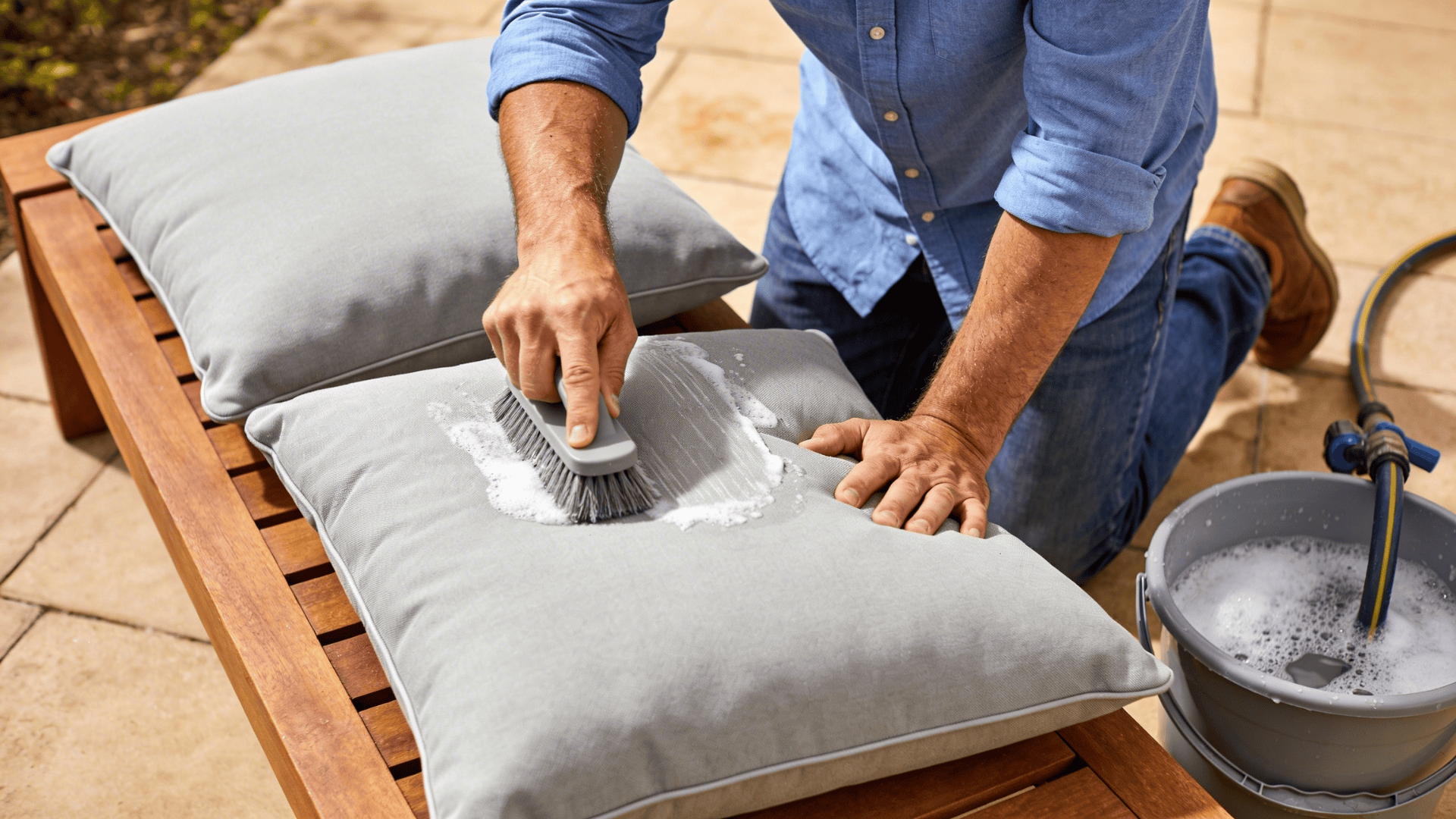
If you are dealing with mold or mildew on your Sunbrella cushions, you are not alone. Outdoor fabric can grow mildew in just a few days when damp, and once it smells, a simple wipe won’t fix it.
I have seen how quickly cushions can lose their clean look when they are used daily or left outside.
But cleaning them is not hard if the right steps are followed. In this guide, I will show you how to clean Sunbrella cushions easily at home.
You will also learn how to remove stains, deal with mildew, and keep your cushions looking fresh for longer.
I will share easy tips that actually work without damaging the fabric. If you want your cushions to look clean again, keep reading and follow each step carefully to get the best results.
Understanding Sunbrella Fabric
Sunbrella fabric is a strong outdoor material made to handle sun, rain, and daily use. It is often used for patio furniture, cushions, umbrellas, and even boat covers.
The fabric is made from solution-dyed acrylic, which means the color goes deep into the fibers.
This helps it resist fading, even after long hours in the sun. It is also water-resistant and easy to clean, making it a good choice for outdoor spaces. Most stains can be removed with mild soap and water.
The fabric feels soft, not rough like some outdoor materials, so it stays comfortable to sit on. Another key point is its resistance to mold and mildew.
This makes it useful in humid areas. Sunbrella fabric is known for lasting many years without losing its look or strength, which makes it a reliable option for both outdoor and indoor use.
Tools and Materials Needed
These are the basic tools used to clean Sunbrella fabric safely and remove dirt without damaging the material. Using the right tools makes the process easier and more effective.
How to Clean Sunbrella Cushions?
Cleaning Sunbrella cushions is simple if the right steps are followed. This process helps remove dirt, stains, and mildew without damaging the fabric.
Step 1: Prepare the Cleaning Solution
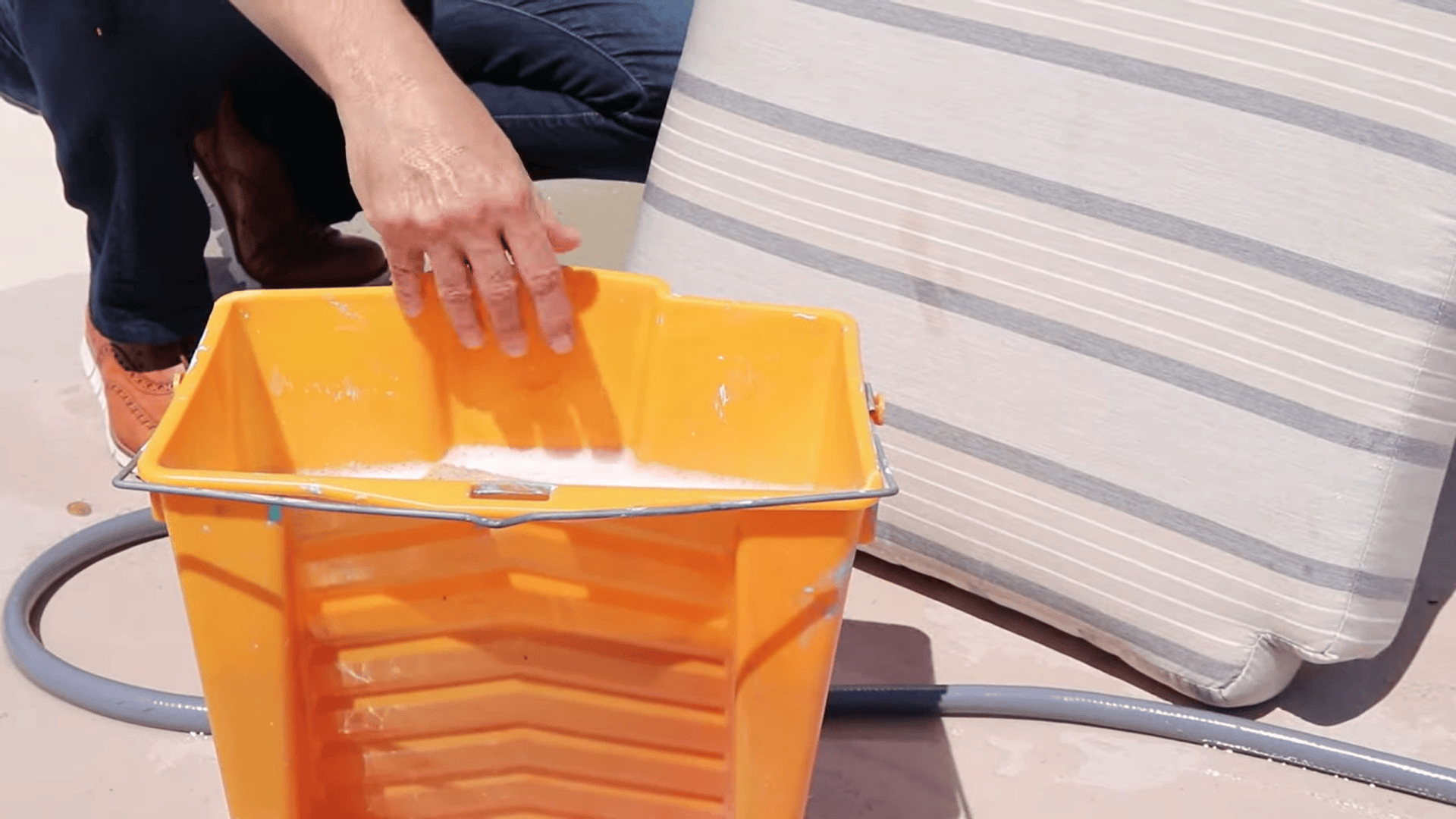
Start by mixing a simple cleaning solution for regular use. Use about a quarter cup of mild dish soap with water. This works well for light dirt and basic upkeep.
If you see mold or mildew, use a stronger mix. Add 1 cup of bleach to a gallon of water, then mix in ¼ cup of mild dish soap. Always wear rubber gloves when using bleach. It can be harsh on your skin.
Work in an open, airy space so the fumes don’t build up. I prefer mixing this solution outside instead of in a garage or shed.
Step 2: Apply the Cleaning Solution
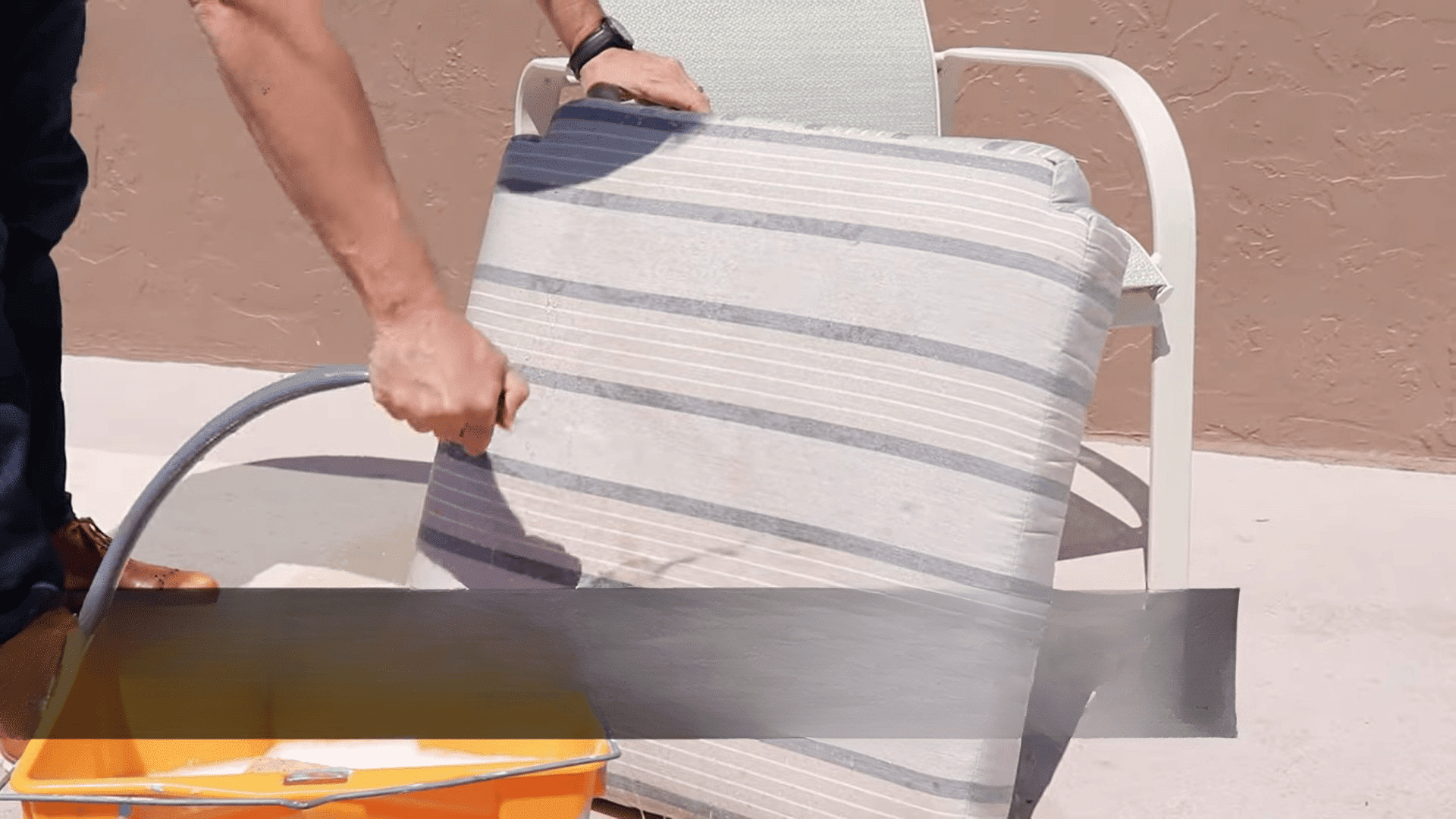
Apply the prepared cleaning solution evenly across the cushion surface. Make sure to cover all areas, including corners, seams, and stained spots. This helps loosen dirt and stains from the fabric fibers.
Even application ensures that no part of the cushion is left untreated.
It also allows the cleaning solution to start working on both visible stains and hidden dirt, making the next cleaning steps more effective.
Step 3: Scrub the Cushion Surface
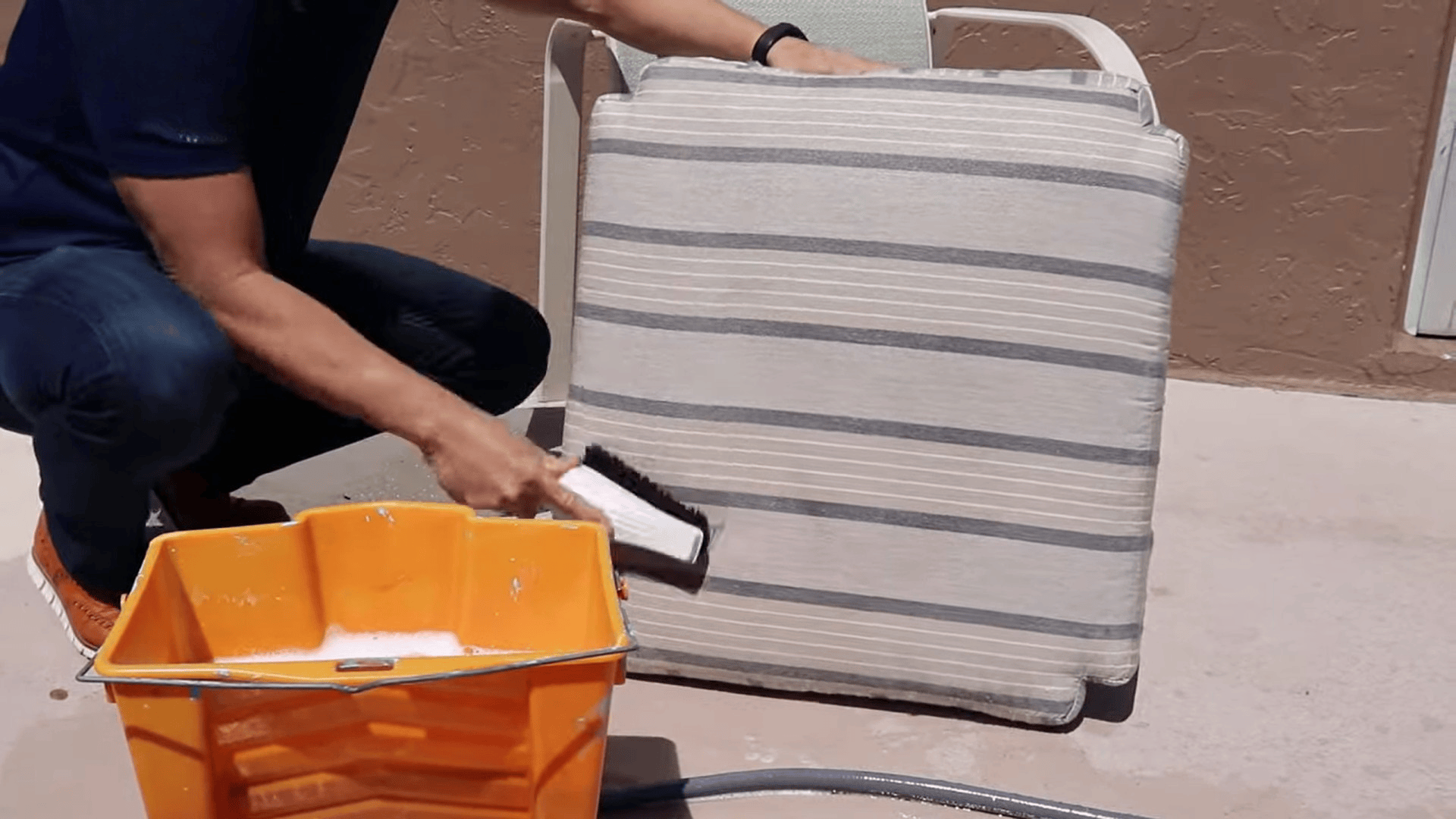
Use a soft brush to gently scrub the cushion after applying the cleaning solution. Focus on stained areas like food spots, but clean the full surface for even results. This helps remove dirt from all sides.
Use light pressure and small, steady motions while scrubbing. Avoid pressing too hard, as it can damage the fabric.
This step lifts dirt and stains from deep in the material. It also improves the overall cleaning result, helping the cushion look fresh, clean, and well cared for after washing.
Step 4: Clean All Sides of the Cushion
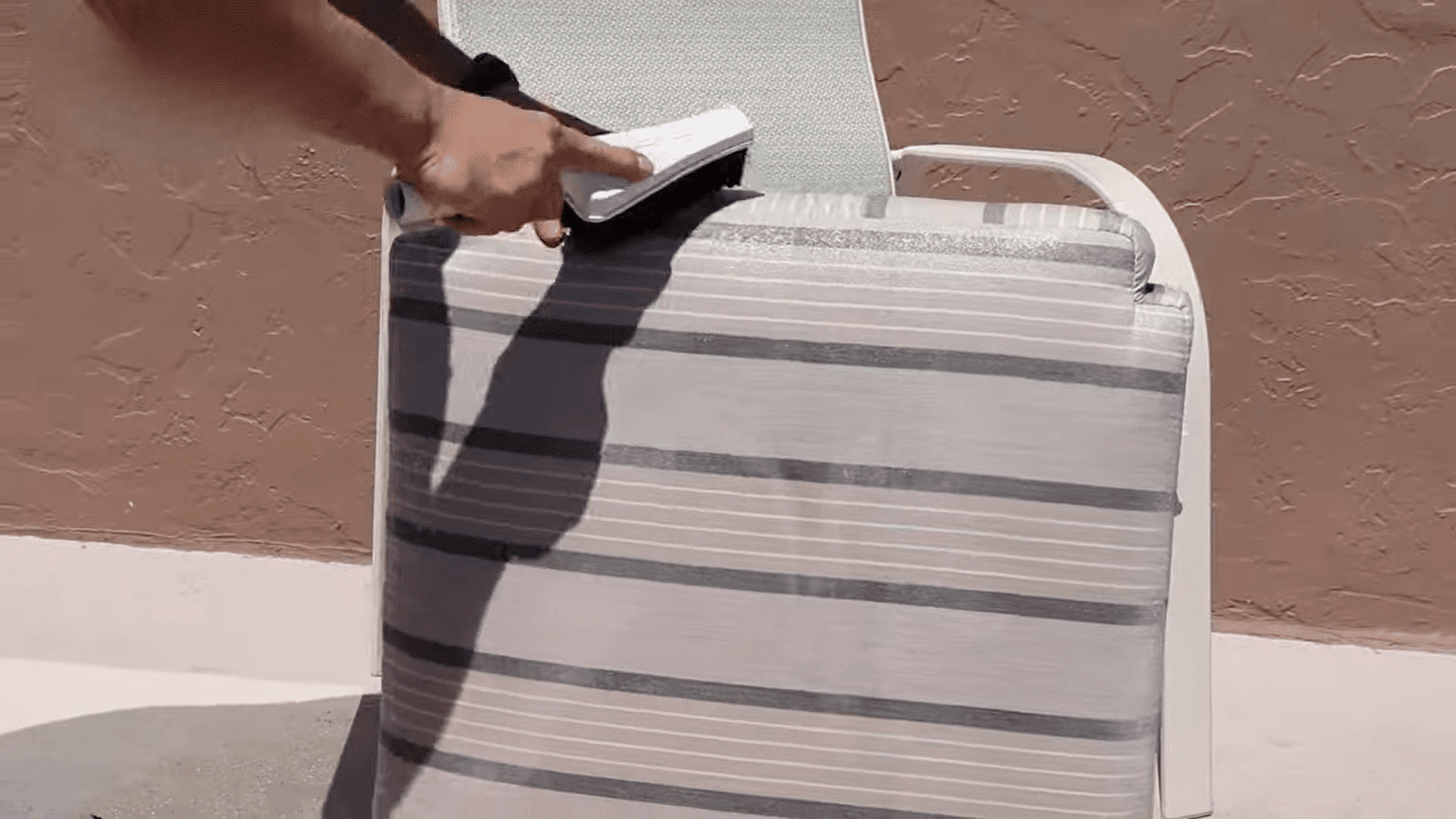
Continue cleaning by scrubbing all sides of the cushion, not just the top. Pay extra attention to edges, seams, and corners where dirt and mildew build up. These areas often hold hidden grime.
Check the underside as well. Cushions placed on metal or wood frames trap moisture underneath.
This makes it a common spot for mildew. Many times, the top looks clean, but the bottom has dark mold spots growing for weeks.
Cleaning every side helps prevent this problem and keeps the cushion fully fresh.
Step 5: Let the Solution Sit
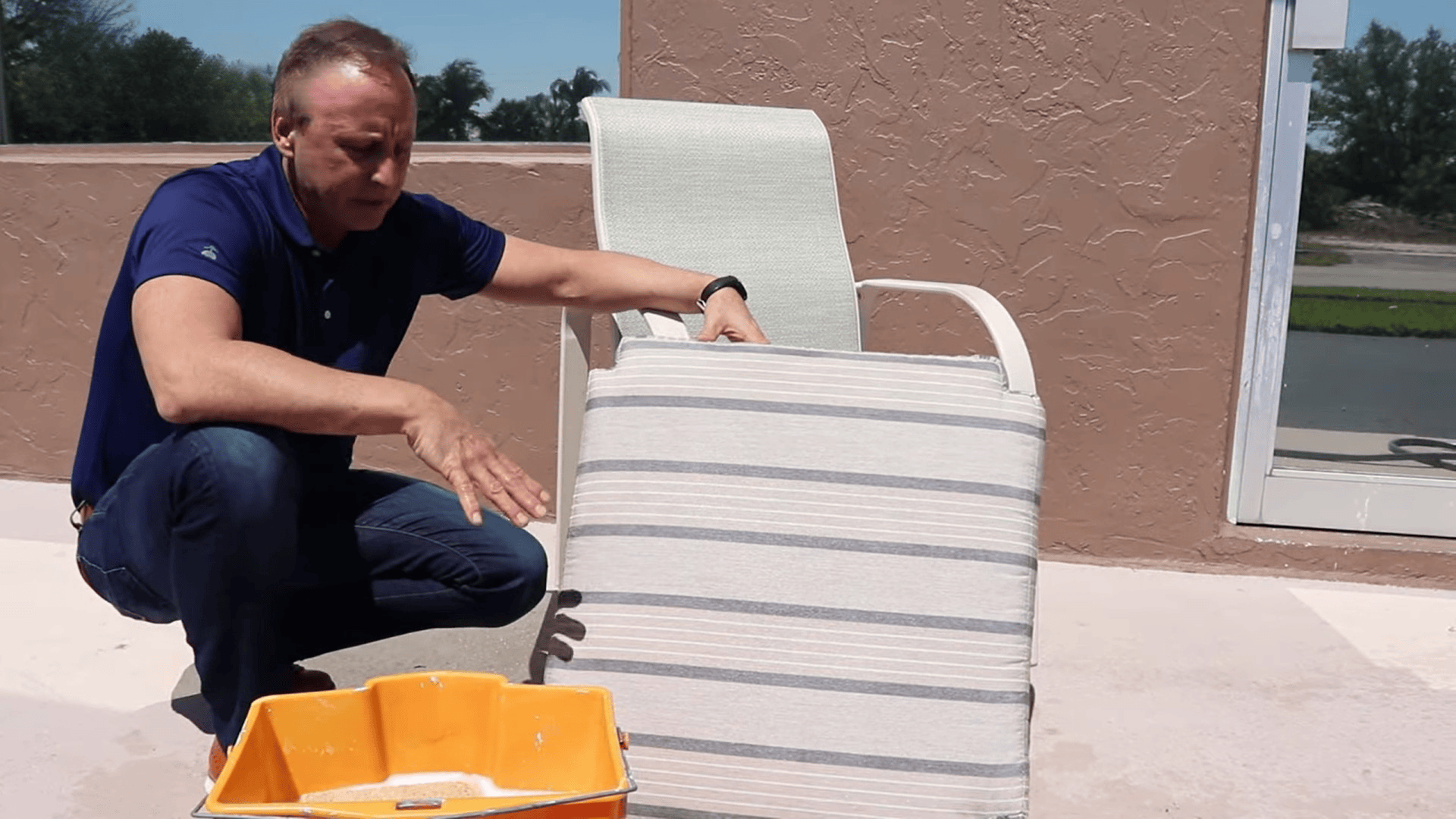
Allow the cleaning solution to sit on the cushion for about five minutes before rinsing. This waiting time helps the detergent and bleach break down stains and kill mildew more effectively.
Letting the solution rest also gives it time to reach deeper into the fabric fibers, where dirt may be trapped.
This step is especially helpful for tougher stains that need extra time to loosen. Proper soaking improves the overall cleaning result and makes rinsing easier.
Step 6: Rinse the Cushion Thoroughly
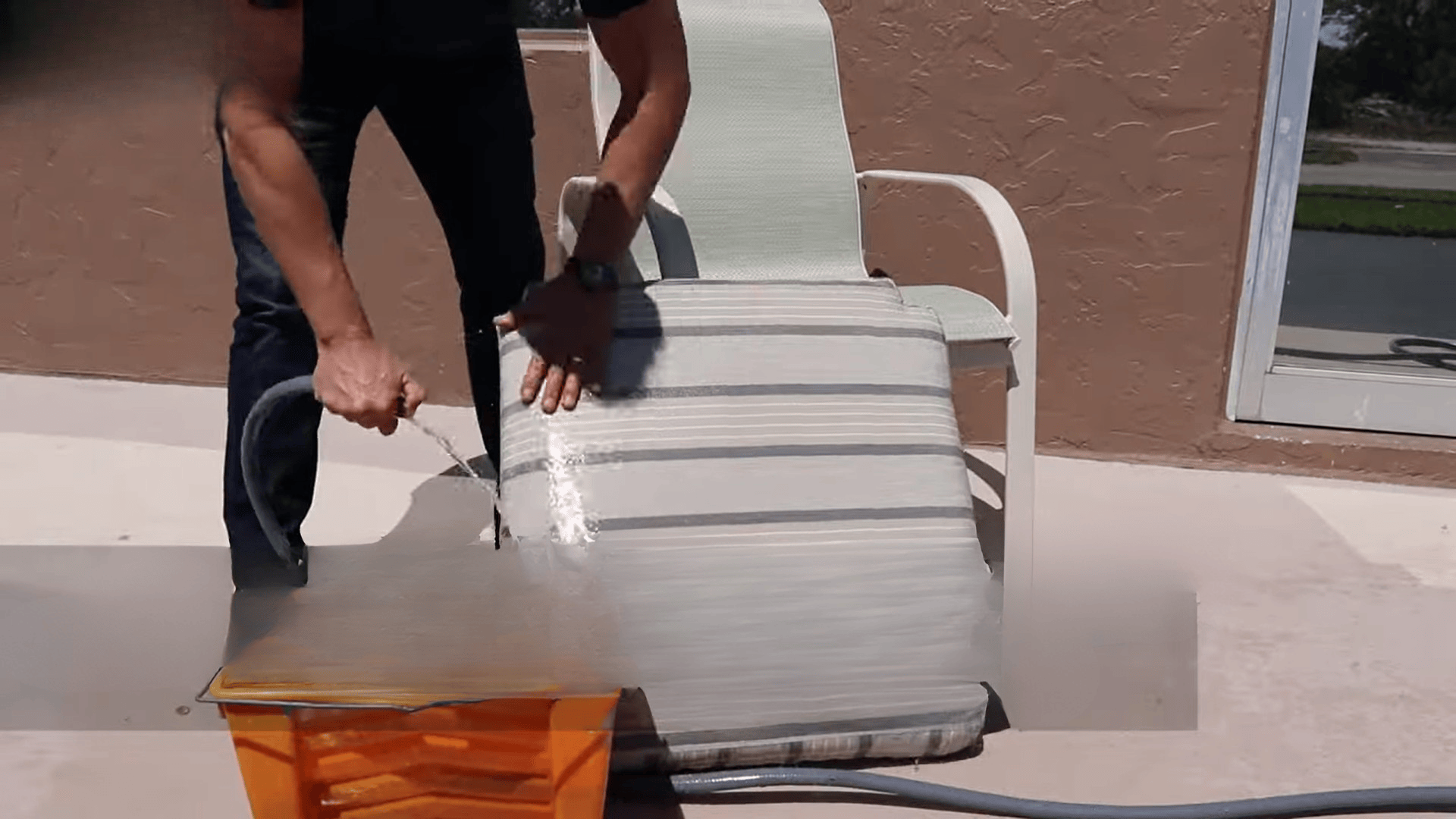
After the solution has soaked, rinse the cushion thoroughly with clean water. Make sure all soap and bleach are washed out of the fabric completely. Any leftover residue can attract dirt and leave marks on the surface.
Use enough water to flush out the cleaner from all sides, including seams and edges.
Proper rinsing protects the fabric and ensures no chemicals remain. This step is important to keep the cushion clean and ready for safe drying.
Step 7: Let the Cushion Air Dry
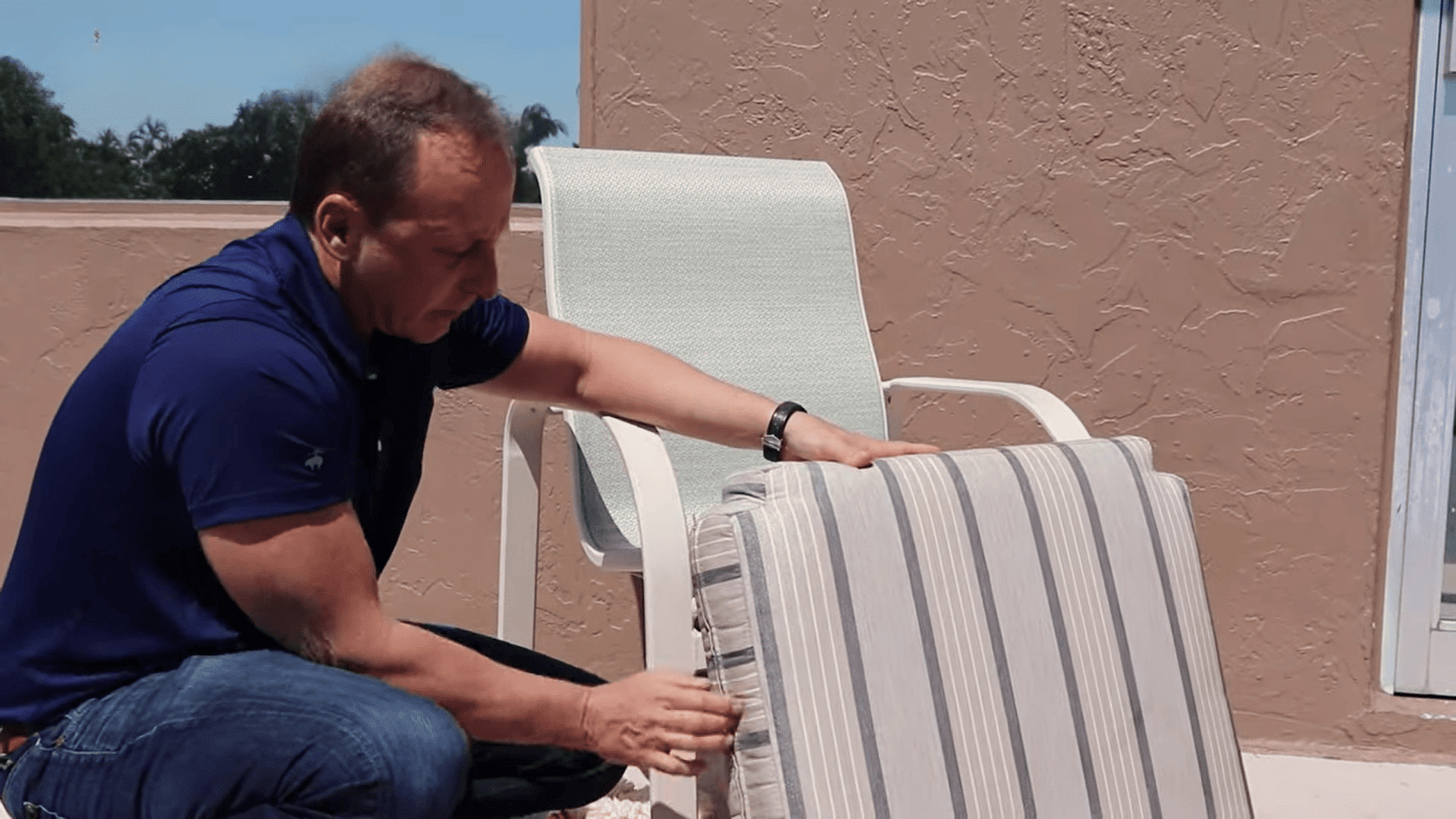
Place the cushion in a position that allows proper airflow for drying. It is best to set it on its side so water can drain out easily.
If there is a zipper, keep it facing down to help release trapped moisture inside.
Direct sunlight speeds up drying time considerably and has a natural, mild disinfecting effect on any residual surface mildew spores.
I prop cushions against a chair or lean them at a 45-degree angle against a fence post to keep both sides exposed to air simultaneously. Avoid stacking cushions while drying.
Step 8: Check Final Cleaning Results
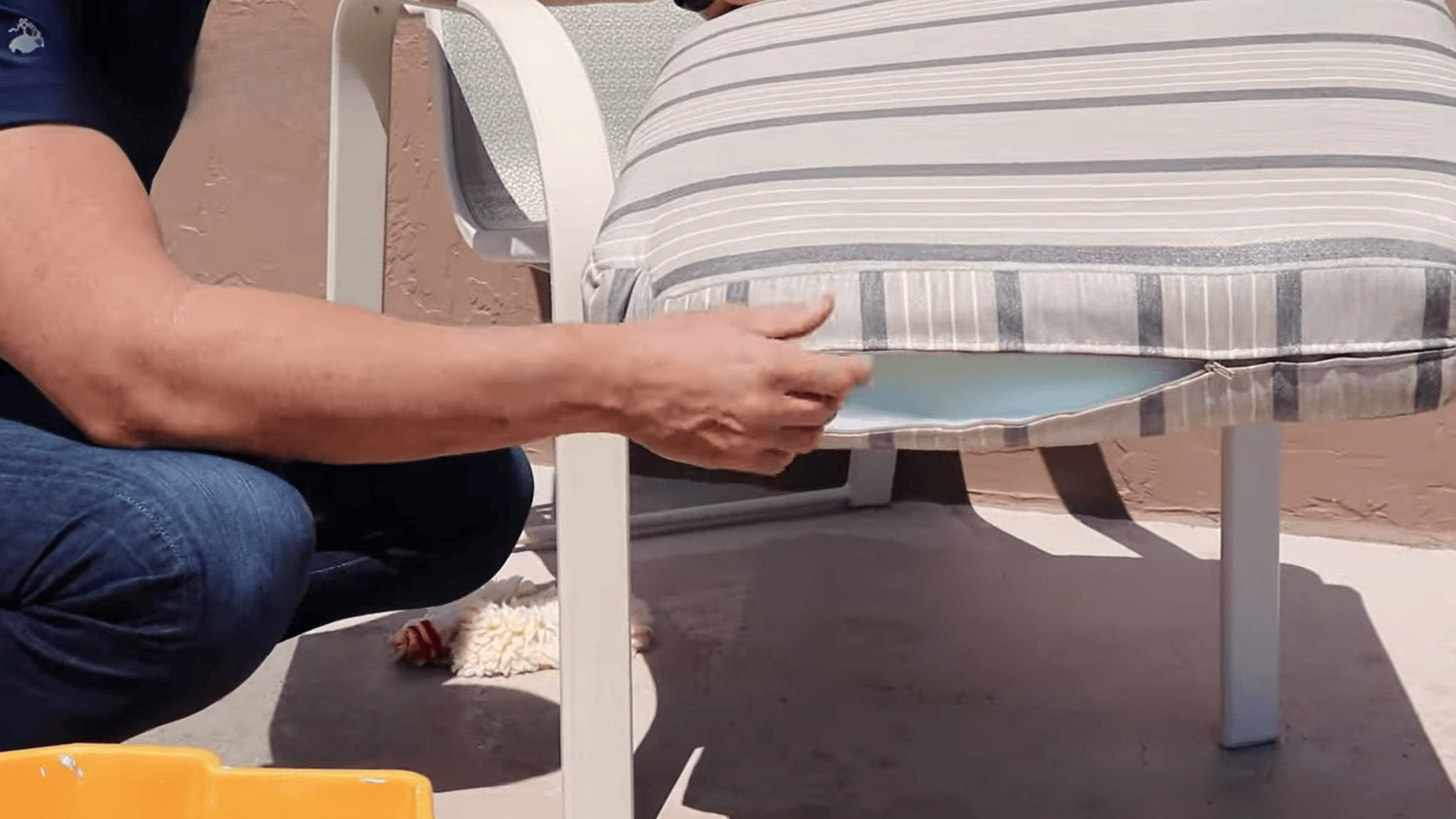
After the cushion is fully dry, check the surface carefully for any remaining stains or dirt. It looks like the cushion looks much cleaner and refreshed after the process.
Look at both sides and the seams to confirm the cleaning worked well. If any marks are still visible, the cleaning steps can be repeated.
This final check helps ensure the cushion is fully clean, safe to use, and looks presentable again.
You can check out the original video on their YouTube channel here by Sunniland Patio, or watch it below, where the cleaning process is explained step by step.
Best Cleaning Solution for Sunbrella Cushions
Sunbrella fabric works best with gentle cleaners that do not damage its surface. Using the right solution helps remove dirt, stains, and mildew safely.
1. Mild Soap and Water
Mild soap and water are the most common and safest way to clean Sunbrella cushions. Mix a small amount of dish soap with warm water to create a simple cleaning solution.
This method works well for regular cleaning and light stains. It helps remove dirt without harming the fabric.
This is the only solution you need for weekly or biweekly maintenance.
Using bleach routinely, even diluted, will gradually strip the DWR coating and dull the color of the fabric over multiple seasons.
2. Bleach Solution for Mold and Mildew
A diluted bleach solution can be used for tough mold and mildew stains. Mix one cup of bleach with water and a small amount of mild soap.
This solution helps kill mold spores and remove deep stains from the fabric.
It is important to use the right amount to avoid damage. Always rinse the cushion well after cleaning. This method is useful for outdoor cushions exposed to moisture and humidity.
3. Vinegar for Odor Removal
Vinegar is a natural option for removing mildew smell from Sunbrella cushions. It helps break down odor-causing bacteria and freshens the fabric.
Mix vinegar with water and apply it lightly to the affected area. Let it sit for a few minutes before rinsing.
This method works well for removing smells without using strong chemicals. Vinegar is safe for most fabrics and can be used as a simple odor treatment.
4. Commercial Sunbrella Cleaners
Commercial cleaners made for Sunbrella fabric are designed for deeper cleaning. These products are tested to remove stains while protecting the material.
They often work well on tough spots that basic cleaning cannot fix. Always follow the instructions on the label to avoid damage.
Using a fabric-safe cleaner helps maintain the quality of the cushion. This option is useful for heavy cleaning or long-term maintenance.
Quick-Reference: Which Cleaning Method to Use by Stain Type
Different stains and contamination types respond best to different solutions. This table shows the right method, the dwell time needed, and what to avoid for each situation.
| Stain / Problem | Recommended Solution | Dwell Time | What to Avoid | Re-treat DWR? |
|---|---|---|---|---|
| General dirt and dust | Mild dish soap + water | 5 min | Bleach (unnecessary) | No |
| Mold and mildew | 1 cup bleach + ¼ cup soap per gallon | 15–20 min | Dry brushing before wetting | Yes, always |
| Mildew odor (no visible growth) | White vinegar + water (1:1) | 10 min | Bleach (not needed here) | No |
| Food and drink | Mild soap + water, blot first | 5 min | Rubbing the stain | No |
| Grease and oil | Baking soda first, then soap solution | 5 min each stage | Hot water (sets oil) | No |
| Ink and dye transfer | Isopropyl alcohol, blot only | Blot, do not soak | Rubbing, harsh solvents | No |
| Bird droppings / organic debris | Mild soap + water after scraping solids | 5 min | Scraping with metal tools | No |
Effective Tips to Keep Sunbrella Cushions Clean Longer
Preventing dirt and stains is easier than deep cleaning later. Simple care habits can help keep cushions fresh and long-lasting.
- Clean Spills Immediately: Blot spills with a clean cloth to prevent stains from setting and avoid rubbing to prevent deeper stains.
- Brush or Vacuum Weekly: Regular brushing or vacuuming removes dust and debris, preventing dirt from settling and keeping cushions fresh.
- Store Cushions Properly: Store cushions in a dry, well-ventilated area to prevent mold and mildew, and reduce wear on fabric.
- Use Covers When Not in Use: Protect cushions with covers to shield them from dust, rain, and dirt, extending their lifespan and reducing cleaning needs.
- Lift Cushions Off Surfaces After Rain: Resting on a solid surface traps moisture and often causes mildew underneath. Propping cushions at an angle after rain helps them dry faster.
- Re-apply DWR Spray Once Per Season: Even without bleach cleaning, the water-repellent finish degrades with UV exposure over time. A single application of 303 Fabric Guard each spring keeps the fabric performing as intended.
When to Clean and When to Replace?
Most Sunbrella cushion covers can be cleaned effectively, but there are situations where replacement makes more sense than continued cleaning.
If the foam insert inside the cushion has a persistent mildew smell even after the cover has been thoroughly cleaned, the mold has worked its way into the foam itself.
Foam is porous and retains moisture in a way that fabric does not, and bleach cleaning does not penetrate foam effectively.
In that case, replacing the foam insert while reusing the cleaned cover is the more practical solution.
Similarly, if the fabric has visible pilling, UV fading across large sections, or tears at the seams that have been re-stitched multiple times, the cost of cleaning and reproofing may not be worth it relative to a replacement cover.
Sunbrella sells replacement fabric by the yard, and many outdoor furniture companies sell replacement covers that fit standard frame sizes.
Common Mistakes when Cleaning Sunbrella Cushions
Small mistakes during cleaning can damage the fabric or reduce its life. Avoid these errors to keep Sunbrella cushions clean and in good condition.
- Using Harsh Chemicals: Strong cleaners can damage the fabric coating and weaken fibers. Always use mild solutions made for safe fabric cleaning.
- Not Rinsing Properly: Leftover soap or cleaner stays on the fabric surface. This residue attracts dirt and makes cushions dirty again faster.
- Using High-Pressure Washing: High pressure can damage the fabric surface and protective layer. It may also push water deep into the cushion and cause issues.
- Not Drying Fully: Damp fabric creates the perfect condition for mold and mildew. Always let cushions dry completely before using or storing them.
- Scrubbing Too Hard: Rough scrubbing can wear down the fabric and fade its color. Use a soft brush and gentle motion to protect the material.
- Using Too Much Cleaning Solution: Too much cleaning solution can leave residue and make rinsing harder. Use only the needed amount for effective and safe cleaning.
Conclusion
Cleaning Sunbrella cushions is easier with the right steps. Mild cleaners, gentle scrubbing, and proper rinsing help keep the fabric in good shape for longer.
Taking care of small things like drying the cushions fully and cleaning spills early helps prevent bigger problems later.
These simple habits keep cushions clean with little effort. If odor remains after cleaning the cover, the foam inside is likely the source.
Replacing the insert while reusing a cleaned and re-treated cover is almost always cheaper and more effective than continued cleaning. This guide gives a clear and easy way to handle cleaning at home.
If you found this helpful, save this guide or share it with others so you can keep your cushions clean whenever needed.
Frequently Asked Questions
Can You Machine-Wash Sunbrella Cushion Covers?
Yes, most Sunbrella cushion covers can be machine-washed using cold water and mild detergent. Always check the care label first to avoid damage or shrinking.
Can You Use Dawn Dish Soap on Sunbrella Fabric?
Yes, you can use Dawn dish soap on Sunbrella fabric. It is gentle and works well for cleaning dirt and light stains without harming the material when mixed with water.
What Is the Best Protectant for Sunbrella?
The best protectant for Sunbrella is 303 Fabric Guard or Sunbrella Restore. Both help repel water, prevent stains, and restore protection without affecting the fabric’s look or feel.
How Long Should Sunbrella Cushions Last?
Sunbrella cushions usually last 5 to 10 years with proper care. Regular cleaning and drying help extend their life and keep the fabric strong and fade-resistant.