

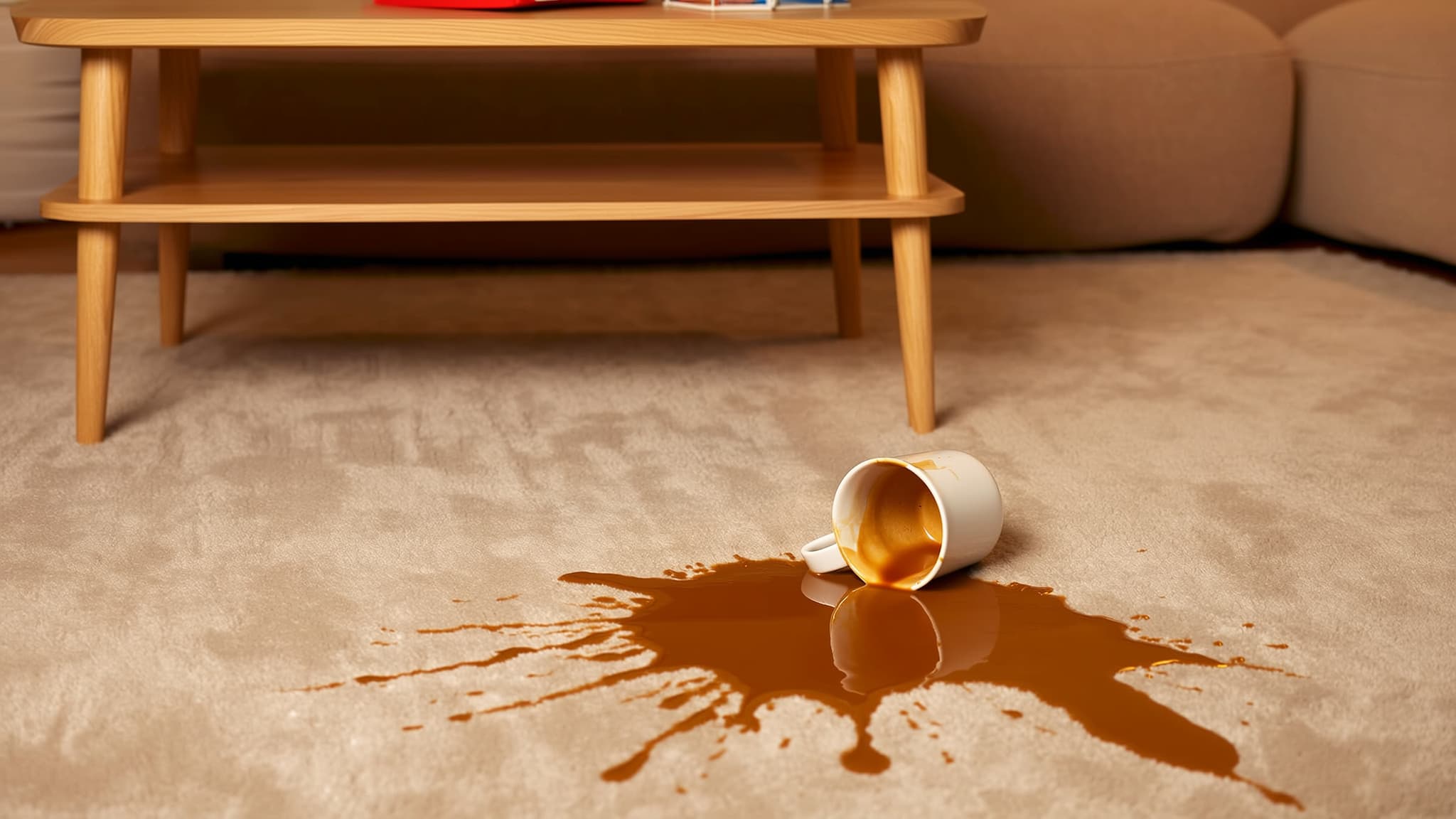
A bump of the table. One wrong move. And suddenly there’s a big brown stain spreading across your carpet.
Coffee stains on carpet are not permanent. Most come out fully with items you already have at home, cold water, baking soda, white vinegar, or dish soap.
This guide covers how to remove coffee stains from carpet the moment a spill happens, how to clean coffee out of carpet that’s already dried in, which home remedies actually work, and which mistakes to stay away from.
Why Coffee Stains Are So Hard to Remove from Carpet?
Coffee contains tannins, natural compounds that bond quickly with carpet fibers and give the stain its dark color. Coffee is also acidic, which helps it cling to fibers rather than sitting loosely on the surface.
If your coffee had milk or sugar in it, the stain gets even trickier, raising the risk of discoloration and a lingering smell if left too long.
What You Need Before You Start
You don’t need any special products. Most of what you need is already in your kitchen.
| Item | Purpose | Key Tip |
|---|---|---|
| Clean white cloth or paper towels | Blotting the stain | White cloth lets you see the stain lifting |
| Cold water | Diluting and rinsing | Always cold,. never hot |
| Baking soda | Absorbing pigment and odor | Works best as a paste for dried stains |
| White vinegar | Breaking down coffee tannins | Mix with water before applying |
| Liquid dish soap | Lifting the stain | Use sparingly, always rinse out fully |
| Hydrogen peroxide (3%) | Treating stubborn marks | For light-colored carpets only; test first |
| Spray bottle | Controlled application | Mist, don’t pour |
| Avoid: Hot water | Sets tannins permanently | Cold water only |
| Avoid: Scrubbing | Pushes stain deeper into fibers | Always blot, never rub |
| Avoid: Over-wetting | Causes wicking and mold risk | Use minimal liquid |
How to Remove Coffee Stain from Carpet: Fresh Spill
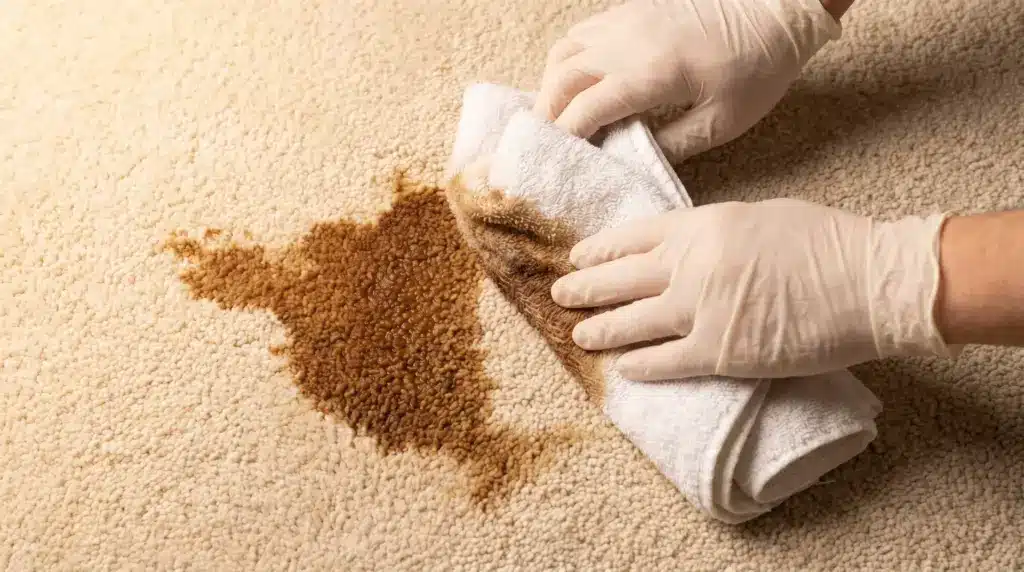
If you just spilled, this is your section. Work through these steps in order and don’t skip ahead.
Step 1: Blot the Spill Right Away
Grab a clean white cloth or a stack of paper towels. Press down firmly on the stain. Do not wipe, drag, or scrub, just press and lift.
Start at the outer edge of the spill and work inward toward the center. This stops the stain from spreading outward into a larger area.
Keep blotting with fresh sections of cloth until you’ve absorbed as much liquid as possible. The cloth will turn brown. That’s the coffee coming out, keep going.
Step 2: Add Cold Water to Dilute
Once you’ve blotted out most of the liquid, pour a small amount of cold water directly onto the remaining stain. This dilutes what’s left and loosens its grip on the fibers.
Blot again with a clean cloth. Repeat a few times, add water, blot, add water, blot, until the cloth comes away with very little color on it.
Do not drench the area. Too much water can damage the carpet backing underneath and create moisture problems.
Step 3: Apply a Cleaning Solution
Mix the following in a spray bottle:
- ½ teaspoon liquid dish soap
- 1 tablespoon white vinegar
- 2 cups cold water
Shake gently. Mist the solution lightly over the stained area, don’t pour it on. Let it sit for about 5 minutes.
Step 4: Blot and Rinse
After 5 minutes, blot the area with a clean, dry cloth. Press down and lift, don’t scrub. Once the stain has faded, rinse with a small amount of cold water to remove soap. Blot dry again.
If the stain is still visible, repeat Steps 3 and 4 until it’s gone.
Step 5: Air Dry the Area
Let the cleaned spot air dry fully before walking on it or placing furniture back. Open a window or turn on a fan to speed up drying, a damp carpet that dries slowly can develop a musty smell.
How to Clean Coffee Out of Carpet: Dried or Old Stains
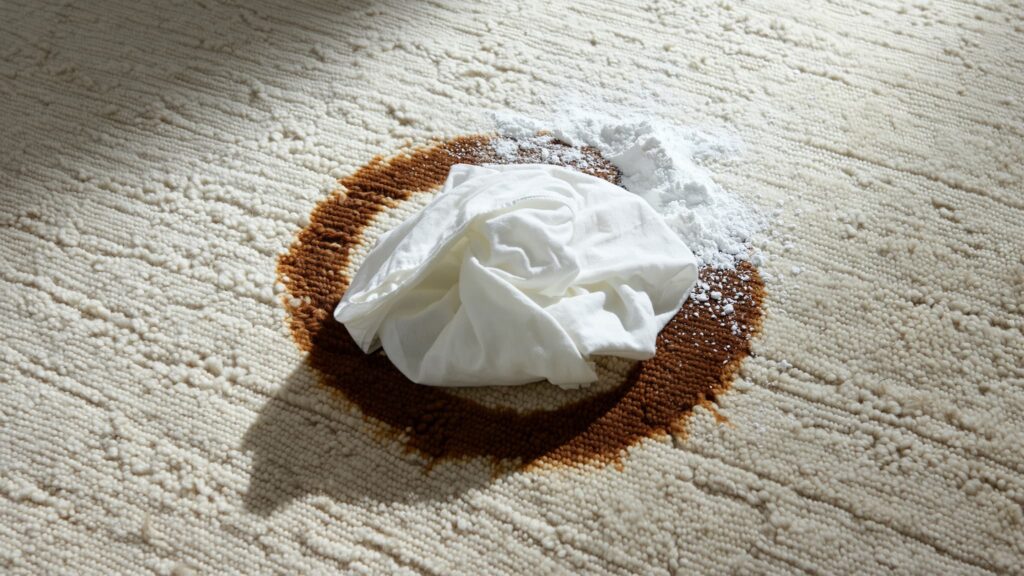
Missed the spill? Found a dried brown ring that’s been there for days? It’s not too late. Dried coffee stains need a slightly different approach, but they do come out.
Step 1: Re-Wet the Dried Stain
Take a clean cloth dampened with warm water. Press it gently into the dried stain for 30 to 60 seconds. This softens the dried coffee and starts to loosen it from the fibers. Don’t soak the area, just enough moisture to rehydrate the stain.
Step 2: Use a Baking Soda Paste
Mix 1 tablespoon of baking soda with just enough warm water to make a thick paste, about the consistency of toothpaste. Apply it to the stain, press gently into the fibers, and leave for at least 30 minutes or until fully dry.
Vacuum the area with a nozzle attachment to pull the dried paste (and the coffee residue it absorbed) out of the carpet. Repeat as needed.
Step 3: Try Hydrogen Peroxide for Stubborn Marks
If baking soda hasn’t fully lifted the stain, try hydrogen peroxide, especially on light-colored or white carpets.
Mix:
- 1 cup hydrogen peroxide (3% solution)
- ½ teaspoon liquid dish soap
Test on a small hidden patch first. Hydrogen peroxide can lighten some carpet colors. If the test spot looks fine after a few minutes, dab the solution onto the stain with a clean cloth. Let it sit for 10 minutes, then blot clean and rinse with cold water.
Step 4 : Repeat If Needed
Old stains rarely come out in one round. Plan on two or three cleaning passes. Each round lifts a bit more. Be patient, it will clear.
Home Remedy Recipes for Coffee Stain Removal
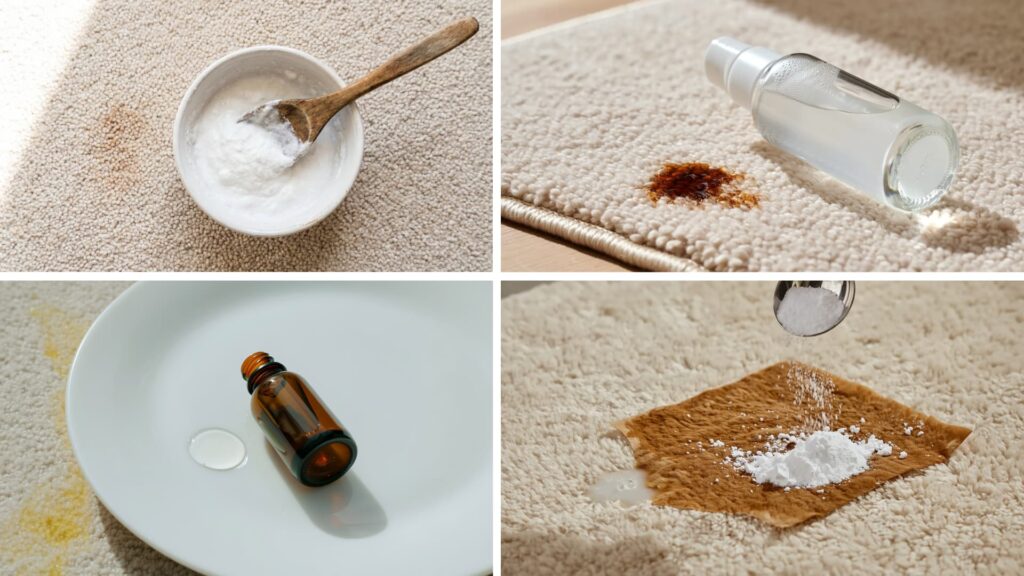
Baking Soda + Water Paste
Mix 3 parts water with 1 part baking soda into a thick paste. Apply it to the stain, let it dry fully, then vacuum it up. It works well on dried stains and also pulls out any lingering coffee smell from the fibers.
White Vinegar + Dish Soap Solution
Mix 2 cups of water, 1 tablespoon of white vinegar, and 1 tablespoon of dish soap. Apply with a sponge or spray bottle, blot dry, then rinse the area with cold water to clear out any soap left in the carpet.
Hydrogen Peroxide + Dish Soap
Mix 1 cup of hydrogen peroxide (3%) with ½ teaspoon of liquid dish soap. This works well on light-colored or white carpets. Always test on a hidden area first, hydrogen peroxide can lighten darker carpet colors if not checked beforehand.
Vinegar + Baking Soda Combo
Blot the stain first, then apply a 50/50 mix of cold water and white vinegar. Sprinkle baking soda over it and leave for 15 minutes.
Follow up with a dish soap and water solution, blot clean, then rinse with cold water and pat dry. The vinegar breaks down the coffee’s acidic compounds while the baking soda absorbs the remaining pigment.
Cleaning Coffee Stains by Carpet Type
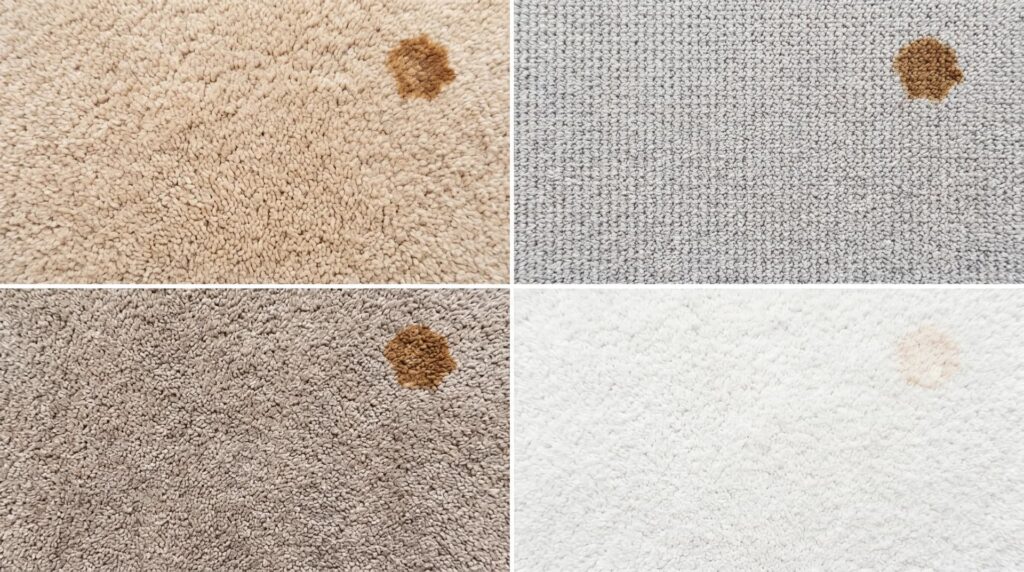
Different carpet materials need different treatment. Using the wrong approach can cause more damage than the coffee stain itself.
1. Wool Carpets
Wool is natural and porous. It absorbs liquid quickly and deeply. It’s also sensitive to alkaline cleaners, which can damage the fibers or cause color bleeding.
- What to use: Mild, pH-neutral cleaning solutions only. Use minimal liquid and blot more than you spray.
- What to avoid: Strong vinegar solutions, harsh detergents, or anything alkaline. Do not scrub.
2. Synthetic Carpets (Nylon, Polyester)
Synthetic carpets are much more forgiving. They’re less porous, so stains sit nearer the surface rather than soaking deep into the pile.
You can use stronger cleaning solutions, the vinegar and dish soap mix, hydrogen peroxide, or most commercial carpet stain removers work well here.
3. Blended Fiber Carpets
Blended carpets vary depending on the fiber ratio. A carpet that’s 80% nylon and 20% wool behaves differently from one that’s 50/50.
Always test your chosen cleaning solution on a hidden corner first. Wait 5 minutes and check for any discoloration or fiber damage before applying to the stain.
4. White or Light-Colored Carpets
Light carpets show coffee stains clearly, but they also give you more cleaning options, including hydrogen peroxide. Start by blotting up as much coffee as possible, then apply a gentle dish soap and water mix.
If the stain stays, move to the hydrogen peroxide solution (1 cup hydrogen peroxide + ½ tsp dish soap), but always test first.
Do not use bleach, even on white carpets, unless you know exactly what you’re doing. Even diluted bleach can cause uneven patches or fiber damage when applied incorrectly.
Common Mistakes to Avoid When Cleaning Coffee Stains
| Mistake | Why It’s a Problem | What to Do Instead |
|---|---|---|
| Rubbing or scrubbing the stain | Spreads the stain wider and pushes it deeper into fibers | Always blot, press down and lift, don’t drag |
| Using hot water | Heat sets coffee tannins permanently into the carpet | Use cold water only |
| Skipping the spot test | Some solutions can discolor or damage certain carpets | Test on a hidden area before applying |
| Soaking the carpet | Moisture seeps into backing, causing wicking, mold, and odor | Use minimal liquid at each step |
| Leaving soap residue | Makes fibers sticky, attracting more dirt over time | Always rinse with plain cold water after using soap |
| Mixing bleach with other cleaners | Bleach reacts badly with vinegar and many common cleaners | If using bleach, use it alone, diluted, on white carpets only |
When to Call a Professional Carpet Cleaner
Sometimes, DIY methods reach their limit. That’s not a failure, it just means the stain or carpet type needs more specialized treatment.
Signs You Need Expert Help
- The stain covers a large area and hasn’t come out after multiple cleaning attempts
- The carpet is a high-value rug, an heirloom, or made of a fragile natural fiber
- The stain has been sitting for weeks or months
- An odor won’t clear up even after thorough cleaning
- The carpet shows discoloration or fiber damage from a previous cleaning attempt
Professional cleaners use vacuum extraction equipment and pH-balanced solutions not sold at retail. These tools pull moisture and residue far more completely than blotting by hand.
How Often Should You Deep Clean?
For high-traffic areas, hallways, living rooms, areas near the kitchen, professional deep cleaning every 12 to 18 months helps remove ground-in dirt and allergens that regular vacuuming can’t reach.
How to Prevent Coffee Stains on Carpet
The simplest way to handle coffee stains is to stop them from happening.
Use mugs with secure lids when moving around the house, keep coffee in non-carpeted areas like the kitchen, and place a rug or mat in spots where spills are most likely.
A carpet protector spray applied to high-risk areas creates a light barrier on the fiber surface, giving you more time to blot up a spill before it sets.
Final Thoughts
A coffee spill on your carpet is not a big deal if you move fast. Blot right away, use cold water, apply a simple cleaning solution, and rinse the soap out fully.
For dried stains, re-wet the area first, then use a baking soda paste or vinegar mix.
Knowing how to remove coffee stains from carpet means you’re ready the next time a spill happens, no panic, no permanent damage. The solution is already in your kitchen.
Frequently Asked Questions
Does Coffee Stain Carpet Permanently?
No. Coffee stains are not permanent. Most come out fully with fast action and the right cleaning solution, even old, dried stains can be removed with a few cleaning passes.
Will Dawn Remove Coffee Stains?
Yes. Dawn dish soap mixed with cold water and white vinegar is one of the most effective home solutions for coffee stains on carpet. Always rinse out all the soap after cleaning to avoid sticky residue on the fibers.
What Is the Best Thing to Get Coffee Stains Out of Carpet?
Cold water and quick blotting first, then a vinegar and dish soap solution. For dried stains, a baking soda paste works well. Hydrogen peroxide is the strongest home option for light-colored carpets.
Can Old Coffee Stains Be Removed?
Yes. Re-wet the dried stain with warm water first to loosen it, then apply a baking soda paste or vinegar and soap solution. Old stains may need two or three cleaning rounds, but they do come out.