

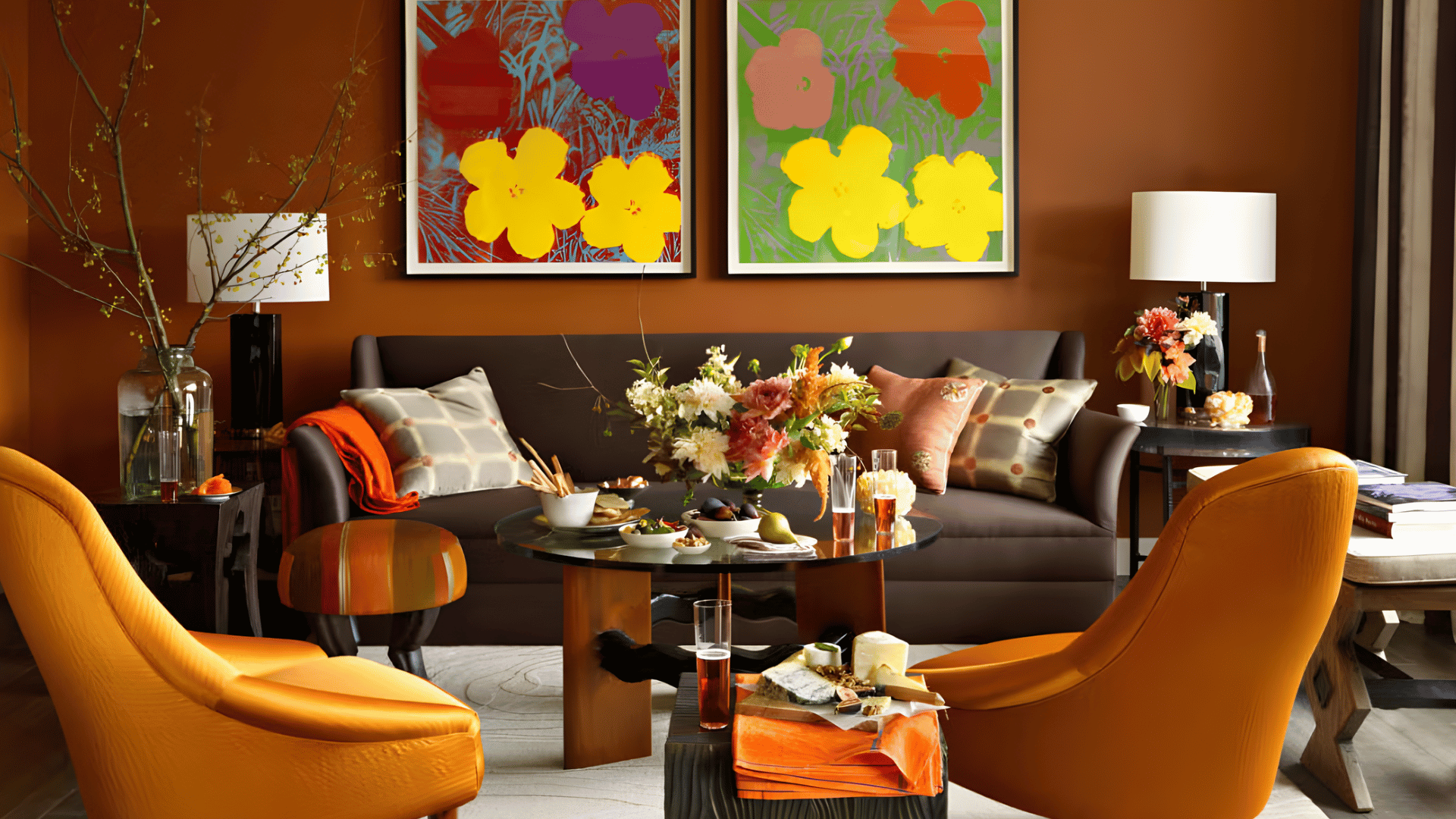
I’ve always liked how homes from the 1970s felt warm, bold, and full of personality. The colors were strong, the furniture had character, and every room seemed to tell a story.
If you like that relaxed and playful look, you might be thinking about bringing it into your own space.
In this guide, I share old-school 70s home interior ideas that show how this classic style worked in real homes. You will see ideas for living rooms, kitchens, bedrooms, and small decor details that helped define the decade.
Some ideas focus on colors and textures, while others highlight furniture and layout choices that were common at the time.
By the end, you will have plenty of simple ways to add a retro 70s feel to your home.
What Defines a 70s Home Interior Style
When I think about homes from the 1970s, I notice how relaxed and personal they feel. They were built to feel comfortable and easy to live in.
Furniture was soft, colors were warm, and spaces often encouraged people to sit together and talk.
One big feature was the use of earth-tone colors. Homes often used shades like burnt orange, mustard yellow, avocado green, and deep brown. These colors appeared on walls, sofas, carpets, and even kitchen appliances.
Another key part of the style was the use of natural materials. Wood panel walls, wicker chairs, and rattan tables were very common. These materials added texture and gave homes a grounded, relaxed look.
Texture also mattered a lot. Shag carpets and thick fabrics made rooms feel soft and cozy. Lighting, large sofas, and open seating areas helped create spaces where people could gather and spend time together.
Key Colors Used in 70s Interior Design
Color played a huge role in shaping homes during the 1970s. Most spaces used warm, earthy shades, making the rooms feel comfortable and grounded.
These tones often appeared on walls, carpets, furniture, and kitchen items. Many homes mixed several colors together to create a bold but balanced look.
- Burnt Orange: This warm shade showed up on sofas, rugs, and wall paint. It added energy to rooms while still feeling cozy and relaxed.
- Avocado Green: Avocado green was one of the most common colors in kitchens and living rooms. It worked well with wood furniture and natural textures.
- Mustard Yellow: Mustard yellow helped brighten a space without looking too strong. It was often used in curtains, cushions, and patterned fabrics.
- Chocolate Brown: Dark brown tones helped balance brighter colors. This shade appeared in wood furniture, leather seating, and wall panels.
- Deep Red And Rust Tones: Rust and deep red shades added warmth and depth. These colors often showed up in rugs, throw pillows, and wall art.
- Cream and Beige Neutrals: Cream and beige helped soften bold colors. Many homes used them on walls or carpets to keep the space from feeling too busy.
Key Elements Used in 1970s Home Decor
Homes in the 1970s used many natural and textured materials. These materials helped rooms feel warm, comfortable, and easy to live in.
Most interiors focused on surfaces you could see and feel. Wood, woven fibers, and soft fabrics gave spaces a relaxed and welcoming look.
1. Wood Paneling
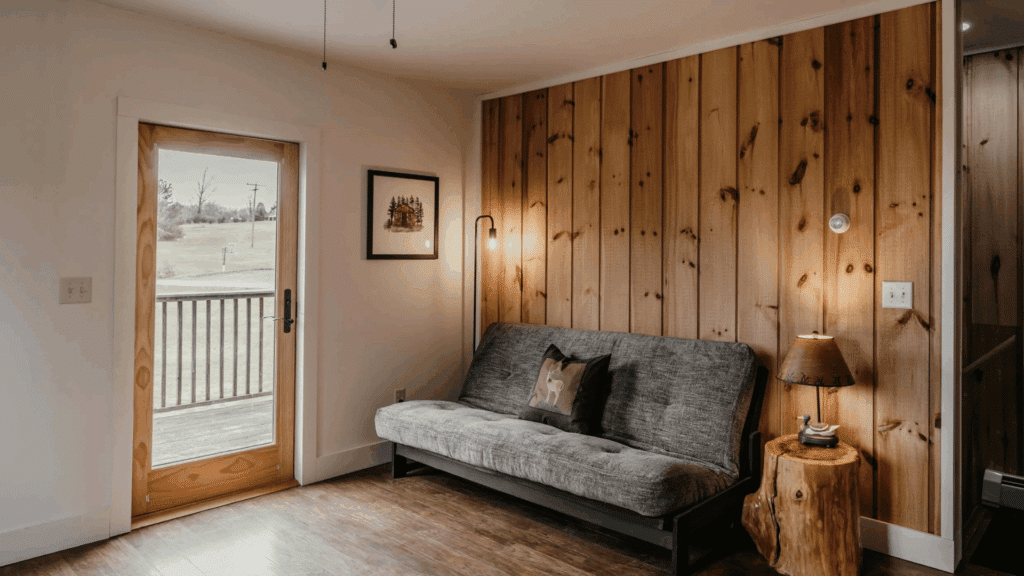
Wood paneling was one of the most common features in 70s homes. Many living rooms, basements, and family spaces used wood walls to add warmth and depth. The rich brown tones helped create a cozy atmosphere that felt calm and inviting.
Homeowners often paired wood paneling with earth-tone furniture and soft lighting. This combination made the rooms feel grounded and comfortable.
The natural look of wood also worked well with other materials, such as leather, wicker, and shag carpets, which were popular at the time.
2. Rattan And Wicker Furniture
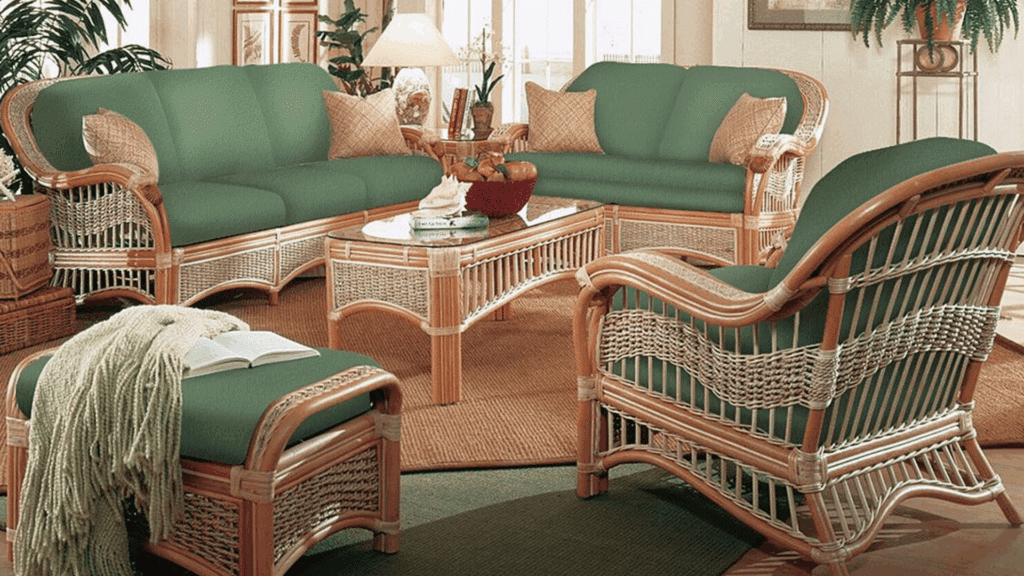
Rattan and wicker furniture became popular because they brought a natural, relaxed feel to homes. Chairs, coffee tables, and storage pieces made from these materials were light but durable.
Their woven texture added visual interest without making a room feel heavy.
Many people placed rattan chairs in living rooms, sunrooms, or reading corners. These pieces worked well with plants and warm colors.
The natural style helped balance darker wood furniture and thick fabrics used in many 70s interiors.
3. Shag Carpet
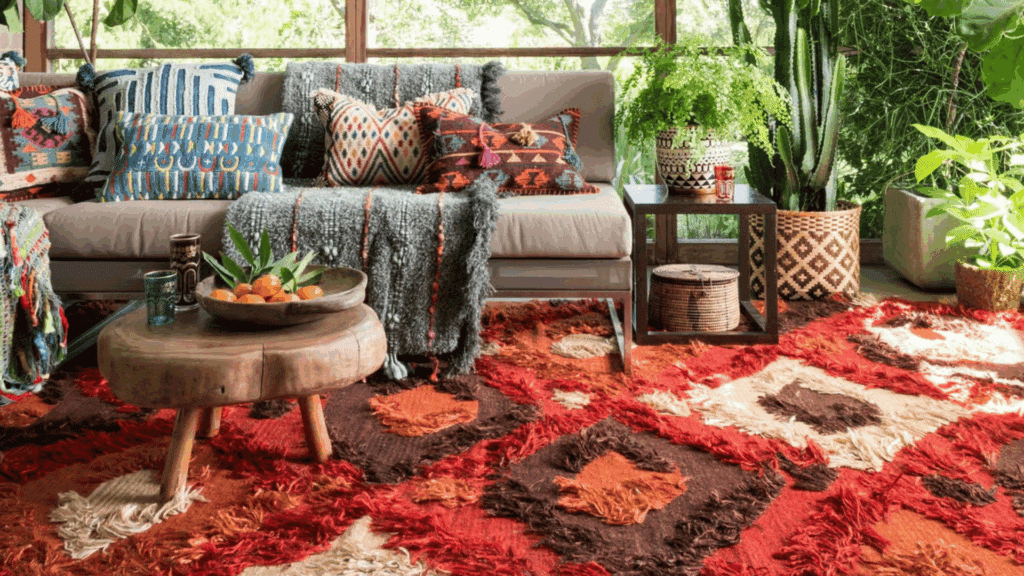
Shag carpet was one of the most recognizable parts of 1970s home design. The thick, soft fibers made floors feel warm and comfortable underfoot.
Many homes used shag carpets in living rooms and bedrooms to create a relaxed setting. Colors often matched the earth-toned palette of the time, including orange, brown, and green.
The deep texture also helped soften large rooms with wood furniture and bold patterns. Shag carpets made spaces feel casual, cozy, and welcoming for everyday living.
4. Ceramic Tile
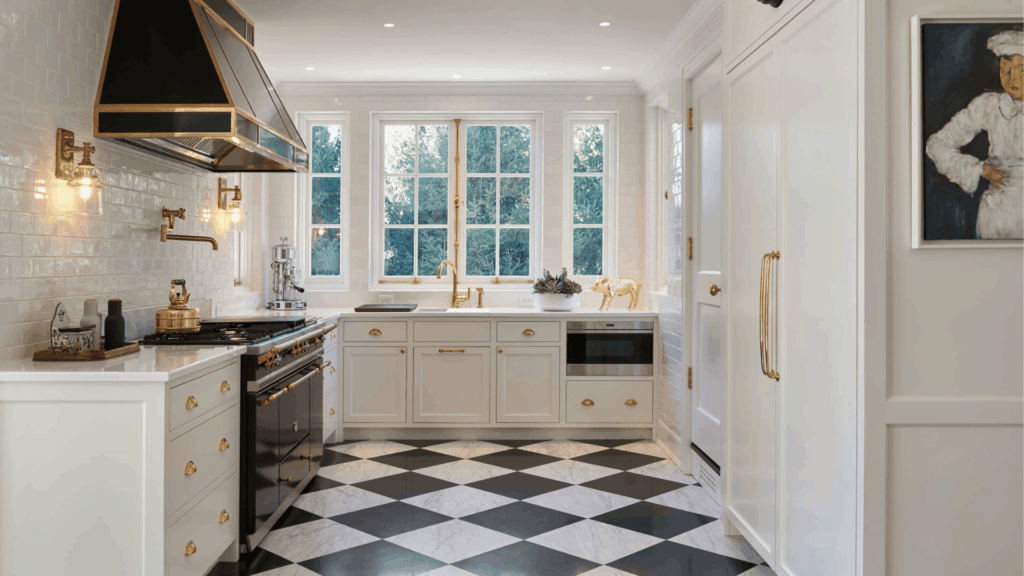
Ceramic tile was widely used in kitchens, bathrooms, and entryways during the 1970s. These tiles were practical and easy to clean, which made them ideal for busy households.
Many homes used bold colors or simple patterns that matched the decade’s style.
Earth tone shades such as brown, rust, and green were common choices. Ceramic tile also helped add texture and contrast to spaces filled with wood and fabric.
This material balanced style with function while keeping rooms durable and easy to maintain.
5. Macramé Textiles
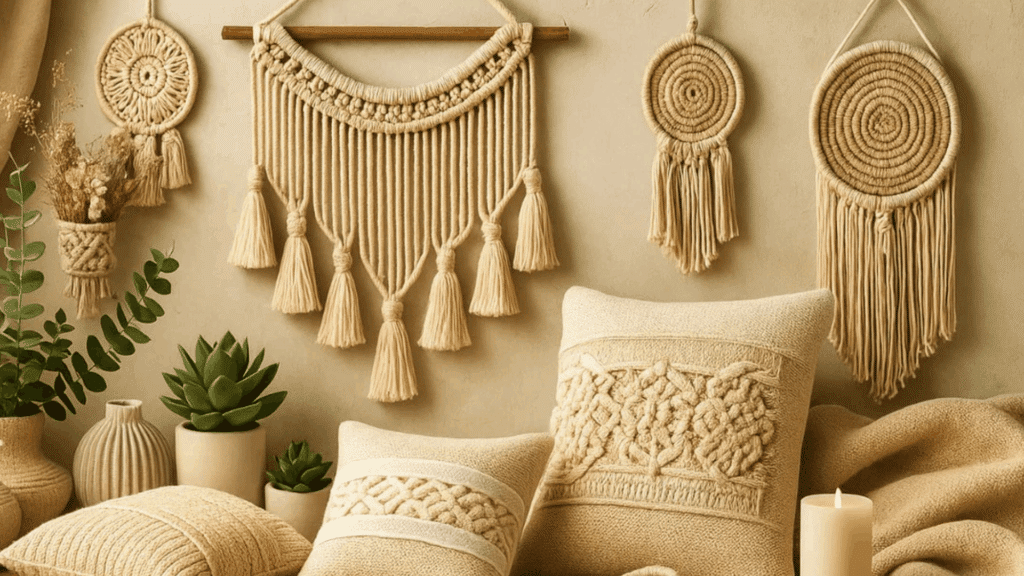
Macramé became a popular decorative element in many 70s homes. Handmade wall hangings, plant holders, and decorative pieces added texture to walls and corners.
These woven designs often used natural cotton or rope, which fit perfectly with the decade’s love for natural materials. Macramé pieces worked well in living rooms, bedrooms, and near windows where plants were placed.
They helped soften spaces that had wood walls or heavy furniture. The handmade look also added a personal touch to home decor.
6. Leather And Suede Upholstery
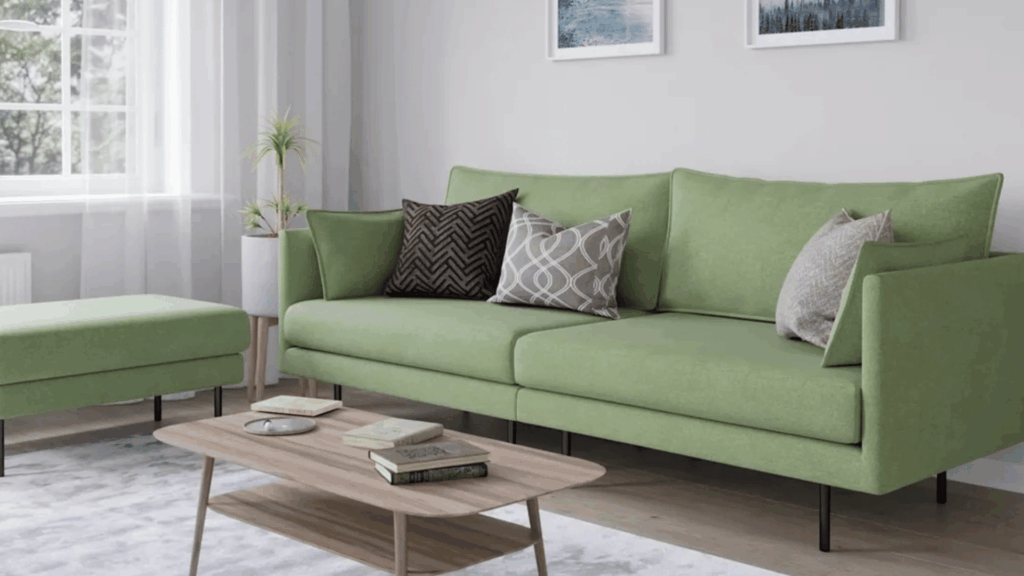
Leather and suede upholstery were common choices for sofas, chairs, and lounge seating during the 1970s. These materials were durable while still feeling soft and comfortable.
Dark brown and tan shades were especially popular because they matched the decade’s warm color palette. Leather and suede also paired well with wood furniture and textured rugs. This combination created a balanced and relaxed living space.
Many homes used these materials to make seating areas feel inviting and suitable for everyday use.
Nostalgic 70s Home Interior Ideas
If you want to bring retro style into your home, these ideas show what made 70s interiors stand out. Many homes used warm colors, bold patterns, and relaxed furniture.
The ideas below highlight design choices that shaped the decade. You can use them as inspiration to add small retro touches or create a full 70s look in your space.
1. Sunken Living Room With Retro Seating
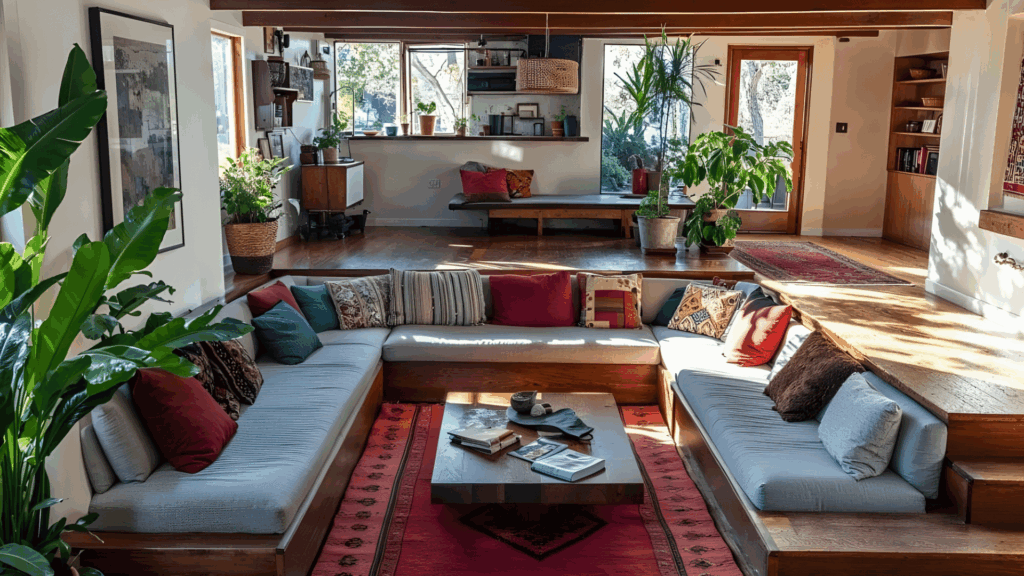
A sunken living room was a popular feature in many 1970s homes. The seating area sat slightly below the main floor, creating a cozy gathering spot.
Large sectionals, low sofas, and thick cushions often filled the space. This layout helped people sit close together and talk comfortably, making the room feel social and relaxed.
2. Shag Carpet Floors For A True 70s Look
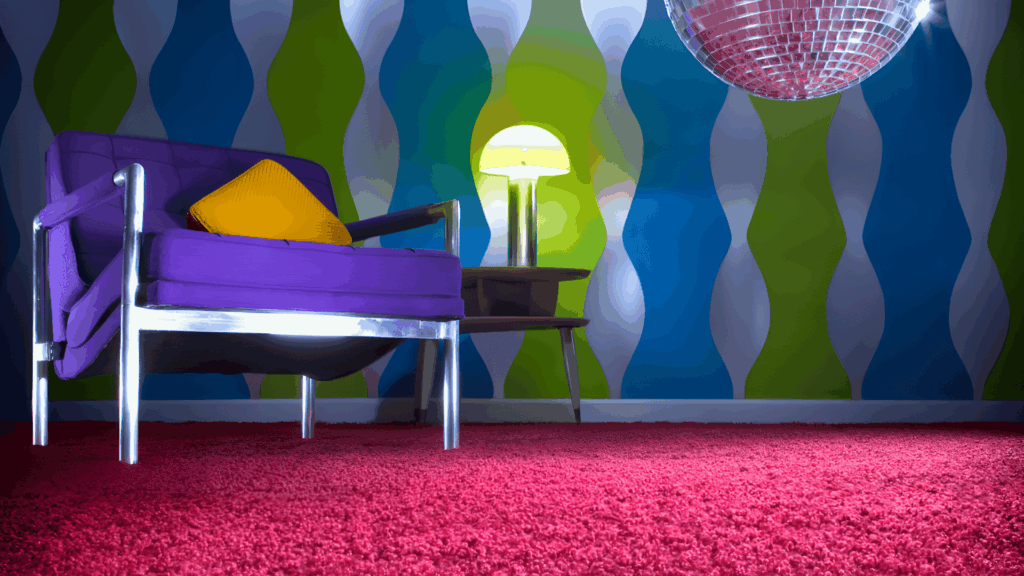
Shag carpet became one of the most recognizable flooring styles of the decade. Its thick and fluffy texture made living rooms and bedrooms feel warm and soft underfoot.
Many homes used colors like brown, orange, or cream. The deep pile added texture and helped rooms feel comfortable and inviting.
3. Wood Panel Walls For A Vintage Feel
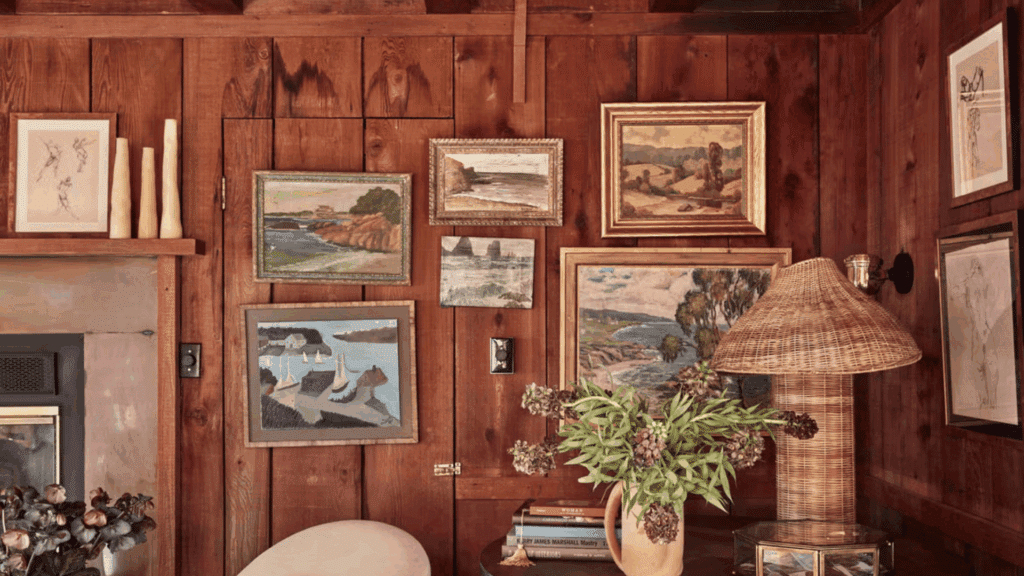
Wood paneling covered the walls in many 70s homes. Dark wood tones created a warm and grounded look in living rooms and family spaces.
The panels added texture without needing extra decoration. Many people paired wood walls with earth-tone furniture and soft lighting to keep the space cozy.
4. Burnt Orange And Brown Color Palette
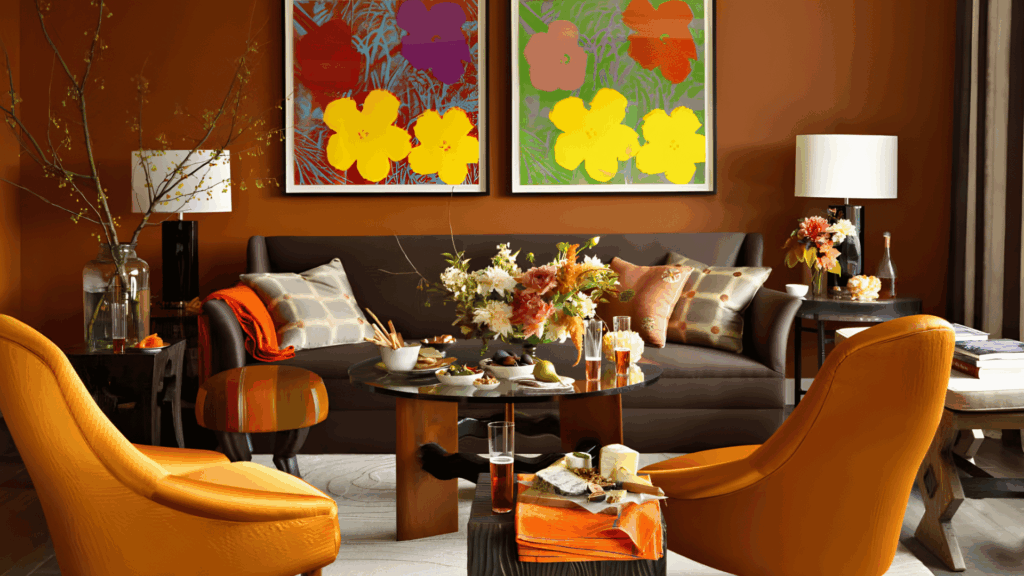
Burnt orange and brown were two of the most common colors in 1970s interiors. You could see them on sofas, carpets, walls, and curtains.
The mix created a warm and relaxed mood that fit the decade’s design style. These colors also worked well with wood furniture and natural textures.
5. Retro Geometric Wallpaper Designs
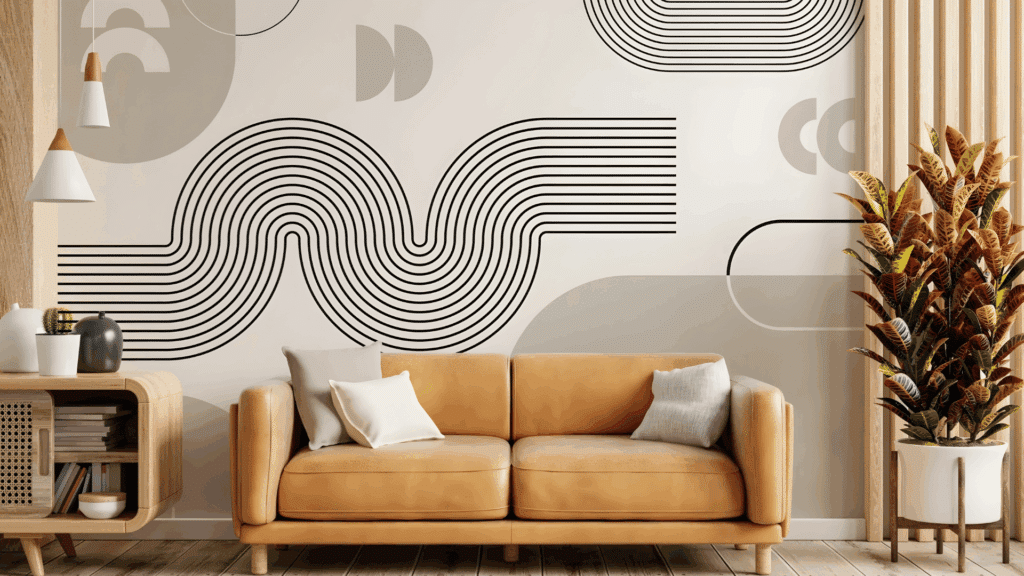
Wallpaper with bold shapes and repeating patterns became a strong design feature during the 70s. Geometric prints often use colors like mustard yellow, brown, and orange.
Many homeowners placed these patterns on accent walls in living rooms or hallways. The designs added energy and personality to simple spaces.
6. Vintage Rattan And Wicker Furniture
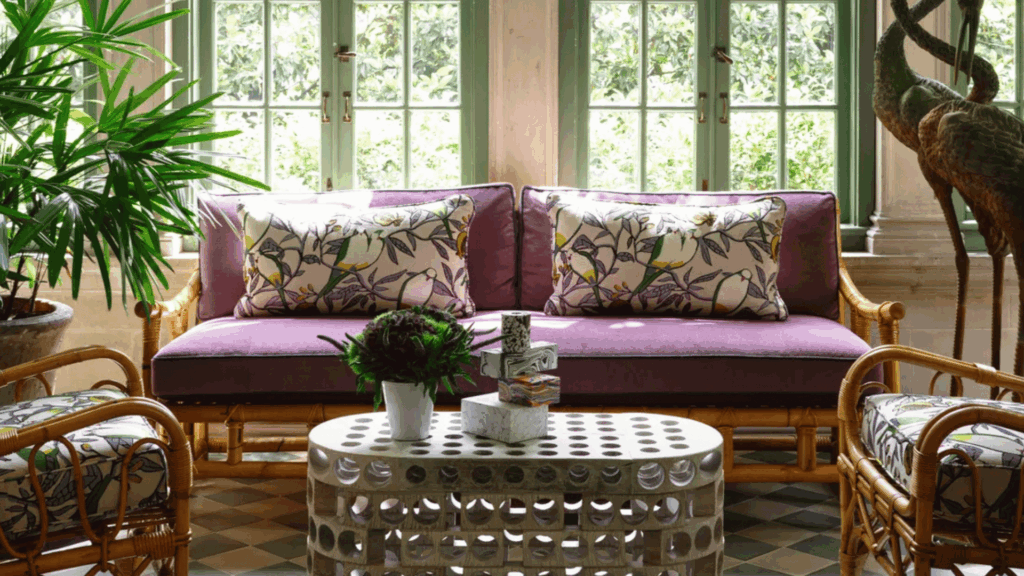
Rattan and wicker furniture appeared in many living rooms, patios, and bedrooms. Chairs, coffee tables, and shelves made from woven materials helped add texture to the space.
These pieces felt light but still matched the warm color palette of the decade. They worked especially well with plants and wood accents.
7. Conversation Pit Living Room Setup
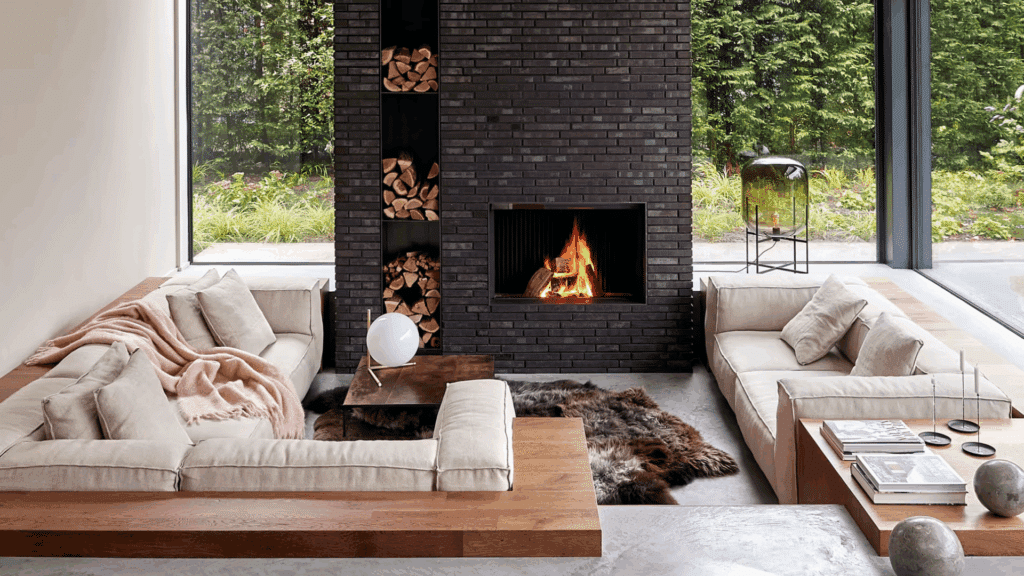
Conversation pits were designed to bring people together. The seating area was built lower than the surrounding floor, often with cushions or built-in sofas around the edges.
This setup created a comfortable place for guests to sit and talk. It also made the living room feel open while keeping the seating area defined.
8. Earth Tone Living Room Decor
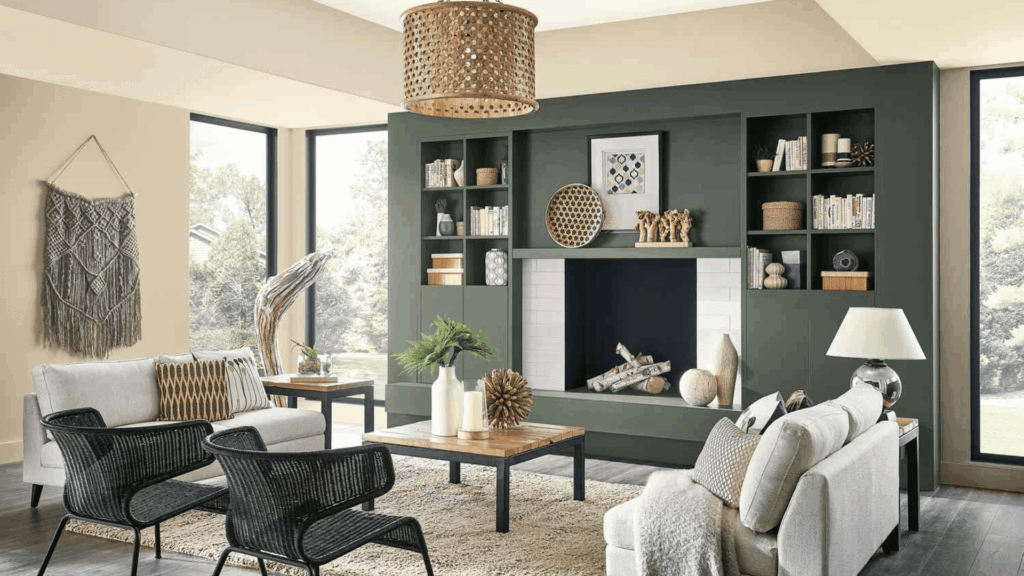
Many 70s homes used earth-toned colors to create calm, welcoming living rooms. Shades like rust, brown, mustard, and olive green appeared on furniture, rugs, and walls.
These colors helped balance bold patterns and wood surfaces. The result was a room that felt warm and relaxed without looking too bright.
9. Retro Patterned Sofa Designs
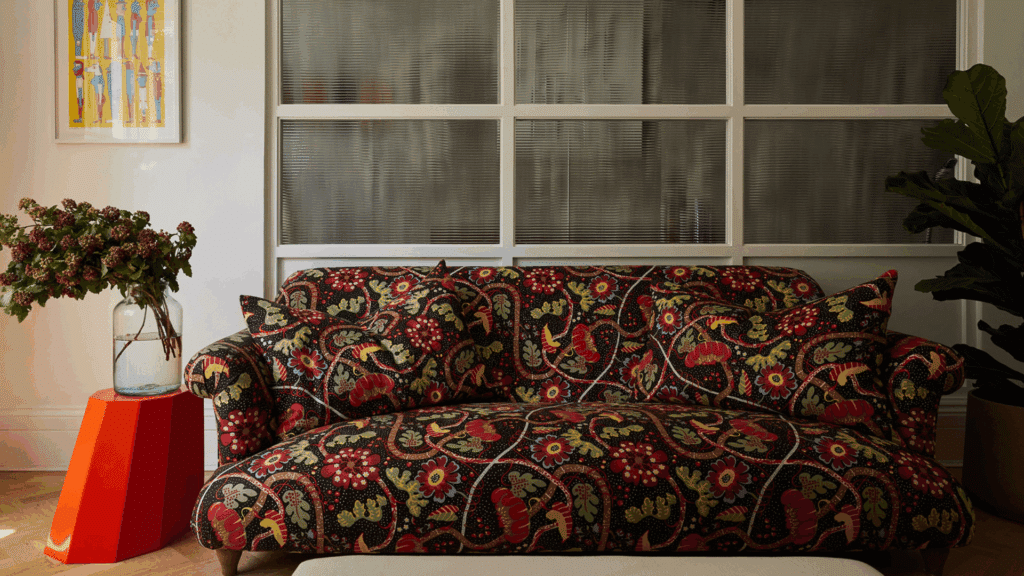
Sofas during the 1970s often used bold fabric patterns. Floral prints, geometric shapes, and striped designs were common choices.
These sofas became the main focal point in living rooms. When paired with neutral walls or shag carpets, the patterned fabric helped add personality and visual interest.
10. Hanging Egg Chairs For A 70s Vibe
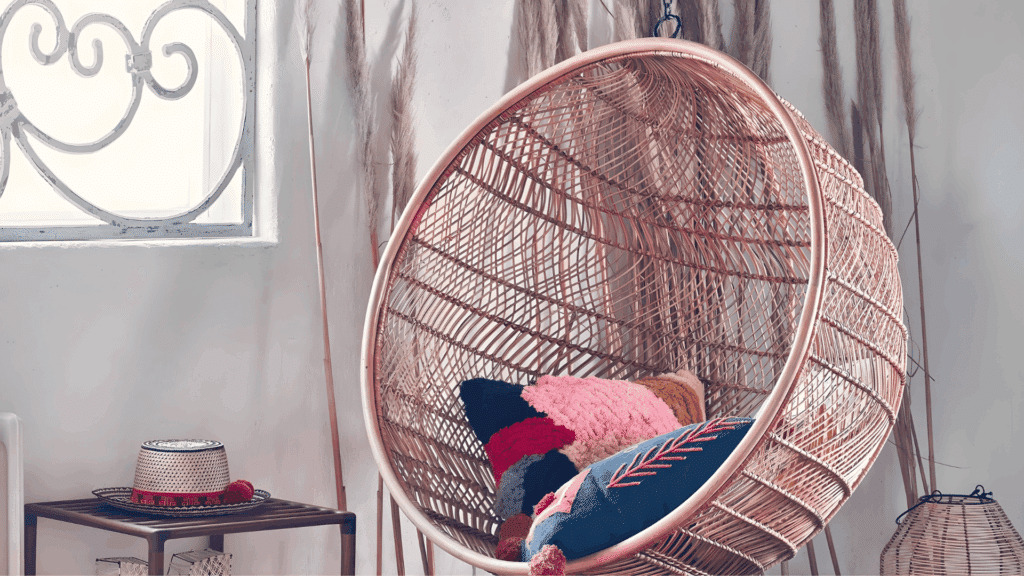
The hanging egg chair became a well-known piece of retro furniture. Suspended from the ceiling or a metal frame, the chair created a cozy place to sit and relax.
Many versions used wicker or rattan materials. These chairs worked well in living rooms, bedrooms, or reading corners.
11. Macramé Wall Hangings And Decor
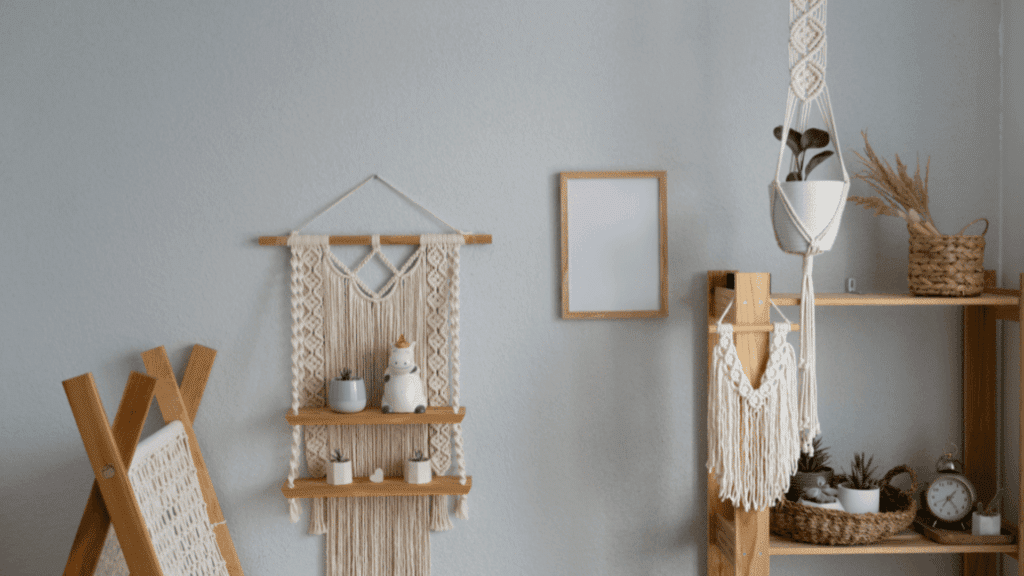
Macramé decor was popular because it added a handmade texture to rooms. Wall hangings, plant holders, and decorative pieces used knotted rope patterns.
Many homeowners hung macramé near windows or above sofas. These pieces helped soften rooms filled with wood and bold colors.
Where To Find Retro 70s Home Decor
Finding real 70s decor can take a little time, but many great pieces still exist. Vintage furniture and accessories often show up in places where older home items get resold.
If you know where to look and what details to check, you can find genuine pieces that bring real retro character into your home.
| Place | What You’ll Find | What To Check |
|---|---|---|
| Thrift Stores And Flea Markets | Vintage furniture, lamps, mirrors, rugs, and small decor pieces from older homes. | Look for solid wood, rattan furniture, bold fabrics, and older hardware. |
| Online Vintage Marketplaces | Retro furniture, lighting, and decor are listed on sites like Etsy, eBay, and Facebook Marketplace. | Check clear photos, item details, brand labels, and signs of age. |
| Antique Shops | Well-kept vintage furniture, mirrors, lamps, and decorative pieces. | Look for real wood, metal hardware, and classic 70s design shapes. |
| Retro-Inspired Modern Brands | New furniture and decor designed with a 70s style look. | Choose earth tones, curved shapes, and textured fabrics. |
Common Mistakes To Avoid With 70s Decor
Retro design can look fun and welcoming, but it can also feel messy if too many elements are crammed into one space. A balanced approach helps the style feel natural instead of overwhelming.
The key is to use a few strong retro details while keeping the rest of the room simple and comfortable.
- Using Too Many Bold Colors: The 70s used strong colors like orange, mustard, and green, but using all of them at once can make a room feel busy. Pick one or two main colors and let neutral tones balance the space.
- Filling Every Wall With Patterns: Patterned wallpaper and fabrics were common in the 70s, but covering every surface with prints can look crowded. Try using patterns on one wall or on furniture while keeping other areas simple.
- Ignoring Lighting Choices: Lighting helped shape the mood of many 70s interiors. Plain modern lights can make the room feel disconnected from the style. Retro table lamps, pendant lights, or warm bulbs can help complete the look.
- Mixing Too Many Retro Styles: Some people combine too many vintage themes at once. Sticking mostly to 70s shapes, colors, and materials keeps the room feeling consistent and easier to enjoy.
At the End
Bringing a retro look into your home can feel fun and personal. The best part about 70s design is that you don’t need to copy everything from the decade.
You can pick a few ideas that match your space and style. A warm color palette, textured fabrics, or vintage furniture can quickly give a room that nostalgic feel.
Small changes often make the biggest difference. A shag rug, a retro lamp, or a patterned sofa can add character without making the room feel overdone.
The goal is to create a space that feels comfortable and full of personality. I hope these ideas helped you picture how a retro style could work in your own home.
Now I’d love to hear from you. Which idea was your favorite, or have you already tried a 70s design in your home? Share your thoughts in the comments below.