

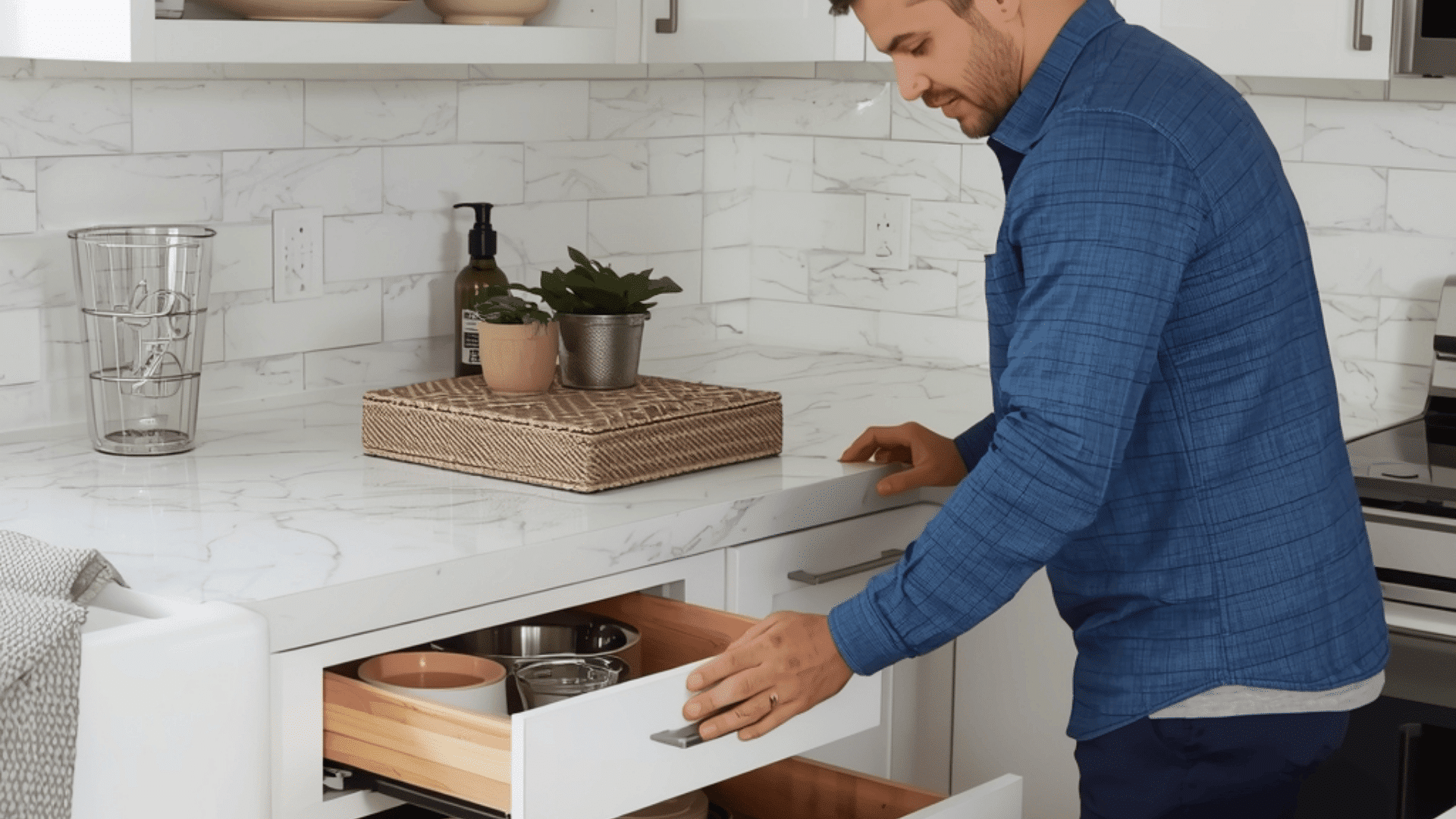
Kitchen drawers are one of the most-used storage spaces in any home, yet they are often the most neglected.
Over the past decade of kitchen redesign projects, I’ve seen the same problem happen again and again: tidy drawers turn messy within weeks without a proper system.
In this guide, you will find a practical, step-by-step approach to organizing every type of kitchen drawer.
From measuring correctly before you buy anything, to choosing the right organizers and setting up specific drawer types, each section builds on the last.
I’ve also included quick habits that keep drawers neat in under five minutes a week.
Quick Answer: How to Organize Kitchen Drawers?
Kitchen drawers can be organized by emptying them, removing extra items, grouping what you use, and adding simple dividers to keep everything in place.
I once reorganized a messy kitchen drawer after getting tired of searching for things every day.
The first step was to take everything out and give the drawer a quick clean. Then, useful items were sorted, and duplicates or unused things were removed.
After that, similar items, such as spoons, tools, and wraps, were grouped its their own sections.
Adding a few dividers made a big difference because nothing slides around anymore. Daily-use items were placed in the top drawers, making them easier to grab quickly.
After finishing one drawer, the next became much easier to organize, and now the kitchen feels cleaner and far more functional.
How to Measure Kitchen Drawers Before Organizing?
Organizing kitchen drawers becomes much easier when the measurements are correct. Taking a few minutes to measure properly helps avoid buying organizers that do not fit.
- Empty the Drawer: Remove everything before measuring so the entire drawer space is fully visible.
- Measure Width: Check the inside width carefully from edge to edge for accurate sizing.
- Measure Depth: Measure from the front to the back of the drawer.
- Check Height: Measure the inside height to ensure organizers fit comfortably.
- Look for Obstructions: Notice hinges, corners, or curved edges that may reduce usable storage space.
- Leave Extra Room: Keep a little extra space for dividers so they fit without pressure.
- Write Measurements Down: Save the exact numbers somewhere safe to make shopping easier and faster.
Best Kitchen Drawer Organizer Options
Choosing the right kitchen drawer organizer makes a big difference in how neat and easy your drawers feel. The goal is to pick simple tools that fit your space and keep items from moving around.
1. Expandable Drawer Dividers
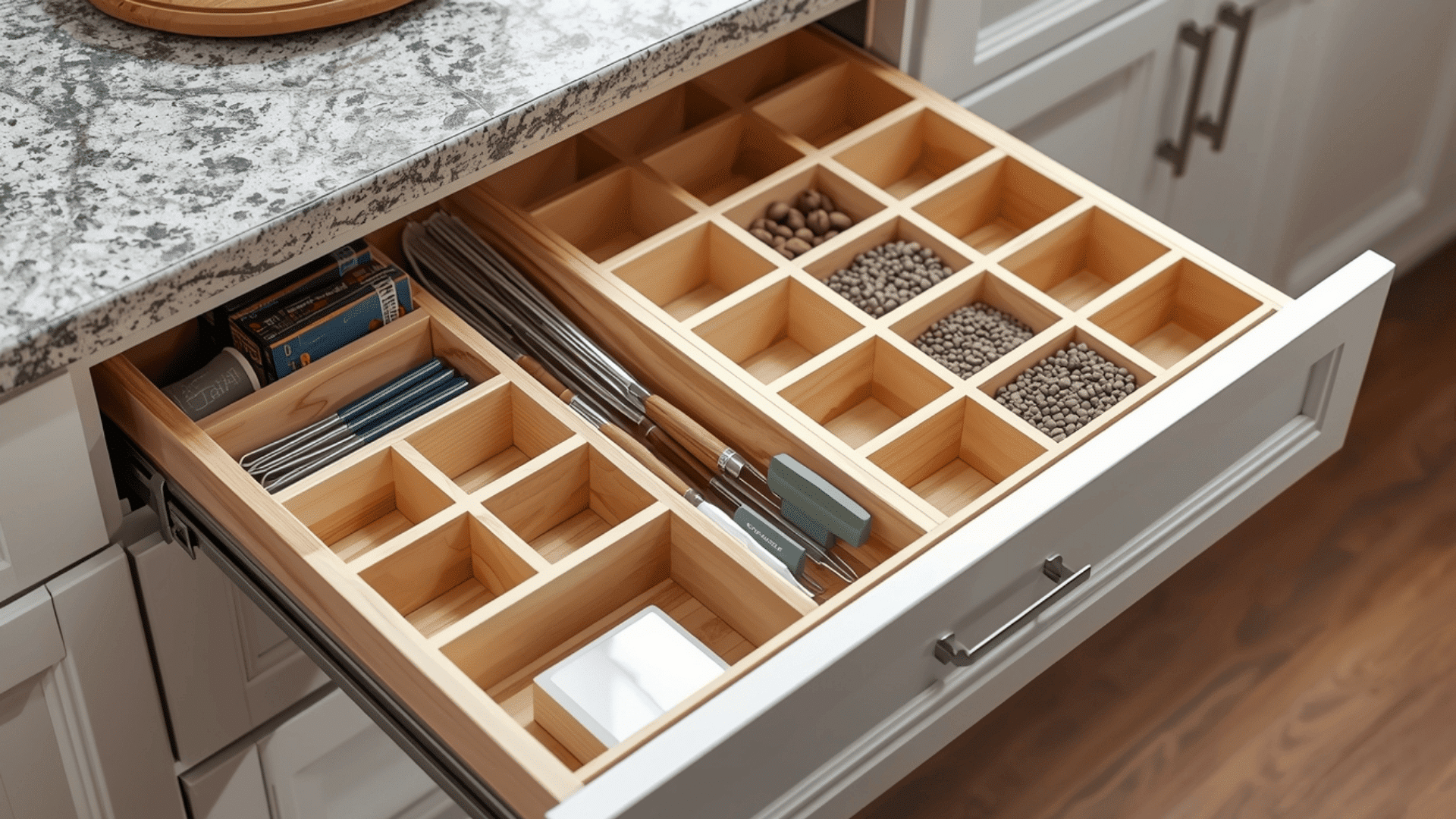
Expandable drawer dividers are among the easiest ways to organize kitchen drawers because they adjust to fit almost any drawer size.
They work well for separating utensils, cooking tools, and even larger items.
These dividers create clean sections, keeping everything in place.
I use this one, and let me tell you it is really effective and quick, as it helps create instant sections without much effort. It also keeps drawers neat for longer.
2. Cutlery Trays
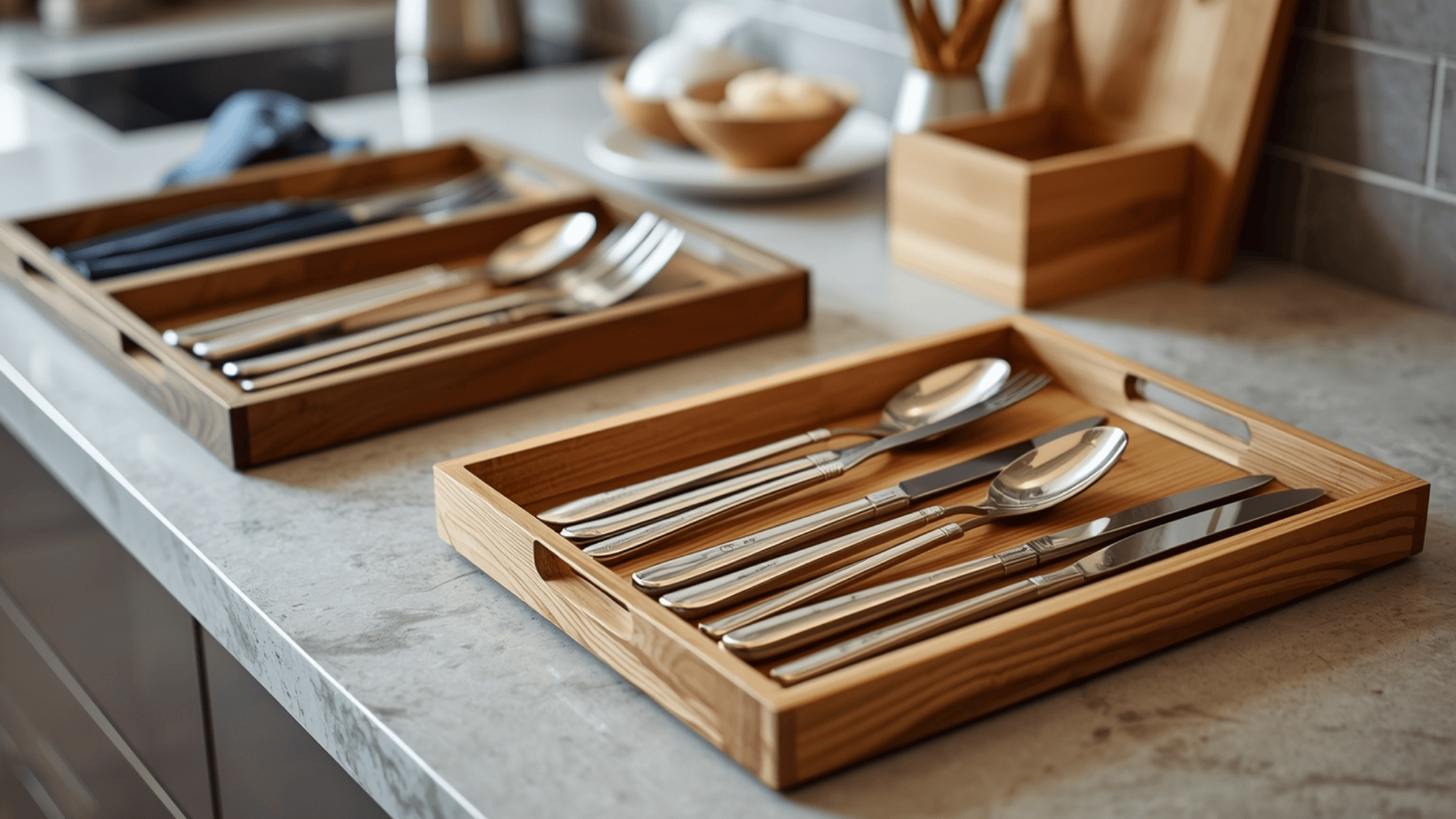
Cutlery trays are perfect for organizing forks, spoons, and knives in a simple layout. They come in different sizes and often fit standard drawers easily.
These trays help keep each item in its own section, which makes daily use faster.
Instead of searching through a pile, everything is visible at once. They are also easy to clean and maintain. This option works best if you want a clean and simple setup without overcomplicating your drawer space.
3. Deep Drawer Peg Systems
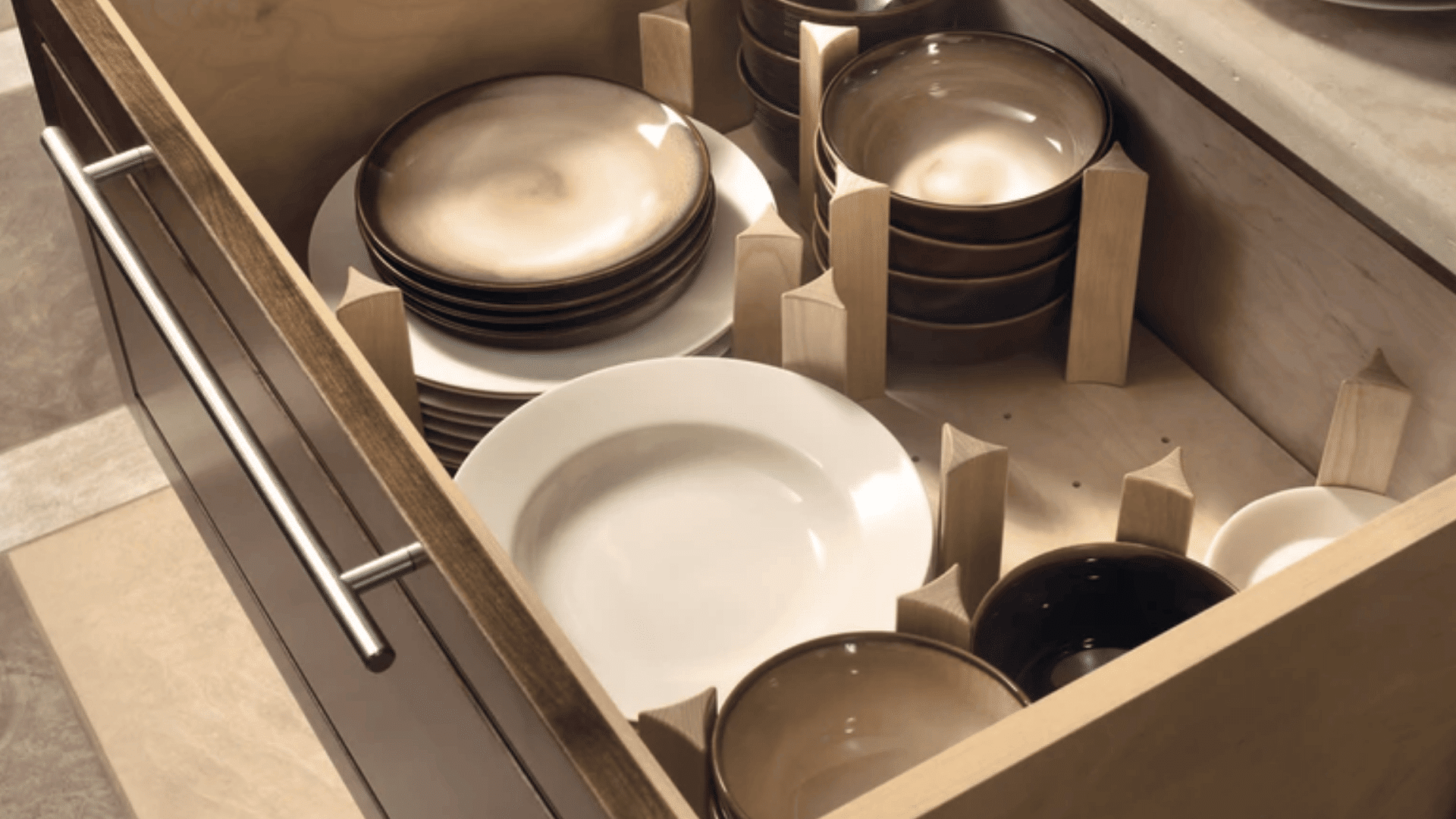
Deep drawer peg systems are ideal for storing pots, pans, and lids without stacking them.
These systems use adjustable pegs to hold items in place so they do not slide around. This makes it easier to access large items without making a mess.
I first encountered peg systems in Scandinavian kitchen design, where they are standard in deep lower drawers.
They are especially useful in kitchens where cabinet space is limited, and drawers need to do double duty for both cookware and bakeware.
4. Small Bins and Containers
Small bins and containers are great for organizing random items, especially in junk drawers. They help group small tools like scissors, clips, and gadgets so they do not get mixed up.
These containers are easy to move and can be adjusted to your needs. They also help prevent clutter from building up over time.
Using bins makes it easy to keep everything in one place and gives your drawer a cleaner, more structured look.
5. In-Drawer Knife Blocks
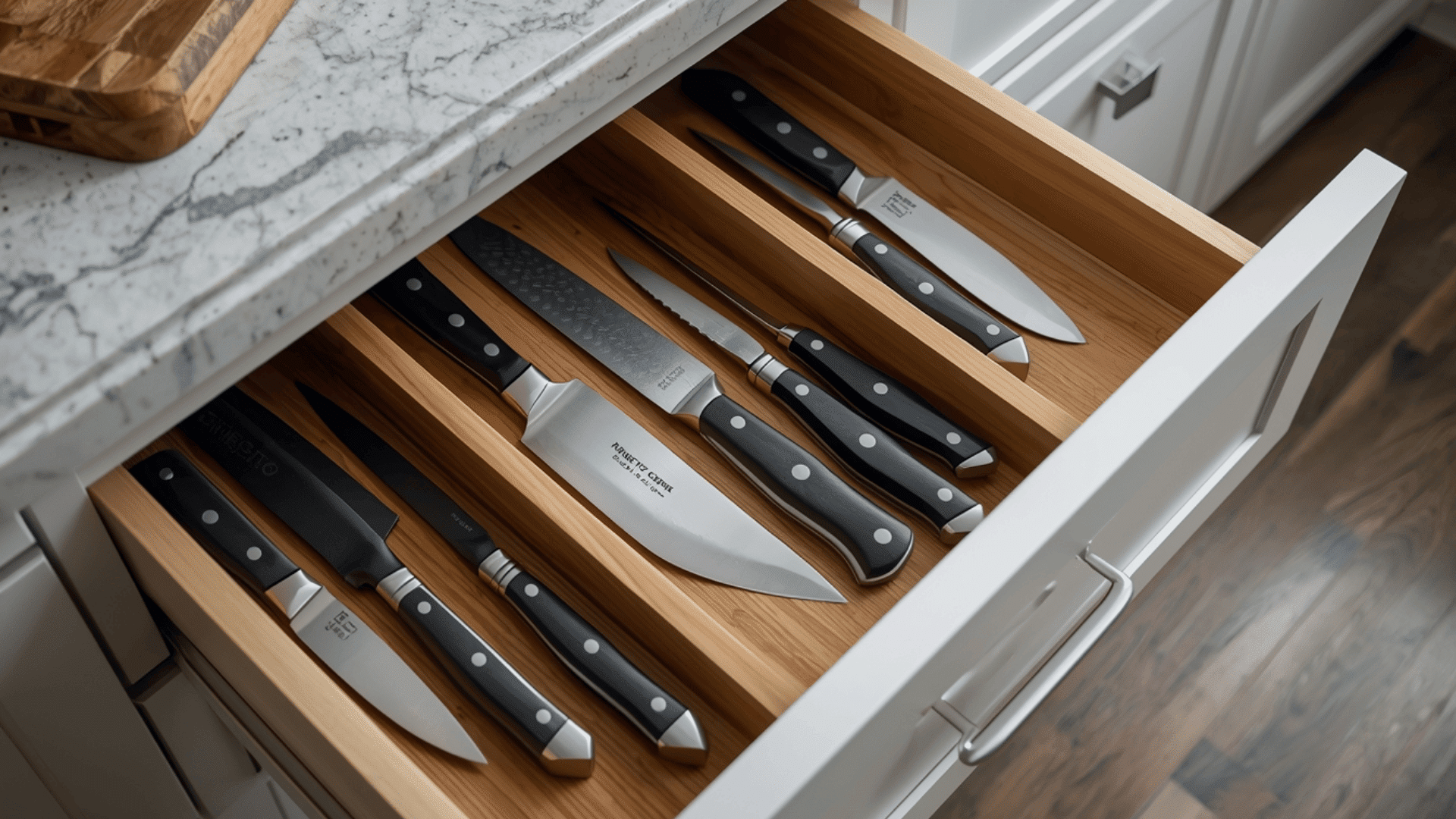
In-drawer knife blocks are a safe and space-saving option for storing knives. They keep blades protected and organized while freeing up counter space.
This helps reduce clutter on your kitchen surface and keeps your setup clean. These blocks come in different sizes to fit your drawer properly.
They also make it easy to access knives when needed, without having to dig through other items.
This option works well if you want both safety and better use of space.
Kitchen Drawer Organization Ideas by Type
Different drawers need different setups to stay neat and easy to use. Using the right method for each drawer type helps maintain order for a long time.
6. Utensil Drawer Setup
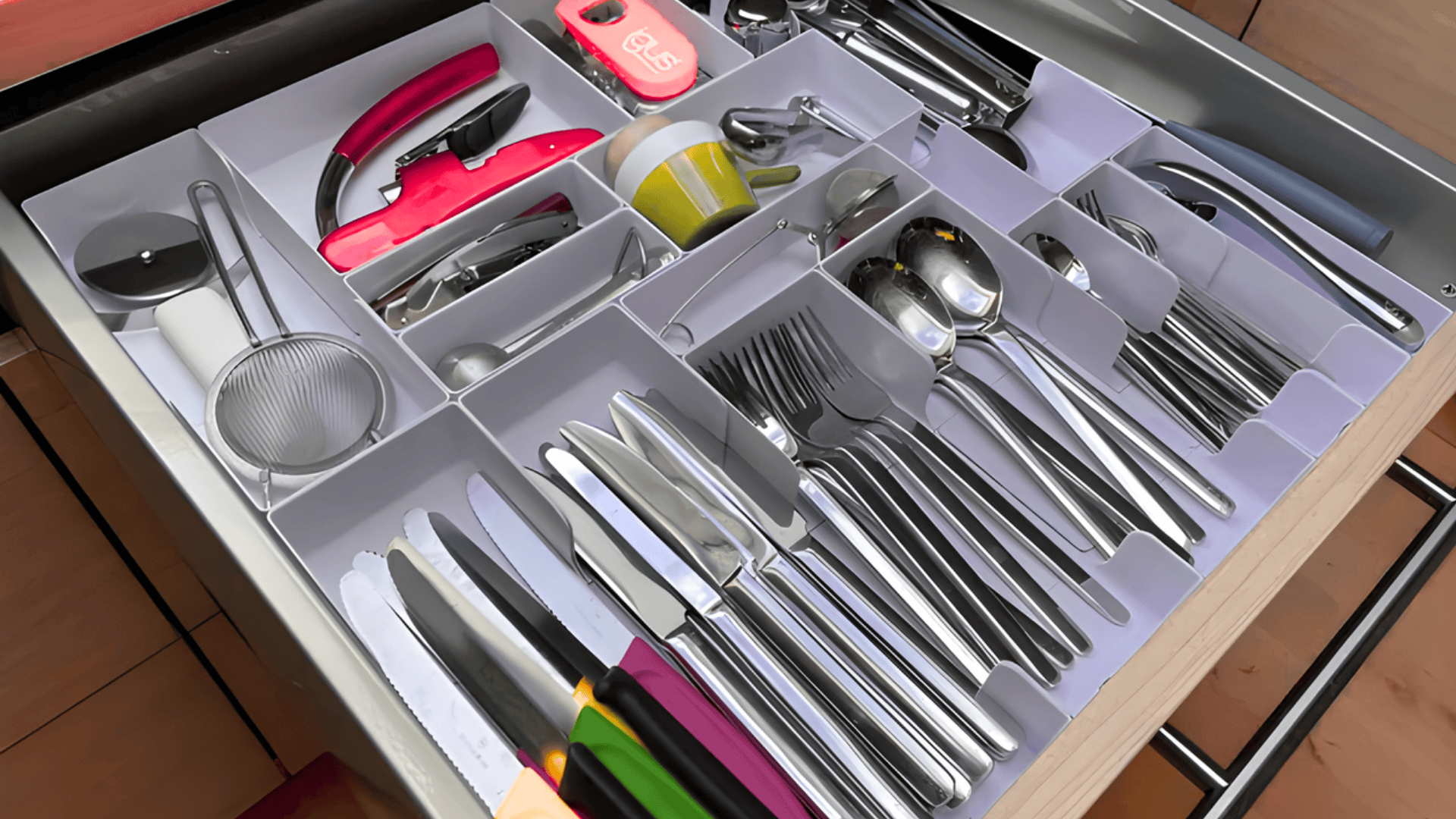
A proper utensil drawer setup starts with dividers that separate spoons, spatulas, and other kitchen tools into clear sections.
This keeps items easy to find and prevents clutter from building up over time. Limiting the drawer to daily-use tools also helps avoid overcrowding and makes the space more practical for everyday cooking.
Removing extra or rarely used utensils creates more room and improves organization.
When every item has a fixed spot, the drawer stays neat, works more smoothly, and becomes much easier to maintain during regular kitchen use without constant rearranging or cleanup.
7. Junk Drawer Setup
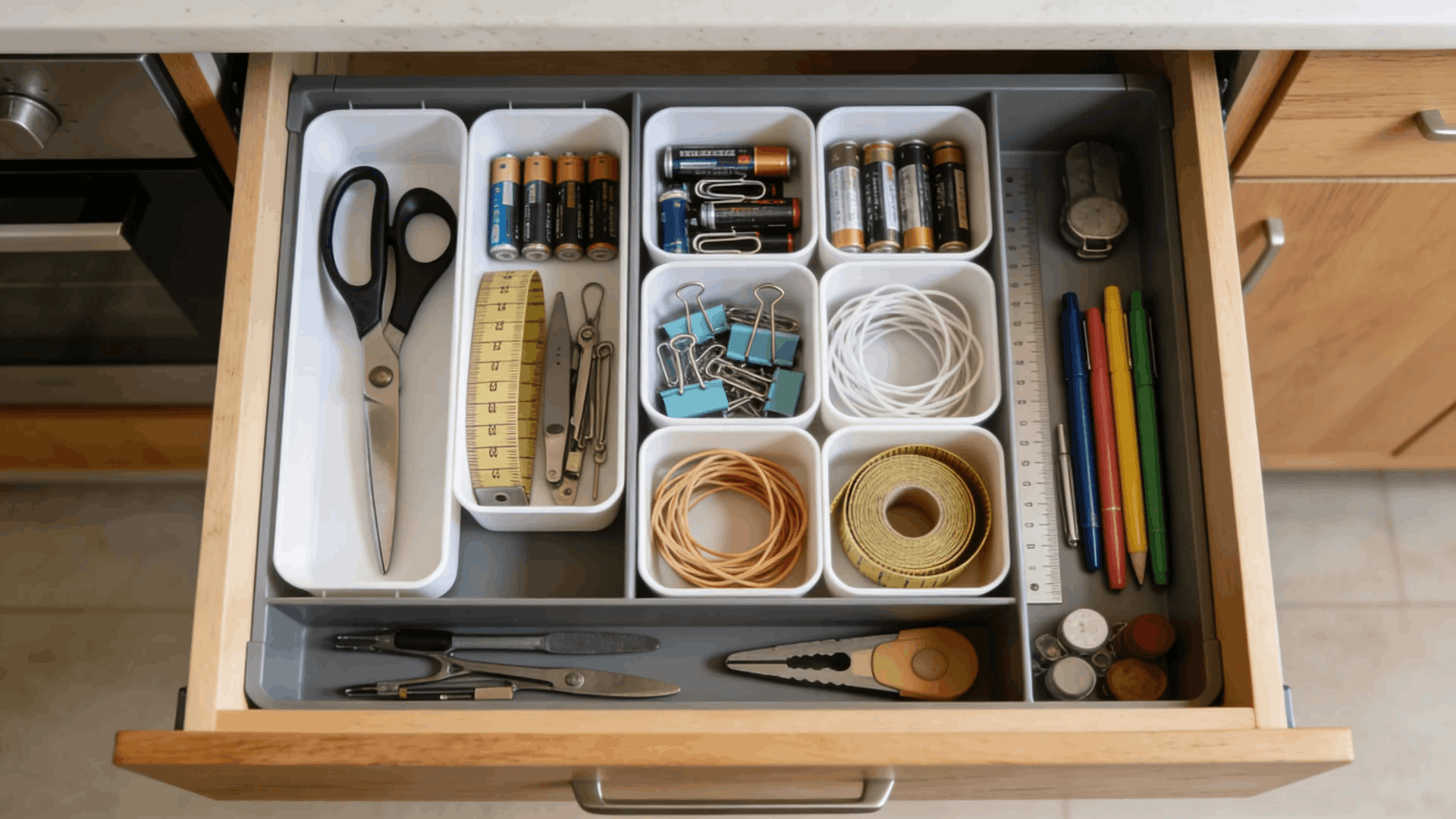
A junk drawer setup works best when it is limited to just one drawer in the kitchen. Use small bins or containers to separate items like scissors, batteries, and clips.
This prevents everything from mixing together and creating clutter. Without bins, small items quickly become messy.
Keeping sections inside the drawer helps maintain order and makes it easier to find things when needed without wasting time searching through random items.
8. Cleaning Supplies Drawer Setup
A cleaning supplies drawer is useful for storing cloths, sponges, and small cleaning tools in one easy-to-reach place. Waterproof bins or containers help protect the drawer from moisture and prevent messes.
Grouping items by use keeps everything organized and easier to grab during cleanup.
This setup works best in a drawer near the sink for quick access while cooking or washing dishes.
Keeping cleaning tools neatly stored in one spot also supports better hygiene and makes daily kitchen cleanup faster, simpler, and more manageable.
9. Spice Drawer Setup
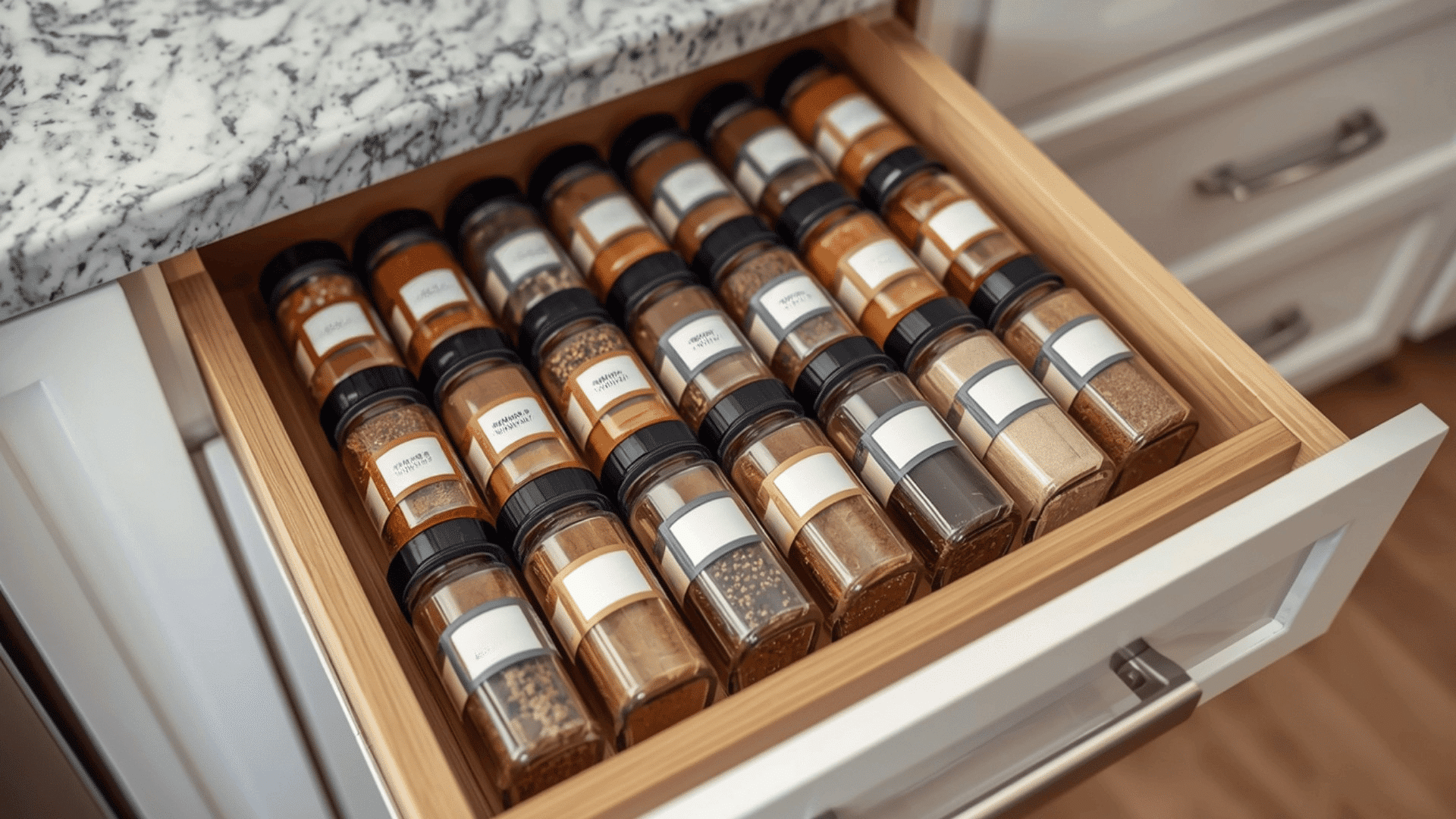
A spice drawer works best when every jar is easy to see and read. Labels or spice racks help organize spices in neat rows, making cooking faster and more convenient.
A flat layout also prevents stacking, clutter, and confusion while searching for ingredients.
Switching from a cabinet to a drawer setup can save time because all spices stay visible in one place.
This setup keeps the drawer tidy, improves access during cooking, and makes the kitchen feel more organized for daily use without extra effort or constant rearranging.
10. Food Storage Drawer Setup
A food storage drawer setup should keep all wraps, bags, and containers in one place. Use organizers designed for plastic bags and foil to avoid loose packaging.
This helps reduce clutter and keeps items easy to grab.
Group similar items together so you do not have to search through different drawers.
This setup works well for maintaining order and ensuring that all storage items stay in one, organized, and accessible space.
11. Snack Drawer Setup
A snack drawer setup works well for organizing packaged snacks and small food items. Use bins or dividers to separate different types of snacks.
Keep frequently used items at the front for easy access.
This setup is useful for keeping snacks visible and preventing overstocking. It also helps maintain order and makes it easier to find items quickly without creating a mess inside the drawer.
Why Kitchen Drawer Organization Matters?
Kitchen drawer organization matters because it saves time, keeps your kitchen clean, and helps you use space better.
Many people don’t realize how much time gets wasted with messy drawers. Before organizing, it’s common to open the same drawer repeatedly just to find one tool.
It slows down cooking and makes small tasks feel annoying. Once everything is sorted and each item has a place, tools can be found in seconds. It also makes the kitchen look cleaner without extra work, since nothing is out of place.
There is also a psychological benefit that often goes unmentioned. A well-organized kitchen reduces low-level daily stress.
Small frictions, not finding the peeler, digging past duplicate tools, compound across weeks and months. Removing them does not just save seconds; it makes the kitchen a more enjoyable place to spend time.
How to Organize Deep Kitchen Drawers Properly?
Deep kitchen drawers provide extra storage, but they can become cluttered without proper organization. Using simple storage methods helps keep everything accessible, neat, and easy to manage day to day.
| Organization Tip | Purpose | Description |
|---|---|---|
| Use Dividers | Create separate sections | Dividers help keep pots, pans, and lids separated neatly inside deep drawers. |
| Store Items Upright | Improve easy access | Keeping trays, pans, and lids upright makes them easier to access quickly. |
| Group Similar Items | Reduce searching time | Place similar kitchen items together to avoid having to search through the entire drawer. |
| Add Storage Bins | Organize extra space | Bins help divide large spaces and prevent smaller items from moving around. |
| Avoid Overfilling | Keep drawers manageable | Too many heavy items make drawers difficult to open and organize properly. |
| Leave Small Gaps | Protect kitchen items | The space between items helps protect cookware and keeps the drawer tidier longer. |
| Keep Daily Items Accessible | Improve daily convenience | Frequently used cookware should stay near the front for easier everyday access. |
Tips to Keep Drawers Organized Long-Term
Organizing a drawer once is easy. Keeping it organized requires building a few small habits that take almost no time but make a real difference over weeks and months.
- Don’t overfill drawers: Leave some space so items are easy to access and don’t get stuck
- Do a quick reset weekly: Put things back in place to avoid the buildup of clutter
- Remove unused items monthly: Clear out tools you no longer use to free space
- Stick to one-purpose drawers: Keep each drawer focused on a single category
- Use the same layout always: Avoid changing setups too often to maintain consistency
- Clean drawers regularly: Wipe inside to keep them fresh and dust-free
- Return items after use: Build a habit of placing items back immediately
- Upgrade organizers if needed: Replace old or poor-fitting dividers for better results
- Avoid adding unnecessary tools: Only keep items that you actually use often
How to Choose the Right Drawer Organizers?
Choosing the right organizer depends on your drawer size and what you want to store. Start by measuring the drawer and checking the items to be stored.
Expandable dividers work well because they adjust to fit different sizes.
For smaller items, trays or bins help keep things separated. Deep drawers work better with peg systems that hold larger items in place.
Material also matters. Bamboo and wood feel warm and are durable; plastic is lightweight and easy to clean; stainless steel works well in drawers near the sink.
Match the material to where the drawer is in the kitchen and how much moisture or heat it is likely to encounter.
Avoid organizers that are too big or too small, as they don’t stay in place. Simple designs work best since they are easy to clean and use. Make sure the organizer fits tightly so items don’t shift.
The goal is not to buy many organizers but to choose the right ones. When they fit well, they keep everything neat and easy to manage.
Common Mistakes to Avoid While Organizing Kitchen Drawers
Small mistakes can quickly turn organized drawers back into clutter. Fixing these early helps maintain a clean and functional kitchen setup.
| Mistake | Solution |
| Keeping too many tools | Remove duplicates and keep only frequently used items |
| Not using organizers | Use dividers, trays, or bins to separate items |
| Mixing different item types | Group similar items like cutlery, tools, and wraps |
| Ignoring drawer flow | Place daily items in easy-to-reach drawers |
| Overfilling drawers | Leave some space so items are easy to access |
| Not decluttering regularly | Do a quick monthly check and remove unused items |
| Using the wrong size organizers | Choose organizers that fit your drawer size properly |
| Storing rarely used items on top | Keep less-used items in deeper or lower drawers |
| No clear purpose for drawers | Assign one function per drawer to avoid clutter |
Easy Kitchen Drawer Organization Checklist
Keeping kitchen drawers organized becomes easier with a simple routine and smart placement of items. A well-planned setup saves time, reduces clutter, and makes everyday cooking more convenient.
- Sort by Usage: Keep frequently used kitchen tools in the most accessible drawers.
- Use Small Containers: Neatly separate tiny items like clips, packets, and measuring spoons.
- Store Heavy Items Below: Place heavy cookware in the lower drawers for safer, easier handling.
- Label Drawer Sections: Labels help maintain order and make it easier to find items.
- Keep Matching Sets Together: Store matching lids, containers, and utensils in one dedicated area.
- Use Vertical Storage: Stand trays, cutting boards, and lids upright to save more space.
- Avoid Random Storage: Give every kitchen item a fixed place to prevent messy drawers.
- Check Drawers Regularly: Remove unnecessary items every few weeks to maintain organization.
- Choose Simple Layouts: A clean and simple arrangement works better for daily kitchen use.
Conclusion
Organizing kitchen drawers is one of the highest-return improvements you can make to a kitchen.
It costs very little, takes a few hours at most, and the payoff shows up every single day, in faster cooking, easier cleanup, and a space that simply feels better to work in.
The most common mistake I see is trying to do everything at once. Pick one drawer today.
Empty it, measure it, remove what you do not need, and add one good organizer. That single drawer will motivate the rest.
From compact Mumbai flats to open-plan Scandinavian kitchens, the principle holds everywhere: when a space is set up clearly, people actually maintain it.
Start with the drawer you open most. That is the one that will give you the fastest and most visible result.
Frequently Asked Questions
How Do You Decide Where to Put Things in Kitchen Cabinets?
Place items based on frequency of use, keeping daily items near work areas and grouping similar items together.
Where to Put What in Kitchen Drawers?
Store cutlery in top drawers, tools near the stove, and larger items in deeper drawers.
What Are the Best Kitchen Drawer Organizers?
Expandable dividers, cutlery trays, bins, peg systems, and in-drawer knife blocks are effective options.
What Should Not Be Kept in Kitchen Drawers?
Avoid storing rarely used, broken, or duplicate items that take up unnecessary space.