

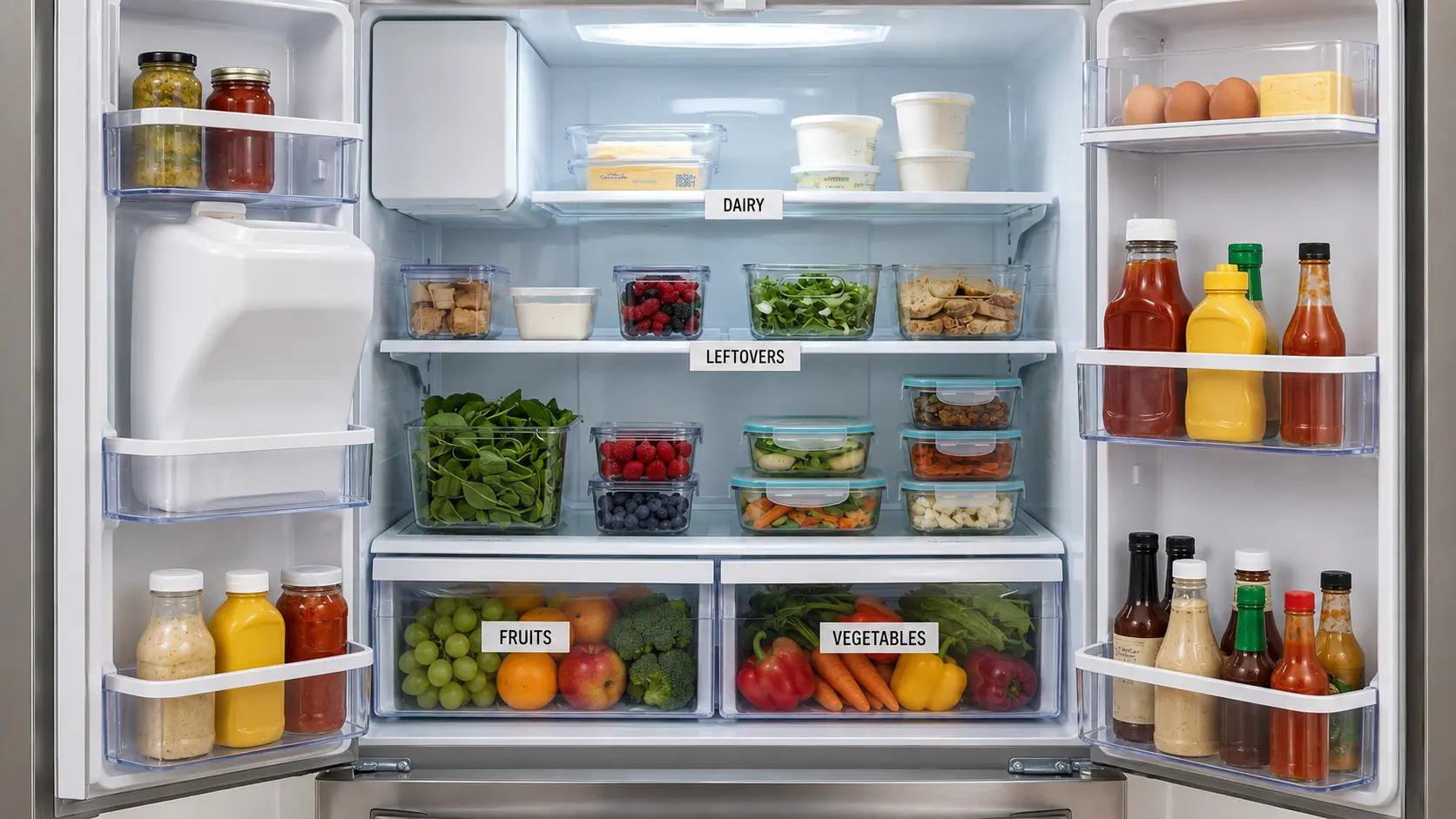
Opening your refrigerator shouldn’t feel like digging through a crowded drawer. Yet many of us deal with messy shelves, forgotten leftovers, and food pushed to the back where it eventually goes bad.
I noticed this myself one Sunday after a big grocery run. I’d bought fresh herbs, two packs of chicken, and a handful of condiments. Within minutes, my fridge was chaos again. That’s when I decided to reorganize it properly, zone by zone.
The difference was immediate. Learning refrigerator organization can change how your whole kitchen feels. A well-organized fridge helps you find ingredients quickly, keeps food fresh longer, and reduces unnecessary waste.
This guide walks through every practical step. You’ll learn how to organize your fridge properly and actually keep it that way.
Why Proper Refrigerator Organization Matters?
A well-organized refrigerator makes a real difference to your kitchen and your daily routine. Here’s what changes when you get it right.
- Helps Food Stay Fresh for Longer: Proper placement and airflow help food hold its quality longer.
- Makes Ingredients Easier to Find: An organized fridge means you spot what you need without digging.
- Reduces Food Waste: When everything is visible, it’s far less likely to be forgotten until it spoils.
- Saves Money: Knowing what you have before you shop stops you buying things you already own.
- Keeps Your Kitchen Running Smoothly: A tidy fridge makes cooking and meal prep noticeably easier.
Getting these basics right sets everything else up. The zones, the containers, the habits all follow from here.
How to Organize a Fridge?
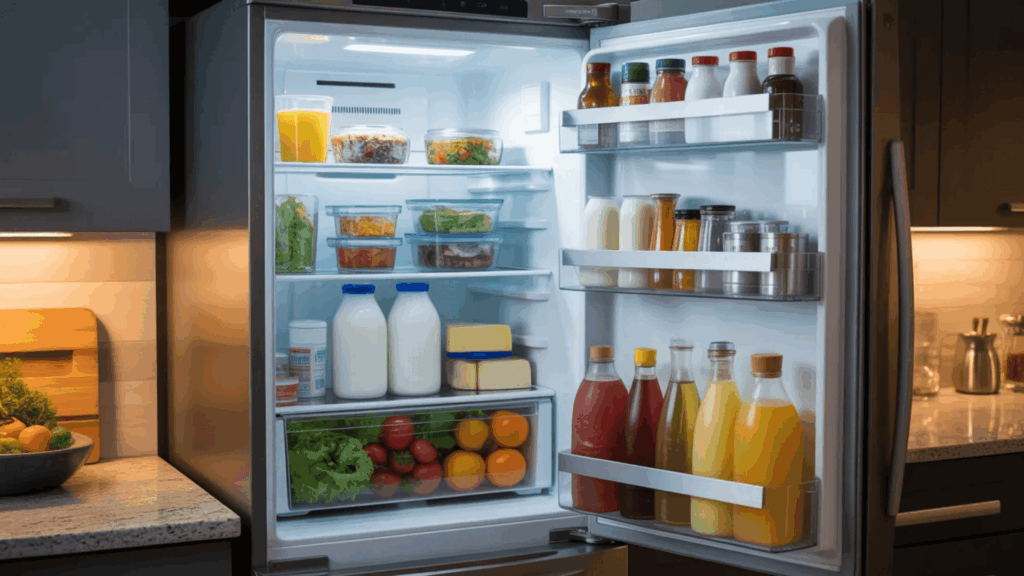
The most important thing to understand about fridge organization is that temperature varies by zone. Different areas run at different levels, and storing food in the right one matters more than most people realize.
Before you rearrange anything, take everything out of the fridge.
Check dates, throw out anything spoiled or expired, and wipe every shelf and drawer with a damp cloth. A paste of baking soda and warm water removes stuck-on residue without leaving any chemical smell.
You can’t organize around clutter you should have discarded. And a clean surface keeps the zones easier to maintain once everything goes back in.
Pro tip: With the shelves empty, adjust their heights now. Fit your most-used items first. A taller gap for a pitcher or meal-prep containers saves daily frustration.
1. Top Shelf
Store ready-to-eat foods like leftovers, drinks, and snacks on the top shelves for easy access. Since these items don’t need cooking, keeping them at eye level saves time during daily use. This area usually maintains a steady temperature, making it suitable for foods you reach for often.
Pro tip: Keep smaller items in a tray or bin so they don’t get pushed to the back and forgotten.
2. Middle Shelves
The middle shelves are ideal for storing dairy products such as milk, cheese, yogurt, and butter. This section holds a steady, reliable temperature. That consistency is what keeps dairy fresh longer.
Avoid placing dairy in the door. Temperature swings there affect quality faster than you’d expect. Keeping dairy here also makes it easy to see and grab during cooking. That visibility alone helps cut waste.
Pro tip: Store milk toward the back of the shelf where the temperature stays more consistent.
3. Bottom Shelf
The bottom shelf is the coldest spot in the fridge. It’s the right place for raw meat, poultry, and seafood. Storing these items lowest helps maintain proper chilling and stops harmful bacteria from growing.
It also keeps juices from dripping onto other food. Sealed containers add an extra layer of protection.
Pro tip: Always place raw meat in a tray or container to catch any leaks and avoid cross-contamination.
4. Crisper Drawers
Crisper drawers control humidity. That’s what actually keeps produce alive longer. Most models have a small slider on each drawer that sets the humidity level.
- Vegetables need high humidity. The moist air slows wilting and keeps leafy greens crisp.
- Fruits need low humidity. The drier air prevents the moisture buildup that leads to mold.
If your fridge has two drawers, give one to vegetables and one to fruit. Without adjusting the slider, both default to a mid-range setting that doesn’t fully serve either type.
Setting each drawer takes five seconds. It can add several days to how long your produce lasts.
Pro tip: Keep fruits and vegetables separate. Some fruits release ethylene gas, which speeds up spoilage in nearby vegetables.
5. Door Shelves
The refrigerator door is best for condiments, sauces, dressings, and beverages. This area sees more temperature changes because it opens frequently throughout the day.
Condiments and sauces handle those fluctuations well. Dairy and raw foods don’t, which is why they belong elsewhere.
Storing them here also frees up the main shelves for items that need consistent cooling.
Pro tip: Avoid storing eggs or milk in the door, even if your fridge has built-in holders for them.
6. Containers
Clear, airtight containers help keep your fridge clean and organized while making storage more efficient. They let you see what you have without opening anything. That alone saves time on busy days.
Containers also prevent spills and stop strong odors from spreading to other foods. Grouping similar items together reduces clutter and makes everything easier to find and maintain.
Pro tip: Use stackable containers to make better use of vertical space.
7. Label and Rotate
Label food with dates and place older items at the front so they get used first. This simple habit reduces waste and keeps your fridge more organized over time.
Checking what you have regularly stops things from getting lost at the back of shelves. Rotating your groceries means nothing gets used past its prime. Meal planning gets easier too.
Pro tip: Do a quick weekly check to remove expired items before restocking.
Seasonal Tips for Fridge Organization
Keep your fridge organized all year by adjusting storage based on seasonal needs and food habits.
| Season | Tips | Description |
|---|---|---|
| Summer | Store drinks, keep light foods | Keep water, juices, and fruits easy to reach. Use space for items that stay fresh in heat. |
| Winter | Store cooked meals, adjust space | Use more space for leftovers, soups, and warm meals. Reduce space for cold drinks. |
| Monsoon | Check expiry, use airtight boxes | Moisture can spoil food faster, so check items often and store food in sealed containers. |
| All Seasons | Clean and manage space | Wipe shelves regularly, remove old items, and avoid overfilling to keep airflow proper. |
Tips to Prevent Food Waste in Your Refrigerator
Reducing food waste doesn’t require big changes. A few consistent habits make a noticeable difference over time.
- Place Older Items at the Front: Keep older food at the front so it gets used before newer items.
- Follow First-In, First-Out: Always reach for the oldest groceries first. It’s the one habit that cuts most household food waste.
- Label Leftovers With a Date: Add the prep date to any container so you know exactly how old something is.
- Check Expiration Dates Regularly: remove anything past its use-by date before you restock.
- Plan Meals Around What You Already Have: Use what’s in the fridge first. Your fridge should inform your shopping list, not the other way around.
These habits take minutes to build. Done consistently, they’ll save you real money over time.
How to Keep Your Fridge Smelling Fresh?
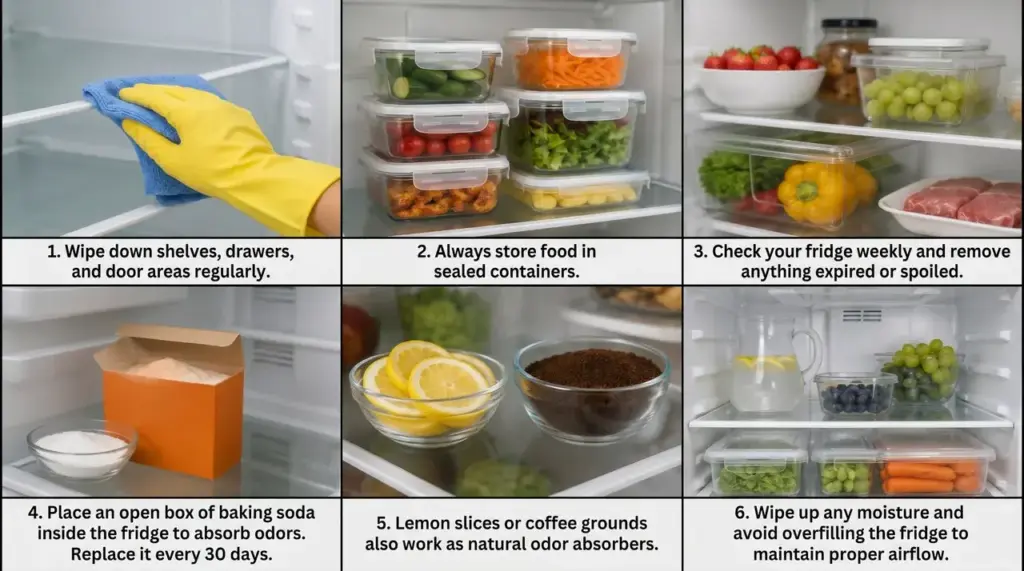
Bad smells build up when spills sit too long, containers aren’t sealed, or expired food stays in the fridge. The fix is consistent, not complicated. A few habits kept up together make a real difference.
- Wipe down shelves, drawers, and door areas regularly. Catch spills before they dry and start to smell.
- Always store food in sealed containers. Open leftovers spread odors to everything around them.
- Check your fridge weekly and remove anything expired or spoiled. Don’t let it linger.
- Place an open box of baking soda inside the fridge to absorb unwanted odors. Replace it every 30 days to keep it effective.
- Lemon slices or coffee grounds also work if you prefer a natural option.
- Wipe up any moisture you spot inside. Damp areas attract odor faster than almost anything else.
- Try not to overfill the fridge either. Proper airflow helps maintain a clean, fresh smell.
Best Containers and Storage Bins for Your Fridge
Using the right containers keeps food organized, easy to access, and fresh for longer.
| Container Type | Purpose | Benefit |
|---|---|---|
| Clear Storage Bins | Used to group similar items like snacks, fruits, or sauces | Makes items easy to see and find |
| Airtight Containers | Ideal for storing leftovers, cut fruits, and prepared meals | Keeps food fresh and controls odors |
| Stackable Containers | Designed to be placed on top of each other | Saves space on refrigerator shelves |
| Labels | Used to mark containers with food names or dates | Helps track freshness and reduce waste |
Common Refrigerator Organization Mistakes to Avoid
These are the habits that quietly undo a well-organized fridge. Most are easy to fix once you spot them.
- Overcrowding shelves: Too many items on one shelf block cold air. That causes uneven cooling and faster spoilage.
- Storing food in the wrong zones: Placing foods in the wrong sections affects freshness and can increase the risk of contamination.
- Forgetting to label leftovers: Without dates, leftovers get forgotten and go to waste.
- Ignoring regular cleaning: Skipping cleaning leads to odors, spills, and bacterial buildup over time.
- Keeping expired or spoiled food: It takes up space and affects the freshness of everything around it.
Most of these are quick fixes. Catching them early keeps the whole system working.
Final Thoughts
Organizing your refrigerator doesn’t have to be complicated. Understanding the zones, using the right containers, and building a few simple habits keeps your fridge clean and efficient.
After reorganizing my own fridge using these zone principles, the biggest change wasn’t aesthetic. It was behavioral.
I stopped throwing away produce because it was visible and accessible. The whole setup took about 45 minutes. Maintenance is maybe five minutes a week. That’s a worthwhile trade.
With regular maintenance and smart storage choices, you can keep your refrigerator working better for your daily routine.
Frequently Asked Questions
What Should Go in The Bottom Drawer of A Fridge?
Use the bottom drawer for fruits and vegetables. Separate them where possible; this extends freshness and prevents cross-contamination.
In What Order Should Food Be Arranged in The Fridge?
Top shelf: ready-to-eat foods. Middle: dairy. Bottom: raw meat. Drawers: fruits and vegetables.
What Temperature Should a Fridge Be Set At?
Keep it between 1–4°C (35–40°F). This range slows bacterial growth and keeps food safely preserved.