

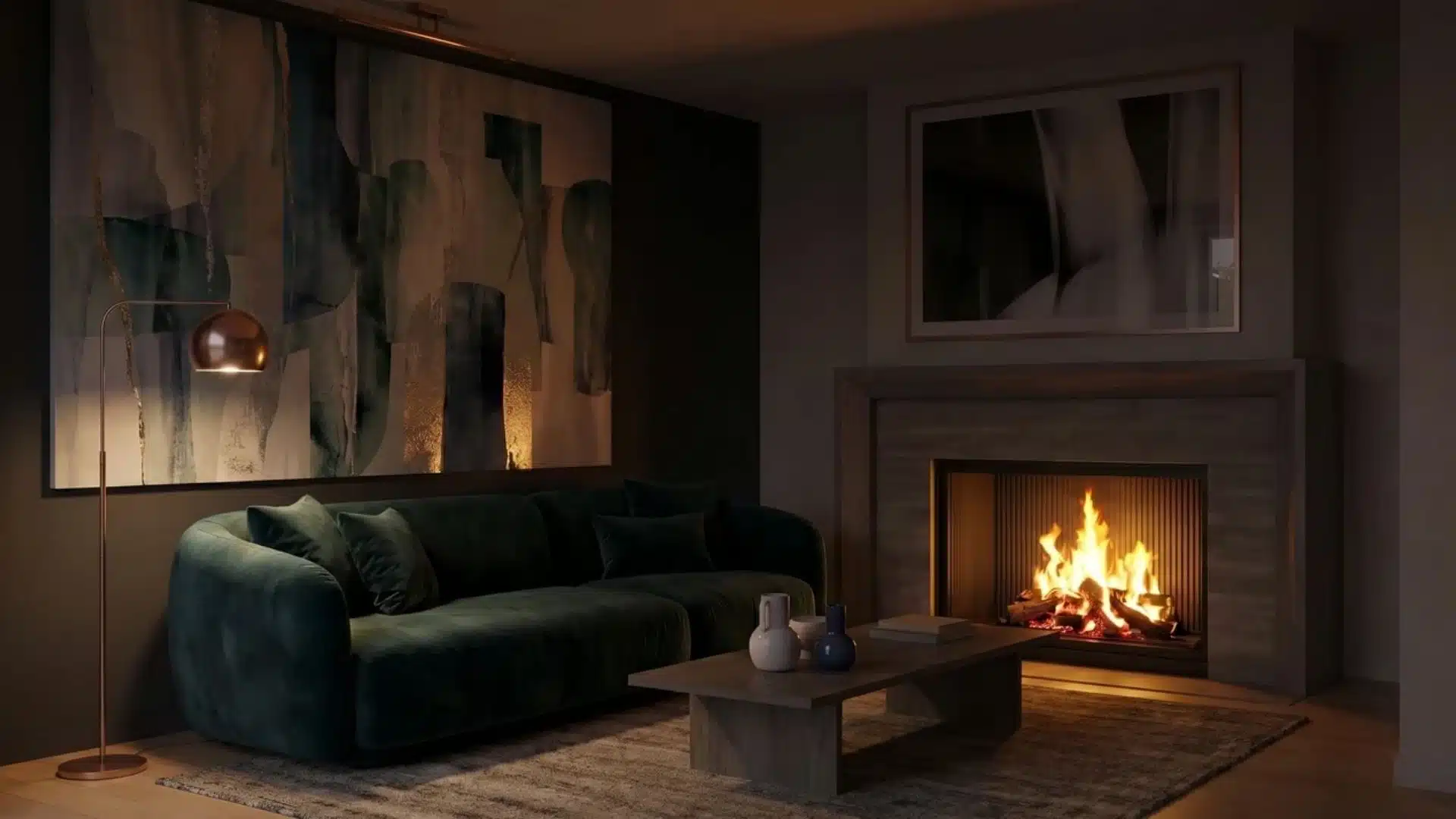
A room full of beautiful pieces can still feel wrong, and most people can’t explain why. The answer almost always comes down to one missing principle.
That principle is quieter than color, subtler than furniture choice, and more powerful than any single purchase. Yet most people style entire rooms without ever applying it consciously.
Most rooms already hold the ingredients for a stunning focal point; they just need the right arrangement to unlock it. Understanding a few core tools changes how you see every space.
Whether you’re styling a living room or rearranging a bedroom, the same logic applies everywhere. The tools are simpler than you think, and the results are immediate.
What Exactly is Emphasis?
Every great room has a star. Emphasis is how you pick it.
In plain terms, emphasis in interior design is the principle of making one feature stand out so your eye knows where to look first. It creates order out of a room full of stuff.
Think of a fireplace framed by two tall lamps, or a bold piece of art over the sofa. That pull toward one spot is emphasis at work.
Without it, a room feels restless. Your eye bounces around with nowhere to settle, even when every single piece is lovely.
Rooms usually fail in two ways. Flat means nothing stands out. Chaotic means too many elements compete at once. Most “off” rooms are chaotic, fixed by removing visual noise and letting one element lead the space.
Emphasis vs. Focal Point: The Difference
People mix these two up constantly, but they aren’t the same thing.
Emphasis is the technique, the deliberate choices you make to draw attention. The focal point is the result, the actual feature that ends up grabbing the eye.
Here’s the easy way to remember it: Emphasis is the spotlight; the focal point is the performer standing in it.
Get the difference down, and the rest of the design falls into place. Let’s look at why every room needs that one standout spot.
Why Every Room Needs a Focal Point?
A room without a focal point is like a paragraph with no point. Your eye reads everything and remembers nothing. A clear point of emphasis in a room solves three problems at once:
- Guides the eye: It tells you where to look first, so the space feels organized instead of chaotic.
- Calms the clutter: One anchor pushes everything else into a supporting role, even in a busy room.
- Gives purpose: A focal point makes a space feel intentional, like every choice was deliberate.
If you see a living room where the sofa, art, rug, and shelves all compete at once. The effect is exhausting.
Give that same room one anchor, like a fireplace, and the noise settles instantly. That’s the quiet power of emphasis: it brings order to what’s already in the room.
6 Designer Tools that Create Emphasis
Designers reach for the same small toolkit to pull the eye to one spot. Every tool below works by widening the gap between one element and everything else in the room.
That gap has a name: visual weight.
Emphasis in interior design refers to the pull an element has on the eye, shaped by size, color, contrast, texture, and placement. A small object can dominate a room if it carries more visual weight than everything around it.
Each tool below works by increasing that weight in a controlled way, so one element leads the space while the others support it.
| Tool | How It Pulls Focus | Quick Example |
|---|---|---|
| Color and Contrast | A shade that breaks the pattern | Navy accent wall in a white room |
| Scale and Size | Sheer bigness | Oversized art above the sofa |
| Lighting and Depth | A literal spotlight | Picture light over a painting |
| Texture and Pattern | Tactile richness | Velvet sofa among smooth surfaces |
| Placement and Isolation | Position and breathing room | Lone sculpture on a bare console |
| Architectural Features | Built-in drama | Fireplace or arched doorway |
Knowing the tools is step one. Knowing when to use each is what counts.
1. Color and Contrast
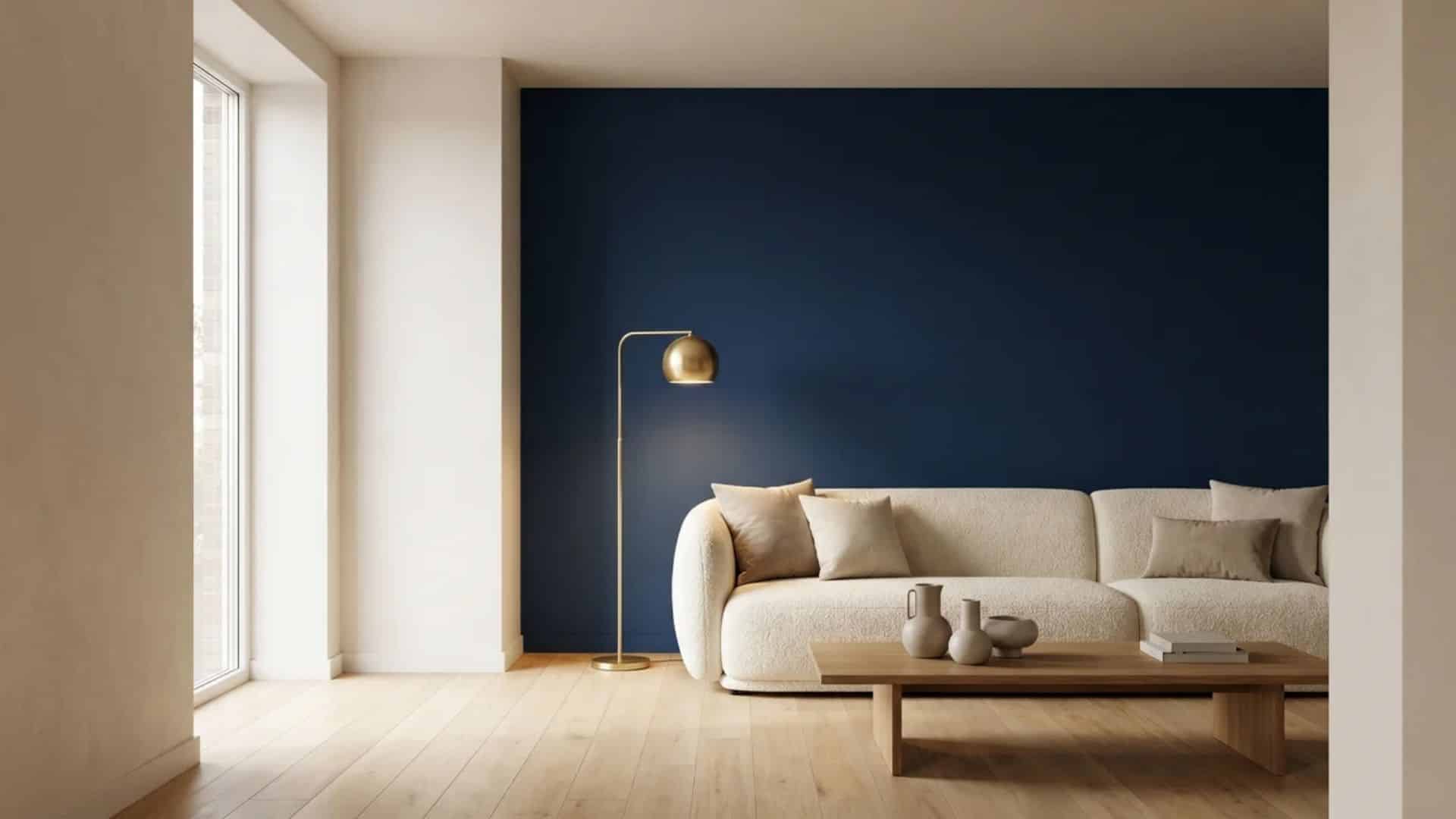
Color contrast grabs attention faster than any other design choice. The eye naturally locks onto differences in tone, so one bold shade against muted surroundings instantly becomes the visual anchor.
Use one dominant color and let everything else support it through softer tones. A deep navy wall or olive cabinet can carry the entire room without needing multiple competing colors.
2. Scale and Size
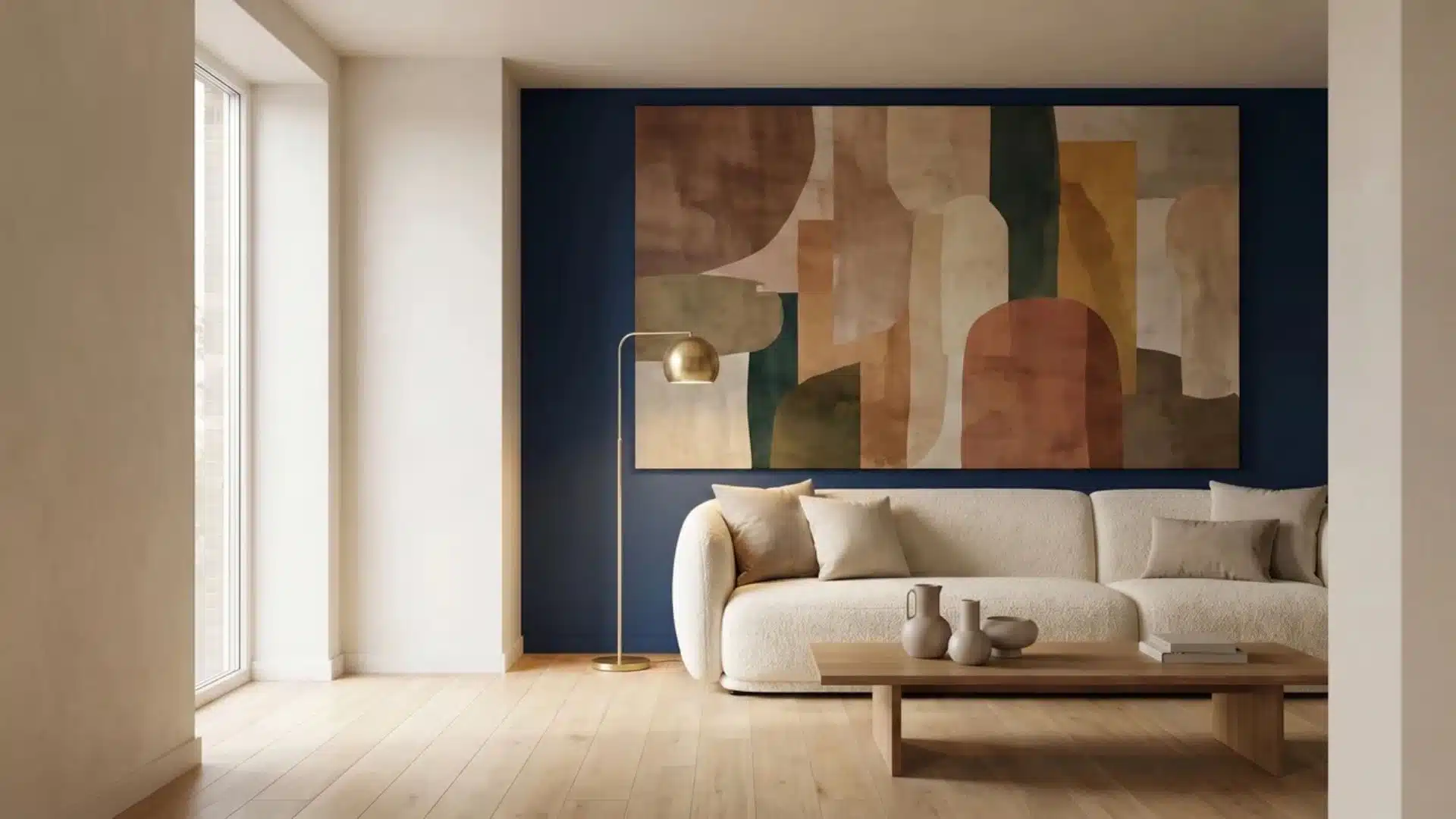
Scale decides what feels important the moment someone walks in. Larger objects dominate visual attention, even if everything else in the room is well designed.
Pick one oversized feature that feels slightly bold for the space, such as a large artwork or a tall headboard. Avoid undersized pieces since they disappear and weaken the focal point.
3. Lighting and Depth
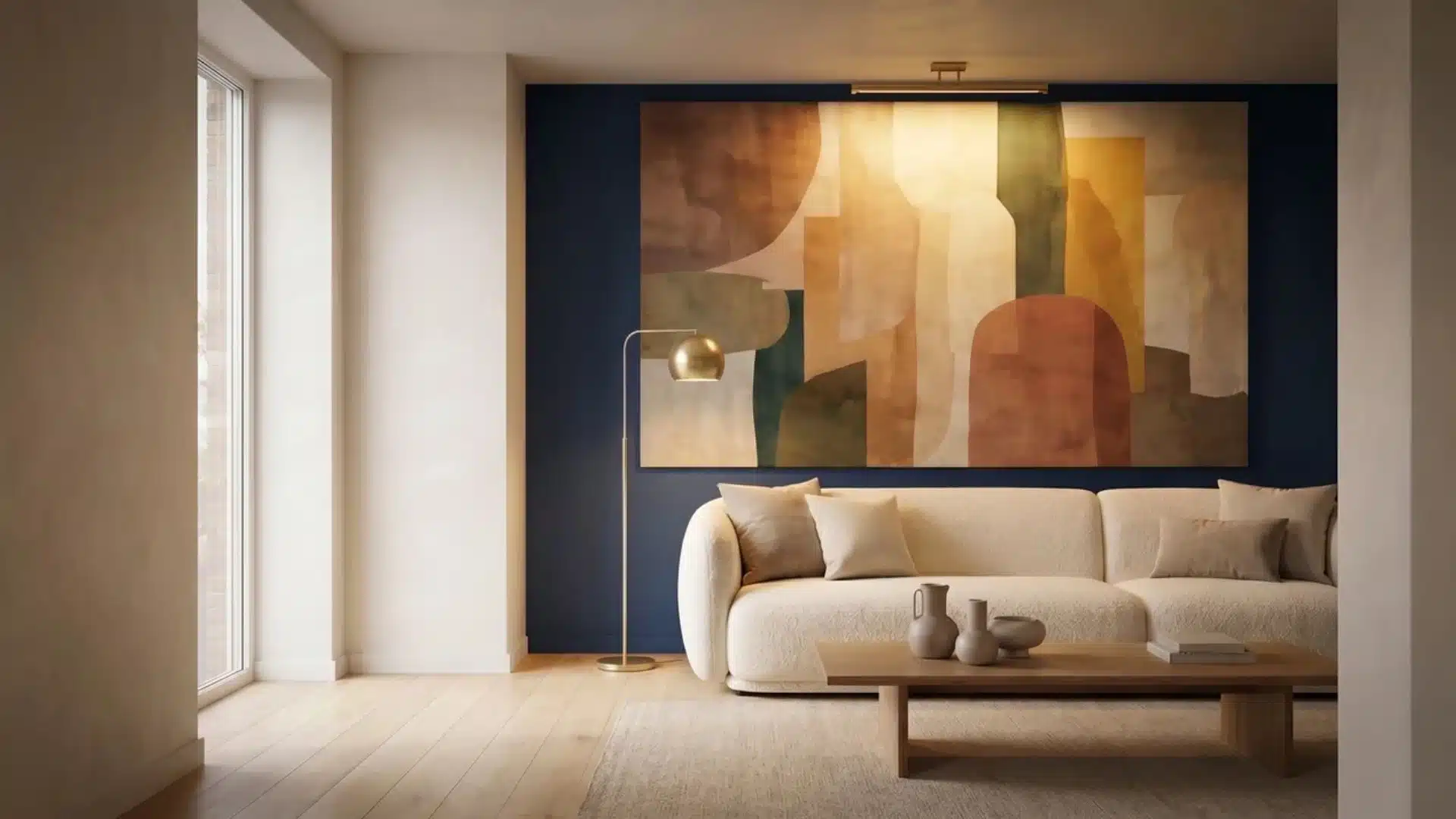
Lighting controls where the eye lands first. Focused light acts as a guide, drawing attention to a specific object or surface and separating it from the rest of the room.
Use directional lighting, such as sconces or picture lights, to highlight one area at a time. Keep the general lighting softer so it supports rather than competes with the focal point.
4. Texture and Pattern
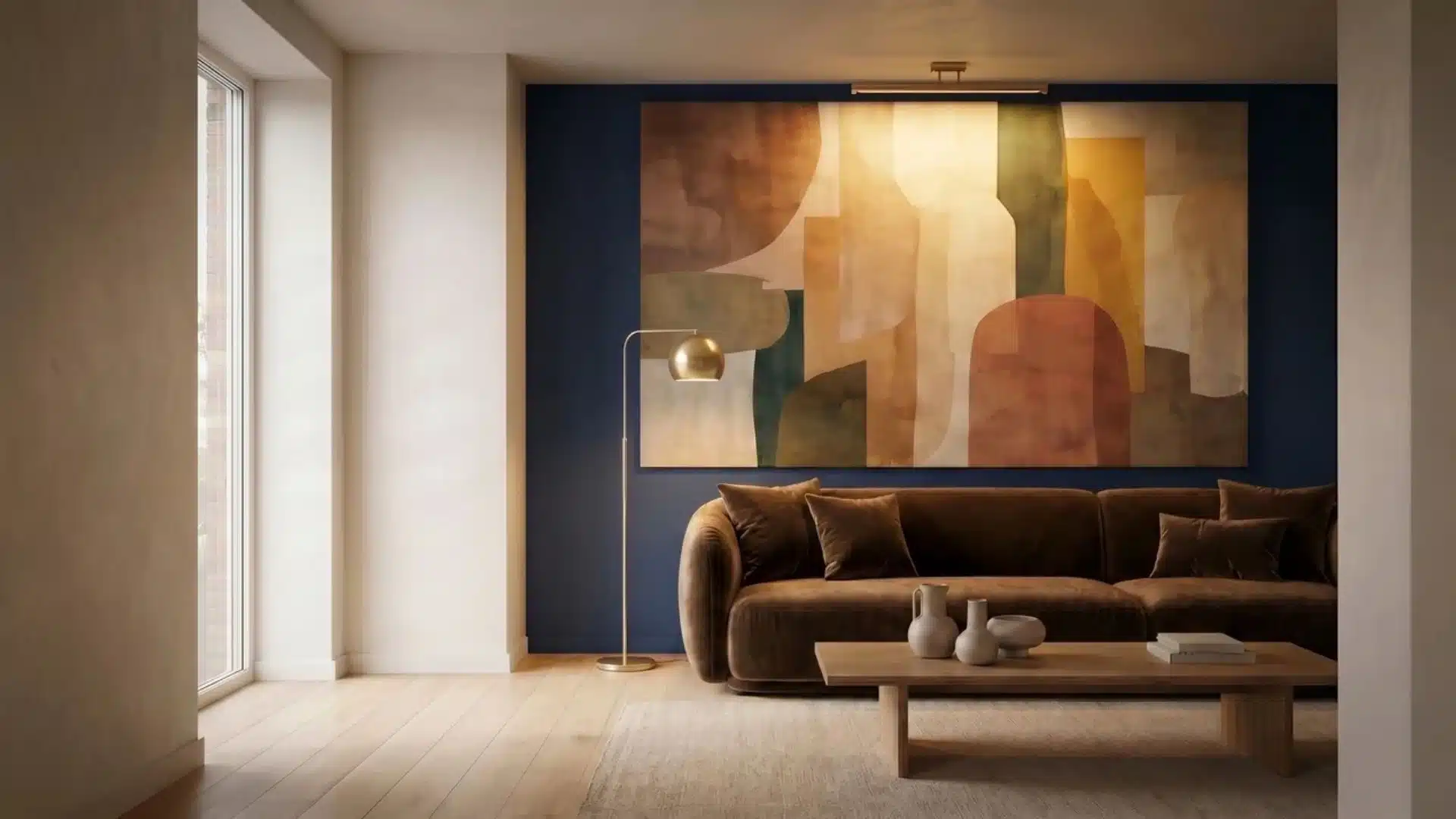
Texture creates emphasis by adding visual weight through surface detail. Even without strong color changes, textured materials stand out immediately against flat surroundings.
Chooseone primary texture such as fluted wood or velvet and let it lead. Too many textures in one space cancel each other out and dilute the focal effect.
5. Placement and Isolation
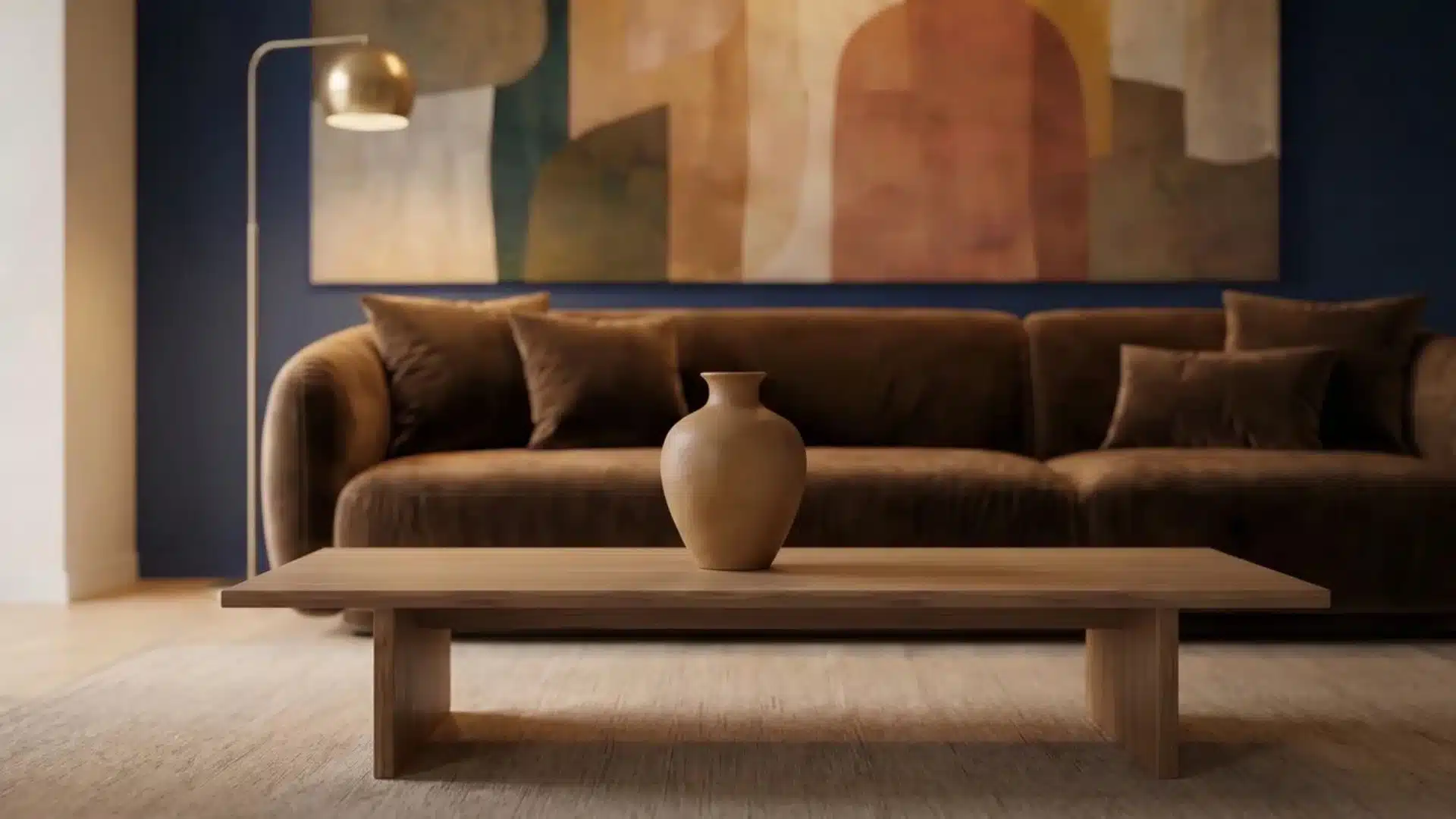
Placement changes how important an object feels. When something is given space around it, the eye reads it as intentional and important instead of cluttered.
Isolate key items by giving them breathing room on all sides. A single chair in an open corner carries far more impact than the same chair surrounded by other objects.
6. Architectural Features
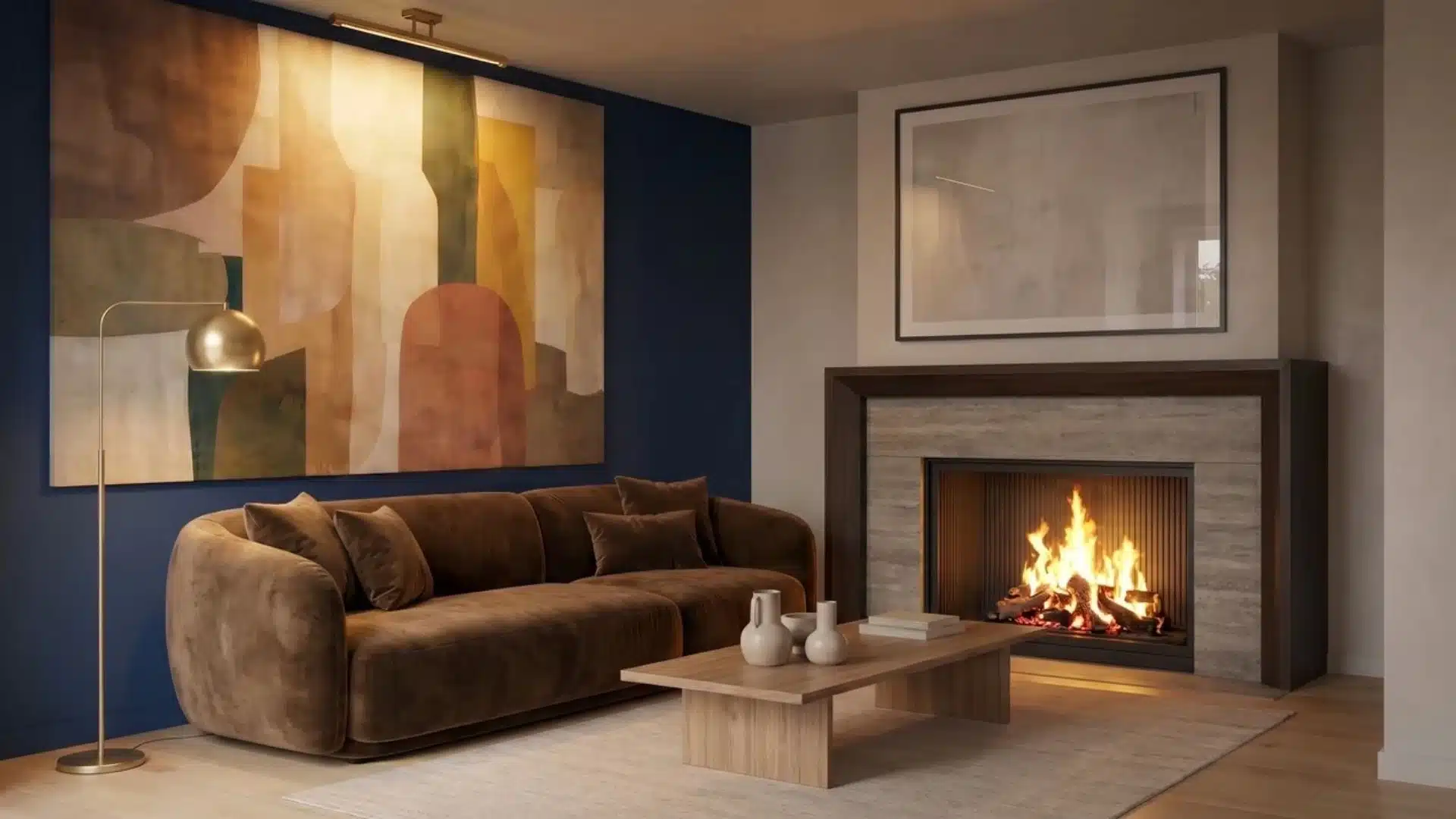
Architectural elements naturally pull attention because they are built into the structure of the room. Features like fireplaces, arches, or large windows already act as strong visual anchors.
Strengthen these elements by arranging furniture or lighting around them. If a room lacks them, create a simple built-in or statement wall to establish a clear focal point.
Why Does Your Eye Always Pick One Spot First?
Your brain processes an entire room in milliseconds, scanning for contrast before you consciously register a single object. High contrast equals immediate attention.
This is rooted in survival. The brain evolved to spot differences quickly; a shape that breaks the pattern signals something worth noticing, whether a threat or a reward.
Designers exploit this hardwiring deliberately. A bold wall, an oversized artwork, or a lit sculpture creates exactly the kind of contrast the brain is already hunting for.
That’s why emphasis in a room isn’t a stylistic choice; it’s a response to how the brain is wired.
That’s why emphasis isn’t decorative; it’s neurological. Give the brain one clear winner, and the room feels resolved. Withhold it, and the eye keeps searching
How to Find Your Room’s Focal Point?
A focal point is easier to find than to invent. Most rooms already have one hiding in plain sight, so the job is to spot it and then back it up.
Step 1: Spot the Natural Focal Point
Walk in and notice where your eye goes first. It’s often a window with a view, a fireplace, or a built-in architectural detail. That instinct is the room telling you what wants to be the star.
Step 2: Decide to Feature it or Create One
A strong existing feature just needs to be amplified with color, light, or framing. A flat room with no natural anchor needs one built, like a large piece of art, a bold accent wall, or a statement bed.
Step 3: Build the Hierarchy Around it
Once the star is set, everything else plays support. Face or frame your furniture toward the focal point, and keep nearby pieces quieter. The goal is a clear pecking order in which one feature leads and the rest follow.
Common Emphasis Mistakes to Avoid
Emphasis tends to go wrong in three predictable ways. All three are easy to catch once you know them:
- Too many focal points: When everything is special, nothing is. Pick one clear star per room and let the rest support it.
- Overcrowding the focal point: A great feature smothered by clutter loses its punch. Give it empty space to breathe.
- Forgetting balance: Pouring all your attention into one spot can leave the rest of the room bare. Keep supporting pieces intentional, so the whole space feels finished.
Avoid these mistakes, and your focal point will do exactly what you intended.
Conclusion
Emphasis in interior design isn’t a decorator’s secret; it’s a simple, learnable skill that transforms how any room feels the moment you walk in.
One clear focal point does the heavy lifting. It calms visual noise, gives your eye somewhere to settle, and makes every other piece feel like it belongs.
The rooms around you will start revealing exactly what they’re missing and exactly how to fix it. That shift in perception is what separates intentional design from accidental arrangement.
Pick one room today. Find its star, give it space to lead, and let the rest quietly follow. That single shift will make the whole space feel designed.
Frequently Asked Questions
Can a room have more than one focal point?
A room should have only one primary focal point. Multiple competing focal points divide attention and make a space feel restless. Secondary elements can add interest, but only when clearly subordinate to the main
What is emphasis also called in design?
Emphasis is often called dominance, and both terms mean the same thing: one element carries more visual weight than everything around it. The feature this creates is the focal point, the spot the eye lands on first. It’s achieved through deliberate choices in color, scale, lighting, or placement.
Can emphasis and contrast be the same thing?
Contrast is one tool used to create emphasis, but it is not the same thing. It pulls focus by placing opposing elements together so one breaks the pattern. Emphasis is the broader goal, achievable through scale, lighting, isolation, or placement too. Contrast is the method; emphasis is the result.
What is the difference between emphasis and balance?
Emphasis intentionally concentrates attention on one dominant feature. Balance distributes visual weight evenly so no part of the room feels heavier than another. The two work together, emphasis sets the focal point, and balance keeps everything around it stable. One without the other leaves a room either lopsided or not.