

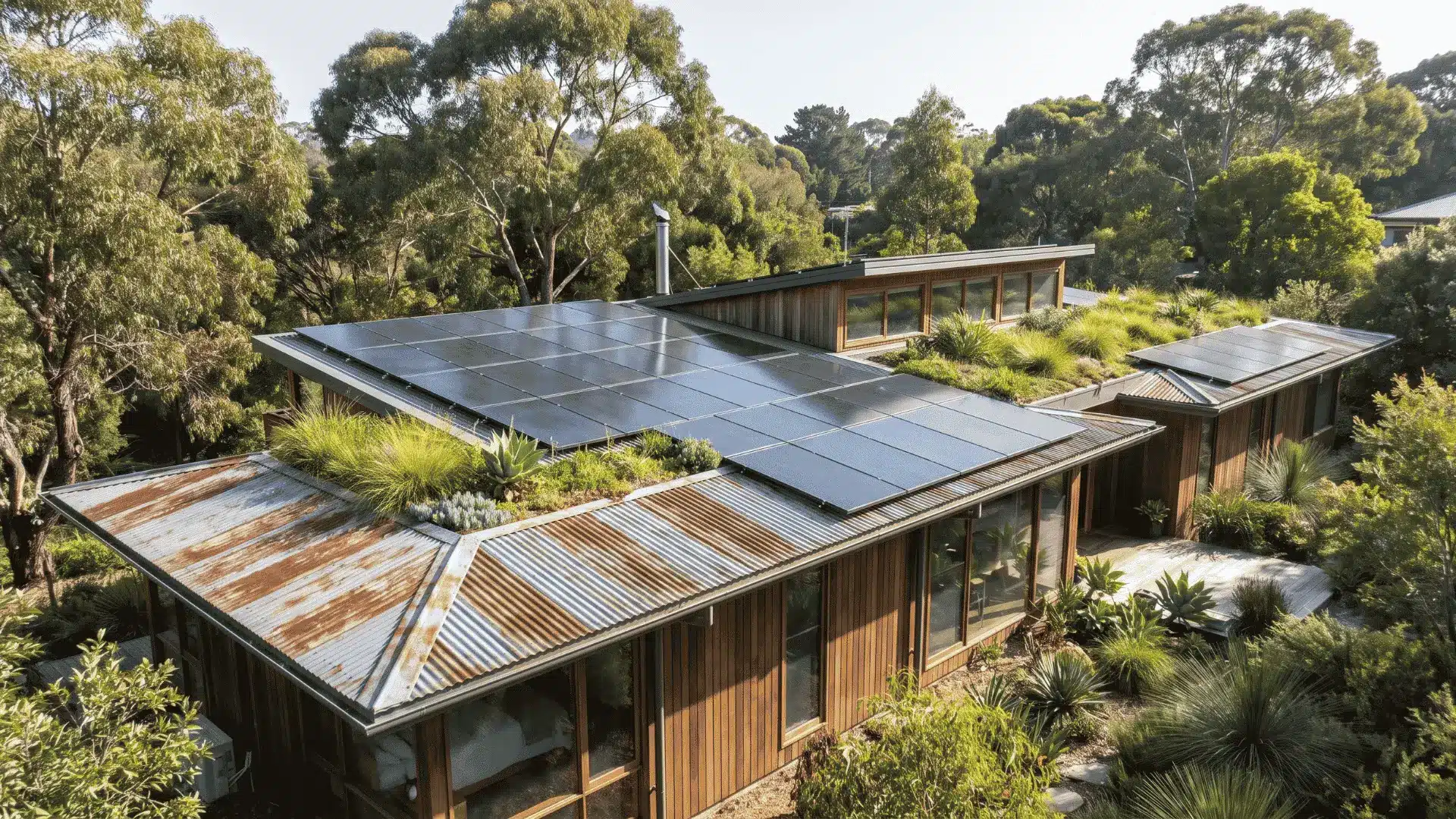
Replacing a roof is a major decision, but the impact goes beyond the upfront cost. The materials you choose affect energy use, waste, durability, and the resources needed to produce and replace them.
Sustainable roofing options have grown significantly, but the term “green” is not always as clear as it sounds.
Some materials marketed as eco-friendly may not perform well over time, while others with a more traditional appearance can offer better long-term benefits.
Understanding what truly makes a roof sustainable helps you choose materials that balance environmental impact, performance, and lifespan.
What Actually Makes a Roof Sustainable?
A sustainable roof isn’t defined by what it’s made from; it’s defined by what it costs the environment across its entire life. This is something that gets overlooked when people focus only on the material label.
How much energy goes into making it? How long does it stay on the building? And what happens to it when it comes down? A material that scores well in one area but poorly in the other two may not be as sustainable as it first appears.
The lifespan piece is the one I see people underestimate most. Every time a roof gets replaced, the manufacturing cost starts again: more energy used, more raw materials needed, and more waste created.
The “eco-friendly” label in roofing usually points to one benefit. Recycled content. Low toxicity. Natural origin. Those factors matter, but the strongest sustainability choices are the ones where multiple benefits line up.
When they don’t, the right answer depends on your roof, your climate, and how long you plan to keep the home.
Sustainable Roofing Options Ranked by Lifecycle Impact
Ten sustainable roofing options ranked by their full lifecycle performance, including embodied energy, lifespan, and end-of-life impact.
1. Reclaimed Slate
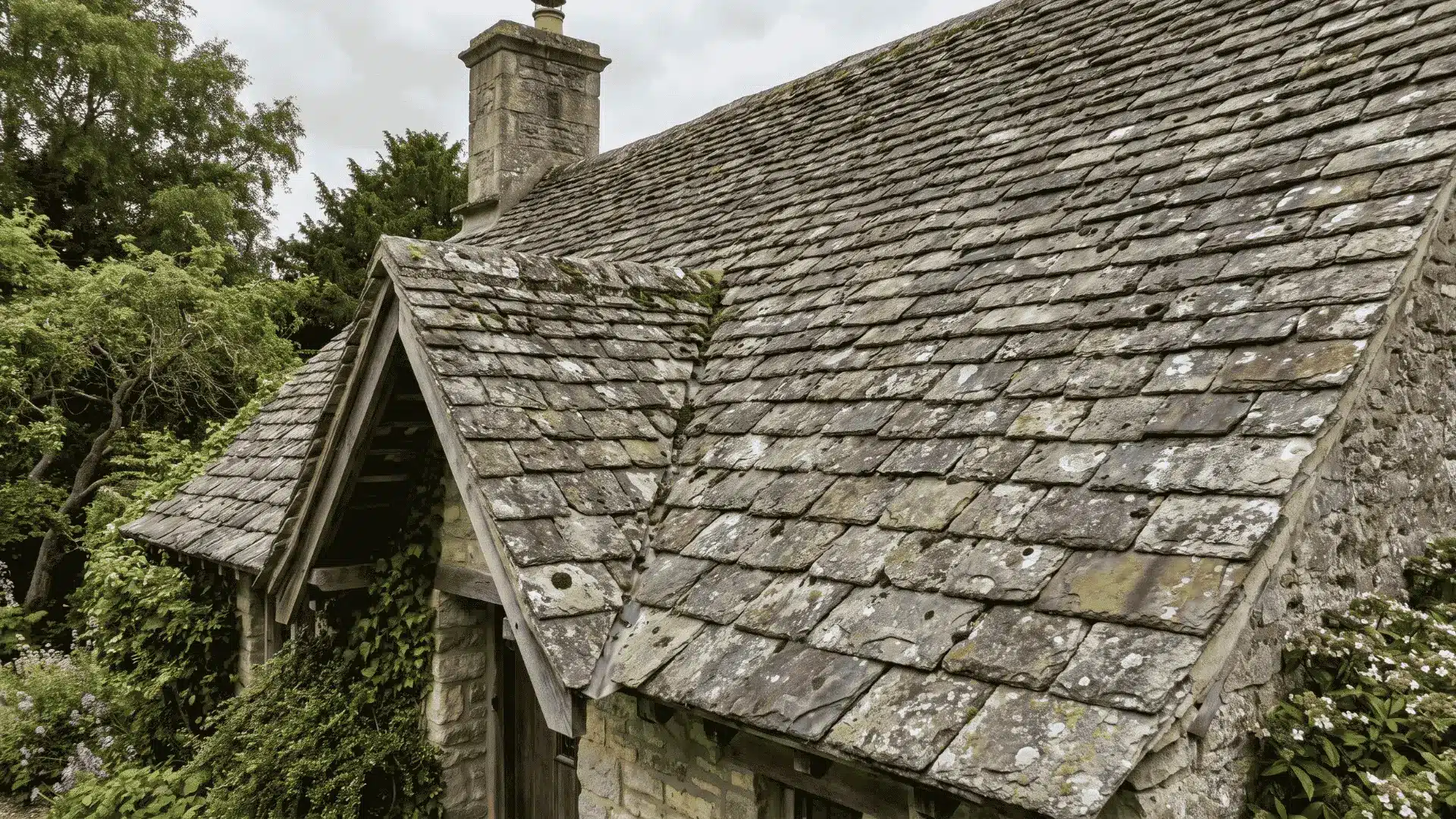
Reclaimed slate has almost no embodied energy; the stone already exists, so nothing new is quarried or processed. That makes it the sustainability ceiling on this list.
Natural slate roofs last 75–150 years. Properly graded reclaimed slate keeps that lifespan, giving you the same material with a near-zero manufacturing footprint.
The one real constraint is availability. Reclaimed slate supply is limited and highly regional. If it’s not accessible in your area, the sustainability case doesn’t hold up for sourcing it from far away.
2. Metal Roofing (Steel and Aluminum)
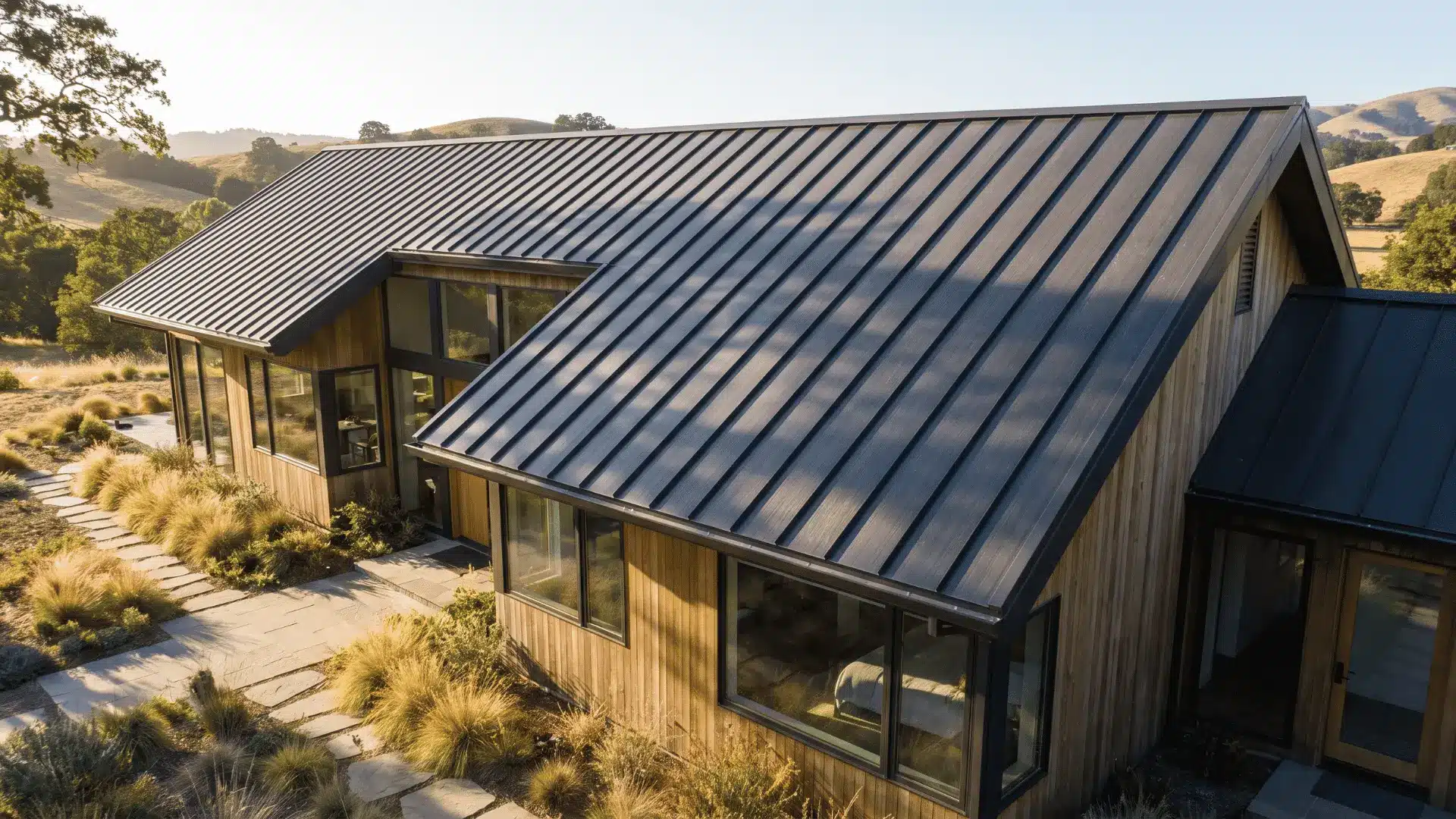
Metal roofing is 100% recyclable and lasts 40–70 years; those two facts are the entire sustainability argument.
The “eco-friendly metal roof” label often skips the manufacturing impact. Steel and aluminum require high energy to produce, so the higher embodied carbon only makes sense if the roof lasts long enough to justify it. For long-term homeowners, the math works.
Steel and aluminum differ here. Aluminum is lighter, more corrosion-resistant, and more valuable to recycle, while steel is more widely available. Both are recyclable, but aluminum closes the loop better.
3. Clay Tiles
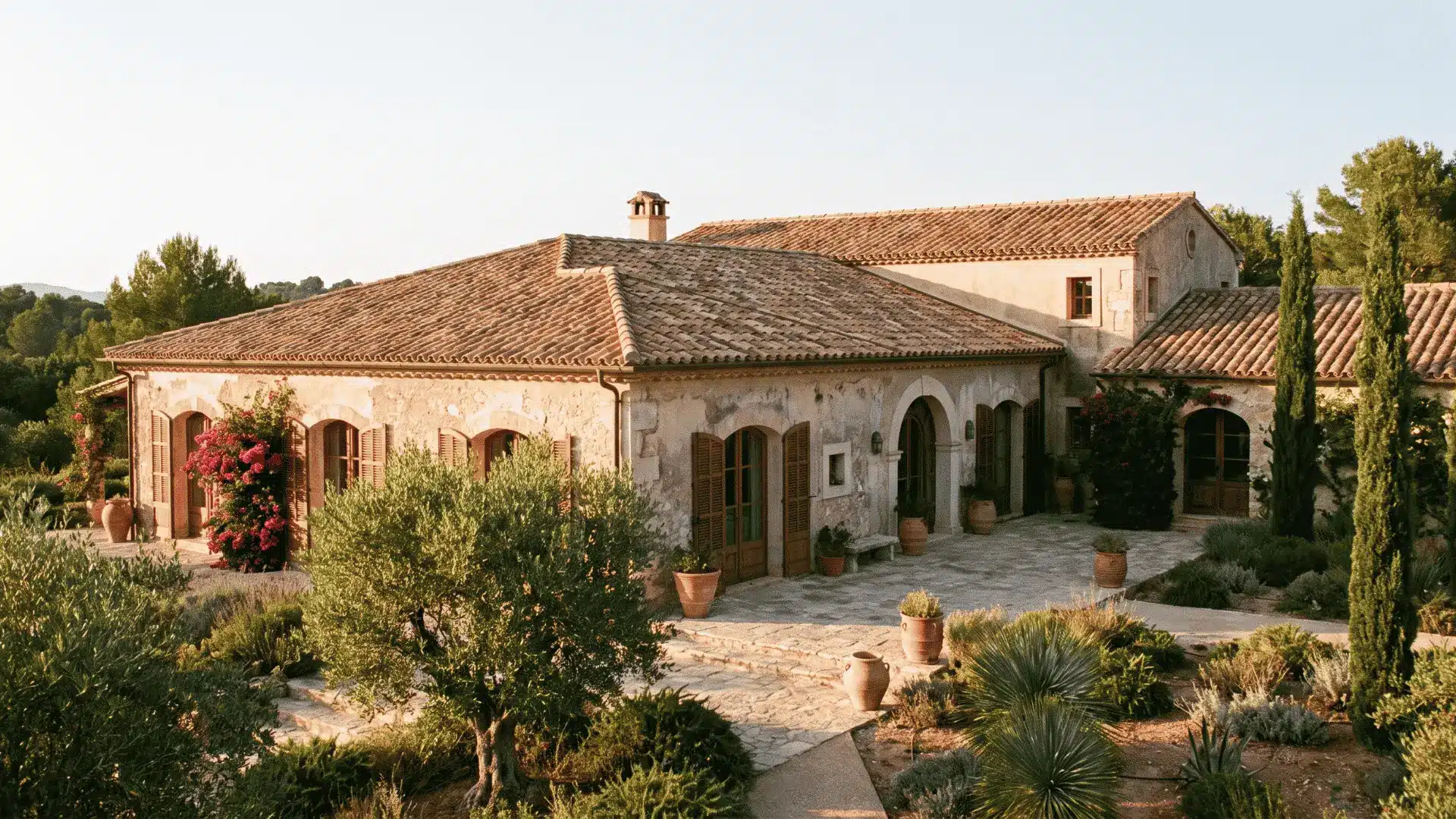
Clay tiles last 50–100+ years. At that lifespan, the energy cost of manufacturing them is spread over a period during which most other roofs would have been replaced two or three times over.
They’re also thermally massive. I’ve lived under a clay tile roof, and the cooling difference is more than a chart can show. The way it handles heat through the day is noticeable, especially in hot weather.
which meaningfully reduces cooling loads.
The sustainability case can narrow because clay is heavy. If your structure needs reinforcement, that adds embodied energy before installation. If it already supports the load, the lifecycle benefits are stronger.
4. Concrete Tiles
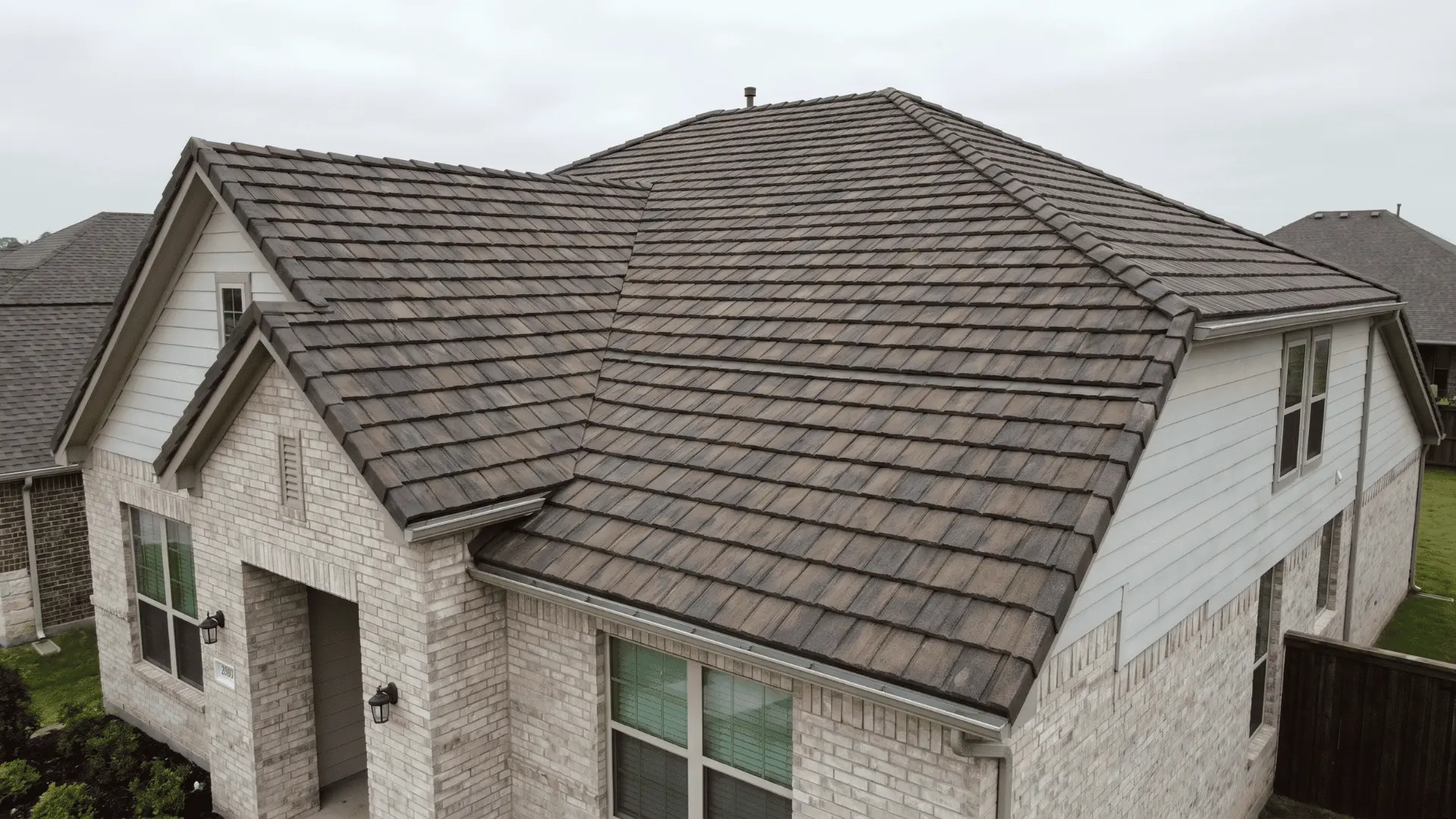
Concrete tiles last a similar length of time to clay tiles, around 40–50 years with proper maintenance, but the manufacturing story is different. Cement production is carbon-intensive, and that gap shows up at the embodied energy stage.
The end-of-life picture is also weaker. Concrete tiles typically go to landfill or get crushed into aggregate. Neither closes the loop the way clay does.
Concrete’s advantage is accessibility. It’s cheaper than clay, making long-lasting roofing available to more budgets. You get strong durability at a lower cost, but with a less clean sustainability profile.
5. Solar Shingles
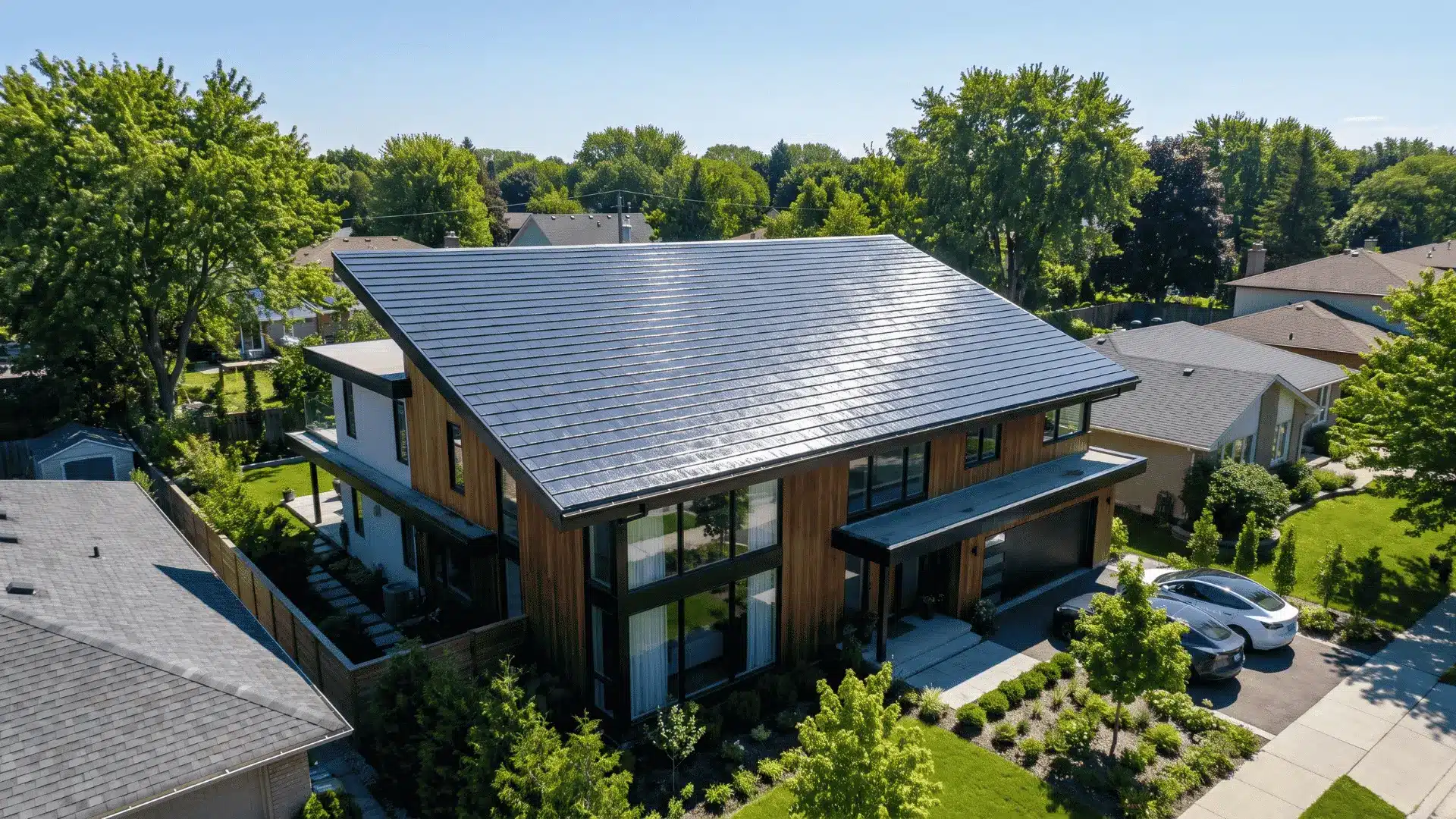
Solar shingles are the only roofing material on this list that generates energy, changing the sustainability calculation. As an energy efficient roofing option, they reduce grid reliance while also serving as a protective roof system.
Unlike other options that reduce impact through durability or recycling, solar shingles also offset household energy use. That sustainability benefit compounds over time.
Their manufacturing footprint is the highest on this list, with a 7–12 year energy payback depending on climate and roof conditions.
Note: Roof orientation matters too. A north-facing roof or low-solar area can delay or eliminate the point where the susta inability benefits become net positive.
6. Recycled Rubber Shingles
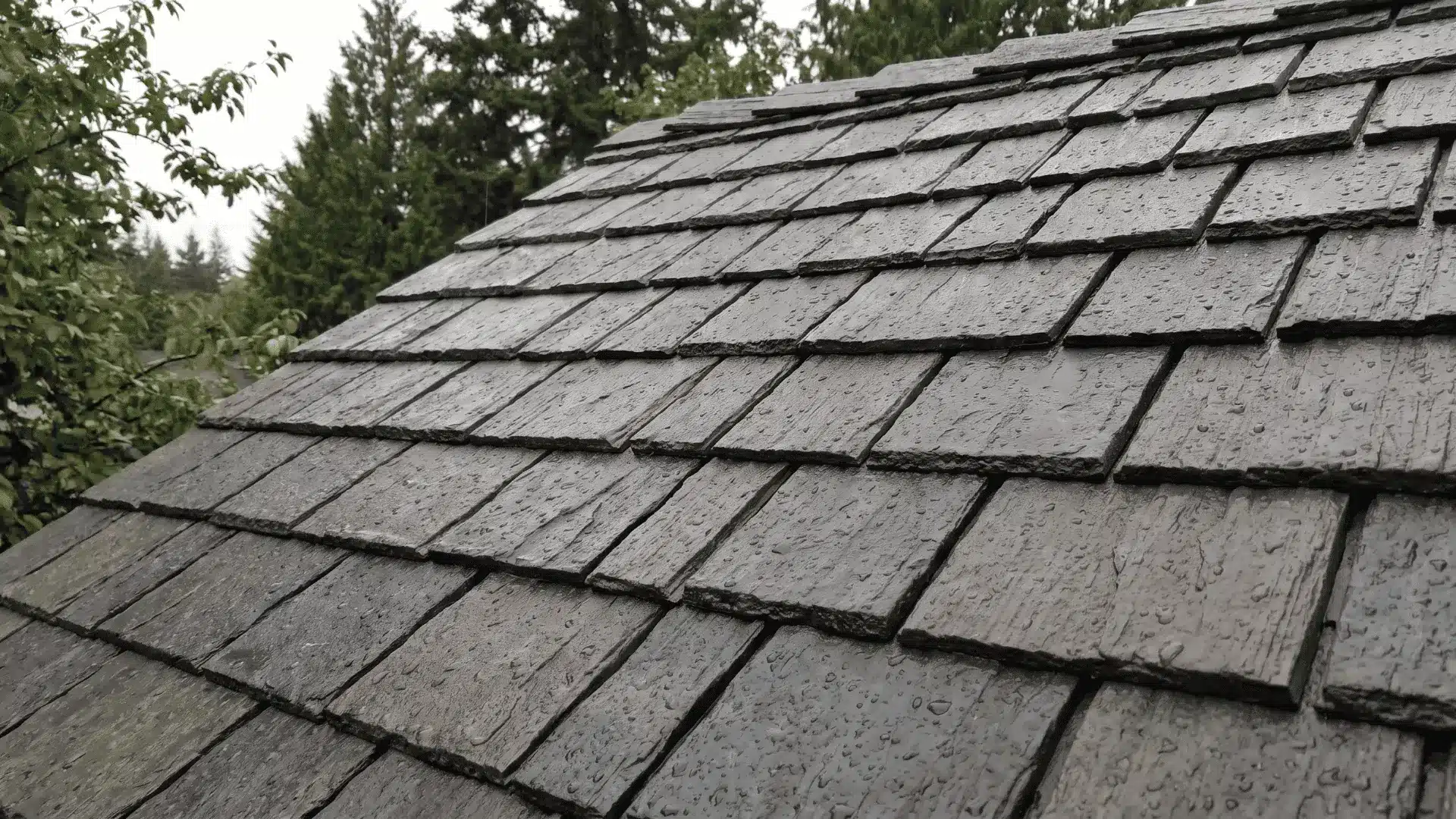
Recycled rubber shingles address a waste problem by repurposing used tires that would otherwise end up in landfills. Their sustainability value comes from redirecting existing materials.
What makes these shingles different is the closed loop. They use diverted waste as input and can be recycled again at the end of their life, something most roofing materials cannot match.
The lifespan sits at 30–50 years. That’s real durability, but it’s shorter than metal or clay. Over a long ownership horizon, that gap in longevity is where the lifecycle advantage starts to narrow.
7. FSC-Certified Wood Shakes and Shingles
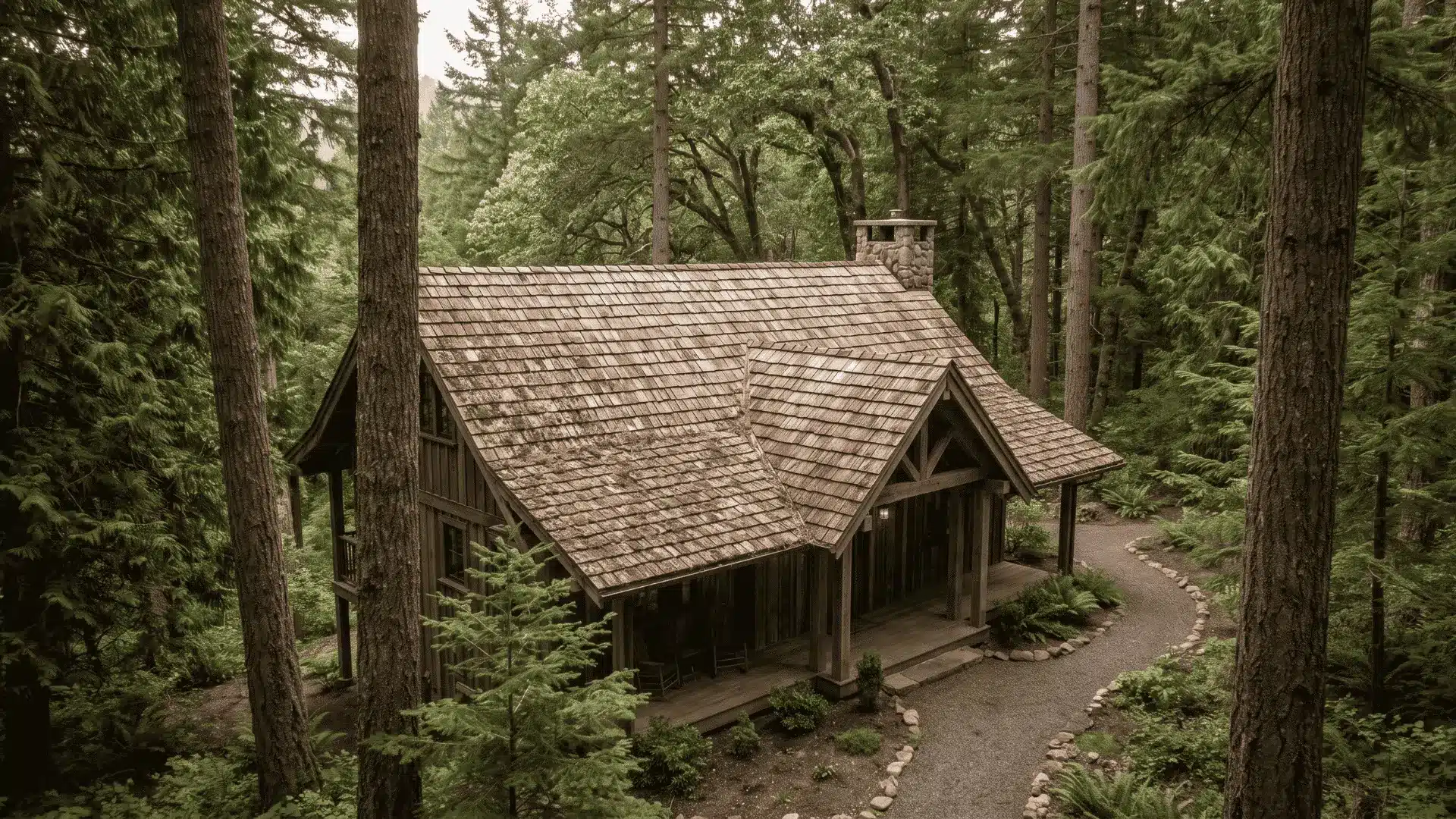
Wood roofing is only sustainable when the timber is FSC-certified. Without certification, there’s no verified sourcing chain, and deforestation risk removes the renewable-material argument.
With certification, the picture improves considerably. Wood insulates naturally, reducing heating and cooling loads. It’s biodegradable, so end-of-life doesn’t mean landfill.
The hard constraint is fire. In dry climates, wood roofing can be a real risk and may be prohibited by code. No sustainability benefit overrides fire safety requirements.
8. Recycled-Content Asphalt Shingles
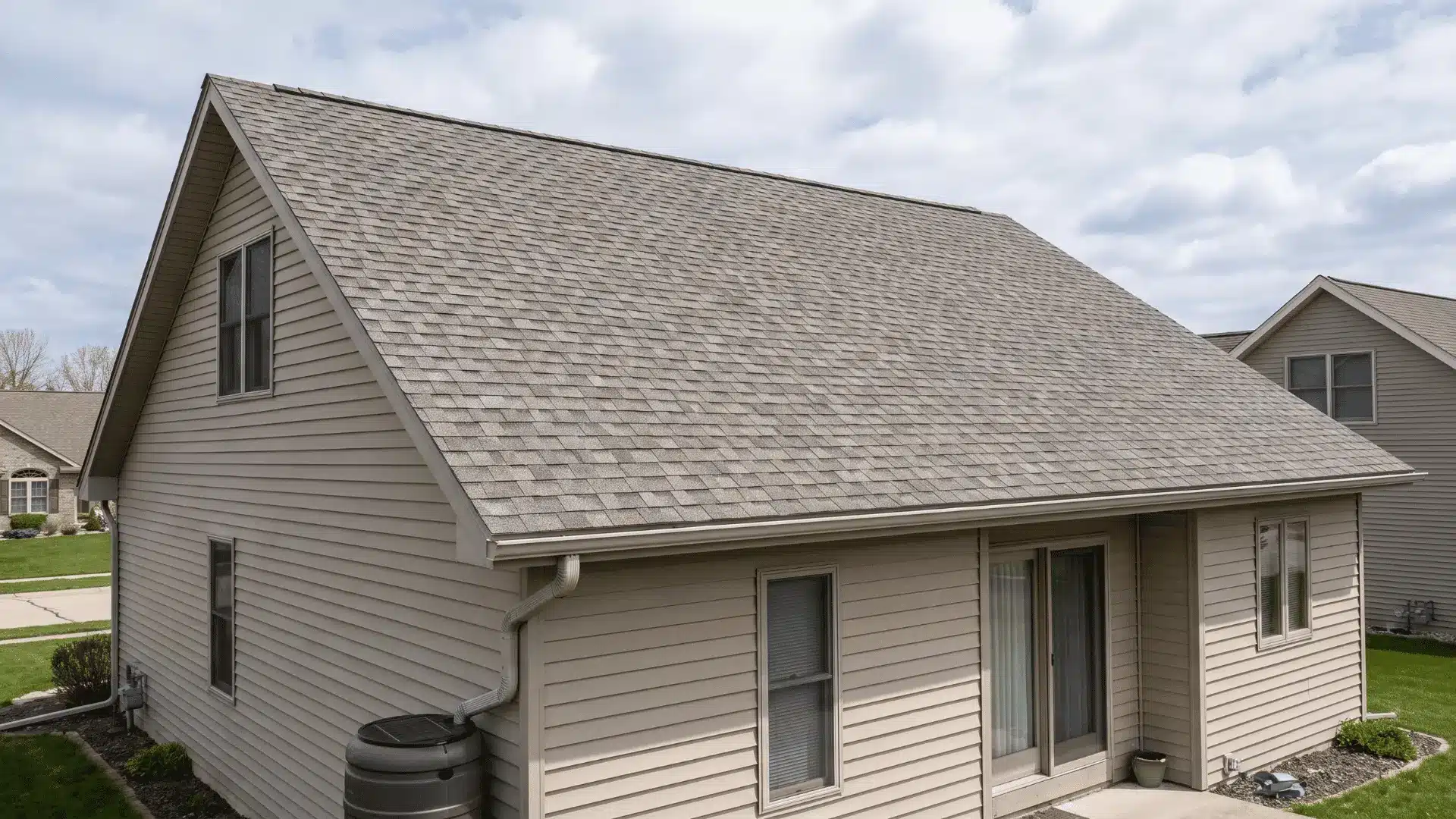
Recycled content makes these shingles better than standard asphalt shingles, but it doesn’t make them a full-lifecycle solution. The recycled input fraction is real. The rest of the picture largely isn’t
The base is still asphalt. Lifespan is still 20–30 years. And at the end of that, they typically go to landfill unless there’s an asphalt recycling program in your area.
What they do offer is access. If a long-lifespan material isn’t financially viable right now, this is a meaningful step up from conventional asphalt, with no significant cost premium. That’s a real sustainability argument, just an honest, limited one.
9. Living Roofs (Green Roofs)
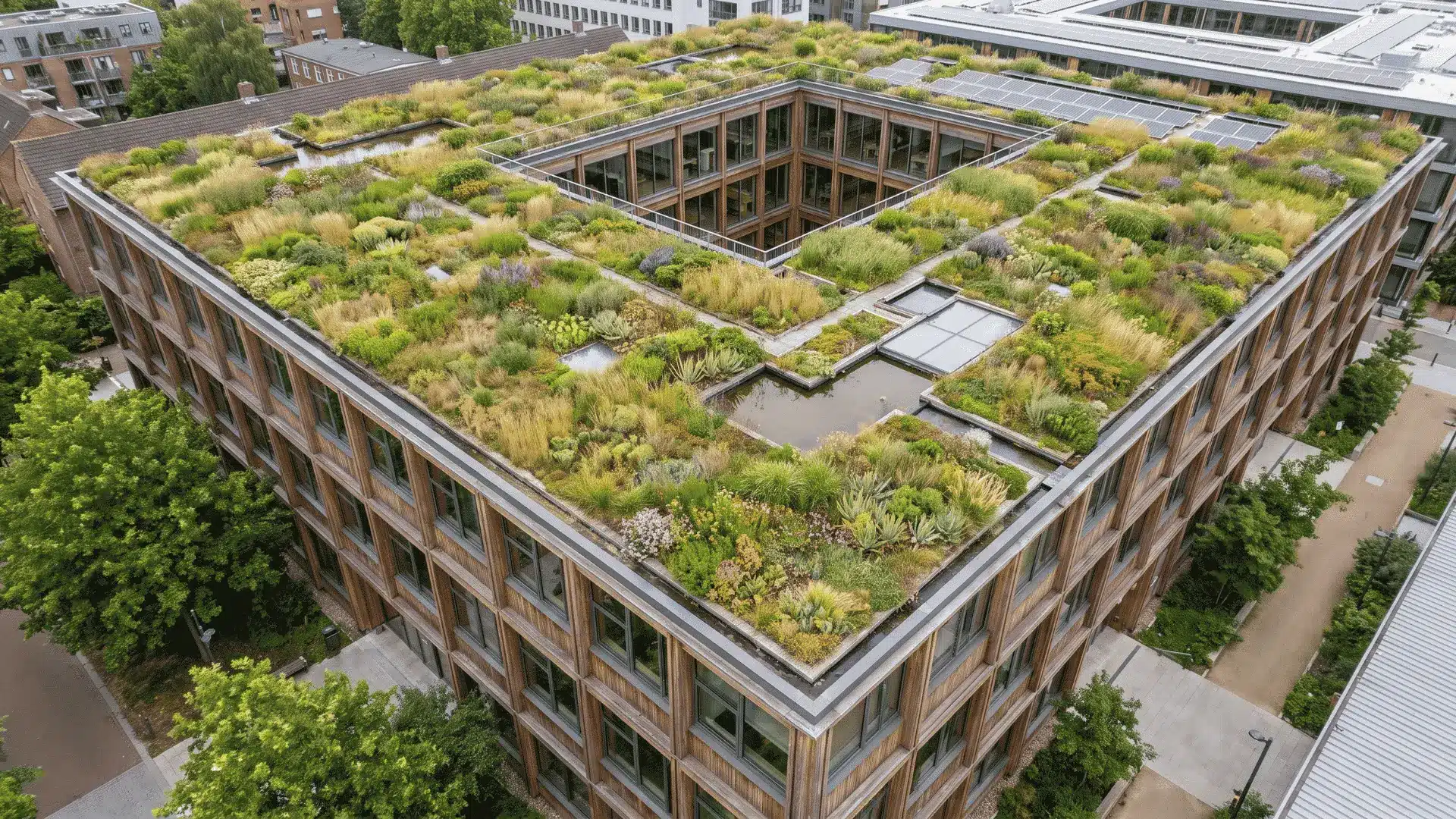
Living roofs manage stormwater, reduce urban heat, and support biodiversity- sustainability work that happens at neighborhood scale, not just building scale. No other option on this list does that.
They also protect the waterproofing membrane beneath them. Shielded from UV exposure and temperature swings, that membrane lasts significantly longer than it would on an exposed roof.
The main limitation is structural requirements. Living roofs are heavy and need maintenance, making them better suited for commercial and new construction. The sustainability case is strong, but the building must support it.
10. Cool Roofs (Reflective Coatings and Membranes)
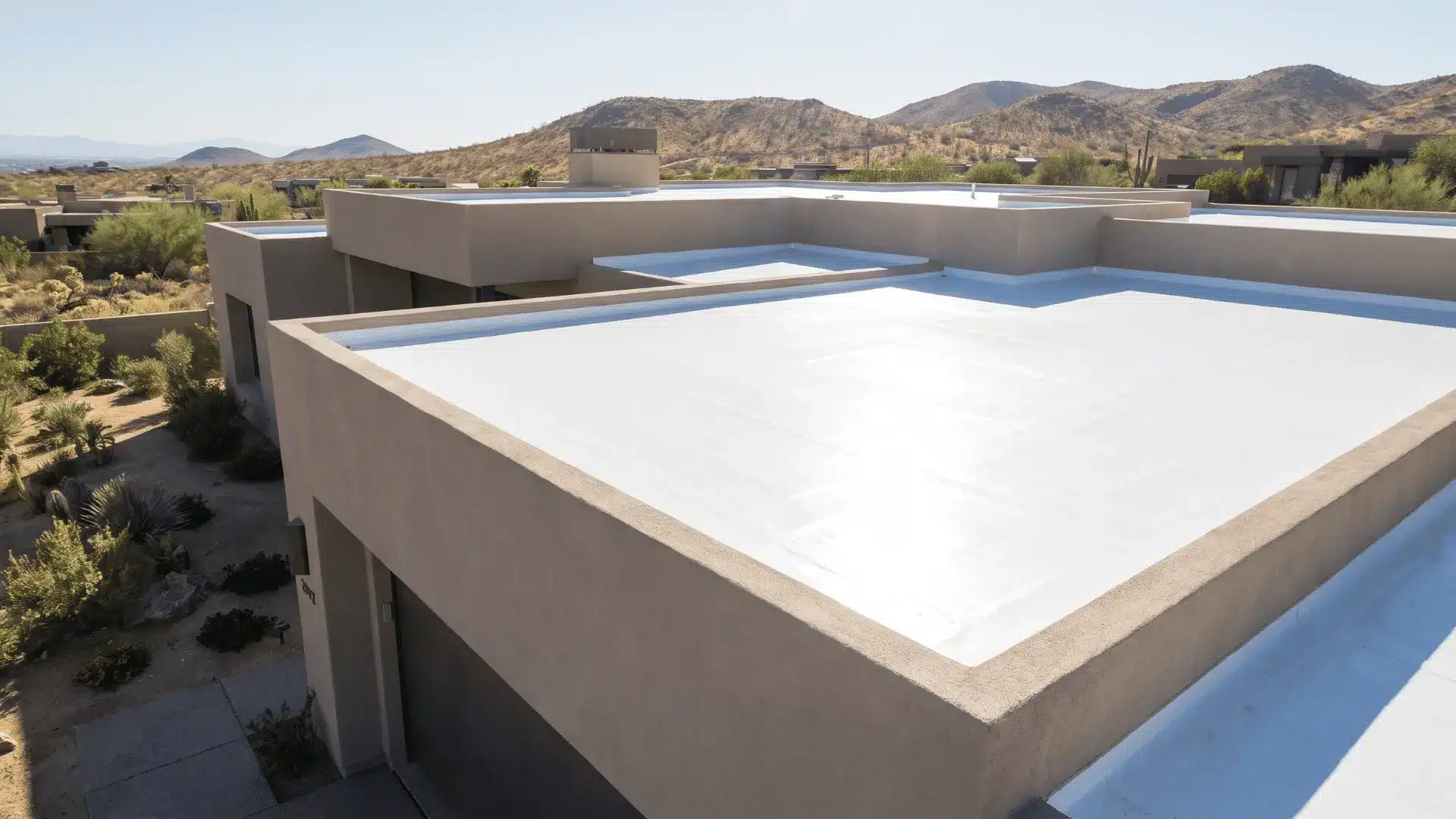
Cool roofs reduce cooling needs by reflecting solar radiation instead of absorbing it. In hot and mixed climates, this can be a real sustainability benefit because less absorbed heat means less cooling energy.
In cold climates, reflectivity can work against you by reducing winter solar gain and increasing heating needs. The sustainability benefit can shrink or disappear altogether.
The strongest sustainability benefit of cool roofs is extending the life of existing roofs. As a coating, they reduce UV damage and thermal stress, delaying replacement, which is always a sustainability gain.
Which Sustainable Roofing Option Fits Your Situation?
The most sustainable roofing material is not the same for every home. Your climate, budget, expected ownership period, local regulations, and energy goals all change which option makes the most sense.
| Your Situation | Best Roofing Choices | Why They Make Sense |
|---|---|---|
| Staying in your home for decades | Metal roofing, clay tile | Their long lifespan spreads out the environmental impact of production and replacement. The higher upfront cost can pay off over time through durability and fewer replacements. |
| Working with a tighter budget | Recycled rubber shingles, recycled-content asphalt shingles | These options provide sustainability benefits through recycled materials without requiring the higher investment of longer-lasting systems. |
| Wanting energy generation from your roof | Solar shingles | They need to be evaluated separately because their value depends on factors like roof orientation, sunlight exposure, and local electricity costs. |
| Living in a hot climate | Cool roofing materials | Reflective roofs can reduce heat absorption and lower cooling demand, making them a better fit for warmer regions. |
| Living in a cold climate | Insulated roofing systems and climate-appropriate materials | Some cool roofing options may provide fewer benefits in colder areas, where heat retention becomes more important. |
| Living in an area with strict fire codes | Metal roofing, clay tile, other approved materials | Local regulations may eliminate some options, such as certain wood roofing products, before other factors come into play. |
The best sustainable roof is the one that fits your home’s conditions and delivers the right balance of durability, environmental impact, and long-term value.
Conclusion
The roof over your head has a longer environmental story than most people realize. It starts at the factory and ends at a recycling facility or a landfill.
Choosing sustainable roofing options isn’t about picking whatever sounds greenest. It’s about matching the right material to your climate, your timeline, and your budget. Get that match right, and the sustainability gains are real and lasting.
The materials exist. The information is here. What changes outcomes is applying it to your specific situation rather than defaulting to the most familiar option.
If you’re ready to make a more informed choice, start with the three factors that matter: how it’s made, how long it lasts, and where it goes when it’s done.
Frequently Asked Questions
What Is the Most Environmentally Friendly Roofing Material?
Reclaimed slate carries the strongest overall sustainability case, with near-zero embodied energy and a lifespan that can exceed a century. For new materials, metal roofing ranks highest when the owner has a long horizon on the property. The most sustainable choice for any specific building depends on climate, lifespan expectations, and local recycling infrastructure. No single material wins universally.
Are Cool Roofs Actually Sustainable in Cold Climates?
Only partially. Cool roofs reduce cooling energy demand effectively in hot climates. But the same reflectivity that cuts summer cooling loads also reflects winter solar gain, increasing heating demand. In cold climates, material durability and insulation value are stronger sustainability levers. The net benefit of cool roof coatings in cold regions is primarily extended membrane lifespan, not energy reduction.
Do Recycled Rubber Shingles Last as Long as Metal or Clay?
No. Recycled rubber shingles typically last 30–50 years, shorter than metal (40–70 years) or clay (50–100+ years). Their sustainability case rests on waste diversion and closed-loop recyclability, not lifespan. For owners prioritizing maximum lifecycle impact, longer-lasting materials hold the advantage. For owners prioritizing accessible cost and waste reduction, rubber shingles remain a strong option.
Is FSC Certification Required for Wood Shingles to Be Considered Sustainable?
In practical terms, yes. Without FSC certification, there’s no verified chain of custody confirming the timber came from responsibly managed forests. Uncertified wood shakes carry deforestation risk that undermines the renewable-sourcing argument entirely. FSC certification is the minimum threshold, not a premium add-on, for wood roofing to qualify as a sustainable material choice.