


Paint covers homes, cars, furniture, and bridges, but few people know what it contains. Its ingredients determine its durability, finish, drying time, and performance.
I find it interesting that paint blends chemistry, engineering, and design into one protective, decorative coating.
In this article, you’ll learn about the ingredients that make up paint, how manufacturers produce it, the different types available, and how paint has evolved over time.
Keep reading to gain a clearer understanding before choosing your next paint product.
What Is Paint Made Of?
Paint is made of four primary ingredients: pigments, binders (resins), solvents (carriers), and additives.
Each ingredient serves a specific purpose, working together to give paint its color, durability, adhesion, and ease of application.
Pigments provide color and hiding power, while binders hold the pigment particles together and form the protective film after the paint dries.
Solvents keep the paint in a liquid state until application, then evaporate as the coating dries.
Additives are included in smaller amounts to improve performance by controlling drying time, preventing mold and mildew, enhancing flow, increasing stain resistance, and extending shelf life.
The formula varies by paint type, but nearly all modern paints contain four core components.
What Does Each Paint Ingredient Do?
Each ingredient in paint has a specific function that affects how the product looks, applies, dries, and performs.
| Ingredient | Purpose | Common Examples | Effect on Finished Paint |
|---|---|---|---|
| Pigments | Provide color, opacity, and hiding power while helping protect surfaces from UV damage. | Titanium dioxide, iron oxides, carbon black, phthalocyanine blue | Improves color, coverage, brightness, and fade resistance. |
| Binders (Resins) | Hold pigment particles together and bond the paint to the surface after drying. | Acrylic resin, vinyl acrylic, alkyd resin, epoxy resin | Increases durability, adhesion, flexibility, gloss, and weather resistance. |
| Solvents (Carriers) | Keep paint in a liquid form for easy application and evaporate as the paint dries. | Water, mineral spirits, xylene, acetone | Affects drying time, odor, cleanup method, and VOC emissions. |
| Additives | Improve paint performance by enhancing application, storage, and long-term protection. | Defoamers, thickeners, biocides, anti-settling agents, drying agents | Provides smoother application, mildew resistance, longer shelf life, and better overall performance. |
Understanding Paint Sheens and Finishes
The appearance and texture of paint depend on its sheen level, which is determined by the ratio of binders, pigments, and other ingredients.
- Matte: Has a smooth, low-sheen finish that hides minor surface imperfections and creates a soft, modern appearance.
- Flat: Offers almost no light reflection, making it ideal for ceilings and low-traffic areas where hiding flaws is a priority.
- Eggshell: Provides a subtle, velvety sheen with better durability than flat paint, making it suitable for living rooms, dining rooms, and hallways.
- Satin: Delivers a soft, pearl-like finish that is easier to clean and works well in kitchens, bathrooms, and high-traffic spaces.
- Semi-Gloss: Reflects more light and offers increased moisture and stain resistance, making it a popular choice for trim, doors, cabinets, and bathrooms.
- High-Gloss: Creates a highly reflective, durable finish that withstands frequent cleaning and highlights architectural details, though it also makes surface imperfections more noticeable.
How Is Paint Made?
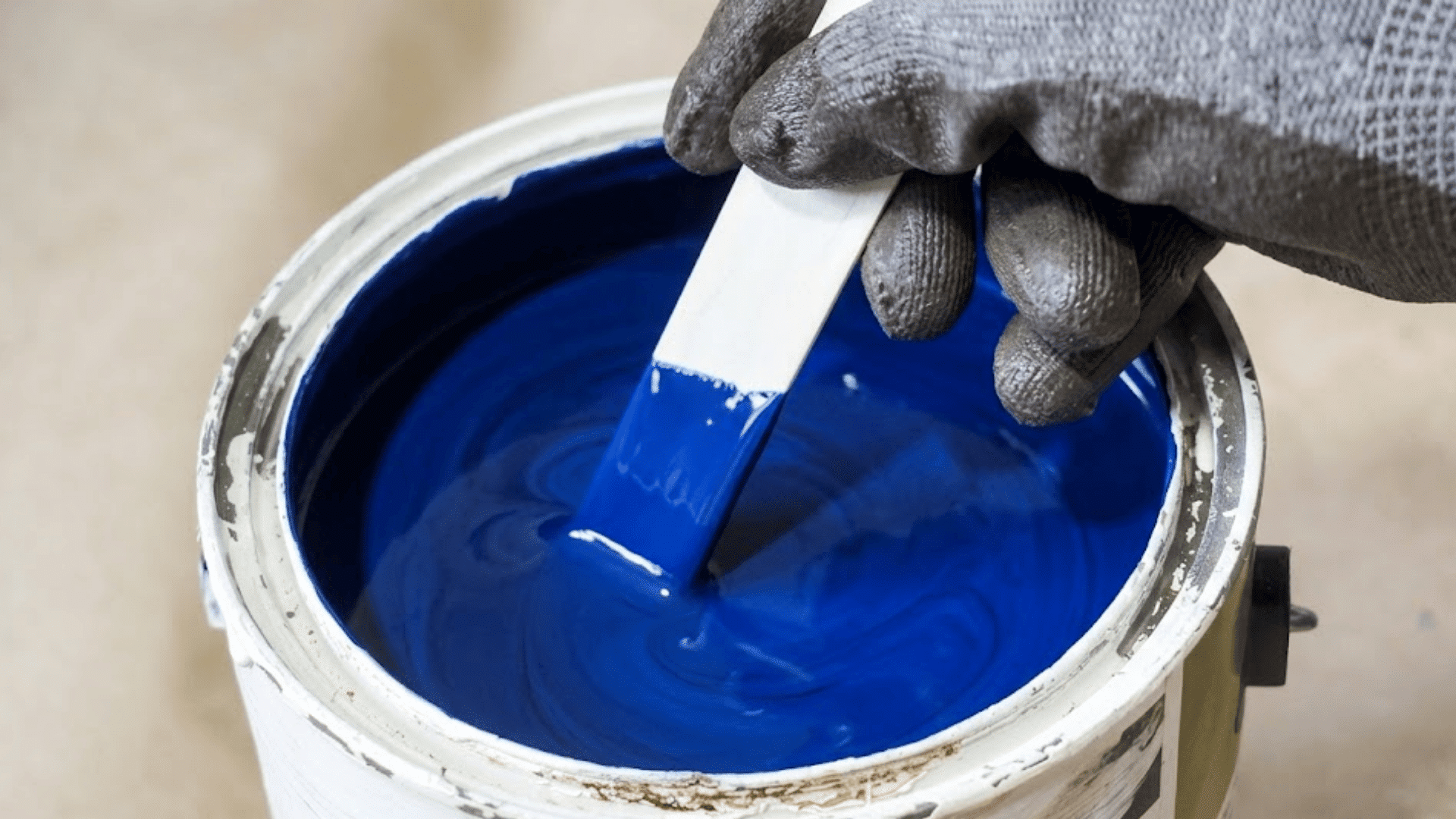
Modern paint is manufactured through a carefully controlled process that combines raw materials into a consistent, durable coating.
Step 1: Raw Material Selection
Paint manufacturing begins with selecting high-quality raw materials based on the intended use of the product.
Manufacturers choose pigments for color, binders for durability, solvents for the desired consistency, and additives for specific performance features such as mildew resistance or faster drying.
Every ingredient is tested for purity, compatibility, and consistency before production begins.
Using carefully selected materials helps ensure the finished paint meets performance standards for both appearance and durability.
Step 2: Measuring and Batching Ingredients
Once the raw materials are approved, each ingredient is accurately weighed and measured according to a precise formulation.
Automated batching systems are commonly used to maintain consistency across every production batch.
Even small differences in ingredient amounts can affect color, viscosity, drying time, or durability.
Following exact formulations allows manufacturers to produce paint with uniform quality, ensuring customers receive the same performance and finish every time they purchase the product.
Step 3: Mixing Pigments with Liquid Components
The measured pigments are blended with binders, solvents, and some additives to create an initial mixture called the mill base.
High-speed industrial mixers evenly distribute the pigment particles throughout the liquid, preventing clumps and uneven coloring.
Proper mixing ensures that every gallon of paint has a consistent color and texture before it moves to the next stage of manufacturing. This process also prepares the mixture for fine particle grinding.
Step 4: Grinding and Milling
During grinding and milling, the paint mixture passes through specialized equipment that breaks pigment particles into extremely fine sizes.
Roller mills, bead mills, or sand mills are commonly used to achieve a smooth and uniform dispersion.
Finer pigment particles improve color consistency, hiding power, and surface smoothness.
This step also removes any remaining agglomerates that could cause streaks, rough texture, or uneven coverage during paint application.
Step 5: Letdown Stage
After grinding, the concentrated mill base is transferred to a larger mixing tank, where the remaining binders, solvents, and performance additives are incorporated.
This stage, known as letdown, adjusts the paint to its final viscosity, gloss level, and application characteristics.
Manufacturers carefully control mixing speeds and ingredient ratios to produce the desired finish, whether matte, satin, or gloss. Color adjustments may also be made before final testing begins.
Step 6: Quality Testing
Before paint is approved for sale, it undergoes extensive quality control testing.
Manufacturers evaluate color accuracy, viscosity, gloss, drying time, adhesion, hiding power, and resistance to scrubbing or weather exposure.
Samples are compared with established standards to ensure every batch performs consistently. If any measurement falls outside the required specifications, the paint is adjusted or rejected.
This process helps maintain reliable product quality across every container produced.
Step 7: Packaging and Distribution
Once the paint passes all quality checks, it is filtered to remove any remaining impurities before being filled into cans or other containers using automated packaging equipment.
Each container is sealed, labeled, and coded for traceability. The finished products are then packed into cartons or pallets and shipped to distribution centers, retailers, and professional suppliers.
Proper packaging protects the paint during storage and transportation while preserving its quality until it reaches the customer.
Where Do Paint Ingredients Come From?
Paint ingredients come from a variety of natural and manufactured sources. Depending on the type of paint, manufacturers combine these materials to achieve the desired color, durability, finish, and performance.
- Minerals: Minerals such as titanium dioxide, calcium carbonate, clay, silica, and iron oxides are mined from the earth and processed into pigments and fillers that improve color, opacity, and texture.
- Petroleum Products: Many synthetic resins, solvents, and additives are derived from petroleum. These ingredients help improve durability, flexibility, adhesion, and weather resistance in many paint formulations.
- Plants: Some natural paints use plant-based materials, including starches, cellulose, and natural dyes, as renewable alternatives to certain synthetic ingredients.
- Natural Oils: Oils such as linseed oil, tung oil, and soybean oil have long been used as binders in oil-based paints. They form a protective film as they cure, improving durability and water resistance.
- Water: The primary carrier in water-based paints. It keeps the paint in a liquid state during application and evaporates as the coating dries, leaving behind a solid paint film.
- Synthetic Chemicals: Acrylic polymers, alkyd resins, preservatives, defoamers, and other engineered chemicals are added to improve performance, stability, drying time, stain resistance, and overall longevity.
- Recycled Materials Used in Modern Paint: Some paints use recycled paint, reclaimed solvents, and recycled materials to reduce waste and improve sustainability.
Different Types of Paint and What They Are Made From
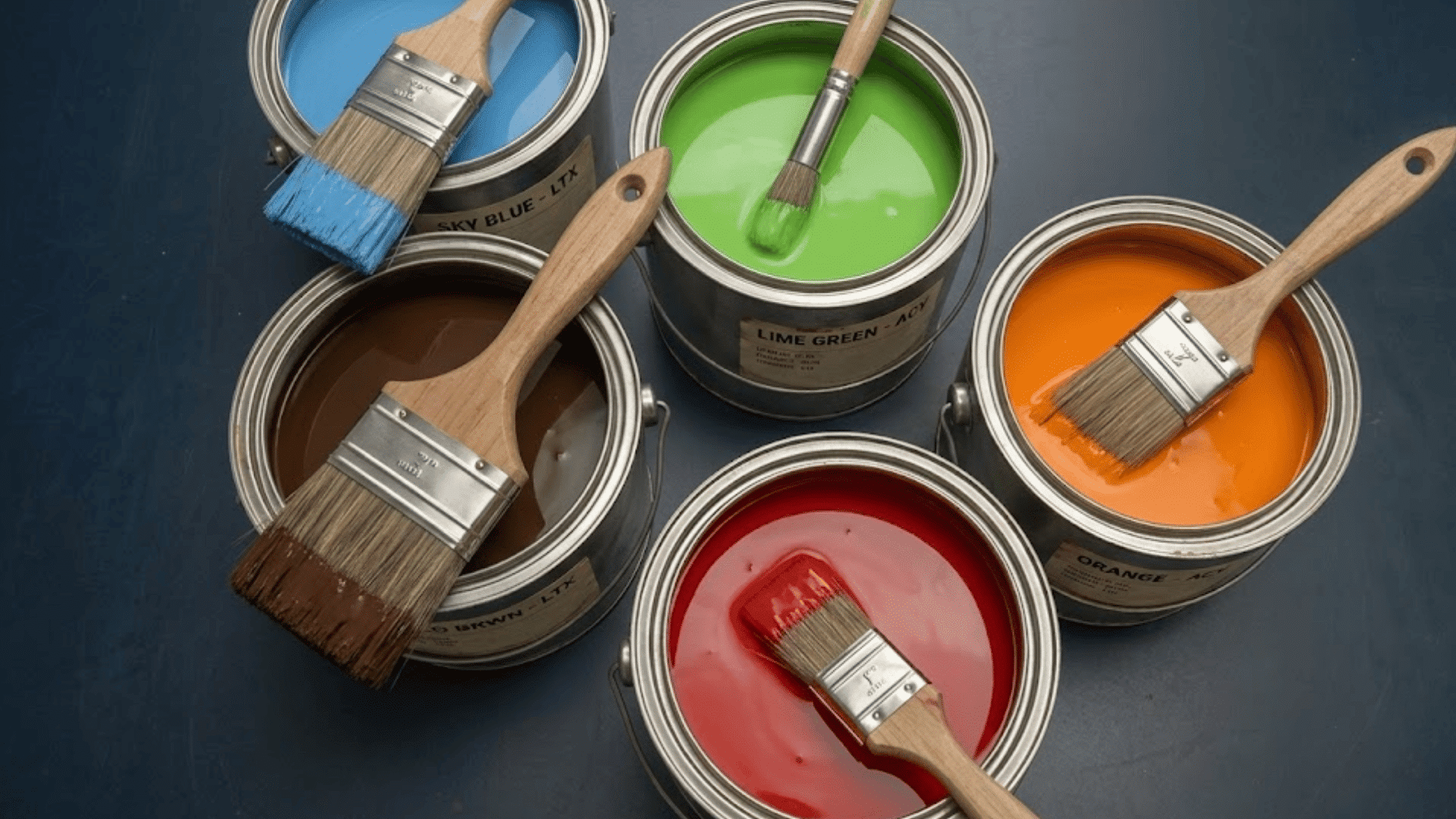
Different types of paint use different combinations of binders, pigments, solvents, and additives to achieve specific finishes and performance.
1. Acrylic Paint
Acrylic paint is made with acrylic polymer resin as its primary binder, combined with pigments for color, water as the carrier, and additives that improve flow and durability.
As the water evaporates, the acrylic resin forms a flexible, water-resistant coating.
It is widely used on walls, wood, canvas, concrete, and exterior surfaces because it dries quickly, resists fading, and performs well in changing weather conditions.
Main Ingredients: Acrylic resin, pigments, water, and performance additives.
2. Latex Paint
Despite its name, modern latex paint does not contain natural rubber latex.
It is made with synthetic acrylic or vinyl acrylic binders, pigments, water, and additives that improve application and mildew resistance.
Water acts as the carrier and evaporates after application, leaving behind a durable paint film. Latex paint is commonly used for interior walls and ceilings because it has low odor, dries quickly, and is easy to clean.
Main Ingredients: Synthetic latex (usually acrylic or vinyl acrylic), pigments, water, and additives.
3. Oil-Based Paint
Oil-based paint is made using alkyd resins or drying oils such as linseed oil, along with pigments and petroleum-based solvents like mineral spirits.
As the solvent evaporates, the oils cure through oxidation to form a hard, durable coating.
This type of paint is valued for its smooth finish, excellent adhesion, and wear resistance, making it suitable for trim, doors, cabinets, and metal surfaces.
Main Ingredients: Alkyd or natural oil binders, pigments, organic solvents, and additives.
4. Enamel Paint
Enamel paint is formulated with durable resins that create a hard, smooth surface after curing. It may be water-based or oil-based depending on the formulation.
Manufacturers combine pigments, binders, carriers, and additives to improve scratch resistance and gloss retention.
Enamel paint is commonly used on furniture, cabinets, appliances, and metal surfaces where a durable finish and easy cleaning are important.
Main Ingredients: Acrylic or alkyd resin, pigments, solvents or water, and hardening additives.
5. Epoxy Paint
Epoxy paint is made by combining epoxy resin with a hardening agent that reacts chemically after mixing. Pigments provide color, while fillers and additives improve strength and wear resistance.
Once cured, epoxy forms an extremely hard coating that resists chemicals, moisture, stains, and heavy traffic.
It is commonly used on garage floors, industrial equipment, in warehouses, and on concrete surfaces that require exceptional durability.
Main Ingredients: Epoxy resin, hardener, pigments, fillers, and additives.
6. Chalk Paint
Chalk paint is typically made from a water-based acrylic or latex paint blended with calcium carbonate or similar mineral powders to create its signature matte appearance.
Pigments provide color, while additives improve consistency and adhesion. Its thick formula often requires little surface preparation before application.
Chalk paint is popular for furniture restoration because it creates a soft, vintage-style finish that can be distressed easily.
Main Ingredients: Acrylic or latex base, calcium carbonate, pigments, water, and additives.
7. Milk Paint
Milk paint is made from natural ingredients, including casein protein from milk, lime, natural earth pigments, and mineral fillers.
It is usually sold as a powder and mixed with water before use.
Unlike synthetic paints, milk paint contains few ingredients and produces a breathable, matte finish.
It is commonly used on wood furniture, decorative projects, and historic restorations because of its natural appearance.
Main Ingredients: Milk protein (casein), lime, natural pigments, and mineral fillers.
8. Spray Paint
Spray paint contains the same basic ingredients as liquid paint, including pigments, binders, solvents, and additives, but it also includes a compressed propellant that allows the paint to be sprayed from an aerosol can.
The fine mist creates smooth, even coverage on detailed or irregular surfaces.
Spray paint is widely used on metal, plastic, and wood surfaces, as well as in craft projects where fast application and a consistent finish are desired.
Main Ingredients: Pigments, resin, solvents, additives, and aerosol propellant.
The History and Origin of Paint
Paint has been used for thousands of years, evolving from simple natural mixtures into advanced coatings engineered for durability, appearance, and environmental performance
| Timeline | Paint or Innovation | Main Ingredients | Key Advancement |
|---|---|---|---|
| Prehistoric Era (around 40,000 BCE) | Ancient Paints | Charcoal, ochre, clay, animal fat, plant sap | Created the first decorative and symbolic paints for cave art. |
| Ancient Civilizations to the Middle Ages | Natural Pigments | Iron oxides, chalk, carbon black, mineral pigments | Produced more durable, naturally colored paints for art and buildings. |
| 15th–19th Century | Linseed Oil Paints | Linseed oil, natural pigments | Improved durability, adhesion, and weather resistance. |
| 18th–19th Century | Factory-Made Paint | Synthetic pigments, industrial binders | Enabled large-scale production with consistent quality and a wider range of colors. |
| Mid-20th Century | Latex Paints | Acrylic or vinyl acrylic resins, water, pigments | Introduced faster drying, easier cleanup, and lower odor. |
| Late 20th Century | Low-VOC Paints | Water-based resins, low-VOC solvents, pigments | Reduced harmful emissions while maintaining paint performance. |
| 21st Century | Modern Eco-Friendly Coatings | Renewable materials, recycled content, advanced water-based resins | Improved sustainability, durability, and environmental performance. |
How Has Paint Manufacturing Become More Environmentally Friendly?
Paint manufacturers have introduced cleaner production methods and improved formulations to reduce environmental impact while maintaining product quality.
- Low-VOC Technology: Many modern paints contain fewer volatile organic compounds (VOCs), helping reduce air pollution and improve indoor air quality.
- Water-Based Coatings: Water-based paints replace many traditional chemical solvents, reducing odors, VOC emissions, and the need for harsh cleanup chemicals.
- Recycling: Some manufacturers recycle leftover paint, reclaim solvents, and use recycled packaging materials to reduce waste and conserve resources.
- Renewable Materials: Certain paint formulations include plant-based oils, bio-based resins, and other renewable raw materials to decrease reliance on fossil fuels.
- Lower Emissions: Modern manufacturing processes use cleaner technologies and improved energy efficiency to reduce greenhouse gas and industrial emissions.
- Waste Reduction: Better production methods, precise ingredient batching, and improved quality control help minimize material waste during manufacturing.
How Does Paint Dry and Cure?
Paint does not become fully durable the moment it feels dry. It first dries as the solvent evaporates, then continues curing as the binder forms a strong, protective film over time.
| Stage | What Happens | Approximate Time | Why It Matters |
|---|---|---|---|
| Surface Dry | Solvents begin evaporating, leaving the paint dry to the touch. | 1 to 2 hours | Reduces smudging and allows light handling. |
| Recoat Ready | The first coat has dried enough to apply another coat safely. | 2 to 8 hours | Helps achieve even coverage and a smoother finish. |
| Dry to Handle | The paint film becomes firm enough for normal, careful use. | 24 hours | Minimizes fingerprints, dents, and minor surface damage. |
| Full Cure | The binder fully hardens, forming its strongest protective coating. | 7 to 30 days | Provides maximum durability, adhesion, stain resistance, and washability. |
Note: Drying and curing times vary depending on the paint type, temperature, humidity, ventilation, and manufacturer recommendations.
Common Myths About Paint Ingredients
Many people have misconceptions about what goes into paint and how those ingredients affect performance. Here are some of the most common myths and the facts behind them.
- All Paints Contain Lead: Lead was once a common paint ingredient, but in many countries, modern architectural paints are manufactured without added lead.
- Water-Based Paint Has No Chemicals: Water-based paint still contains pigments, binders, additives, and other chemicals. Water simply replaces most organic solvents.
- Thick Paint Is Always Better: A thicker consistency does not guarantee higher quality. The overall formulation determines coverage, durability, and application.
- Oil Paint Always Lasts Longer: Oil-based paint is durable, but many modern acrylic and latex paints provide similar long-term performance in many applications.
- Natural Paint Is Always Safer: Natural ingredients do not automatically make a paint safer. Safety depends on the complete formulation, intended use, and proper application.
Conclusion
Understanding what paint is made of and how it is manufactured makes it easier to choose the right product for any project.
From pigments and binders to solvents and additives, every ingredient plays a role in determining the paint’s color, durability, finish, and performance.
Modern manufacturing produces more consistent, efficient, and environmentally friendly paints.
If you’re planning to paint a room or simply want to understand how paint works, this knowledge provides a solid foundation.
Use this information to choose paint products with greater confidence for your next project.
Frequently Asked Questions
Are Paint Ingredients Safe?
Most modern paints are safe when used as directed. Choosing low-VOC or zero-VOC products and ensuring proper ventilation during application further reduces potential exposure.
Why Does Paint Smell?
Paint smells because it releases volatile compounds and other ingredients as it dries. Water-based paints generally produce less odor than oil-based formulations.
Is Acrylic Paint Made from Plastic?
Yes. Acrylic paint contains acrylic polymer resin, a synthetic plastic-based binder that forms a flexible, durable film after the water evaporates.
How Long Does Paint Last in a Sealed Can?
A tightly sealed paint can typically lasts up to 10 years for latex paint and up to 15 years for oil-based paint when stored in a cool, dry place.