

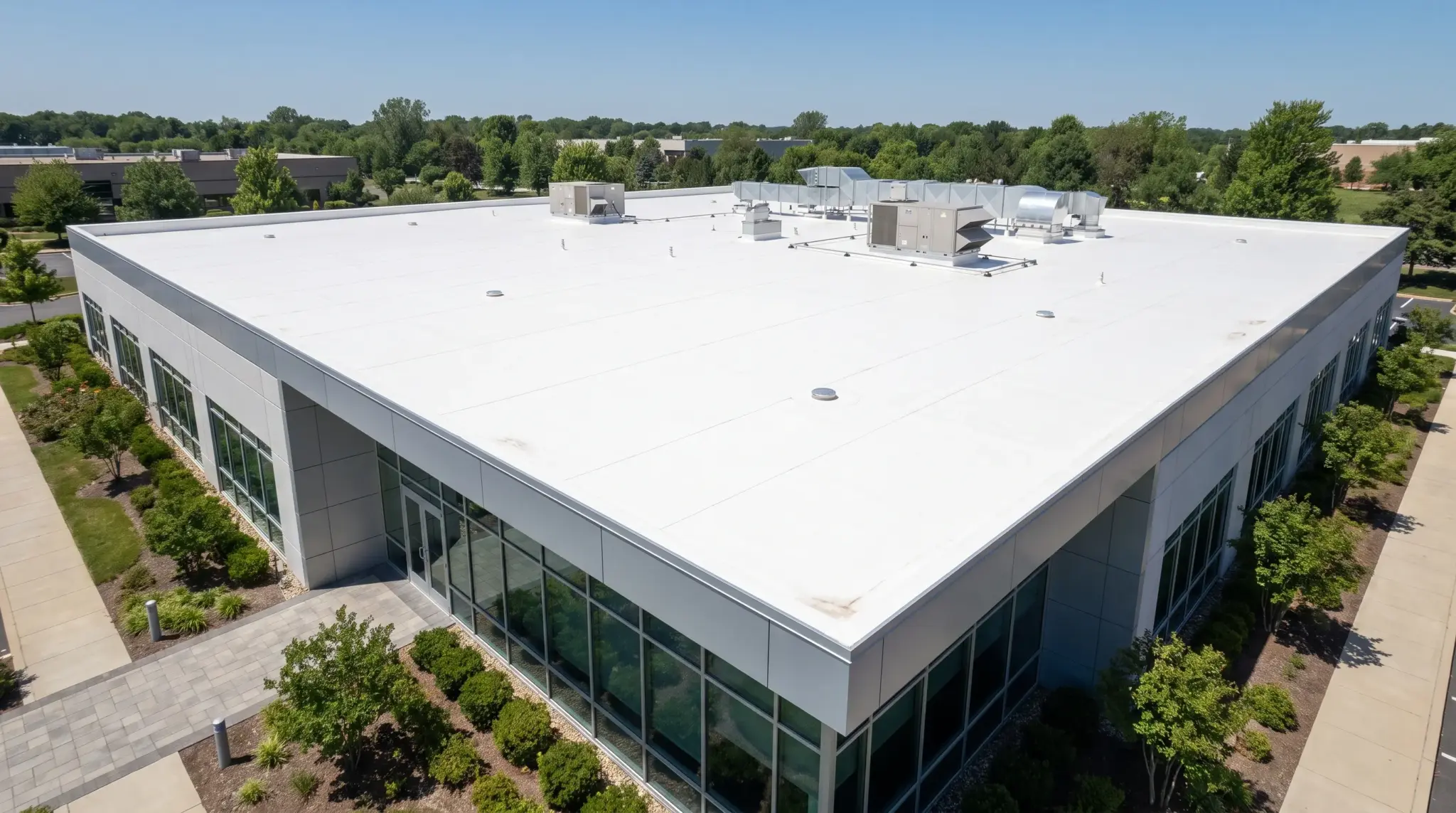
A flat or low-slope roof has different challenges than a traditional pitched roof. Property owners need a system that can withstand weather conditions, reduce energy costs, and provide dependable protection.
Choosing the right roofing material often comes down to upfront cost, durability, and long-term maintenance. This is where a TPO membrane roof has become a popular option.
Many commercial buildings and some homes use TPO roofing because it offers a practical mix of performance and affordability. Understanding how it works can help you make a smarter decision.
I’ll cover the benefits, installation options, costs, and maintenance tips to help you decide whether TPO roofing is right for your property.
What Is a TPO Membrane Roof?
A TPO roof membrane is a single-ply roofing material designed for flat and low-slope roofs. It provides waterproof protection, reflects heat, and helps protect buildings from UV exposure and weather damage.
TPO stands for Thermoplastic Polyolefin, a synthetic roofing material made by combining polypropylene and ethylene-propylene rubber. Manufacturers add reinforcing layers, usually polyester scrim, to improve strength, stability, and resistance to tearing.
The membrane creates a protective barrier over the roof deck. Sheets are installed across the surface and joined using hot-air welding, creating strong seams that help prevent water infiltration.
TPO roofing is commonly used for:
- Commercial buildings
- Warehouses
- Industrial facilities
- Flat roof replacements
- Low-slope residential structures
When selecting TPO roofing, factors such as membrane thickness, reinforcement quality, installation method, and manufacturer warranty should be considered.
How Does a TPO Membrane Roof Work?
A TPO roofing system works by creating a waterproof layer over the building structure. The membrane protects the roof from moisture while reflective properties help manage heat absorption.
A typical TPO roofing system includes:
| Layer | Purpose |
|---|---|
| Roof deck | Provides structural support |
| Insulation | Improves thermal performance |
| Cover board | Protects insulation and creates a stable surface |
| TPO membrane | Provides waterproof protection |
| Heat-welded seams | Creates continuous waterproof joints |
The membrane is installed over a prepared roof surface, secured using the appropriate attachment method, and welded at seams to prevent leaks.
Benefits of TPO Roof Membrane
TPO roof membranes are widely used because they offer a balance of durability, energy efficiency, and cost-effective installation for flat and low-slope roofs.
- Improves energy efficiency: White TPO membranes reflect sunlight and reduce heat absorption, helping keep roof surfaces cooler and potentially lowering cooling demands.
- Provides weather protection: TPO resists UV exposure, rain, wind, and temperature changes, creating a durable barrier against outdoor conditions.
- Creates strong waterproof protection: Heat-welded seams fuse membrane sheets together, forming a continuous layer that helps reduce leak risks.
- Offers flexibility and durability: TPO can expand and contract with temperature changes without easily cracking or losing performance.
- Lightweight and easy to install: Large membrane sheets reduce installation time and place less stress on the building structure.
What are the Different TPO Roof Installation Methods?
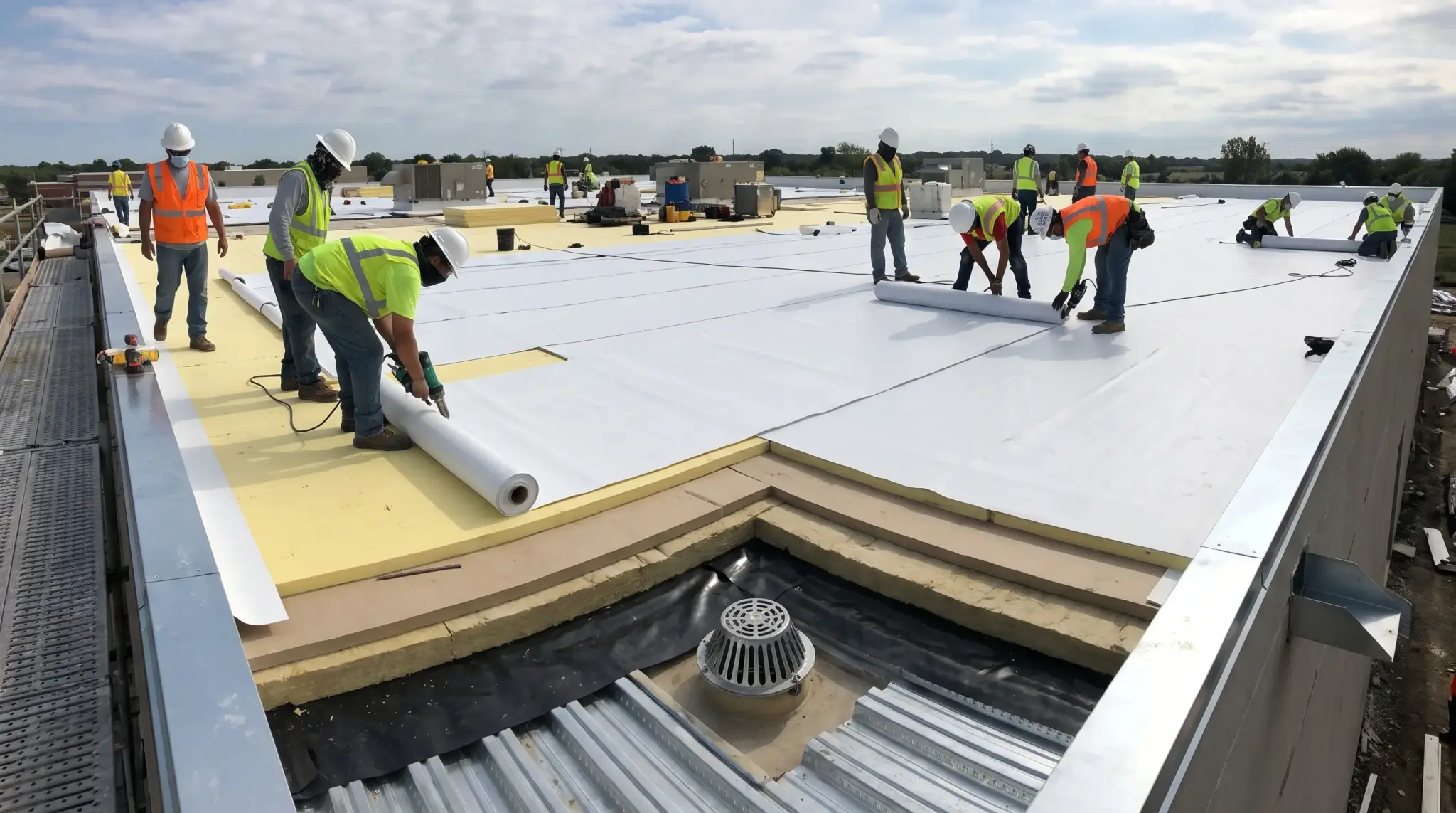
A TPO membrane depends on preparing a stable structural base and a clean roof deck or insulation layer before it goes down. Damaged decking, trapped moisture, and blocked drains must be fixed before the membrane goes down.
The main difference between TPO installations is how the membrane is secured. Contractors typically use one of three methods.
1. Mechanically Attached TPO
A mechanically attached system uses screws and plates to secure the membrane directly to the roof deck.
Fasteners are placed along membrane edges and covered by overlapping sheets. This method is popular because it is generally faster and more affordable than other installation options.
- Faster installation
- Lower labor costs
- Suitable for many commercial buildings
Proper fastener placement is important because incorrect spacing can increase the risk of membrane movement during high winds.
2. Fully Adhered TPO
A fully adhered system uses adhesive to bond the membrane across the roof surface.
The membrane is attached continuously rather than only at attachment points, creating a smooth and secure finish.
- Better performance in high-wind areas
- Suitable for complex roof shapes
- Reduces membrane movement
This method usually requires more labor and materials, increasing installation costs.
3. Ballasted TPO
A ballasted system places the membrane loosely over the roof deck and holds it down using approved materials such as gravel or concrete pavers.
- Requires fewer fasteners
- Simplifies installation
- Can reduce installation time
However, the building structure must support the additional weight. Repairs and inspections may also require moving ballast materials.
4. Seams, Flashing, and Roof Edges
Regardless of installation method, TPO sheets are joined using hot-air welding. This process melts the edges of the membrane together to create strong, waterproof seams.
Special attention is required around:
- Roof drains
- Vents
- Walls
- Corners
- Equipment openings
- Roof edges
These areas are common locations for leaks if flashing and seam installation are not completed correctly.
TPO Roofing Cost: What to Expect
The average cost of a TPO roof is typically around $5 to $12 per square foot installed, depending on materials, labor, and project conditions.
| Cost Factor | Impact on Price |
|---|---|
| Roof size | Larger roofs may reduce installation costs per square foot |
| Membrane thickness | Thicker materials increase durability and price |
| Installation method | Fully adhered systems usually cost more |
| Roof condition | Repairs and preparation increase costs |
| Location | Labor and material availability affect pricing |
How Long Does a Membrane Roof Last?
A TPO roof typically lasts 15 to 30 years when properly installed, maintained, and protected from excessive damage.
Several factors influence how long a TPO roof performs, including installation quality, membrane thickness, climate conditions, maintenance frequency, and roof traffic. A well-installed system with regular inspections can reach the upper end of its expected lifespan.
- Installation quality: Proper seam welding, flashing, and attachment methods help prevent early failures.
- Membrane thickness: Thicker options, such as 60 mil or 80 mil, offer greater resistance to punctures and wear.
- Climate exposure: UV rays, storms, and temperature changes can affect membrane performance.
- Maintenance routine: Regular inspections and timely repairs help extend the roof’s lifespan.
- Foot traffic: Walk pads can reduce damage in frequently accessed areas.
TPO vs. EPDM and PVC Roofing
TPO is often considered a middle-ground option among single-ply roofing membranes. It is usually more affordable than PVC while offering better heat reflection than traditional EPDM systems.
| Feature | TPO | EPDM | PVC |
|---|---|---|---|
| Cost | Moderate | Usually lower | Higher |
| Lifespan | 15–30 years | 20–30 years | 20–30+ years |
| Energy Efficiency | Excellent with white membranes | Moderate | Excellent |
| Chemical Resistance | Good | Moderate | Excellent |
| Seam Method | Heat welded | Adhesive/tape | Heat welded |
TPO is a good choice when you’re weighing the trade-offs among finish options in terms of cost, durability, and energy efficiency. EPDM may suit budget-focused projects, while PVC is often preferred for buildings exposed to chemicals or demanding conditions.
Disadvantages of TPO Roof Membrane
TPO roofing offers strong performance, but it also has some limitations that should be considered before installation.
- Installation quality affects performance: Poor seam welding or incorrect installation can lead to leaks and early roof problems.
- TPO quality varies: Different manufacturers use different formulations, so durability can vary between products.
- Can be damaged by heavy traffic: Frequent walking, tools, or sharp objects can puncture the membrane.
- Requires regular inspections: Seams, flashing, and damaged areas need routine checks to prevent larger issues.
- Not ideal for chemical exposure: Buildings exposed to oils or harsh chemicals may need a more resistant roofing material.
Is a TPO Roof Right for Your Property?
Yes, a TPO roof is a suitable choice for many flat and low-slope buildings that need durable protection, energy efficiency, and affordable performance.
TPO roofing works well for commercial buildings, warehouses, and some residential structures because it provides waterproof protection and reflects heat. Before choosing this system, consider factors such as your climate, roof design, expected foot traffic, maintenance needs, and budget.
Properties with frequent roof access may need added protection, such as walk pads, while buildings exposed to harsh weather may benefit from thicker membranes. Evaluating these conditions helps determine whether TPO roofing meets your long-term performance needs. A professional roof inspection can also help confirm the right solution for your property.
Conclusion
Choosing a roofing system is about finding the right balance between cost, durability, energy efficiency, and long-term maintenance. A TPO membrane roof can be a practical choice for many properties.
The key takeaway is that proper installation and regular care matter just as much as the roofing material itself. A quality system can provide reliable protection for years.
Before making a decision, consider your building’s needs, climate, budget, and future maintenance requirements. Comparing your options can help avoid costly mistakes.
If you are considering TPO roofing, consult a qualified roofing professional to evaluate your property and recommend the best solution for your needs.
Frequently Asked Questions
What is a TPO membrane roof used for?
A TPO membrane roof is commonly used on flat and low-slope buildings, including commercial properties, warehouses, offices, and some residential structures. It provides a durable, energy-efficient layer that helps protect buildings from weather, moisture, and UV exposure.
How long will a TPO membrane roof last?
A properly installed and maintained TPO membrane roof typically lasts around 15 to 30 years. Factors like membrane quality, installation methods, climate conditions, and regular maintenance can affect how long the roofing system performs.
Is TPO roofing better than EPDM?
TPO and EPDM both offer reliable performance for flat roofs, but they have different strengths. TPO is often preferred for its reflective surface and heat-welded seams, while EPDM is known for flexibility and long-term weather resistance. The better option depends on your building needs, budget, and climate.
Can a TPO roof be repaired?
Yes, TPO roofs can often be repaired if damage is found early. Common repairs include fixing punctures, damaged seams, and small areas of membrane wear. Regular inspections help identify problems before they require larger repairs or replacement.