

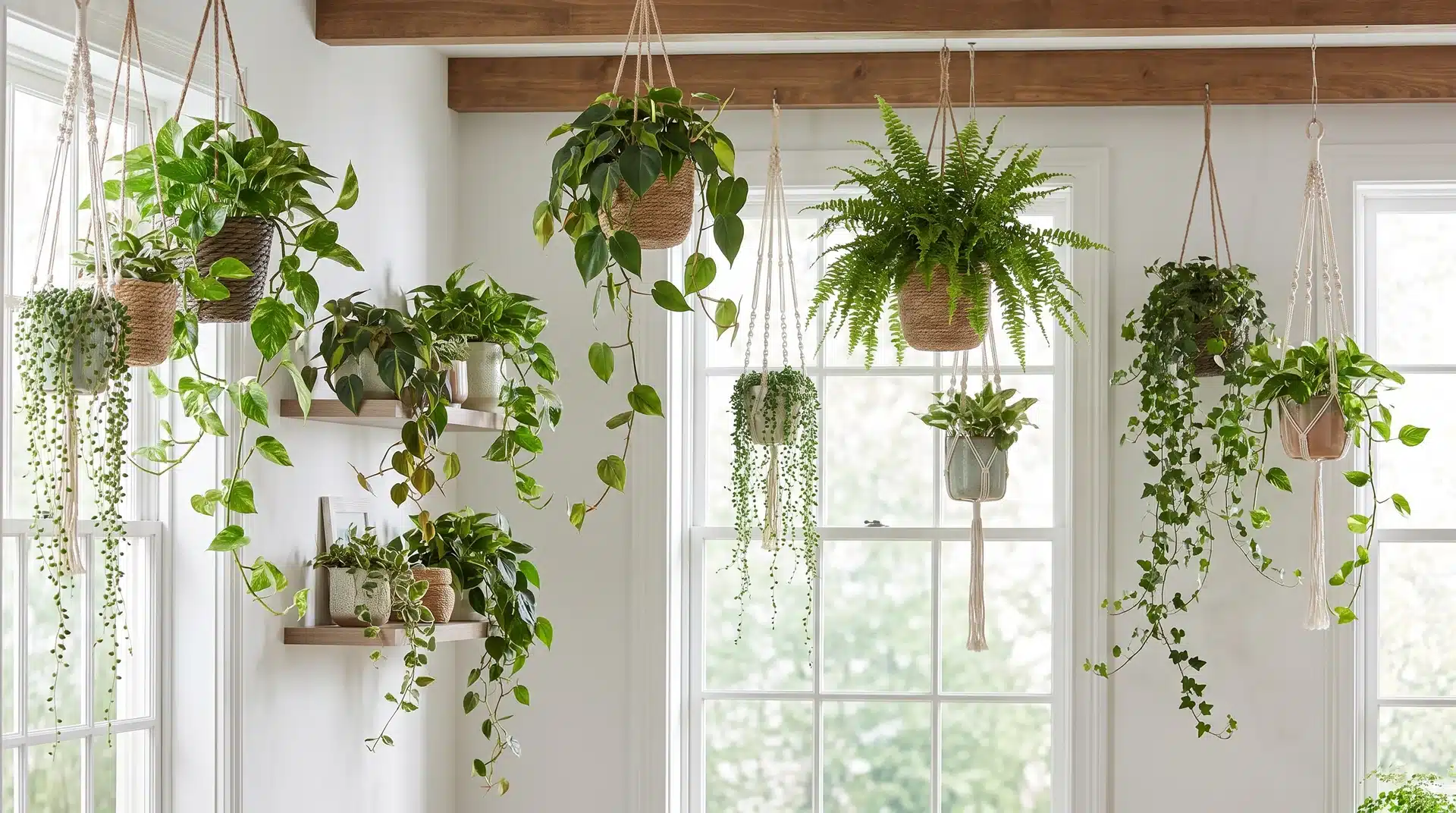
You have probably seen them in home décor photos: lush plants spilling from baskets, filling empty corners and making a room feel instantly more alive. Plants are often used in aesthetic room ideas because they add softness and natural texture.
Then you bring one home, and a few weeks later, it looks nothing like the picture. The leaves fade, the vines thin out, or the plant simply stops growing.
The problem usually is not the plant itself. It is choosing a variety that does not match your light, care routine, or available space.
Below, you’ll find the best indoor hanging plants, how to choose the right one for your home, and how to hang them safely without damaging your ceiling or losing the plant.
What Makes a Plant Worth Hanging Indoors
The best hanging plants combine attractive growth patterns with care requirements that match your home and the needs of different rooms in a house, from bedrooms to bathrooms.
Two factors usually decide whether a hanging plant will bloom:
- Growth habit: Naturally trailing plants develop long stems that spill downward by design. Plants stretching toward light may look similar at first but become thin and weak over time.
- Root tolerance: Hanging baskets dry out faster and are not repotted as often. Plants that need constant moisture or more root space may struggle in these conditions.
Etiolation is a common issue with hanging plants. This happens when stems become long and sparse because the plant is not receiving enough light.
Choosing a plant that naturally grows this way makes maintenance easier and creates the fuller look most people want.
How to Hang Them Without Damaging Your Ceiling or Losing the Plant
- Check the total weight: Include the pot, soil, water, and plant when choosing a hook or mounting system.
- Find a ceiling joist: A hook attached only to drywall may pull out under weight. Locate a solid support point before drilling.
- Use the right anchor: If a joist is unavailable, choose a toggle bolt with a weight rating that matches the basket.
- Consider wall-mounted hooks: These work well near windows and help place plants closer to natural light.
- Use tension rods for rentals: Window tension rods offer a no-drill option for lighter plants.
- Balance height and light: A beautiful hanging spot is not useful if the plant cannot receive enough light.
Best Indoor Hanging Plants
The best hanging plants combine attractive growth patterns with care requirements that match your home.
1. Golden Pothos
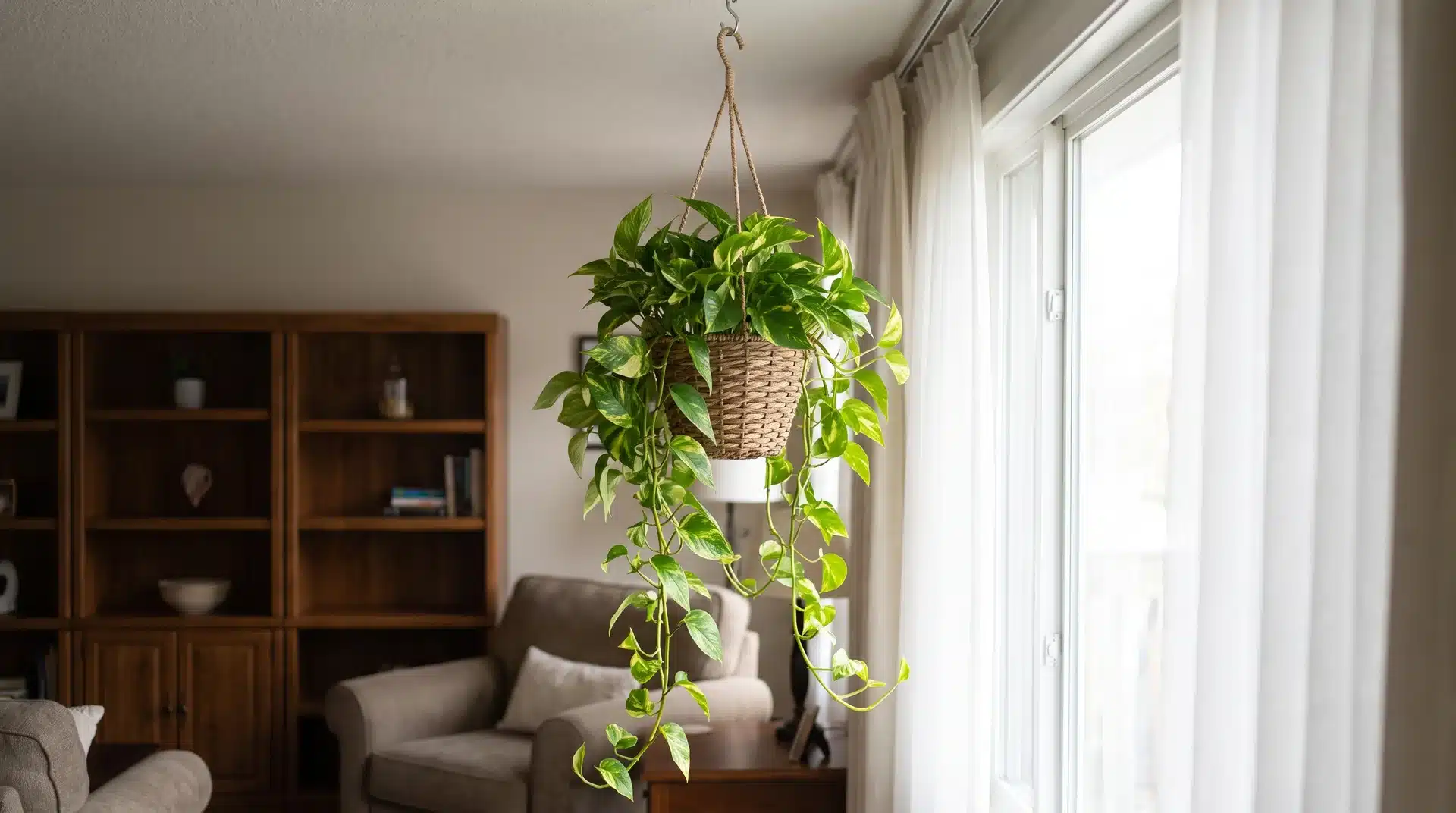
Golden pothos is one of the easiest indoor hanging plants for beginners because it grows well with simple care. Its long trailing vines spill over baskets and shelves, creating a fuller green display without taking up floor space.
Give it bright indirect light for stronger growth, but allow lower light tolerance. Water when the top soil feels dry and avoid keeping roots constantly wet.
Average price: $15 to $40 for a small to medium plant, and $40 to $70 for larger hanging baskets.
2. Heartleaf Philodendron
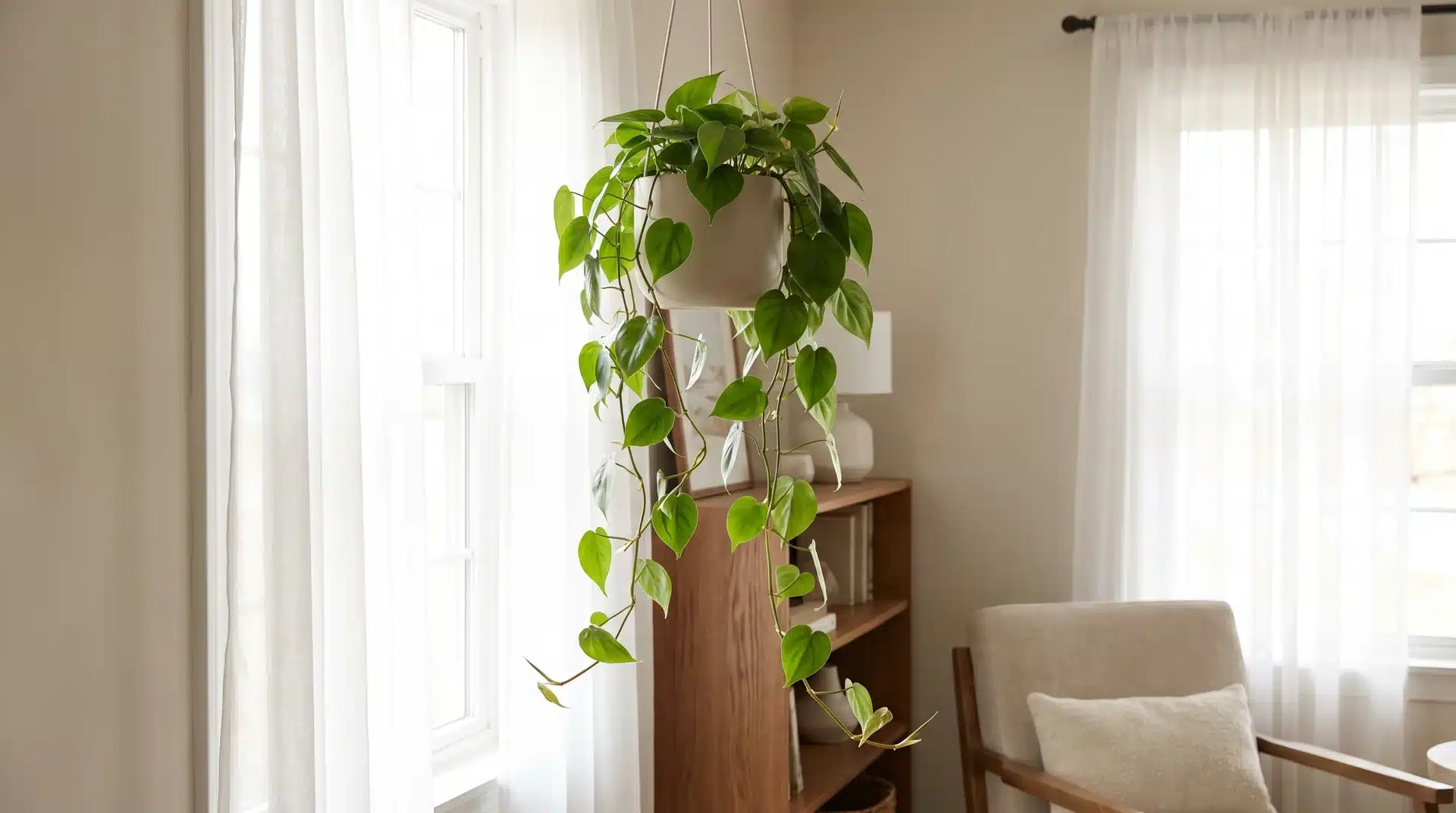
Heartleaf philodendron is a beginner-friendly hanging plant with soft, heart-shaped leaves and long trailing vines. It grows steadily and works well in bedrooms, offices, or small corners where you want more greenery.
Keep it in bright indirect light, although it can tolerate lower light better than many plants. If the vines look stretched with fewer leaves, move it closer to a window instead of watering more.
Average price: $15 to $35 for small plants, and $35 to $60 for established hanging baskets.
3. Spider Plant
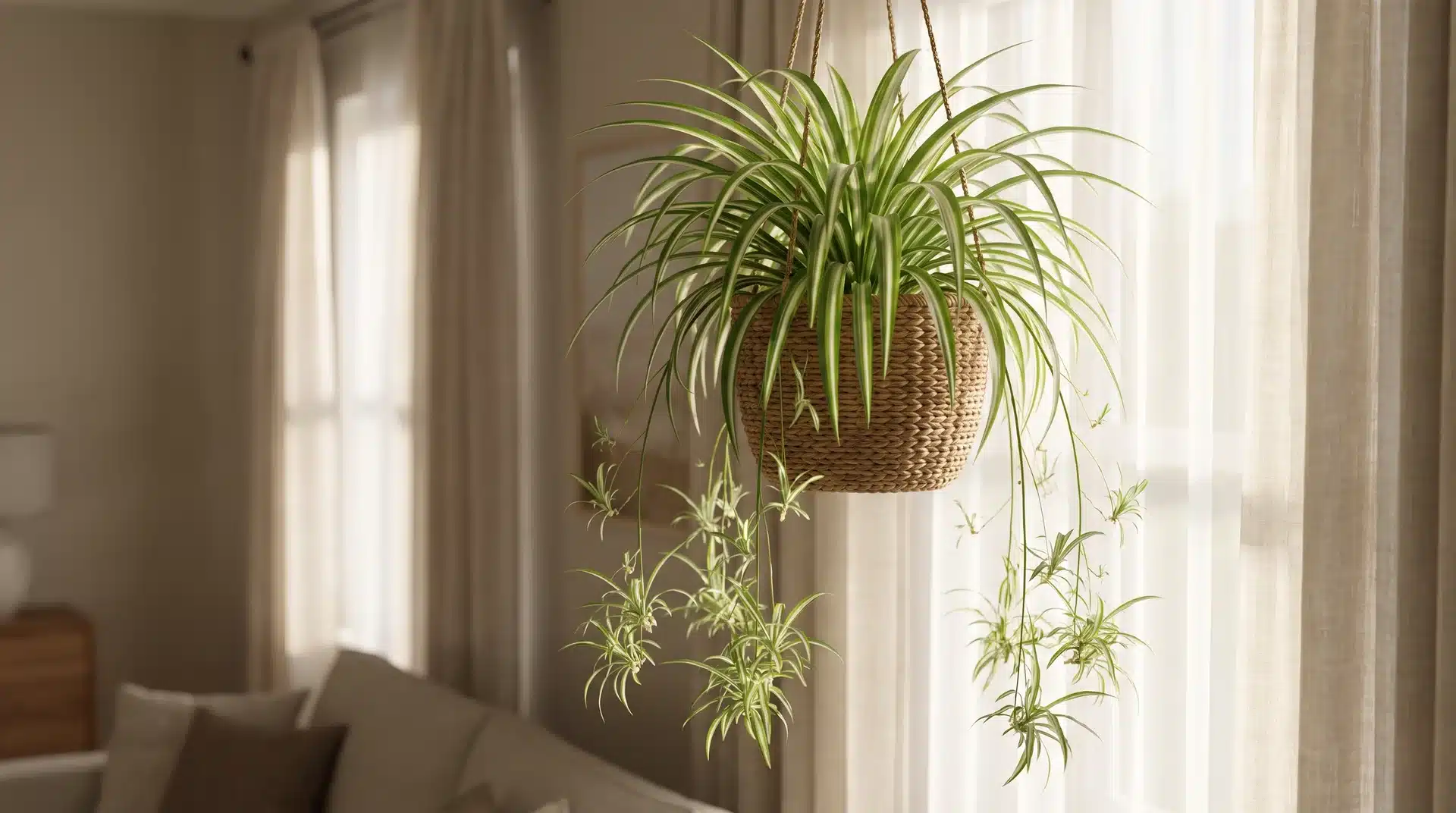
The spider plant is a beginner-friendly hanging plant with thin, arching leaves and small baby plants that grow from long stems. Those little offshoots naturally create the full cascading look people usually want from hanging baskets.
Offer bright indirect light and water when the soil starts drying. Remove damaged leaves and trim excess growth to keep it healthy and balanced.
Average price: $10 to $30 for small plants, and $25 to $50 for mature hanging baskets.
4. String of Pearls
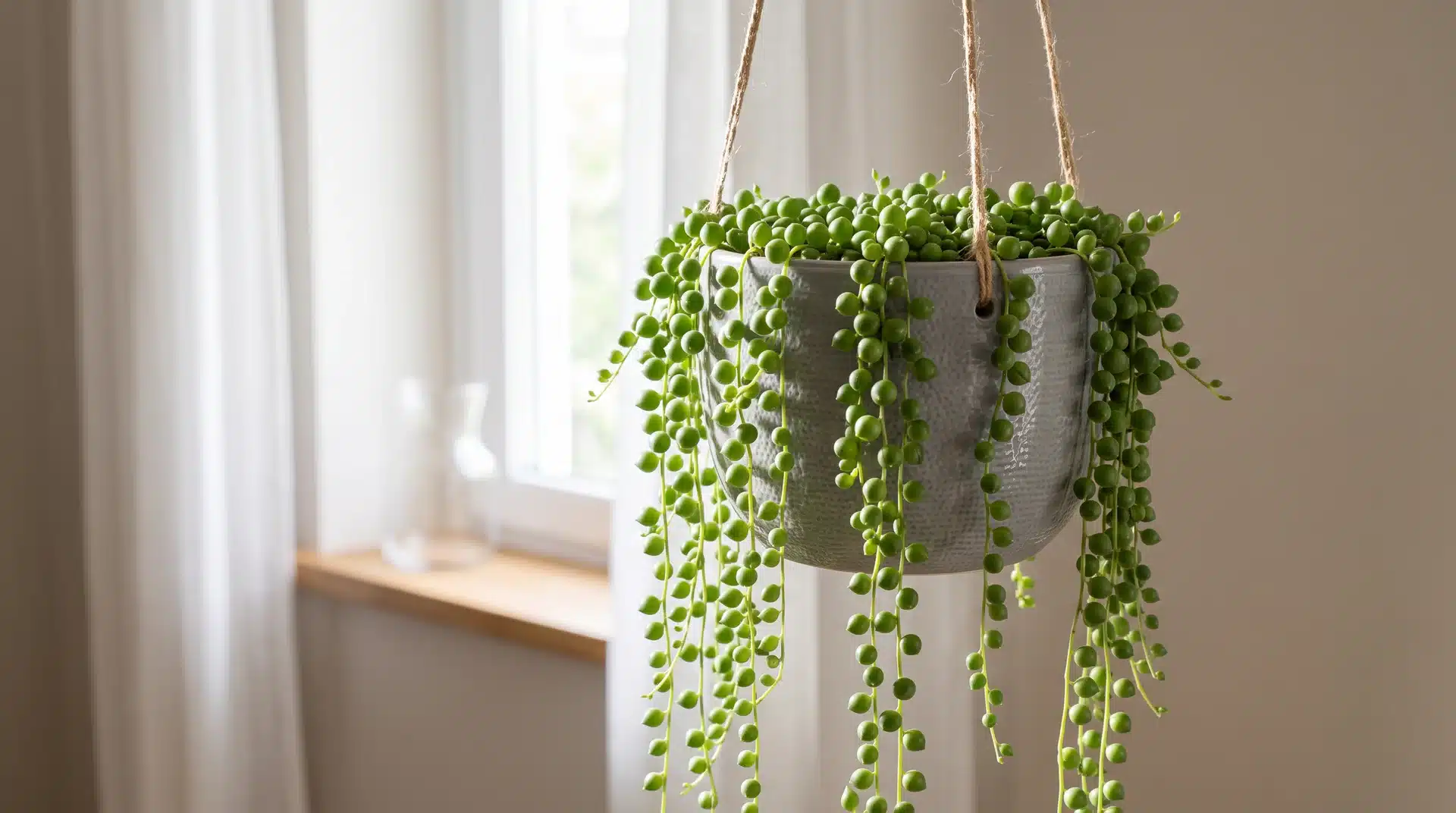
String of pearls stands out with its round, bead-like leaves that spill down from hanging pots. It is a great choice if you want something different from traditional leafy plants.
Allow the soil to dry completely between watering and give it strong light near a bright window. Handle the delicate stems carefully during movement.
Average price: $15 to $40 for small plants, and $40 to $80 for larger hanging baskets.
5. String of Hearts
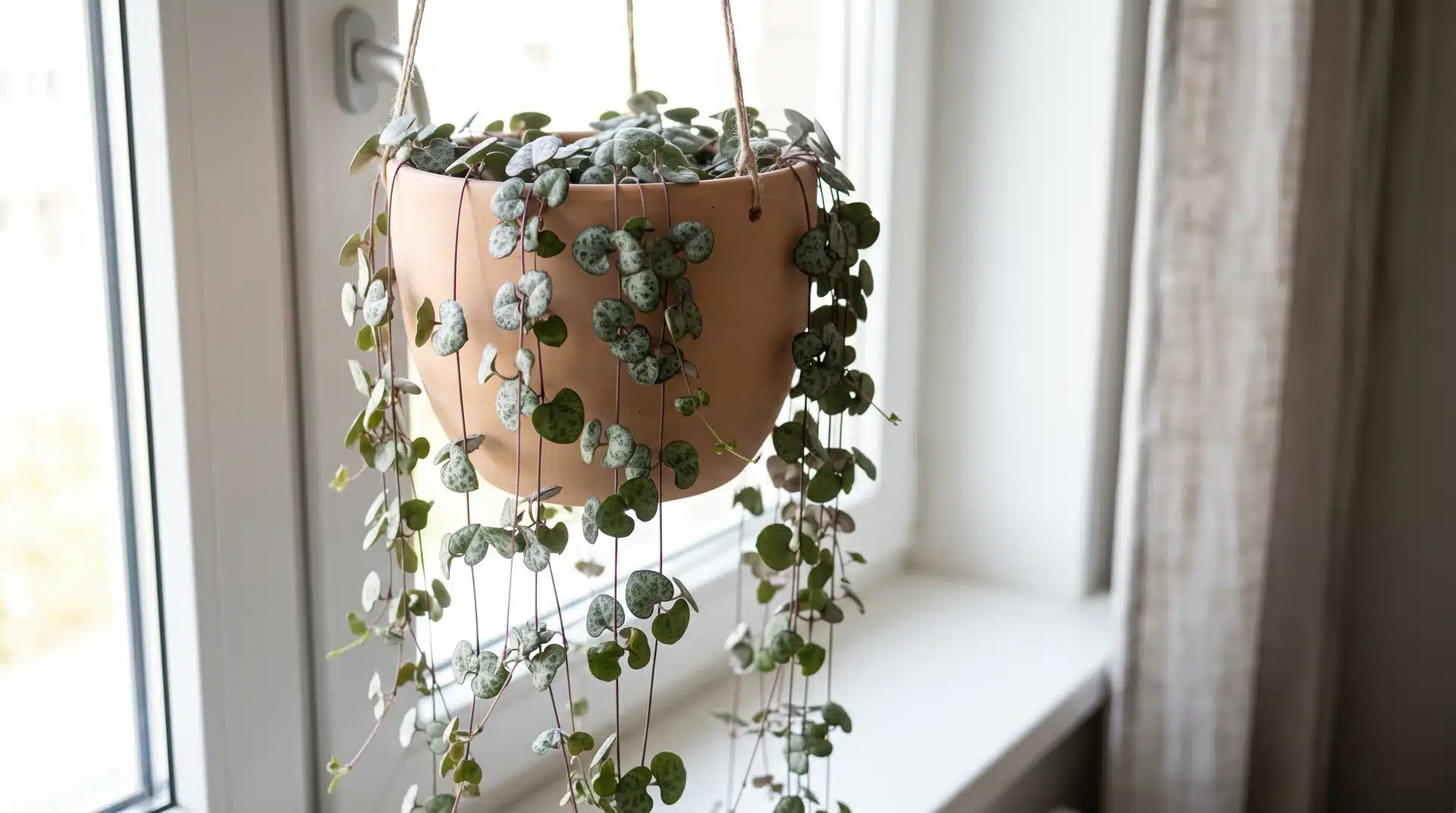
String of hearts has thin trailing vines with small heart-shaped leaves, making it a great choice for small spaces and hanging baskets. I like this plant because it adds greenery without making a room feel crowded.
Give it bright indirect light and water only when the soil feels dry. If the vines become thin, move it closer to a light source instead of increasing water, as too much moisture can cause problems.
Average price: $15 to $45 for small plants, and $45 to $75 for fuller hanging baskets.
6. Satin Pothos
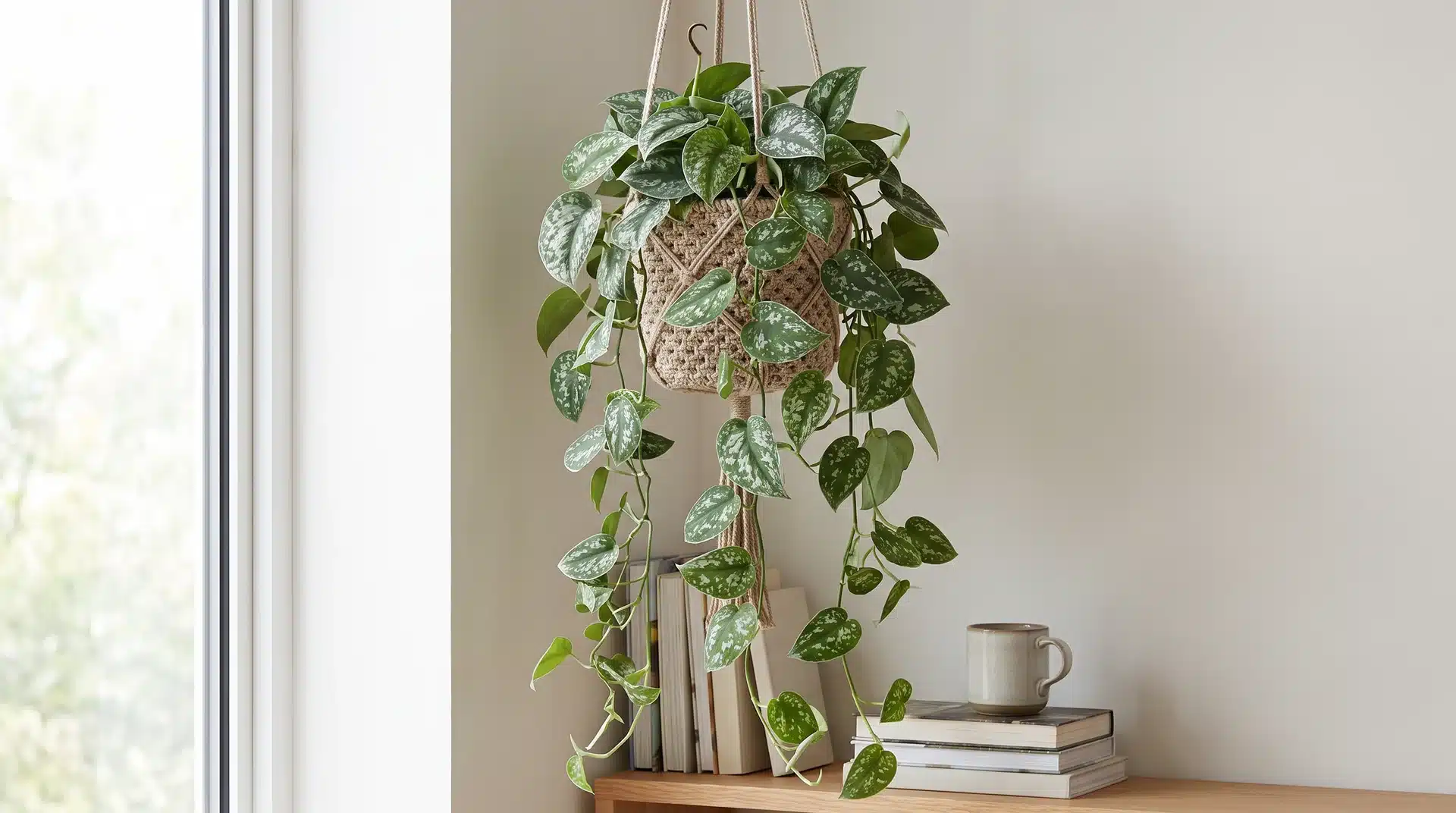
Satin pothos has green leaves with silver markings that give it a softer, more decorative look than regular pothos. Its trailing vines grow well in hanging baskets and add texture to empty corners or shelves.
Put it in bright indirect light to keep the leaf patterns strong and encourage growth. Water when the soil feels dry, and trim longer vines if you want the plant to stay fuller.
Average price: $15 to $45 for small plants, and $40 to $70 for larger hanging baskets.
7. String of Turtles
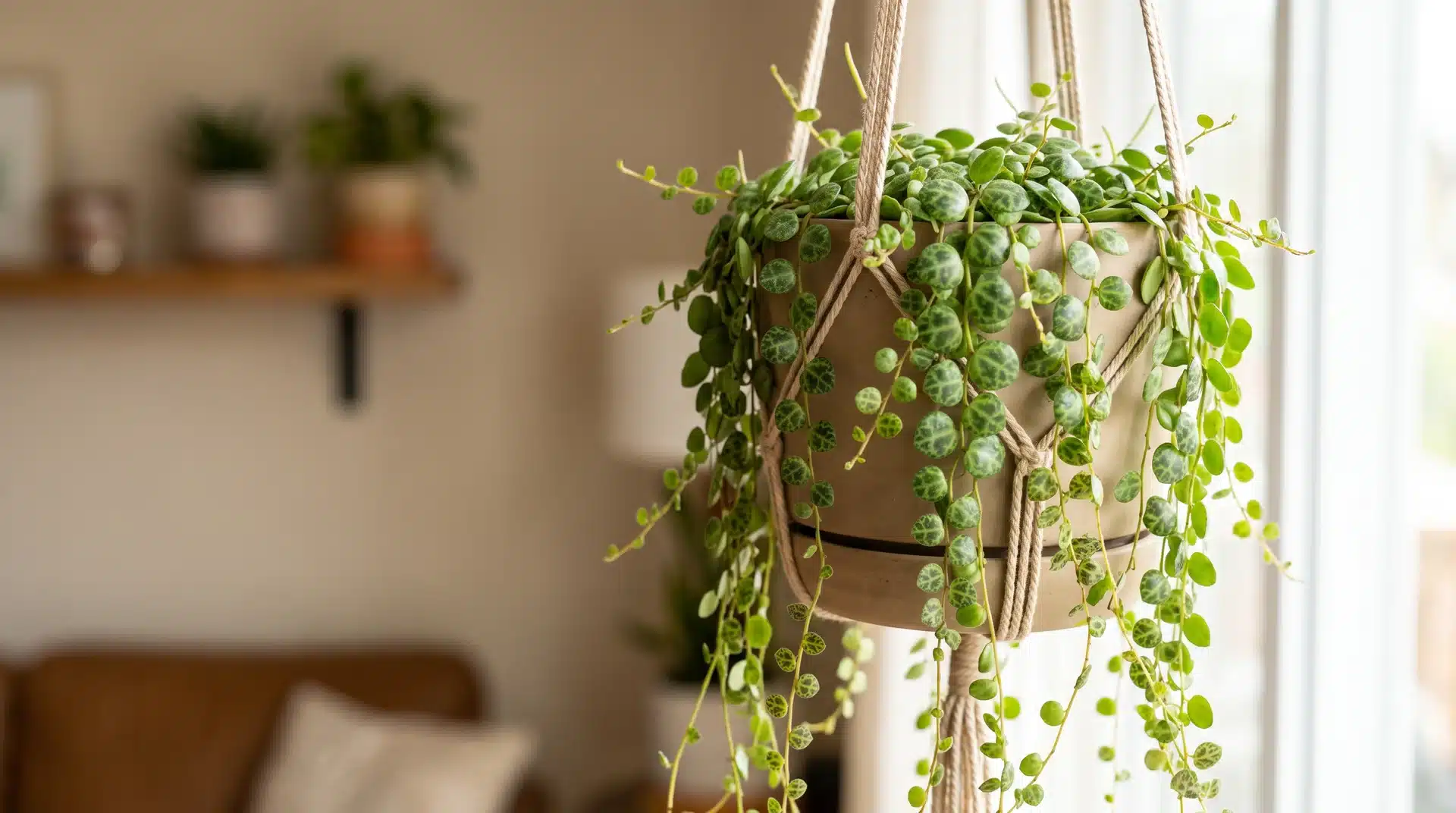
String of turtles gets its name from its small round leaves that look like tiny turtle shells along the vines. It is a great hanging plant if you want something unique that does not take up much space.
Keep it in bright indirect light and let the soil dry between waterings. Avoid overwatering because its leaves store moisture and can become damaged in wet soil.
Average price: $20 to $50 for small plants, and $45 to $75 for mature hanging baskets.
8. Hoya (Wax Plant)
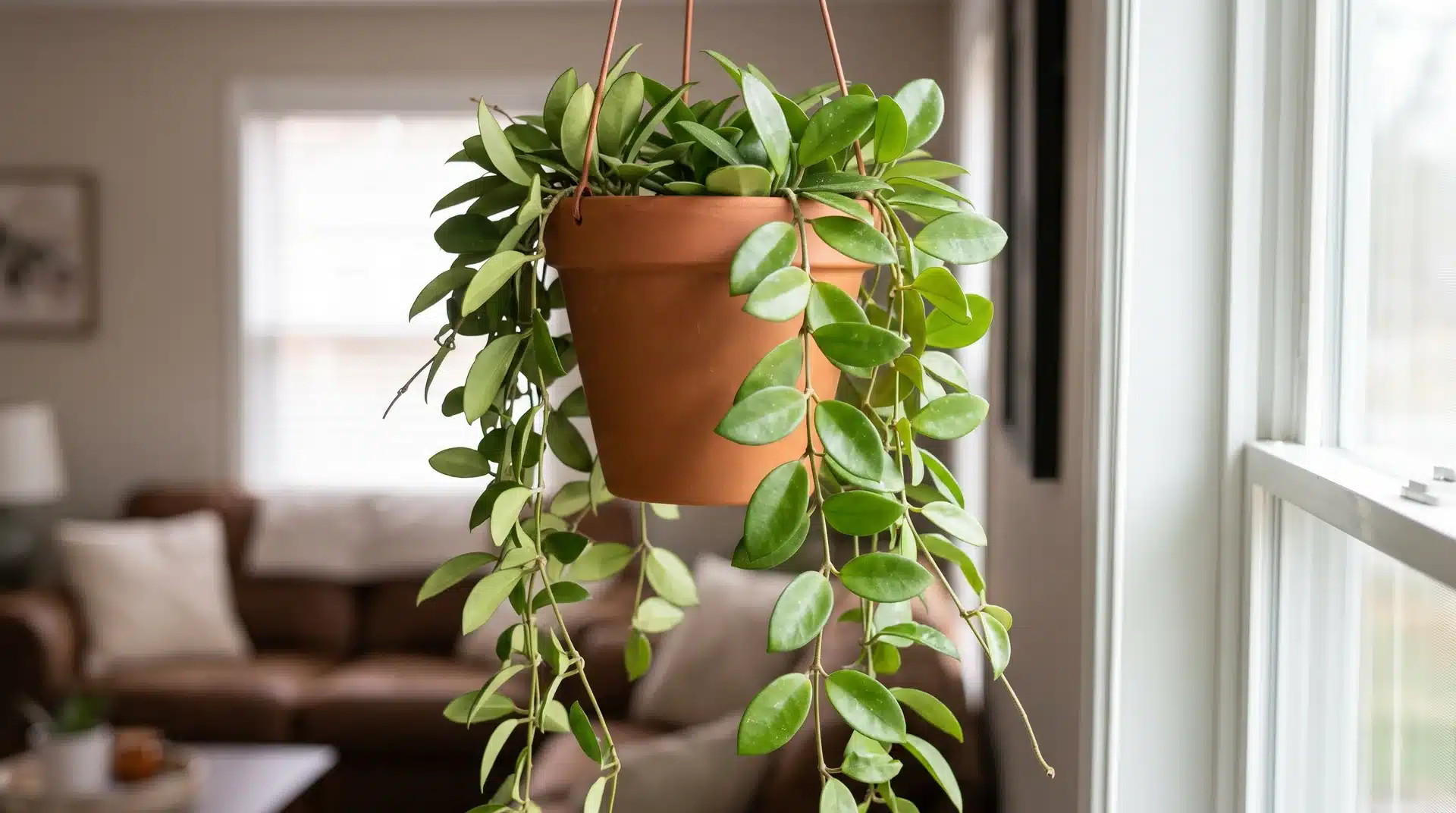
Hoya is a long-lasting hanging plant with thick leaves and trailing stems that can grow beautifully over time. Some varieties can also produce small clusters of flowers when they receive the right care.
Provide bright indirect light and avoid moving it frequently. Water after the soil dries, and allow time because hoyas grow slowly over time.
Average price: $15 to $60 for small plants, and $50 to $100 for larger or flowering varieties.
9. Boston Fern
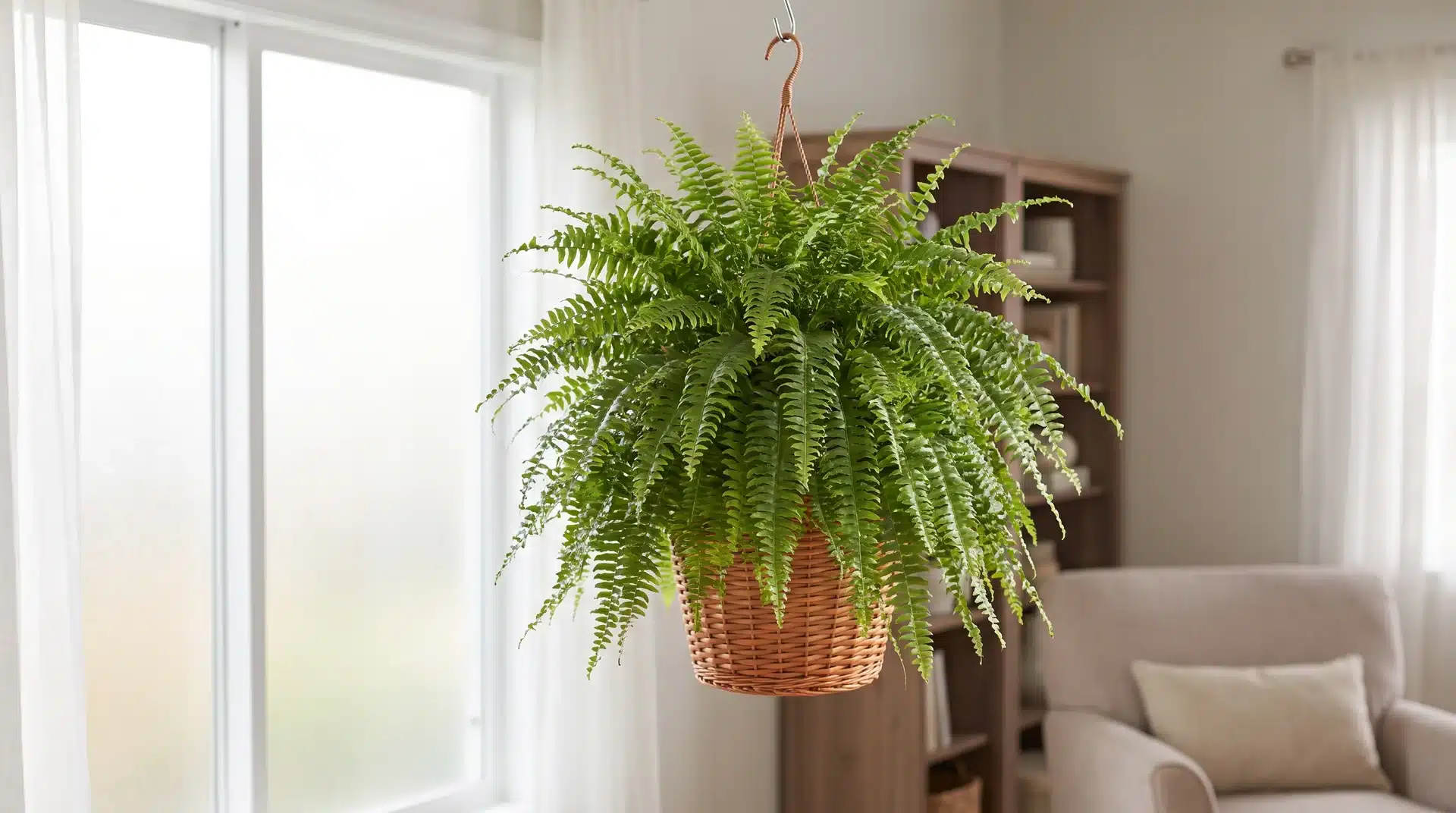
Boston fern creates a full hanging display with soft green fronds that flow over the sides of the pot. It is a good choice if you want a plant with more volume instead of long trailing vines.
Maintain bright indirect light and slightly moist soil for healthier growth. Increase humidity in dry rooms to prevent brown edges and crispy fronds.
Average price: $15 to $45 for small plants, and $40 to $70 for larger hanging baskets.
10. Burro’s Tail
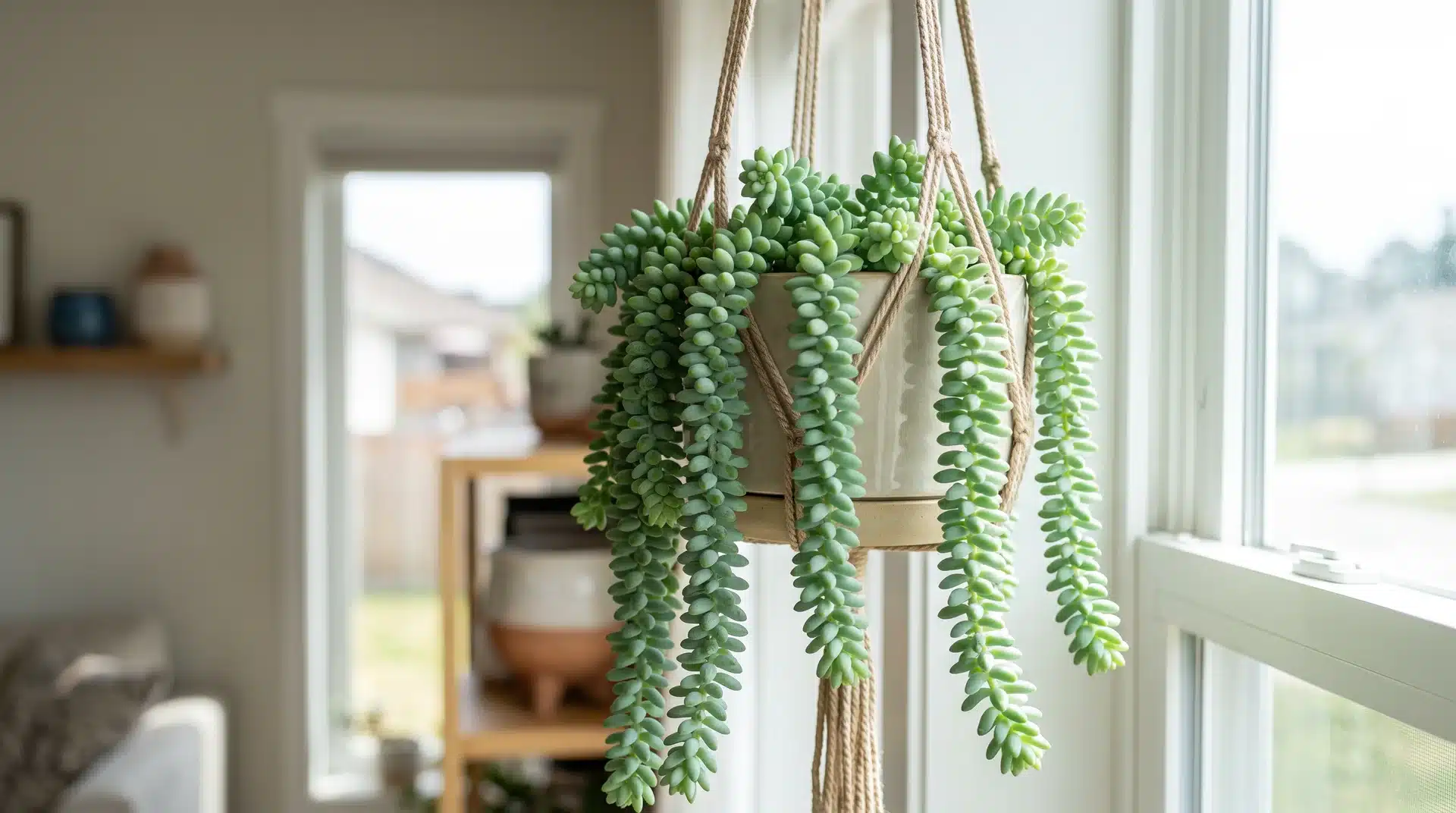
Burro’s tail is a trailing succulent with thick stems covered in small, rounded leaves. Its unusual shape makes it stand out from common hanging plants and works well in bright indoor spaces.
Choose a sunny indoor spot and water less often than tropical plants. Avoid frequent movement because the leaves can fall easily when handled.
I have seen beginners move this plant around too much after noticing a few fallen leaves, but keeping it in one bright, safe spot usually helps it grow better.
Average price: $15 to $40 for small plants, and $40 to $75 for larger hanging baskets.
11. Tradescantia (Wandering Jew)
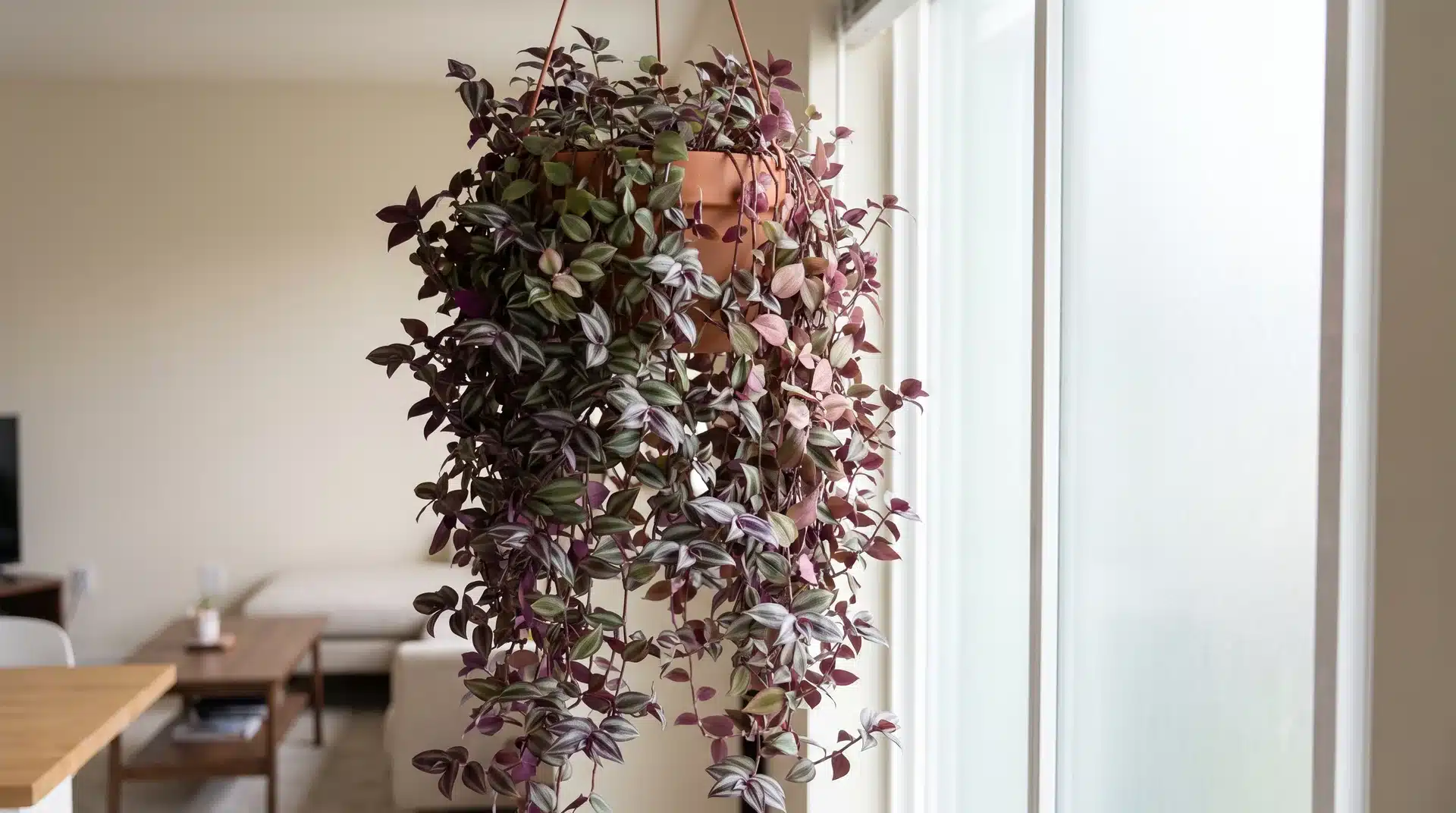
Tradescantia is a fast-growing hanging plant known for colorful leaves and trailing stems. Depending on the variety, the foliage can include shades of purple, silver, green, or pink.
Grow it in bright indirect light to maintain strong colors and encourage fuller growth. Trim vines regularly because cutting helps prevent stretched stems.
Average price: $10 to $35 for small plants, and $30 to $60 for larger hanging baskets.
12. Peperomia Rotundifolia (Trailing Jade)
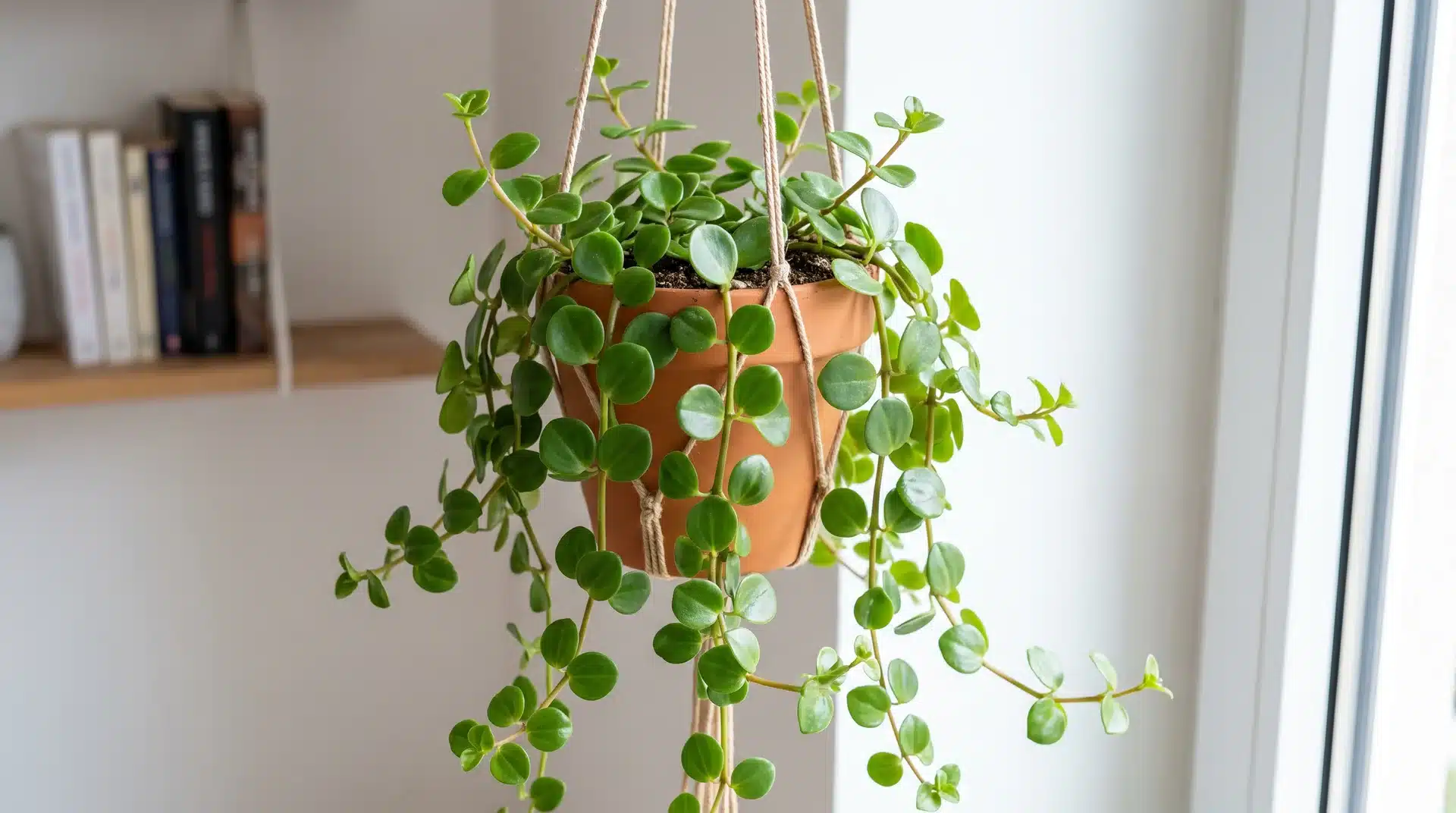
Trailing jade peperomia has small round leaves that grow along thin cascading stems. It is a good option for apartments, offices, or smaller areas where you want greenery without a large plant.
Use bright indirect light and choose a pot with drainage holes. Water only when the soil begins drying because it prefers lighter moisture levels.
Average price: $15 to $40 for small plants, and $35 to $60 for established hanging baskets.
13. Monstera Adansonii (Swiss Cheese Vine)
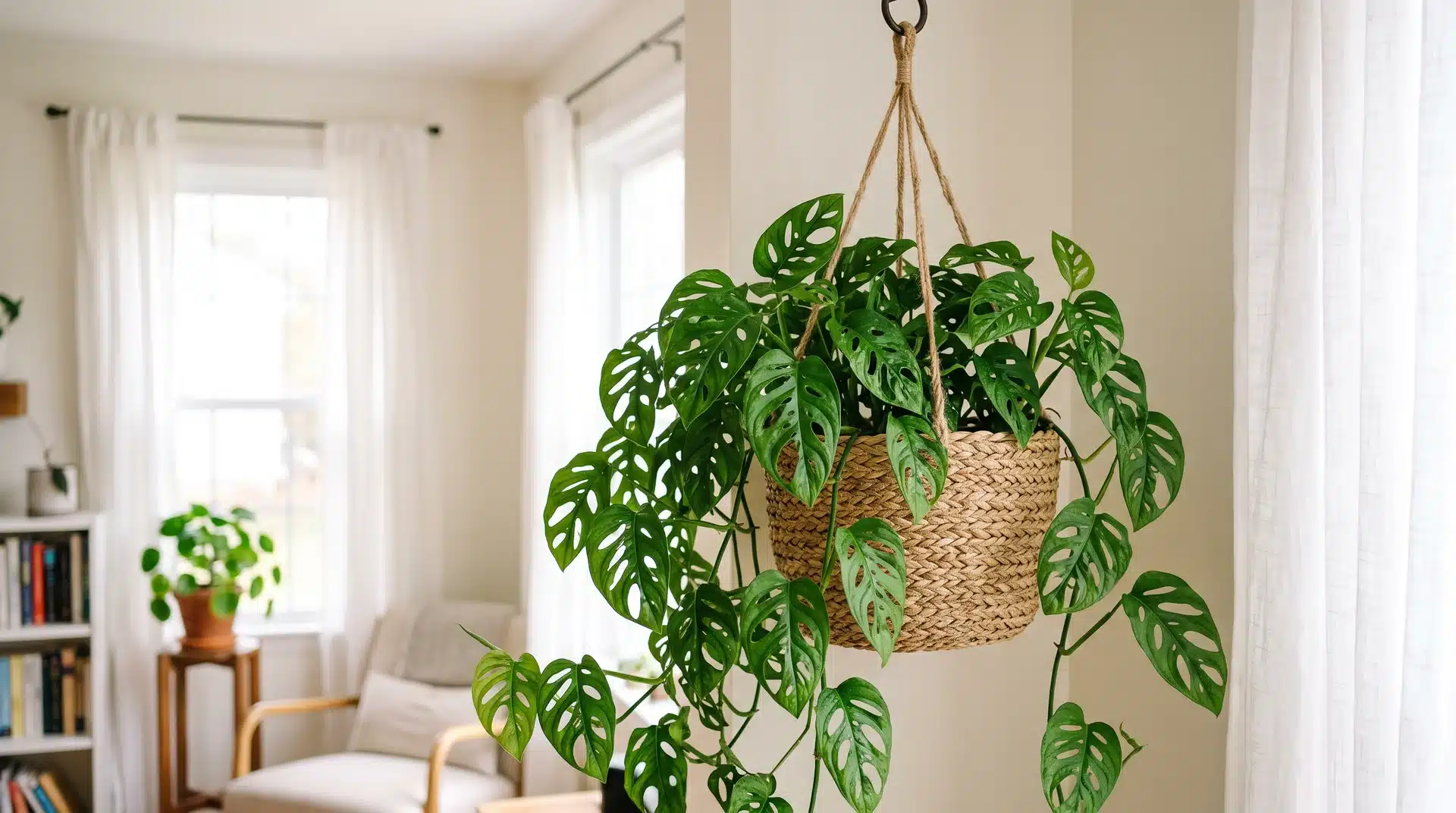
Monstera adansonii is a hanging tropical plant with unique leaves that develop natural holes as they grow. It adds a tropical feel indoors without needing the space required by larger monstera plants.
Place it in bright indirect light and keep the soil lightly moist. If the air in your home is dry, adding some humidity can help the leaves stay healthy.
Average price: $20 to $60 for small plants, and $50 to $100 for larger hanging baskets.
14. English Ivy
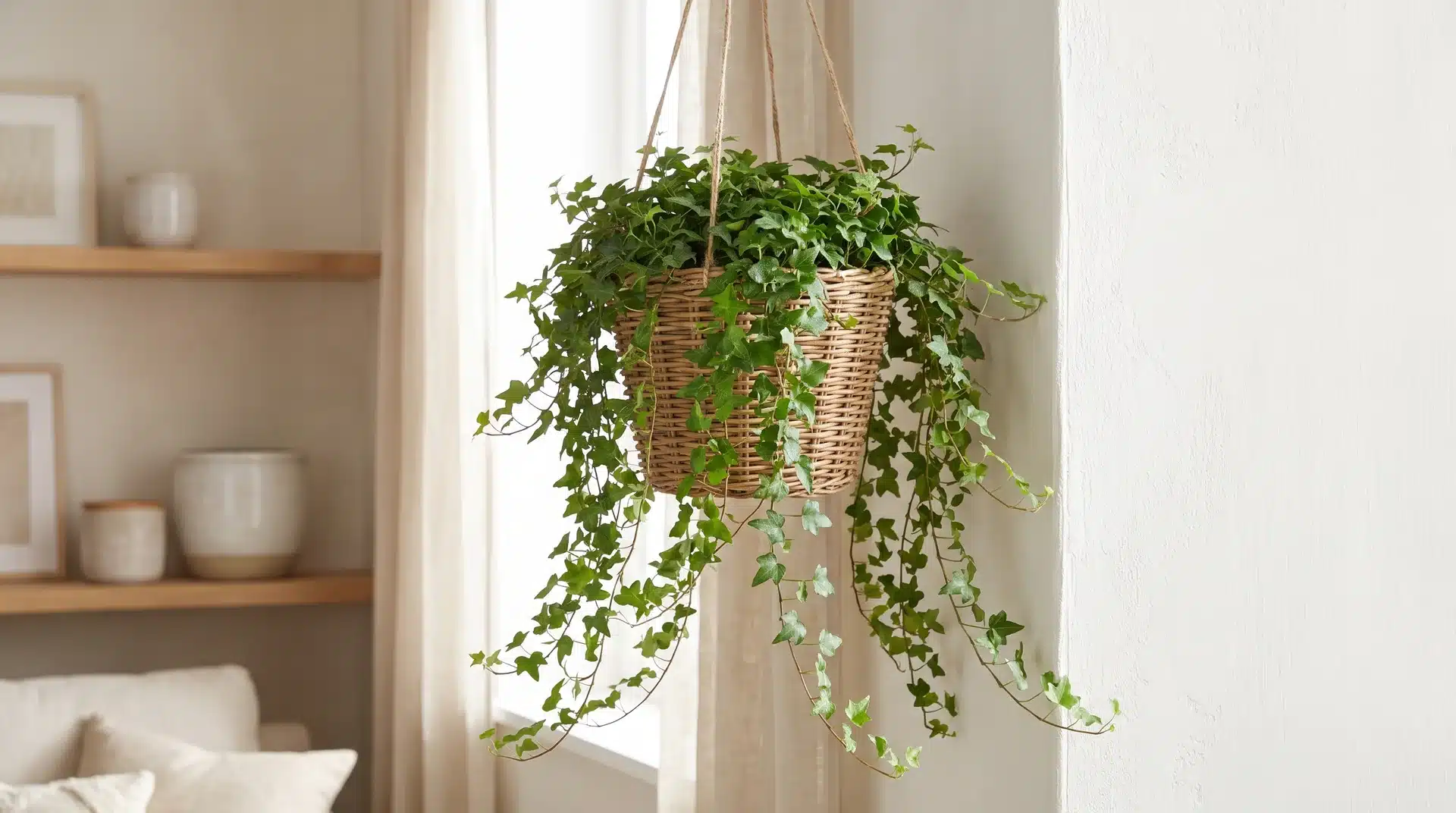
English ivy is a classic trailing plant with small leaves that grow along long vines. When placed in a hanging basket, it creates a full cascading look that works well in many indoor spaces.
Keep it near bright indirect light, and I always trim the vines to control growth. Water when the soil starts to dry, and keep it away from pets because it can be harmful if eaten.
Average price: $10 to $35 for small plants, and $30 to $60 for hanging baskets.
15. Nest Fern
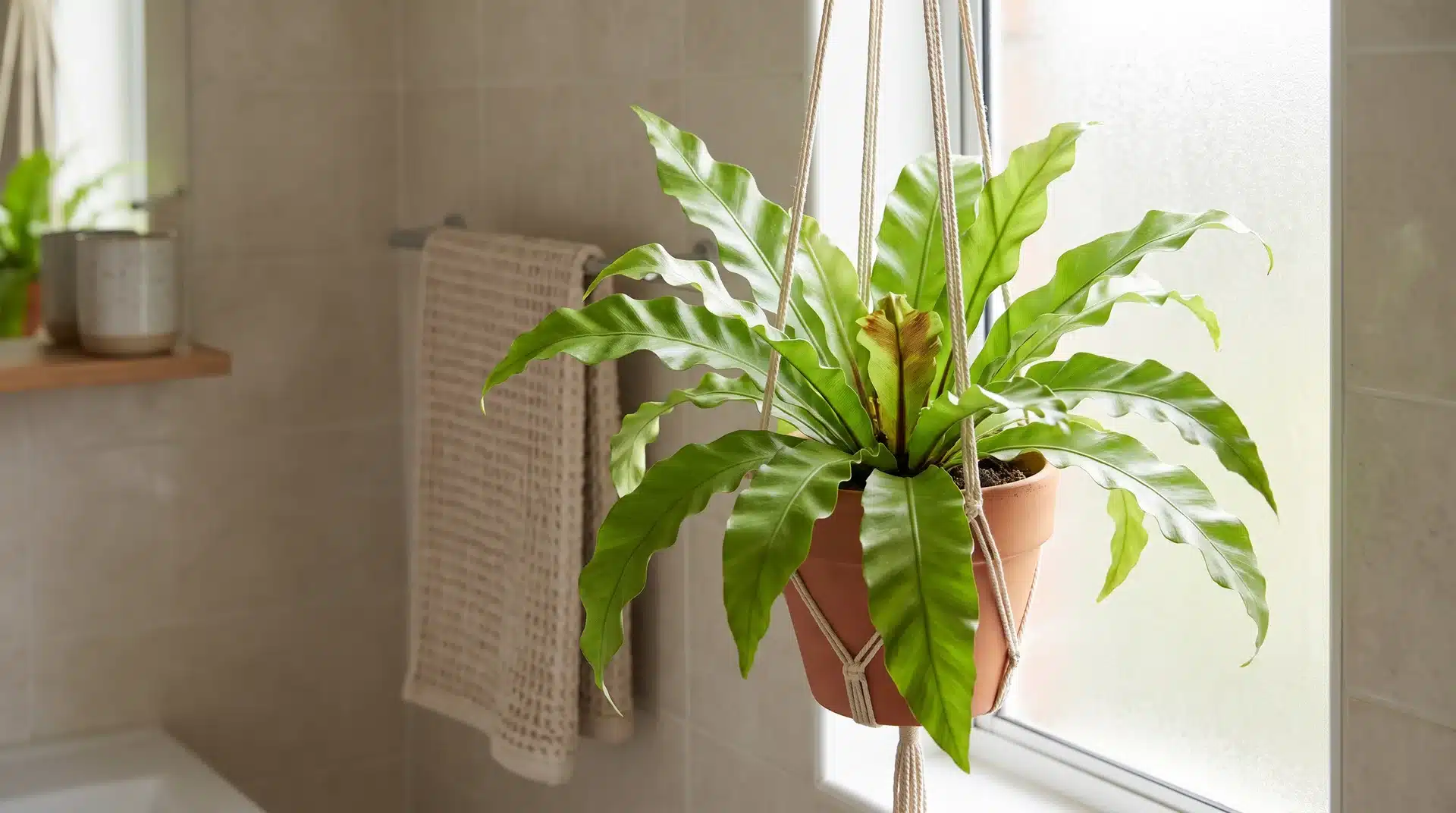
Bird’s nest fern adds a different shape to hanging plant collections with its wide, wavy leaves instead of trailing vines. It works especially well in humid areas like bathrooms, including spaces inspired by small bathroom designs.
Maintain bright indirect light and slightly moist soil for healthy growth. Offer a humid environment, such as a bright bathroom, when possible.
Average price: $20 to $60 for small plants, and $50 to $90 for larger specimens.
Common Mistakes to Avoid
- Drilling into drywall without support: A ceiling hook attached only to drywall may hold temporarily but can fail once the basket becomes heavier with wet soil.
- Ignoring the full weight: Always consider the pot, soil, water, and plant together. A lightweight basket can become much heavier after watering.
- Using the wrong hook rating: Picture hooks are not designed for hanging plants. Choose hardware rated for the actual weight of your basket.
- Hanging plants too far from light: A spot that looks perfect visually may not provide enough sunlight for healthy growth.
- Skipping wall-mounted options: Renters or people avoiding ceiling damage can use wall hooks near windows for better support and light access.
- Overlooking plant growth habits: Some plants become thin and stretched because they are reaching for light instead of naturally trailing.
Conclusion
Choosing indoor hanging plants comes down to matching the plant with your space and creating a safe setup before anything else. The right variety should fit your available light, watering routine, and the amount of care you realistically want to provide.
I have found that beginners often struggle because they choose a plant based only on appearance instead of checking whether their home can support it.
If you are starting out, a Golden Pothos is a reliable first choice. Focus on good light, proper watering, and secure hanging hardware before adding more plants.
Once one hanging plant starts thriving, building a collection becomes much easier.
Frequently Asked Questions
What is the best indoor hanging plant for beginners?
Golden Pothos is the most forgiving option you’ll find. It handles irregular watering, tolerates low to medium light, and trails quickly enough that you’ll see progress within weeks. It’s also widely available and inexpensive to replace if something goes wrong early on. One thing to know: it is toxic to cats and dogs if eaten.
Are there indoor hanging plants that are safe for cats and dogs?
Yes, but the list is genuinely short. Spider Plant is the most reliable pet-safe option and grows well in low to medium light. Boston Fern works in higher-humidity spaces like bathrooms. Most popular trailing plants, including all pothos and philodendron varieties, are toxic to pets if ingested. That’s not a reason to avoid them. It’s a reason to hang them out of reach.
Why is my hanging plant drying out so fast?
Hanging baskets dry out faster than pots on a shelf because air circulates around all sides of the container. Checking the top two inches of soil before watering is more reliable than any fixed schedule. If the basket is made from coco fiber, lining it with a thin plastic layer slows moisture loss without affecting drainage.
Can a hanging plant survive in a room with no natural light?
No plant thrives without any light at all. Even the most tolerant options, like Pothos and Heartleaf Philodendron, need some ambient daylight to keep trailing and producing new growth. In a windowless room, a full-spectrum LED grow light placed within twelve inches is a workable substitute. Put it on a timer and treat it like a window.