


Sitting for hours can take a toll on your body, especially if your workspace is not designed for comfort and support.
Ergonomic furniture is designed to fit the body’s natural posture and movements, helping reduce strain while improving comfort, body alignment, and productivity.
Ergonomic furniture, including adjustable chairs, desks, and supportive accessories, creates a healthier workspace.
It supports good posture, reduces muscle and joint pressure, and encourages better movement throughout the workday.
According to the Occupational Safety and Health Administration (OSHA), ergonomics is the science of fitting jobs and work tasks to workers to help reduce the risk of musculoskeletal disorders and improve workplace safety.
Key Takeaways
|
What Is Ergonomic Furniture?
Ergonomic furniture is designed to support the body’s natural posture, movements, and alignment, making everyday tasks more comfortable and reducing physical strain.
If you’re asking what ergonomicfurniture is, it refers to chairs, desks, and other workspace furniture that can be adjusted to fit different body sizes and working positions.
It is based on the principles of ergonomics, which focus on creating a better fit between people and their work environment.
Ergonomic furniture adapts to the user, helping prevent uncomfortable body positions.
This helps improve comfort, supports healthy posture, reduces stress on muscles and joints, and creates a more productive and comfortable workspace.
Key Features of Ergonomic Furniture
Ergonomic furniture includes practical features that improve comfort, provide better support, and allow users to create a workspace that fits their body and work style.
- Adjustable Settings: Adjustable height, seat position, desk level, and other features help users customize furniture for a comfortable, supportive fit.
- Built-In Body Support: Features such as lumbar support, contoured seats, and properly positioned armrests help maintain natural posture and body alignment.
- Flexible Seating Functions: Seat depth, backrest tilt, and reclining options allow users to change positions easily and stay comfortable throughout the day.
- Comfortable and Durable Materials: Breathable fabrics, mesh backs, and high-quality cushioning improve airflow while providing lasting comfort during daily use.
- Easy-to-Use Design: Smooth adjustment controls and functional designs, including sit-stand options, make it simple to adapt the workspace to different tasks and preferences.
What Are the Advantages of Ergonomic Furniture?

Ergonomic furniture offers more than comfort. It supports healthier posture, reduces physical strain, and helps create a more productive and comfortable workspace.
1. Improves Comfort During Long Work Hours
Ergonomic furniture is designed to support the body during extended periods of sitting or standing.
Features such as adjustable seating, lumbar support, and height-adjustable desks help users find comfortable working positions that suit their needs.
This reduces discomfort caused by poorly designed furniture and allows people to work for longer periods without frequent aches or the need to constantly change positions.
2. Reduces Neck, Back, and Shoulder Strain
Poor posture and inadequate support can place extra stress on the neck, back, and shoulders throughout the workday.
Ergonomic furniture helps distribute body weight more evenly while supporting the spine’s natural alignment.
Adjustable features allow users to position themselves correctly, reducing pressure on muscles and joints. Over time, this can help lower the risk of stiffness, muscle tension, and work-related discomfort.
3. Supports Better Posture
One of the main benefits of ergonomic furniture is promoting healthy posture.
Ergonomic chairs encourage users to sit with proper spinal alignment, while adjustable desks and monitor setups help keep the head, neck, and shoulders in comfortable positions.
Maintaining good posture reduces unnecessary stress on the body and supports healthier movement habits, especially for people who spend many hours working at a desk.
4. Increases Productivity and Focus
Working in a comfortable environment makes it easier to stay focused on daily tasks.
When furniture provides proper support, employees are less likely to be distracted by discomfort or frequent position changes.
Ergonomic workstations also encourage better organization and efficient movement, helping users maintain concentration for longer periods.
5. Helps Reduce Fatigue
Physical discomfort can quickly lead to tiredness during long workdays.
Ergonomic furniture helps reduce fatigue by supporting natural body positions and encouraging movement throughout the day.
As a result, users often experience better energy levels and remain more comfortable and engaged while working.
6. Supports Long-Term Workplace Wellness
Using ergonomic furniture consistently can contribute to better long-term health in the workplace.
Proper support and adjustability help reduce the risk of repetitive strain injuries and musculoskeletal problems caused by poor posture.
A well-designed workstation also encourages healthier work habits and greater comfort over time.
Investing in ergonomic furniture benefits both employee well-being and overall workplace performance.
How to Choose Ergonomic Furniture for Your Workspace?
Choosing ergonomic furniture starts with understanding how you work each day and the type of support your tasks require.
Look for furniture with adjustable features, such as seat height, lumbar support, armrests, or desk height, so it can be customized to your body and working style.
The furniture should fit your workspace while allowing enough room for comfortable movement and proper equipment placement.
If you’re setting up a home office, understanding the standard ceiling height can help when planning a Riser Desk, adjustable desks, monitor arms, and overhead storage for a comfortable workspace.
A well-planned ergonomic workspace can improve posture, reduce strain, and increase daily comfort.
Types of Ergonomic Furniture
Ergonomic furniture comes in different forms, each designed to improve comfort, support proper posture, and create a healthier, more efficient workspace.
1. Ergonomic Office Chairs
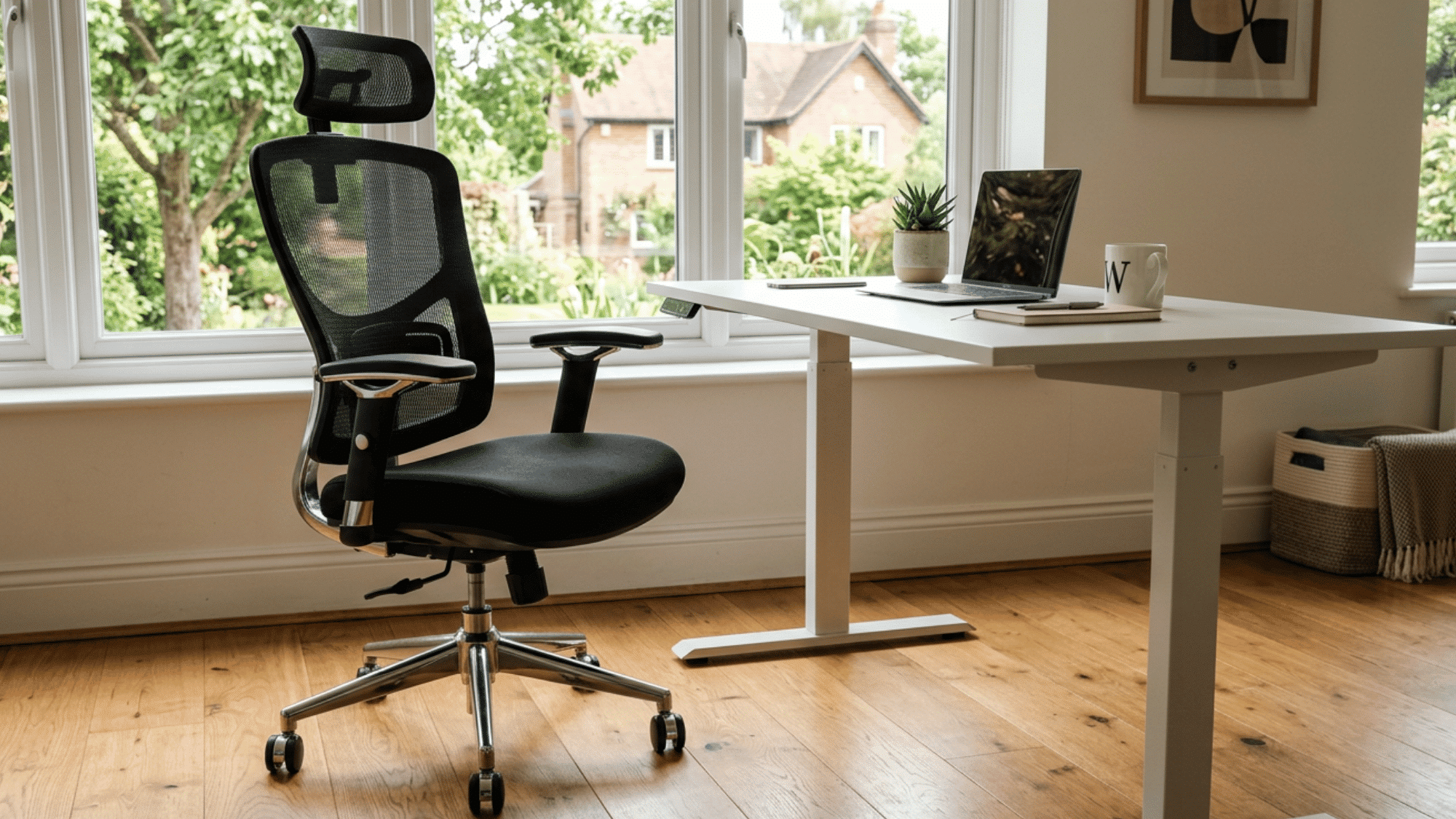
Ergonomic office chairs are designed to support the spine and encourage healthy sitting posture throughout the day.
They typically include adjustable seat height, lumbar support, armrests, seat depth, and reclining functions, allowing users to customize the chair to their body.
These features help reduce pressure on the neck, back, and shoulders while improving comfort during long hours of desk work.
2. Height-Adjustable Desks
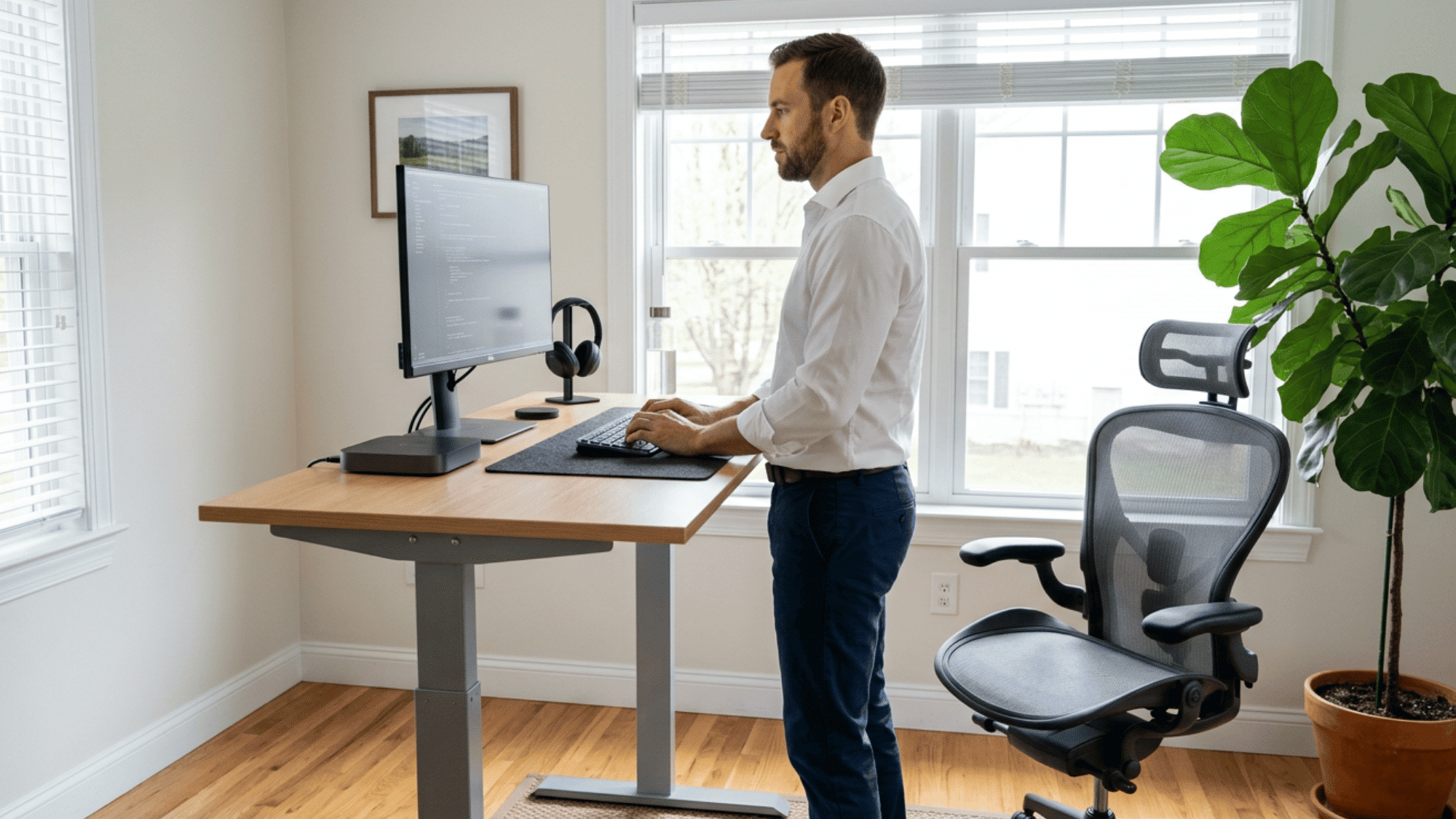
Height-adjustable desks, also called sit-stand desks, allow users to switch between sitting and standing throughout the workday.
This flexibility encourages movement, improves circulation, and helps reduce the discomfort associated with prolonged sitting.
Available in manual and electric models, these desks make it easier to create a comfortable workstation while supporting better posture and reducing physical fatigue.
3. Ergonomic Workstations
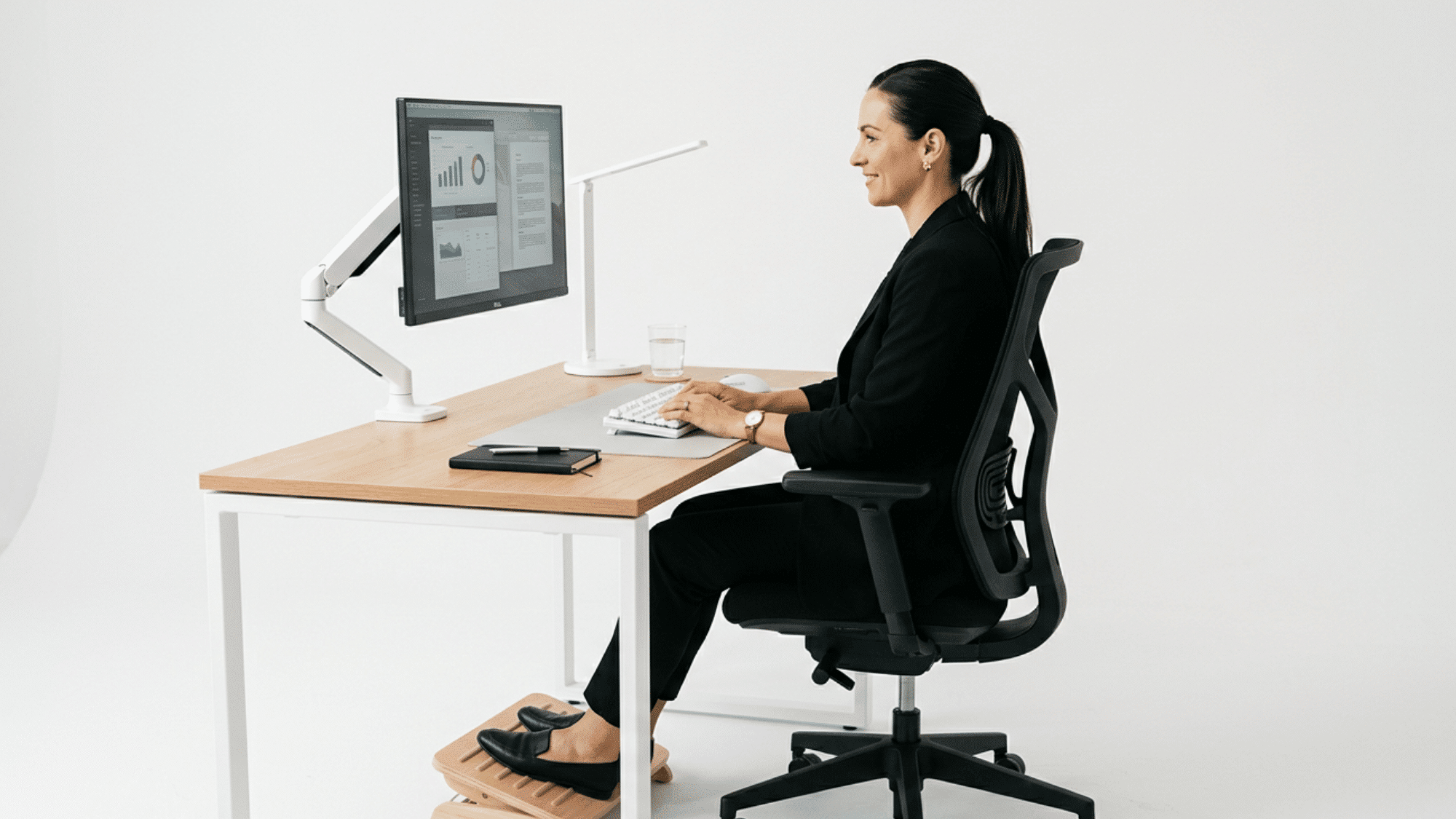
Ergonomic workstations combine desks with supportive accessories to create a workspace that promotes comfort and efficiency.
They may include monitor stands, keyboard trays, and adjustable monitor arms that position equipment at the correct height and viewing angle.
A properly arranged workstation reduces unnecessary reaching, supports natural body alignment, and makes daily tasks more comfortable.
A thoughtfully arranged ergonomic workstation can also enhance the overall look of a room, especially when paired with contemporary interior design principles.
4. Ergonomic Accessories
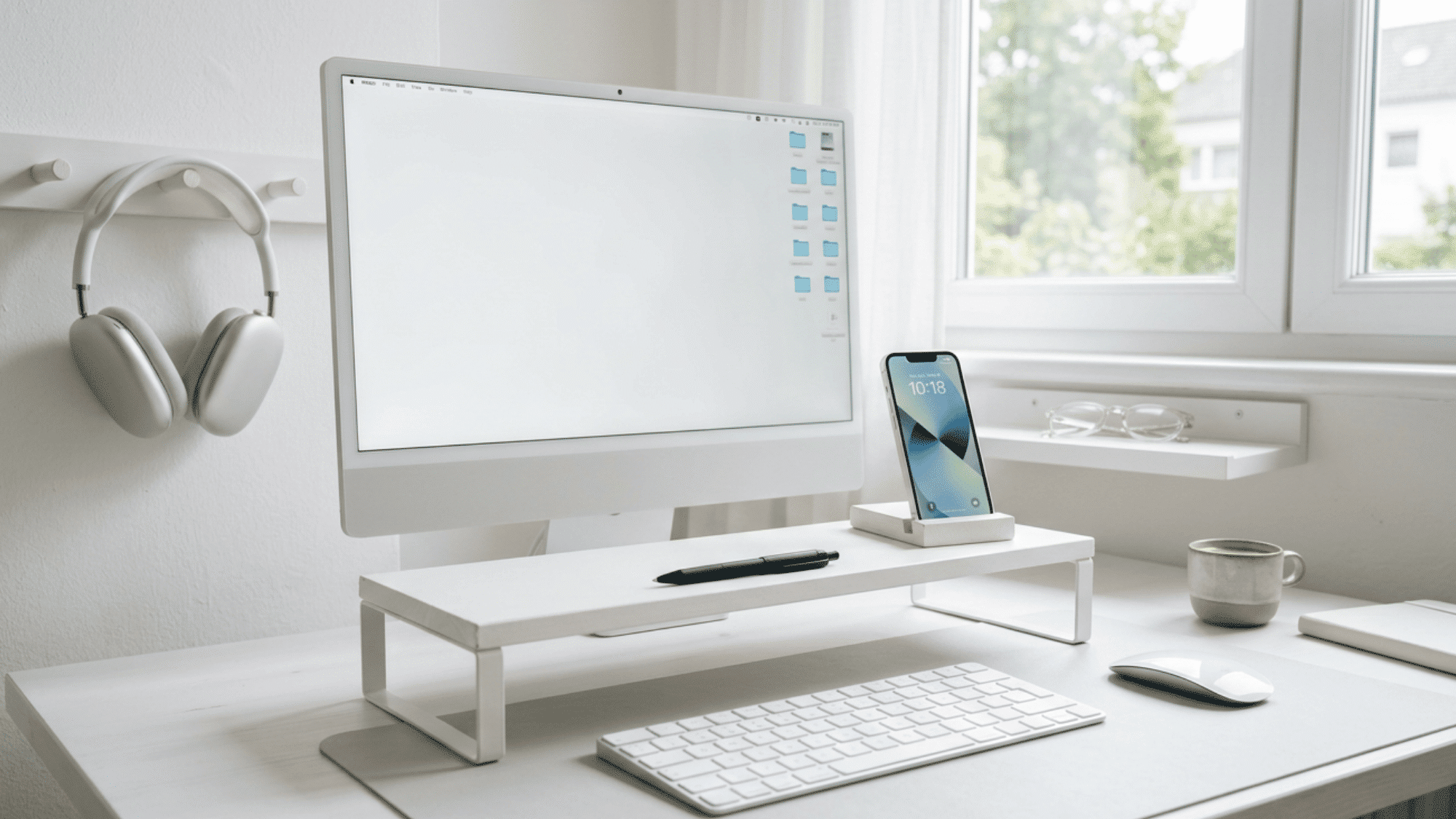
Small ergonomic accessories can make a noticeable difference in workplace comfort.
Footrests help support the legs and improve sitting posture, while laptop stands raise screens to eye level to reduce neck strain.
Ergonomic keyboards and mice are designed to support more natural hand and wrist positions, helping reduce repetitive strain during extended computer use.
5. Modular Ergonomic Furniture
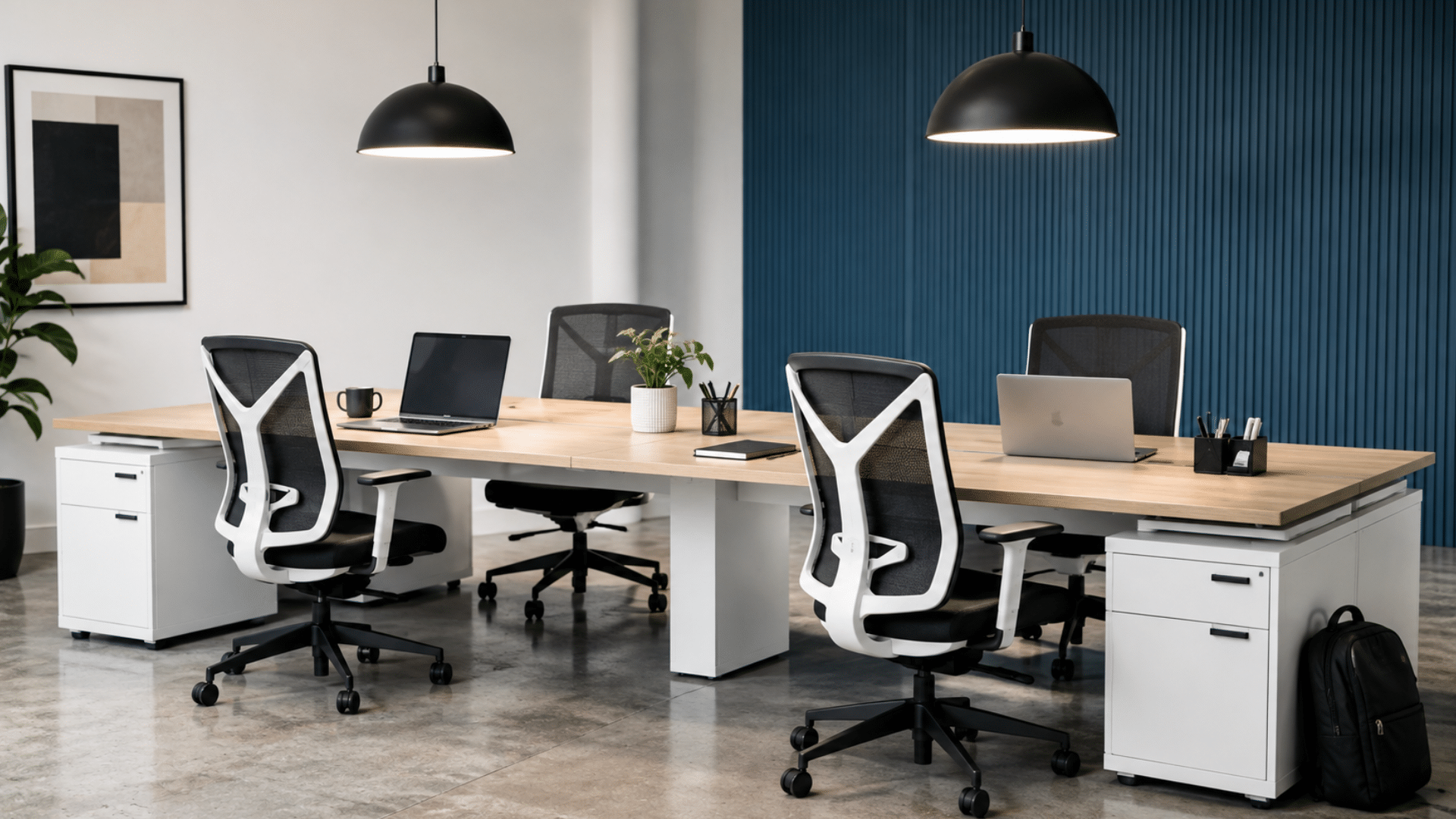
Modular ergonomic furniture offers flexible workspace solutions that can be adjusted as needs change.
These systems often combine desks, storage units, monitor arms, and other ergonomic components into a customizable setup.
By letting users organize their workspace around their tasks and preferences, modular furniture improves comfort, supports better posture, and makes efficient use of available office space.
How to Tell If Your Workspace Needs Ergonomic Changes?
Persistent discomfort, poor posture, or strain while working can signal that your workspace needs ergonomic adjustments.
- Feeling Uncomfortable at Work: Constant discomfort while sitting or working may indicate that your chair, desk, or overall setup lacks proper support.
- Lower Back Pain: Ongoing lower back discomfort can result from inadequate lumbar support or an improperly adjusted chair.
- Neck and Shoulder Pain: Neck or shoulder tension may develop when your monitor, chair, or desk height forces you into an awkward position.
- Wrist and Hand Discomfort: Tingling, numbness, or soreness can occur when your keyboard or mouse is positioned too high, low, or far away.
- Headaches and Eye Strain: Frequent headaches or tired eyes may be linked to poor monitor positioning, screen distance, or inadequate lighting.
- Frequent Posture Changes: Constantly shifting, slouching, or adjusting your position can suggest that your furniture is not providing adequate support.
Is Ergonomic Furniture Worth It?
For many people, ergonomic furniture is a worthwhile investment because its long-term benefits often outweigh the initial cost.
Quality ergonomic furniture offers lasting support and helps create a healthier workspace.
Over time, it can reduce discomfort associated with prolonged sitting, potentially lowering the risk of work-related aches and improving overall well-being.
A comfortable workspace also makes it easier to stay focused and work efficiently throughout the day.
Ergonomic furniture is especially beneficial for office employees, remote workers, students, and anyone who spends long hours at a desk, making it a practical choice for both home and workplace settings.
Things to Avoid when Choosing Ergonomic Furniture
Avoiding a few common mistakes can help you choose ergonomic furniture that provides lasting comfort, proper support, and better value for your workspace.
- Choosing Style Over Support: Attractive furniture may look good, but proper ergonomic support and comfort should always be the top priority.
- Ignoring Adjustability: Furniture without adjustable features may not fit different body types, making it harder to maintain a comfortable working position.
- Not Measuring Your Workspace: Buying furniture without checking available space can limit movement and result in an inefficient workstation layout.
- Skipping Proper Setup After Purchase: Even ergonomic furniture needs to be adjusted correctly to provide the intended support and improve posture.
- Assuming One Size Fits Everyone: The best ergonomic furniture should suit individual body dimensions and work habits rather than offering a single fixed setup.
Conclusion
If I’m spending hours at my desk, I want my workspace to feel comfortable, supportive, and suited to the way I actually work.
That’s where ergonomic furniture can make a real difference. The right chair, desk, and accessories aren’t just about creating a polished setup. They’re about helping us work more comfortably throughout the day.
When choosing ergonomic furniture, I’d focus on what fits my body, workspace, routine, and budget rather than simply following trends.
Small improvements to our setup can make everyday work feel more manageable and comfortable.
Have you tried ergonomic furniture in your workspace? Share your experience, favorite upgrades, or buying tips in the comments below.
Frequently Asked Questions
How Long Does It Take to Adjust to Ergonomic Furniture?
Most people adapt within a few days to a few weeks. Proper adjustments and consistent use help your body become comfortable with the new setup.
Can Ergonomic Furniture Help with Existing Back Pain?
Ergonomic furniture may help reduce discomfort by providing better support and posture, but it is not a substitute for medical treatment or professional advice.
How Often Should Ergonomic Furniture Be Adjusted?
Adjust your furniture whenever your tasks, posture, or work habits change. Regular checks help maintain proper support and comfort throughout the day.
Does Ergonomic Furniture Require Professional Installation?
No. Most ergonomic furniture is designed for easy assembly and adjustment, though following the manufacturer’s setup instructions ensures the best ergonomic fit.
How Long Does Ergonomic Furniture Typically Last?
High-quality ergonomic furniture can last 7–15 years or longer with proper care, depending on the materials, build quality, and frequency of use.