

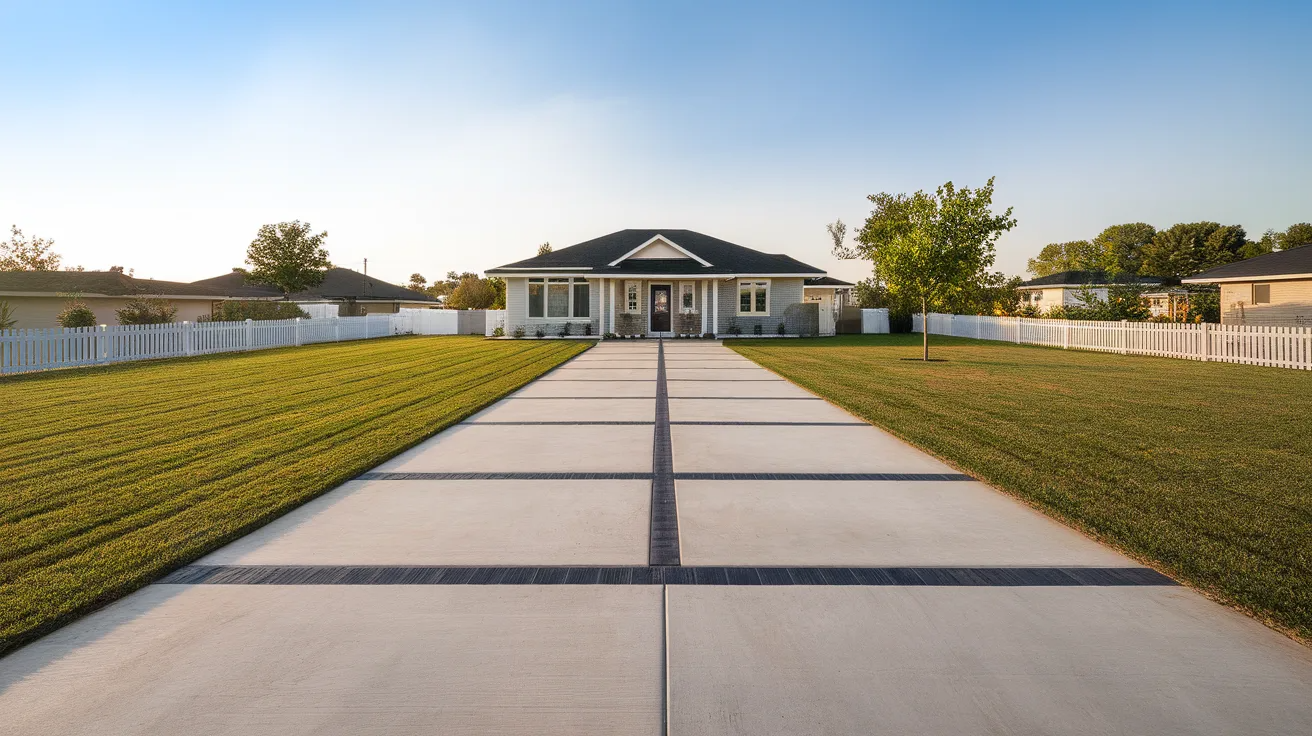
A driveway is one of the first things people see when they visit a home. It’s more than just a place to park; it enhances curb appeal and supports everyday use.
The right driveway can make a home look neat and feel more complete. With so many materials and styles to pick from, choosing the best fit can feel confusing.
Each option brings something different in terms of look, cost, and care.
This blog breaks down the most common driveway types in a simple way, so homeowners can learn what’s out there and feel more sure about the path they choose, literally..
What to Consider Before Choosing a Driveway?
Before choosing a driveway, it helps to consider more than just looks. Start with your budget. Some materials cost more to install but last longer, while others are cheaper but need more upkeep.
Weather also matters. Certain driveways hold up better in snow, rain, or heat. Think about how many cars will use the space, and if any heavy vehicles or trailers will be parked there.
Also consider how much time you’re willing to spend on care. Some driveways need sealing, mowing, or weeding.
Choosing the right type means balancing cost, strength, and the amount of care it requires.
Best Driveway Types for Your Home
Below are common types of driveways, each with its own pros, cons, and cost, to help you choose the option that works best for your home.
1. Concrete Driveway
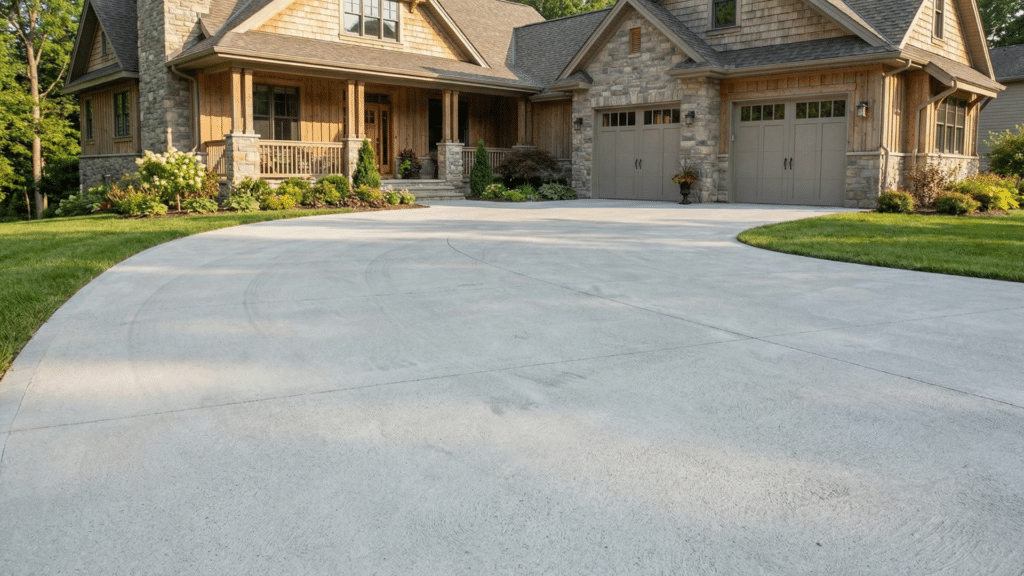
Concrete driveways are strong, long-lasting, and common in many homes. They provide a smooth, clean look and are great for daily use.
Best For:
- Homes in warm or mild climates
- Families with multiple cars
- Homeowners looking for a solid, modern surface
Pros:
- Durable and long-lasting (30+ years)
- Easy to keep clean
- Can be colored or stamped for style
- Handles heavy loads well
Cons:
- Can crack in freezing weather
- Needs sealing every few years
- Repairs may not match the rest
- More costly than basic gravel or asphalt
Average Cost: $4 to $15 per square foot, depending on design and location
2. Asphalt Driveway
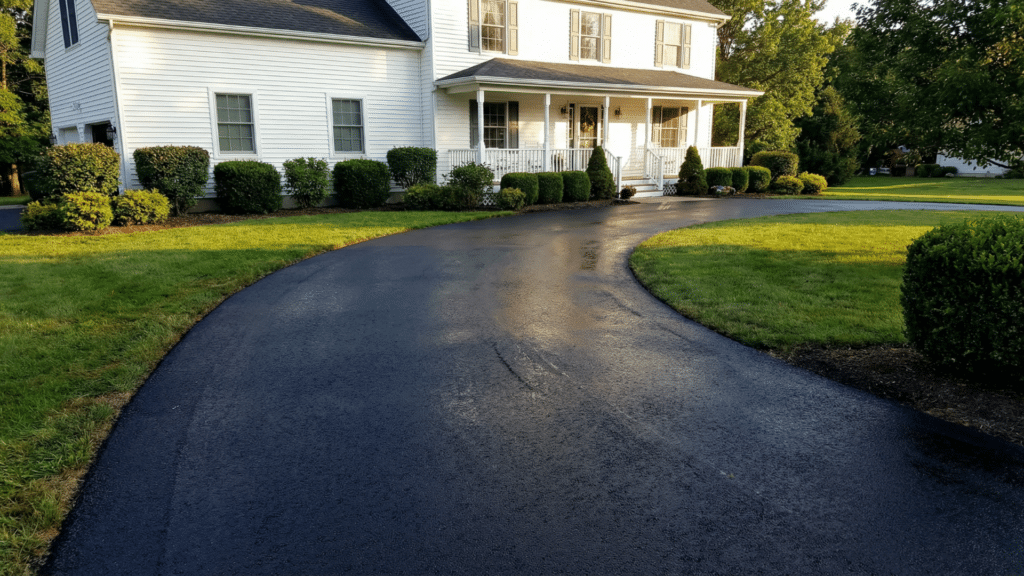
Asphalt is a dark, flexible surface often used in colder regions. It’s smooth and quick to install.
Best For:
- Homes in cold climates
- Budget-conscious homeowners
- Short to medium-length driveways
Pros:
- Lower cost than concrete
- Easy to repair and resurface
- Good in freezing weather
- Fast to install
Cons:
- Needs sealing every 2–3 years
- Can soften in high heat
- Shorter life (15–20 years)
- Fades over time
Average Cost: $3 to $8 per square foot
3. Gravel Driveway
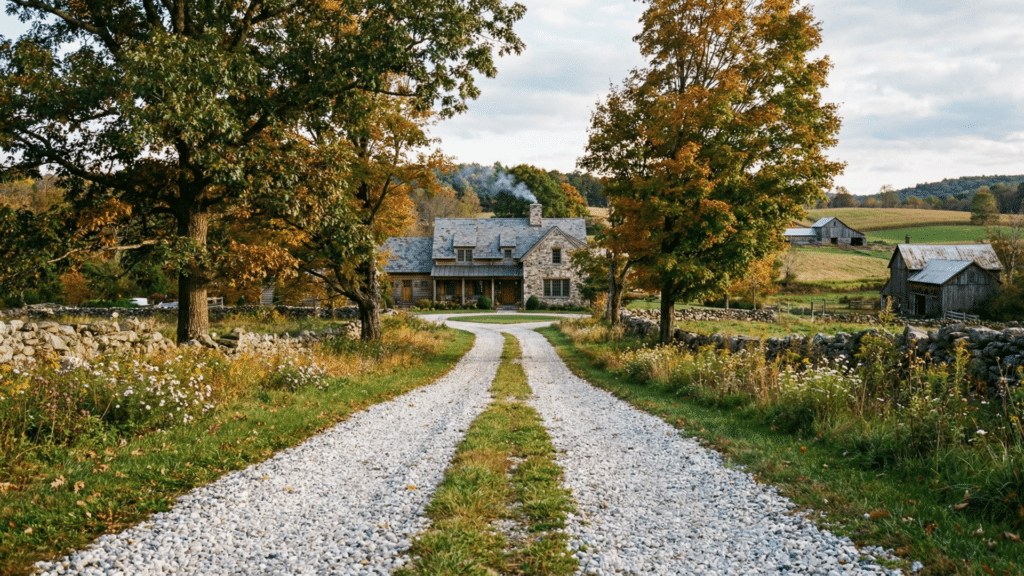
Gravel driveways are made of loose stones and are great for rural areas or long driveways.
Best For:
- Country or rural homes
- Long driveways
- Homeowners wanting a low upfront cost
Pros:
- Very affordable
- Drains water well
- Easy to install
- Simple to fix and top off
Cons:
- Needs regular raking and leveling
- Stones may shift or spread
- Weeds can grow through
- Hard to shovel snow
Average Cost: $1 to $3 per square foot
4. Paver Driveway
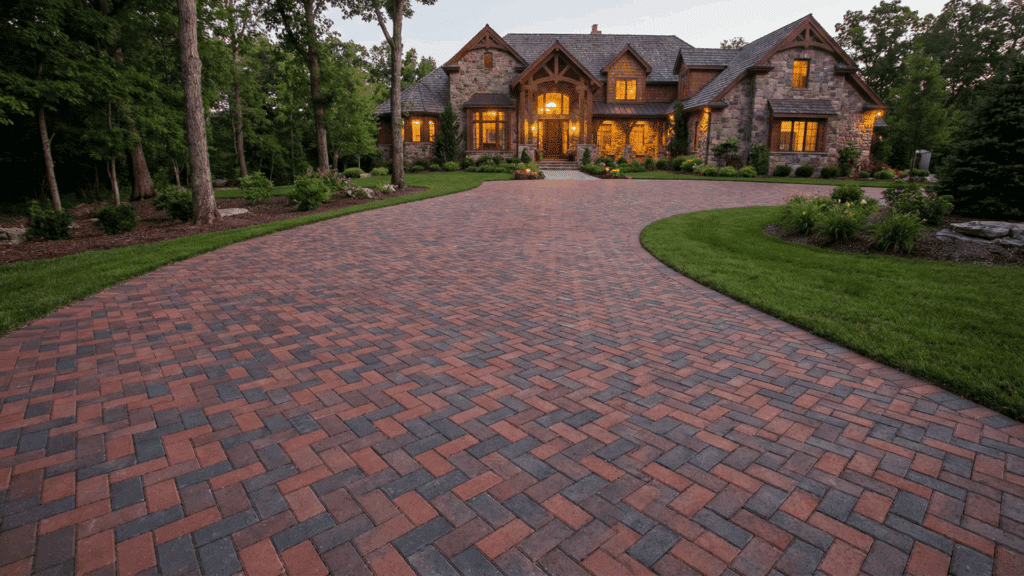
Paver driveways use bricks or concrete blocks in patterns. They add style and boost curb appeal.
Best For:
- High-end or decorative driveways
- Homeowners wanting custom designs
- Those looking for long-term value
Pros:
- Beautiful and customizable
- Very durable (up to 50 years)
- Easy to fix one paver at a time
- Increases property value
Cons:
- High cost to install
- Weeds can grow between blocks
- Can shift if not installed well
- Needs good base support
Average Cost: $10 to $30 per square foot
5. Brick Driveway
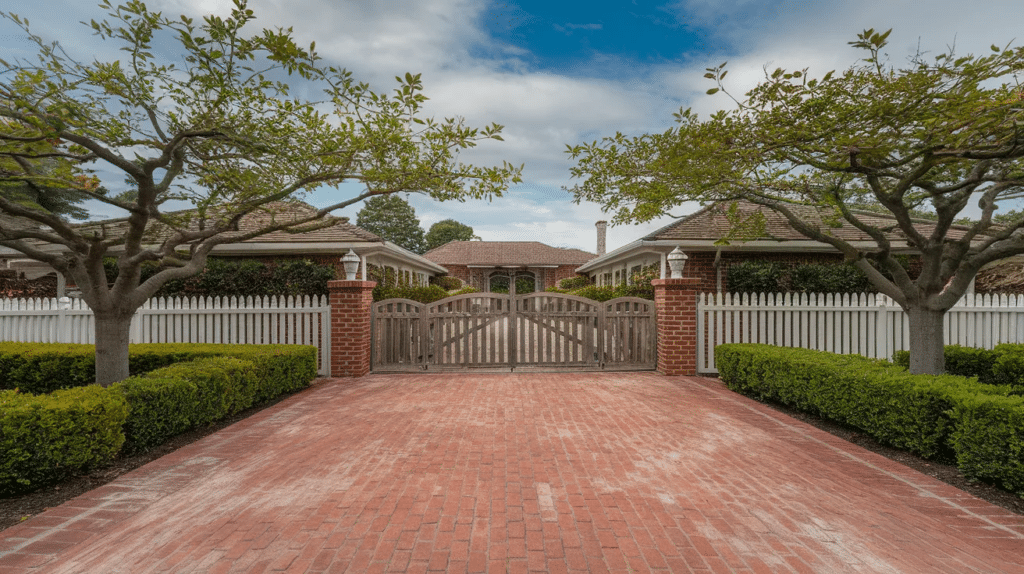
Brick driveways have a classic, timeless look. They are often used in traditional homes or historic areas.
Best For:
- Older-style or traditional homes
- Homeowners wanting a vintage feel
- Mild climates
Pros:
- Attractive and long-lasting
- Good drainage
- Easy to replace bricks
- Classic look adds charm
Cons:
- Higher upfront cost
- Can be uneven over time
- Needs sealing to prevent wear
- Gaps can grow weeds
Average Cost: $10 to $25 per square foot
6. Crushed Stone Driveway
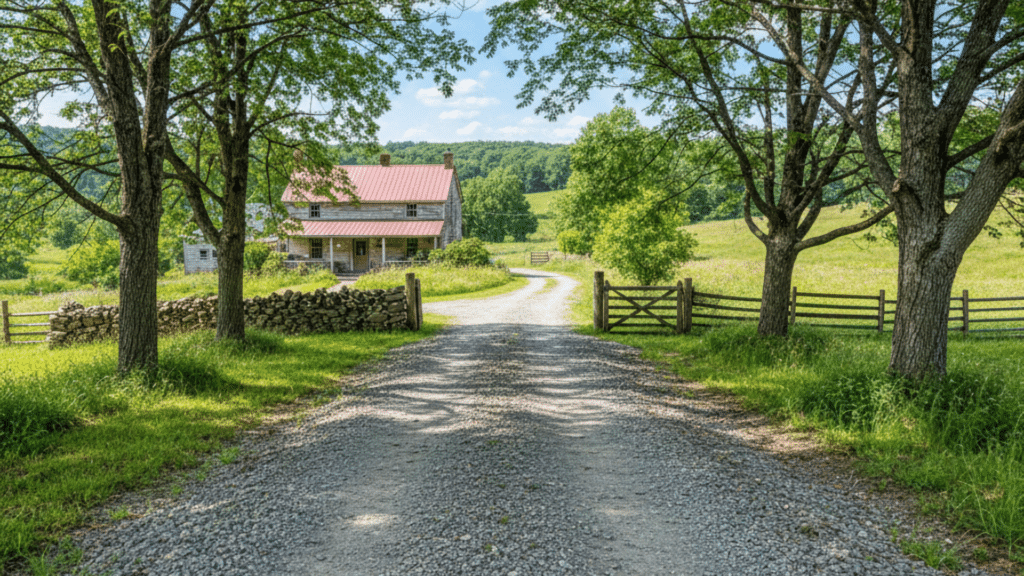
Crushed stone is similar to gravel but has larger, sharper rocks. It gives a tidy, finished look.
Best For:
- Rural or semi-rural homes
- Homeowners needing fast drainage
- Large or sloped areas
Pros:
- Cheap and easy to install
- Great water drainage
- Simple to top off or fix
- Comes in different colors
Cons:
- Can scatter with use
- Dusty in dry weather
- Weeds may grow
- Noisy when walked or driven on
Average Cost: $1 to $4 per square foot
7. Cobblestone Driveway
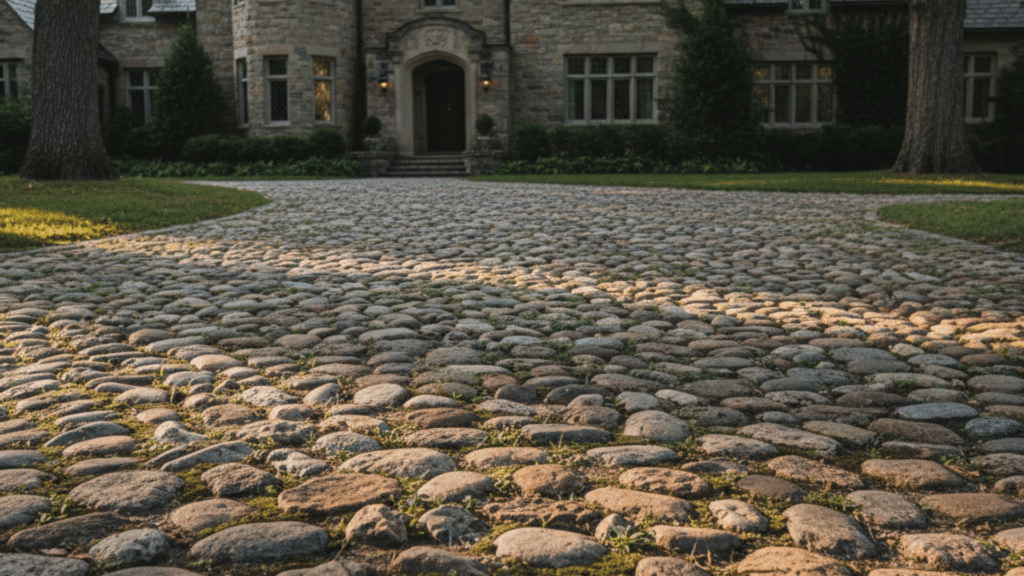
Cobblestone driveways use natural stones for a strong, old-world look. Often found in upscale or historic areas.
Best For:
- Homes in historic or luxury areas
- Long-term value and style
- Those wanting a standout design
Pros:
- Very strong and can last 100+ years
- Unique, charming look
- Low maintenance
- Resistant to wear and cracks
Cons:
- Very expensive
- Can be uneven or bumpy
- May grow moss between stones
- Hard to walk or shovel
Average Cost: $20 to $70 per square foot
8. Basalt Driveway (Natural Stone)
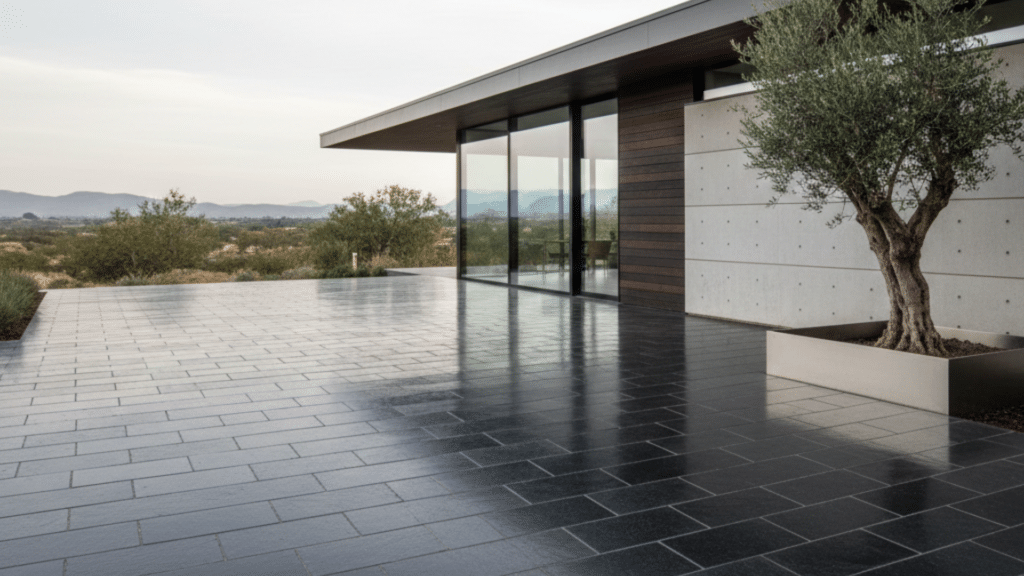
Basalt is a dark natural stone used in tiles or slabs. It gives a sleek, high-end look.
Best For:
- Modern or designer homes
- Warm climates
- Homeowners wanting something unique
Pros:
- Stands out visually
- Long-lasting and tough
- Handles heat well
- Natural and eco-friendly
Cons:
- Pricey to install
- Heavy and hard to work with
- Slippery when wet
- Cracks if not sealed
Average Cost: $10 to $30 per square foot
9. Grass Paver Driveway
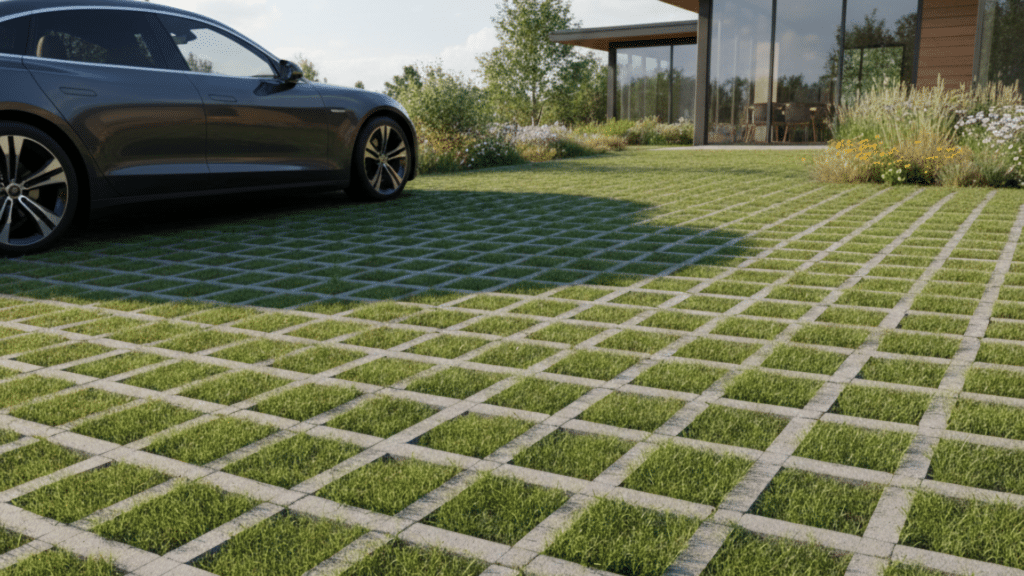
This driveway uses a plastic or concrete grid filled with soil and grass. It combines green space with support.
Best For:
- Eco-conscious homeowners
- Low-traffic driveways
- Homes in flat areas
Pros:
- Eco-friendly and green
- Water drains into the ground
- Soft and natural look
- Helps reduce runoff
Cons:
- Needs regular mowing and care
- Can get muddy after rain
- Not ideal for heavy cars
- May need reseeding
Average Cost: $5 to $15 per square foot
10. Recycled Asphalt Driveway
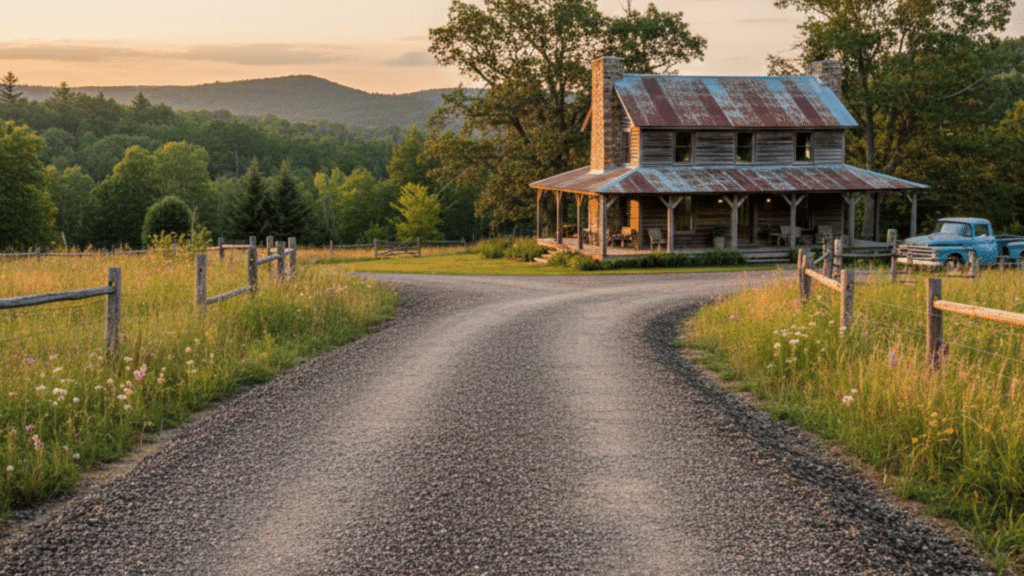
Made from reused asphalt, this driveway is budget-friendly and useful in rural areas.
Best For:
- Long driveways
- Farms or rural roads
- Budget-minded homeowners
Pros:
- Very affordable
- Holds together better than loose gravel
- Reuses old materials
- Dark color hides stains
Cons:
- Rough surface
- Shorter life than fresh asphalt
- May break down over time
- Limited design choices
Average Cost: $1 to $3 per square foot
11. Tar and Chip Driveway
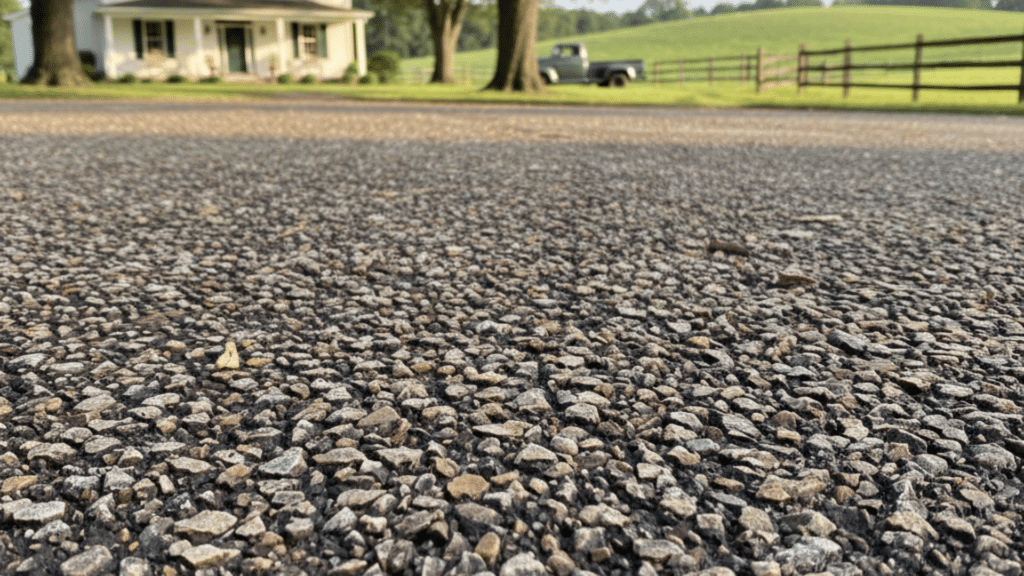
A mix of tar and gravel, this driveway has a rough look and feel. It’s used in some countries or in older homes.
Best For:
- Rural homes or farms
- Medium-length driveways
- Those who want a rustic look
Pros:
- Cheaper than asphalt
- Good grip for tires
- Can be patched easily
- Textured finish
Cons:
- Limited installers available
- Not as smooth
- Chips can come loose
- Doesn’t last as long
Average Cost: $2 to $5 per square foot
Driveway Cost Comparison Table
| Driveway Type | Cost (per sq. ft.) | Lifespan (Avg.) | Maintenance Needs |
|---|---|---|---|
| Concrete | $4 – $15 | 30–40 years | Moderate |
| Asphalt | $3 – $8 | 15–20 years | High (seal often) |
| Gravel | $1 – $3 | 10–20 years | High (ranking, refills) |
| Paver | $10 – $30 | 30–50 years | Low |
| Brick | $10 – $25 | 25–30 years | Moderate |
| Crushed Stone | $1 – $4 | 5–10 years | High |
| Cobblestone | $20 – $70 | 50–100 years | Low |
| Basalt Stone | $10 – $30 | 25–50 years | Low to moderate |
| Grass Paver | $5 – $15 | 10–15 years | High (lawn care) |
| Recycled Asphalt | $1 – $3 | 10–15 years | Moderate |
| Tar and Chip | $2 – $5 | 7–10 years | Moderate |
How to Choose the Right Driveway for Your Home
Picking the right driveway depends on your needs, your home, and your budget. Each type has its own pros and cons, so it’s important to think about a few key points before you decide.
Ask yourself these simple questions:
- How much can I spend now, and later? Some driveways cost more to install but need less care. Others are cheaper up front but may require more work over time.
- What’s the weather like where I live? Rain, snow, heat, and ice can all affect how long a driveway lasts. Some materials work better in cold places, others in hot areas.
- Will the style match my home? Think about how the driveway looks in relation to your house. Do you prefer something neat, rustic, or natural?
- How will I use the driveway? Do you have one car or more? Will heavy trucks or an RV use it? The material needs to handle the weight and use.
- Can I keep up with the maintenance? Some driveways need sealing, weeding, or repairs. Others need very little care. Choose what fits your time and energy.
Take a few minutes to list your top needs. Then compare your list to each type of driveway. The best choice is the one that works for your home, your lifestyle, and your wallet.
Tips for Saving Money on Driveway Projects
Driveways can be a big investment, but there are smart ways to cut costs without lowering quality. Here are a few simple tips that can help you save money during your project:
- Get 2–3 quotes before hiring a contractor
- Choose local materials to save on shipping
- DIY small jobs like gravel or repairs
- Ask about group deals if neighbors also need driveways
- Look for sales on pavers or stone in off-seasons
Wrapping Up
A driveway is more than just part of your yard; it’s part of your daily life. It’s where your day starts and ends, and it should work well for you.
Choosing the right one doesn’t have to be hard if you focus on what matters most to you.
There’s no one-size-fits-all answer, but there is a right fit for your home and routine. Keep your goals in mind as you narrow down the options. Think simple, think smart.
Take the first step today, review your needs, set your budget, and choose a driveway type that makes sense for you and your home.