

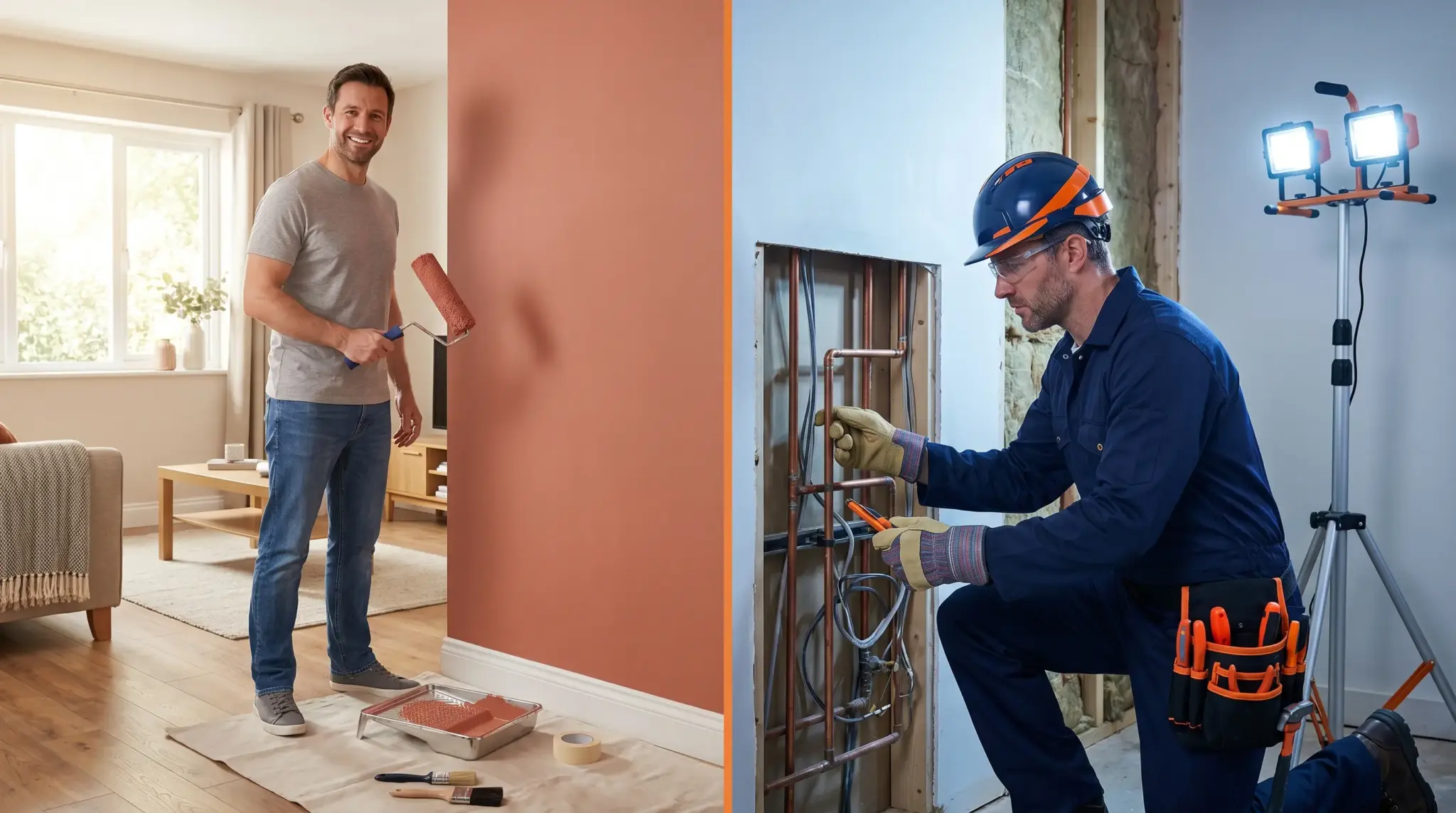
Quick answer: You should DIY home repairs if the worst outcome is cosmetic and reversible, like painting or patching drywall. However, you must hire a licensed professional for tasks involving safety risks, heavy mechanics, or hidden infrastructure, such as electrical work, behind-the-wall plumbing, and automatic gate repairs.
There is something deeply satisfying about fixing things around the house yourself. You save money, you learn a new skill, and at the end of the day, you get to look at your handiwork and feel proud. Home ownership brings a never-ending list of maintenance tasks, and tackling a few of them on your own can be highly rewarding.
But not every repair belongs on your weekend to-do list. Knowing the difference between a manageable DIY project and a job for a licensed professional can save you serious time, money, and stress. A simple mistake on the wrong type of repair can quickly turn into a massive headache.
Here is a practical breakdown of when to roll up your sleeves and when to pick up the phone to call a professional.
What Home Repairs Are Safe to DIY?
Let’s start with the good news. A surprising number of home repairs are genuinely manageable for the average homeowner equipped with basic tools and a few internet tutorials. Choose DIY if the repair is superficial and a mistake will not cause structural damage.
Painting walls and ceilings is the classic DIY win. It takes a lot of time, but the process is highly forgiving. Mistakes are easy to cover up, and the cost of hiring professional painters can be eye-watering. The same logic applies to installing shelving, replacing cabinet hardware, caulking bathroom tiles, and fixing a running toilet. These are low-risk jobs where the worst-case scenario is a minor inconvenience rather than a safety hazard.
Patching small drywall holes is another task homeowners often feel intimidated by, but shouldn’t. With a patch kit from any local hardware store and a bit of patience with sanding and paint matching, you can make a hole disappear in a single afternoon.
Garden and landscaping work also falls comfortably in DIY territory. Laying mulch, planting shrubs, and building simple raised garden beds require physical effort, but the stakes remain incredibly low. The golden rule for DIY is simple: if the worst outcome is cosmetic and reversible, it is probably fair game for you to handle.
Which Home Repairs Require a Licensed Professional?
A lot of homeowners underestimate how quickly a basic repair can spiral out of control when the underlying system is more complex than it looks. Choose a professional if the system involves dangerous elements or hidden infrastructure.
Electrical work is the most obvious example. Replacing a standard light switch is something many people can handle safely. Rewiring a room, adding a new circuit, or troubleshooting a mysterious breaker issue requires a licensed electrician. The consequences of getting electrical work wrong range from a house fire to severe electrocution. It is simply not worth the risk to attempt this yourself.
Plumbing beyond the basics follows the exact same logic. Swapping out a bathroom faucet is usually fine. But the moment you start working with pipes behind walls, dealing with low water pressure throughout the house, or touching anything related to your water heater, you enter professional territory. A leak inside a wall can cause mold damage that costs far more to remediate than the original plumbing job would have cost.
Roof repairs are another common DIY trap. People patch a few shingles, think they solved the problem, and do not realize until the next rainstorm that water is still getting in. Roofing requires understanding how water moves across a specific surface, and a bad patch can actually make the drainage worse. Factor in the serious fall risk, and roofing is always a job best left to the pros.
HVAC systems are incredibly complex. Basic maintenance like checking refrigerant levels requires a licensed technician in most states. If your heating or cooling system is underperforming, making strange noises, or cycling on and off irregularly, do not start pulling panels off. Call an HVAC technician who knows exactly what they are looking at.
Why Should You Hire an Expert for Automatic Gate Repair?
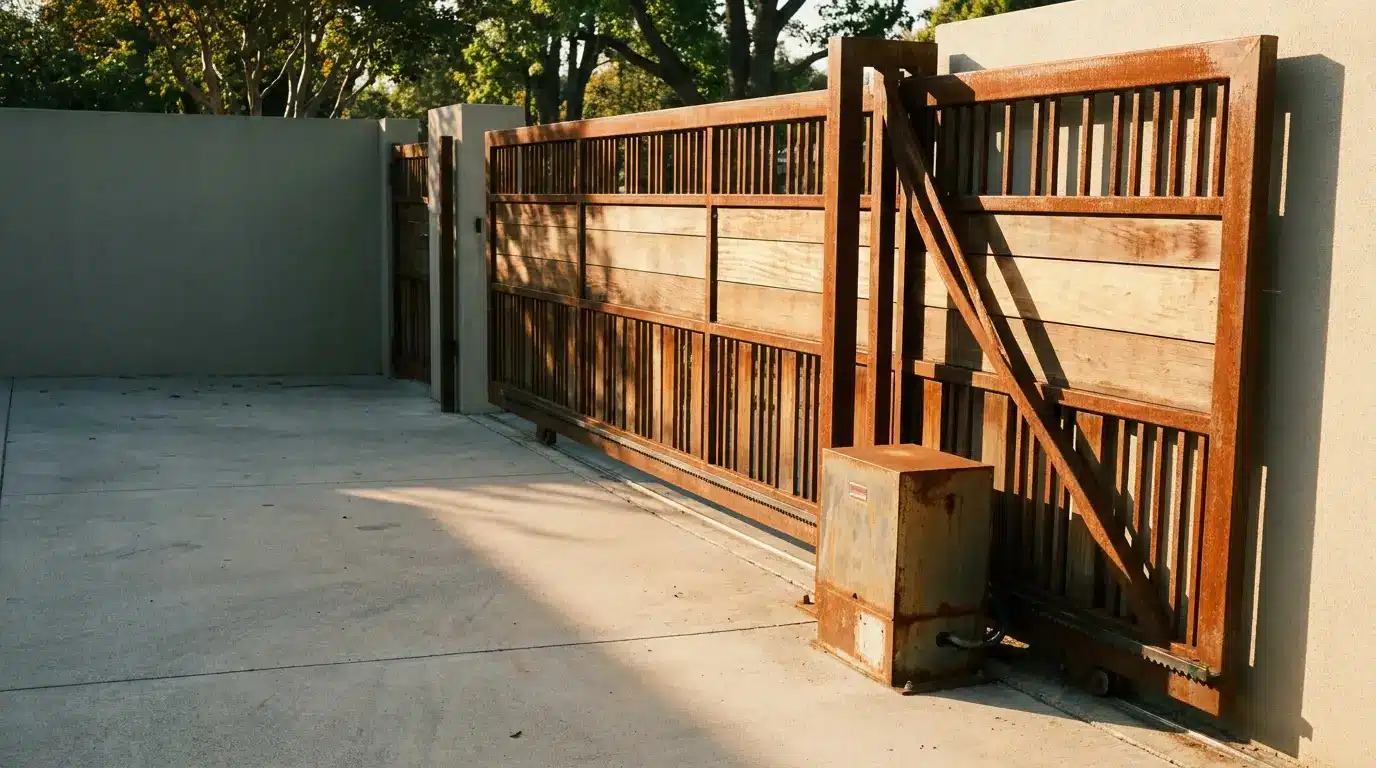
Gate repairs often surprise homeowners who assume the fix will be simple. It is easy to look at a driveway gate that will not open and assume the remote just needs a new battery or a sensor needs wiping down. Sometimes it really is that simple. But automatic gates are more mechanically and electrically complex than they appear to the naked eye.
A typical automatic gate system involves an electric motor, a control board, safety sensors, limit switches, a power supply, and an intercom or keypad system. When a gate stops working, the cause could be any one of these specific components interacting badly. Without the right diagnostic tools and professional training, you are essentially guessing.
More importantly, gates are incredibly heavy. According to industry standards, a residential sliding gate can weigh anywhere from 200 to over 800 pounds. If the track, wheels, or motor becomes compromised and you start manually forcing the heavy gate, you risk damaging the system further. You also risk serious physical injury. Swing gates present their own hazards when the hinge or arm mechanism fails under heavy tension.
This is exactly why gate repairs fall firmly in the “call a pro” category. A certified gate repair Los Angeles technician can diagnose the issue accurately on the very first visit. They have access to the right replacement parts and know how to safely handle a system that sits under intense mechanical stress. Most reputable gate repair companies offer same-day service, meaning you are rarely waiting long for a fix.
The math usually works out in your favor, too. A professional gate repair typically costs a few hundred dollars. A DIY attempt gone wrong can result in a completely damaged motor or a bent track, pushing your total repair bill into the thousands.
How Do You Decide Between DIY and Hiring a Professional?
When you are staring down a new repair and trying to decide which route to take, ask yourself four specific questions to guide your decision:
- Is there a safety risk if something goes wrong? Electrical, structural, gas, and heavy mechanical systems all carry genuine injury or fire risks. Default to a licensed professional in these scenarios.
- Will a mistake be expensive or hard to reverse? Cosmetic mistakes are perfectly fine to learn from. Mistakes that damage core infrastructure, like pipes, internal wiring, or motors, compound quickly and cost a fortune to fix.
- Do I have the right tools, not just the right instructions? Online tutorials make tasks look incredibly easy. Many jobs require specialized tools that cost too much to buy for a single, one-time repair.
- Is my time actually free? A repair that takes a seasoned professional two hours might take an inexperienced homeowner an entire weekend. Factor in what your own free time is actually worth to you.
The Bottom Line on Home Maintenance
DIY has a real and legitimate place in modern home ownership. Doing things yourself builds practical skills, saves money on the right jobs, and gives you a much deeper understanding of how your own house operates.
The best DIYers know exactly where their limits are. They are never embarrassed to call in a professional when the job demands one. The ultimate goal is not to do everything yourself. The goal is to take excellent care of your home. Sometimes those two things overlap, and sometimes you just need to pick up the phone.
Frequently Asked Questions About Home Repairs
How Much Money Do I Actually Save Doing Home Repairs Myself?
You save 100% of the labor costs when you DIY, which typically makes up 50% to 70% of a professional repair bill. However, you must factor in the cost of buying specialized tools and materials. If you make a major mistake, the cost to hire a professional to fix your error will far exceed your initial savings.
When Is a Plumbing Issue Too Complicated for DIY?
You should hire a professional plumber anytime the repair involves opening up walls, modifying main supply lines, handling raw sewage, or working on gas-powered water heaters. Simple tasks like clearing a basic drain clog or replacing a showerhead are perfectly safe for DIY.
Why Do Automatic Gates Break Down So Often?
Automatic gates break down because they are heavy, constantly moving mechanisms exposed to outdoor weather elements 24/7. Common issues include worn-out tracks, dead motor batteries, pest infestations in the control board, and misaligned safety sensors.
Can I Do My Own Electrical Work if I Turn Off the Main Breaker?
No, you should not do your own complex electrical work even with the breaker off. While turning off the breaker prevents immediate electrocution, improper wiring can lead to a house fire days or months later when the power is restored. Always hire a licensed electrician for rewiring or adding circuits.